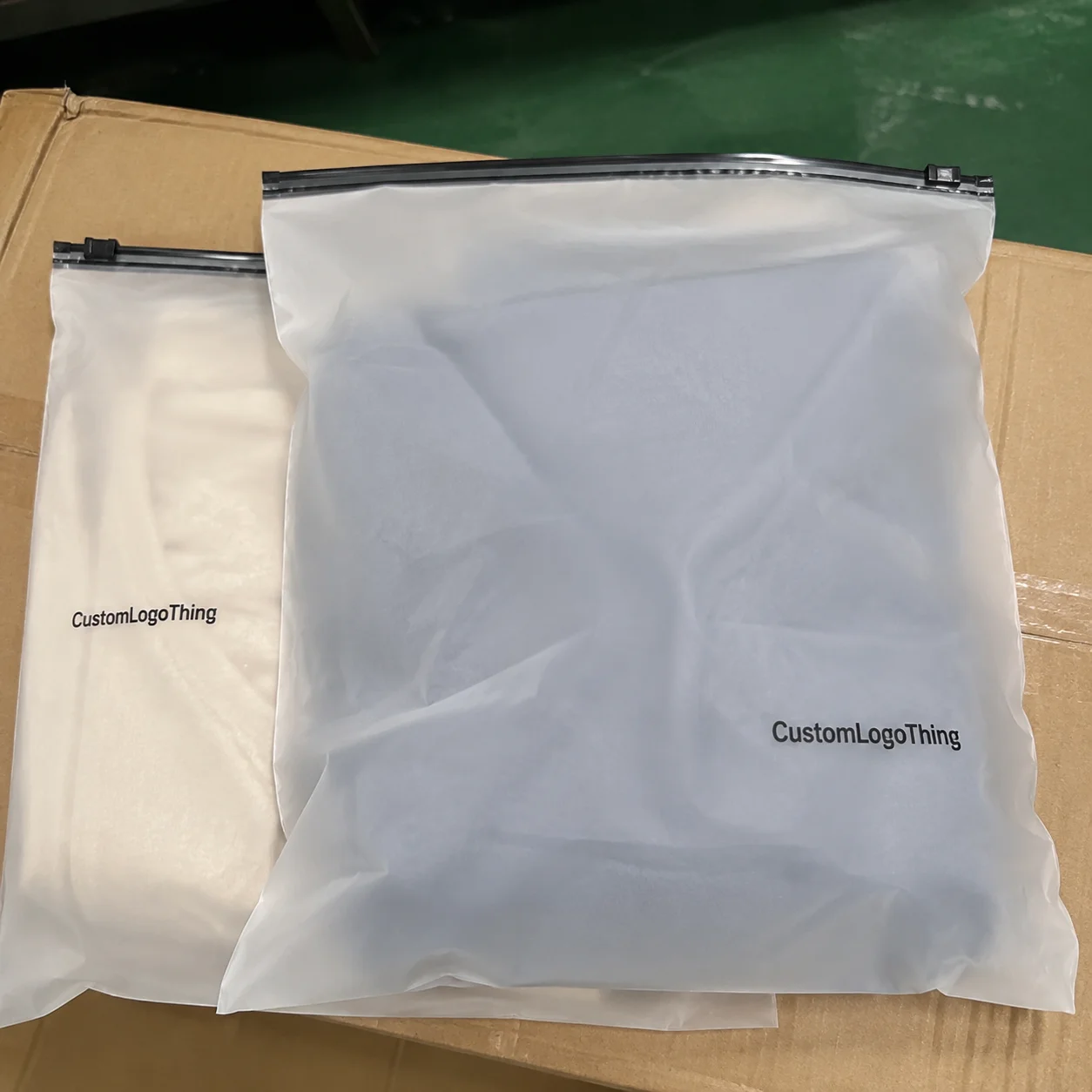
A tea brand asks for a printed Clear Zipper Bags quote for tea and sends two things: a logo and “we need 5,000 bags.” That is not really a quote request. It is a polite invitation to guess, and guessing is how brands end up with good-looking packaging that does not fit the product, does not close cleanly, or costs more than the tea can support.
Custom Logo Things keeps custom packaging quotes practical. Size, film, thickness, zipper, print method, quantity, artwork versions, and shipping address decide the price. Words like “premium,” “artisan,” and “luxury” may belong on a brand brief, but they do not hold aroma in a pouch.
Printed Clear Zipper Bags Quote for Tea: What Buyers Actually Need
A useful Printed Clear Zipper Bags Quote for tea starts with the product, not the artwork. Loose leaf tea packaging has two jobs: show the product clearly and protect it from moisture, aroma loss, handling, shelf friction, and shipping abuse. If the bag looks beautiful but lets peppermint fade in two weeks, the print quality is not the problem; the packaging spec is.
Clear zipper bags are popular because shoppers like seeing the blend. That matters for herbal teas, floral mixes, fruit infusions, single-origin tasting packs, subscription refills, and retail display bags where color and texture help sell the product before the customer opens it. Visibility brings attention. Barrier and seal quality protect the purchase after attention has done its work.
Quote accuracy depends on several plain but critical details:
- Bag dimensions: width, height, bottom gusset if used, header space, and usable fill area.
- Fill weight: often 10g to 25g for samples, 50g to 100g for retail, and 250g to 500g for refills.
- Tea volume: fine black tea, rolled oolong, chamomile flowers, dried citrus, and pyramid sachets fill very differently.
- Film structure: clear PE, CPP, PET/PE laminate, BOPP/CPP, or a higher-barrier structure.
- Thickness: commonly about 2.5 mil to 5 mil, depending on format and distribution.
- Zipper style: standard press-to-close zipper, stronger refill zipper, or specialty reclosure.
- Print method: digital, flexographic, or higher-volume production.
- Quantity and shipping destination: freight is real, and bulky bags can change carton volume quickly.
A 500-piece custom run will not price like a 50,000-piece order. Tooling, press setup, proofing, changeover time, film sourcing, and finishing do not vanish because the project is small. Lower quantities can still make sense for launches and tests, but the buyer should see the economics clearly before committing.
Packaging rule: sample tea bags, retail pouches, and large refill packs are separate packaging problems. One shared size can work across several SKUs, but one spec rarely works perfectly across every tea format.
If you are ready to price an actual project, send the useful details through Contact Us. A clean request usually gets a cleaner answer.
Clear Zipper Bag Formats That Work for Tea
Clear zipper bags are not one product. They are a group of formats, and the right one depends on fill weight, shelf display, tea density, storage expectations, and how customers will open and reclose the pack after purchase.
| Bag format | Best use | Typical tea fill range | Buying note |
|---|---|---|---|
| Flat zipper bag | Samples, tasting packs, subscription inserts | 10g to 50g | Lower material use, but limited shelf presence. |
| Stand-up zipper pouch with clear panel | Retail shelves and boutique tea lines | 50g to 250g | Good balance of display, branding, and stability. |
| Fully clear resealable bag | Visual herbal blends and colorful botanicals | 25g to 250g | Strong visibility, but barrier should be checked. |
| Gusseted clear zipper bag | Larger loose leaf refills | 250g to 500g+ | Better volume capacity; film strength matters more. |
| Hang-hole retail bag | Peg displays, small retail packs, gift sets | 10g to 100g | Header strength and hole placement need clearance. |
Tea sizing is sneaky. A 100g bag of fine breakfast tea may pack tightly and leave clean headspace. A 100g bag of chamomile flowers can look like it wants its own apartment. Rolled oolong, pyramid sachets, dried citrus peels, hibiscus, and fluffy botanicals all behave differently once filled. A quote based only on gram weight is missing half the story.
For small tea samples, flat zipper bags often make sense. They are simple, compact, and efficient for 10g to 25g portions. For retail, stand-up zipper pouches usually present better on shelves because the bag can face forward and carry more branding without relying on a label wrapped around a soft, shifting product.
Larger refill packs need stronger film, better zipper performance, and enough headspace so the customer can close the bag without wrestling it like an overpacked suitcase. That last inch above the product looks unimportant on a dieline, then becomes very important in a kitchen, stockroom, or fulfillment line.
Zipper choice also matters. Most tea bags use a standard press-to-close zipper. Heavier refills may need a stronger profile, especially above 250g or for bags that will be opened repeatedly. Tear notches are a small detail, but they help customers open the first seal cleanly without scissors, teeth, or bad judgment.
Ask for a size recommendation before approving artwork. Mockups are useful. Filled samples are better. If you can provide the actual fill weight and tea type, the bag dimensions can be matched to the product instead of copied from a random pouch photo online.
Film, Barrier, Thickness, and Food-Safe Specifications
The material structure controls clarity, stiffness, seal strength, freshness, and cost. That sounds simple. It is also where many weak tea packaging projects begin, because “make it clear” is not a complete material specification.
Common options for printed clear tea zipper bags include clear PE, CPP, PET/PE laminates, and BOPP/CPP. PE and CPP can work for simple clear bags, especially for lightweight samples or short-term use. PET/PE laminates usually offer better stiffness, print quality, and overall pouch feel. Higher-barrier structures may be recommended for premium teas, flavored blends, strong aromatics, or longer retail shelf life.
There is always a tradeoff between clarity and barrier. Fully clear packaging shows the tea beautifully, but some teas need stronger moisture and oxygen protection than a basic transparent structure provides. If freshness is the priority, a clear window pouch may outperform a fully clear pouch because the opaque portion can carry a stronger laminate while the window still shows the product.
Thickness commonly runs from about 2.5 mil to 5 mil for many zipper tea bags. Lightweight sample packs can sit toward the lower end. Retail stand-up pouches often need more body so they do not collapse on shelf. Larger refill bags, rougher handling, and wholesale cartons with repeated movement may justify heavier films. If bags will travel through parcel networks, packaging should be reviewed against realistic transit conditions and, where appropriate, standards such as ISTA test methods for packaged-product distribution.
Aroma retention deserves more attention than it usually gets. Mint, masala chai, bergamot, flavored rooibos, smoky teas, and strong herbal blends can lose scent or transfer aroma into nearby products if the structure is weak. Nobody wants lavender notes in plain green tea unless they paid for lavender green tea.
Food-contact basics should be covered before production:
- Food-grade film: suitable for direct or intended food packaging use.
- Clean sealing: proper seal width and zipper alignment to reduce leaks, weak closures, and uneven openings.
- Ink safety: inks should suit the print construction, with lamination or treatment used as required.
- Documentation: material declarations or compliance documentation can be requested when needed.
- Lot control: cartons, inner packs, and production references should be clear enough for receiving and inventory checks.
Optional features include matte finish, gloss finish, frosted effect, transparent window, hang hole, bottom gusset, rounded corners, tear notch, resealable zipper, and a blank label area for batch coding. Each one can improve the package. Each one can also add cost, affect minimum order quantity, or change the production path.
Compostable or recyclable options may be possible, but buyers should not treat sustainability claims like magic stickers. Those materials can change barrier performance, puncture resistance, shelf life, cost, and MOQ. For responsible end-of-life language, review practical guidance from the U.S. EPA recycling resources before printing broad claims on a small bag.
Print Options for Logos, Ingredients, and Retail Branding
Printing on clear zipper bags is not just dropping a logo on plastic. The film is transparent, the product behind it is textured, and the customer may read the bag under bright retail lights, dim cafe lighting, or at a kitchen counter before 7 a.m. Design has to survive all of that.
Digital printing is useful for short runs, multiple SKUs, launch batches, and test markets. It usually avoids some of the larger setup costs tied to traditional plates, though unit prices can be higher at scale. Flexographic printing often works better for larger quantities and repeat orders because the unit cost can improve once setup is absorbed. Gravure-style production may be appropriate for high-volume premium runs, but it typically requires higher quantities and longer planning.
White ink backing is a big deal on clear bags. Without a white underprint, colors can look weak, transparent, or muddy against tea leaves. A red logo over dark Assam might look brown. A pale green flavor label over chamomile may disappear. That is not subtle branding; that is a production surprise.
Artwork zones should be planned before the dieline is approved. Common zones include:
- Front logo and flavor name
- Net weight and product description
- Ingredient list and allergen notes if applicable
- Brewing instructions
- Barcode or QR code
- Batch label area or lot code space
- Regulatory copy and business contact details
- Back-panel brand story, if the bag has room
Readable typography wins. Tiny gold script on clear plastic over dark tea leaves looks elegant until a customer tries to read it under store lighting. Use enough contrast. Keep key retail copy large enough. Leave seal and zipper clearance alone. Ink sitting too close to heat seals or zipper tracks can create production problems and inconsistent results.
PMS color matching can be requested within normal tolerances, but clear film, ink opacity, white underbase, matte coating, and the product color behind the print all affect final appearance. A digital proof is not a physical printed bag. Treat it as a layout approval, not a perfect color guarantee.
If you sell six tea flavors, quote them together where possible. Shared bag size, shared material, and a consistent artwork structure can improve production efficiency. Each artwork version may still affect setup, proofing, and handling, but grouping SKUs is usually smarter than treating every flavor like a separate packaging universe.
A proper proofing path should include the dieline, digital proof, print placement review, zipper and seal clearance, barcode check, and final approval. For retail products, scan the barcode before production. Do not assume. Assumptions are free until they become reprints.
Pricing, MOQ, and Unit Cost Drivers for Tea Bags
A Printed Clear Zipper Bags Quote for tea depends on quantity, size, material structure, thickness, print coverage, number of colors, white ink, zipper style, finishing features, freight, and delivery location. That is the honest answer. One universal price without specs is fantasy with a zipper.
Small custom runs usually carry higher unit costs because setup, artwork handling, press time, proofing, and production changeover still exist. A 1,000-piece order can be useful for a launch or test market, but it will almost always cost more per unit than 10,000 or 25,000 pieces.
| Quote bracket | Typical buyer use | Unit cost behavior | Practical advice |
|---|---|---|---|
| 1,000 pieces | Launches, market tests, small subscription drops | Highest per-unit cost | Good for validation, not great for margin. |
| 3,000 pieces | Early retail runs or multiple small SKUs | Often better than 1,000, still setup-heavy | Ask if SKU splitting is allowed. |
| 5,000 pieces | Growing tea brands and repeat sellers | More realistic commercial range | Good comparison point for most buyers. |
| 10,000 pieces | Retail programs and wholesale inventory | Usually stronger price break | Check storage space before ordering. |
| 25,000 pieces | Established SKUs and high-volume sellers | Best setup absorption | Works if artwork and demand are stable. |
Realistic price ranges vary too much to quote responsibly without specs, but buyers should expect a clear difference between short-run digital pricing and larger production pricing. A small digitally printed sample bag may price very differently from a 5 mil high-barrier stand-up pouch with white ink, matte finish, gusset, hang hole, and full back-panel copy. Same broad category. Different cost structure.
Common cost adders include heavy film, high-barrier laminates, full-coverage ink, white ink underbase, matte or frosted finishes, hang holes, gussets, rounded corners, custom sizing, special zippers, and expedited production. Freight also matters, especially for bulky gusseted bags because cartons may contain a lot of trapped air before the bags are filled.
MOQ depends on production method. Digital short runs may support lower quantities. Flexo often requires higher minimums but can deliver better unit pricing on repeatable artwork. Higher-volume production can reduce unit cost further, but only if the quantity matches sell-through. Packaging sitting in storage for two years is not inventory strategy. It is clutter with invoices.
Multiple flavors can sometimes share the same structure and size. That helps. Each version may still require separate artwork proofing and production handling. If the front panel changes only by flavor name and color stripe, say that early. If every SKU has different coverage, barcode placement, and layout, expect more quoting detail.
Send your target retail price and fill weight with the quote request. A 50g tea pouch selling for $8 has a different packaging cost tolerance than a 250g premium refill selling for $38. A beautiful bag that kills margin is not a win. It is a packaging choice pretending to be a brand upgrade.
Process and Timeline From Quote Request to Delivered Bags
The process for a custom tea zipper bag quote is straightforward if the request is complete. If the request is vague, the process becomes a 12-email guessing game, and nobody needs that.
Start with these details: bag size or fill weight, tea type, quantity, number of SKUs, artwork status, preferred material, zipper requirements, finish, delivery address, and target deadline. If you do not know the bag size, send the tea weight and describe the blend. Better yet, send a photo of the current pack next to a ruler, or provide the current dimensions and what you dislike about them.
A proper quote should include item specifications, material structure, print method, unit price, setup or plate costs if any, estimated freight, production lead time, and proofing requirements. If a quote only says “custom zipper pouch, 5,000 pcs,” it is not detailed enough to compare against another supplier’s offer.
The timeline usually moves through these stages:
- Specification review: confirm size, format, film, thickness, zipper, and print needs.
- Quote: provide pricing by quantity bracket and production method where applicable.
- Artwork dieline: set safe zones, seal areas, zipper clearance, and cut lines.
- Proof approval: review layout, spelling, barcode, colors, and placement.
- Production: print, convert, add zipper, finish, and pack.
- Quality check: inspect print, seals, zipper function, count, and packing.
- Shipping: ship cartons to the delivery address or fulfillment location.
Simple digital runs are usually faster. Custom film structures, flexographic plates, specialty finishes, complex SKU splits, or very large orders need more time. A practical planning range may be around 10 to 20 business days after proof approval for simpler custom runs, while more complex or larger projects can take several weeks. Material availability, artwork readiness, order size, and finishing details all influence the schedule.
Do not start the clock from the day you ask for a quote. The real clock starts after specs, artwork, payment terms, and proof approval are complete. Annoying, but true.
Pre-production samples or physical mockups are worth considering for new tea formats, unusual fill weights, premium retail launches, or anything being presented to wholesale buyers. A flat rendering cannot tell you whether a bulky botanical blend will sit properly in a pouch or fight the zipper every time.
Plan inventory buffers around harvest cycles, seasonal tea releases, subscription box drops, and wholesale buyer deadlines. If your fall chai launch depends on packaging arriving the same week the product ships, you are not being efficient. You are gambling with labels.
Next Steps to Get an Accurate Custom Tea Bag Quote
The fastest way to get useful pricing is to send real product details upfront. Custom Logo Things can recommend options, but the recommendation gets better when the packaging problem is clear.
Use this checklist before contacting the team:
- Tea type: loose leaf, herbal blend, flavored tea, sachets, refill pack, or sample pack.
- Fill weight: 10g, 25g, 50g, 100g, 250g, 500g, or another target.
- Estimated packed volume: especially important for fluffy botanicals and pyramid sachets.
- Bag format: flat, stand-up, gusseted, fully clear, clear window, or hang-hole retail bag.
- Quantity: choose one target and at least two alternate quantities.
- Number of SKUs: list flavors and artwork versions.
- Artwork files: vector logo, dieline if available, barcode, ingredient text, flavor names, and compliance copy.
- Finish preference: gloss, matte, frosted, clear, or white ink backing.
- Delivery address: city, state, country, and any deadline.
Photos help. If you have current packaging, send front, back, side, and filled photos. Existing bag dimensions and pain points are faster than a vague description like “medium size.” Medium means nothing. A 100g fine tea bag and a 100g chamomile bag can have completely different volume needs.
Ask for quantity breaks. For example, request 3,000, 5,000, and 10,000 pieces. Seeing the price break helps prevent emotional ordering. Sometimes the jump from 3,000 to 5,000 makes sense. Sometimes the inventory risk is not worth it. The numbers should decide, not optimism.
Also ask for material recommendations instead of forcing a film structure copied from another supplier. Tea blends vary. Packaging should Match Your Product, sales channel, and shelf-life needs, not someone else’s spec sheet. If you want recyclable, compostable, high-barrier, fully clear, matte, low MOQ, and cheap all at once, expect tradeoffs. Packaging is not a wish-granting department.
Artwork readiness matters. Gather the vector logo, flavor names, ingredient copy, barcode, net weight, brewing instructions, business address, and any regulatory text before proofing. Missing copy delays production more often than film availability does. Boring admin wins here.
To start a real quote, send your specs through Contact Us. To get the most accurate printed clear zipper bags quote for tea, send the product details first, then compare options by protection, shelf impact, unit cost, and delivery date.
FAQ
What details do I need for a printed clear zipper bags quote for tea?
Send bag size or fill weight, tea type, order quantity, number of artwork versions, logo files, preferred material, zipper style, finish, and delivery location. If you do not know the bag size, provide the tea weight and a photo or sample of the product so the supplier can recommend dimensions instead of guessing.
What is the typical MOQ for printed clear tea zipper bags?
MOQ depends on print method, size, material, and customization level. Digital production can often support smaller runs, while flexo or higher-volume production usually has higher MOQs but better unit pricing. Ask for 1,000, 3,000, 5,000, 10,000, and 25,000-piece breaks if your budget and storage space allow comparison.
Are clear zipper bags good for loose leaf tea freshness?
They can be, if the film structure has enough moisture and aroma protection for the tea type. Fully clear bags are great for product visibility, but some premium, flavored, or strongly aromatic teas may need stronger barrier films or a clear window instead of a fully clear structure.
Can I print multiple tea flavors in one custom zipper bag order?
Yes. Multiple SKUs are common for tea brands. Using the same bag size and material across flavors can help control cost. Each artwork version may still affect setup, proofing, and production complexity, so list all flavors during the quote stage.
How long does production take after I approve the tea bag artwork?
Timeline depends on quantity, print method, material availability, and finishing details. Simple short runs are generally faster, while custom laminates, specialty finishes, or large orders take longer. Production timing usually starts after final proof approval, not when the first quote request is sent.
Need pricing for your own tea line? Send the specs to Contact Us and ask for a clear comparison by format, film, quantity, and lead time.