Printed Clothing Labels Quote for Coffee Merch Buyers
If you are requesting a Printed Clothing Labels Quote for coffee, you are pricing more than a trim detail. Coffee merch is washed often, handled hard, and judged quickly, so the label has to stay legible, comfortable, and consistent after repeated use. A weak label can make an otherwise solid garment program look unfinished.
That matters because coffee brands usually treat apparel, packaging, and in-store presentation as one system. If the label quality does not match the rest of the brand, the merch line feels less deliberate. The right quote should therefore reflect actual use, not just the lowest unit price.
Why coffee brands reprice labels faster than they reorder shirts
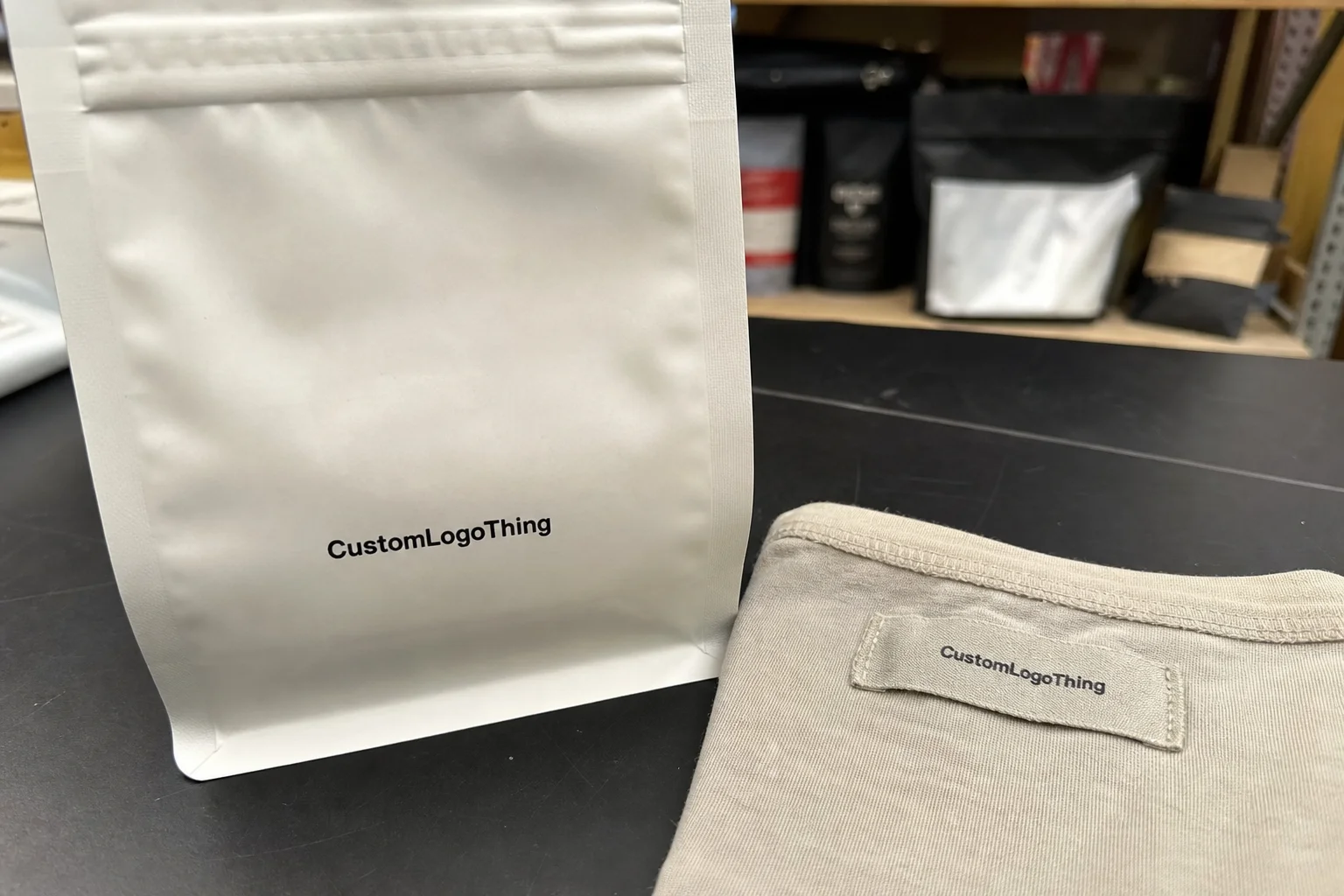
Coffee apparel takes more wear than standard retail clothing. It is washed frequently, dried quickly, folded in stacks, and worn in environments where heat, steam, and friction are normal. A shirt can still be structurally fine while the label has already started to curl, fade, or irritate the neck.
That is why the real cost of a poor label is not the unit price. It is the rework, the replacement order, and the extra time spent fixing a problem that should have been avoided in the first place. For multi-location coffee brands, inconsistency across staff uniforms and retail merch can also make the line look less controlled.
When the quote is tied to the actual use case, the buyer can compare suppliers more honestly. A label for barista uniforms, for example, needs a different durability and comfort balance than a label inside a premium hoodie sold at retail. If the same brand sells both, the label spec should support both without creating separate visual systems.
Label formats that work on cafe uniforms, merch tees, and retail apparel
Different garments need different trim choices. A barista apron, a heavyweight hoodie, and a lightweight tee do not need the same construction, so the best label format depends on wear, comfort, and the finish level the brand wants to project.
| Label type | Best use | Typical MOQ | Rough unit price | Buyer take |
|---|---|---|---|---|
| Printed satin label | Neck labels, care info, lightweight tees | 500-1,000 pcs | $0.14-$0.30 | Smooth hand feel, clear print, good for comfort-first garments |
| Woven-look printed label | Retail hoodies, premium tees, visible branding | 1,000 pcs+ | $0.12-$0.28 | Reads like woven trim without the higher weaving cost |
| Cotton label | Natural, heritage-style merch and small runs | 500-1,000 pcs | $0.16-$0.35 | Soft and authentic, but less crisp for tiny type |
| Heat-transfer label | Tagless neck branding, performance tees, aprons | 300-500 pcs | $0.18-$0.40 | Best when comfort matters more than a sewn-in edge |
| Care and size tab set | Multi-piece apparel programs | 1,000 pcs+ | $0.10-$0.22 per piece | Useful when you need a full retail spec, not only a logo mark |
Printed satin is still the most common choice for coffee shop uniforms because it balances price, legibility, and comfort. Woven-look printed labels make sense when the merch line sits at a higher price point and the buyer wants more texture without moving to a true woven construction. Heat-transfer labels are usually the quiet option for staff tees and slim-fit garments because there is no folded edge under the collar.
For broader trim packages, our Custom Labels & Tags page is a useful place to compare formats before quoting. If the brand also uses paper hang tags or folded retail cards, FSC-certified stocks can help keep the apparel and packaging system aligned. The relevant certification body is FSC.
Specifications that affect legibility, comfort, and wash performance
The difference between a workable label and a disappointing one usually comes down to specification discipline. Buyers should define size, fold style, edge finish, backing, and print coverage before asking for a quote. If those details are vague, the supplier will either pad the estimate or come back with questions that slow the job.
A Printed Clothing Labels Quote for coffee becomes much more accurate when the artwork matches the real garment. A 15 mm neck label needs different type sizing than a 40 mm side seam label, and tiny copy that looks fine on screen can disappear after laundering. As a rule, keep body copy minimal and let the brand mark do the work.
Useful spec points to include:
- Finished size, such as 15 mm x 60 mm or 20 mm x 70 mm.
- Fold type, including straight cut, center fold, end fold, or loop fold.
- Application method, sewn-in or heat-applied.
- Ink coverage, especially if the design uses dark solids or a full-color background.
- Garment type, because a heavyweight hoodie and a slim tee do not wear the same way.
Color contrast is one of the easiest places to lose readability. Dark type on a medium-tone label may look refined in a mockup and weak after repeated washing. If the brand wants a close color match, ask for a digital proof with Pantone references or a physical sample before a larger run. That is routine risk control, not overengineering.
Testing should be practical. Many buyers pair internal wash testing with standards such as AATCC 61 for laundering and colorfastness, and ASTM methods for abrasion where relevant. If the labels are part of a larger retail rollout, shipping and packout can also be checked against ISTA guidance so the goods arrive flat, clean, and sale-ready.
Very fine serif type, reversed-out text, and dense care-copy blocks are the first things to fail. If the design depends on tiny details, increase the label size or simplify the layout. That usually costs less than forcing a fragile design through approval and then finding out it reads poorly in real light.
Printed clothing labels quote for coffee merch: pricing, MOQ, and unit cost
Price depends on more than quantity. Material choice, print complexity, fold style, finish method, and the number of SKUs all affect the number. A single label with one-color print and a standard fold will price very differently from a tag set that includes size, care, and branding across several pieces.
For coffee merch buyers, MOQ should be read in operational terms. Are you replenishing one flagship café, launching a seasonal tee for a few stores, or outfitting a regional chain with staff uniforms? Smaller runs are possible, but they usually carry more setup cost per unit. Larger runs lower unit price, although freight, storage, and reorder timing matter more as volume climbs.
| Order profile | Typical setup | Indicative unit cost | What drives the number |
|---|---|---|---|
| Test run for one café | 300-500 pcs, simple print, one size | $0.22-$0.55 | Setup and proofing weigh more than volume |
| Standard merch refresh | 1,000-2,500 pcs, one or two sizes | $0.12-$0.28 | Balanced quantity, moderate complexity |
| Multi-location uniform program | 3,000-10,000 pcs, repeatable spec | $0.08-$0.18 | Higher volume reduces per-unit cost and makes reorders easier |
| Premium retail capsule | 500-1,500 pcs, stronger finish expectations | $0.18-$0.40 | Better hand feel, tighter color control, and more revision time |
There is also a fixed-cost layer that buyers often miss. Artwork cleanup can add a small charge if the logo file is not print-ready. Special finishing, sample shipping, and rush production can also move the total. A fair quote should separate those items clearly so you can compare suppliers without guessing.
“The cheapest label is expensive if it fails after three wash cycles. A clearer spec usually saves more money than a lower quote.”
If you want a cleaner estimate, send the label dimensions, artwork file format, brand colors, quantity, garment type, and delivery destination in the first message. Include whether the labels are for staff uniforms, retail tees, or both. That single detail changes the durability and comfort assumptions, which changes the quote.
Production process and lead time from artwork to delivery
The production path is simple on paper and slower in practice. The usual sequence is brief, artwork review, digital proof, approval, production, inspection, and shipping. Each stage catches a different kind of error, and skipping one moves the risk downstream where it is more expensive to fix.
- Brief: define garment type, label dimensions, quantity, and application method.
- Artwork review: check logo quality, type size, and color references.
- Digital proof: confirm layout, spelling, and fold direction.
- Approval: lock the spec before the job enters production.
- Production: print, cut, finish, and pack.
- Inspection and shipping: confirm count, visual quality, and dispatch method.
Lead time usually starts after proof approval, not after the first inquiry. For simple printed satin labels, a typical window is about 7-12 business days from approval to dispatch. More complex jobs, especially those with multiple sizes or higher print coverage, often sit in the 12-15 business day range. Rush work is possible, but it narrows slot availability and can limit proof revisions.
Late-stage changes are the most common cause of delays. If the brand decides to adjust the logo size, switch from sewn-in to heat-applied, or add a new care instruction after proof approval, the timeline may reset. That is normal, which is why purchasing teams should lock the garment spec before they request final numbers.
A useful quality-control check is to ask how inspection happens before shipment. Count accuracy, trim alignment, edge quality, and obvious print defects such as missing ink or registration shifts should all be checked before dispatch. Those issues are small individually, but they become expensive if they show up across a full batch and have to be sorted by hand on receipt.
What to expect from a supplier like Custom Logo Things
Generic suppliers are fine until the job gets specific, and coffee apparel is specific. It needs repeatable reorders, clear proofing, color consistency, and labels that do not feel like an afterthought. A focused supplier should be able to support that process without turning every order into a new setup.
That matters for multi-location cafés and roasters. When one store reorder needs to match a previous batch, the artwork history and spec history have to be clean. When retail tees and staff uniforms share the same visual system, the supplier has to keep the label consistent across different garments. When a buyer wants a revised quantity, the response needs to be readable and specific.
Quality control should be part of the offer, not a separate conversation. Ask how artwork is handled, what material guidance is available, and whether sample approval is supported before production starts. If the label has to match cups, bags, or retail inserts, that alignment should be built into the proofing process from the start.
If you already know the label style you want, start from Custom Labels & Tags and build the quote from there. If the order includes multiple SKUs, list them separately so the supplier can keep the pricing clear and the reorder path simple.
Next steps to request an accurate quote and move into production
If you need a Printed Clothing Labels Quote for coffee, start with a brief that reads like a production file. The more exact the input, the less time gets spent on clarification. For most buyers, the right sequence is simple.
- Gather the artwork in a usable file format, ideally vector.
- Choose the label type based on garment use, not only on price.
- Confirm size, fold, and application method.
- State the quantity by SKU if there is more than one garment.
- Add wash expectations, especially for staff uniforms.
- Request proofing if the label needs to match cups, bags, or retail inserts.
If the order splits between uniforms and retail merch, ask for two quotes. The specs may look similar, but the use case is not. A barista tee that gets washed several times a week needs a different durability profile than a premium hoodie sold at the counter. Treating them as one order can distort both cost and result.
It also helps to ask about the reorder path before approval. A good label program should make replenishment easier than first-time sourcing. For Coffee Brands That want a repeatable system, the decision is straightforward: send the brief, compare the options, approve the proof, and move the order into production.
What do I need to request a printed clothing labels quote for coffee shirts?
Send the label size, material preference, artwork file, quantity, and where the labels will be used. Include whether the labels are for barista uniforms, retail merch, or both, because wash and wear conditions affect the spec. If you have brand colors or previous samples, add those too so pricing and proofing are more accurate.
Which printed label type is best for coffee shop uniforms?
Printed satin and soft woven-look printed labels are common for neck labels because they feel smoother against skin. For heavy-use uniforms, choose a format that holds detail after frequent washing and drying. If the label sits under an apron or outer layer, comfort may matter less than durability and contrast.
What MOQ should I expect for coffee merch label orders?
MOQ depends on material, size, and print complexity, but smaller runs are usually possible on simpler specs. Higher quantities typically lower unit cost and make reorders easier for seasonal or multi-location programs. Ask whether the supplier can quote both a test run and a replenishment run so you can compare landed cost.
How long does production take after approval?
Production time starts after artwork approval, not when the first inquiry is sent. Simple label orders usually move faster than orders with custom finishes, multiple sizes, or detailed color matching. Shipping time is separate from production, so confirm both before you commit to a launch date.
Can printed clothing labels match coffee packaging colors exactly?
A close match is usually possible, but the final result depends on material, print method, and proof approval. Provide Pantone references or existing packaging samples if color consistency matters across apparel and boxes. Request a proof before production if the label needs to align with cups, bags, or retail inserts.