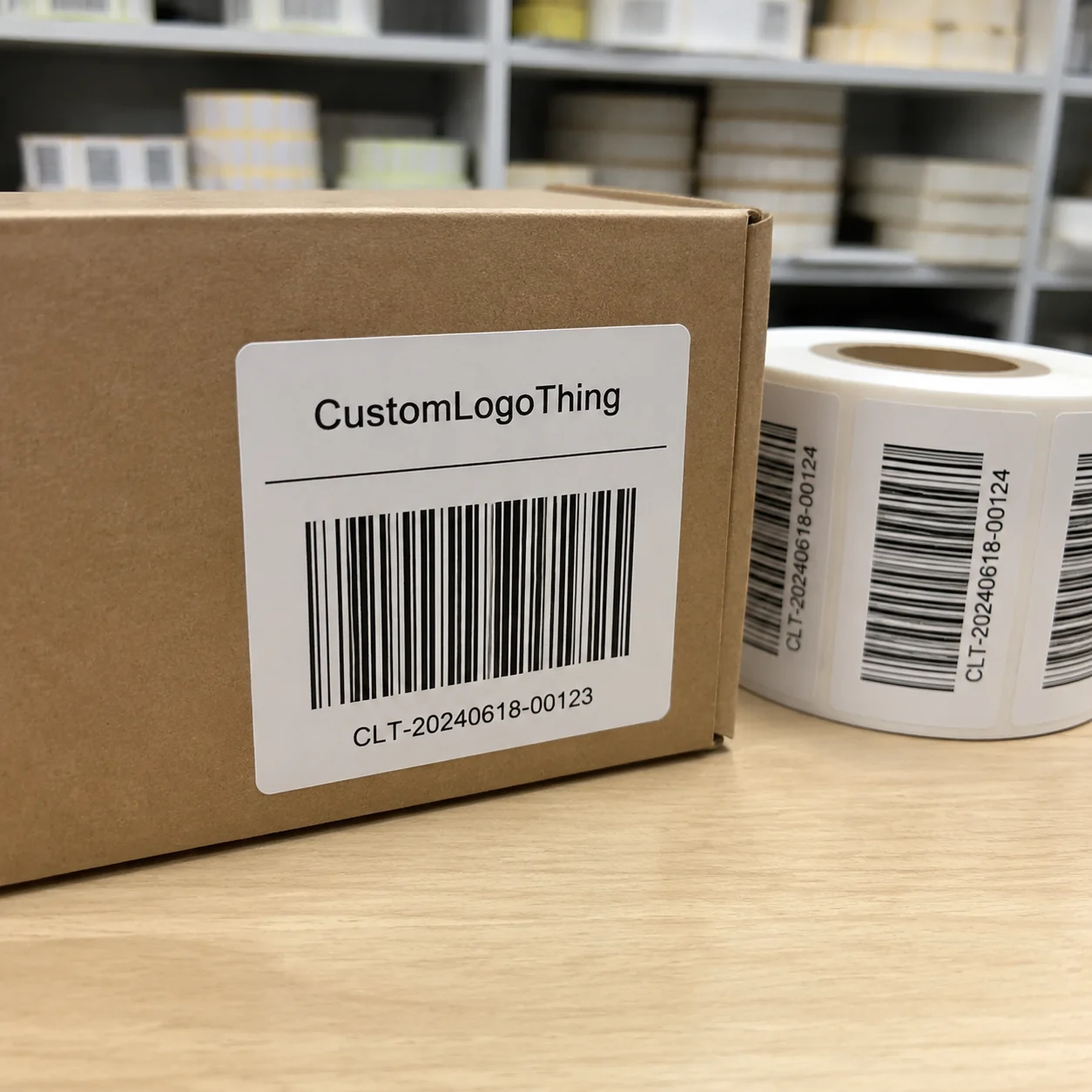
Printed Clothing Labels Quote for ecommerce is usually the first place a brand learns whether a label program is built for production or just for a mockup. The number on the page matters, but the details behind it matter more: what substrate is being quoted, whether setup is included, how much text will fit cleanly, and whether the label can survive laundering without turning rough or unreadable. For an ecommerce team, that is the difference between a stable repeatable component and a low-cost item that quietly creates returns, rework, and extra handling in the warehouse.
Printed labels have replaced a lot of generic tags because they simplify the inside of the garment. They reduce assembly steps, remove loose pieces from the pack-out flow, and give a cleaner finish on products that are sold directly to consumers. A label can seem minor until a warehouse is processing thousands of units a week. Then one extra sew operation, one misaligned insert, or one uncomfortable tag becomes a measurable cost.
They are also more versatile than many buyers expect. A well-specified printed neck label or care label can hold up through repeated washing while staying softer and lighter than a folded woven tag. That said, performance depends on the material, print process, and how much the garment moves in wear and wash.
Why ecommerce brands switch from generic tags to printed labels
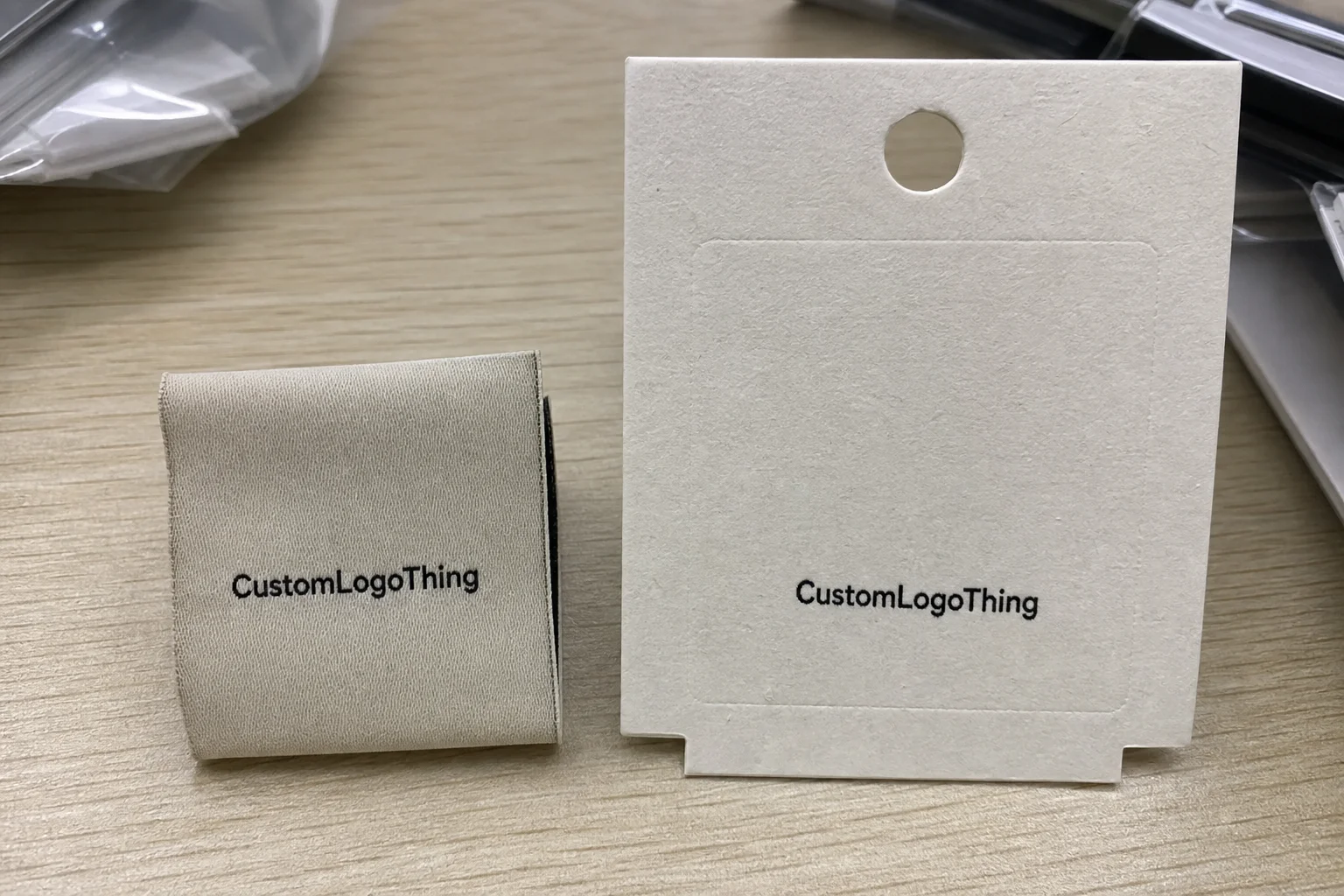
Most brands do not switch because they are chasing a trend. They switch because the old label format keeps getting in the way. A tag scratches. A tag folds badly under packing pressure. A tag tears out during fulfillment, or the customer cuts it off immediately after opening the parcel. None of those issues sounds large on its own, but together they create a steady stream of support noise that costs more than the label ever saved.
Printed labels solve an operational problem first. They reduce the number of separate pieces that have to be handled, attached, checked, and accounted for. That matters in direct-to-consumer fulfillment, where teams want fewer variables and fewer chances for a unit to be delayed or packed incorrectly. They also help standardize the look of a product range, so the inside presentation stays consistent across basics, loungewear, activewear, and children’s items.
The branding benefit is real, but it follows the operational one. If the label sits flat, feels soft, and keeps the required text legible after washing, the garment reads as more considered without asking the warehouse to do extra work.
A label that customers forget about is usually doing its job well. It is not drawing attention, creating irritation, or triggering avoidable complaints.
That is why a Printed Clothing Labels Quote for ecommerce should be read as a production document, not only a price sheet. It should show whether the supplier understands garment type, fabric behavior, proofing standards, and reorder consistency. If those pieces are missing, a low unit price means very little.
Printed label formats that fit high-volume apparel lines
Not every apparel program needs every label type. The right choice depends on where the label sits, how much information it must hold, and how much bulk the garment can tolerate at the seam or neck opening. The best label format is often the one that solves the fewest problems in the warehouse and on the wearer.
Care labels
Care labels are the practical standard for fiber content, washing instructions, and origin information. They are common on basics, sleepwear, uniforms, and any product that needs a clear compliance block. The design should stay compact. If the copy gets crowded, the label may still print cleanly, but readability drops fast once it is sewn in and the fabric starts flexing.
Brand and neck prints
Brand marks and neck prints work well on tees, athleisure, and promotional apparel where comfort matters more than a stitched insert. They reduce abrasion, give a cleaner retail feel, and remove one sewing step from the process. For large programs, that can be the difference between a predictable line and a line that keeps stalling on a small but repetitive operation.
Heat-transfer identification panels
Heat-transfer labels are often the right option for activewear, children’s apparel, and any garment sold as tagless. They let the brand combine logo, size, and care information in a single application. The tradeoff is that the transfer has to match the fabric. Stretch content, surface texture, wash temperature, and tumble drying all affect how the print behaves over time.
For brands comparing multiple label families, Custom Labels & Tags is a practical place to compare formats without reworking the brief for each style.
Consistency matters as much as the label type. If a T-shirt, a hoodie, and a two-piece set all use the same visual language for size marking and care text, the brand feels more organized. That tends to show up in fewer questions from customer service and fewer mistakes in replenishment.
Material, ink, and size specs that protect wash durability
Durability starts with the specification, not the artwork. Before a supplier quotes, the buyer should confirm the substrate, print method, label size, color count, and edge finish. Those details affect both performance and price more than most mockups do.
For sewn-in printed labels, polyester satin and taffeta are widely used because they balance print clarity with a softer hand-feel. Satin reads a little more polished. Taffeta is usually a bit crisper and can be easier to handle in some sewing applications. For tagless programs, the transfer system needs to bond cleanly to the garment fabric without cracking, peeling, or showing through on the outer face.
There is no single material that wins every time. Cotton garments, blends, performance knits, and brushed fabrics all behave differently. If a supplier cannot explain why one print process is better for a stretch tee and another is better for a children’s cotton tee, the durability claim should be treated carefully.
Wash resistance should be tied to a test method, not a promise. Ask whether the print has been evaluated against an AATCC laundering method or a comparable internal test, and ask how many wash cycles the label is expected to survive before fading, edge lift, or text loss becomes likely. The answer should vary by application. A promotional item and a premium activewear piece do not need identical performance targets, but both should have a clear standard.
Size affects legibility more than many teams expect. A 30 x 50 mm label can carry noticeably more readable information than a 25 x 40 mm label once fiber content, care symbols, and brand text are added. Leave enough breathing room around the copy. Small type below roughly 5 pt equivalent becomes fragile after sewing and laundering, especially on garments that move a lot at the seam.
Edge finishing changes the user experience too. Heat-cut edges reduce fray on synthetic materials. Folded edges look tidy on some sew-in labels, but they add bulk. That can be acceptable on outerwear and less acceptable on lightweight tees, where even a thin seam can be felt by the customer.
If the program includes carriers, inserts, or hangtag stock, paper sourcing should be documented clearly. FSC-certified paper is easier to audit than a vague recycled claim because the chain-of-custody framework gives procurement a cleaner paper trail. You can verify the standard through the FSC organization itself.
Practical rule: compare suppliers on the same spec sheet. If the substrate, finish, or text length changes, the quote is not comparable.
Printed clothing labels quote for ecommerce: cost, MOQ, and unit pricing
A Printed Clothing Labels Quote for ecommerce should separate the pieces of cost that buyers can actually forecast. Quantity, size, color count, substrate, finishing, and setup fees all affect the final number. A low unit price with a large plate charge can be the wrong choice if a brand is still testing fit, compliance copy, or SKU mix.
MOQ is usually the biggest lever. Small runs cost more per unit because setup work is spread across fewer labels. Larger runs lower the unit price, but only if the design is stable enough to justify the inventory. For a brand still adjusting artwork, sizing, or garment fabric, a lower MOQ can be cheaper in practice even if the per-piece price is higher.
| Format | Typical MOQ | Indicative unit price | Setup notes | Best fit |
|---|---|---|---|---|
| Printed satin care label | 1,000-5,000 | $0.10-$0.28 | $35-$120 setup, depending on artwork complexity | Core apparel, compliance text, soft hand-feel |
| Polyester neck print | 500-2,500 | $0.08-$0.22 | Low setup if the artwork is one color and final | Basic tees, fast-turn replenishment, cleaner packing |
| Heat-transfer label | 500-3,000 | $0.14-$0.35 | May need tighter proofing for placement and stretch | Activewear, children’s items, tagless programs |
| Woven label alternative | 1,000-10,000 | $0.12-$0.30 | Higher setup if thread colors or weave detail change | Premium branding, tactile finish, retail display |
Those numbers are directionally useful, not universal. A simple one-color label on a stable substrate can land near the lower end of the table, while a multi-color print with very fine text can move up quickly. A 5,000-piece order may come in around $0.11-$0.18 per unit for a straightforward care label, while a 500-piece test order can move above $0.30 once setup is distributed over fewer pieces.
The fastest way to get a realistic quote is also the least dramatic: send the exact label size, the artwork file, quantity by SKU, garment type, and delivery destination. If the supplier has to guess at any of those, the response will take longer and the number will be less reliable. The quote should also show repeat-order pricing separately from first-run pricing, because that is what protects margin on reorder.
For buyers comparing label systems across different product groups, the important question is whether the cost is being driven by the artwork or by the production method. That distinction matters. A lower unit price that only works at a higher MOQ is useful for a stable core line. It is less useful for a launch that may change after the first sales cycle.
Some buyers focus only on the cheapest quote and miss the hidden costs. Extra shipping from split shipments, a second proof round because of unclear copy, or a reprint caused by a minor placement error can erase the savings very quickly. A clean quote is usually the one that shows all of the moving parts upfront.
Process, timeline, and production steps from artwork to delivery
The production path should be simple enough for a buying team to follow without guesswork. The usual sequence is brief, artwork review, proof approval, production, quality check, and dispatch. If a supplier cannot explain that sequence clearly, delays usually show up later.
- Brief: Confirm label type, dimensions, garment use, quantity by SKU, and destination.
- Artwork review: Check font size, color count, text length, and whether the file is vector-ready.
- Proof approval: Sign off on layout, copy, and placement before production starts.
- Production: Print, cut, finish, and inspect against the approved proof.
- Quality check: Confirm registration, color consistency, and edge finish.
- Dispatch: Ship once the order passes the agreed tolerance level.
Lead time depends on order size and complexity. A repeat order with final artwork can often move in 7 to 10 business days after approval. A new label with revised copy, multiple colors, or special finishing more often lands in the 12 to 18 business day range. Larger multi-SKU programs can take longer, especially if every style needs a separate proof.
Most delays happen before production starts. Small text, poorly prepared files, and color matching issues tend to force a second proof round. That is manageable if the calendar allows it. It becomes a problem when the brand has already committed to a launch date and the label is the last item holding the shipment back.
Rush work is possible in some cases, but only when the artwork is final and the spec is clean. Buyers sometimes treat speed as a negotiation point. In practice, the real limit is whether the supplier can start immediately without correcting files or chasing missing information.
If the labels are part of a broader packout or retail shipping program, transit testing should not be ignored. The outer cartons, mailers, and inserts may need evaluation against ISTA protocols so the shipment arrives in usable condition. The label itself may be small, but it still lives inside a larger logistics system.
Approval milestone that helps ecommerce teams: design signs off on copy, operations signs off on placement, and purchasing signs off on quantity. That simple split prevents most production disputes before they begin.
What separates a reliable label supplier from a cheap reprint problem
Price alone is a weak predictor of supplier quality. The better signal is how the supplier handles proofing, batch consistency, and reorders. A dependable label partner can explain why one spec costs more than another without hiding behind vague language or a rushed quote.
Cheap reprint problems usually appear downstream. The first order looks fine, then the second batch shifts in color, the text sits too close to the edge, or the finish changes just enough to be noticeable. By then the cost is not only production. It is warehouse time, customer complaints, and the possibility of a full rework.
The lowest quote is often the one that creates the most expensive reorder.
A reliable supplier should be willing to talk about tolerance, not only appearance. That includes repeatability across batches, acceptable color variance, expected wash performance, and how the label will behave on the actual garment fabric. It also includes practical questions that matter to an ecommerce team: What file format do you need? How are revisions billed? What happens if the copy changes after the proof is approved?
These service signals matter more than polished sales language:
- Clear artwork requirements and file checks before proofing.
- Specific responses when copy, dimensions, or quantity change.
- Repeat-order matching that preserves the approved look.
- Plain language on setup fees, shipping, and MOQ.
- Enough technical depth to explain tradeoffs instead of glossing over them.
For brands that need continuity across multiple products, Custom Labels & Tags is useful as a reference point for keeping the label family consistent without rebuilding the specification every time. The best suppliers do not just quote the first order. They make the second one easier to place.
That is usually the sign of a stable partner: not someone who says yes to every request, but someone who can explain what will and will not survive production, washing, and reordering.
How to request samples, approve artwork, and place the first order
The smoothest first order is the one that arrives with enough detail to avoid back-and-forth. Start with the label dimensions, garment type, quantity by SKU, and the exact wording that must appear. If the artwork is still changing, ask for a proof first. That keeps design and purchasing aligned before any spend is committed.
Sample review should be practical. Check whether the text is readable at arm’s length. Compare the color against the brand standard. Feel the label against the skin if the garment is worn close to the body. Then check placement on the seam or neck area, because a label that looks correct flat can behave differently once stitched or transferred.
There is value in slowing the approval just enough to catch the issues that are expensive to fix later. Missing fiber content, poor spacing, cramped icons, or a font that is too light can all become production headaches if they are approved too quickly. A small pilot is usually the least expensive place to find those problems.
A simple internal flow usually works well:
- Design approves copy, typography, and logo placement.
- Operations approves fit, placement, and pack-out handling.
- Purchasing approves MOQ, price, and lead time.
For premium products or compliance-heavy categories, a wash test before scaling volume is worth the time. A short pilot can be cheaper than correcting thousands of labels after launch. The first order should tell you whether the label is easy to live with in production, not just whether it looks good on a screen.
FAQ
How do I compare a printed clothing labels quote for ecommerce suppliers accurately?
Compare the landed cost, not just the unit price. Include setup, sampling, shipping, and any revision fees. Use the same specification for every supplier so MOQ, material, print method, and size are being priced on equal terms.
What artwork files are needed for ecommerce clothing label quotes?
Vector artwork is preferred, along with the label dimensions, color references, and any required care or compliance text. If the file is not final, ask for a proof first so text size, spacing, and placement can be checked before production.
What is a typical MOQ for printed clothing labels for ecommerce brands?
MOQ depends on the format and production method. Smaller runs are often available if the buyer accepts a higher unit price, but the real question is whether the order size matches the launch risk. Ask how MOQ changes by design complexity so you can decide whether to launch one SKU or consolidate several styles.
How long is the usual turnaround after proof approval?
Repeat orders with final artwork can often move in 7 to 10 business days after approval, while new work with revised copy or special finishing usually takes longer. Ask for lead time in business days and confirm whether shipping is included or quoted separately.
Can printed labels hold up to repeated washing and resale pressure?
They can, if the material and print method are matched to the garment from the start. Ask for the substrate, the test method, and the expected wash performance before placing volume. That is the practical value of a Printed Clothing Labels Quote for ecommerce: fewer surprises, cleaner pack-outs, and a specification your team can reorder without reworking every detail.