Buyer Fit Snapshot
| Best fit | Printed Corrugated Boxes Wholesale projects where brand print, material claims, artwork control, MOQ, and repeat-order consistency need to be specified before quoting. |
|---|---|
| Quote inputs | Share finished size, material target, print colors, finish, packing count, annual reorder estimate, ship-to region, and any compliance wording. |
| Proofing check | Approve dieline scale, logo placement, barcode or warning zones, color tolerance, closure strength, and carton packing before bulk production. |
| Main risk | Vague material claims, crowded artwork, missing packing details, or unclear freight terms can make a low unit price expensive after revisions. |
Fast answer: Printed Corrugated Boxes Wholesale: Pricing, MOQ, Specs should be specified like a repeatable production item. The safest quote records material, print method, finish, artwork proof, packing count, and reorder notes in one written spec.
Production checks before approval
Compare the actual filled-product size with the drawing, then confirm tolerance on folds, seals, hang holes, label areas, and retail display edges. Reserve space for logos, QR codes, warning copy, and material claims before decorative graphics fill the panel.
Quote comparison points
Review material grade, print process, finish, sampling route, tooling charges, carton quantity, and freight assumptions side by side. A quote is only useful when the supplier can repeat the same color, closure quality, and packing count on the next order.
Printed Corrugated Boxes Wholesale is not a side note in packaging. It is usually the point where a brand either tightens its shipping operation or keeps feeding money into labels, tape, inserts, and avoidable damage. A plain carton can look cheaper on a quote sheet. Then the team pays for extra handling, more SKUs, and a pack line that never quite settles down. That is not savings. That is a very expensive habit with better paperwork.
If you buy packaging for repeat shipments, retail-ready programs, subscription kits, or fulfillment work that needs fast picking, Printed Corrugated Boxes wholesale often makes more sense than buyers expect. The box becomes part of the workflow. It cuts down confusion in the warehouse, keeps the unboxing experience consistent, and gives the shipment a clear brand signal without piling on more materials. I have watched teams save more time from better carton identification than they ever saved from squeezing a few cents off the unit price.
A box that costs a few cents less but slows the line, confuses the warehouse, or arrives damaged is not a bargain. It is a costly mistake with nicer typography.
For buyers comparing quotes, the real job is not hunting the lowest unit price and calling it a win. The real job is buying the right spec once, then keeping the line moving. That is the lens behind this page, because printed corrugated boxes wholesale only pays off if the box, the print, and the order size fit the operation.
Why Printed Corrugated Boxes Wholesale Saves Money
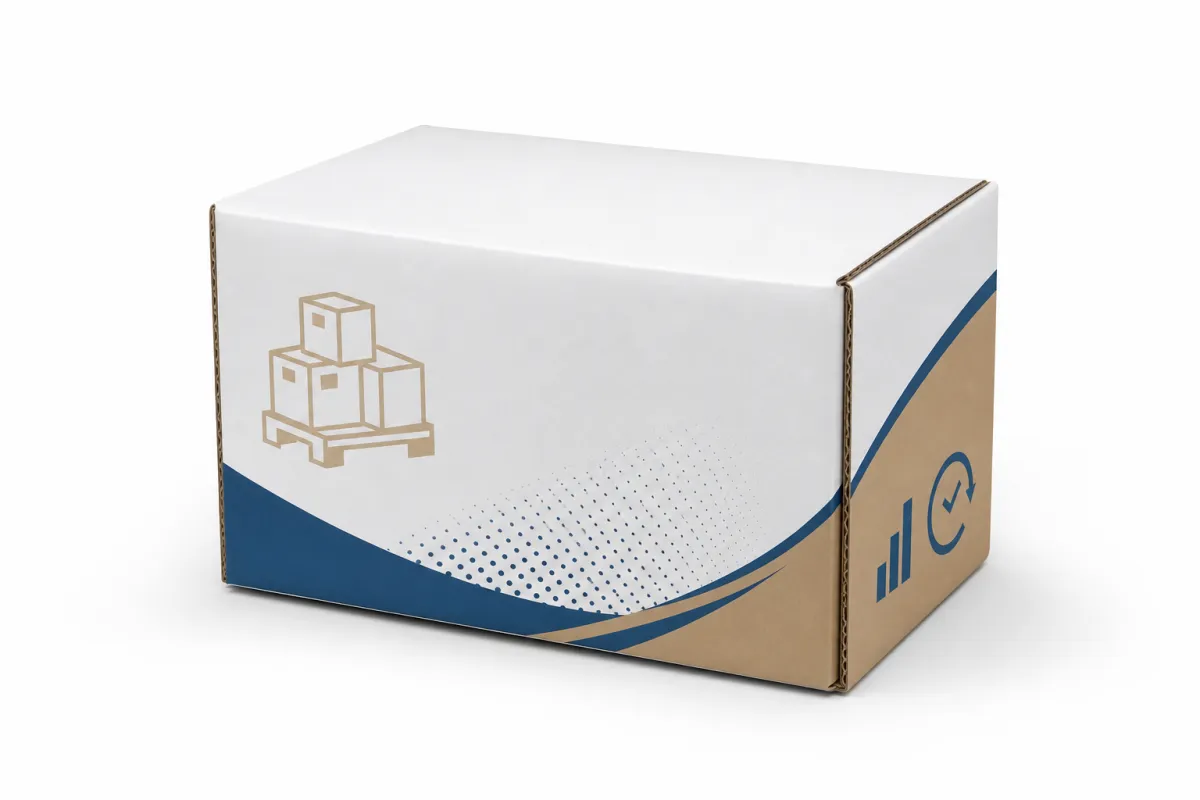
Printed corrugated boxes wholesale can cost less overall than plain cartons once you count the pieces most teams forget. Labels, tape, void fill, separate inserts, and correction labor all chew through budget. A branded carton often removes one or two of those costs right away. That can matter more than shaving two cents off the box itself.
Wholesale buying also works well for repeat shipments. If the same product ships every week, packaging should stop acting like a special project. Solid programs use printed corrugated boxes wholesale to lock in a standard pack-out, reduce operator guesswork, and keep every shipment looking like it came from the same company instead of three vendors who never spoke to each other. I have seen that kind of consistency calm down a messy warehouse faster than a new software rollout.
Retail programs feel that benefit too. Store-ready packaging, ecommerce shipping, and subscription kits all ask the carton to do more than contain a product. A printed box helps with SKU identification, shelf presentation, and warehouse speed. A loader spots the right carton faster. A picker verifies the size faster. A customer gets a cleaner unboxing. None of that sounds dramatic until the numbers get large.
The box sits in both systems at once: sales and operations. Printed corrugated boxes wholesale supports both. The print can reduce line errors, reinforce brand recognition, and keep mixed inventory under control. If you run several sizes, color-coded panels or bold size marks can save real time on the floor.
Most buyers end up in one of three buckets:
- Repeat shipments with stable dimensions and predictable demand.
- Retail or ecommerce brands that need the carton to carry part of the branding load.
- Fulfillment operations that care about speed, clear labeling, and fewer packing errors.
If your program changes every month, wholesale still works, but the spec needs to stay flexible. If the size is stable and the artwork is locked, printed corrugated boxes wholesale starts paying back fast. That is why buyers often pair it with Wholesale Programs and broader Custom Packaging Products planning instead of treating each carton as a one-off.
Not every job needs premium graphics. Some only need one-color branding, a size marker, and a clean layout. That is enough. The goal is not to overbuild the box. The goal is to make printed corrugated boxes wholesale earn its keep.
Printed Corrugated Boxes Wholesale Product Details
Corrugated boxes are not all built the same, and buyers who know the basic formats usually get better quotes. Printed corrugated boxes wholesale commonly covers four box types: mailer boxes, regular slotted cartons, custom die-cut shippers, and retail-ready display cartons. Each one solves a different problem. Pick the wrong one, and the pricing mess starts early.
Mailer boxes work well for ecommerce and subscription programs because they open cleanly, stack neatly, and look good on camera. Regular slotted cartons are the workhorses of shipping. They are simple, efficient, and usually the most economical choice when the product fits standard dimensions. Custom die-cut shippers give a tighter fit and stronger presentation, but tooling and design prep take more time. Display cartons are built for retail presentation and need the print and structure to pull double duty.
Board choice matters just as much. For many printed corrugated boxes wholesale jobs, single-wall corrugated is enough. Common options like C flute or B flute offer a practical balance of strength and print surface. If the product is heavy, stacked high, or shipped through rough freight lanes, double-wall can be the safer call. It is thicker, stronger, and less likely to collapse under pressure, though it adds cost and bulk.
Printing method is the other major variable. Flexographic printing is usually the volume choice. It is efficient on repeat runs and handles simple artwork well. Litho-lamination fits sharper graphics and premium retail presentation better. Digital print suits smaller runs, fast changes, and complex artwork without the same plate setup burden. None of those options wins every job. The right answer depends on quantity, artwork, and how much the box has to sell the product before anyone opens it.
Here is a simple comparison buyers can use during the quoting stage:
| Print Method | Best Fit | Typical MOQ | Look and Finish | Tradeoff |
|---|---|---|---|---|
| Digital print | Short runs, pilots, test packaging | Low to moderate | Clean, flexible, fast setup | Higher unit cost at scale |
| Flexographic print | Repeat shipping cartons, volume programs | Moderate to high | Solid, economical, dependable | Less detail than premium methods |
| Litho-lamination | Retail packaging, strong brand impact | Higher volume | Sharp graphics, premium appearance | More setup and higher cost |
Inside print, window cutouts, and custom inserts also come up often in printed corrugated boxes wholesale. Inside print works for a brand reveal or setup instructions. Window cutouts fit retail display better. Inserts matter when the product needs to stay centered, protected, or separated during transit. Each one adds value if it solves a real problem. If it is just decoration, it probably does not belong in the quote.
For shipping-heavy programs, many buyers also compare printed corrugated boxes wholesale against Custom Shipping Boxes because the product mix may call for more than one carton style. That is normal. A clean packaging lineup usually uses one format for warehouse fulfillment and another for presentation.
For buyers who need a standard baseline, the most common material targets are single-wall corrugated with ECT ratings matched to the weight and stacking load. For heavier packs, double-wall and stronger board grades are worth the extra cost. A good packaging partner should explain the tradeoff plainly instead of tossing around vague words like “better” and “stronger.” Those words do not protect product in transit.
Printed corrugated boxes wholesale works best when the carton style, board grade, and print method are chosen together. Splitting those decisions almost always creates rework later.
Specifications That Protect Print Quality and Strength
Specs are where most packaging mistakes start. Printed corrugated boxes wholesale should never be quoted from a vague idea and a shrug. The box needs finished dimensions, board thickness, flute type, print coverage, and strength targets before the numbers mean anything useful. Otherwise, every quote is just a guess with a tie on.
Start with size. Finished dimensions matter more than buyers think. An oversized carton wastes corrugate, pushes freight cost up, and can force more void fill. A tight box can bruise product, crush corners, or make packing miserable. In actual production, a few millimeters can change how the product sits, how the lid closes, and how the stack behaves on a pallet.
Board specification should be stated clearly. A lightweight ecommerce kit may work with single-wall 32 ECT C flute, while a heavier industrial pack or multi-item shipper may need 44 ECT or double-wall construction. If the box has to survive rough handling, high humidity, cold-chain storage, or a long warehouse dwell time, say that upfront. A carton that looks fine on a desk can behave badly in a damp trailer. That is not theory. That is a real-world headache I have seen more than once.
Artwork details matter just as much as structure. Printed corrugated boxes wholesale pricing changes with the number of colors, ink coverage, and how much of the surface gets printed. A one-color logo on one panel is a different job from full-wrap graphics across every panel. Buyers should also say whether the artwork wraps around corners, whether reverse panels need print, and whether the design depends on specific color matching. If the brand cares about consistency, ask about Pantone targets and proof expectations.
File prep saves time too. The best quotes happen when the buyer sends the dieline, finished dimensions, vector artwork, and any special requirements together. Bleed, trim, and safe areas should be clear. If the design has barcodes, lot coding space, or legal copy, those need to be reviewed before production. Miss that, and a clean job turns into a second-round proofing mess.
There are a few quality questions buyers often skip, then regret later:
- Will the carton be palletized, hand-packed, or automated?
- How much stacking pressure will the top tier see?
- Is the shipment exposed to humidity, condensation, or temperature swings?
- Does the box need to pass transit testing such as ISTA procedures?
- Is the fiber source important for your brand or customer requirements?
That last point matters more than it used to. If your program has sustainability targets, ask about FSC-certified fiber and recycled content options. For reference, FSC certification can support responsible sourcing claims, but it is not automatic. The supplier has to actually offer the right material and documentation.
Printed corrugated boxes wholesale also benefits from pallet planning. A box that nests poorly on a standard pallet can create shipping inefficiency at the carton stage and at the truck stage. If the carton size can be tuned to a pallet pattern, the savings are often larger than buyers expect. That is one of those practical details that never looks exciting in a quote and still saves real money.
Clean specifications do three things at once: they reduce delays, cut sample rounds, and prevent the classic “we thought that was included” argument. That argument wastes time for everyone. Better to over-clarify once than pay for confusion twice.
Printed Corrugated Boxes Wholesale Pricing and MOQ
Pricing for printed corrugated boxes wholesale comes from a handful of variables, and all of them matter. Size, board grade, print method, number of colors, quantity, finishing, tooling, and freight all move the number. There is no honest flat rate for a custom carton because there is no standard carton hiding underneath it.
As a rough buying guide, smaller digital runs may start with a lower MOQ but a higher unit price. That makes sense if the project is still a pilot. Flexo often becomes more economical once volume rises because setup gets spread across more boxes. Litho-lamination usually lives in the higher-volume, higher-presentation lane, where the box has to look premium enough to justify the extra spend.
For practical planning, these are common ranges buyers see in the market for printed Corrugated Boxes Wholesale:
- Digital short runs: often 100-500 units for prototypes, launches, or small replenishment orders.
- Flexo runs: commonly 1,000-5,000 units or more, depending on box style and print count.
- Litho-laminated programs: usually make more sense above 2,500-5,000 units because setup needs volume to pay back.
Those are ranges, not commandments. A simple brown box with one-color print behaves very differently from a full-color retail carton with coating and a custom insert. The key is to ask for the MOQ by SKU, not just by order. A project with three box sizes may have different minimums for each size.
Unit pricing also changes in steps. If a buyer moves from 1,000 to 2,500 to 5,000 units, the per-box cost may drop enough to justify the extra inventory. That is why it pays to test several quantity tiers during the quote. The cheapest total order is not always the cheapest per box, and the cheapest per box is not always the smartest move if inventory risk is high.
Here is where buyers often overspend:
- Over-specifying strength. A carton does not need double-wall if the product is light and the shipment is stable.
- Adding finishes that do not solve a problem. Coatings and special treatments should earn their place.
- Running too many SKUs. Small variations in size create setup and storage cost fast.
- Skipping dieline review. A bad spec can turn an affordable job into rework and delay.
As a practical matter, printed corrugated boxes wholesale often lands in a broad pricing band. Small branded mailers may sit in the low single-digit range per unit on short runs, while higher-volume cartons can fall well below that depending on board and print coverage. Heavy-duty or highly decorated cartons cost more. That is normal. If a quote looks suspiciously low, check what was left out. Usually something was.
Shipping matters too. Freight can turn a decent carton price into a bad landed cost if the packaging is oversized or shipped inefficiently. Buyers should ask whether the quote includes delivery, palletization, and export handling if needed. A clean per-box number is useful. A clean landed cost is better.
The best way to control pricing is to standardize the spec. Printed corrugated boxes wholesale works best when the design is stable, the dimensions are intentional, and the print coverage is not changing every order. That consistency is how buyers get repeatable cost instead of surprise revisions.
Process and Timeline for Wholesale Box Orders
A good order process keeps the project calm. Printed corrugated boxes wholesale should move through a clear sequence: brief, quote, artwork review, proof approval, production, quality check, and shipping. If the supplier cannot explain that sequence, the buyer is probably going to spend too much time chasing updates.
The timeline depends on the print method and the box complexity. Simple repeat orders can move faster, especially if the artwork is already approved and the carton spec has not changed. Custom die-cuts, premium graphics, and multi-color print naturally take longer. Tooling, plates, and proofing all add steps. That is not a problem unless someone pretends those steps do not exist.
Typical lead times for printed corrugated boxes wholesale often fall into these rough ranges after proof approval:
- Digital short runs: about 7-12 business days in many cases, depending on workload and finishing.
- Flexo production: often 10-15 business days for straightforward jobs.
- Litho-laminated cartons: frequently 15-25 business days, especially if tooling or proof rounds are involved.
Those ranges can move. Freight, peak demand, artwork changes, and material availability all affect the schedule. A buyer should plan backward from launch or replenishment dates instead of from the day the mood strikes to order. Packaging has no sympathy for wishful thinking.
Where do delays usually happen? Three places, mostly. First, missing or incomplete artwork files. Second, unclear dimensions or product weights. Third, late proof approvals or design changes after tooling starts. Press time is often not the issue. The handoffs are.
A strong supplier should state the important parts up front:
- Estimated lead time by print method.
- Sampling or prototype timing.
- What kind of artwork files are needed.
- Whether rush production is possible and what it costs.
- How quality checks are handled before shipment.
That last point is worth pressing on. Printed corrugated boxes wholesale should include some kind of inspection for print alignment, board integrity, and carton dimensions. A buyer does not need a lecture. A buyer needs the confidence that the first carton and the ten-thousandth carton behave the same way.
For products that ship fragile, expensive, or sensitive to fit, a sample or prototype is smart. Not optional. A $40 or $80 sample can save a lot more than that once the production run starts. If the product is new, pack it first, test it in the real carton, then scale. That is a cleaner path than finding a bad fit after 3,000 boxes are already in motion.
Printed corrugated boxes wholesale also works better when one person owns the decision. Packaging projects stall when marketing wants one thing, operations wants another, and procurement is trying to save pennies without changing specs. One final approver keeps the project moving. Otherwise, the order turns into a committee sport, and nobody enjoys that.
If a buyer needs a fast benchmark, the safest route is to send finished dimensions, quantity, print colors, and artwork together. That lets the supplier quote the actual job, not an imaginary version of it. Printed corrugated boxes wholesale is a precision purchase, not a vibe.
Why Choose Us for Wholesale Corrugated Packaging
Buyers usually want the same three things from printed Corrugated Boxes Wholesale: accurate quotes, dependable production, and a supplier who understands that a box has to work before it has to impress. That is the right standard. Packaging should not need a pep talk to do its job.
At Custom Logo Things, the practical advantage is simple: we focus on specs that make sense, not padded language. If the job needs a certain board grade, we say that. If the print method fits volume or artwork complexity better, we say that too. A buyer should get a quote that reflects the real carton, not a generic placeholder with a nicer font.
Support matters here. Buyers often need help on dielines, print area, box style, or basic material selection. That is normal. Most teams are not shopping for packaging every day, and a packaging partner should know that. The useful part is clear advice on what the box can do, what it cannot do, and where a small change can lower cost without hurting performance.
Trust comes from repeatability. Printed corrugated boxes wholesale should not feel like a lottery on the second order. The board should be consistent, the print should register correctly, and the dimensions should stay within the agreed tolerance. If a program needs recurring replenishment, that consistency matters more than a flashy quote.
Here are the tradeoffs buyers should think through before choosing a supplier or a spec:
- Speed vs. finish: digital is fast; premium graphics usually take longer.
- Cost vs. protection: lighter board lowers spend until it starts raising damage rates.
- Flexibility vs. volume: smaller runs are easier to change, but unit cost climbs.
- Presentation vs. warehouse efficiency: nice graphics do not help if the carton slows fulfillment.
That is why printed corrugated boxes wholesale should be treated as a packaging system, not a single SKU. A brand might use one carton for ecommerce, another for bulk shipping, and a third for retail. That is not overkill. That is real operations.
We also see buyers get more value when they connect packaging decisions across the full lineup. A carton project may need to sit alongside inserts, labels, void fill, or a secondary mailer format. If that is the case, it helps to review Custom Packaging Products as part of the same buying conversation instead of splitting the work into disconnected pieces.
For some programs, the right outcome is a clean one-color box. For others, it is a high-impact retail carton. The point is not to push one style for every order. The point is to match the spec to the job. That is how printed corrugated boxes wholesale stops acting like a cost center and starts behaving like a controlled part of the supply chain.
And yes, buyers care about sourcing. If your company needs recycled content, FSC documentation, or transit testing reference points, those details should be part of the conversation early. That is how the order stays boring in the best possible way. Boring packaging is usually reliable packaging.
Next Steps to Get an Accurate Quote Fast
If you want a clean quote for printed corrugated boxes wholesale, send the right inputs the first time. That sounds obvious. Still, a surprising number of requests arrive with only a rough size and a hope that the rest will sort itself out. It will not.
Start with finished dimensions. Then add product weight, board preference, print colors, estimated quantity, and ship-to location. If you already have a dieline, include it. If the box has to fit a pallet pattern, mention that too. Those details let the supplier quote the actual job and help avoid the back-and-forth that drags projects out.
Useful quote inputs for printed corrugated boxes wholesale include:
- Finished box dimensions, not just product size.
- Weight per packed unit and any stacking concerns.
- Board grade or strength target, if known.
- Print method preference and number of colors.
- Artwork files, dieline, and any special instructions.
- Quantity by SKU, not just total project quantity.
If the product is expensive, fragile, or new to the line, order one prototype first. That is especially smart for first-time printed corrugated boxes wholesale programs. The prototype tells you whether the fit is right, whether the print area is clean, and whether the pack-out feels practical for the team. A good first sample prevents a very expensive second guess.
A pilot run is also useful if the packaging is brand new. Test the carton in the real workflow, then adjust if needed. Maybe the insert needs a tighter fit. Maybe the lid is a touch too loose. Maybe the board should step up one grade. Those small corrections are cheap during sampling and annoying after the warehouse has already trained on the wrong version.
Once the spec is confirmed, scaling into printed corrugated boxes wholesale is straightforward. The data is already there. The artwork is already approved. The box is already proven. That is the best place to be before placing a larger replenishment order.
The most practical takeaway is simple: lock the dimensions, choose the print method based on volume and finish, and approve a real sample before you buy at scale. If printed corrugated boxes wholesale is going to save money, it has to be built on a spec that matches the shipment instead of a guess that only looks good on paper.
FAQ
What is the typical MOQ for printed corrugated boxes wholesale?
MOQ depends on print method, board type, and box style. Digital jobs can start lower, while flexo and litho programs usually make more sense at higher quantity. Ask for the MOQ by SKU, because multiple sizes in one order can change the minimum. If you are testing a new product, a pilot run is usually smarter than forcing a huge first order for printed corrugated boxes wholesale.
How much do printed corrugated boxes wholesale orders cost?
Cost depends on box size, board grade, print colors, quantity, finishing, and freight. There is no honest one-price answer. The fastest way to get a real number is to share finished dimensions, artwork, and target volume together. Smaller runs cost more per box. Larger quantities usually unlock better unit pricing for printed corrugated boxes wholesale.
How long does printed corrugated boxes wholesale production take?
Simple repeat orders move faster than custom die-cuts or full-color printed jobs. Artwork approval and sample sign-off are often the biggest timeline risk, not the printing itself. Build in enough time for proofing, production, and freight so the launch does not depend on a miracle. That is especially true for printed corrugated boxes wholesale with new tooling or multiple SKUs.
Can I order custom sizes with printed corrugated boxes wholesale?
Yes, custom sizing is standard for most corrugated packaging programs. Provide the product dimensions, required protection, and any pallet or warehouse constraints so the box is sized correctly. A custom size often reduces empty space, lowers damage risk, and can cut shipping waste. That is one of the main reasons printed corrugated boxes wholesale stays popular with repeat shippers.
What do you need to quote printed corrugated boxes wholesale quickly?
Send the finished size, quantity, board preference, print colors, artwork files, and ship-to location. If you already have a dieline, include it. That removes a lot of back-and-forth. The more precise the spec sheet, the fewer quote revisions you will need. For printed corrugated boxes wholesale, precision saves time and keeps the pricing honest.


