Buyer Fit Snapshot
| Best fit | Printed Corrugated Boxes With Logo projects where brand print, material claims, artwork control, MOQ, and repeat-order consistency need to be specified before quoting. |
|---|---|
| Quote inputs | Share finished size, material target, print colors, finish, packing count, annual reorder estimate, ship-to region, and any compliance wording. |
| Proofing check | Approve dieline scale, logo placement, barcode or warning zones, color tolerance, closure strength, and carton packing before bulk production. |
| Main risk | Vague material claims, crowded artwork, missing packing details, or unclear freight terms can make a low unit price expensive after revisions. |
Fast answer: Printed Corrugated Boxes With Logo: Branding That Ships should be specified like a repeatable production item. The safest quote records material, print method, finish, artwork proof, packing count, and reorder notes in one written spec.
Production checks before approval
Compare the actual filled-product size with the drawing, then confirm tolerance on folds, seals, hang holes, label areas, and retail display edges. Reserve space for logos, QR codes, warning copy, and material claims before decorative graphics fill the panel.
Quote comparison points
Review material grade, print process, finish, sampling route, tooling charges, carton quantity, and freight assumptions side by side. A quote is only useful when the supplier can repeat the same color, closure quality, and packing count on the next order.
Printed corrugated Boxes With Logo do a lot more work than people give them credit for. They protect product, carry a brand, and set expectations before the carton is ever opened. A plain brown box can move inventory just fine, sure, but it rarely says anything about the care behind the order. A branded corrugated box says the shipment was planned with intent, packed with some discipline, and sent out as part of a larger customer experience.
That matters because packaging is often the first physical touchpoint a customer has with a brand. I have seen a simple one-color logo on a clean mailer make a product line feel more organized and more expensive without changing the product itself. I have also seen a generic carton make a solid order feel forgettable. The box is not the whole story, but it does shape the first impression in a way people remember.
The best carton is usually not the fanciest one on the quote sheet. It is the one that fits the product properly, survives the route, and prints cleanly on the board you actually need. Printed Corrugated Boxes with Logo can be understated, premium, or somewhere in between, but they still have to do the job. If the structure is wrong, the branding will not rescue it. If the branding is sloppy, the structure may still work, but the package will feel half-finished.
Printed Corrugated Boxes With Logo: What They Are and Why They Stand Out
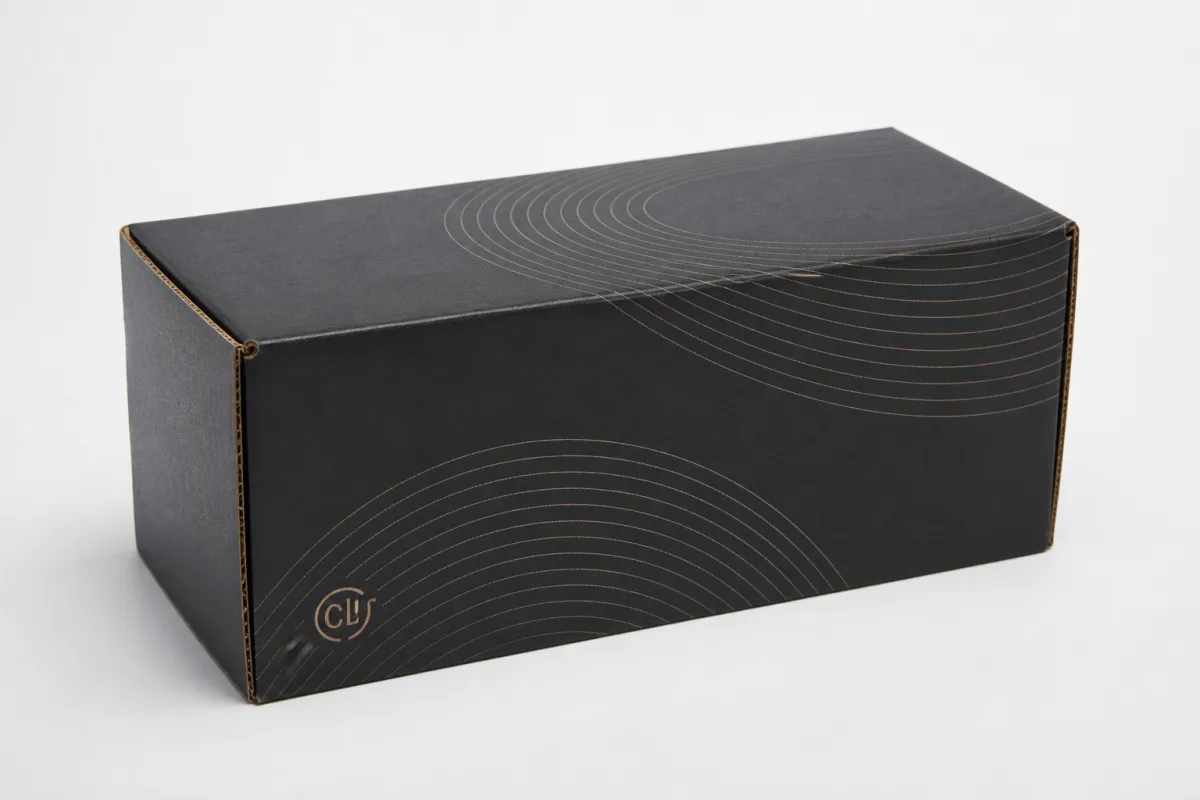
Printed corrugated boxes with logo are shipping or mailer boxes made from corrugated board and printed with a brand mark, wordmark, pattern, or short message on the outside. Corrugated board provides the strength, cushioning, and stacking performance. The print gives the carton identity. Together, they create packaging that can move through warehouses and parcel networks while still looking deliberate when it arrives.
There is a meaningful difference between a plain carton, a branded mailer, and a fully printed corrugated box. Plain cartons are usually built for one thing: getting from point A to point B without complaint. Branded mailers often focus on the top panel and the unboxing moment, with a logo or short message placed where the customer sees it first. Fully printed corrugated boxes with logo can carry artwork across multiple panels and create a more complete visual presentation. None of these is automatically better. Each serves a different packaging need.
From a buyer's point of view, the right option depends on the product, the shipping route, and the level of presentation the brand actually needs. A subscription brand may want a tidy one- or two-color print that looks polished without adding a lot of cost. A heavy ecommerce shipment moving through parcel carriers may need a stronger board and a simpler print strategy. Printed corrugated boxes with logo work well because they solve a real operational problem while still giving the brand a visible surface to work with.
That is where they stand out. Corrugated board provides practical protection against compression, stacking, and the rough handling that happens in real transit. Logo printing turns that working container into a repeat brand signal. Even if the carton gets a few scuffs on the way, the identity still comes through. A shipment can arrive with a little wear and still feel intentional, and that is a better result than a perfect carton that says nothing at all.
Used well, the visual strategy becomes part of the package rather than an afterthought. A simple logo on kraft board can feel honest and grounded. A crisp two-color print on white corrugated can feel cleaner and more polished. A full exterior print can add energy, as long as the layout respects folds, seams, and the limits of the substrate. Printed corrugated boxes with logo are not only about appearance. They help recognition, support consistency, and raise perceived value without requiring extra sleeves or wraps.
"A logo cannot rescue weak board or a sloppy structure. It can, however, make a sound box feel more considered than it really is."
If the carton itself is doing the shipping work, the structure should drive the decision first. If the box needs to handle transit, stacking, and presentation, Custom Shipping Boxes are usually the most direct starting point. If you want to compare broader packaging formats, materials, and finishing options, Custom Packaging Products gives a wider view of what is possible.
Printed corrugated boxes with logo also make sense across categories that depend on repeat recognition: apparel, candles, supplements, specialty foods, and compact electronics. In those businesses, the box is often the first branded surface a customer sees. That is a big reason these cartons are so common in ecommerce. They make the shipment feel like part of a system instead of a random warehouse carton pulled from stock.
How Printed Corrugated Boxes With Logo Are Made: The Process and Timeline
Printed corrugated boxes with logo follow a familiar production path, even when the artwork looks simple. Structure comes first. Then board selection. Then the print method. After that comes proofing, production, finishing, packing, and freight. Skip one of those steps and the cost usually shows up later, either in delays, waste, or a carton that does not behave the way it should in transit.
The first stage is artwork and dieline prep. The dieline is the box map, and it matters more than many first-time buyers expect. If a logo lands on a fold, a seam, or a flute line, the print can look broken, stretched, or fuzzy. That is why print-ready files need safe zones, bleed, and clear panel placement. Printed corrugated boxes with logo almost always look better when the artwork is built around the carton rather than forced onto it afterward.
Board selection follows. Common choices include E-flute, B-flute, and C-flute, depending on the box style and how much rigidity the shipment needs. Light retail mailers often use thinner flutes for a cleaner print face. Heavier shippers may need stronger board grades such as 32 ECT or 44 ECT. If the box is going through parcel networks, it is smart to think beyond appearance and check performance against transit testing such as ISTA protocols or similar packaging methods. A box that looks sharp but fails in transit is just a repair bill waiting to happen.
Print method comes next. Flexographic printing is common for larger runs and simpler graphics. Digital printing fits shorter runs, variable artwork, and faster setup. Litho-lamination is usually chosen when the goal is sharper image quality on a corrugated structure, especially for retail-facing packaging. Printed corrugated boxes with logo can be built with any of those methods, but each choice changes the timeline, the price, and the way color behaves on the board.
Proofing is where many delays hide. A lot of buyers treat the proof like a routine formality. It is not. It is the point where scale mistakes, color issues, cut-line problems, and logo placement errors get caught before the whole batch is printed. For printed corrugated boxes with logo, a proof that feels slightly off should be treated as a reason to pause. Once a bad file is approved, the factory usually prints exactly what was signed off.
Typical production windows vary with complexity:
- Digital short runs: often 5-10 business days after proof approval.
- Flexographic runs: often 10-15 business days, depending on plate prep and order size.
- Litho-laminated jobs: often 15-25 business days because of extra print and lamination steps.
That is the first pass on timing. Repeat orders usually move faster because the structure, files, and sometimes the print setup are already in place. A reorder of printed corrugated boxes with logo can move through production much faster than the original run if the size, board, and artwork stay the same. The best repeat jobs are uneventful in the best sense: same spec, same approval chain, same result.
Delays usually show up in familiar places. Missing dielines, slow artwork approval, last-minute logo edits, changes to board grade, and sample revisions all add time. The more custom the structure, inks, and finish, the more planning the run needs. That is not factory drama. It is simply the rhythm of packaging production.
Cost and Pricing for Printed Corrugated Boxes With Logo
Pricing for printed corrugated boxes with logo comes down to a few basic drivers: box size, board grade, print coverage, number of colors, finishing, order quantity, and whether tooling or plates are needed. If a quote leaves out those details, you are not comparing packaging. You are comparing assumptions with different labels on them.
The easiest way to think about cost is to separate setup cost from unit cost. Setup cost covers artwork prep, plates, dies, sample work, and machine setup. Unit cost is what each box costs once production is running. Printed corrugated boxes with logo usually get cheaper per unit as the quantity increases, but not in a neat straight line. Freight, plate charges, and pallet space can flatten the savings if the order is small or the box is oversized.
Here is a practical range, assuming common box sizes and straightforward artwork:
| Print Method | Best For | Typical Setup | Typical Unit Cost | Typical Timeline |
|---|---|---|---|---|
| Digital | Short runs, test launches, multi-SKU orders | Low setup, often no plates | $1.10-$3.25 each | 5-10 business days |
| Flexographic | Medium to high volume, simple logos, solid coverage | Plate charges often $150-$600 per color | $0.35-$1.20 each | 10-15 business days |
| Litho-laminated | Premium retail looks, sharper image detail | Higher setup, print prep, and lamination steps | $1.75-$4.75 each | 15-25 business days |
Those figures are ranges, not promises. A small two-color mailer can land well below a premium printed shipper. A larger box with heavy ink coverage, a special coating, or a custom insert can cost considerably more. Printed corrugated boxes with logo are not a commodity unless the spec is very simple and the quantity is large. The moment you start adding finishes, the math changes.
Short runs usually cost more per box because the setup is spread across fewer units. That is the tradeoff. A 500-piece order may look expensive beside a 5,000-piece run, but the smaller order can still be the better move if you are testing a product, changing branding, or launching cautiously. Printed corrugated boxes with logo often make the most sense when the buyer knows whether the goal is unit savings, visual presentation, or both.
Hidden costs are where budgets get surprised. Design revisions can add hours. Sample boxes can cost extra. Special coatings can nudge the total upward. Rush orders are rarely cheap. Freight matters more than people expect, especially for larger cartons that fill pallets quickly. If the cartons are bulky, shipping can quietly become one of the biggest line items in the order.
One practical habit helps a lot: compare quotes on the same spec sheet. Do not let one supplier quote a different board thickness, a different print count, and a different carton size, then call it apples-to-apples. It is not. Printed corrugated boxes with logo should be judged on the same dimensions, the same board grade, the same print method, and the same delivery terms.
A useful quote usually breaks out:
- box dimensions and style
- board flute and ECT rating
- print colors and coverage
- plate, die, or setup fees
- sample or proof charges
- freight or delivery terms
That level of detail is not overthinking it. It is how you keep printed corrugated boxes with logo from turning into a budget leak.
Design Factors That Change Print Quality and Brand Impact
Design is the part of the process where printed corrugated boxes with logo either look sharp or drift into "good enough" territory. Corrugated board is not a smooth paperboard sheet. It has texture, absorbency, and visible structural lines. The same logo that looks crisp on a coated insert can behave differently on kraft corrugated, white corrugated, or a laminated surface.
Logo size matters. A small logo can disappear on a rough board face. A logo that is too large can overwhelm the carton and make the brand feel louder than the product deserves. The right size is usually the one that stays readable from a short distance without crowding folds or seams. Printed corrugated boxes with logo work best when there is enough space around the mark for the eye to register it quickly.
Contrast matters even more. Light ink on natural kraft can feel understated, but it can also fade visually if the logo is too thin. Dark ink on white corrugated usually prints cleaner and reads faster. High-contrast layouts are safer for shipping cartons because they hold up better under mixed lighting, handling, and quick phone-camera photos. People judge boxes from six feet away and from three inches away. Both views count.
Board texture changes the result. Uncoated kraft stock gives a warm, natural look, but the ink can absorb more heavily. Coated white corrugated creates a cleaner print face, though it may feel less organic. Printed corrugated boxes with logo can lean premium, earthy, or utilitarian depending on that choice alone. The carton does not need to be everything. It only needs to match the brand story and the shipping job.
File prep is where many otherwise solid projects go sideways. Use vector art for logos whenever possible. Keep tiny text away from folds. Leave safe margins around edges. Make sure the printer has a clean dieline, not just a screenshot of the carton. If brand color matters, give the supplier color references or Pantone targets instead of hoping the screen preview will translate perfectly. Screens lie. Print does not.
Finishing can help, but it can also add cost without adding much value. Spot gloss can make a logo stand out. Matte coating can feel more refined. A varnish can protect part of the printed surface. Every extra finish adds complexity, though. If the goal is a clean shipping carton, printed corrugated boxes with logo may need little more than good board, smart placement, and disciplined artwork. Fancy is not the same thing as effective.
"A busy box is rarely a stronger box. More ink does not automatically mean more brand value."
A clean layout often wins. One strong logo on the top panel, a short message on the side, and a structured repeat pattern can feel more premium than printing every inch of the carton. That is especially true for printed corrugated boxes with logo used in ecommerce. The customer sees the exterior, opens it once, and remembers whether the packaging felt considered or chaotic.
If sustainability sits anywhere in the brief, finish choices matter too. Simple printed corrugated boxes with logo are usually easier to recycle than heavily laminated or mixed-material builds. If a clean recycling path matters, check material choices against guidance from organizations such as the FSC and confirm whether coatings or laminations will affect local recycling rules.
Step-by-Step: Ordering Printed Corrugated Boxes With Logo
The cleanest ordering process starts with function, not artwork. First decide what the box has to do. Is it shipping a fragile item? Sitting on a retail shelf? Handling stacked storage? That answer drives size, board strength, and closure style. Printed corrugated boxes with logo look far better when the structure is right, because the branding sits on a box that behaves properly in the real world.
Step one is measuring the product and building a packaging spec around it. Account for product dimensions, inserts, void fill, and any need for protective clearance. A box that is too tight can cause damage. A box that is too loose wastes space and money. Printed corrugated boxes with logo should fit the product with enough tolerance for packing speed and transit movement, not just because the CAD drawing looked tidy.
Step two is choosing the corrugated style and board strength. A simple mailer might work with a lighter flute. A shipping carton may need a stronger board grade, especially if the box will be stacked or moved through carrier hubs. If you are unsure, ask for samples or compare the project against standard corrugated performance specs. Packaging buyers do not get paid for guessing. They get paid for keeping returns low and shipments intact.
Step three is artwork prep. Ask for the dieline before you design anything. Build the logo, message, and any pattern around the fold lines and flap layout. Keep one person in charge of final approval. If six people edit the proof, the run slows down and the art gets muddy. Printed corrugated boxes with logo can only look good if the file stays controlled from the start.
Step four is proof review. This is not the time to shrug and say "close enough." Check spelling, logo scaling, panel orientation, colors, and any legal copy. Check barcodes if they are included. Check that the print sits inside the safe zone. If the proof needs correction, fix it before production. One wrong proof can waste a whole run, and that is a lot more expensive than one more day spent reviewing the details.
Step five is sampling. If the order is expensive, repeatable, or tied to a launch, approve a sample or prototype before full production. That is the cheapest insurance in packaging. Printed corrugated boxes with logo often look fine on screen and slightly different in hand, especially when the substrate is kraft or the design has fine detail. A sample shows the real finish, the real color, and the real fold behavior.
Step six is production and receiving. Plan where the cartons will go the moment they land. Too many buyers treat packaging as if it has nowhere to live until someone trips over a pallet in the back room. Have storage ready. Have a count check ready. Have a receiving plan ready. Printed corrugated boxes with logo are useful only if they are on hand when orders start shipping.
Here is the short version of the buying sequence:
- Define product size and shipping needs.
- Choose board grade, flute type, and box style.
- Prepare print-ready artwork from the dieline.
- Review and approve the proof carefully.
- Sample if the order matters or the design is new.
- Confirm storage and receiving before delivery.
That process is dull. Good. Dull is what you want from packaging procurement. Printed corrugated boxes with logo should feel exciting to the customer, not to the operations team trying to keep the warehouse moving.
Common Mistakes With Printed Corrugated Boxes With Logo
The most common mistake is designing for the screen instead of for the substrate. A logo that looks crisp in a PDF can print muddy on natural corrugated stock if the contrast is too weak or the lines are too thin. Printed corrugated boxes with logo are especially unforgiving when the artwork was built by someone who has never watched ink behave on board. Pretty monitor, ugly carton. It happens constantly.
The next mistake is choosing a box that looks smart in a mockup but fails in real shipping. A box can look premium and still crush, bulge, or waste half the freight cubic inches. Packaging is not a mood board. It is a working container. Printed corrugated boxes with logo need to survive handling, stacking, and carrier abuse before they deserve compliments.
Rushed approvals create expensive problems. If a proof goes through with the wrong color, the wrong size, or a misplaced logo, the whole run may need rework. That is how small mistakes become scrap. Printed corrugated boxes with logo are most efficient when the proof stage is treated like a quality checkpoint rather than a formality.
Another classic mistake is chasing the lowest quote without checking board quality, setup fees, or lead time. The cheapest number can hide a weak spec. It can also hide poor color consistency or a schedule that only works if nothing goes wrong. That is not a bargain. That is a lottery ticket. Printed corrugated boxes with logo should be compared by total landed cost, not by the headline price alone.
Overbranding shows up often too. If every panel is crowded with logos, taglines, and graphics, the box can feel noisy or cheap. One strong mark often does more than four crowded faces. Sometimes the smarter design is the one that stops a half-inch earlier. Printed corrugated boxes with logo do not need to shout to be effective.
There is also a structural mistake that shows up in ecommerce all the time: buying a beautiful box that is the wrong size for the product and then stuffing it with filler. That raises cost, slows packing, and weakens the unboxing experience. If the box is oversized, the branding feels disconnected from the product. Printed corrugated boxes with logo should fit the item and the process, not force the process to work around them.
Most of these mistakes come from treating packaging as an afterthought. Once production starts, every small error gets multiplied. That is why printed corrugated boxes with logo reward buyers who slow down early and move faster later.
Expert Tips and Next Steps for Printed Corrugated Boxes With Logo
If the design, size, or print method is new, start with a pilot run. A small test order is cheaper than 5,000 boxes that are technically usable but visually off. Printed corrugated boxes with logo benefit from this approach because color, board texture, and fold behavior can all change the final result. One short run can save a brand from a very expensive lesson.
Compare at least two or three suppliers on the same spec sheet. Same dimensions. Same board grade. Same print count. Same quantity. Same delivery terms. That is the only fair way to judge price. Printed corrugated boxes with logo can look wildly different on quotes that are not actually comparable. A lower price on a weaker spec is not savings. It is a delayed problem with a neat line item.
Ask for samples and print examples from similar projects. Not just any box. Similar board, similar print method, similar size. If a supplier can show a clean example on the same substrate, you will learn more in 30 seconds than you will from a polished sales deck. Printed corrugated boxes with logo are tactile products. Touch matters.
Be specific before you request a quote. Define the box dimensions, logo placement, quantity target, shipping deadline, and whether the order is a one-time launch or a repeatable item. The more precise the brief, the better the quote. That is true in packaging and almost nowhere else, which is probably why people keep forgetting it. Printed corrugated boxes with logo work best when the brief is clear enough that the factory does not need to guess.
Think about the box as part of a system, not a standalone object. The exterior branding should match the insert, tape, label, and product presentation. If the box says premium and the inside says chaos, the customer notices. Printed corrugated boxes with logo are stronger when the whole shipping flow feels coordinated.
For teams that want a broader sourcing view, it helps to look at the packaging lineup as a set rather than a single item. The outer box, insert, mailer, and label all influence the final experience. That is where Custom Packaging Products becomes useful: you can compare formats without locking yourself into one style too early.
Standards are useful here as guardrails. If the shipment faces parcel abuse, check transit testing against ISTA methods. If sustainability matters, confirm material claims and sourcing certificates before you sign off. If the box will be recycled widely, make sure the inks, coatings, and laminations do not complicate the path. Printed corrugated boxes with logo are strongest when the brand story and the engineering story agree.
My practical advice is simple: define the spec, lock the art, sample the result, then order with enough lead time to avoid a rush fee. That keeps printed corrugated boxes with logo from turning into a frantic expense and turns them into a repeatable brand asset. Done well, they protect the product, sharpen recognition, and make the shipment look like it was planned by someone who cares about how things arrive.
So the takeaway is straightforward: start with the carton structure, not the logo file, then build the artwork around a real dieline, approve a sample, and compare quotes on the exact same spec. If you do those four things, printed corrugated boxes with logo are much more likely to arrive looking the way you expected, and they will keep doing that on repeat orders without a lot of drama.
How much do printed corrugated boxes with logo usually cost?
Pricing depends on box size, board strength, print coverage, and order volume. Short runs usually cost more per box because setup is spread across fewer units. For many projects, printed corrugated boxes with logo fall somewhere around $1.10-$3.25 each for digital short runs, $0.35-$1.20 each for flexographic production, and $1.75-$4.75 each for litho-laminated packaging, depending on the spec. Ask for setup fees and freight too, because those can change the real landed cost fast.
What is the typical MOQ for printed corrugated boxes with logo?
MOQ varies by print method and supplier. Digital production can work at lower quantities, while flexo and litho setups often need higher volumes to make the math work. If you want a pilot or test run, ask for sample production or a small-batch option. The right MOQ for printed corrugated boxes with logo is the lowest quantity that still gives you a reasonable unit price and acceptable setup efficiency.
How long does production take for printed corrugated boxes with logo?
Lead time depends on proof approval, print method, and whether tooling or new dies are needed. Simple repeat orders can move faster than custom first runs. In practice, printed corrugated boxes with logo can ship in about 5-10 business days for digital work, 10-15 business days for flexo, and 15-25 business days for litho-laminated jobs. Delays usually come from artwork changes, missing specs, or slow approvals.
What artwork file works best for printed corrugated boxes with logo?
Vector files are usually best because they stay sharp at any size. Keep important text away from folds, edges, and flute lines. If brand color accuracy matters, give the supplier color references or Pantone targets. A clean dieline and a print-ready PDF save time and reduce proof mistakes. Printed corrugated boxes with logo are much easier to get right when the artwork is built for the carton, not just dropped onto it.
Can printed corrugated boxes with logo still be recyclable?
Often yes, but it depends on inks, coatings, adhesives, and any extra laminates or inserts. Simple printed corrugated boxes with logo are usually easier to recycle than heavily laminated builds. If sustainability matters, confirm the full structure, not just the outer carton. Check material claims with your supplier and use standards-based sourcing where possible.


