Buyer Fit Snapshot
| Best fit | Printed Corrugated Inserts with Logo projects where brand print, material claims, artwork control, MOQ, and repeat-order consistency need to be specified before quoting. |
|---|---|
| Quote inputs | Share finished size, material target, print colors, finish, packing count, annual reorder estimate, ship-to region, and any compliance wording. |
| Proofing check | Approve dieline scale, logo placement, barcode or warning zones, color tolerance, closure strength, and carton packing before bulk production. |
| Main risk | Vague material claims, crowded artwork, missing packing details, or unclear freight terms can make a low unit price expensive after revisions. |
Fast answer: Printed Corrugated Inserts with Logo: Material, Print, Proofing, and Reorder Risk should be specified like a repeatable production item. The safest quote records material, print method, finish, artwork proof, packing count, and reorder notes in one written spec.
Production checks before approval
Compare the actual filled-product size with the drawing, then confirm tolerance on folds, seals, hang holes, label areas, and retail display edges. Reserve space for logos, QR codes, warning copy, and material claims before decorative graphics fill the panel.
Quote comparison points
Review material grade, print process, finish, sampling route, tooling charges, carton quantity, and freight assumptions side by side. A quote is only useful when the supplier can repeat the same color, closure quality, and packing count on the next order.
Printed corrugated Inserts With Logo do more than stop a product from sliding around inside a carton. They lock the item in place, soften the abuse of transit, and turn the opening moment into something deliberate instead of improvised. If the outer carton is the courier's first read on the brand, the insert is the customer’s first real encounter with it. That is why printed corrugated inserts with logo often carry more branding weight than the shipper itself. If the carton and insert need to be developed together, pair the insert work with Custom Shipping Boxes so the fit is engineered as one system instead of two separate guesses.
That matters most for fragile sets, premium kits, and products that have to arrive centered, clean, and intact. A skincare bundle, a candle set, or a compact electronics kit can look expensive online and oddly cheap in the box if it shifts, tilts, or arrives scuffed. Printed corrugated inserts with logo are not decoration with freight attached. They are a control surface. They reduce breakage, trim returns, and stop customers from opening a carton full of loose parts and regret.
Pretty packaging that collapses in transit is just expensive confetti.
From a packaging buyer’s perspective, the insert has two jobs that must happen at once: hold the product and tell the brand story. Printed corrugated inserts with logo do both without adding a lot of complexity to the line. The hard part is Choosing the Right structure, the right board, and the right print method so the insert does the protective work first and the branding second. That order matters. It always has. I have seen gorgeous packs fail on a vibration table because the insert looked right but the board grade was wrong, and that gets kinda expensive once claims start stacking up.
Printed Corrugated Inserts with Logo: Why They Matter
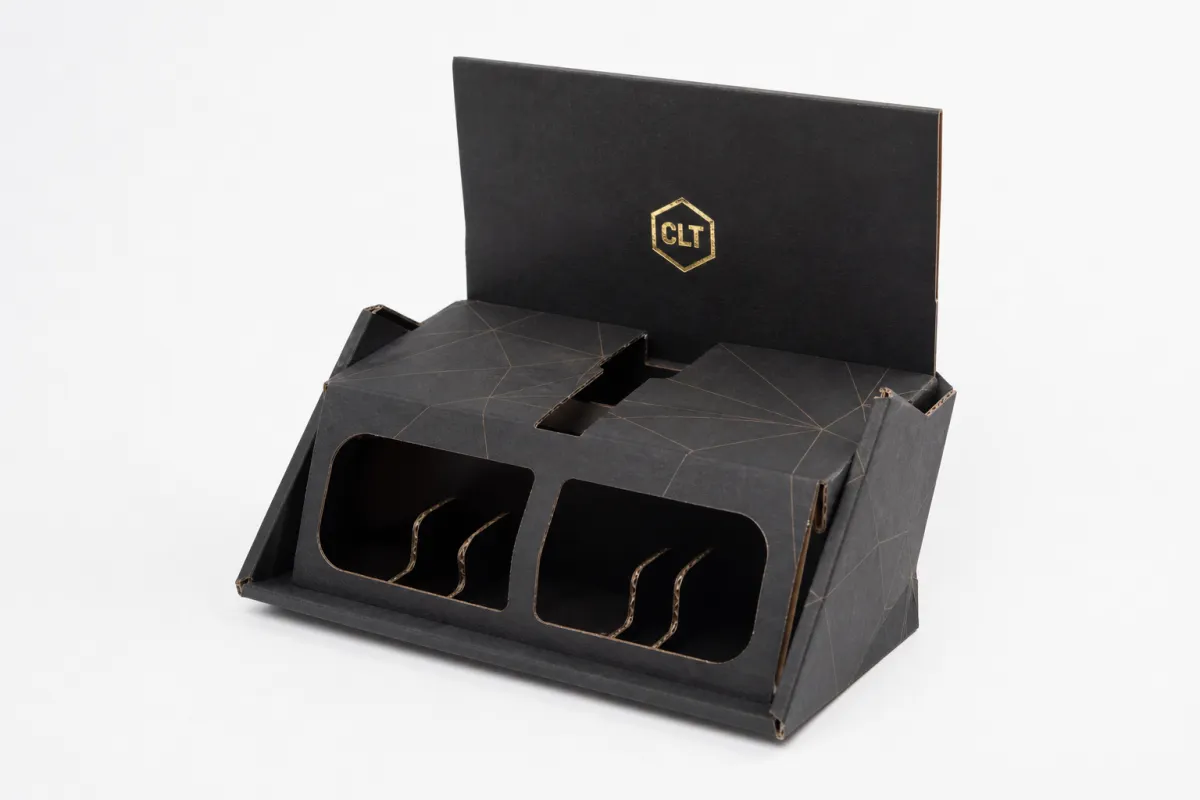
Printed corrugated inserts with logo often shape customer perception more sharply than the outer carton. The lid comes off, the insert appears, and the customer sees the internal architecture before they see the product itself. If the product is loose, the insert looks generic, or the fit feels careless, the whole package reads as cheaper. If the product sits snugly, the logo appears where it should, and the structure looks purposeful, the brand feels far more considered. That first second carries unusual weight.
Corrugated inserts serve a practical role first. They hold the item in place, absorb vibration, and reduce movement during shipping and handling. Most shipping damage is not dramatic. It is not a carton falling from a loading dock in cinematic slow motion. It is repeated compression from stacked cases, friction inside the shipper, and a hundred small jolts that add up. Printed corrugated inserts with logo help by building friction points, cavities, folds, and tabs that lock the product in position.
Think about a fragile skincare set. Without an insert, bottles tilt, rub, and knock into each other. Labels scuff. Pumps snap. The customer opens the box and gets something closer to a drawer dump than a premium reveal. With printed corrugated inserts with logo, each item sits in a slot or cavity. The bottles stay upright, surfaces stay cleaner, and the brand mark shows up right where the eye lands. The same logic applies to electronics, glassware, supplements, and gift sets. If the product moves, the packaging is only halfway doing its job.
There is also a cost layer that gets ignored too often. Printed corrugated inserts with logo can reduce damage claims, replacement shipments, and customer service noise. That is not a theoretical savings line on a slide deck. If a product breaks in transit, the cost of replacing it includes the item, freight, labor, support time, and the trust loss that follows a disappointed buyer. A well-designed insert is cheaper than a steady stream of refunds.
For brands that care about the inside of the box as much as the outside, printed corrugated inserts with logo are one of the clearest ways to make the pack feel intentional. They can be plain and restrained or bold and graphic. Either way, they should look like they belong in the system. When they look like an afterthought, customers notice. They notice fast.
One more practical point: printed corrugated inserts with logo become especially useful when a product has multiple components. A kit with a main item, an accessory, a cable, and a leaflet turns messy fast if the parts are not separated. The insert gives each item a defined home. That means fewer missing pieces, faster assembly, and a cleaner opening experience. In a warehouse, it also means fewer questions from a team trying to figure out which side faces up.
How Printed Corrugated Inserts with Logo Work
Printed corrugated inserts with logo work because several design choices line up at once. Board grade, flute type, die-cut shape, and print method each influence fit, strength, and appearance. If one piece is wrong, the insert feels off. When they align, the insert handles the unglamorous task of keeping everything centered while still looking branded.
Start with board structure. E-flute is common when the goal is a cleaner print surface and a tighter fit in a compact carton. B-flute offers more crush resistance and often fits heavier items better. C-flute can work for larger or weightier products where stacking strength matters more than a slim profile. A lot of printed corrugated inserts with logo use E-flute or B-flute because those grades balance print quality and support without eating too much internal space.
Fit Creates Protection
The insert protects the product by controlling movement. That comes from tabs, cutouts, folds, sleeves, and cavities. A good insert creates contact points where the item should be held, not where it will get scraped. It also keeps dead space from opening up around the product. Too much clearance and the item shifts. Too little clearance and the product gets crushed or the pack turns into a wrestling match for the assembly team.
Printed corrugated inserts with logo should fit the product and the carton at the same time. That means the design cannot be based on guesswork or a rough outer-box size alone. Internal dimensions matter more than most people expect. Product footprint, closure style, shipping environment, and the way the customer removes the item all shape the final structure.
Print Adds Clarity
Print options change how the brand mark appears. Flexographic print is the workhorse for simple spot-color graphics, especially at higher quantities. Digital print helps with shorter runs or designs that need more variation because it removes some of the setup burden. Spot-color branding keeps the look clean and can hold cost down if the design stays minimal. Full-coverage graphics feel sharper when the insert is part of the unboxing story, but they are not always the smartest use of budget.
Printed corrugated inserts with logo do not need to be loud to be effective. A small logo on the top flap or a repeat mark on the visible face is often enough. Visibility matters more than visual shouting. Some brands print only where the customer actually sees the insert on opening. That usually saves money and avoids turning the inside of the box into a billboard nobody asked for.
The production flow is straightforward once the structure is set. The product gets loaded, the insert folds or assembles, and the carton closes. In a well-run pack-out, the insert should make loading easier, not fussier. If the team has to fight the insert every time, the design is wrong. Packaging should help operations instead of slowing them down because someone wanted a prettier dieline.
For buyers comparing options, printed corrugated inserts with logo should be judged as a system, not as a standalone print item. The insert has to survive transit, fit the product, and still support the brand’s visual language. That is why the full pack-out deserves attention: carton, insert, and product together. If you are also sourcing matching shipping cartons, handle that at the same time. It cuts the usual back-and-forth that burns weeks and still ends with a strange fit.
Printed Corrugated Inserts with Logo: Cost, Pricing, and MOQ
Printed corrugated inserts with logo can be surprisingly affordable or maddeningly expensive, depending on the spec. The main cost drivers are board thickness, print coverage, die complexity, order quantity, and whether the insert is a single folded structure or a multi-piece assembly. If the spec is fuzzy, the price will be fuzzy too. A quote without clean inputs is basically a polite estimate wearing a tie.
Lower volume usually means higher unit cost. Nobody enjoys that, but setup has to be paid for somewhere. A custom die-cut shape needs tooling, setup, and proofing. Once the run gets larger, those fixed costs spread across more units and the unit price falls. Printed corrugated inserts with logo also tend to cost more when the design has large print areas, tight registration, or multiple components that need to be packed flat and assembled later.
Typical Cost Range
For practical planning, simple printed corrugated inserts with logo often land in these rough ranges at around 5,000 units, depending on size and print coverage:
| Insert Type | Best For | Typical Unit Price | Notes |
|---|---|---|---|
| Simple die-cut insert, 1 color print | Light products, basic retail kits | $0.12-$0.22 | Lower setup burden; clean logo placement |
| Folded branded insert, medium complexity | Cosmetics, candles, small electronics | $0.18-$0.35 | Good balance of protection and presentation |
| Multi-piece custom insert with larger print area | Fragile sets, premium bundles, mixed SKUs | $0.28-$0.55 | Higher tooling and assembly time |
| Short-run prototype or small MOQ | New product launches, sample testing | $0.40-$1.20 | Useful for testing fit before full production |
Those numbers are not promises. They are planning ranges. Printed corrugated inserts with logo can sit below or above them depending on board grade, quantity, and whether the design needs special finishing. A simple insert in a heavy-duty board can cost more than a more decorated piece in a lighter board if the structural demand is higher. That is why line-by-line quote comparison matters.
What Changes the Quote
- Board grade: E-flute usually costs less than heavier structures, unless the product needs more compression resistance.
- Print method: Flexo is often cheaper for simple artwork at scale; digital can fit small runs better.
- Die complexity: More folds, tabs, and cutouts mean more setup and more waste risk.
- Quantity: Higher volume lowers unit price, while low MOQ orders carry a larger share of setup cost.
- Assembly: If the insert needs hand folding or secondary assembly, labor shows up quickly in the quote.
Printed corrugated inserts with logo should be quoted with exact material and production details, not vague phrases like "premium board" or "branded insert." Ask vendors for the board grade, print method, waste allowance, assembly requirements, and delivery terms. If the sample is included, say so. If it is not, say so. Clarity saves time and makes apples-to-apples comparison possible.
MOQ reality is simple. Small runs are useful, but they cost more per piece. Larger runs make more sense if the insert design will stay stable across several product drops. If you launch a seasonal kit every three months, printed corrugated inserts with logo need enough flexibility to handle those refreshes without chewing through budget. If the design is stable, bigger quantities usually win. If the product is still changing, keep the first run smaller and test before committing to a long run.
One more buying note: if a supplier refuses to break down how the quote was built, that is a mild warning sign. Not a full alarm, but certainly not reassuring. The best quotes explain where the cost sits and what triggers a price shift. That is especially true for printed corrugated inserts with logo, where the same-looking shape can behave very differently in production.
Printed Corrugated Inserts with Logo Process, Timeline, and Production Steps
The production path for printed corrugated inserts with logo is not complicated, but it has more moving parts than people expect. The process usually begins with product measurements, then structural concepting, dieline creation, artwork placement, sample approval, and final production. Miss a step and the schedule stretches. Skip the sample and you often pay later in waste, rework, or a painfully awkward fit.
The first step is getting the real measurements. That means product dimensions, product weight, carton size, and internal clearance, not just whatever the spec sheet says the item is supposed to be. If the product has a cap, pump, cable, or accessory, include that too. Printed corrugated inserts with logo only work when the structure is built around the actual object, not the marketing description of it.
Expected Timeline
Simple printed corrugated inserts with logo can move fairly quickly once the artwork and dimensions are ready. A realistic framework is:
- Specification and dieline setup: 1-3 business days.
- Prototype or sample creation: 3-7 business days.
- Sample review and revisions: 2-5 business days, sometimes longer if the fit is off.
- Final production: often 8-15 business days for standard runs after approval.
- Freight and delivery: depends on destination and shipping mode.
That is the normal path. It slows down when the insert is highly custom, when the carton and insert are being developed together, or when the artwork is incomplete. Printed corrugated inserts with logo are usually delayed by missing dimensions, logo files that are not print-ready, or late approvals after the sample arrives. Those are boring reasons. They are also the common ones.
Delays also appear when teams change the design after sample approval. The impulse makes sense. Someone notices the logo is too small, or the cavity needs to be a little deeper, and the order goes back into motion. Every change creates a ripple. A new cut line can mean another tool check, another proof, and another round of sign-off. If the timeline is tight, make the decisions early and keep them stable.
Printed corrugated inserts with logo follow the same broad stages as plain inserts, but print alignment adds a layer of precision. The logo has to land cleanly on the visible face, and the fold sequence has to keep the graphic in the right place when the insert is assembled. A design can look perfect in a flat proof and still fail when the creases shift the print position by a fraction of an inch. That is why samples matter. The box does not care how good the PDF looked.
Testing is another part of the process that gets skipped until a problem appears in transit. For shipping validation, common references include ISTA packaging test methods and compression guidance tied to ASTM standards. General packaging resources are available at ISTA, and broader recycling and materials guidance sits at EPA recycling resources. If sustainability is part of the brief, FSC-certified board is worth asking about, and the standard is outlined at FSC. Printed corrugated inserts with logo do not need every reference on every job, but the language helps when discussing test strength, recyclability, and material sourcing.
I still remember one cosmetics launch where the board spec looked fine on paper but failed the corner-drop test because the cavity was just loose enough for the bottles to tap each other. The sample had passed a cursory inspection, so nobody caught it until the first transit trial. A half-millimeter is nothing on a spreadsheet; in a box, it can be the whole story.
Key Factors That Decide the Right Insert Spec
The right spec for printed corrugated inserts with logo begins with the product, not the branding. Weight, fragility, and shape come first. A perfume bottle, a charger, and a candle each demand different support and different compression behavior. If the product is heavy or oddly shaped, the insert has to control movement without making the pack impossible to assemble. Fancy means nothing if the product arrives cracked.
Carton size and internal clearance come next. Too much space wastes board and invites motion. Too little space compresses the product or makes the insert impossible to seat properly. Printed corrugated inserts with logo need enough tolerance to allow for manufacturing variation, but not so much slack that the item rattles. That balance is where most good packaging lives.
Branding decisions matter too. Logo size, placement, and ink coverage all change the final look and the price. A small one-color mark on the top flap is usually efficient and clean. A full-face print with multiple colors can strengthen a premium presentation, but it also raises setup requirements and risk. Printed corrugated inserts with logo should match the experience you want the customer to have. Minimal works when the product is already the hero. Bold works when the unboxing is part of the show.
What I Would Ask Before Approving the Spec
If I were signing off on printed corrugated inserts with logo, I would ask four plain questions:
- Does the insert stop movement in transit, or does it only look tidy on a drawing?
- Can the warehouse team assemble it quickly without cursing the packaging department?
- Is the logo placed where the customer actually sees it?
- Does the board choice match the product weight and shipping method?
Sustainability belongs in the spec too, but it should be handled practically. Corrugated board is generally recyclable, which is a sensible starting point. Heavy coatings, mixed materials, and unnecessary laminated layers make disposal more complicated. Printed corrugated inserts with logo that use paper-based board and responsible inks are easier to explain to customers and easier to recycle in standard paper streams, depending on local collection rules. If recycling is part of the promise, the structure has to support that promise instead of quietly undermining it.
Handling speed matters as well. If the insert takes too long to fold or load, it will annoy the warehouse team and slow production. That is not a small issue. A beautiful insert that doubles pack-out time is expensive in a very literal way. Printed corrugated inserts with logo should be easy to remove from the carton, easy to place, and easy for the customer to recycle after use. A good insert is almost boring in operation. That is the compliment.
Finally, think about the shipping channel. A retail-ready mailer has different demands than a carton going through parcel carrier networks or palletized freight. Compression, vibration, and drop risk vary by route. Printed corrugated inserts with logo that work well for local shipping may need thicker board or tighter retention for parcel transit. There is no one perfect structure. There is only the one that matches the product, the box, and the shipping reality.
Common Mistakes With Printed Corrugated Inserts with Logo
The most common mistake with printed corrugated inserts with logo is the obvious one: people measure the outer carton and ignore the product itself. That leads to sloppy fit, extra space, and movement. The carton size is not the same thing as the internal support requirement. A box can be technically correct and still be a bad package if the insert fails to hold the item properly.
Another mistake is overprinting every surface. More ink is not always more premium. Sometimes a single clean logo on the visible face looks sharper and costs less. Printed corrugated inserts with logo should feel intentional, not hungry for attention. If every panel is shouting, the design often looks busier than luxurious. Quiet branding can be stronger, especially inside the box where the product already has the spotlight.
Skipping a physical fit test is a classic problem. A design can look perfect on screen and still fail when the product goes into the insert. Tabs may sit too tight. The cavity may be half an inch off. The fold order may create a bulge where there should be a flat surface. Printed corrugated inserts with logo should always be tested with an actual product, not just a rendering and a hope.
Stacking strength gets ignored too often. If the carton is going to sit on a pallet, move through a distribution center, or get compressed in a parcel network, the insert and board need enough strength to survive that pressure. A box that looks fine at unpacking can arrive crushed if the structure was too light for the route. That is where testing methods like ISTA drop and vibration checks, plus compression references under ASTM guidance, become useful instead of academic.
There is also a habit of treating printed corrugated inserts with logo as a last-minute decoration. That approach is backwards. The insert should be part of the pack design from the beginning. When teams leave it until the end, they often have to force the product into an existing carton and make the branding fit whatever blank space happens to remain. That is how you end up with a mediocre structure and a logo in the wrong place.
One more mistake: not thinking about the customer’s first interaction. If the insert is hard to remove, makes a mess, or scatters parts on opening, the brand experience turns clumsy fast. Printed corrugated inserts with logo should support a clean reveal. The customer should see the product, understand where each component goes, and feel like the package was designed rather than assembled in a panic.
Expert Tips and Next Steps for Printed Corrugated Inserts with Logo
If you are planning printed corrugated inserts with logo, start with a prototype or sample kit before you place a full production order. That advice sounds plain because it works. A sample tells you whether the fit is right, whether the logo placement is visible, and whether the assembly sequence makes sense for real people on a real line. If the product is fragile or the SKU is new, testing first is not optional. It is cheaper than learning the hard way.
Give vendors a clean spec sheet. Include product dimensions, weight, carton size, logo files, target quantity, shipping method, and whether the insert needs to arrive flat or pre-formed. Printed corrugated inserts with logo become much easier to quote and produce when the inputs are clear. Vague briefs create vague results. That is not mysterious. It is just manufacturing.
Compare at least three quotes on the same exact spec. Not three slightly different ideas of the same insert. The same spec. Otherwise the pricing conversation gets muddy fast. One supplier might quote heavier board, another may include assembly, and a third may leave out waste or freight. Printed corrugated inserts with logo should be compared line by line so you can see why the numbers differ. If one quote is much lower, ask what was removed. There is usually something.
A Simple Buying Sequence
- Measure the product and carton carefully.
- Choose the structural style based on weight and fragility.
- Pick the board and print method that fit the run size.
- Review a sample with the actual product inside.
- Test the pack for handling, transit, and unboxing.
- Approve production only after the fit and finish are right.
That sequence is plain, but it saves money. Printed corrugated inserts with logo should not be approved because the proof looks nice. They should be approved because the product sits properly, the logo shows cleanly, and the pack can survive shipping without drama. If one of those pieces fails, keep adjusting. A small change in cavity depth or fold placement can make a large difference in outcome.
For brands with multiple SKUs, it often makes sense to standardize parts of the insert design where possible. Maybe the outer carton stays the same while the cavity or internal support changes for each product. Maybe the logo placement stays fixed while the die cut shifts slightly. Printed corrugated inserts with logo do not all need to be unique from scratch. Reuse is smart when the product family allows it, especially if cost control matters across multiple launches.
And here is the last practical point. If the insert is going into a premium box, do not assume the most complex option is the best one. Sometimes the cleanest printed corrugated inserts with logo are the simplest. One strong structure, one accurate fit, one good logo placement. That is often enough. The customer wants the product protected and the unboxing to feel deliberate. They are not grading the packaging team for trying too hard.
So the next move is simple: measure, sample, test, refine, then place the production order. That is the path for printed corrugated inserts with logo when you want fewer damages, fewer returns, and a better opening experience. Do that well, and the insert stops being hidden cardboard. It becomes part of the brand.
What are printed corrugated inserts with logo used for?
Printed corrugated inserts with logo are used to hold products in place during shipping, reduce breakage, and add branded presentation inside the box. They are especially useful for fragile items, premium kits, and multi-item sets where movement and first impression both matter. In practice, printed corrugated inserts with logo can turn a loose, ordinary shipment into a package that feels controlled and intentional.
How much do printed corrugated inserts with logo usually cost?
Cost depends on board grade, print coverage, die complexity, quantity, and whether the insert needs assembly. As a rough planning range, printed corrugated inserts with logo can run from about $0.12 to $0.55 per unit at mid to higher volumes, with short-run prototypes costing more. If someone gives you a price without knowing the spec, treat it as a placeholder, not a quote.
How long does production take for printed corrugated inserts with logo?
Timeline usually includes design, sample approval, production, and shipping, so approvals are often the biggest variable. Simple printed corrugated inserts with logo can move in a few weeks if the artwork and measurements are ready, while custom die-cut structures or multiple revisions add lead time. If the sample changes after review, expect the schedule to stretch. That is normal.
Are printed corrugated inserts with logo recyclable?
Most printed corrugated inserts with logo are recyclable if they are made from paper-based board and kept free of heavy coatings or mixed materials. If sustainability matters, ask for FSC-certified board, recyclable inks, and a structure that fits your local recycling rules before approving the sample. The material choice matters more than the marketing line on the box.
What information do I need before requesting a quote?
Provide product dimensions, product weight, carton size, logo artwork, quantity, and the shipping use case. The more exact the specs, the more accurate the quote and the fewer surprises later. For printed corrugated inserts with logo, exact data beats optimistic guessing every time.
Actionable takeaway: measure the actual product, request a sample, and test the insert in the real carton before approving production. If the item moves, the logo lands in the wrong place, or the team struggles to assemble it, revise the spec. Printed corrugated inserts with logo work best when protection, print placement, and pack-out speed are all checked together, not one after another.


