Buyer Fit Snapshot
| Best fit | Printed Die Cut Stickers for Boxes projects where brand print, material claims, artwork control, MOQ, and repeat-order consistency need to be specified before quoting. |
|---|---|
| Quote inputs | Share finished size, material target, print colors, finish, packing count, annual reorder estimate, ship-to region, and any compliance wording. |
| Proofing check | Approve dieline scale, logo placement, barcode or warning zones, color tolerance, closure strength, and carton packing before bulk production. |
| Main risk | Vague material claims, crowded artwork, missing packing details, or unclear freight terms can make a low unit price expensive after revisions. |
Fast answer: Printed Die Cut Stickers for Boxes: Material, Adhesive, Artwork, and MOQ should be specified like a repeatable production item. The safest quote records material, print method, finish, artwork proof, packing count, and reorder notes in one written spec.
Production checks before approval
Compare the actual filled-product size with the drawing, then confirm tolerance on folds, seals, hang holes, label areas, and retail display edges. Reserve space for logos, QR codes, warning copy, and material claims before decorative graphics fill the panel.
Quote comparison points
Review material grade, print process, finish, sampling route, tooling charges, carton quantity, and freight assumptions side by side. A quote is only useful when the supplier can repeat the same color, closure quality, and packing count on the next order.
Printed Die Cut Stickers for Boxes: A Practical Guide
A plain kraft carton can disappear on a packing bench. Add one well-placed sticker and the same box suddenly looks deliberate, even considered. That is the real pull of Printed Die Cut stickers for boxes: they change the signal without forcing a carton redesign, new plates, or a warehouse full of fresh inventory. For a small brand, that shift can feel dramatic. For a larger operation, it can be the difference between a package that simply ships and one that quietly earns attention.
Shape carries real weight here. Because printed die cut stickers for boxes are cut to the outline of the artwork, the silhouette becomes part of the design itself. A logo with a hard edge, a seal with a scalloped border, a seasonal icon, or a simple badge can look far more finished once the sticker follows the artwork instead of sitting inside a standard rectangle. That is why these stickers show up on ecommerce mailers, subscription kits, influencer drops, retail cartons, sample packs, and internal packaging notes. The format works because it behaves like a small piece of packaging architecture, not just a label.
The business case is just as direct. printed die cut stickers for boxes let teams turn existing stock into branded packaging, support short campaigns, and keep one base carton in rotation across multiple SKUs. A single box style can carry a holiday version, a launch version, and a standard version, which keeps inventory simpler than printing three separate cartons. If your packaging system also uses other printed components, pair it with Custom Labels & Tags or browse Custom Packaging Products to build a tighter visual system across the shipper, insert, and outer wrap.
Looks are only part of the story. A good spec can carry product information, tamper cues, lot separation, seasonal messaging, and warehouse handling instructions. A poor one can curl at the corners, scuff in transit, or fail before the box reaches the customer. I have seen packaging teams fall in love with a sample only to discover, three days into a rollout, that the adhesive was fine on a smooth mockup and mediocre on actual corrugated. That kind of miss gets expensive fast. Understanding printed die cut stickers for boxes before placing an order usually saves more money than trying to rescue a weak run after the fact.
The sections that follow cover production, material choices, price drivers, and the mistakes that most often waste budget. If you are comparing suppliers, planning a launch, or trying to make a modest carton feel more polished, printed die cut stickers for boxes deserve a serious look.
Printed Die Cut Stickers for Boxes: Why They Punch Above Their Weight
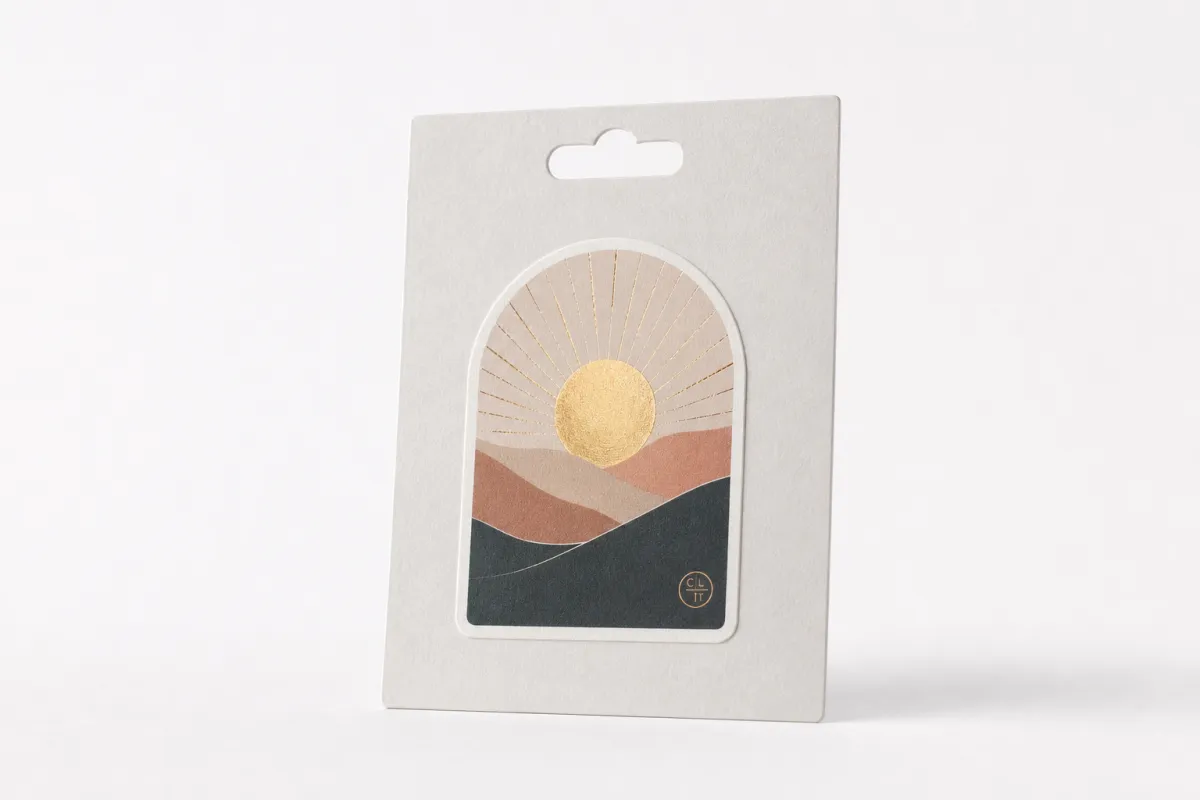
In packaging terms, printed die cut stickers for boxes are a shortcut only in the smartest sense. They upgrade visible presentation without changing the carton structure, board grade, or box print schedule. That matters because full box reprints are expensive and slow. They also lock you into one graphic until the next production cycle. A sticker can move faster. It can change with a campaign, a product launch, a regional rollout, or a clean-up of old branding that no longer matches the line.
The strongest uses are easy to spot. An ecommerce brand might place a die cut logo on a plain mailer so the box reads premium at first glance. A subscription kit can use a custom shape to make each monthly package feel collectable. A retail carton can use printed die cut stickers for boxes as a seal or secondary branding layer when the base carton has to stay neutral for several SKUs. Sample packs and internal packaging notes benefit too, because the sticker can carry instructions, barcodes, or sample messaging without cluttering the carton face.
Modularity is another reason buyers keep returning to printed die cut stickers for boxes. If one carton size gets reordered five times a year and another only appears during peak season, the sticker program can flex around that rhythm. A brand does not need to treat every box as a permanent design decision. That matters for short product cycles, influencer drops, and marketplace bundles that change by the month. A custom box run can sit still for a year; a sticker can adapt in a week.
There is also a less glamorous reason they work: speed. A packaging manager does not always get a clean runway for a full box refresh. Maybe sales wants a holiday version by next Tuesday. Maybe the rebrand is approved, but the corrugated supplier is booked out. Maybe the team is just not ready to commit to a new carton spec. Printed stickers are kind of the pressure valve in that situation. They let the brand move without pretending the whole packaging system can be rewritten overnight.
Practical rule: if the carton inventory must stay flexible, printed die cut stickers for boxes usually beat reprinting full custom boxes every time the artwork changes.
From a packaging buyer’s point of view, the value is straightforward. A plain carton has low visual equity. One well-sized die cut sticker can raise that perception quickly, often at a fraction of the cost of a litho-printed box or a structural redesign. That is why printed die cut stickers for boxes appear in lean startup programs and in mature operations that want a repeatable finishing touch without tying up cash in new corrugated inventory.
printed die cut stickers for boxes also support operational clarity. A color-coded sticker can identify a storage lot, a promo version, or a shipping class. A fragrance brand may use one shape for retail and another for direct-to-consumer orders. A cosmetics company may add a small seal to show tamper awareness, while a food brand may use them for secondary messaging on a carton sleeve. The design does not have to be flashy to work. In packaging, clear often wins over clever.
- Ecommerce shipping boxes: a fast way to add brand presence without full box print.
- Subscription kits: easy to swap themes between monthly drops.
- Retail cartons: useful for seals, promos, or compliance messaging.
- Sample packs: useful when you want a polished look on short runs.
- Internal notes: practical for sorting, batch marking, and warehouse cues.
The surprising part is not that printed die cut stickers for boxes work. It is how much flexibility they give a packaging team. A good sticker program can absorb artwork changes, reduce box inventory risk, and keep the brand looking more expensive than the carton itself might suggest.
How Printed Die Cut Stickers for Boxes Are Produced
The production flow is simple once it is broken into stages. First, the artwork is built with the cut shape in mind. A designer creates the graphics, adds bleed, and keeps critical text inside a safe zone. For printed die cut stickers for boxes, the cut line matters just as much as the art, because the cutter follows that contour exactly. A mismatch between the two can leave a border too thin, a logo too close to the edge, or a shape that feels accidental rather than intentional.
Most suppliers will ask for a vector file, usually in PDF, AI, or EPS format. Bleed is commonly set at 1/8 inch, while the safe zone is often 1/16 to 1/8 inch depending on shape complexity. Tiny type is risky. On small printed die cut stickers for boxes, text below about 5 pt can become fragile once the piece is cut, handled, and applied to corrugated board. Strong contrast helps, and so does simpler geometry. When the art gets fussy, the final piece usually does too.
Printing method depends on volume and turnaround. Digital printing is common for short and medium runs because it allows quick setup and flexible artwork changes. Larger standardized orders may move through other production paths that suit repeat volume better. Either way, the aim stays the same: keep color consistent, hold cut registration, and preserve detail on a piece that may be only a few inches wide. For printed die cut stickers for boxes, the smallest logo element often matters more than the print method itself.
Next comes the die-cutting stage. The sticker is cut to the outline of the artwork, then sheeted, stacked, or rolled depending on how it will be applied. A hand-applied program may work best with sheets, because operators can peel and place them quickly. A more repetitive line may prefer rolls if the application process is semi-automated. If the order is especially detailed, a supplier may recommend a simpler edge so the cut does not become too delicate for handling. That recommendation is usually worth following, even if the prettier shape is tempting.
Proofing is where many buyer errors get caught early. A proper proof should show the sticker art, the cut path, and the intended placement on the box mockup. Review color, line thickness, barcode legibility, and the relationship between sticker size and carton face. Check the sticker against the box material itself. A design that looks clean on a white digital proof can feel too busy on a corrugated kraft carton. For printed die cut stickers for boxes, mockup review is not decoration; it is risk control.
Timeline follows the same logic. Clean artwork and a fast approval cycle keep things moving. Complex shapes, specialty finishes, foil-like effects, or multiple proof rounds extend the schedule. A practical timeline for standard printed die cut stickers for boxes is often 7-12 business days from approval for simpler runs, and 12-15 business days or more for orders with special finishing or heavier proofing. That range is typical, not guaranteed. If a launch date matters, build in buffer, because freight and proof changes have a bad habit of showing up late.
- Artwork setup: logo, bleed, cut line, and safe zone.
- Digital proof: confirm colors, text size, and placement.
- Mockup check: view the sticker on the actual carton face.
- Print stage: production based on the approved file.
- Die-cut stage: trim to the exact outline.
- Finishing and packing: sheet, roll, inspect, and ship.
Printed die cut stickers for boxes are often easier to produce than full custom cartons, though the workflow still rewards precision. The better the brief, the fewer surprises later. In packaging, surprises usually arrive as delays, and delays have a way of costing more than the sticker itself.
Cost, Pricing, and MOQ for Printed Die Cut Stickers for Boxes
Pricing for printed die cut stickers for boxes usually follows the same core variables: size, shape complexity, quantity, material, finish, ink coverage, and setup needs. A simple round or square sticker costs less to make than a detailed custom contour. A small logo mark costs less than a full-bleed multi-color design. Higher quantity usually lowers unit cost, even when the upfront spend rises. That trade-off matters more than many buyers expect. A 1,000-piece order and a 10,000-piece order do not behave the same way on the quote sheet.
Minimum order quantity, or MOQ, is where the business case starts to sharpen. Low MOQs help with testing, seasonal launches, and SKU validation. Higher MOQs reduce per-unit cost, but they also increase inventory risk if artwork changes or demand softens. For printed die cut stickers for boxes, the right MOQ is usually tied to how long the carton format will stay in use. A campaign sticker for six weeks should not be spec’d like a permanent branding asset.
One useful way to compare quotes is to match every variable. Ask for the same sticker size, the same shape complexity, the same adhesive type, the same finish, and the same shipping assumptions. If one supplier quotes a lower number but excludes proofing or revision rounds, the lower number is not really lower. It is just incomplete. The best pricing conversation around printed die cut stickers for boxes focuses on total landed cost, not only the unit figure.
Ballpark pricing can help with early planning, though it always depends on actual art and quantity. For a 3" x 3" die cut sticker at around 5,000 pieces, paper stock may land roughly around $0.14-$0.22 per unit, film-based options often around $0.18-$0.29, and premium soft-touch or specialty finishes can rise into the $0.24-$0.38 range. Smaller quantities usually cost more per piece. Larger volumes can come down, sometimes sharply, if the design stays stable. Those figures are planning numbers, not quotes.
| Material Option | Best Use | Typical Feel | Approx. Unit Cost at 5,000 | Notes |
|---|---|---|---|---|
| Paper stock | Dry indoor cartons, budget-conscious branding | Natural, matte, easy to write on | $0.14-$0.22 | Good for short cycles; less resistant to moisture and scuffing |
| BOPP or similar film | Shipping boxes, humidity-prone routes, abrasion | Smoother and more durable | $0.18-$0.29 | Often a stronger all-round choice for printed die cut stickers for boxes |
| Vinyl-style film | Harder-wearing applications, longer display life | Stout, slightly thicker, premium feel | $0.20-$0.34 | Can be a good fit for transit-heavy cartons |
| Soft-touch laminated film | Luxury mailers and high-value gift packaging | Velvety, muted, tactile | $0.24-$0.38 | Raises the perceived value, but also raises cost |
MOQ and price should always be read in relation to the box program itself. If the carton has a short life and will be replaced in three months, a large sticker order can become dead stock. If the box is part of a stable core range, a larger order can make sense because the unit economics improve and the artwork risk is lower. That is why printed die cut stickers for boxes should be matched to product cycle, not vanity.
One more question to ask: what is included in the quote? Proofs, revisions, shipping, and packing method can all change the actual spend. If the sticker will be hand-applied in house, the application time should also be considered. A die cut shape that saves five cents per piece but adds six seconds of labor is not always the best deal. For printed die cut stickers for boxes, the cheapest quote is not always the smartest order.
There is a hidden cost people miss all the time: variation. If you have to reorder a sticker every few weeks because the artwork keeps changing, the administrative time starts to nibble at the savings. One clean spec, held steady for a season, usually beats five tiny revisions. That is the kind of unglamorous math packaging teams end up living with.
Materials, Adhesives, and Finishes That Change Performance
Material choice can make or break a sticker program. Paper face stock is the common entry point. It works well for dry indoor use, lower-cost branding, and cartons that do not see much rubbing. It also has a familiar look on kraft board, which is why a lot of packaging teams start there. Once shipping gets rough, or humidity rises, paper may show edge lift sooner than expected. That matters for printed die cut stickers for boxes that travel through distribution rather than sitting on a shelf.
Film-based options usually perform better under transit stress. Polypropylene-style films, BOPP, and vinyl-style materials are common when cartons face abrasion, condensation, or fluctuating temperatures. If a box may sit in a cold dock and then move into warmer air, a film face stock often handles the shift more gracefully than paper. That does not mean every job needs film. It means the environment should drive the choice. printed die cut stickers for boxes fail most often when the buyer treats a label like a decoration instead of a material-system decision.
Adhesive choice matters just as much. Permanent adhesive is the default for branding because it sticks through storage, shipping, and handling. Removable adhesive makes more sense for short promotions, reusable packaging, or sample kits where the carton may need a cleaner release. On rough corrugated surfaces, even the best adhesive can struggle if the board is dusty, heavily textured, or cold. That is why a small adhesion test on the actual box is worth doing before a large order of printed die cut stickers for boxes goes live.
Finish changes both appearance and readability. Matte finishes reduce glare and help text remain legible under warehouse lighting. Gloss can make colors pop, but it can also reflect too much on retail shelves or under bright LEDs. Soft-touch adds a premium tactile layer, though it also adds cost and should usually be reserved for higher-value programs. A sticker that looks rich in a studio can become hard to read if the finish is too reflective. With printed die cut stickers for boxes, finish choice should be tied to lighting, handling, and brand promise.
There are also sourcing considerations. If your program uses fiber-based stock, FSC-certified material can help document responsible sourcing, especially for brands that care about environmental claims. For transit testing, the ISTA protocols are widely used in packaging validation, and they are useful when you want to see how a sticker or carton holds up under parcel stress. FSC also publishes useful information for teams evaluating certified fiber materials: FSC. Not every order needs formal testing, but the standards give you a better baseline than guesswork.
If you want a quick rule of thumb, keep it simple. Paper for dry, short-life cartons. Film for shipping stress, moisture, and handling. Permanent adhesive for long-term branding. Removable adhesive for short campaigns or reusable boxes. Matte if glare is an issue. Gloss if color pop matters more than reflection. That framework will not solve every packaging problem, but it will narrow the field for printed die cut stickers for boxes fast.
From a production perspective, consistency is the quiet win. A box that must look the same across multiple fulfillment centers should not depend on an adhesive that behaves differently from batch to batch. This is why sample testing on the actual carton, in the actual environment, beats a paper spec sheet. printed die cut stickers for boxes are a small part of the package, but they are exposed to the same stress as the carton itself.
One packaging line I reviewed had two sticker stocks that looked nearly identical on paper. On the actual box, one held up fine; the other lifted at the edge after a cold morning delivery cycle. The difference was not dramatic, which is why people missed it at first. Packaging failures are often annoyingly small like that.
Step-by-Step Process and Timeline for Ordering
The easiest orders begin with a clean intake checklist. Before a supplier quotes printed die cut stickers for boxes, they should know the box dimensions, the intended placement, the quantity, the application method, the shipping environment, and the deadline. Leave out any of those pieces and the quote usually needs revision later. A little structure at the start saves time at the end, and in packaging time usually means money.
Artwork comes next. Gather the logo files, any required legal text, the preferred color values, and the final shape direction. Then build the cut line and mock up the sticker on the actual carton face. That mockup matters more than many buyers think. A 4-inch sticker can dominate a small mailer and feel just right on a larger shipping box. For printed die cut stickers for boxes, proportion is not a small detail; it is the whole look.
Proofing should be deliberate, but not endless. Review the digital proof, check the cut path, confirm line weights, and verify that no key information is sitting too close to the edge. If the design includes a barcode, QR code, or tiny compliance note, test the scan and the legibility before approval. A supplier can only print what it is given. With printed die cut stickers for boxes, a careful proof cycle is usually safer than a rushed one, but a three-round approval process often points to an unclear brief.
- Set the brief: box size, use case, quantity, and deadline.
- Prepare artwork: logo, cut line, safe zone, and bleed.
- Review proof: color, text, finish, and placement.
- Approve mockup: confirm how the sticker sits on the carton.
- Print and cut: production moves through the approved setup.
- Inspect and ship: check registration, edges, and packing.
Timelines usually break down into file prep, proofing, printing, cutting, finishing, inspection, and delivery. Each stage can add delay if the brief is vague. A simple run may move quickly after approval, but specialty finishes and heavy artwork can stretch the schedule. If a brand needs printed die cut stickers for boxes for a launch, the safest habit is to work backward from the ship date and leave space for reproofs, freight delays, and last-minute copy changes.
Lead time planning matters even more when the order supports a seasonal campaign. A holiday box program, a trade show kit, or a product drop can trigger a spike in demand that leaves no room for mistakes. In that situation, it is usually wiser to order a small pilot batch first, then reorder once the sticker has been tested on the actual box and the application team has given feedback. That path may feel less dramatic than placing one huge order, but printed die cut stickers for boxes reward discipline more than drama.
One practical habit is to write a placement guide. A simple document with a top margin, left margin, and center point can reduce inconsistency across shifts or fulfillment centers. If the sticker is meant to sit 20 mm from the top edge and 15 mm from the left seam, write that down and share it. On a busy line, consistency is a form of quality control. That is especially true for printed die cut stickers for boxes that need to look identical from carton to carton.
Another small but useful move: keep one reference carton with an approved sticker attached and photograph it under the same lighting used in the warehouse. It sounds almost too basic to matter, but teams often lose track of what “approved” was supposed to look like after a few weeks. One physical reference can prevent a dozen awkward adjustments later.
Common Mistakes That Hurt Results and Waste Budget
The first mistake is simple: too much detail on a small shape. Thin strokes, tiny type, and busy graphics may look fine on screen, then collapse once the sticker is trimmed and applied to a textured carton. A rough kraft surface can swallow detail in a way glossy mockups never show. If the design has to be miniature, make it bolder. printed die cut stickers for boxes are not kind to fragile art.
The second mistake is skipping real adhesion tests. A carton made from recycled board, a box with surface dust, or a refrigerated shipment can all behave differently from a studio sample. I have seen packaging programs fail because the sticker was specified for the artwork, not for the substrate. If the box surface is coated, varnished, or unusually fibrous, test it first. For printed die cut stickers for boxes, the adhesive has to match the box, not the design presentation.
The third mistake is buying on unit price alone. A low quote can hide thin material, poor color control, or a finish that scuffs in transit. It can also leave out proofing, freight, or revision fees. A sticker that peels during delivery forces rework, and rework is always more expensive than the original order. When comparing printed die cut stickers for boxes, total cost and failure risk should sit in the same spreadsheet.
The fourth mistake is ignoring labor. A hand-applied sticker may look cheap on paper, but if it takes 8 to 12 seconds to peel, align, and press, that labor adds up fast across thousands of cartons. A clean liner, an easy peel edge, and a simple placement guide can reduce that burden. The goal is not just to buy printed die cut stickers for boxes; it is to make them easy to use in the real warehouse.
The fifth mistake is approving art without a box mockup. This sounds basic, yet it is one of the most common failure points. A sticker might be the right size in isolation and still look off-center, oversized, or too quiet once it lands on the carton. Box mockups expose that problem before money is spent. A supplier can help, but the buyer needs to sign off on the visual relationship between the sticker and the package. That is the heart of printed die cut stickers for boxes: shape plus placement equals perception.
There is also a packaging-operations angle that gets overlooked. A sticker may perform beautifully on a sample table and fail in a warehouse that is humid, rushed, or unevenly staffed. If your line runs fast, the adhesive needs enough initial tack to hold position immediately. If your boxes travel far, the finish needs to resist scuffing. If your boxes stack, the face stock needs to survive pressure. The real world is less forgiving than a proof file, and printed die cut stickers for boxes only succeed when the spec matches that reality.
- Start with one core size: prove the program on the highest-volume carton first.
- Use one placement standard: keep every shift aligning stickers the same way.
- Run a pilot batch: test peel, tack, and customer response before scaling.
- Track labor time: a faster application format can save more than a lower unit price.
- Review reorders critically: if the sticker works, lock the spec and avoid unnecessary changes.
My honest view: the brands that get the best results treat printed die cut stickers for boxes as a packaging system, not as an afterthought. They test on the actual carton, specify the finish for the actual environment, and write down the application method. That sounds basic because it is. Basic, in packaging, usually means profitable.
Frequently Asked Questions
What are printed die cut stickers for boxes used for?
They brand plain shipping or retail cartons without requiring a full box redesign. They can also highlight promos, product details, warnings, or seasonal themes, which makes printed die cut stickers for boxes useful when you want a custom look but need packaging flexibility.
How long do printed die cut stickers for boxes usually take to produce?
Simple orders can move quickly if the artwork is approved on the first proof, while complex shapes, special finishes, or multiple revisions can extend the schedule. For printed die cut stickers for boxes, planning ahead is the safest move when the order is tied to a launch or seasonal campaign.
Which material is best for printed die cut stickers for boxes?
Paper stock works well for dry indoor use and lower-cost branding, while film-based materials are better when moisture, abrasion, or shipping stress is a concern. The right choice for printed die cut stickers for boxes depends on the box surface, the shipping route, and how long the sticker must stay intact.
How do I estimate pricing for printed die cut stickers for boxes?
Start with size, quantity, shape complexity, and finish type, then ask whether setup, proofing, shipping, and revisions are included in the quote. Comparing total order cost and unit cost helps you avoid a situation where a low sticker price hides extra fees, which is a common trap with printed die cut stickers for boxes.
Can printed die cut stickers for boxes be applied by hand?
Yes, most are applied manually for small and mid-size runs, though a clear placement guide helps keep the result consistent. Large or repetitive orders may benefit from a format that is easy to peel, align, and press, because labor time matters just as much as the sticker itself when you are scaling printed die cut stickers for boxes.
If there is one takeaway, it is this: choose the sticker spec around the actual box, the actual route, and the actual labor process, then test it before the full run. That one discipline keeps printed die cut stickers for boxes from turning into a pretty mistake.

