Buyer Fit Snapshot
| Best fit | Printed Die Cut Hang Tags projects where brand print, material claims, artwork control, MOQ, and repeat-order consistency need to be specified before quoting. |
|---|---|
| Quote inputs | Share finished size, material target, print colors, finish, packing count, annual reorder estimate, ship-to region, and any compliance wording. |
| Proofing check | Approve dieline scale, logo placement, barcode or warning zones, color tolerance, closure strength, and carton packing before bulk production. |
| Main risk | Vague material claims, crowded artwork, missing packing details, or unclear freight terms can make a low unit price expensive after revisions. |
Fast answer: Printed Die Cut Hang Tags: Design, Cost, and Process should be specified like a repeatable production item. The safest quote records material, print method, finish, artwork proof, packing count, and reorder notes in one written spec.
Production checks before approval
Compare the actual filled-product size with the drawing, then confirm tolerance on folds, seals, hang holes, label areas, and retail display edges. Reserve space for logos, QR codes, warning copy, and material claims before decorative graphics fill the panel.
Quote comparison points
Review material grade, print process, finish, sampling route, tooling charges, carton quantity, and freight assumptions side by side. A quote is only useful when the supplier can repeat the same color, closure quality, and packing count on the next order.
Printed Die Cut Hang Tags do more than carry a price, SKU, or care note. A well-chosen silhouette can make a tag feel deliberate and premium before anyone reads a line of copy, and that matters because the tag is often the first object a shopper touches, turns over, and remembers.
That is why printed Die Cut Hang Tags keep showing up on apparel, accessories, specialty foods, gift items, and seasonal merchandise. The shape draws the eye. The printed surface carries the message. The finish settles the tone, whether the brand needs polished, playful, rustic, or upscale. Those three elements work together, and the value usually comes from how they fit together rather than from any single feature alone.
Brands that care about the full packaging experience should not treat the tag as a leftover detail. Even in a small format, the tag carries a lot of brand meaning. If you are already thinking about companion pieces such as Custom Labels & Tags, the same design logic applies here: shape, stock, finish, and information hierarchy all need to support the product instead of fighting it.
With Printed Die Cut hang tags, the first impression happens in hand, not on a mockup. A shopper may never read the longer product story, yet they will notice whether the tag feels stiff or flimsy, whether the cut line looks intentional, and whether the finish helps the artwork read cleanly. That is the real test, not how the proof looks on a monitor, but how the piece behaves once it is hanging on the product.
“A tag can be small and still do a lot of work.”
That truth shows up most clearly in categories where packaging has to identify the product, carry the brand voice, and survive repeated handling. Printed die cut hang tags can support all three jobs, provided the production plan is thoughtful from the start. The sections below cover the process, the material and finish decisions, the cost drivers, and the mistakes that tend to create delays or weaker results than the buyer expected.
Printed die cut hang tags: why shape changes the first impression
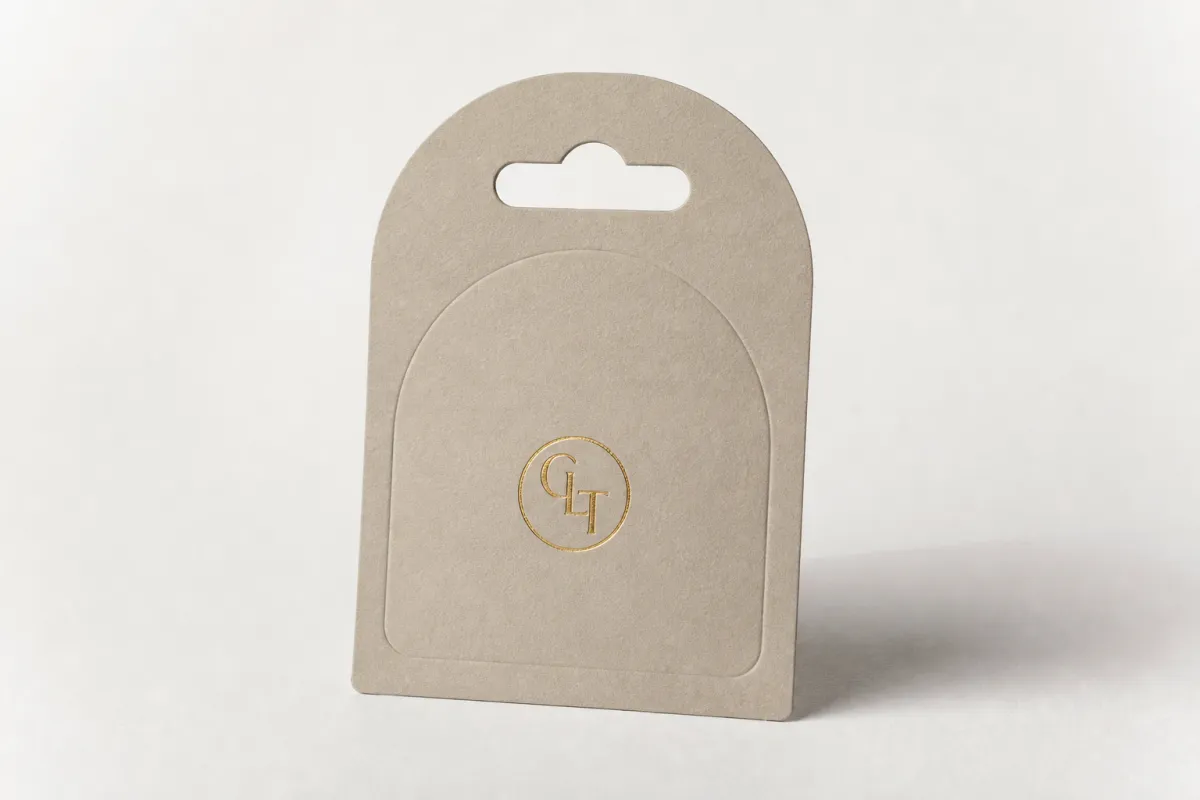
Shape speaks faster than most buyers expect. A clean rectangle can certainly do the job, but printed die cut hang tags send a stronger signal that the brand cared about the details. The outline begins telling the story before the shopper reads a single word. A soft curve can feel friendly. A sharp angle can feel modern or technical. A custom contour can echo a logo, a product form, or even a seasonal campaign. That kind of visual echo makes the tag feel designed rather than merely printed.
From the packaging buyer’s side, the first touch matters because it turns a small format into a real brand surface. printed die cut hang tags are not just labels hanging from a string. They combine graphics, substrate, and cut geometry in a controlled way. Printing comes first, then the die cut Shapes the Final outline, which means the tag can carry brand identity and practical information at the same time, including barcodes, care notes, origin claims, or promotional details.
These tags show up wherever presentation carries weight. Apparel is the obvious example, but the same approach works for handbags, jewelry, candles, gourmet goods, premium stationery, gift wrap, and seasonal products that need a quick visual cue on crowded shelves. Even a small product can feel more finished with printed die cut hang tags because the tag acts as a final piece of the presentation. The item remains the hero, while the tag gives it context.
The important part is that shape, print, and finish do not live in separate boxes. A die cut outline that looks exciting on paper can become awkward if the text sits too close to the edge. A glossy finish can make color sharper, yet it can also introduce glare under bright retail lighting. A soft-touch coating can feel rich in hand, though it may soften tiny type if the artwork is already dense. printed die cut hang tags work best when those tradeoffs are considered together.
Shelf-read is another factor that gets overlooked. A product tag is usually seen from several feet away first and then at arm’s length later. Strong printed die cut hang tags hold up in both moments. From a distance, the silhouette pulls attention. Up close, the typography, stock choice, and finish confirm that the brand knows what it is doing. That combination is exactly why a small tag can outperform a larger generic one.
For brands building a fuller packaging system, the tag can also reinforce other printed pieces like labels, belly bands, carton sleeves, and insert cards. When those surfaces share the same visual language, the brand feels more deliberate. When one piece looks premium and another looks rushed, the mismatch stands out. That is why printed die cut hang tags often belong in a broader packaging conversation rather than a standalone purchase.
There is a simple way to judge a die cut shape: ask whether the outline makes the product easier to understand or simply makes the tag look unusual. If the answer is only the second part, the design is probably trying too hard. The strongest printed die cut hang tags usually feel inevitable, as if the shape belongs to the product instead of competing with it. That is the kind of result buyers remember without really knowing why.
Printed die cut hang tags process and timeline: from dieline to delivery
The production path for printed die cut hang tags begins with the dieline, the technical map that shows where the tag will print, where it will cut, and where holes or folds need to land. That file is not decorative. It keeps the printed art and the final knife cut aligned. If text, borders, or key image elements sit too close to the cut path, even a small shift can make the finished tag look cramped or off-center.
Once the dieline is approved, artwork is built around it and sent for proofing. Digital proofing helps with layout, copy, and general placement, yet for printed die cut hang tags it does not always tell the whole story. Color can shift from screen to stock. Coatings can change the feel. A custom shape can make the proportions look different in hand than they do on a monitor. Many buyers ask for a physical sample, or at least a more complete production proof, when the order matters.
After approval, production moves into printing, then die cutting, then finishing. Depending on the job, that finishing stage can include hole punching, corner rounding, scoring, foil stamping, lamination, UV coating, stringing, or bundle packing by SKU. Every extra step adds handling time. printed die cut hang tags with simple print and cut work faster than tags that include specialty foil, soft-touch lamination, or several versions in one run.
Lead time depends on how many moving parts the order includes. A straightforward run with approved art, a common stock, and standard hole placement may move in roughly 7 to 12 business days after approval, though plant capacity and queue length still matter. More complex printed die cut hang tags with multiple shapes, extra finishing, or several SKUs can stretch into the 2 to 3 week range, or longer if a new die must be made and samples need sign-off first. The exact timing matters less than the order of operations: artwork approval, tooling, print, cut, finish, inspect, pack.
That sequence explains why early approval protects both schedule and budget. A late copy change can ripple through the whole job, especially if the tag already has a custom cut path or variable data. If the seller has to revise the dieline, recheck the cut line, or remake plates, the job slows quickly. printed die cut hang tags reward clean decisions early because the shape is built into the production steps from the beginning.
For buyers comparing suppliers, it helps to ask where the bottleneck usually sits. Some teams print quickly but slow down on finishing. Others handle simple cuts fast but need more time for specialty effects. Asking about those constraints upfront is better than assuming every vendor works the same way. The process for printed die cut hang tags is not mysterious, but it does need coordination.
If the tags will travel with a product through ecommerce shipping, it is wise to think beyond the press run and into transit durability. Many packaging teams use guidance from ISTA when they want to understand how print components behave under vibration, drops, and handling. The tag may not be a shipping component on its own, but it still has to arrive looking clean and attached correctly. I have seen a tag design look great on press and then pick up dents or edge wear in transit because the stock choice was too light for the packing method.
A simple rule applies here: the tighter the timeline, the more important it is to keep the artwork stable. printed die cut hang tags are easiest to move quickly when the dimensions, copy, and finish are locked before production starts.
Materials, finishes, and construction choices that shape the result
Stock choice is where many of the tactile decisions begin. For printed die cut hang tags, a heavier cover stock is often the starting point because it holds the shape well and feels more substantial in hand. Common options include coated cover stocks for sharper image reproduction, uncoated stock for a softer feel and easier writing, and textured papers when a brand wants a more natural or crafted impression. The right selection depends on the brand voice and how much handling the tag will see.
Thickness matters as much as paper type. A tag that is too light can curl or bend after die cutting, especially if it has a narrow neck or a lot of open space in the outline. A thicker stock, such as 14pt to 18pt cover or a comparable 300gsm to 400gsm paperboard, generally gives printed die cut hang tags better body and a cleaner presentation on shelf hooks and garment pins. If the piece needs to hang flat, that stiffness helps. If it needs to flex with the product, a slightly lighter stock may be easier to work with.
Finishes affect both appearance and durability. Matte cuts down glare and improves readability, which matters under hard retail lighting. Gloss makes color pop and can help with bright branding or bold graphics. Soft-touch creates a velvety feel customers tend to remember, although it should be used carefully on text-heavy tags because it can mute small details. Aqueous coating is a practical middle ground for many printed die cut hang tags because it adds protection without overcomplicating the surface.
Foil, embossing, and spot UV can all work well on a die cut tag if the design leaves them room to breathe. The mistake is piling on effects simply because the budget allows it. A tag with too many finishes can feel busy, and busy is not the same as premium. The best printed die cut hang tags usually use one standout detail very well rather than several details competing for attention.
Construction choices matter in use, not just in the design file. Hole size should match the attachment method, whether that is string, a plastic loop, a pin fastener, or a small wire tie. The punch needs enough reinforcement around it so the material does not tear during hanging or checkout handling. Rounded corners can survive rough handling better than sharp corners, while a sharper outline can feel more intentional for fashion or premium gift items. In production, these are not minor details. They change how the tag behaves.
The color side deserves attention too. If the tag has to match cartons, woven labels, inner cards, or printed pouches, color management should begin early. A warm white stock will shift a palette differently than a bright white stock. A coated surface will hold ink differently than an uncoated one. printed die cut hang tags often sit beside other brand assets, so the goal is visual harmony, not just a nice-looking tag in isolation. If the color target matters, get a match approved on the actual stock rather than trusting a screen image to do the job.
Sustainability claims are another place where material choice carries weight. Recycled content, responsibly sourced fibers, and FSC-certified paper can all support a stronger packaging story, but the supply chain details matter as much as the message. If a brand is making an environmental claim, the paperwork should match the material. The FSC system is one of the better-known ways to support that chain-of-custody story when the paper source matters to the buyer. That does not automatically make every tag more sustainable, but it does make the sourcing conversation more credible.
There is no single best build for printed die cut hang tags. A textured uncoated stock may suit a natural candle brand and feel out of place on a fashion label that needs crisp photography. A gloss-coated tag can look excellent on a brightly colored accessory line and still be a poor choice for handwritten pricing or care notes. Material and finish decisions should come from use, not habit.
| Option | Best For | Typical Strength | Relative Cost | Notes |
|---|---|---|---|---|
| Uncoated cover stock | Writeable tags, natural brands | Easy to mark, softer feel | Low to moderate | Good for care notes and hand-applied info |
| Coated cover stock | Bright graphics, strong color work | Sharper print detail | Moderate | Can show glare under strong store lighting |
| Soft-touch laminated stock | Premium fashion and gift items | Tactile, upscale feel | Moderate to high | Feels rich, but small text should be checked carefully |
| Foil-accented stock | Luxury cues, seasonal launches | High visual impact | High | Best used sparingly on printed die cut hang tags |
That table is the starting point, not the whole answer. The right choice still depends on the product, the retail lighting, the attachment method, and how much handling the tag will take before it reaches the buyer. A beautiful proof can still be the wrong answer if the stock fights the design. That is why printed die cut hang tags should always be evaluated as a package of decisions rather than a set of separate line items.
Printed die cut hang tags cost, pricing, and MOQ factors
Cost becomes very real once the shape is chosen. With printed die cut hang tags, pricing usually starts with setup: the custom die, the print prep, and the proofing work. From there, the per-unit cost is shaped by quantity, number of print colors, stock choice, finish, hole punching, stringing, and whether the tags need to be packed or sorted in a special way. The more custom the piece, the more those setup steps matter.
For smaller runs, setup can dominate the quote. A 250-piece order may look expensive on a per-unit basis because the die and press work are spread across very few tags. Once the quantity moves into the thousands, the unit price drops because those fixed costs are diluted across more pieces. In practical terms, printed die cut hang tags might land around $0.18 to $0.45 per piece on modest runs, depending on print coverage and finishing, while larger quantities can move lower if the shape is straightforward and the artwork is stable. Those are broad working ranges, not promises, but they are a more honest starting point than vague language about “affordable” tags.
Minimum order quantity follows the same setup logic. A supplier may ask for a MOQ because the die, plate, or finishing time does not make sense at tiny volume. That is especially true for specialty shapes, foil, embossing, or stacked SKUs. If a buyer wants a single logo shape in a very low quantity, a standard rectangle or oval may be the better budget choice. printed die cut hang tags are custom work, and custom work usually needs enough volume to justify the tooling.
That does not mean every custom shape is expensive. It means the buyer should understand where the money goes. If the order includes a one-time die setup, more elaborate art coverage, and hand stringing, the quote will reflect labor and tooling. If the same job uses a simpler outline, one-color print, and bulk packing, it will usually be far more approachable. printed die cut hang tags become cost-efficient when the design respects the manufacturing path.
Comparing quotes fairly is where many people lose money. One vendor may quote a low unit price but leave out freight, proofs, or the die. Another may bundle more into the total. Before approving anything, check whether the quote includes artwork review, sample approval, finishing, packing, and reorders. A lower headline price is not always the lower total cost once all of the pieces are counted.
The hidden budget traps are usually timing-based. Last-minute copy changes can trigger a revised proof. A new barcode or SKU layout can force an extra check. Changing the shape after the estimate is approved may mean new tooling. Rush fees are common when the schedule tightens after production planning should have been locked. With printed die cut hang tags, the easiest way to protect budget is to freeze the basics before quoting starts.
Here is a practical way to think about pricing. If the tag needs to do more than a standard retail tag, it probably needs a budget that reflects that extra work. That may sound obvious, but it prevents a lot of frustration. A custom silhouette, upgraded stock, and foil detail should not be expected to cost the same as a basic one-color tag on commodity paper. printed die cut hang tags are often affordable in the right quantity, but they are not supposed to disappear in the costing model.
For brands building a broader packaging system, it helps to compare the tag quote against other touchpoints such as carton labels and product stickers. If the rest of the line comes from the same planning logic, the visual result is cleaner and the production schedule is easier to manage. That is one reason many teams keep a relationship with a supplier that can handle Custom Labels & Tags alongside custom hang tags. One file structure, one naming system, and one approval rhythm can save more than a few cents per unit.
A low MOQ can be useful for testing, but it can also raise the per-piece cost enough that the tag no longer fits the product margin. printed die cut hang tags should support the brand story and the business model together. If the tag looks great but breaks the margin, the design still needs another pass. That part is not glamorous, but it is the part that keeps the program healthy.
Step-by-step: from brand brief to approved proof
The cleanest jobs start with a clear brief. Before anyone opens design software, define the product type, the shelf environment, the brand tone, and the exact information the tag must carry. Does it need a price? A care instruction? A barcode? A seasonal message? A recycled-content statement? The more precise the brief, the easier it is to create printed die cut hang tags that feel intentional instead of crowded.
Next comes the technical spec. This should include the finished size, the outline concept, hole placement, stock preference, finish, quantity, attachment method, and any variable data. If several products share the same brand system, list which parts stay fixed and which parts change. That helps the supplier plan the run and keeps printed die cut hang tags consistent across SKUs.
Artwork needs to be built with die-cut reality in mind. Leave safe margins near the edge. Extend background colors or photos into bleed. Keep type large enough to read once the tag is trimmed and hanging from a product. If the shape has tight curves or points, avoid placing important copy where a tiny shift would create a collision. Good printed die cut hang tags look precise because the layout respects the cut line from the start.
Then comes quote and proof review. Ask for both together if possible, because the proof can expose issues that affect the quote, and the quote can help you spot unnecessary extras. During review, check the color intent, copy accuracy, SKU numbers, barcode quality, and the relationship between artwork and cut path. This is where many errors are caught, and catching them here is much cheaper than catching them after production.
If the supplier offers a physical sample, take it seriously. A screen preview can never tell you exactly how stiff the stock feels or how the finish behaves under light. Hold the sample. Fold it slightly if the format allows it. Hang it from the intended fastener. Look at it under the same conditions the customer will see it. printed die cut hang tags can look handsome on a monitor and still feel wrong in hand, and hand feel matters more than people admit.
A good proofing rhythm also protects future reorders. Save the approved file, the dieline version, the finish notes, and the setup dimensions in one clean folder. If the same product comes back next season, that record can save days of back-and-forth. In packaging work, the best reorders are the ones that already know what worked the last time. printed die cut hang tags benefit from that discipline because custom shape jobs have more ways to drift than standard tags do.
If the tag is part of a broader launch, test it under real conditions before lock-in. Put it next to the garment, gift item, or food package. Photograph it. Check it in retail-style lighting. Fold it into a shipping carton and shake the box a little. That may sound basic, but it reveals problems quickly. For bigger shipment programs, teams sometimes pair that practical check with broader transit guidance from the packaging field and standards bodies. The exact method varies, but the principle stays the same: verify the physical result, not just the visual file.
Once the proof is approved, keep the change window closed unless something truly important changes. The fastest jobs are the ones where the approval chain is short, the art is final, and the supplier knows the specs are locked. That is how printed die cut hang tags move from file to finished piece without drama.
Common mistakes when ordering printed die cut hang tags
The first mistake is choosing an outline that hurts legibility. A dramatic shape can be fun, but printed die cut hang tags still have to communicate. If the cut steals too much space from the text, or if the silhouette makes the layout feel cramped, the tag ends up working against the product instead of for it. Shape should support the brand story, not overwhelm the copy.
Another common problem is crowding the cut edge. Text, borders, and logos need breathing room around the knife line, and bleed needs to be built in correctly. If the designer forgets that margin, the finished tag can look clipped or uneven even when the printing itself is technically fine. This is especially important on printed die cut hang tags with curves, points, or narrow necks, because those shapes leave less room for error.
Skipping a physical proof is a risk, especially on premium jobs. The screen does not show the stiffness of the board, the texture of the paper, or the way a soft-touch coating dulls the shine. It also does not show how the color will shift under store lighting. If the tag is supposed to carry a premium price point, the proof should match the buying experience as closely as possible. printed die cut hang tags are too visible to leave to guesswork.
Scheduling mistakes are just as common. Many buyers assume a custom run will move like a stock tag, then get surprised when the die setup, proof approvals, and finishing steps add time. If the job also includes multiple SKUs, variable text, or special foil work, the schedule stretches further. Good printed die cut hang tags planning starts earlier than most teams expect, especially before a launch window gets tight.
Practical details get missed too. The string length can be wrong for the product size. The attachment method can snag or rotate. The writable area can be too small for the retail team. The tag can sit awkwardly against a folded garment or a gift box. Even retail lighting matters, because a glossy tag that looks sharp in daylight may glare under a bright boutique fixture. The best printed die cut hang tags are designed for the actual product, the actual store, and the actual packaging flow.
It is also easy to forget that the tag has a job after the sale. Some customers keep packaging pieces if they feel special, and some retailers use the tag as a support point for storytelling. If the shape is memorable and the print is clean, the tag can extend the brand experience a little longer. That is useful return from a small piece of print. But it only happens when printed die cut hang tags are built with use in mind.
One last mistake is treating the hang tag as a one-off design project instead of a repeatable system. A single attractive tag is nice. A tag program that can be reused across seasons, product families, and reorder cycles is better. That is where the real operational value sits, and it is usually where the cleaner long-term margin lives too.
Expert tips and next steps for a stronger tag program
If you want printed die cut hang tags to keep helping instead of creating extra work, build a reusable system. Start with a base layout, a standard stock, a consistent hole placement, and a few approved shape families. That gives the brand room to vary messages or seasonal artwork without rebuilding every tag from scratch. It also makes reorders faster because the structure is already proven.
Test the tag the way a customer will experience it. Hold it, hang it, photograph it, and compare it next to the product under the right lighting. If the tag is for ecommerce as well as retail, check how it looks in images because some finishes read very differently on camera than in person. printed die cut hang tags should earn their keep in both settings, not only one.
Ask for samples when the tag is intended to support a premium price point. Even a small swatch of paper or a sample run can reveal whether the finish feels right. A glossy tag might be exactly what a bright toy line needs, while a soft-touch or uncoated piece could be better for apparel or gift goods. There is no shame in testing. In fact, it is the practical move.
A one-page spec sheet is one of the best tools a packaging buyer can keep. Include the finished size, stock, finish, hole size, attachment method, quantity, print notes, approval contact, and reorder history. When that information is written down clearly, printed die cut hang tags become much easier to keep consistent across seasons and product launches. It also reduces the chance that a rushed reorder drifts away from the original intent.
If sustainability is part of the brand message, make sure the material story is complete. Recycled content can be useful, FSC sourcing can strengthen credibility, and lighter-weight materials can reduce paper use, but the final choice still has to work on press and in hand. A responsible tag is not one that only sounds good in marketing copy. It is one that performs well, prints cleanly, and aligns with the product. That is true for printed die cut hang tags just as much as it is for cartons, sleeves, and labels.
For teams planning a broader packaging refresh, it helps to line up hang tags with the rest of the line so the family feels connected. A product may use cartons, wraparound labels, or printed inserts, but the same discipline applies. If the tag, the label, and the package all speak the same design language, the product feels more complete. That is why many buyers keep Custom Labels & Tags in the same conversation as their hang tag strategy.
The next steps are straightforward: audit the current tag, tighten the spec, compare quotes with setup and freight included, and plan the next run before the launch window gets crowded. If the existing tag is doing only the bare minimum, there is room to improve. If it is already strong, there may still be a smarter stock, a cleaner cut, or a better finishing choice waiting in the next revision. printed die cut hang tags reward that kind of careful iteration, and the gains usually show up in the hand, on the shelf, and in the customer’s memory.
What are printed die cut hang tags, and how are they different from standard hang tags?
printed die cut hang tags are custom-shaped tags that are printed first and then cut to a specific outline, which gives the packaging a more tailored look than a basic rectangle. The shape can reinforce branding, help a product stand out on the rack, and create a more memorable first touchpoint with the customer. They usually require a dieline or die setup, so they are more custom than stock tags but offer more design flexibility.
What stock works best for printed die cut hang tags on retail products?
A heavier cover stock is usually a safe starting point because it holds shape well and feels substantial in hand. Uncoated stock is easier to write on, while coated stock can sharpen print detail and improve visual pop. The best choice depends on how the tag will be used, whether it needs to match other packaging, and how durable it must be during handling. For many printed die cut hang tags, the right stock is the one that balances print quality with practical handling.
How long does the process for printed die cut hang tags usually take?
Simple jobs with approved artwork and a familiar stock can move faster, while custom shapes, special finishes, or multiple revisions add time. Proof approval is often the biggest timing checkpoint, because production cannot start until artwork and layout are finalized. If the schedule is tight, ask early about lead time, proof turnaround, and whether the supplier can accommodate a rush. That matters even more for printed die cut hang tags with custom tooling.
How much do printed die cut hang tags cost per piece?
Per-piece cost depends on quantity, stock, finish, color count, and whether a custom die or extra finishing steps are required. Small orders often carry a higher unit cost because setup fees are spread across fewer tags. To compare quotes properly, check what is included in setup, proofing, and freight instead of looking only at the lowest unit price. With printed die cut hang tags, the total project cost usually tells the real story better than the headline number.
Do printed die cut hang tags need a custom dieline or special finishing?
Yes, a custom shape usually needs a dieline so the printer and cutter know exactly where the final edge should be. Special finishing is optional, but it can improve brand impact when the tag needs extra texture, shine, or durability. The right choice depends on the product, the retail environment, and how much visual emphasis the tag should carry. For many printed die cut hang tags, the best results come from a clean dieline and one well-chosen finish rather than a long list of effects.