Buyer Fit Snapshot
| Best fit | printed foam inserts for boxes for packaging buyers comparing material specs, print proof, MOQ, unit cost, freight, and repeat-order risk where brand print, material, artwork control, and repeat-order consistency matter. |
|---|---|
| Quote inputs | Share finished size, material target, print colors, finish, packing count, annual reorder estimate, and delivery region. |
| Proofing check | Approve dieline scale, logo placement, barcode or warning zones, color tolerance, and any recyclable or compostable wording before bulk production. |
| Main risk | Vague material claims, crowded artwork, or missing packing details can create delays even when the unit price looks attractive. |
Fast answer: Printed Foam Inserts for Boxes: Design, Cost, and Fit should be specified like a repeatable production item. The safest quote includes material, print method, finish, artwork proof, carton packing, and reorder notes in one written spec.
What to confirm before approving the packaging proof
Check the product dimensions against the actual filled item, not only the sales mockup. Ask for tolerance on folds, seals, hang holes, label areas, and retail display edges. If the package carries a logo, QR code, warning copy, or legal claim, reserve that space before decorative graphics fill the panel.
How to compare quotes without losing quality
Compare board or film grade, print process, finish, sampling route, tooling charges, carton quantity, and freight assumptions side by side. A lower quote is only useful if the supplier can repeat the same color, closure quality, and packing count on the next order.
Customers rarely remember the outer carton. They remember the moment they open it, the way the product sits, and whether the package feels like it was designed with care from the start; that is where Printed Foam Inserts for boxes earn their place. A carton can ship the item, but the insert is what holds everything steady, protects the finish, and turns a routine delivery into something that feels deliberate instead of improvised.
That matters most for fragile electronics, bottle sets, premium tools, beauty kits, and any product with awkward edges or a surface you do not want marked up. I have seen plenty of packs that looked good from ten feet away and then fell apart the second you lifted the lid. The product itself may be excellent, yet if it rattles, shifts, or arrives with scuffs, the entire experience drops in value. Printed Foam Inserts for boxes fix that by controlling movement and shaping the first reveal into something calm, precise, and finished.
There is a practical side to this that gets overlooked. A strong shipping carton helps, but cardboard alone does not cradle a product, reduce abrasion, or lock an irregular shape in place during transit. That is the insert's job. Add branding, orientation marks, product names, or clear handling cues on the foam, and the package starts doing more work without forcing the box itself to carry every responsibility.
So the real question is not whether you need extra filler. It is whether the package should look temporary or finished. The rest of this piece breaks down what printed foam inserts for boxes do, how they are made, what moves the price, and which mistakes turn a smart packaging idea into an expensive correction.
Printed foam inserts for boxes: why the insert matters first
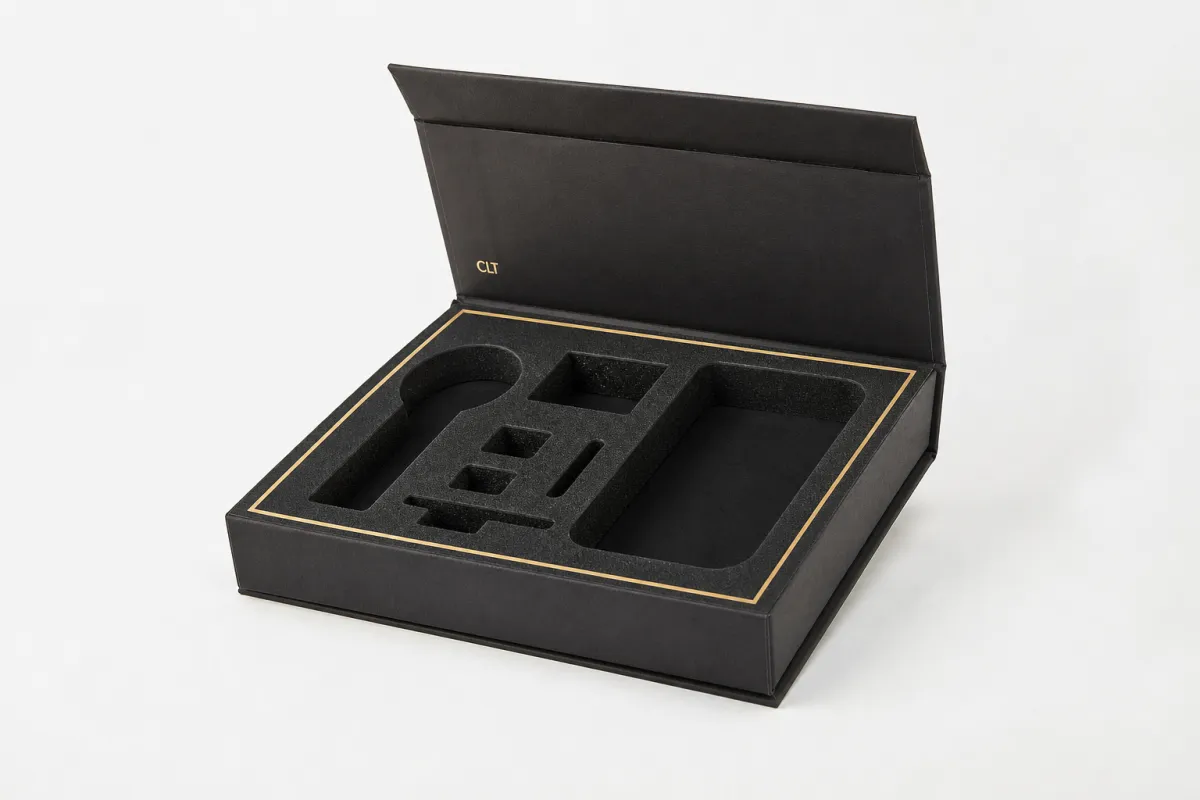
Most packaging failures begin with movement. If a product can slide, tilt, or strike the inside corner of a carton, the package is already working against itself. printed foam inserts for boxes stop that motion at the source by creating a fitted nest around the item, so the box behaves like a coordinated system instead of a loose container filled with hope.
The customer experience matters just as much. People do not open a premium kit and admire the corrugated flute. They notice whether the product is centered, whether it lifts out cleanly, and whether the inside looks intentional. That is why printed foam inserts for boxes show up so often in electronics, fragrances, cameras, tools, and gift sets. The insert serves protection, presentation, and a quiet signal that the brand pays attention to details.
A lot of buyers miss that balance. They spend on a better carton, then place generic void fill inside and call it done. That may be acceptable for low-risk goods, but it is a weak approach for anything heavy, fragile, polished, or high-margin. A thicker box does not stop abrasion. It does not prevent a bottle neck from breaking. It does not protect a machined edge from rubbing through a finish. printed foam inserts for boxes do that work because the product is held, not just surrounded.
Branding has a role too. Printing on the foam creates space for a logo, orientation arrow, product name, or a simple lift cue. Those details sound small until they show up in a real unboxing sequence. A clean mark can make the package feel ordered and complete, while a blank slab of foam can look generic even when the fit is excellent. That sounds small, but it is kinda the whole job. printed foam inserts for boxes often separate a package that is merely functional from one that feels finished.
If the box looks premium but the product rattles, the packaging failed. A strong reveal with poor fit is still a bad pack-out.
From a buyer's point of view, the insert is also where the post-shipping experience gets controlled. A product that fits too tightly frustrates customers and slows packing. A product that sits too loosely feels cheap and raises the odds of damage. printed foam inserts for boxes let you tune that balance instead of guessing, which is why they deserve planning time early in the process.
A practical benchmark helps here: identify the damage mode before you sketch the cavity. Impact, vibration, surface scuffing, compression, or presentation all lead to different design choices. Once that is clear, the insert brief gets much easier. The phrase printed foam inserts for boxes covers a wide range of builds, but the best ones always start with the same order of priorities: protect the product first, then make the interior look like it belongs to the brand.
How printed foam inserts for boxes are made and used
The basic process is straightforward. The foam is selected, cut, routed, die-cut, water-jet cut, or molded into a shape that matches the product footprint, and then the visible surface is printed or branded. With printed foam inserts for boxes, the cut matters as much as the print because a sharp logo does not help if the cavity is uneven or the product rests on a pressure point.
In use, the insert sits inside the carton and works like a custom restraint. The outer box becomes the shipping shell. The foam absorbs load, keeps the item centered, and limits side-to-side motion. For sets with multiple components, the insert can also separate parts so metal does not touch glass, coated surfaces do not rub together, and small accessories do not drift into the wrong corner during transport. That is the real value of printed foam inserts for boxes: they turn a carton into a controlled environment.
Common foam materials behave differently. EVA is often chosen for a smoother look and a cleaner presentation. PE is popular for firmer support and better resilience in many shipping situations. PU foam can be softer and more cushion-like, which helps with delicate items but is not always the best choice for sharp-edged or heavy products. None of these is automatically better. The right choice depends on crush resistance, appearance, cut quality, and the level of branding you want. That is why printed foam inserts for boxes should be specified around product behavior rather than around a material label alone.
Branding can be applied several ways. Screen printing is common for bold logos and simple marks. Heat transfer works for some visual effects. Laser marking can deliver a clean, understated result on certain materials. Each method changes setup cost, production speed, and final appearance. If the brand wants strong contrast, a print method with solid opacity makes sense. If the goal is restrained luxury, a subtle mark or blind impression may fit better. The same printed foam inserts for boxes can look very different depending on the branding method, and that is the part many teams underestimate.
Where do they make the most sense? Premium retail packaging, subscription boxes, sample kits, bottle sets, medical or laboratory device kits, and export packaging where transit risk is real. They also work well when the product needs repeated repacking, because a fitted cavity speeds pack-out and reduces mistakes. If the package has to look orderly every time it is opened, printed foam inserts for boxes are doing both a physical and visual job.
For buyers comparing package systems, it helps to remember that the insert is not a luxury add-on. It is a control layer. If you are also reviewing cartons, sleeves, or display packaging, our Custom Packaging Products page is a useful place to compare structures before you lock the insert spec.
For brands working under transit standards, it is smart to think beyond appearance. Packaging teams often use ISTA test methods or ASTM-style evaluation to check whether the pack-out survives vibration, drop, and compression. You do not need to be a standards nerd to benefit from that discipline; you just need to know that a pretty mockup is not the same thing as a tested system. The International Safe Transit Association has a useful overview of packaging test approaches at ista.org.
Key factors that affect fit, protection, and branding
Fit is the first variable, and it is less forgiving than most people expect. You need the actual dimensions of the product, not just the catalog size. That means length, width, depth, protrusions, fragile edges, button positions, charging ports, closures, and any shape that extends past the main body. printed foam inserts for boxes are only as accurate as the measurements behind them. If the insert is built from a sketch instead of a real sample, you are gambling with tolerances.
Compression and density come next. Softer foam can cushion delicate items more gently, but it may also collapse faster under load. Denser foam tends to hold shape better, support heavier products, and resist permanent dents after repeated use. For many buyers, the sweet spot is a material that protects during transit while still allowing the customer to remove the product without a wrestling match. A loose fit wastes protection; a tight fit turns every unboxing into a tug-of-war. That is a big reason printed foam inserts for boxes need a physical sample review before full production.
Brand contrast matters more than people admit. Dark foam with subtle marking communicates something very different from bright print on a light surface. A luxury cosmetic line may want restrained branding and a soft reveal. A technical product may benefit from bold orientation marks and clear labeling. The insert should match the product tier, not just the logo file. Good printed foam inserts for boxes make the interior feel aligned with the product's market position.
Environmental conditions also matter. Humidity, temperature swings, long transit routes, and stacking pressure can all affect performance. A foam that looks ideal in a clean sample room may behave differently after a few days in a hot truck or a damp warehouse. That is why experienced packagers test under realistic conditions instead of judging only by appearance. If the shipment is moving through multiple handoffs, the design needs enough resilience to survive those touches without losing shape. printed foam inserts for boxes are not just packaging art; they are part of the distribution system.
Then there is assembly. If the packer has to force the product in, line up tiny marks by eye, or twist the item three times before it seats correctly, the insert is inefficient. It may even create damage during packing. A good insert should guide the product naturally. The best printed foam inserts for boxes make the packing line faster, not slower. That matters whether you ship 100 orders a month or 10,000.
One more practical point: the customer should be able to remove the product without damaging the foam or fighting the fit. A snug insert is good. A stubborn insert is not. If the product requires too much force, the design probably needs relief cuts, a deeper cavity, or a different density. That is the kind of detail that separates a decent concept from a package people actually enjoy using. printed foam inserts for boxes should support the unboxing, not fight it.
For sustainable projects, material choice also intersects with sourcing. If your outer carton needs recycled content or FSC-certified paperboard, that can fit well with a cleaner insert plan. The Forest Stewardship Council explains certification and responsible sourcing here: fsc.org. Foam is not paperboard, of course, but the surrounding pack system can still reflect a more careful material strategy.
Process and timeline: from brief to production steps
The process should begin with a real brief, not with a vague "need foam insert" email. Send product dimensions, carton size, product weight, finish, fragility concerns, and logo artwork if the insert will be branded. If the product has uneven surfaces or delicate parts, include photos or a CAD file. The better the brief, the fewer rounds of correction later. That is especially true for printed foam inserts for boxes, because one wrong assumption can affect both cut accuracy and print placement.
Design comes next. The supplier lays out the cavity, chooses the foam type, confirms thickness, and checks whether the product sits cleanly without pressure points. A solid design review should answer practical questions, not just aesthetic ones: Can the customer lift the product out without tearing the foam? Does the carton close without compressing the insert? Is there enough clearance for print registration and trimming? These are the questions that keep printed foam inserts for boxes from becoming expensive mockups that never scale.
Prototyping is where most risk gets removed. A sample or pre-production version lets you verify fit, print placement, logo sharpness, cavity depth, and pack-out speed. If the item is expensive or the launch matters, do not skip this. One prototype is usually cheaper than one production run that misses the mark. I would rather see a buyer spend a little more time on sample approval than pay for 5,000 units that are technically usable but awkward enough to frustrate the warehouse. printed foam inserts for boxes deserve that extra step.
Production usually follows a simple sequence: cutting, finishing, printing, inspection, and carton-fit verification. The best suppliers document this sequence so the order does not drift between jobs. That matters for repeat orders, because a packaging spec that lives only in someone's memory is not a spec; it is a future problem. If your production team can verify the insert against the carton before shipment, the odds of a clean launch go up. That is the advantage of treating printed foam inserts for boxes as a controlled production item instead of a one-off craft job.
Timeline depends on complexity. Simple runs with standard foam and basic print can move fairly quickly once artwork and measurements are approved. Custom shapes, special tooling, multiple SKUs, or layered inserts take longer. Add time if you want revisions, packaging testing, or brand sign-off across more than one department. In practice, simple jobs are often completed in roughly 10 to 15 business days after approval, while more complex branded inserts may need 3 to 5 weeks or more, especially if tooling or multiple samples are involved. That range is not a promise; it is a realistic planning window for printed foam inserts for boxes.
If the project is tied to a product launch, count backward from the ship date and build in sample approval time. That one step prevents the classic panic order, where everyone discovers the insert is wrong two weeks before freight leaves the dock. The truth is boring but useful: most delays are caused by missing measurements, late artwork, or unclear approval ownership, not by the foam itself. printed foam inserts for boxes are easier to execute when one person owns the final spec.
Cost, pricing, MOQ, and quote drivers for printed foam inserts for boxes
Price is driven by a few predictable things: foam type, thickness, cavity complexity, print method, order quantity, and whether custom tooling or dies are needed. If the shape is simple and the print is limited to a single logo, costs stay more reasonable. If you ask for intricate cutouts, multiple colors, tight tolerances, and a premium foam grade, the quote moves up fast. That is normal. printed foam inserts for boxes are custom components, not commodity peanuts in a bag.
MOQ matters because setup labor has to be spread across the run. A small order often looks expensive per unit because cutting setup, print preparation, inspection, and packaging do not shrink just because the quantity does. That is why a 200-piece run can look surprisingly pricey while a 5,000-piece run looks much healthier on a per-unit basis. For printed foam inserts for boxes, the unit cost curve usually improves as quantity rises, but only if the design stays stable.
Quote comparisons are where buyers get tripped up. Two suppliers may quote the same outside dimensions but use different foam grades, different print methods, different tolerances, and different packaging for shipment. One quote may include a sample and inspection. Another may not. So the cheapest line item is not always the cheapest job. If the insert arrives warped, poorly printed, or too loose, the real cost is higher than the invoice. That is the hard side of printed foam inserts for boxes pricing.
Hidden cost traps show up in rushed schedules, repeated revisions, oversized cutouts, and very tight tolerances. Waste increases when the foam sheet size does not nest efficiently. Labor increases when the layout is awkward to cut or pack. If artwork changes after approval, you can end up paying for a second round of setup. That is why I tell buyers to ask for sample costs, tiered pricing, and re-order pricing before they sign off on printed foam inserts for boxes.
| Foam option | Best use | Typical thickness range | Price range at medium volume | Main tradeoff |
|---|---|---|---|---|
| EVA | Premium presentation, smooth finish, tighter branding | 10-30 mm | $0.55-$1.40 per unit | Often higher cost than basic foam |
| PE | Firmer support, shipping protection, repeat handling | 10-40 mm | $0.35-$0.95 per unit | Can look less plush than EVA |
| PU | Light cushioning for delicate or lighter products | 15-50 mm | $0.28-$0.80 per unit | Can compress more over time |
| High-density custom foam | Heavier kits, tools, and structured product sets | 10-35 mm | $0.65-$1.80 per unit | Tooling and setup can increase MOQ pressure |
Those numbers are rough planning ranges for branded inserts in medium production quantities, not a quote. Freight, artwork complexity, inspection standards, and order size can move them up or down. For a 5,000-piece run, printed foam inserts for boxes might land comfortably in the lower part of those ranges; for a 300-piece launch order, the same insert can feel much more expensive because setup is being spread across fewer units.
There is also a useful question buyers skip: what is the real cost of a damaged product? If the insert cuts damage claims by even a small percentage, the packaging may pay for itself quickly. That is especially true for high-margin items or products that create customer service headaches when they arrive scuffed or broken. In those cases, printed foam inserts for boxes are not a decorative spend. They are damage prevention with branding attached.
My practical advice is simple. Ask for tiered pricing, ask what changes at the next quantity break, ask whether the print method changes the lead time, and ask how reorders are handled. If the supplier cannot explain those parts clearly, the quote is not ready. Good packaging buying is boring in the best way: clear specs, clear numbers, clear expectations. That is how printed foam inserts for boxes stay profitable instead of becoming a recurring headache.
Common mistakes with printed foam inserts for boxes
The biggest mistake is building the insert from a sketch instead of the actual product. The sketch may look perfect on screen, but the real item has tolerances, curves, seams, and small protrusions that the drawing forgot. That is how you end up with an insert that fits the idea of the product, not the product itself. With printed foam inserts for boxes, the physical sample matters more than the marketing image.
Over-branding is another common miss. A logo in the wrong place can clutter the reveal, make the insert harder to read, and distract from the product. You do not need to print every square inch to prove the brand is there. Often a clean mark, one orientation cue, and a product name are enough. The best printed foam inserts for boxes support the item. They do not shout over it like a bad trade-show banner.
Choosing foam by price alone is a cheap mistake that gets expensive later. Low-grade material can crumble, stain, warp, or lose shape after a short period of use. It may look fine in the sample photo and then go soft, dusty, or uneven in real packing conditions. That is bad news for returns and even worse for unboxing. If the insert needs to survive repeated handling, printed foam inserts for boxes should be evaluated on durability, not just on invoice cost.
Pack-out speed is easy to overlook until the warehouse starts using the product. If staff need too much force, too many steps, or awkward rotations to seat the item, your package is now slowing fulfillment. That is a labor problem, not just a design problem. The better choice is a cavity that guides the product naturally and lets the packer work quickly. Good printed foam inserts for boxes save time during assembly instead of stealing it.
Do not skip approval checks. A foam insert can look correct on a monitor and still fail in the hand. Screen color, print placement, cavity depth, and carton fit all deserve a sample review. Transit testing is worth the time too, especially if the product is fragile or the shipment will travel far. A short test now beats a long apology later. For brands that want a standard framework, the Packaging Machinery Manufacturers Institute and related industry resources at packaging.org are a good place to understand broader packaging expectations.
If you are comparing materials, keep the system in mind. The insert, carton, and closure all need to work together. A great foam cavity inside a weak box is still a weak system. A strong carton with a sloppy insert is still a sloppy system. printed foam inserts for boxes are only one part of the package, but they are often the part that exposes whether the rest of the structure was thought through.
Expert tips and next steps for printed foam inserts for boxes
Start with a real packaging brief. Include product dimensions, carton size, product weight, finish, fragility, and the visual role you want the insert to play. If the insert is meant to look premium, say so. If it is meant to speed warehouse work more than impress a customer, say that too. Vague requests create vague quotes, and vague quotes are where printed foam inserts for boxes start drifting off spec.
Ask for a sample anytime the product is expensive, oddly shaped, or part of a premium launch. That is not overcautious. That is basic risk control. A prototype lets you check fit, print placement, removal force, and whether the insert actually helps the product feel valuable when the box opens. One sample can save you from an entire production run that looks good on paper but feels wrong in hand. printed foam inserts for boxes reward that kind of discipline.
Compare suppliers on more than unit price. Lead time matters. Print quality matters. Foam consistency matters. Reorder stability matters. If one supplier changes the foam density every time you place a reorder, you do not have a supply plan; you have a surprise program. Ask who is responsible for spec control, sample approval, and carton-fit verification. Those details are often more important than a few cents on the quote for printed foam inserts for boxes.
Build a packing test into the process. Have the warehouse team pack several units, open them, and repack them. Watch for friction points, confusion, too much force, and any step that slows the line. Packaging people love to talk about protection, but speed matters too. If an insert is difficult to use, the problem will show up immediately in fulfillment. That is why I treat printed foam inserts for boxes as both a design item and a workflow item.
If you want a practical action plan, keep it simple: measure the product, define the protection target, request a sample, test the pack-out, and lock the spec. Then keep the approved print file and cavity drawing in one place so reorders do not drift. That is how brands get consistency without wasting time. The best printed foam inserts for boxes are not the flashiest ones; they are the ones that ship well, open cleanly, and reorder without drama.
There is one more thing buyers should remember. Foam does not magically fix a bad package architecture. If the carton is undersized, the closure is weak, or the product has a sharp edge that needs additional restraint, the insert should be part of a broader packaging system. A smart insert design reduces claims, improves presentation, and makes packing smoother, but only if the rest of the package is built to support it. That is why printed foam inserts for boxes are best treated as a system decision, not a last-minute accessory.
The practical takeaway is simple: measure the product, identify the damage mode, choose a foam that matches the load and presentation, then approve a sample before full production. If you do those four things in order, printed foam inserts for boxes stop being a guessing game and become a controlled part of the package. Skip them, and the first real test will happen in transit, which is usually the most expensive place to discover a mistake.
Frequently asked questions
What products work best with printed foam inserts for boxes?
The best candidates are fragile, premium, or oddly shaped products that need both protection and presentation. Common examples include electronics, bottles, tools, cosmetics, medical devices, and gift sets. If the product moves in transit or looks better in a custom reveal, printed foam inserts for boxes are usually worth the upgrade.
How do I choose the right foam thickness for printed foam inserts for boxes?
Start with product weight, fragility, and the amount of crush protection you need during shipping. Thicker is not automatically better; too much thickness can waste space and make the insert bulky. Ask for a sample pack-out so you can see whether the product seats securely without feeling forced. That practical test matters more than guessing. printed foam inserts for boxes should fit the item, not the other way around.
Are printed foam inserts for boxes expensive for small orders?
Small orders usually cost more per unit because setup, cutting, and print preparation are spread over fewer pieces. MOQ and tooling can matter as much as material cost, so a low-volume run may look pricey at first. Request tiered pricing so you can compare small-run and bulk pricing before you commit to printed foam inserts for boxes.
How long does it take to produce printed foam inserts for boxes?
Simple designs move faster than custom shapes with special print requirements or multiple approval rounds. Sampling, revisions, and tooling can add time before production even starts. Ask for both standard lead time and rush options so you can plan around launch dates. For more complex jobs, printed foam inserts for boxes may need several weeks rather than a quick turnaround.
What should I send when asking for a quote on printed foam inserts for boxes?
Send product dimensions, carton size, product weight, quantity, foam preference, and logo artwork if branding is required. Include photos or CAD files if the product has uneven surfaces, fragile parts, or unusual cutouts. The better the brief, the better the quote, and the fewer ugly surprises later. That is the fastest way to get accurate printed foam inserts for boxes pricing.