Buyer Fit Snapshot
| Best fit | printed folding cartons price for packaging buyers comparing material specs, print proof, MOQ, unit cost, freight, and repeat-order risk where brand print, material, artwork control, and repeat-order consistency matter. |
|---|---|
| Quote inputs | Share finished size, material target, print colors, finish, packing count, annual reorder estimate, and delivery region. |
| Proofing check | Approve dieline scale, logo placement, barcode or warning zones, color tolerance, and any recyclable or compostable wording before bulk production. |
| Main risk | Vague material claims, crowded artwork, or missing packing details can create delays even when the unit price looks attractive. |
Fast answer: Printed Folding Cartons Price: What Really Drives Cost should be specified like a repeatable production item. The safest quote includes material, print method, finish, artwork proof, carton packing, and reorder notes in one written spec.
What to confirm before approving the packaging proof
Check the product dimensions against the actual filled item, not only the sales mockup. Ask for tolerance on folds, seals, hang holes, label areas, and retail display edges. If the package carries a logo, QR code, warning copy, or legal claim, reserve that space before decorative graphics fill the panel.
How to compare quotes without losing quality
Compare board or film grade, print process, finish, sampling route, tooling charges, carton quantity, and freight assumptions side by side. A lower quote is only useful if the supplier can repeat the same color, closure quality, and packing count on the next order.
Printed Folding Cartons Price looks clean on a spreadsheet. Then the spec sheet shows up and the number starts moving. Board grade. Coating. Die-cut complexity. Glue pattern. Maybe a window patch. Maybe a tamper feature. A carton quote is rarely just a print quote, and anyone pretending otherwise is selling you a neat little fantasy wrapped in paperboard.
Two cartons can share the same outside dimensions and still land in completely different price brackets. One needs heavier board. Another needs tighter folding tolerances. A third asks for a finish that slows the line and creates more setup work than the buyer expected. If you buy packaging for a living, you already know the smart quote starts with fit, function, and line speed. The lowest unit number is useless if the carton is wrong for the product.
I like a carton quote that answers three questions fast: does it protect the product, does it assemble cleanly, and does it price fairly at the quantity I actually need? If those answers line up, the Printed Folding Cartons price is easier to defend because the spec matches the job instead of fighting it. That is the whole point, really.
Printed Folding Cartons Price: Start With the Product Fit
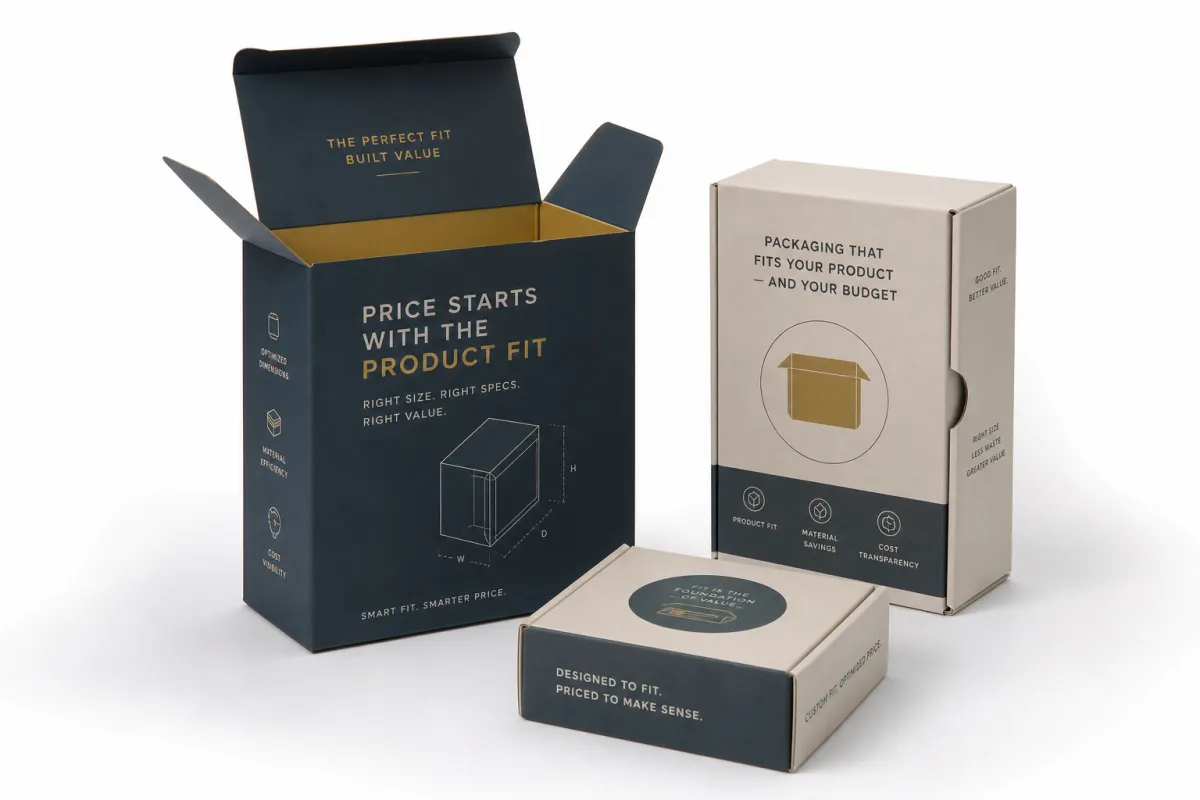
The printed folding cartons price usually moves more because of board grade and structure than because of color count. That surprises people until they compare a light cosmetic tuck box with a heavier food carton that needs more stiffness, stronger flaps, and less drama at the folder-gluer. I have seen a seemingly tiny change in board thickness move a quote more than a full graphic refresh. Packaging is funny like that. Not really funny, but you get it.
A carton shape is part of the price. Straight tuck, reverse tuck, auto-bottom, sleeve, and crash-lock styles all use different amounts of board and different amounts of labor. The press matters, sure. The converting side matters just as much. The printed folding cartons price is not only a printing decision. It is a converting decision, and sometimes that is where the real money hides.
That is why two cartons with identical outside dimensions can still cost differently. One may use 18 pt SBS with a simple tuck closure. Another may call for 24 pt board, a reinforced bottom, and tighter folding tolerances so the product does not wobble in the tray. Once those details show up, the printed folding cartons price shifts because material usage and machine time shift. Simple. Not easy, but simple.
There is a plain business reason to Choose the Right carton structure first. A carton that opens cleanly, packs fast, and sits well on shelf can cut labor and reduce damage in fulfillment. A slightly higher printed folding cartons price can still be the better buy if it prevents crushed corners, rework, or freight waste. Cheap packaging that creates bigger problems is not cheap. It is expensive in slow motion.
- Product protection: heavier board and better closures help reduce transit damage.
- Packing speed: a carton that forms well can save seconds on every unit.
- Freight efficiency: flat ship formats reduce cube and storage burden.
- Shelf impact: the right structure helps the package stand up and read clearly.
Before you ask for a quote, define the job in plain language: product weight, needed clearance, hand pack or machine pack, and how much the carton has to carry the brand story. The clearer that picture is, the easier it is to estimate the printed folding cartons price without padding the number for uncertainty. If the supplier has to guess, you are gonna pay for the guessing somewhere.
A cheap quote is not the same thing as the lowest landed cost. If the carton slows packing, drives up damage, or looks weak on shelf, the savings vanish fast.
What a Printed Folding Carton Includes
A folding carton is a formed paperboard package that can be printed, die-cut, folded, glued, and shipped flat so it uses storage space efficiently until the line needs it. That basic definition matters because the printed folding cartons price comes from all of those steps, not just the printing stage. Buyers sometimes focus on ink coverage and forget the converting side entirely. That is how budgets get weird.
Common structures include tuck end, reverse tuck, straight tuck, auto-bottom, and sleeve styles. Tuck end cartons show up a lot in cosmetics, supplements, and lightweight consumer goods. Auto-bottom designs make more sense for heavier products or lines that need faster hand packing. Structure changes the printed folding cartons price more than a small artwork tweak ever will.
Structures that affect cost
A simple straight tuck can be economical because it uses a familiar die and a straightforward glue pattern. Reverse tuck versions can fit better for certain retail orientations. Auto-bottom and crash-lock styles add stability, but they also add complexity. If the carton needs a window patch, hang tab, or special closure, the printed folding cartons price rises because converting takes more passes and more inspection. More passes means more touchpoints. More touchpoints usually means more cost. No magic here.
Board grades and caliper
Material choice matters just as much. SBS is popular for a clean print surface. C1S and C2S give different print and feel options. Kraft supports a more natural look. Recycled board can help with sustainability goals depending on the product and how picky the end market is about appearance. Caliper, or board thickness, affects stiffness, fold performance, and the feel in hand. A thicker board can improve perceived value, but it also affects the printed folding cartons price because it changes raw material usage and machine behavior.
Print and finish options
Buyers often ask for gloss or matte coatings, aqueous varnish, foil stamping, embossing, debossing, spot UV, soft-touch lamination, and specialty windows. Each finish adds visual value. Each finish also adds setup, handling, or curing time. A carton with one color and a light aqueous coat will not price the same way as a carton with full-coverage graphics, foil, and raised texture. If you are trying to protect the printed folding cartons price, trim with intention instead of guessing. Pick the finishes that actually pull weight for the brand.
For sourcing programs that care about responsible fiber, certification matters too. FSC-certified board is a common request, and the chain-of-custody basics are explained clearly at fsc.org. That does not automatically make a carton more expensive in every case, but it can narrow the board options you are shown and therefore affect the printed folding cartons price you receive. Availability also changes by region and mill supply, so that part is not always neat and tidy.
Use cases help narrow the build quickly:
- Cosmetics: often need premium appearance, neat folds, and tactile finishes.
- Supplements: may need tamper evidence, compliance text, and efficient pack-out.
- Candles: usually benefit from stronger board and protective insert planning.
- Specialty foods: may require specific coatings or food-contact awareness.
- Consumer electronics: often need tighter die-cut tolerances and better protection.
Specifications That Shape the Quote
If you want an accurate printed folding cartons price, the spec sheet has to do real work. Dimensions, panel layout, clearance, board grade, and closure style tell the supplier how much material is needed and how the carton will behave on press and on the folder-gluer. Vague specs usually produce vague pricing. That is not a supplier problem. That is math behaving like math.
Artwork variables matter too. A one-color job with a simple logo is not priced the same as a five-color build with PMS matching, heavy coverage, white ink, or large flood areas. Ink usage, setup time, proofing, and registration control all shift the printed folding cartons price in ways buyers can see once the quote is broken down. Even small copy changes can affect plate work and prepress checks, which is where a lot of the annoying little costs live.
Artwork and press setup
Clean files reduce friction. A usable dieline, correct bleed, embedded images, and clear callouts for spot colors can prevent rounds of prepress corrections. If the art has nested elements, fine type, or reverse knockouts, those details may need a proof check or a revised trap strategy before the job can move ahead. That is one reason the printed folding cartons price can rise after a vague brief turns into a precise production file. Precision is good. Precision also has a bill attached.
Simple rule: fewer surprises in the file, fewer surprises in the bill. A supplier should be able to tell you where a revision cost is coming from, whether it is a dieline adjustment, a new separation, or a change in finish coverage. A clear file is not just tidy. It protects the printed folding cartons price from avoidable rework and keeps the production schedule from wobbling.
Compliance and performance needs
Some cartons need more than retail appeal. Food-contact expectations, child-resistant features, tamper evidence, hanging tabs, or shelf-ready formats all influence construction choices. If the carton must survive distribution testing, supply chain teams may reference ISTA methods or ASTM D4169-style performance checks. Those requirements can change the spec, and once the spec changes, the printed folding cartons price changes with it.
Keep expectations realistic. A carton that needs a reinforced bottom and tamper evidence is not supposed to price like a basic tuck box. The goal is not the lowest number on the page. The goal is a carton that meets the handling requirement without turning the package into overbuilt baggage. That balance is what keeps the printed folding cartons price fair.
Finish decisions can also affect production sequence. A soft-touch laminate can create a richer presentation, but it adds another pass and another layer of quality control. Foil and embossing can lift the shelf story, yet they raise setup time and tooling costs. If the budget is tight, those are the details to challenge first when you are pressure-testing the printed folding cartons price.
Good to know: if the carton art is still moving, lock the structure and dimensions early. Late changes to panel sizes or copy-heavy panels can force a new dieline and, in some cases, a revised quote. I have seen teams burn a week because they changed a side panel from 1.75 inches to 2.0 inches after approval. Tiny on paper. Annoying in production.
Printed Folding Cartons Price: Cost Drivers and MOQ
The printed folding cartons price is usually built from a few very concrete pieces: board cost, press setup, die cutting, finishing, gluing, packing, and quality checks. If a quote does not make those buckets visible, you are left guessing where the money goes and what can be adjusted. Transparent pricing is not a luxury. It is the bare minimum for sane purchasing.
MOQ matters because setup costs are shared across the run. A higher quantity usually lowers the per-carton cost, even though the total order gets larger, because the same plates, die, and machine setup are spread across more pieces. That is one of the most reliable rules in folding carton pricing, and it is why the printed folding cartons price at 2,500 pieces can look very different from the printed folding cartons price at 25,000. There is no trick there. Just fixed costs doing fixed-cost things.
Multiple SKUs, versioned artwork, rush timing, and split shipments can all raise the quote. Each change adds handling, scheduling, and often extra proofing. A supplier is not just printing paper; they are balancing machine time, changeovers, and inspection, which is exactly why the printed folding cartons price shifts when the order becomes more complex.
Here is a practical comparison of how quantity can affect a typical custom carton job. The numbers below are examples, not a universal rate card, and they can move with board market swings, finish selection, and regional labor. Still, the pattern is useful. In each tier, the printed folding cartons price depends on board, coverage, and finishes, yet the general downward slope in unit cost usually holds.
| Run size | Typical unit range | What usually drives it | Best fit |
|---|---|---|---|
| 2,500 pieces | $0.32-$0.70 | Setup costs spread over a small run; premium finishes matter more | Launches, pilot programs, seasonal tests |
| 5,000 pieces | $0.18-$0.42 | Better absorption of press, die, and converting setup | Small retail rollouts, replenishment starts |
| 10,000 pieces | $0.12-$0.29 | More efficient material usage and production flow | Stable SKUs with predictable demand |
| 25,000 pieces | $0.08-$0.20 | Lower per-unit setup burden and better press efficiency | Established products, wider distribution |
That table also explains why apples-to-apples comparison matters so much. A quote that looks higher on unit cost may include better board, cleaner finishing, or more reliable pack-out. If it reduces transit damage or speeds hand assembly, the printed folding cartons price may be higher on paper but lower in the real order cycle. I would rather pay for fewer headaches than chase the cheapest line item and buy myself a pile of surprises.
A better way to compare quotes is to look at total order cost instead of unit cost alone. Add freight, tooling, proof charges, and any special handling. Then ask whether the carton will improve shelf appeal or pack efficiency enough to justify the number. If the answer is yes, the printed folding cartons price is doing its job instead of just sounding low.
Here are the most common cost drivers buyers should check line by line:
- Board grade: SBS, kraft, recycled board, and caliper all affect material cost.
- Print coverage: heavy ink coverage, PMS matching, and white ink can slow the run.
- Finishes: foil, embossing, soft-touch, lamination, and spot UV add setup and handling.
- Tooling: die cutting, embossing dies, and specialty inserts create one-time charges.
- Order complexity: multiple SKUs or split shipments raise labor and scheduling effort.
Process and Timeline From Quote to Delivery
A dependable printed folding cartons price starts with a clean intake. The supplier needs carton dimensions, quantity, target finish, product weight, artwork files, and any compliance notes before a serious quote can be built. If those basics are missing, the quote will either be padded or revised later. Neither one helps planning, and both are mildly irritating.
The next step is proofing. A good supplier reviews the dieline, confirms the structure, checks the artwork against the layout, and flags issues before production starts. This is the stage where line breaks, barcode placement, bleed, and panel orientation can still be corrected without wrecking the schedule. It is also where a realistic printed folding cartons price starts to feel trustworthy because the build is being checked against the real job instead of a wish list.
A straightforward production flow usually looks like this:
- Gather specs, quantities, and artwork.
- Confirm board, structure, and finish.
- Review proof and approve the dieline.
- Print, die cut, finish, and glue the cartons.
- Pack flat, inspect, and ship.
Timelines vary, but a common planning window for a standard folding carton job is 12-15 business days from proof approval to completion, with simpler runs sometimes moving a bit faster and premium finish jobs taking longer. Foil, embossing, window patching, multiple SKUs, and freight routing can add several days. The printed folding cartons price should be considered alongside the schedule, because a rush charge can erase a low unit number quickly.
Plan backward from the launch date or replenishment deadline. That sounds basic, yet many issues happen because approvals are compressed. A buyer may think they are saving time by rushing a proof, but the result is often extra freight cost, a revision charge, or a carton that arrives too late to help. A calmer schedule usually protects both the budget and the printed folding cartons price.
For regulated products or sensitive supply chains, add another layer of review. Food packaging may need a careful materials discussion, while retail shipments may need transit readiness checks. If the carton has to endure rough handling, shipping standards like ISTA methods are worth discussing early. That is the point where quality, test criteria, and the printed folding cartons price should be aligned before anything is approved.
Why Choose Custom Logo Things for Folding Cartons
Custom Logo Things approaches folding cartons the way a practical packaging buyer wants to see them handled: with real production variables, clear expectations, and enough detail to make the quote usable. That matters because the printed folding cartons price should be tied to a build that can actually be made, not a rough guess that sounds convenient until production starts.
For many buyers, the value sits in the guidance. A carton that needs a lighter board, a different tuck direction, or one less premium finish can often save money without making the package look stripped down. A knowledgeable team should help you see those tradeoffs clearly so the printed folding cartons price fits the budget and still supports shelf presence. That kind of advice is boring in the best way. It saves money before anyone gets dramatic.
Communication during prepress and production is where expensive mistakes are usually avoided. If the dieline is reviewed carefully, the artwork is checked against the fold pattern, and changes are documented early, the job is far more likely to run clean. That kind of follow-through does not sound flashy, but it is exactly what keeps the printed folding cartons price from drifting after approval.
The process should also work for both smaller test runs and larger replenishment orders. A launch carton may only need a few thousand pieces, while a steady SKU may need a much larger repeat order. In both cases, the buyer should know what the board, finish, and quantity are doing to the printed folding cartons price, and what can be adjusted if the target number needs to move down.
Experience matters here because carton pricing is rarely about one isolated variable. It is the combination of structure, print method, finish, and production method that shapes the final number. I have seen buyers save real money by switching from a heavy decorative finish to a cleaner print layout with stronger typography. The package still looked premium. It just stopped paying for effects nobody could actually see.
The best carton partner is not the one that throws out the lowest figure first. It is the one that can explain the build, the cost, and the reason behind every line item.
That is the real value for a brand team or operations team. You get a carton spec that is repeatable, priced against the actual job, and less likely to create surprises on the factory floor or at the dock. When the quote is grounded in production reality, the printed folding cartons price becomes a tool instead of a gamble.
Next Steps to Lock In Your Printed Folding Cartons Price
The fastest way to get a dependable printed folding cartons price is to gather the essentials before you ask for a quote. Send the carton dimensions, quantity, product type, board preference, finish ideas, and final artwork files if you have them. If you do not have final art yet, a clean dieline and a clear structural brief still give the supplier enough to build a meaningful estimate.
Ask for line-item pricing whenever possible. That lets you see how board, printing, finishing, tooling, and freight contribute to the total. It also makes it easier to spot where a simpler structure or a different board grade could lower the printed folding cartons price without making the carton look cheaper on shelf.
Compare at least two structure options if the job allows it. A small change in closure style, board thickness, or finish combination can sometimes trim material waste or shorten the run, and that can improve the printed folding cartons price more than chasing a tiny artwork adjustment ever will. If the first quote feels high, do not assume the product cannot be packaged well; often it just needs a smarter build.
Here is the cleanest decision rule I can give you: if a carton protects the product, packs efficiently, and presents the brand well, a modestly higher unit cost may still be the better business move. That is why the last review should always ask about function, schedule, and total order value together. The printed folding cartons price only tells the whole story when those three pieces are in the same conversation.
So, define the specs clearly, review the proof carefully, and approve the quote that matches the product, the timeline, and the real order size. That approach gives you a more accurate printed folding cartons price and a carton that is ready to perform where it matters: on line, in transit, and on shelf. No theatrics. Just packaging that does its job.
What changes printed folding cartons price the most?
Board grade, carton size, and finish complexity usually have the biggest impact on printed folding cartons price. Quantity matters too, because setup costs are spread across more units as the run gets larger. Special structures, rush timing, and multiple artwork versions can also push the number up. If a quote jumps fast, one of those items is usually the reason.
How does MOQ affect folding carton pricing?
A higher MOQ usually lowers the unit price because press setup and die-cut preparation are shared across more cartons. A very small run can still make sense for launches, limited channels, or seasonal tests. If you are comparing options, ask for a few quantity tiers so you can see where the best break begins. That is the easiest way to avoid guessing.
Can I lower printed folding cartons price without making the carton look cheaper?
Yes. In many cases you can simplify the structure, remove an unnecessary finish, or choose a more efficient board grade and still keep strong shelf appeal. A smart print layout often does more for the eye than stacking several premium effects on one box. A little restraint goes a long way.
How long do printed folding cartons take to produce?
Timing depends on proof approval, artwork readiness, finish choice, and the current production load. Straightforward cartons usually move faster than jobs with foil, embossing, windows, or multiple SKUs. A standard run often takes about 12-15 business days after proof approval, with shipping added on top. Rush jobs can move faster, but they tend to cost more.
What do I need to send for an accurate folding carton quote?
Send carton dimensions, quantity, product type, preferred material, finish requests, and any compliance requirements. Include artwork files or at least a clean dieline so the supplier can evaluate the build correctly. The more specific the inputs, the more reliable the printed folding cartons price will be. If one piece is missing, expect the quote to wobble a bit.


