If you are comparing packaging for a roast line or retail program, a printed Frosted Zipper Bags quote for coffee should tell you more than the unit price. A useful quote helps you judge whether the bag will protect aroma, present well on shelf, and move through filling, carton packing, and shipping without avoidable friction.
Coffee packaging has to do several jobs at once. It needs to look premium, reseal cleanly, hold up in transit, and still be practical for the customer who opens it every morning. Frosted zipper pouches can handle that balance well, but only if the material structure, closure, and print method match the product.
The reason this format keeps showing up in coffee packaging is simple: it can feel refined without looking flashy. A frosted finish softens the view of the contents, the zipper adds everyday utility, and the print surface still gives enough control for restrained branding or more detailed artwork. That combination is hard to beat for a bag that is meant to sit in a kitchen, a cafe display, or a subscription box.
"Coffee packaging only looks straightforward until you start balancing barrier performance, shelf appeal, and the realities of filling and sealing. The quote gets better when the spec is clear."
Why frosted zipper bags work so well for coffee shelf appeal
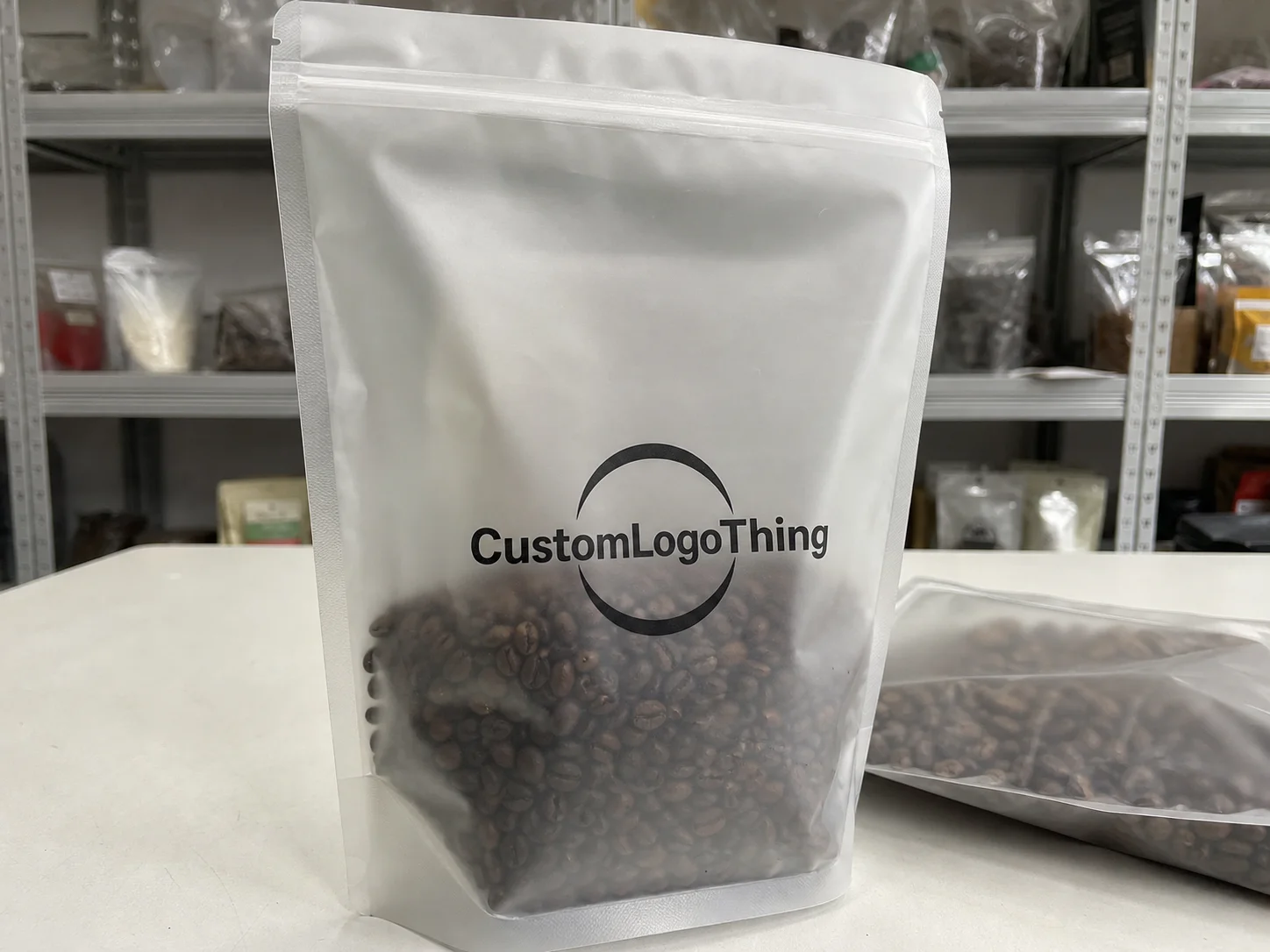
Frosted film creates a specific visual effect that suits coffee. It softens what is inside without hiding it completely, so the package feels controlled and premium instead of plain or overly glossy. That semi-translucent look gives customers a subtle sense of product presence, which can suggest freshness while still protecting the brand presentation.
That matters because coffee is often judged in a few seconds. On shelf, a matte-frost look usually reads cleaner than a standard clear poly bag, and it pairs naturally with dark inks, white ink, or restrained artwork. The result feels intentional rather than generic.
The zipper matters just as much as the finish. Coffee is rarely a one-time-use product, especially in whole bean and ground formats. Customers open the pouch, close it, and reopen it every day, so a reliable press-to-close zipper adds real functional value. If the closure is stiff, weak, or misaligned, the user notices immediately.
Brands often choose this format for retail displays, subscription shipments, sample packs, and premium e-commerce orders because it sits in a useful middle ground. It looks more polished than a basic clear bag, but it can still be configured for efficient carton packing and stable stacking. In practice, that combination can do more for sell-through than a louder design ever would.
For a buyer requesting a quote, it helps to think of the pouch as a retail tool, not just a container. The strongest quote is the one that accounts for visual impact, barrier needs, and packing efficiency at the same time.
Coffee bag construction, material options, and print-ready features
Frosted coffee bags are commonly built from frosted PE, frosted CPP, or a laminated structure that includes a barrier layer. The simpler versions work for lighter-duty retail presentation, samples, and dry goods with less sensitivity to oxygen and moisture. Once freshness matters more, buyers usually move toward laminated film structures that improve barrier performance and sealing reliability.
For roasted coffee, barrier performance is not a minor detail. Oxygen can flatten aroma, and moisture can affect grind behavior and the way the coffee tastes after opening. That is why many coffee brands ask for laminated pouches with stronger sealing and, in some cases, a degassing valve. The right structure depends on roast date, target shelf life, shipping conditions, and how quickly the product will reach the customer.
Zipper style is another choice that deserves attention. Standard press-to-close zippers are common and practical for most coffee SKUs. If the bag is intended for broader retail use, tear notches help the customer open the pack cleanly without stressing the seal area. Child-resistant features are less common for coffee, but they can be discussed if the market or regulatory context calls for them.
Print method changes both appearance and cost. On frosted material, flexographic printing is often used for medium-to-large quantities, while gravure may be selected when artwork complexity, color control, or volume justify the tooling. White underprint is especially useful on translucent film because it improves contrast and keeps small text legible. Without that base layer, logos and fine copy can look weak or muddy, especially if the artwork uses light tones.
Finish choices also affect the final look. A full matte frost gives a softer premium impression, while partial clear windows reveal more of the product for brands that want a direct visual cue. Spot white, solid ink blocks, and carefully positioned transparent areas can all be used to shape how the pouch reads on shelf.
For coffee specifically, a degassing valve should be discussed early if the product is fresh roasted whole bean rather than low-activity dry goods. Once the bag structure changes to accommodate the valve, the quote, tooling, and production setup should reflect that detail from the start.
Printed coffee bag specifications buyers should confirm before quoting
The fastest way to get a useful quote is to define the bag before asking for pricing. Size, film thickness, zipper style, seal width, print colors, and whether the pouch is gusseted or flat all affect both the unit cost and the finished result. If those details are still vague, the first quote is usually only a rough estimate, and the real number may shift once the spec is finalized.
It helps to start with the coffee itself. Whole bean coffee, ground coffee, samples, and retail pouches do not all behave the same in a bag. Fill volume changes the dimensions, and the shape of the product can influence whether a stand-up pouch, side gusset bag, or flat pouch is the right choice. A bag that looks good empty may collapse or bulge once filled, and that changes the shelf appearance immediately.
Artwork details should be ready as well. Vector logo files are preferred, and PMS targets are useful if color consistency matters across batches. Buyers should also confirm whether the design is front-only or full-wrap, because that changes print setup and panel planning. Bleed area, safe margins, and the location of nutrition, roast-date, or lot-code fields should all be checked before approval.
Compliance and handling details matter too. A coffee pouch should be food-contact suitable for its intended use, odor-resistant enough to protect aroma, and engineered for dependable sealing at the fill line. If the bags will ship in cartons to a warehouse or fulfillment partner, pack-out count and carton dimensions should be part of the specification. That prevents a lot of friction later.
Before final approval, ask for a sample reference or dieline. It is the easiest way to verify zipper position, panel layout, label space, and the practical look of the bag once printed. A quote based on a real dieline is usually far more reliable than one based on a rough size description.
- Bag size and gusset style
- Material structure and thickness
- Zipper type and valve requirement
- Print colors and white ink needs
- Artwork files and dieline confirmation
- Carton packing and shipment format
Cost, pricing, MOQ, and quote factors for coffee packaging
Price is driven by a few concrete variables. Bag size is one of the biggest, because larger pouches consume more film and often need a stronger structure. Material gauge and barrier complexity also move the number. A simple frosted pouch with basic print costs less than a laminated barrier bag with a valve, full-wrap graphics, and multiple ink colors.
The number of colors matters more than many first-time buyers expect. A two-color design with open space is generally easier to run than a highly detailed, full-coverage layout. White ink can also add cost, especially when it is used as a base layer to improve visibility on frosted film. Add-ons such as zippers and degassing valves carry their own costs as well.
For planning, buyers usually see a clear separation between three quote bands. A basic frosted zipper pouch sits at the lower end, a laminated frosted pouch with stronger barrier properties moves into the middle, and a valve-equipped coffee bag with full-color print sits at the higher end. That spread is normal. The bag is not just being printed; it is being built to serve a specific storage and handling job.
MOQ has a direct effect on unit economics. Smaller runs usually carry higher per-unit pricing because setup costs, plates, and machine preparation are spread across fewer bags. Larger quantities usually improve the unit price, but only if the forecast is realistic. A buyer is better off comparing the cost of a slightly higher MOQ against the risk of overbuying a design that may change soon.
It is also smart to compare quotes side by side using the same terms. One supplier may quote ex-works pricing, while another includes freight or carton packing details. Some quotes include proofing and tooling; others itemize them separately. If you do not line those up carefully, the lowest quote can become the most expensive once all costs are added.
A solid quote for a Printed Frosted Zipper Bags Quote for coffee should state the MOQ, unit price at tiered quantities, any tooling or plate charges, special finish costs, and whether the valve installation is included. That level of clarity helps buyers compare real options instead of guessing.
| Option | Typical Use | Relative Cost | Notes |
|---|---|---|---|
| Frosted PE zipper pouch | Samples, lighter retail packs | Lower | Good shelf look, limited barrier performance |
| Frosted laminated zipper pouch | Retail coffee, e-commerce, subscription | Medium | Better aroma protection and print presentation |
| Frosted laminated pouch with valve | Fresh roasted whole bean coffee | Higher | Useful when degassing is needed after roasting |
For buyers trying to manage both brand appearance and budget, the best answer is not always the cheapest bag. Sometimes a slightly better structure reduces complaints, improves shelf presentation, and helps the product feel worth the retail price. That is basic packaging economics, not marketing spin.
Process and lead time from artwork approval to shipment
The normal workflow starts with inquiry and specification review. After that comes artwork checking, quotation, proof confirmation, production, quality inspection, packing, and shipment. Each step sounds simple on paper, but delays usually appear when the dimensions are still being adjusted or the artwork is not print-ready.
Artwork problems are one of the most common reasons for schedule slippage. Low-resolution logos, missing dielines, unclear color targets, and late copy changes can all push the job back. If the design needs white ink on frosted film, the layout should be checked carefully so small text stays readable and contrast holds up after printing.
Production lead time depends on print method, order size, and structure. Custom printed bags usually take longer than stock packaging because the job has to move through proofing and setup before the actual run begins. For standard custom orders, 12 to 15 business days after proof approval is a reasonable expectation. More complex laminations, valve applications, or sourcing issues can extend that timeline.
Proofing is part of a good process, not a delay to complain about. Digital mockups help confirm layout, while color matching and pre-production approval reduce the chance of surprises once the press starts running. If the order is large or the design is sensitive to color, a buyer may want to review a printed sample before full production.
Rush orders are possible in some cases, but they depend on factory capacity, film availability, and how complicated the pouch structure is. A simple frosted zipper pouch is easier to accelerate than a full barrier bag with valve and detailed multi-color print. If timing is tight, the cleanest route is to finalize the spec early and keep artwork changes to a minimum.
For planning purposes, always ask where the schedule starts. Some suppliers count from artwork approval, while others count from payment, plate confirmation, or proof sign-off. That one detail can change expectations quite a bit.
How we support coffee brands with consistent print quality and packing efficiency
Good packaging production is about repeatability. The zipper must align correctly, the seals need consistent strength, and the print registration has to stay stable from the first bag to the last. On frosted material, color control matters even more because translucent film can reveal weak coverage or slight shifts in tone that would be less noticeable on opaque stock.
Experienced manufacturing also helps prevent problems that are easy to overlook during quoting. Weak seals can lead to product loss or complaints. Curling film can create packing headaches. Very small type may disappear on frosted surfaces if the underprint is not handled properly. Artwork can also distort if the panel dimensions are not matched to the actual structure.
Quality control should cover a few basic checks before the order leaves production. Seal strength needs to be consistent across the run, zipper engagement should feel even on both sides, panel dimensions should match the dieline, and the valve, if included, needs to sit cleanly without puckering the film. Registration should be checked at startup and again during the run, especially on jobs with white ink or dense color blocks.
Efficiency after production matters too. Coffee bags that pack neatly into cartons, stack cleanly on pallets, and fit standard fulfillment workflows are easier to handle all the way through the supply chain. A packaging design should not create extra labor just because it looks attractive.
That is why support should include dielines, material recommendations, and pre-production checks. Those steps reduce rework and help the buyer approve the right construction before full manufacturing starts. For brands that need ongoing replenishment, consistency is just as valuable as the first quote.
Useful authority references: packaging and material standards often align with broader industry guidance from organizations such as the Packaging Association, while transit and handling tests may relate to protocols discussed by ISTA. If sustainability questions are part of the project, the FSC framework at fsc.org is also worth reviewing where paper-based components are involved.
For coffee brands, that kind of practical support is usually more useful than a generic promise. The pouch has to perform on the line, protect the product during shipment, and still look right when it reaches the shelf or the kitchen counter.
Next steps to request an accurate coffee bag quote
If you want a dependable quotation, send the basics in a clean format. Start with bag dimensions, coffee type, target quantity, print colors, zipper requirements, and whether you need a valve or gusset. Add artwork file status too, because a finished vector file is much easier to quote accurately than a rough logo snapshot.
If the format is not finalized, ask for a spec sheet or dieline first. That keeps the quote aligned with the right pouch construction instead of forcing the supplier to guess. Once the structure is set, the pricing becomes much more meaningful.
Do not compare unit price alone. A better buying decision includes MOQ, lead time, print quality, functional features, and how the finished pouch will look after filling. On frosted film, a sample or mockup review is especially helpful because transparency and contrast can change the final appearance more than buyers expect.
The cleanest path is to lock the spec, confirm the artwork, and request a quote against the actual structure you plan to run. That is the best way to get pricing you can trust and a production plan that matches the product.
FAQ
What details do I need to request a frosted zipper bag quote for coffee?
Provide bag size, coffee type, quantity, print colors, zipper style, and whether you need a valve or gusset. Include artwork files or a logo reference so the quote reflects real print requirements instead of estimates.
Are frosted zipper bags suitable for whole bean coffee and ground coffee?
Yes, they are commonly used for both formats when the structure and seal are matched to the fill weight and shelf-life needs. Whole bean coffee may also need a degassing valve, depending on how fresh the roast is at packing.
What affects the unit cost of printed coffee zipper bags the most?
Bag size, material structure, number of colors, print coverage, and add-ons like zippers or valves have the biggest impact. MOQ also affects price because setup costs are shared across the total quantity.
Can I print white ink on frosted bags so my logo stands out?
Yes, white underprint or white ink is often used to improve contrast on translucent frosted material. The print method and artwork setup need to be reviewed carefully to keep fine text readable.
How long does production usually take after artwork approval?
Lead time depends on order size, print method, material availability, and whether a proof is required. For standard custom orders, 12 to 15 business days after proof approval is a reasonable planning window, with longer timing for more complex structures.


