Jewelry packaging has to do a lot with very little material. It needs to protect delicate pieces, make them look intentional, support fulfillment, and still fit the economics of a line that may include dozens of SKUs. That is why a Printed Frosted Zipper Bags Quote for jewelry is often the first serious pricing step for brands that want a bag to do more than hold a product. Frosted film softens glare, hides fingerprints better than plain clear poly, and gives small items a cleaner retail presentation without forcing every piece into a rigid box.
The appeal is practical rather than decorative. A ring, bracelet, necklace, or earring set tends to look more unified in a consistent frosted pouch than it does in a mix of clear bags and loose inserts. The zipper closure adds another layer of usefulness, since it keeps components together during packing, storage, and returns processing. For brands that sell across retail and e-commerce, that combination is hard to beat.
What matters most is whether the spec fits the job. Jewelry bags that look good on a sample sheet can still be awkward on the packing bench if the size is wrong, the zipper is too stiff, or the print sits too close to the closure. A solid quote should reveal those issues before production starts.
Why frosted zipper bags outperform plain poly for jewelry presentation
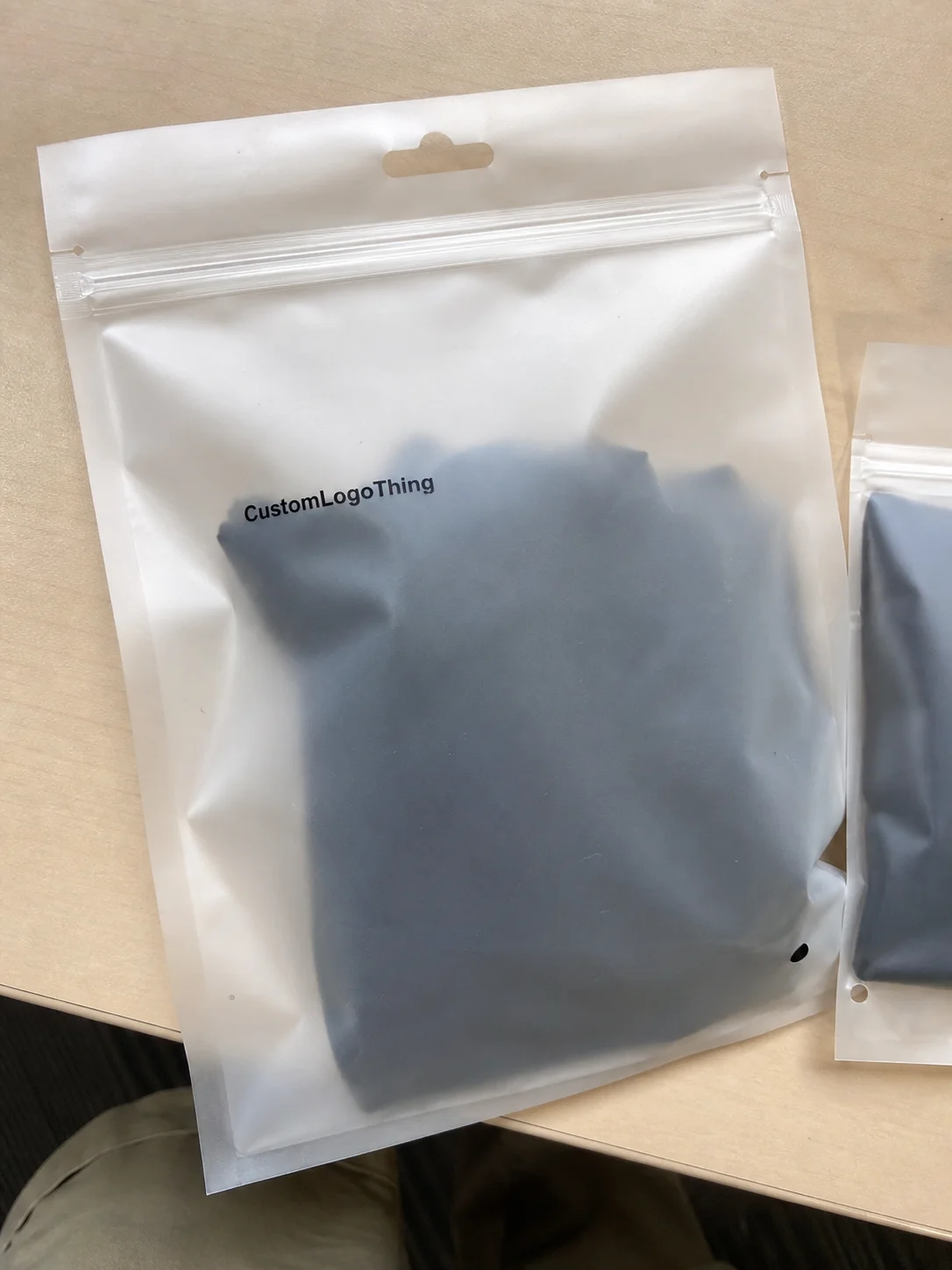
Plain poly bags are economical, but they are not forgiving. Every fingerprint shows. Every seam reflects light. Every tiny scratch becomes visible under bright retail lighting, which is exactly where jewelry needs to look polished.
Frosted film changes how the surface reads. It diffuses glare, so a polished ring or faceted stone sits against a softer background instead of competing with a shiny clear surface. That small visual shift can make silver, gold, pearl, and crystal pieces appear more deliberate and premium. For lower-profile items, the difference is even more noticeable because the bag stops behaving like a distraction.
The zipper closure matters just as much. Jewelry is small, easy to misplace, and frequently handled during packing, display changes, and inventory checks. A resealable bag helps keep pieces together and reduces dust exposure, especially when items move between backstock and shelf. It will not replace proper cushioning for fragile jewelry, but it does improve day-to-day handling.
There is also a merchandising benefit. One format can serve several roles at once: display, packing, storage, and short-term protection. That can simplify packaging decisions for collections with modest ticket prices, while premium pieces can still use cards, trays, or inserts alongside the bag.
“For jewelry brands, packaging earns its place by solving handling problems and sharpening presentation. If it only adds cost, it is working against the product.”
In practice, Frosted Zipper Bags are most effective when the bag is sized to the piece, the print is restrained, and the closure quality is consistent. That is what buyers should be checking, not just whether the sample looks attractive from a distance.
Printed frosted zipper bags quote for jewelry: what buyers need to specify
A useful quote begins with a precise spec. The phrase printed Frosted Zipper Bags quote for jewelry sounds straightforward, but suppliers still need real production details before they can price accurately.
Start with the bag style. Is it a flat pouch or a gusseted pouch? Is the finish fully frosted or only lightly translucent? Does the zipper need a single-track closure, and should the print appear on one side or both? Those choices change material use, setup time, and in some cases the printing method.
Then define the jewelry use case. A ring bag is not the same as a necklace bag. Earrings usually need a compact footprint, while pendants and bracelets may require extra room for a backing card, care slip, or small insert. If the bag needs to hold a display card, that should be stated before quoting begins. Otherwise, the pouch may fit the jewelry but not the presentation system.
Artwork is another major price factor. The logo and print layout influence both setup and press time. Common variables include:
- Number of colors in the logo or artwork
- Print coverage, especially if the design spans a wider area
- PMS matching requirements
- White underbase needs on frosted film
- Metallic ink or other specialty effects
Size matters in a less obvious way than many buyers expect. A bag that is too large can make a small ring look undersized, while a bag that is too tight can distort the zipper line or slow packing speed. The right supplier will ask for the actual dimensions of the jewelry, not just the bag size you think you want.
Use case also affects the spec. Retail display and shipping protection are not identical goals. If the bag is meant for shelf presentation only, the priority may be print clarity and surface appearance. If it has to survive fulfillment and repeated handling, film thickness and closure performance deserve more attention.
Material, size, and print specifications that change the quote
Three variables usually move the price fastest: film thickness, dimensions, and print complexity. Everything else tends to build on those. A small change in one of them can affect both appearance and the final unit cost.
Thickness is usually measured in microns or mils. Thicker film feels firmer in hand and resists punctures more effectively, but it also raises the price and can make the bag less flexible on the packing bench. For jewelry, the sweet spot is often enough structure to keep the pouch neat without making it bulky or difficult to close. The right answer depends on the item weight, whether there are sharp edges, and how often the bag will be reused.
Customization goes beyond logo printing. Buyers frequently request:
- Frosted opacity control
- Zipper color matching
- Hole punch or hang tab
- Euro slot for peg display
- Matte or soft-touch visual effect
Bag sizes are usually quoted by internal dimensions. That matters because the usable space is what determines whether the piece fits without strain. Small earring packs can use compact pouches, while necklaces often need longer formats to avoid tangling or awkward folds. If you want one size for multiple SKUs, ask whether the bag can accommodate the largest item without making the smallest one look lost inside.
Print method matters even if the buyer does not plan to manage the press line. A simple one-color logo on frosted film is generally the most economical branded option. Multi-color artwork, edge-to-edge decoration, or two-sided printing raises setup time and often pushes the order into a higher quote band. If the brand uses a strict Pantone standard, the supplier should say whether exact matching is realistic on the chosen film.
Before production, request clear checkpoints for closure performance, print adhesion, color accuracy, and sample approval. Those are the details that catch most avoidable issues before a full run begins.
| Option | Typical use | Quote impact | Buyer takeaway |
|---|---|---|---|
| 1-color logo, one side | Starter branding, simple retail packs | Lowest setup and print cost | Best for controlled budgets and repeat replenishment |
| 2-color logo, one side | Brand marks with an accent color | Moderate increase | Good balance of visibility and cost |
| Full artwork, two sides | Premium retail presentation | Higher setup and press time | Use when shelf visibility matters on both faces |
| Thicker film with euro slot | Hang display and higher handling demand | Higher material cost | Useful for shops that display by pegboard |
If the quote is based on a vague request, the final price will usually drift once artwork and sizing are clarified. A clean spec saves time on both sides and gives a more realistic starting point.
Cost, pricing, MOQ, and what affects your unit cost
MOQ is where many jewelry brands get surprised. Lower quantities usually carry a higher unit price because setup, plate preparation, color matching, and press time are spread across fewer pieces. That is not a penalty; it is the normal math of custom production.
For budgeting, simpler printed Frosted Zipper Bags will cost less than versions with dual-sided artwork, specialty effects, or heavier film. As a planning range, smaller runs can price noticeably higher per unit than larger runs, while mid-volume orders often improve once the press is running efficiently. Exact numbers depend on size, print coverage, and material cost at the time of quoting.
The main cost drivers usually behave like this:
- Bag size: larger formats use more film and usually cost more per unit
- Material thickness: heavier film increases price but improves feel and durability
- Print colors: more colors mean more setup complexity
- Print sides: one side is cheaper than two
- Packing configuration: bulk packed versus retail packed can change labor cost
Sample pricing should be treated separately from production pricing. A proof, mock-up, or pre-production sample may cost more per unit because the run is tiny and the setup work is still real. For launches and higher-value jewelry lines, that extra spend often saves money by catching layout or fit issues before mass production begins.
A better quote request includes volume tiers. Ask for pricing at several quantities, such as 1,000, 5,000, and 10,000 pieces. The breakpoints can be revealing. In some cases, a modest increase in quantity drops the unit cost enough to justify the larger order.
Every quote should clearly state four items:
- Unit price at multiple quantities
- Tooling or setup charges
- Sample cost and sample freight
- Freight assumptions for the production order
If those items are missing, the quote is incomplete. A low headline price that excludes freight, setup, or sample terms is not a useful buying tool. It only creates a more expensive comparison later.
For buyers who track recycled content or end-of-life messaging, packaging guidance from the EPA recycling resources and the Institute of Packaging Professionals can help frame internal requirements. That does not decide the bag spec, but it does help define what claims your brand can support.
Production steps, lead time, and sample approval workflow
The production sequence is usually simple, but only if approvals move on schedule. A typical order starts with artwork submission and spec confirmation. Next comes the digital proof. After that, the supplier produces a sample or pre-production proof if requested. Once it is approved, mass production begins.
Lead time depends on quantity, print complexity, and current factory workload. A straightforward order can move faster than a multi-color premium run, but buyers should still leave room for revisions. Jewelry packaging tends to be unforgiving about alignment, size, and color, especially when the logo has to sit in a specific position or match an established brand standard.
A realistic workflow often looks like this:
- Day 1-2: Artwork review and quote confirmation
- Day 3-5: Digital proof and corrections
- Day 6-10: Sample or pre-production proof, if needed
- After approval: Mass production, inspection, packing, and shipment
For many custom jewelry packaging jobs, production after approval may run in the range of about 12 to 15 business days, although quantity and current load can stretch or shorten that window. If the launch date is fixed, separate sample time, production time, and shipping time in the quote. Too many estimates blur those together and make planning harder than it should be.
Sample approval matters most when logo clarity or print alignment is critical. A bag can be technically within tolerance and still look wrong if the branding sits too high, too low, or too close to the zipper. Premium collections tend to magnify those small errors.
“The cheapest quote is rarely the least expensive order if the proof comes back wrong, the artwork needs revision, or the size has to be changed after launch.”
For larger shipments, it can also help to ask whether the supplier understands standard transit testing and carton packing expectations, especially if the jewelry bags are going into mixed product shipments. Packaging that travels well is usually the result of clear packing instructions, not guesswork.
How to compare suppliers before you request final pricing
Supplier comparison only works if everyone is pricing the same spec. If one supplier quotes a 60-micron bag and another quotes 80-micron film, the prices will never mean the same thing. The same problem appears with print coverage, zipper style, and packing method.
Vague MOQ answers are a warning sign. So is the absence of a sample option. Inconsistent size naming can also create confusion, especially when the same pouch is described three different ways across a quote, proof, and order sheet. Freight and tooling should be stated clearly from the beginning, not added later as a surprise.
For jewelry brands that reorder regularly, repeatability matters as much as price. You want a supplier that can reproduce the same color, zipper feel, and frosted effect on later runs. A one-time low quote is less useful than stable production control across quarters.
Ask for documentation on:
- Material grade
- Print method
- Quality control steps
- Sample approval process
- Freight assumptions
There is another practical filter that buyers often overlook. The better supplier is not always the one with the most polished sales language. It is the one that asks specific questions about jewelry type, display setup, packing flow, and reordering needs. If they can recommend bag size, closure type, and layout instead of merely pricing the file, they probably understand the production realities behind the quote.
Next steps to request an accurate quote and place your order
The fastest route to a realistic quote is a complete spec sheet. Confirm the bag size, quantity, material thickness, print sides, and the number of colors in the artwork. Upload the correct file format. Note the jewelry type and whether the bag needs to fit an insert card, display card, or care slip.
That is the clearest way to request a Printed Frosted Zipper Bags Quote for jewelry without creating extra revisions later. It also reduces the back-and-forth that stretches timelines and clouds the comparison between suppliers.
For launches, gift sets, and premium retail collections, request a sample or proof before production. Correcting a sample is cheaper than correcting a full run. Once the proof is approved, compare unit cost at your target volume, confirm freight assumptions, and then move into production and shipping.
If your order includes multiple jewelry categories, do not assume one size will suit all of them. Rings, stud earrings, chains, bracelets, and pendant cards often need different pouch proportions. The more closely the bag matches the product, the more polished the final presentation tends to look.
Before placing the order, confirm a few practical details one last time: print placement, packaging count per carton, whether bags are bulk packed or nested, and whether the zipper action feels acceptable on sample units. These small checks prevent the kinds of issues that are easiest to ignore during quoting and hardest to fix after production begins.
What details do I need for an accurate printed frosted zipper bags quote for jewelry?
Provide bag size, quantity, material thickness, print colors, print sides, and closure style. Include the jewelry type and any insert card or display card dimensions so the fit is correct. Artwork files and color-matching requirements should be shared up front to avoid quote changes later.
What is the typical MOQ for custom frosted zipper jewelry bags?
MOQ depends on size, print complexity, and the production method. Smaller, simpler jobs often have a lower entry quantity, while multi-color or specialty finishes usually require higher volume. Ask for tiered pricing so you can compare your MOQ against your budget.
Can frosted zipper bags be printed on both sides for jewelry packaging?
Yes. Many buyers choose one-side or two-side printing based on shelf visibility and branding needs. Two-side printing can improve presentation, but it usually raises setup and unit cost. Confirm whether the artwork should be mirrored, repeated, or different on each side.
How long does production usually take after artwork approval?
Production time varies by quantity, print method, and factory schedule. Proof approval, color matching, and material availability can all affect lead time. Ask for a timeline that separates sample approval, mass production, and shipping.
Are frosted zipper bags suitable for shipping jewelry safely?
They work well for dust protection, organization, and presentation, but shipping safety depends on the jewelry and the outer mailer protection. For delicate items, pair the bag with cushioning, a box, or a mailer insert. If the item has sharp edges or heavy metal parts, confirm film thickness before ordering.


