Buyer Fit Snapshot
| Best fit | Printed Hang Tags on Recycled Paper projects where brand print, material claims, artwork control, MOQ, and repeat-order consistency need to be specified before quoting. |
|---|---|
| Quote inputs | Share finished size, material target, print colors, finish, packing count, annual reorder estimate, ship-to region, and any compliance wording. |
| Proofing check | Approve dieline scale, logo placement, barcode or warning zones, color tolerance, closure strength, and carton packing before bulk production. |
| Main risk | Vague material claims, crowded artwork, missing packing details, or unclear freight terms can make a low unit price expensive after revisions. |
Fast answer: Printed Hang Tags on Recycled Paper: Material, Adhesive, Artwork, and MOQ should be specified like a repeatable production item. The safest quote records material, print method, finish, artwork proof, packing count, and reorder notes in one written spec.
Production checks before approval
Compare the actual filled-product size with the drawing, then confirm tolerance on folds, seals, hang holes, label areas, and retail display edges. Reserve space for logos, QR codes, warning copy, and material claims before decorative graphics fill the panel.
Quote comparison points
Review material grade, print process, finish, sampling route, tooling charges, carton quantity, and freight assumptions side by side. A quote is only useful when the supplier can repeat the same color, closure quality, and packing count on the next order.
Printed Hang Tags on Recycled Paper: A Practical Guide
Printed Hang Tags on recycled paper do more than identify a product. They shape the first impression before a shopper ever lifts the item from the rack. The fiber grain, the softer cast, the slightly less polished surface: all of it signals restraint. A glossy tag can shout. Recycled paper usually speaks more quietly, and that often reads as more considered, more tactile, and more believable.
For a brand, that shift matters because a tag has to carry several jobs at once. It needs a logo, size, SKU, barcode, and sometimes a sustainability claim, then it has to survive handling, packing, transit, and retail display without curling at the corner or tearing at the hole. Buyers who treat the tag as a minor detail usually learn the opposite once production starts. That is why many teams fold tags into their Custom Labels & Tags plan from the start rather than separating them from the rest of the packaging system.
Recycled stock also changes the technical conversation. Ink density behaves differently. Small type needs more room. Hole placement matters more. A coated sheet can forgive weak design decisions; recycled paper rarely does. That sounds limiting until the first sample arrives and the whole piece feels calmer, quieter, and more deliberate than the bright, plastic-sharp alternatives beside it.
Why printed hang tags on recycled paper stand out
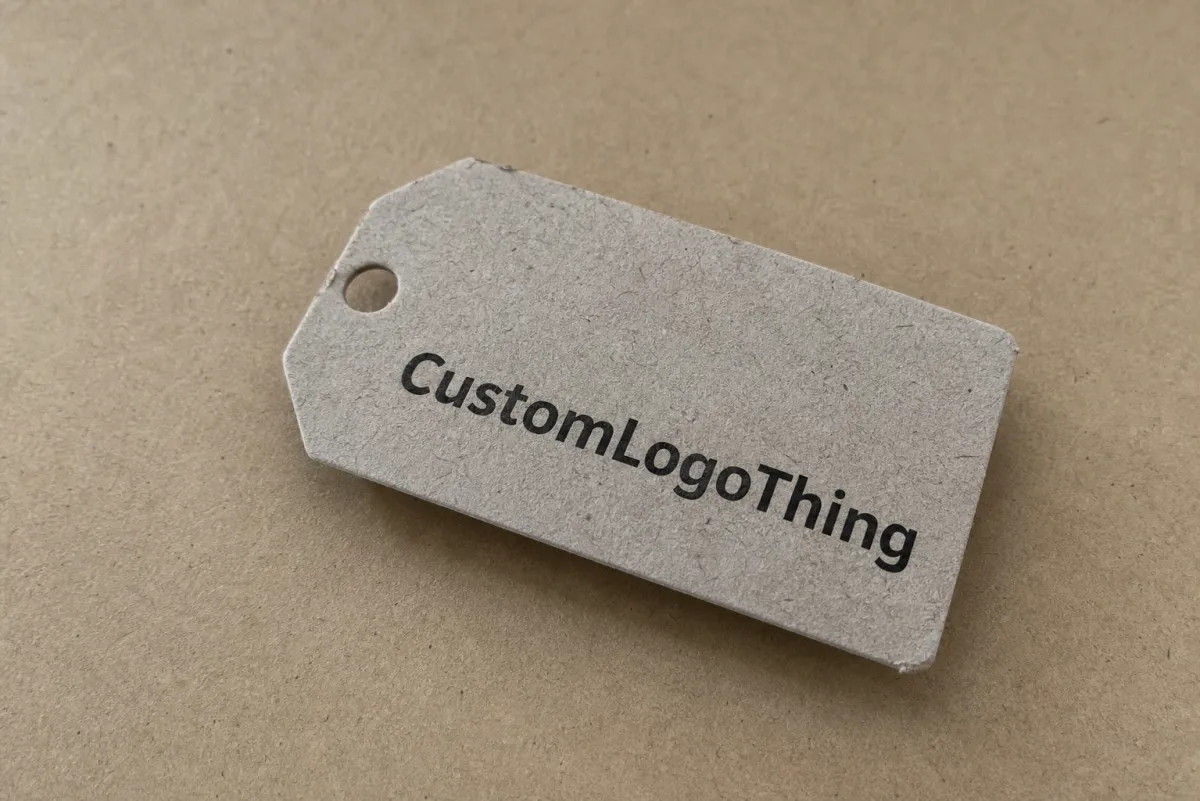
A recycled tag often feels premium because it works through texture rather than shine. A shopper notices stiffness, surface grain, and weight before reading a word. That split-second reaction can tilt a product toward artisan, boutique, editorial, or sustainable, while a slick coated tag can flatten those cues into something more ordinary. The effect is subtle. It is also real in the way people describe a product: sturdy, warm, natural, handmade, refined.
Printed hang tags on recycled paper differ from standard hang tags in ways a buyer can see and feel immediately. Recovered fiber creates tiny flecks or tonal variation. The paper often carries an off-white, kraft, or soft natural tone. Edges can look less clinical. The handfeel is usually drier and less slippery. None of that is a defect. For apparel, gifts, artisanal goods, and boutique retail, those details often do the branding work better than a louder finish would.
The sustainability story should stay grounded. Recycled content can support a lower-impact packaging approach, especially when the paper source is documented and the spec avoids wasteful extras. Empty claims do not help anyone. What helps is choosing a tag that uses the right amount of paper, the right print method, and the right fastening system for the product it serves. A tag that falls apart at the hole is not a sustainability win; it is a packaging failure.
That is why the format shows up in so many categories. Apparel brands use it to state size and price without crowding the garment. Handmade brands use it to build authenticity. Gift packaging teams use it to make a small item feel complete. Boutique buyers use it to reinforce a visual identity without bringing in heavy laminates or a glossy surface that clashes with the rest of the pack.
Design decisions matter even more on recycled stock because the paper exposes weak choices. Dark text usually prints with more authority than pale text. Fine lines need breathing room. Heavy blocks of copy can sink into the grain. A tag that looks elegant on a laptop screen can turn muddy in hand if the caliper is too light or the contrast is too timid. Printed hang tags on recycled paper reward discipline. The best versions are calm, direct, and sparing.
“A recycled tag works best when the material is carrying part of the brand message. The paper should look chosen, not accidental, and the print should support that feeling instead of fighting it.”
If sourcing is part of the decision, ask for the actual paper spec, any recycled-content documentation, and the chain-of-custody paperwork that applies to the stock. FSC certification can be useful, but it does not automatically prove recycled content; those are different claims. For buyers who care about shipping resilience as well as source control, test methods from organizations such as ISTA can help frame how packaging components behave under handling and transit stress. A hang tag is small, but it still travels through the same world of friction, stacking, and time.
How the process and timeline work from file to delivery
The production path for printed hang tags on recycled paper is simple to describe and easy to complicate. Artwork review comes first, then paper selection, proofing, print setup, cutting, finishing, packing, and shipment. Each stage exists because the next stage depends on it. A rush order can compress the schedule, but it cannot erase the steps without paying for it later in errors, delays, or waste.
Artwork review is where many projects either move fast or stumble. A clean file with the right bleed, a sensible safe area, and a legible dieline can move straight through. A file with a barcode too small to scan, text too close to the trim, or artwork built on the wrong size often creates back-and-forth that eats days. Hole position, string-slot placement, and custom die shapes also need to be checked against the actual product, not just the mockup. A tag can be beautiful and still fail if it hangs wrong.
Proofing is the next decision point. A digital proof catches layout mistakes, spelling errors, and broken alignment. A physical sample reveals what screens hide: ink warmth, grain visibility, edge behavior, and whether the hole feels too near the content. Recycled paper can make ink appear darker or less crisp than it does on coated stock. Teams that need a close match to another printed component usually benefit from a sample, especially if the launch date allows the extra step.
Where timeline gets spent
Print time is only one slice of the schedule. Drying, die cutting, hole punching, stringing, bundling, and final pack-out all take their turn. A flat one-color tag with a simple cut can move quickly. A custom shape with multiple inks, a reinforced hole, or manual attachment of string and fasteners takes longer. Freight can become the loudest variable of all if the shipment crosses several zones or a launch date leaves no room for delay.
A straightforward digital run may be ready in roughly 7 to 10 business days after approval. A more involved offset job with a custom die, special finishing, or stringing often sits closer to 12 to 18 business days. Large quantities, unusual paper sourcing, or complex packing instructions can extend that further. Those figures are planning ranges, not promises, but they help a buyer talk honestly about launch timing instead of hoping the schedule will absorb itself.
What slows approval
Unclear dielines cause more trouble than most teams expect. So do last-minute copy changes and poorly organized files. If the tag needs to include a barcode, SKU, legal line, or sustainability note, each item needs room to breathe. Pushing everything to the edge creates a proof that looks crowded and a production file that invites mistakes. The fastest jobs usually come from teams that agree on a spec sheet before the quote is signed.
Reorders become easier when the approved artwork, hole size, stock name, and finishing notes live in one place. That simple record cuts guesswork and shortens review time. It also reduces the odds that a tiny change on a repeat run turns into a production issue. Packaging calendars get crowded quickly; a good record keeps the next order from becoming a fresh puzzle.
Cost, pricing, and MOQ factors to budget
Pricing for printed hang tags on recycled paper depends on more than the paper choice. Buyers often assume the recycled stock is the main cost driver, yet the real quote usually reflects setup time, print method, quantity, finishing, and packing method. A plain recycled tag with one-color print can be surprisingly affordable. Add a custom die, special finish, or hand-stringing, and the quote shifts fast even if the paper itself stays the same.
MOQ, the minimum order quantity, shapes unit price because setup costs are spread across the run. A smaller order carries more of that setup cost per piece. A larger order usually lowers the unit price. That pattern is normal across printed packaging. Recycled content is not always what pushes a quote upward. Handling, packing, or a complex die often matters more than the substrate.
For planning, a 500-piece order with a simple one-sided print may land in a very different bracket from a 5,000-piece order with the same art. A useful way to think about the pricing landscape is to separate the paper cost from the production handling.
| Option | Typical Use | Typical Complexity | Planning Price Range | What Drives the Cost |
|---|---|---|---|---|
| Base recycled tag, one color, flat cut | Apparel basics, small retail runs, simple SKU tags | Low | $0.12-$0.35 per tag at 500 units; $0.05-$0.12 at 5,000 units | Setup, paper weight, trim size, and quantity |
| Mid-range tag, two colors, hole drilling, variable data | Boutique products, seasonal collections, gift packaging | Medium | $0.20-$0.55 per tag at 500 units; $0.08-$0.18 at 5,000 units | Print coverage, proofing, hole work, and packing |
| Premium tag, custom die, special finish, stringing | High-end apparel, limited editions, display-driven retail | High | $0.35-$1.00+ per tag at 500 units; $0.12-$0.30+ at 5,000 units | Die cost, hand assembly, finish, and quality control |
Those figures are planning ranges, not fixed pricing. They still help a buyer ask sharper questions. If one quote lands much higher than another, the reason may be hidden in the handling, a stronger stock, a better packed carton count, or a more exacting tolerance. Comparing line items is the cleanest way to see where the quote is carrying weight.
Requesting several quote options is usually smart. A lean spec shows the minimum viable cost. A premium spec shows what happens when the paper gets heavier or the finish gets more refined. A larger reorder quantity shows the price break after launch. That gives the team a better read on value instead of chasing the lowest number in isolation.
Budget should also include proofing, freight, and a small overage. Tags get checked on arrival, split into production batches, and sometimes removed from damaged cartons. A modest extra quantity can prevent a rush reprint later, especially for seasonal launches or retail resets that cannot move on the calendar.
Key material and print choices that affect quality
Recycled paper is not one material but a range of surfaces, tones, and weights. Uncoated recycled stock is the most familiar choice because it keeps the natural look visible and still offers a usable writing surface. Textured recycled sheets add more tactile presence. Kraft-toned papers push the design toward earthy or rugged territory. Brighter recycled options exist too, and they work well for brands that want a cleaner, lighter feel without losing the recycled message.
Paper thickness matters as much as appearance. A tag that is too light can curl, bend, or feel fragile in the hand. A heavier caliper often feels more credible for apparel and gift packaging, and it usually handles holes, slots, and fasteners better. Common ranges often sit around 300 to 400 gsm, or roughly 14pt to 18pt depending on the stock. The right answer depends on the product weight, the attachment method, and how much information the tag must carry.
Ink behavior on recycled paper deserves close attention. Strong typography, bold logos, and clear line work usually read best. Very light colors can disappear into the stock, especially when the paper carries visible fiber or a warm cast. Fine detail is possible, but only if contrast and spacing are generous enough. A tag crowded with tiny type can look polished online and muddled in real life. The safest habit is to design for the paper that will actually run through press.
Finishes should support the recycled look rather than hide it. Matte varnish can add protection without turning the tag glossy. Embossing and blind deboss can create depth without crowding the surface with ink. Rounded corners can help the piece wear better in shipping and improve the feel in hand. Hole reinforcement matters too, especially on heavier garments or tags tied with cord. Even a small ring around the hole can extend the life of the tag dramatically once it enters a busy retail environment.
Fastener compatibility deserves testing, not guessing. Cotton string, elastic loop fasteners, paper ties, and plastic hangers all interact differently with recycled stock. A fibrous sheet may hold one attachment style well and tear with another. Adhesive applications can also be tricky because some recycled surfaces do not bond as cleanly as coated paper. If the tag will attach at scale, the test should use the real fastener on the real product. A theoretical match is not enough.
Many buyers keep a short pre-production checklist to catch the misses before they become expensive:
- Confirm paper name, weight, and finish before artwork is finalized.
- Check contrast at actual size, not only on screen.
- Make sure the hole, slot, or string path matches the product.
- Verify barcode readability if the tag includes inventory data.
- Review one physical sample under the lighting used in retail or packing.
That list looks small. It prevents the common failure where a tag looks excellent as a sample and then underperforms once it is attached to the product line and handled by real people.
Step-by-step guide to ordering recycled paper hang tags
The cleanest way to order printed hang tags on recycled paper is to define the use case before requesting a quote. A tag for a folded shirt does not need the same structure as a tag for a candle, a handbag, or a gift box. Start with the product category, the tag size, whether the format is flat or folded, where the hole sits, and what the tag must communicate. If the copy includes a sustainability claim, write it carefully and verify it before production begins.
After that, build a spec sheet a printer can read without guessing. Include paper type, paper weight, print colors, finish, quantity, packaging method, target delivery date, and whether the tags need to be stacked, banded, or bagged. Clear requests usually produce clearer quotes. That saves time and makes it easier to compare suppliers without comparing apples to oranges.
Artwork should be reviewed with production in mind. On recycled paper, small type and thin lines deserve extra scrutiny. A logo that looks sharp on coated stock may need more weight on a natural sheet. Barcode placement should account for the hole and any fold or string path. Legal notes, care references, and warnings should stay away from the trim edge and out of busy visual zones. Good packaging design usually leaves room instead of trying to fill every millimeter.
Before approving a proof, check three things in hand: how the paper feels, how the ink sits on the surface, and whether the tag hangs cleanly on the actual product. Screen proofs do not tell you that part.
Proof approval should happen only after the real-world details are checked. Color can shift on recycled stock. Hole placement can matter more than expected once the tag is threaded through a garment, box, or ribbon. The tag should sit naturally against the product, not twist, curl, or cover important branding. If a sample is available, attach it to the item and handle it the same way a warehouse or store team will handle the finished run.
Planning the first run and the reorder path together saves trouble later. The launch order should support the schedule. The production record should then make the repeat order simpler. Keep artwork files, approved dielines, supplier notes, and paper records together. Once the tag becomes a recurring packaging component, that file becomes valuable quickly.
For teams already managing broader packaging programs, keeping the tag aligned with other printed pieces helps the whole system feel coherent. A hang tag, label, insert card, and retail sticker should read like parts of one set. A coordinated set from Custom Labels & Tags can simplify ordering because the paper, print style, and brand language can be planned together rather than as isolated pieces.
Common mistakes with recycled paper hang tags
The most common mistake is designing the tag as if it were coated stock. Recycled paper usually needs stronger contrast, simpler typography, and more breathing room. Fine serif text can work, but it should be tested at actual size. Light gray copy can disappear. Thin rules can break apart visually. A clean, direct layout usually performs better than one that tries to do too much.
Skipping the physical sample creates another problem. Recycled paper can look different under warm store lighting, cool warehouse lighting, and daylight. It can change character once it is attached to denim, cotton, leather, glass, or paperboard. What looks subtle on a monitor may read loud in hand. What looks refined in a mockup may feel flat once the product is packaged and hanging on a rack.
Too many finishes can work against the intent. If the brand story is natural and lower-impact, stacking coatings, heavy UV, foil, and multiple textures can dilute the effect. That does not ban finishes. It means the finish should be chosen with purpose. A small emboss, a matte protective coat, or a clean deboss can do more for the piece than a crowded mix of decorative layers.
Timeline problems often begin with late artwork changes. A new logo file, a swapped barcode, or a moved hole location may sound minor, yet each change can reset proofing or die work. Unclear dielines cause the same kind of delay. If the launch date is fixed, slowing down early is usually cheaper than rushing into production with unresolved details.
Budget mistakes are just as common. Freight gets left out. Minimums are underestimated. A paper weight that looks elegant online turns out to be too flimsy once packed and hung. A buyer may try to save money by choosing the lightest possible stock, only to find curled tags, bent corners, or weak holes after receiving the order. The lowest quote is not always the lowest final cost.
A final mistake is treating recycled paper as a visual choice only. It is a production choice too. The material affects printing, cutting, assembly, and handling. If the tag is part of a broader retail system, evaluate it the same way as the rest of the package: by how it looks, how it feels, and how well it holds up in use.
Expert tips and next steps for a cleaner packaging launch
Match the tag to the rest of the package so the recycled paper feels like part of a deliberate system. Ink color, type style, and copy tone should echo the box, label, tissue, or insert card. Warm, earthy packaging usually pairs well with a natural recycled hang tag. Modern minimal packaging may call for a brighter recycled stock with crisp black print. Consistency matters more than sameness.
Keep the message tight. A hang tag is not a brochure. One sustainability note, one product detail, and one clear brand cue usually do more than a crowded block of copy. Shoppers rarely read much at retail, and they often decide faster than brands expect. A strong tag gives the eye a clear path and lets the material speak without overexplaining itself.
A reusable production record saves time later. Keep the approved paper name, size, print method, finish notes, dieline, artwork version, supplier quote, and sample approval comments in one place. That record reduces reorder friction and prevents the next buyer from repeating the same file review mistakes. Packaging calendars move quickly; good records help the work stay ahead of them.
Before scaling up, test the tag in real conditions. Attach it to the actual product. Pack it the way the warehouse will pack it. Ship a short test batch if the tag will travel inside a box or mailer. Then inspect the result. Did the hole tear? Did the edges fray? Did the ink rub? Did the tag stay readable after handling? Those answers matter more than a polished render.
If the first run performs well, the next step is straightforward: lock the paper choice, confirm the quote, approve the proof, schedule the run, and set the reorder point early enough that stock never runs thin. That is the practical value of printed hang tags on recycled paper. They can support the brand story, hold up in production, and stay affordable when the spec is chosen with care.
For brands building a consistent packaging line, printed hang tags on recycled paper work best as a system component, not a decorative extra. Once the paper, print, and fastening details are settled, the tag becomes a reliable part of the product presentation, and that is where it earns its keep.
Are printed hang tags on recycled paper durable enough for apparel?
Yes, if you Choose the Right paper weight and keep the design balanced for the stock. A heavier uncoated or textured sheet usually holds up better than a very light recycled sheet, especially on garments that will be folded, bagged, and shipped. Reinforced holes and the right fastener also help the tag survive retail handling.
What paper weight is best for printed hang tags on recycled paper?
A mid- to heavy-weight stock is usually the safest starting point for most retail hang tags. That often means roughly 300 to 400 gsm, depending on the paper family and the feel you want. Choose a thicker sheet when the tag needs to feel premium or carry more information, and always test it on the product before ordering large quantities.
Do recycled paper hang tags cost more than standard stock?
Not always. The final price depends more on quantity, print complexity, and finishing than on recycled content alone. Small runs often cost more per tag because setup time is spread across fewer pieces. The cleanest way to compare value is to request quote options at different quantities and compare both unit cost and total budget.
How long does production usually take for recycled paper hang tags?
Timeline depends on artwork readiness, proof approval, quantity, and finishing requirements. Simple runs move faster than jobs with custom dies, special holes, or multiple print stages. Build in extra time for review, shipping, and any needed sample approval before launch so the schedule does not get squeezed at the end.
Can printed hang tags on recycled paper include special finishes?
Yes, but the finish should support the recycled look instead of hiding it. Matte varnish, embossing, debossing, and selective detail can work well when used carefully. Always confirm that the finish still feels readable, durable, and aligned with your sustainability message once the tag is attached to the product.
For most packaging teams, the strongest outcome comes from keeping the spec honest, the design readable, and the production steps organized. Printed hang tags on recycled paper work best when the material, the print, and the brand story all point in the same direction, and the final approval should always include a real sample attached to the actual product.