Buyer Fit Snapshot
| Best fit | Printed Hang Tags with Embossing projects where brand print, material claims, artwork control, MOQ, and repeat-order consistency need to be specified before quoting. |
|---|---|
| Quote inputs | Share finished size, material target, print colors, finish, packing count, annual reorder estimate, ship-to region, and any compliance wording. |
| Proofing check | Approve dieline scale, logo placement, barcode or warning zones, color tolerance, closure strength, and carton packing before bulk production. |
| Main risk | Vague material claims, crowded artwork, missing packing details, or unclear freight terms can make a low unit price expensive after revisions. |
Fast answer: Printed Hang Tags with Embossing: Material, Adhesive, Artwork, and MOQ should be specified like a repeatable production item. The safest quote records material, print method, finish, artwork proof, packing count, and reorder notes in one written spec.
Production checks before approval
Compare the actual filled-product size with the drawing, then confirm tolerance on folds, seals, hang holes, label areas, and retail display edges. Reserve space for logos, QR codes, warning copy, and material claims before decorative graphics fill the panel.
Quote comparison points
Review material grade, print process, finish, sampling route, tooling charges, carton quantity, and freight assumptions side by side. A quote is only useful when the supplier can repeat the same color, closure quality, and packing count on the next order.
If you are comparing Printed Hang Tags with embossing, treat them as a visible part of the product experience, not as a throwaway label. That sounds obvious, but I have watched more than one brand spend weeks perfecting the garment and then hand the shopper a tag that looks like it was added at the last minute. A hang tag sits in the customer's hand before the buy, and sometimes for a second or two after. That tiny stretch of time can tilt perception more than a long ad campaign. I am going to keep coming back to printed hang tags with embossing because the real questions are not just style. They are cost, paper structure, tactile payoff, and whether the finish actually earns its keep in the hand. A flat tag can vanish on a crowded rack. A well-built embossed tag slows the eye down, invites touch, and leaves a stronger memory behind.
Printed Hang Tags With Embossing: Why They Stand Out
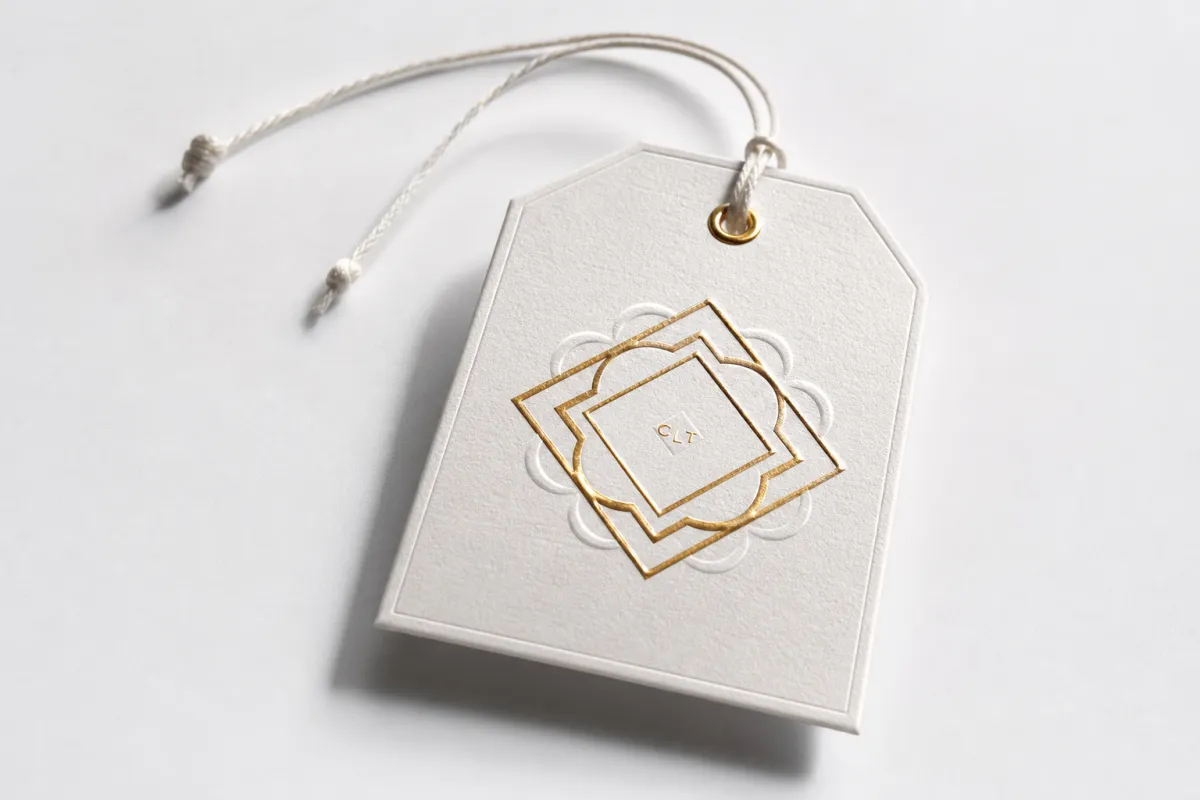
Printed Hang Tags with embossing stand out because they add a tactile cue that flat print cannot fake. The raised area catches light, throws a fine shadow, and gives the fingers something to read before the mind has finished decoding the logo. That seems small until you compare two tags side by side. One feels like a label. The other feels like a decision. In retail, that kind of sensory difference can do more than louder graphics ever will.
Embossing itself is mechanically simple. Artwork is pressed from the back, so the front surface rises into relief. Most Printed Hang Tags with embossing pair that raised form with printed graphics on the front, which gives the design two jobs. Print handles color, type, and product data. Embossing handles depth, texture, and the premium signal. Clean division of labor like that usually makes the final piece better, not fancier. That distinction matters.
The finish often reads more expensive even when the layout stays minimal. A restrained palette, a sharp logo, and paper with enough body can outclass a tag crowded with effects. Buyers sometimes assume foil, gloss, or UV has to carry the whole design. Those finishes can help. They can also become decoration for decoration's sake. In practice, printed hang tags with embossing usually look strongest when the raised element is the focal point and the rest of the tag gives it room to breathe.
Where does embossing earn its keep? New product launches, higher-margin apparel, leather goods, accessories, giftable items, and any product that depends on shelf appeal are natural fits. A tag that has to do more than state a size or SKU has a stronger case for embossing. That does not mean every item deserves the treatment. It means the tag is part of the buying experience, and in that setting printed hang tags with embossing can justify the added spend.
The mistake many brands make is assuming embossing can rescue weak design. It cannot. Thin paper, cramped artwork, and tiny type can turn the finish awkward fast. I once reviewed a sample where the logo looked polished on screen, then came back mushy on a stock that was far too soft for the press pressure. Pretty disappointing, honestly. A raised logo on flimsy stock may flatten, crack, or lose definition at the edges. That result does not feel premium. It feels expensive in the wrong way. Good printed hang tags with embossing depend on the right stock, the right layout, and enough negative space for the texture to read cleanly.
- Best fit: apparel, leather goods, accessories, gift sets, and higher-margin retail items.
- Strongest visual cue: one raised logo, monogram, or product name instead of a crowded mix of effects.
- Poor fit: ultra-thin paper, busy layouts, or tags that need heavy barcode and compliance data on the front.
If you are building a broader tag system, compare finishes across Custom Labels & Tags so the hang tag does not feel detached from the rest of the package. The best printed hang tags with embossing usually match the product's price point, visual language, and customer expectation. Fancy for its own sake is just clutter with a higher bill.
How Printed Hang Tags With Embossing Are Made
The build begins with artwork, but structure decides whether the final tag looks deliberate or improvised. A standard run of printed hang tags with embossing usually moves through artwork prep, print setup, die cutting, tooling for the raised area, embossing, trimming, inspection, and packing. If the supplier is experienced, they will confirm the dieline before anything reaches the press. That one step saves time, money, and the familiar headache of discovering that the logo sits too close to the edge or the hole punch.
Embossing uses a matched die and counter die. Pressure forms the raised area instead of adding material to it. Paper choice matters because the stock has to hold the shape after the press applies force. Heavier stock usually keeps the relief crisp. Softer stock can feel elegant and tactile, but it still needs enough body to survive the process. In general, printed hang tags with embossing work best on material thick enough to hold detail without collapsing under the press.
Blind Embossing vs Printed Embossing
Blind embossing creates a raised surface without ink inside the embossed area. It depends on shadow, texture, and height alone. The effect can look very refined if the stock is right and the design is calm. Printed embossing combines that raised shape with printed artwork, so the viewer sees the logo and feels it at the same time. For printed hang tags with embossing, the printed version usually gives clearer recognition at arm's length, which matters on a busy rack where shoppers move quickly.
There is also a difference between single-level and multi-level embossing. Single-level embossing lifts the shape to one depth. Multi-level embossing creates different heights inside the same design, which can feel richer and more dimensional. It also adds complexity. More depth means tighter tooling control, stronger stock, and a greater chance of drift if the file is sloppy. For most printed hang tags with embossing, alignment matters more than dramatic depth. Precision does the heavy lifting.
Registration deserves more attention than it usually gets. When embossing sits on top of printed artwork, the raised zone has to align with the inked design. Borders, fine type, and narrow strokes are especially sensitive. A tiny shift can make the whole composition look off balance, and by tiny I mean the width of a pencil line or less. That is one reason simpler marks often outperform ornate layouts. printed hang tags with embossing work best when the hero element can tolerate minor production variation without losing its shape.
Do not confuse embossing with debossing. Debossing pushes the surface inward instead of lifting it up. Both finishes can work on hang tags. Embossing usually reads more strongly when the brand wants a clearer tactile statement. Debossing can feel quieter and more restrained. For most printed hang tags with embossing, the raised finish communicates intent quickly without making the tag feel overdesigned.
Paper type changes the result in obvious ways. Coated stocks hold fine detail sharply. Uncoated and cotton stocks absorb light differently and often feel more tactile, which can be ideal for luxury positioning. Very thin paper is a poor choice. It can buckle under pressure and make the embossed area look soft or cracked. If the goal is a smooth, upscale finish, the stock needs enough structure to survive die cutting, printing, and embossing without collapsing halfway through the run.
Buyers who care about production should think in terms of the full stack. Print method, paper caliper, emboss depth, and surface treatment all interact. A matte sheet with spot UV can look crisp, but too much gloss can fight the emboss. A soft-touch lamination can feel rich, yet it can also soften the raised detail if the overall build is too flexible. Printed hang tags with embossing are not just a finish choice. They are a construction decision.
Printed Hang Tags With Embossing: Cost, MOQ, and Quote Basics
Cost usually comes down to five variables: tooling, stock, print method, quantity, and finish complexity. For printed hang tags with embossing, tooling is the part many buyers forget to include in the math. The die and counter die are fixed setup costs, so a small run carries a larger share of that expense. That is why a quote can look reasonable on paper and then feel much larger once the real details are locked in.
The practical price range depends on how the job is built. A smaller order may land somewhere around $0.18-$0.45 per tag at low quantities, depending on size, stock, and whether one or two emboss areas are involved. Larger quantities can drop into a much better range, sometimes $0.05-$0.16 per tag for simpler builds. Those are sourcing ranges, not guarantees. Printed hang tags with embossing vary by paper, finish, and run size. The pattern still holds: the more pieces you order, the less the setup cost stings.
MOQ is usually tied to production efficiency. A supplier has to create the die, run the press, emboss the sheets, trim them, inspect them, and pack the final stack. That takes time and machine scheduling. No one sets a minimum because they enjoy being difficult. They do it because the work has real setup costs. For printed hang tags with embossing, MOQs often start around 250, 500, or 1,000 pieces depending on complexity and whether foil stamping or spot UV is included.
Ask for a quote using the actual production facts, not a vague note that says "need tags." The quote should include size, paper thickness, print sides, emboss location, quantity, hole punch or eyelet, stringing, and whether shipping is included. If you want rounded corners, special cutting, or custom pack counts, say so. Those details change the price. Printed hang tags with embossing are easy to underquote when the spec is fuzzy, and that can create trouble once the order is already in motion.
| Build Option | Best Use | Setup Impact | Typical Per-Tag Impact |
|---|---|---|---|
| Printed only | Basic branding and size info | Low | Lowest |
| Printed + embossing | Clean premium retail tags | Moderate tooling cost | + $0.03-$0.18 depending on volume |
| Printed + embossing + foil stamping | Luxury apparel and giftable items | Higher setup, tighter registration | + $0.05-$0.25 depending on coverage |
| Printed + embossing + spot UV or UV coating | Gloss contrast on a matte base | Extra finishing pass | + $0.04-$0.20 depending on sheet size |
| Printed + embossing + lamination | Durability and richer feel | Added material and labor | Usually higher than embossed-only builds |
That table is a guide, not a price list. Size, paper grade, and order quantity move the numbers more than most buyers expect. If you need sustainable stock, ask for FSC-certified paper and make sure the paperwork is clear. The FSC system is worth checking if your brand makes claims around responsible sourcing. A tag can look beautiful and still fail the simplest credibility test if the sourcing story is vague.
For shipping-heavy programs, ask how the tags are packed and whether the supplier has experience with transit protection or carton reinforcement. The ISTA standards are useful references when packages need to survive distribution, storage, and retail handling. That point sits outside embossing itself, yet it matters if the tags travel as part of a larger product pack. A crushed tag stack can make an entire run look careless.
Revisions cost money. If the dieline changes after tooling has started, or if a new proof is needed because the logo updated at the last minute, expect fees. Rush turnaround can also add freight and scheduling premiums. Printed hang tags with embossing are easiest to price accurately when the artwork is locked and the specification stays stable long enough to be produced as quoted.
If you are comparing options across a full product line, keep the same paper family and finishing logic where possible. That makes reorders easier and keeps the brand system coherent. A good supplier can often help you reuse a die or hold the same emboss depth across multiple SKUs, which trims waste on later runs.
Production Process and Lead Time for Printed Hang Tags With Embossing
The production sequence is simple enough on paper, but every step depends on the one before it. A normal order for printed hang tags with embossing starts with a quote, then a dieline check, then artwork submission, proof approval, tooling, print, emboss, trimming, inspection, and packing. If the supplier skips the dieline conversation, that should raise an eyebrow. The tag may still print. It may also fail in the exact places that matter most.
Artwork is often the real schedule risk. Missing bleed, thin line weights, type too close to the edge, or logos placed across an emboss area can all trigger revisions. So can overcomplicated layouts that try to cram product details, legal text, and brand messaging onto one side. Printed hang tags with embossing need space. A crowded layout weakens the raised area and makes file checks slower than they need to be.
In practical sourcing terms, simple orders may move quickly, but custom embossed tags need extra time for tooling and finishing. A straightforward run can sometimes be turned in roughly 10-15 business days after proof approval if the workload is light and the spec is simple. More complex printed hang tags with embossing may need 15-25 business days or longer, especially if foil stamping, lamination, or spot UV is involved. Shipping adds time on top of that. It is not dramatic. It is just how production behaves.
Samples and bulk runs are not the same thing. A prototype can be produced faster because it is often handled on a different schedule, in smaller quantity, and with less packing complexity. A full production batch needs setup, material allocation, drying or curing time depending on the finish, and quality checks. If the tags must align with an apparel delivery date, a photoshoot window, or a retail floor set, build in buffer time. Brands routinely think they have more time than they do. Then the clock closes in fast.
Rush orders can happen. They also come with tradeoffs. Compress the schedule and you usually lose flexibility on press booking, freight cost rises, and the pain of a reproof gets worse. The cleaner the artwork, the easier it is to move quickly. The messier the file, the more expensive speed becomes. Printed hang tags with embossing reward disciplined planning far more than frantic last-minute edits.
For products that need to survive rough handling, ask how the tags are packed and whether they can be protected from edge crush during transit. If the hang tags are traveling inside outer cartons with apparel, that is one scenario. If they are shipping separately to a warehouse or fulfillment center, the carton build becomes far more important. Packaging teams tend to ignore this until a box opens and the stack is bent. Then the complaint lands. Usually loudly.
Common Mistakes That Hurt Printed Hang Tags With Embossing
The most common mistake is choosing stock that is too thin. Thin paper can look fine on screen and fail once the press applies real force. It can collapse, wrinkle, or show distortion around the raised area. For printed hang tags with embossing, that means the logo softens more than intended and the whole tag feels cheaper than the brand probably wanted. Heavy stock is not always the answer, but paper that cannot hold its shape is a bad starting point.
Another mistake is crowding the embossed zone with details that are too small. Fine serif type, tiny icons, hairline borders, and dense textures can all blur once the paper is raised. The embossed area needs breathing room. That is not design poetry. It is how the process behaves. The more detail you cram into the relief, the more the press turns careful art direction into mush. printed hang tags with embossing usually look strongest when the raised element is bold, simple, and easy to read from a short distance.
Too many finishes can also ruin the effect. A tag that combines embossing, foil stamping, lamination, spot UV, and a glossy coating can end up looking busy instead of premium. Yes, each finish sounds appealing in a quote. No, they do not all need to live on one piece of card. A strong tag usually does one or two things very well. It does not try to win a finish contest. The best printed hang tags with embossing look calm, not frantic.
Do not ignore the reverse side. Emboss pressure can telegraph through the sheet. If the back side carries care instructions, barcode data, recycled-content language, or SKU details, the emboss can interfere with legibility. That risk rises with lighter stock and larger raised shapes. A supplier should flag it during proofing, but buyers should check it too. A lot of tag problems only become visible when the finished stack is in hand.
File prep matters more than many teams want to admit. Missing bleed, low-resolution graphics, unclear dielines, and unoutlined fonts can all create delays. A proof should be checked for line thickness, font size, and the placement of every element around the emboss area. A file that looks acceptable on a laptop can fail once it becomes a real production spec. For printed hang tags with embossing, screen confidence is not the same thing as production readiness.
There is also a packaging logic mistake: treating the hang tag as isolated from the rest of the brand. If the apparel hang tag uses soft-touch matte stock and the box uses a high-gloss sleeve, the customer gets two different stories. That can work if the contrast is intentional. Usually it just feels disconnected. Keep the tag aligned with the larger packaging system, including die cutting style, print tone, and any foil or UV treatment used elsewhere.
- Do this: keep the emboss large, bold, and easy to read.
- Do this: leave clear quiet space around the raised element.
- Do not do this: stack five finishes onto one small tag and hope it feels premium.
Expert Tips for Better Printed Hang Tags With Embossing
If you want printed hang tags with embossing to look genuinely premium, emboss one hero element instead of everything. A logo, product name, or monogram usually has enough weight to carry the effect. When buyers try to emboss the entire layout, the result often turns muddy. Texture has power because it creates focus. If every part of the tag is shouting, nothing ends up standing out.
Keep the color work restrained. Clean typography, one or two print colors, and a disciplined layout let the emboss carry the emotion. Dark ink on uncoated stock feels different from bright print on a coated sheet. Neither is wrong. The wrong move is asking the paper to do too much while the design already feels overloaded. printed hang tags with embossing usually read better when the visual system is direct and confident.
Ask for a hard proof or production sample if the job matters. Computer renderings are useful, but they do not show depth, paper behavior, or how the finish interacts with the raised area. A sample can reveal whether the emboss is too shallow, whether the stock is too soft, or whether a layer of lamination has dulled the tactile effect. If foil stamping is involved, the sample also shows whether the registration holds tightly enough to keep the design intact.
Paper strategy matters more than most people expect. A heavier cover stock, often somewhere in the 14pt to 24pt range depending on the build, gives the emboss a solid base. Cotton and uncoated papers can feel rich and natural. Coated stocks can give sharper print and cleaner edges. If your brand wants a more tactile look, a softer stock can help, but it still needs enough caliper to survive the press. Printed hang tags with embossing are not the place to save two cents on paper and then wonder why they look cheap.
Think about the customer's hand path. A hang tag gets touched before it gets read, turned, or scanned. That means the finish should support the product story at the moment of contact. If the garment is minimal and quiet, the tag should probably be quiet too. If the product is bold and giftable, a stronger emboss with a touch of foil or spot UV may fit. The tag should complement the item, not fight it for attention.
If the embossing has to carry the whole idea, simplify the rest of the layout. That is the fastest way to make printed hang tags with embossing look expensive instead of busy.
One practical move helps a lot: start with a small test run if the brand is new or the artwork is unusually detailed. That is cheap insurance. A short run exposes issues with die cutting, paper stiffness, emboss depth, and ink appearance before a larger order is at stake. It also gives the team something tangible to approve instead of arguing over screen previews. That is exactly where a thoughtful supplier earns trust.
For paper claims and responsible sourcing, ask about FSC paperwork and whether the stock comes with clear chain-of-custody support. If your brand values environmental messaging, the supplier should be able to document what they are actually offering instead of waving at a logo and hoping nobody asks questions. Packaging buyers are tired of vague sustainability language. So is everyone else.
Next Steps for Ordering Printed Hang Tags With Embossing
Before requesting quotes, lock the basics: tag size, paper stock, print sides, emboss location, quantity, and any add-ons such as eyelets, strings, rounded corners, or Custom Die Cutting. If the spec is vague, the quote will be vague. That is how buying mistakes happen. Printed hang tags with embossing are easier to source when the job is described like a production order, not like a mood board.
Gather one clean logo file, one dieline, and one reference image or sample before you ask for pricing. That gives the supplier enough information to quote the actual build instead of guessing at the finish mix. If you also need matching foil stamping, spot UV, or UV coating, say so upfront. Those extras change the workflow. A quote based on missing information is not a bargain. It is a future revision.
Compare at least two quotes using the same spec sheet. A lower price means very little if the paper is thinner, the emboss depth is shallower, or the finish scope leaves out half the build. Ask what the tooling fee includes, whether the die is reusable for reorders, and whether proofing is included. The difference between two suppliers is often not the price alone. It is the clarity of what that price actually covers. That matters a great deal with printed hang tags with embossing.
Check the proof with a production eye. Look at paper thickness, emboss depth, barcode legibility, reverse-side telegraphing, and the spacing around the raised area. If the embossed logo sits too close to a cut edge or a hole punch, request a revision. If the tag looks beautiful but the functional details are unreadable, the design is still unfinished. Printed packaging has to work as hard as it looks.
After approval, plan the reorder point early and keep the spec on file. Consistency matters. The tag on the next run should match the first one unless the brand intentionally changes it. Keep the die code, paper stock, and finish notes together so reorders do not drift. That is how brands avoid the classic complaint that "the last batch looked better." It is also how printed hang tags with embossing stay part of a coherent system instead of becoming one-off exceptions.
If you need a quote, use our contact form with the size, quantity, stock, and finish details already filled in. The cleaner the brief, the cleaner the estimate. If you want to compare related tag options first, review Custom Labels & Tags and match the finish level to your product category. That usually saves time and a few back-and-forth emails.
Pick the stock, confirm the emboss area, and request a sample before the full run. That is the practical path. Printed hang tags with embossing can look sharp, premium, and worth the extra cost, but only if the structure, proofing, and production details are handled with real care.
Are printed hang tags with embossing more expensive than flat hang tags?
Yes, usually. Printed hang tags with embossing add tooling, setup time, and extra finishing labor, so the unit cost is higher than a flat printed tag. The gap gets smaller as quantity rises because the fixed setup cost is spread across more pieces. If you want the effect without a big price jump, emboss one main element and keep the rest of the layout simple.
What paper stock works best for printed hang tags with embossing?
A heavier stock usually performs better because it can hold the raised detail without collapsing. Uncoated, cotton, and premium cover stocks are common choices for printed hang tags with embossing when the goal is a softer, more tactile result. Very thin paper is a bad idea. It can distort, crack, or flatten the emboss too much to read properly.
How long do printed hang tags with embossing take to produce?
Lead time depends on proofing speed, tooling, print method, and quantity. A straightforward order can move quickly, but printed hang tags with embossing usually need extra days for die creation and finishing. A practical planning window is often around 10-15 business days for simple runs and 15-25 business days for more complex builds, plus shipping time. If the tags must hit a launch date, build in buffer time for revisions.
Can I combine foil and embossing on hang tags?
Yes, and it is a common way to make printed hang tags with embossing feel more premium. The layout needs enough room and line weight so the foil and raised area do not interfere with each other. Tight registration is where these jobs usually go sideways, so ask for a proof or sample before approving a large run. A good supplier will check the alignment instead of pretending it will fix itself.
What do I need to request a quote for printed hang tags with embossing?
Send the size, quantity, paper choice, print sides, emboss location, and any extra finishes. Include a clean dieline and final artwork so the supplier can quote the actual production method for printed hang tags with embossing. If you need strings, eyelets, special packing, or matched reorders, say so up front. Those details change the price and the timeline more than most buyers expect.
Takeaway: choose one strong emboss area, lock the paper and dieline before quoting, and get a real sample on the exact stock you plan to use. That is the shortest path to printed hang tags with embossing that feel intentional in hand instead of just expensive on paper.


