Buyer Fit Snapshot
| Best fit | Printed Hang Tags With Logo projects where brand print, material claims, artwork control, MOQ, and repeat-order consistency need to be specified before quoting. |
|---|---|
| Quote inputs | Share finished size, material target, print colors, finish, packing count, annual reorder estimate, ship-to region, and any compliance wording. |
| Proofing check | Approve dieline scale, logo placement, barcode or warning zones, color tolerance, closure strength, and carton packing before bulk production. |
| Main risk | Vague material claims, crowded artwork, missing packing details, or unclear freight terms can make a low unit price expensive after revisions. |
Fast answer: Printed Hang Tags With Logo: Design, Cost, and Use should be specified like a repeatable production item. The safest quote records material, print method, finish, artwork proof, packing count, and reorder notes in one written spec.
Production checks before approval
Compare the actual filled-product size with the drawing, then confirm tolerance on folds, seals, hang holes, label areas, and retail display edges. Reserve space for logos, QR codes, warning copy, and material claims before decorative graphics fill the panel.
Quote comparison points
Review material grade, print process, finish, sampling route, tooling charges, carton quantity, and freight assumptions side by side. A quote is only useful when the supplier can repeat the same color, closure quality, and packing count on the next order.
Printed Hang Tags with logo can change how a product is read before anyone touches the material, tests the zipper, or opens the box. A plain tee, bracelet, or candle can look like stock waiting to be processed; the same item with printed hang tags with logo looks considered, priced with intention, and ready to sit in front of a customer instead of hiding in a carton.
That little rectangle of paper or board carries more weight than most brands expect. It identifies the product, frames the brand, and quietly tells the buyer whether the item belongs in the refined pile or the bargain bin. In the packaging projects I have reviewed over the years, that difference shows up fast, even when the rest of the product is unchanged.
The tag keeps working after the first glance. It shows up on a retail rack, gets handled during unboxing, and still appears in resale photos, gift photos, and social posts long after the product has left the warehouse. A strong tag does not ask for attention. It earns it by making the item feel finished.
If the tag looks cheap, the product starts cheap. That is the blunt truth many brands learn after the order is already in motion.
Printed Hang Tags With Logo: What They Really Do
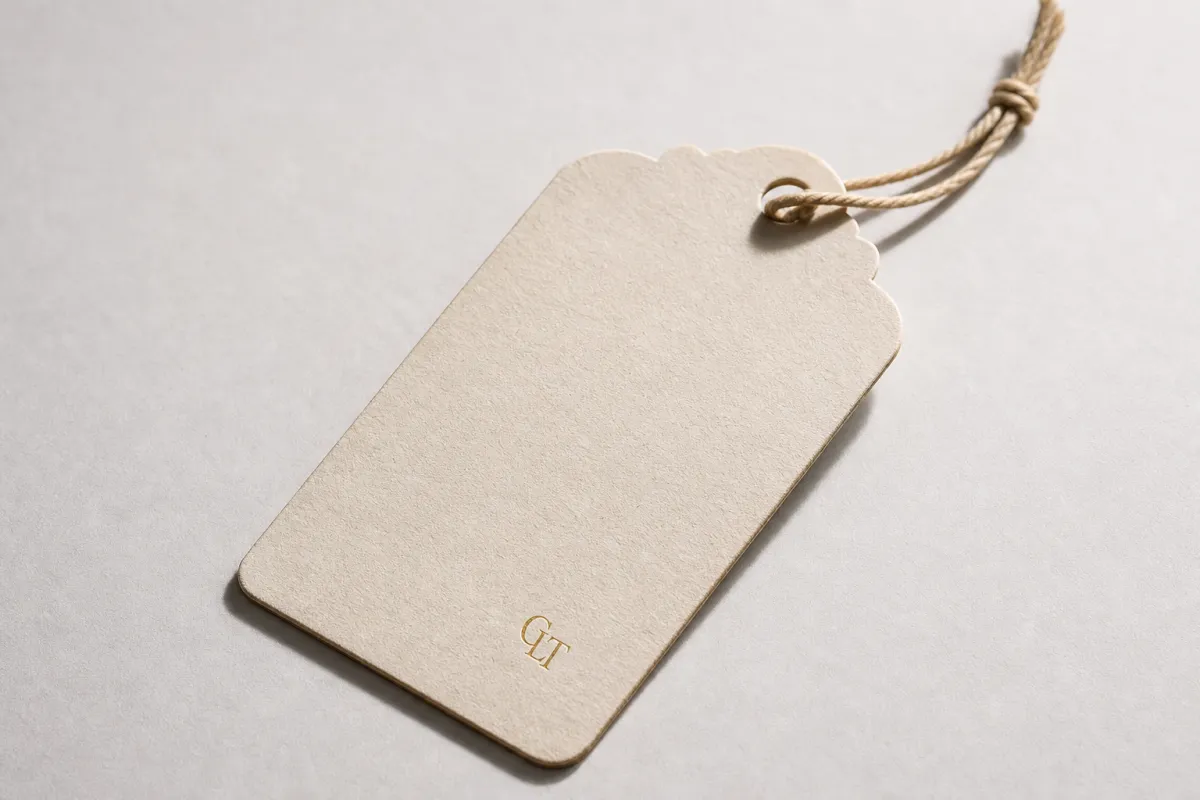
Printed Hang Tags with logo are attached cards or labels that hang from a product using string, ribbon, plastic loop, wire, or a fastener. They show up on apparel, jewelry, accessories, candles, stationery, gift items, and retail packaging that needs a more polished first impression. Some are simple, with a logo on one side and a SKU or price on the other. Others carry a miniature brand story, care instructions, QR codes, origin notes, or a compact product spec that helps the buyer understand what they are holding.
The main job is straightforward. Printed Hang Tags with logo help the buyer understand the product and understand the brand at the same time. A plain identification tag says, "This is item 482." A well-made branded tag says, "This item belongs to a brand with standards, taste, and enough care to get the details right." That second message matters more than people usually admit out loud.
The tag also supports pricing. Printed hang tags with logo can reinforce a price point without spelling it out in a speech. Heavy cardstock, clean typography, and a restrained finish make a mid-priced item feel credible. Thin stock, weak contrast, and sloppy alignment do the reverse. They make the whole product feel like it was rushed through a discount printer and approved in a hurry.
Different settings bring out different strengths. On a retail rack, printed hang tags with logo create a fast visual cue. In an unboxing, they add a small moment of ceremony and give the buyer a beat to slow down. On a gift item, they make the product feel deliberate instead of random. In resale, the tag can support perceived authenticity and condition, which is especially useful for apparel and accessories that move through multiple hands.
From a packaging buyer's point of view, printed hang tags with logo sit in a useful middle ground. They are far cheaper than a full custom box, but they still have a strong effect on first impression. You are buying a small piece of brand theatre. Keep it simple and the spend stays sensible. Stack on foil, embossing, custom shapes, and complex attachment hardware, and the price starts acting like premium packaging.
If you already use companion packaging, printed hang tags with logo work well alongside Custom Labels & Tags and other branded inserts. Consistency matters. The tag should feel like part of the same system, not a stray item somebody approved while juggling three other decisions.
How Printed Hang Tags With Logo Work in Production
The production flow for printed hang tags with logo usually starts with artwork, but artwork is only the first checkpoint. A printer or packaging supplier will review the file, confirm the dieline, verify the hole position, and prepare a proof. After approval, the job moves into print, then cutting, finishing, packing, and shipment.
Material choice sets the tone early. Most printed hang tags with logo are made from cardstock or coated paper stock in the 14pt to 24pt range, or roughly 300gsm to 400gsm depending on the supplier. Lightweight paper works for short runs and low-cost retail tags. Thicker board feels better in hand and holds up better to handling. If the tag is going to be clipped to a garment, tucked into a bag, or passed through a busy store, that extra stiffness matters.
Finish options affect both appearance and durability. Coated stock gives sharper color and cleaner image reproduction. Uncoated stock feels softer and more tactile, which suits artisanal or natural brands. Foil stamping adds brightness and a clear luxury cue. Embossing and debossing introduce depth without requiring another ink color. Spot UV can create contrast on logos or patterns, while rounded corners reduce the office-supply look that plain square tags can have when the design is too bare.
Front-and-back layouts are common because printed hang tags with logo often need to carry branding and practical information together. The front might hold the logo, product name, and a short line of messaging. The back can hold barcode data, SKU, care instructions, country of origin, fabric content, or a QR code that points to product registration or a care page. A clear structure keeps the tag from feeling crowded.
Hole placement deserves more attention than it usually gets. A centered hole works for many apparel tags, while small jewelry cards or asymmetric designs may need side placement or a reinforced eyelet. The attachment method matters too. Cotton string gives a natural look. Satin ribbon feels softer and more giftable. Plastic fasteners are practical for speed and inventory control. Variable data, such as changing SKUs or price points, can affect setup and proofing because the printer has to keep static artwork and changing fields aligned.
Digital print usually fits lower quantities, faster revisions, and designs with multiple versions. Offset printing is better when the run is larger and the color needs to stay consistent across a bigger batch. Specialty finishing, such as foil plus embossing plus Custom Die Cuts, adds time because the job has more stages and more points where an overlooked detail can throw off the result. That part is not glamorous, but it is exactly where good production habits pay off.
If sustainability matters to the brand, ask for FSC-certified paper options and chain-of-custody documentation. The FSC standards are a useful reference point for paper sourcing and responsible forest management. You can review more at FSC-certified paper options.
For brands shipping products through rough handling, it also helps to think beyond the tag itself. If the item gets packed, unpacked, and re-packed more than once, distribution testing guidance from ISTA distribution testing can be a useful benchmark for abrasion and handling risk.
Printed Hang Tags With Logo Cost, MOQ, and Quote Factors
Pricing for printed hang tags with logo comes down to a few predictable variables: quantity, size, stock, print method, color count, finishing, and attachment hardware. The quote may look simple on the surface, but the number is really a stack of decisions. Remove one layer and the cost drops. Add three small upgrades and the "simple" tag starts acting like premium packaging.
Minimum order quantity, or MOQ, matters because setup work is real. A printer has to prepare plates or digital files, calibrate color, confirm the die, and run enough sheets or impressions to make the job worth the press time. Smaller quantities usually cost more per tag, even when the design is plain. That is not a trick. That is how production math works.
Here is a practical way to think about pricing for printed hang tags with logo.
| Order Size | Typical Per-Unit Range | Best Fit | Notes |
|---|---|---|---|
| 250-500 pieces | $0.35-$0.85 | Sampling, launches, small boutiques | Digital print, limited finishing, higher setup share |
| 1,000-2,500 pieces | $0.14-$0.38 | Growing brands, seasonal drops | Better balance of setup and unit cost |
| 5,000-10,000 pieces | $0.06-$0.18 | Established retail, multi-store rollout | Lower unit price, stronger savings on simpler specs |
| Specialty finishes | Add $0.05-$0.25+ | Premium positioning | Foil, embossing, custom shapes, or layered finishing raise cost fast |
Those ranges are not universal, and they should never be treated like a fixed rule. A small run with heavy cardstock, foil, and a custom die cut may cost more than a larger run of plain tags. That is why comparing printed hang tags with logo means comparing the full spec, not just the headline number.
There are hidden costs that first-time buyers often miss. Custom die cuts can add tooling charges. Extra proofing rounds may add time and sometimes money. Rush fees are common if the shop is being asked to pull a job ahead of others. Specialty inks, edge painting, numbered variable data, and custom packaging for delivery can all nudge the total higher. Even something as plain as boxed shipping for the finished tags can matter when the order is large or needs to stay pristine.
The smartest quote comparison is a line-item comparison. Ask what stock is included, what print method is being used, whether the price covers cutting and hole punching, and whether attachment hardware is part of the number. A base price that leaves out finishing is not a bargain. It is a missing piece.
When you compare printed hang tags with logo across vendors, check the following before you compare unit cost:
- Material: stock thickness, coating, and whether the paper feels rigid enough for the product.
- Print method: digital, offset, foil, or mixed finishing.
- Included setup: dieline work, proofing, and cutting.
- Attachment: string, ribbon, plastic fastener, eyelet, or bundled accessory.
- Packaging: bulk packed, banded, boxed, or sorted by SKU.
If your product line already includes branded add-ons, keep the tag spec aligned with the rest of the package. That is where Custom Labels & Tags can help create a more cohesive presentation without forcing every item to carry the same cost profile.
Printed Hang Tags With Logo Process and Timeline
The timeline for printed hang tags with logo is usually manageable, but only when the artwork is clean and the approval chain is not tangled. The standard path runs from file review to proof approval to print production to finishing to shipment. A simple digital job can move in a week once everything is locked. A more involved specialty order can take longer, especially if the tag uses foil, embossing, a custom die, or multiple SKUs.
A realistic planning window for printed hang tags with logo looks like this:
- Artwork review: 1-2 business days for file checks, dieline matching, and content cleanup.
- Proofing: 1-3 business days depending on revision rounds and color changes.
- Production: 3-8 business days for standard digital work, longer for specialty finishing.
- Finishing and packing: 1-2 business days if the order is simple, more if there are multiple SKU bundles.
- Shipping: depends on destination and carrier speed, which means you should not assume the tags arrive the second production ends.
What slows things down? The usual suspects. Missing artwork files. No dieline. Low-resolution logos. Vague instructions about hole placement. Last-minute color changes. A client who approves the proof and then decides the legal copy needs "just one tiny tweak." Tiny tweaks are often the reason schedules slip.
Rush production exists for a reason. Sometimes a product launch shifts, sometimes a trade show date is fixed, and sometimes a buyer forgot to approve the tag until the rest of the pack was already moving through the dock. Rush service can save the launch, but it usually costs more and leaves less room for correction. For printed hang tags with logo, a rush order only makes sense when the deadline has real revenue attached to it.
Order size and finishing complexity often matter more than people expect. A 500-piece digital run with no extras can fly. A 5,000-piece order with foil, rounded corners, and variable barcode data will take longer because each step has to be set up and checked. The press time is only part of the schedule.
One useful way to plan is to work backward from the launch date. If product photography comes first, the tag should not be left for last. If the garment sample is still changing, the artwork needs to stay flexible until measurements settle. If you are coordinating printed hang tags with logo with a packaging refresh, leave room for one proof round that you hope never gets used.
For a launch with any real risk attached, I would rather see a buyer order printed hang tags with logo two weeks early and sleep well than order them three days late and start bargaining with reality. Reality usually wins, and it usually wins by a lot.
How to Design Printed Hang Tags With Logo That Sell
The best printed hang tags with logo balance branding and utility. They should look polished, but they should not turn into a crowded poster on a string. Once the tag tries to say everything at once, it usually stops saying anything clearly.
Start with hierarchy. The logo should be visible without shouting. The product name should be easy to read. If the tag needs pricing, SKU, care instructions, or a QR code, those elements should sit lower in the structure. A short brand message can work well, but it needs room around it. Crowding is what makes tags feel cheap, even when the stock itself is decent.
Typography carries more weight than many brands expect. Serif type often reads as classic or premium. Sans serif can look modern and clean. Script fonts are risky because they can soften in print and become hard to read at small sizes. For printed hang tags with logo, the safer move is usually a strong logo treatment, one highly legible supporting font, and enough contrast to survive real retail lighting.
Color should match the product position. Minimal premium brands often do well with black, cream, charcoal, warm gray, or a restrained accent color. Bold retail brands can push brighter palettes if the contrast still works. Soft-touch coating paired with a muted palette feels very different from gloss stock with saturated color. Neither is right in every case. The right choice depends on what the brand wants the buyer to feel.
Readability should never be traded away for style. Keep body copy large enough to read at arm's length. Maintain safe margins around the hole and edges. Use bleed correctly so the print does not stop awkwardly short. If the tag includes a QR code, test it at the actual print size before the order runs. A code that scans on a monitor and fails on the finished tag is just decorative clutter.
Here are a few practical layout approaches for printed hang tags with logo by category:
- Apparel: logo front, size or product line on the reverse, with care instructions and barcode below.
- Jewelry: compact card, high-contrast logo, short brand line, and restrained finish to avoid overdoing it.
- Food gifts: ingredient or origin note, best-before or batch area, and a clean brand mark that still feels giftable.
- Cosmetics: product name, usage note, and a premium finish that matches the rest of the pack.
If your goods travel through rough handling or display cycles, packaging and tag durability deserve more respect than they usually get. The ISTA testing framework is one useful reference point for thinking about shipping stress, especially if your tags sit inside cartons before they ever reach a shelf. More detail lives at ISTA distribution testing.
Printed hang tags with logo also benefit from file discipline. Use vector artwork for logos and text when possible. Keep the dieline layer separate. Outline fonts if the printer asks for it. Check image resolution on any photo elements. A tag is small, which means every file mistake becomes more obvious, not less.
If you are building a broader packaging system, keep the tag visually linked to inserts, labels, and other branded elements. That is where a custom labels and tags collection helps the whole package feel planned instead of patched together.
Common Mistakes With Printed Hang Tags With Logo
The classic mistakes are not mysterious. They usually come from rushing, overcomplicating, or trying to save a few cents in the wrong place. Printed hang tags with logo fail when they are too busy, too thin, too small, or too disconnected from the product they are attached to.
One common problem is microscopic text. Buyers love to cram in care instructions, legal lines, social media handles, QR codes, and brand story copy until the tag reads like a legal memo. If a customer has to squint, the design has already lost. A good tag should be read in a glance, maybe two if the buyer is moving slowly.
Another issue is weak contrast. Light gray text on cream stock is a favorite mistake because it looks elegant on-screen and turns mushy in print. Printed hang tags with logo need real contrast if they are going to survive store lighting and the glare from phone cameras.
Technical errors show up all the time too:
- Low-resolution logo files that print soft or pixelated.
- Missing bleed, which leaves white slivers after trimming.
- Incorrect dieline setup, especially around rounded corners or holes.
- Color expectations based on screen previews instead of print proofs.
- Ignoring safe zones near the edge, so copy gets too close to the cut.
Size mistakes create another headache. A tag can look fine on a design screen and feel absurd in real life. Too large, and it overwhelms a small item. Too small, and it cannot hold enough useful information. Folding changes the equation too. Some buyers want a folded tag for extra copy, then forget to account for how it hangs, how it opens, and whether the fold line lands on the logo.
Attachment method can also cause trouble later. A thick paper tag tied with a flimsy string may look nice for three seconds and then fall apart in handling. A rigid card on a heavy item may hang awkwardly. A fastener that is too bulky can snag. The tag and the product should be designed together, not separately.
Ordering based on the cheapest quote alone is still a bad plan. A bargain price that leaves out finishing can leave you with a tag that feels thin, prints poorly, or arrives in a format that creates handwork on your side. If the quote for printed hang tags with logo does not spell out stock, cut, finish, attachment, and packing, assume something important is missing.
Proof approval is where a lot of delays begin. Look at copy, spelling, barcode placement, color notes, and quantity splits. If the order uses multiple sizes or variants, confirm each one separately. A correct proof is not a formality. It is the last low-cost chance to catch a mistake.
Expert Tips and Next Steps for Printed Hang Tags With Logo
My simplest advice is this: spec the tag from the product outward, not from the printer quote inward. The product, the brand position, and the handling conditions should decide what the tag needs to be. Printed hang tags with logo are too visible to leave to guesswork.
Before placing an order, run through a short checklist:
- Size: does the tag fit the product and still leave room for the hole and string?
- Stock: does the paper weight match the brand position and handling needs?
- Finish: do you actually need foil, embossing, or spot UV, or will a cleaner design do the job?
- Quantity: are you ordering enough to cover the run without paying too much for setup?
- Attachment: string, ribbon, fastener, or something else?
- Delivery date: is there real room for proofing, not just hopeful thinking?
Requesting samples is smart if the tag will represent a premium product or launch. A proof pack can show how different stocks feel, how color behaves on coated versus uncoated paper, and whether the finish fits the category. A soft-touch tag may be perfect for cosmetics and awkward for rugged apparel. A bright gloss tag may work for retail promotions but feel out of place on a refined gift line.
Test one design across more than one product line if your catalog allows it. Printed hang tags with logo can be adapted by changing the size, product name, and variable data while keeping the core brand system intact. That is a practical way to get consistency without paying for a new design every time the product changes.
Spend the money where the customer will feel it. If the tag is attached to a premium item, better stock or a cleaner finish is usually worth it. If the product itself is low-margin or mass-market, a simpler tag with strong typography and solid print quality is the smarter move. No one gets a prize for overbuilding packaging that the buyer never notices.
Strong next steps are simple: gather artwork, lock the budget, decide the quantity, confirm the attachment style, and build a timeline that leaves room for proofing. If you already know the product range, compare quotes for printed hang tags with logo against the rest of your branded pieces so the whole package feels consistent instead of stitched together from separate decisions.
Printed hang tags with logo work best when they are treated like part of the product, not decoration slapped on at the end. Get the spec right, and the tag quietly does its job. Get it wrong, and the whole item feels cheaper than it should. The practical takeaway is simple: lock the size, stock, finish, and attachment before you approve the proof, and you will save yourself a lot of back-and-forth later on.
Frequently Asked Questions
What are printed hang tags with logo used for in retail packaging?
They identify the product, reinforce the brand, and carry useful details like pricing, sizing, care instructions, barcodes, or QR codes. Printed hang tags with logo also make the item feel more finished at the point of sale or during unboxing.
How much do printed hang tags with logo usually cost?
Cost depends mostly on quantity, stock, size, print method, and finishing. Smaller orders usually land higher per tag, while larger runs push the unit cost down. Specialty details like foil, embossing, and custom die cuts raise the price noticeably.
What is the normal turnaround for printed hang tags with logo?
Simple digital jobs can move quickly after proof approval, while larger runs or specialty finishes take longer. Rush timelines are possible, but they usually cost more and leave less room for corrections.
What file format should I use for printed hang tags with logo artwork?
Vector files are best for logos and text because they stay sharp at any size. Use print-ready files with bleed, safe margins, and the printer's template before final approval. That avoids trimming problems and layout surprises.
How do I choose the right size for printed hang tags with logo?
Match the tag size to the product scale, the amount of copy, and the look you want. Smaller products usually need compact tags, while premium items can support a larger tag with more breathing room. Leave space for the hole, string, and any required product information so the layout does not feel cramped.


