Buyer Fit Snapshot
| Best fit | Offset Printed Hang Tags Wholesale projects where brand print, material claims, artwork control, MOQ, and repeat-order consistency need to be specified before quoting. |
|---|---|
| Quote inputs | Share finished size, material target, print colors, finish, packing count, annual reorder estimate, ship-to region, and any compliance wording. |
| Proofing check | Approve dieline scale, logo placement, barcode or warning zones, color tolerance, closure strength, and carton packing before bulk production. |
| Main risk | Vague material claims, crowded artwork, missing packing details, or unclear freight terms can make a low unit price expensive after revisions. |
Fast answer: Offset Printed Hang Tags Wholesale: Sustainable, Sharp should be specified like a repeatable production item. The safest quote records material, print method, finish, artwork proof, packing count, and reorder notes in one written spec.
Production checks before approval
Compare the actual filled-product size with the drawing, then confirm tolerance on folds, seals, hang holes, label areas, and retail display edges. Reserve space for logos, QR codes, warning copy, and material claims before decorative graphics fill the panel.
Quote comparison points
Review material grade, print process, finish, sampling route, tooling charges, carton quantity, and freight assumptions side by side. A quote is only useful when the supplier can repeat the same color, closure quality, and packing count on the next order.
offset Printed Hang Tags Wholesale is not the kind of purchase that gets a marketing team jumping out of its chair, but it shapes the first physical impression a product makes the moment it is pulled from a box, hung on a rack, or placed on a shelf. A good tag makes a garment, accessory, or gift item feel considered and complete. A weak one can make even a strong product look rushed, and that is a problem people notice faster than they usually admit.
Hang tags have to do a lot in a very small space. They identify the item, support pricing or SKU systems, carry brand cues, and sometimes hold compliance details that need to be clear at a glance. If the type is fuzzy, the black is weak, or the hole is punched a little too close to the edge, the flaw shows up right away. Nobody is admiring the printing method itself. They are judging the tag in their hand.
Custom Logo Things focuses on offset Printed Hang Tags wholesale that are practical first and attractive second, which is usually the right order for retail packaging that has to earn its keep. This guide covers stock selection, finishing, Pricing, Lead Times, and the buying choices that keep a wholesale order from turning into a costly headache. A little attention up front saves a lot of cleanup later.
Why offset printed hang tags wholesale still wins
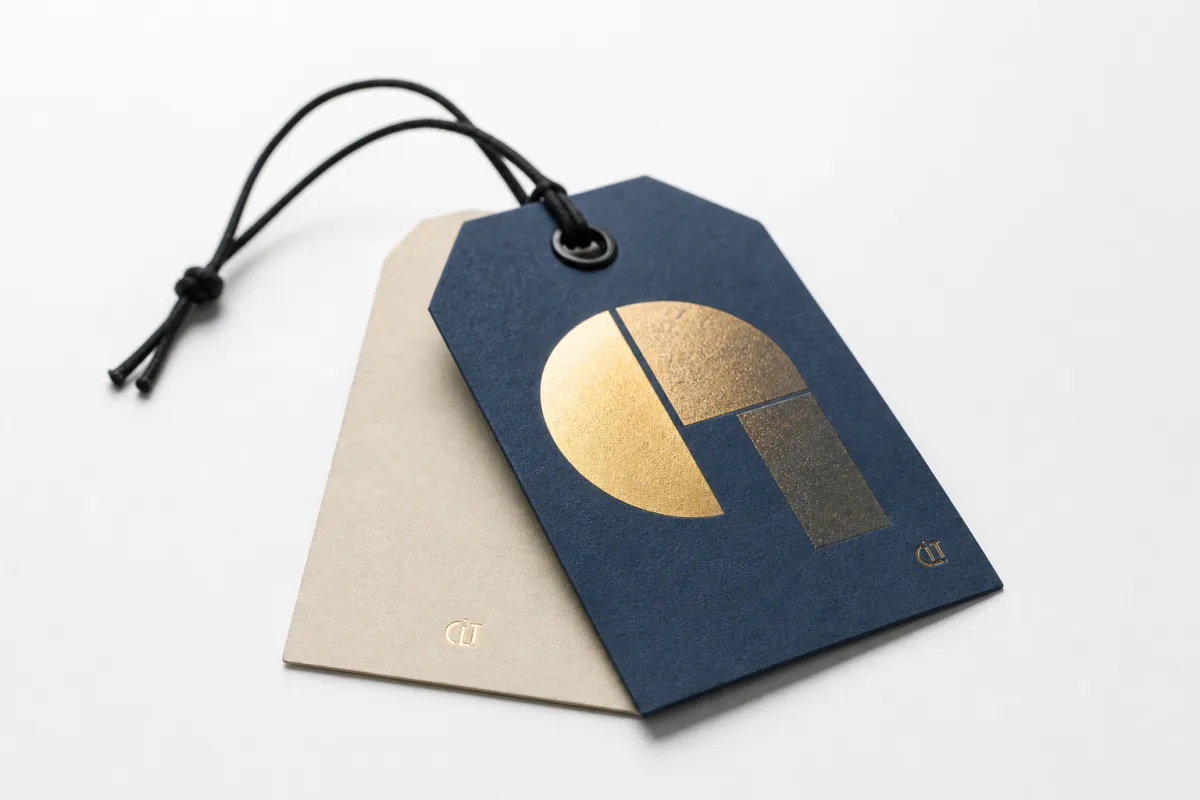
offset Printed Hang Tags wholesale still wins because it gives brands a dependable balance of sharp print, repeatability, and lower unit cost once the quantity rises. Digital printing can make sense for a tiny pilot run or a job that changes data often, but offset has a different advantage: once the plates are made and the press is set, the cost spreads out across more pieces. That is plain arithmetic, not nostalgia.
Retail buyers read details quickly. Crisp small type, solid color fields, and clean registration make a product feel deliberate. Muddy gray text or washed-out solids send the opposite message. Offset printing handles fine line work and broad color areas well, which is why offset printed hang tags wholesale remains a standard choice for apparel, accessories, beauty products, and gift items that need a polished look without pushing the budget too far.
From a packaging buyer’s point of view, the method matters less than the result. Offset printed hang tags wholesale is useful because the process is predictable. Once artwork is locked, the output tends to stay consistent from the first carton to the last, and that consistency matters when a brand is splitting a run across multiple sizes, locations, or seasonal launches. No one wants a tag system that drifts halfway through production.
Sustainability fits this process more naturally than many buyers expect. Recycled or FSC-certified boards can print cleanly on offset presses, and soy or vegetable-based inks are common options for brands that want a lower-impact spec without turning the order into a science project. The goal is not to cram every possible green claim onto the card. It is to make sensible choices: less plastic, fewer coatings, and paper that still holds up in handling.
Offset printed hang tags wholesale also helps when a brand wants to standardize across collections. Same size, same hole placement, same string type, same space for pricing or barcode information. That is the part that makes wholesale buying work. The buyer spends less time reinventing the format and more time deciding where the brand story belongs.
Practical rule: if the tag has to survive shipping, retail handling, and a buyer’s first five seconds of judgment, spend on stock quality and file prep before chasing special effects.
If you are comparing formats, the related Custom Labels & Tags page is a good starting point, and the Wholesale Programs page shows how quantity breaks can shift the economics. Buyers who want a clearer view of the production side can also use the Manufacturing Capabilities page to see what kinds of print and finishing support are available.
Product details: what these hang tags are made to do
At a basic level, offset printed hang tags wholesale is about clarity. The tag should identify the product without making the shopper work for it. That means product name, SKU, price, size, care note, barcode, brand mark, and the small legal details that retail channels often require. The challenge is fitting all of that into a compact format while keeping the design readable from arm’s length.
Different categories use the same product in different ways. Apparel brands usually care about premium feel, hole placement, and string attachment because the tag hangs front and center. Accessories and gift items often need a more decorative shape or a stronger visual brand cue. Cosmetics and candles usually need a mix of branding and compliance information, plus a tag stock that resists scuffing in transit. Offset printed hang tags wholesale works across all of those uses because the format stays flexible.
Common shape options are straightforward: rectangle, square, rounded corners, oval, and custom die-cut shapes. Most buyers still choose the standard rectangle because it is cheaper, easier to stack, and less fussy during finishing. Custom shapes can look memorable, but they need die tooling and usually a larger budget. If the shape does not improve shelf impact or brand recognition, it is just extra spend dressed up as creativity. That happens more often than brands like to admit.
Attachment choices matter as much as the print. String, cotton cord, elastic loop, plastic fastener, or metal pin all create a different customer experience. A soft cotton string feels more natural and fits a sustainable presentation. A fastener can move faster on the packing line. The real key is choosing the attachment before the dieline is finalized so the hole size and position do not become an afterthought. In offset printed hang tags wholesale, a few millimeters can save or sink a run.
- Single-sided print: best for simple branding, minimal copy, and tighter budgets.
- Double-sided print: better for care instructions, size details, QR codes, or storytelling.
- Rounded corners: help prevent fraying and give a softer retail look.
- Custom die-cuts: useful when a brand mark or product category needs a distinct silhouette.
- Standard hole punch: the most efficient choice for wholesale production.
Finishing should support the design, not rescue it. Matte or uncoated stock gives a natural, tactile look that fits sustainable branding. Aqueous coating or a light varnish can add scuff resistance without turning the tag into a plastic sheet. Foil, emboss, or spot UV can work, but they belong on designs that genuinely need that level of emphasis. With offset printed hang tags wholesale, more finish is not automatically better. Sometimes it is just more finish.
Sustainability is strongest when it shows up in the material choice, not only in the copy. Recycled board, FSC-certified paper, fewer coatings, and a print spec that avoids unnecessary waste all help the tag align with the rest of the package. For many brands, that is enough. The tag still looks clean, still feels premium, and still does the job without trying too hard.
Specifications that affect print quality and durability
If you want offset printed hang tags wholesale to come out right, lock the specs before anyone starts quoting. Size, stock thickness, paper type, print sides, finish, hole size, corner style, and attachment method all affect price and performance. Leave one of those loose and the job gets vague fast, which is how budgets drift.
Paper weight changes the whole feel of the tag. Lighter sheets can work for inserts or low-touch pieces, but actual hang tags usually need a thicker cover stock or tag board so the piece does not bend during packing and shipping. Common weights for retail tags often sit around 12pt, 14pt, 16pt, or 18pt equivalent. The right choice depends on the product. A premium knit top can carry a heavier board. A delicate accessory tag may need something lighter so it does not overpower the item.
Offset presses reward clean file prep. Fine line art, small reversed type, and dark solids need proper trap, bleed, and resolution control. If the artwork is assembled loosely, the tag can look fuzzy, muddy, or uneven, especially on uncoated stock. That is not the press being temperamental. That is the file asking for trouble. For offset printed hang tags wholesale, file quality is part of the spec, not an optional extra.
Durability is a practical question, not a branding question. Tags shipped loose in cartons can rub against each other, especially if they are packed tightly or transported long distances. If handling is light and the visual priority is a soft, recycled look, an uncoated stock may be enough. If the tag will be handled heavily, packed with apparel, or exposed to repeated friction, a light protective finish is the smarter call. The goal is to protect the print without turning the tag into a glossy billboard.
Special effects add cost because they add steps. Custom Die Cuts require tooling. Multiple inks add plate work and setup. Foil and emboss need additional processing. That does not mean these details are bad. It means they should be intentional. Offset printed hang tags wholesale is most efficient when the buyer chooses one or two meaningful upgrades rather than stacking effects just because the menu exists.
| Run size | Typical unit price | Best fit | Notes |
|---|---|---|---|
| 500 pieces | $0.28-$0.55 | Test launches, small seasonal drops | Higher setup cost per unit; keep the spec simple |
| 1,000 pieces | $0.16-$0.32 | Early wholesale orders | Good balance of price and flexibility |
| 5,000 pieces | $0.07-$0.16 | Established retail programs | Most press and finishing costs spread out efficiently |
| 10,000+ pieces | $0.05-$0.12 | Core SKUs, repeat programs | Best pricing, but revisions cost more if artwork keeps changing |
Those numbers are ballpark ranges, not a promise carved into stone. Quantity, paper, ink coverage, finish, and assembly all move the final price. Still, the pattern stays the same: offset printed hang tags wholesale gets cheaper per unit as the run grows, because setup costs stop dominating the ticket.
For brands that ship internationally or through parcel networks, it can also be worth checking transit expectations against standards from ISTA. If a tag must remain crisp after a rough ride in a carton, that is not an aesthetic issue. That is a packaging performance issue. The same goes for recycled board selection and chain-of-custody documentation, which are covered through fsc.org.
Offset printed hang tags wholesale pricing and MOQ
offset printed hang tags wholesale pricing is driven by five things more than anything else: quantity, stock, number of colors, finish, and whether the order needs stringing or other assembly. If a buyer asks why one quote is lower, the answer is usually sitting in one of those five buckets. There is no mystery here. There are setup costs, labor, and the time needed to get the press and finishing line ready.
A practical MOQ framework is better than a fantasy number. Simple offset printed hang tags wholesale runs can start around 500 to 1,000 pieces if the spec is straightforward and the size is standard. Most wholesale buyers land somewhere in the 1,000 to 5,000 range because that is where the unit cost starts making sense without locking too much cash into inventory. Larger runs are better for core SKUs, but only if the design will stay stable.
What pushes unit cost upward? Too many versions, frequent artwork changes, custom die cuts, specialty inks, and finish-heavy designs that add handling. What lowers cost? Standardized size, one or two ink colors, sensible paper selection, and a layout that does not require a technician to babysit every sheet. Offset printed hang tags wholesale rewards discipline. That sounds plain because it is plain, but the invoice will agree.
Here is the budget trap I see most often: brands over-spec the tag because they are trying to create perceived value, then they discover the actual customer never notices the expensive detail. A soft-touch laminate on a tag that sits in a folded shirt pocket is usually wasted money. A thicker stock with clean print and good hole placement may do more for perceived value than three finish upgrades. Wholesale buying works best when the budget goes where the shopper can actually see it.
Ask for at least two or three quote tiers. One should keep the spec basic. One should add a better stock. One can include a finish or assembly upgrade. That comparison shows the real break point and keeps everyone honest. With offset printed hang tags wholesale, the cheapest option is not always the smartest, and the most decorated option is usually the easiest way to overspend.
Smart buying move: compare unit cost at 500, 1,000, and 5,000 pieces before you pick a quantity. The break point is often more useful than the first price you see.
A buyer should also think about inventory risk. If the tag carries a short-season promotion or a size matrix that changes often, a smaller run may save money over time, even if the unit price looks higher. If the tag is a core branded piece that will not change for months, a larger run usually wins. Offset printed hang tags wholesale is not only a print decision. It is an inventory decision.
Brands that want tighter control on buy economics can use the same logic across related items too. A label family, a hang tag set, and a retail insert can share a print style and paper range, which makes production planning easier. That is where the broader Custom Labels & Tags catalog can help, because the more formats you standardize, the less the job turns into one-off chaos.
Offset printed hang tags wholesale process and timeline
The offset printed hang tags wholesale process is simple enough to map, which is good news because delays usually come from the buyer side, not the press. The basic flow is: confirm specs, review artwork, approve proof, schedule production, finish the order, then pack and ship. That is the order. Skipping steps does not save time. It usually creates rework.
Proofing is where many jobs slow down. A digital proof catches layout problems, missing bleed, and obvious type issues. If the job includes a difficult brand color, a special finish, or a die cut that sits close to the edge, a physical sample or a more controlled proofing step may be worth it. Offset printed hang tags wholesale depends on this stage more than most buyers expect, because once the press is running, changes become more expensive.
Simple orders can often move in about 7 to 10 business days after approval. Custom finishes, specialty die cuts, heavy assembly, or peak production periods can stretch that window. If the design still needs sign-off from marketing, retail, and finance all at once, the timeline can slip even further. Printing is rarely the bottleneck. Decision-making is.
There are a few common reasons timelines stretch: missing artwork assets, late approvals, custom tooling, a finish choice that needs extra setup, or a quantity that lands right in the middle of a busy production window. Offset printed hang tags wholesale is predictable when the specs are locked. It gets slow when the job is treated like a conversation that never ends.
For launches, build buffer time. If tags need to arrive with product packaging, barcodes, or seasonal pricing already fixed, a tight schedule is a bad idea. A delay of three or four days can still be manageable. A delay of three or four days with no buffer can throw off packing, receiving, and retail ship dates. That is how a small print issue turns into a sales issue.
Good suppliers help by catching file problems early and pointing out specs that do not make sense. They should tell you if a hole is too close to the edge, if the board is too light for the format, or if a requested finish will add cost without meaningfully improving the tag. That kind of guidance is part of the service. It is also what keeps offset printed hang tags wholesale from becoming a surprise expense.
Why choose us for sustainable hang tag production
At Custom Logo Things, the goal is not to dress up offset printed hang tags wholesale with vague promises. The goal is to give brands sensible material options, clean print, and production advice that keeps the order on budget. That sounds straightforward because it is. Fancy language does not help if the color is off or the paper choice is wrong.
Sustainable packaging still has to perform. Recycled board is a good choice only if it prints cleanly and stays readable under handling. FSC-certified stock can support a brand story, but it still needs the right basis weight and finish so the tag does not feel flimsy. Offset printed hang tags wholesale works best when the sustainability goal and the retail goal are treated as the same problem, not separate ones.
Manufacturing support matters. A buyer should expect dieline guidance, file checks, and practical feedback before production starts. That means checking hole position, bleed, barcode contrast, and whether the artwork leaves enough quiet space around the critical information. It also means being honest about what is worth paying for and what is not. If a finish adds cost but does not improve the shelf read, say so. That saves everyone time.
We also keep wholesale buying flexible. Standard formats are there for speed and cost control. Custom shapes are available when the brand needs them. If a spec is going to raise the price without adding value, the better move is to explain that upfront instead of pretending every extra option is a win. A decent supplier should help brands buy smarter, not just louder. That is the real value in offset printed hang tags wholesale.
From a compliance and transportation standpoint, it helps to align the tag with the rest of the package system. If the product ships in cartons, if the tag carries a barcode, or if the paper stock needs recycled content documentation, the plan should be built around those needs from the start. That is the difference between a print order and a packaging program.
For buyers who want a broader view of what we can support, the Manufacturing Capabilities page shows the kinds of print, finishing, and assembly paths that can be used for retail packaging work. It is often easier to choose the right offset printed hang tags wholesale spec once you see what the production side can handle cleanly.
Next steps for offset printed hang tags wholesale
If you are ready to move forward with offset printed hang tags wholesale, gather the basics first: preferred size, quantity range, paper preference, finish choice, whether you need double-sided print, and whether the tags need stringing or packed flat. Those details are enough to produce a quote that is actually useful. A vague request just produces a vague number. That is not a supplier problem.
The fastest way to get a clean estimate is to send one reference image, one target quantity, and one must-have spec. Do not send six mood-board directions and ask the production team to infer your actual priorities. If you need a recycled look, say that. If you need the logo to pop, say that. If you need the barcode on the back with room for pricing, say that. Offset printed hang tags wholesale gets easier the moment the buyer acts like a buyer.
Ask for a dieline and a proof together. That keeps revisions focused and gives the production team a clear target. If your product launch date is fixed, back into the calendar from approval day and leave room for shipping. It is much better to absorb a two-day proof correction than to rush a reprint because the tags are sitting in the wrong warehouse.
Use a simple decision checklist before you approve anything:
- If speed matters most, keep the spec standard.
- If shelf impact matters most, spend on stock and print quality first.
- If sustainability matters most, choose recycled or FSC-certified board before adding decorative finishes.
- If the product will be handled heavily, add a light protective finish rather than overbuilding the design.
- If the run is likely to repeat, standardize the size and hole placement now.
That checklist sounds basic because it is. Basic is good in wholesale. Basic keeps the tag readable, the color consistent, and the cost under control. Offset printed hang tags wholesale is not about making every tag expensive. It is about making the right parts of the tag feel intentional. That is where the value lives.
The cleanest next move is simple: lock the size, stock, print side, finish, and attachment method before the artwork starts drifting. Once those pieces are fixed, the quote gets sharper, the proof gets cleaner, and the final tag is much more likely to do its job without drama. That is usually the whole game, and honestly, it is kinda refreshing when a project stays that straightforward.
What is the usual MOQ for offset printed hang tags wholesale?
Most offset printed hang tags wholesale orders start around 500 to 1,000 pieces, but the practical floor depends on stock, colors, and finishing. If you want custom die cuts or multiple finishes, the MOQ usually moves up because the setup has to be spread across more units. Ask for pricing at two or three quantities so you can see where the real break point sits.
Are offset printed hang tags wholesale a good fit for recycled paper?
Yes, especially when you want a natural look and consistent brand color on an uncoated or lightly finished recycled board. Recycled stock works best when the artwork is simple, the ink coverage is controlled, and the design does not depend on heavy gloss. If the tag will get rough handling, add a light protective finish instead of overbuilding the design with plastic-heavy treatments.
How long does offset printed hang tags wholesale take after proof approval?
Simple runs often take about 7 to 10 business days after proof approval, but custom finishing can extend that window. Timeline depends on die cuts, specialty inks, stringing, and whether the artwork is approved on the first pass. If the tags are tied to a launch date, build in buffer time for revisions and shipping.
Can I lower unit cost without making the tags look cheap?
Yes. Standardize the size, limit the number of ink colors, and avoid unnecessary specialty finishes. Choose a stock that supports the design cleanly instead of paying for effects that do not improve the buyer’s experience. Larger quantities usually lower unit cost more reliably than trimming quality in the wrong place.
What files do you need for offset hang tag artwork?
A print-ready PDF with outlined fonts and the correct dieline is usually the safest starting point. Keep images high resolution and make sure bleeds, safe margins, and hole clearances are set before you send the file. If you are unsure, ask for the supplier’s template first; that saves time and avoids preventable revisions.