Buyer Fit Snapshot
| Best fit | Printed Kraft Bags Price Quote projects where brand print, material claims, artwork control, MOQ, and repeat-order consistency need to be specified before quoting. |
|---|---|
| Quote inputs | Share finished size, material target, print colors, finish, packing count, annual reorder estimate, ship-to region, and any compliance wording. |
| Proofing check | Approve dieline scale, logo placement, barcode or warning zones, color tolerance, closure strength, and carton packing before bulk production. |
| Main risk | Vague material claims, crowded artwork, missing packing details, or unclear freight terms can make a low unit price expensive after revisions. |
Fast answer: Printed Kraft Bags Price Quote: Costs, MOQ, and Timeline should be specified like a repeatable production item. The safest quote records material, print method, finish, artwork proof, packing count, and reorder notes in one written spec.
Production checks before approval
Compare the actual filled-product size with the drawing, then confirm tolerance on folds, seals, hang holes, label areas, and retail display edges. Reserve space for logos, QR codes, warning copy, and material claims before decorative graphics fill the panel.
Quote comparison points
Review material grade, print process, finish, sampling route, tooling charges, carton quantity, and freight assumptions side by side. A quote is only useful when the supplier can repeat the same color, closure quality, and packing count on the next order.
A Printed Kraft Bags price quote should do more than toss out a unit number and call it a day. It should show how size, paper weight, handle style, print coverage, setup, and freight shape the real cost of getting bags into your store, cafe, or event kit.
That matters because two bags can look almost identical in a product photo and still land in very different price bands. A 4-cent difference per bag barely registers at 500 units, but it turns into $400 at 10,000 units and $1,000 at 25,000 units. For a buyer comparing suppliers, that is not a rounding error. That is budget, margin, and timing.
Printed kraft bags also do more than carry products. They frame the purchase. A clean logo on natural kraft can support a premium retail experience, make takeaway packaging feel deliberate, and give gift purchases a finished look without drifting into box territory. That is why the best quotes are not the cheapest ones on paper. They are the ones that expose the tradeoffs instead of hiding them.
If you run a cafe, a boutique, a bakery, or a seasonal pop-up, you already know the bag is rarely just a bag. It is the last touchpoint a customer sees before they leave. That is why a printed kraft bags price quote needs enough detail to show what you are buying, not just what you are paying.
Why a printed kraft bags price quote can reveal hidden value
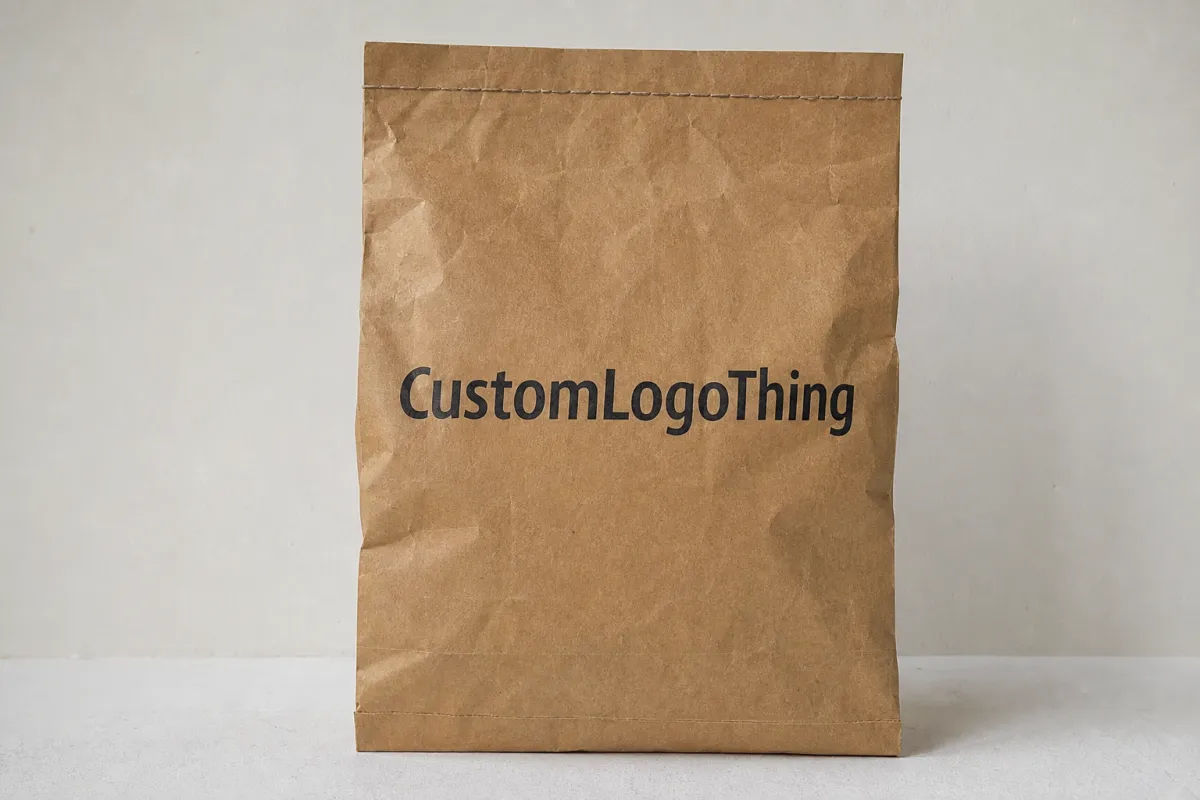
From a packaging buyer's point of view, the first number you see is rarely the number that matters. A printed kraft bag can start with a decent unit price, then climb once artwork setup, handle upgrades, heavier paper, carton packing, and delivery are added. The reverse happens too. A quote that looks slightly higher can actually be the better deal because it includes stronger paper, cleaner registration, or a more realistic transit plan.
The hidden value usually shows up in the details. A bag with a reinforced top, a better fiber blend, and a print process that holds fine type may cost more than a lighter alternative, but it can cut returns, improve shelf and counter presentation, and survive daily customer use more reliably. In retail and food service, that is not cosmetic fluff. It affects whether the bag makes it from counter to car without tearing or folding in on itself like a bad idea.
Take a simple comparison. If Supplier A quotes $0.24 per bag and Supplier B quotes $0.28, the difference is only $0.04. At 5,000 bags, that is $200. At 10,000 bags, it is $400. At 25,000 bags, it is $1,000. Add a second-color logo, an upgraded handle, or a longer freight lane, and the gap widens fast. That is why buyers should compare full landed cost, not just the headline unit price.
Kraft bags also sit in a useful middle ground. They cost less than many rigid cartons, yet they can still carry strong branding. For cafes, bakeries, boutiques, and gift packaging, that balance matters because the bag is both a utility item and a marketing surface. It is one of the few pieces of packaging customers carry in public. That exposure has value, and a quote should reflect it.
A fair quote does not bury the setup fee inside the unit price. It shows the setup, the paper spec, and the freight line so you can compare suppliers on equal ground.
Buyers who skip the spec conversation often end up paying twice: once for the bags, then again for revisions or reprints. A stronger request package usually gets a cleaner answer the first time. If you already know the bag size, print count, and delivery date, you can move faster and avoid the vague back-and-forth that drags procurement out for no good reason.
If you are collecting bids, ask for an itemized response through our contact page. That keeps the conversation focused on the details that change pricing, not just the base model name.
Printed kraft bag product details: styles, handles, and print methods
Printed kraft bags come in several constructions, and each one pushes the quote in a different direction. The shape alone can change the amount of paper used, the machine path, the handle attachment, and the amount of finishing work. A buyer who understands the main options can make better decisions before asking for a price. It saves time. It saves money. Usually both.
Common bag styles
SOS bags are the familiar square-bottom paper bags often used for food service, small retail items, and takeout. They are efficient to produce, easy to stack, and usually the most budget-friendly option when no handle is needed. Many cafes and bakeries use them for quick-service orders because they are simple and practical, which is a rare and beautiful thing in packaging.
Twisted-handle shopping bags are the most common retail format. They feel more substantial, carry better weight, and give a stronger presentation for apparel, gift items, and specialty retail. The twisted paper handle usually adds to the quote, but it also improves perceived value and customer comfort. That tradeoff is easy to justify when the bag is part of the brand experience.
Flat-handle bags usually sit in a slightly lower price band than twisted-handle versions, though the exact gap depends on paper grade and reinforcement. They are widely used in grocery, takeaway, and value-focused retail. If the bag needs to stay comfortable during repeated hand carry, flat handles need careful reinforcement planning. Nobody enjoys a handle that folds under pressure halfway to the parking lot.
Custom-format retail bags may include die-cut handles, gusset changes, reinforced tops, or special shapes for bottles, gifts, or boxed products. These bags are where pricing becomes more sensitive to specification changes. A small design tweak can alter die cutting, glue points, and packing efficiency. Tiny change. Big headache.
How print methods change the quote
Flexographic printing is a strong fit for longer runs and straightforward artwork. It handles one- to three-color logos well, especially when the design uses clean shapes and bold type. Flexo often offers efficient pricing once the quantity climbs, which is why it is common for chain retail and recurring replenishment orders.
Offset printing can deliver sharper detail and better image reproduction, particularly for complex graphics and more refined brand systems. It works well when the artwork needs finer screens, tighter color control, or a premium finish. The tradeoff is setup and sheet handling, which can make it less attractive for very short runs.
Digital printing is useful for lower quantities, test launches, and artwork that may still change. It reduces plate or cylinder setup in many cases and can make smaller orders more practical. The per-bag cost is usually higher at scale, but for 500 to 2,000 bags, it can be the smartest path when speed and flexibility matter more than chasing the absolute lowest unit price.
Branding also changes the economics. A single-color logo on natural kraft usually keeps the quote cleaner than a full-coverage image with multiple process colors. That does not mean simple is better for every brand. It means the design choice should match the buying goal. If the bag is a daily utility item, one sharp color may be enough. If the bag is part of the retail theater, full-color artwork may justify the extra spend.
Industry use cases usually follow this pattern:
- Boutique retail: Twisted-handle or custom retail bags with clean branding and sturdier paper.
- Takeaway food: SOS or flat-handle bags with food-safe inks and practical carrying strength.
- Events and promotions: Digital short runs when quantity is modest and design changes are still being finalized.
- Gift packaging: Premium bag finishes, stronger handles, and print treatments that lift presentation.
A supplier should be able to explain which construction supports your load, your fill method, and your customer experience. If that conversation turns vague, the quote probably is too.
Specifications that shape the quote: sizes, paper stock, and finishes
The fastest way to get a meaningful quote is to define the bag spec clearly. A supplier cannot price a product accurately without the dimensions, the paper weight, the handle type, and the print coverage. Those details decide how much raw material is needed and how much work the machine line must perform.
The core specification list should include:
- Width, gusset, and height: The three dimensions that determine capacity and paper usage.
- Paper GSM: The weight and thickness of the kraft stock, usually expressed in grams per square meter.
- Handle style: Twisted paper, flat paper, die-cut, or no handle.
- Print coverage: One side, both sides, one color, multiple colors, or full coverage.
- Finish requirements: Matte, gloss, coating, hot stamping, or special reinforcement.
- Packing format: Bulk-packed cartons, palletized shipping, or retail-ready counts.
Paper grade matters more than many buyers expect. A 120gsm kraft sheet and a 150gsm kraft sheet do not just differ in feel; they behave differently in print, stiffness, and carry performance. Heavier paper can improve durability and make the bag feel more premium, but it also increases material cost and can affect fold behavior. Lighter paper may save money, yet if the bag is too soft for the product load, the customer experience takes the hit.
Fiber quality also influences appearance. Some kraft stocks show a more pronounced natural texture, which works well for earthy branding. Others have a smoother surface that supports finer print detail. If the design depends on small type, thin lines, or tight registration, the surface choice becomes critical. It is better to solve that in the quote stage than to discover it after production starts and everyone starts pretending the problem was "minor."
Finish options can move the quote more than buyers expect:
- Matte coating: Useful for reducing glare and giving the bag a softer look.
- Gloss coating: Adds sheen and can make colors feel more saturated.
- Inside printing: Increases brand impact but adds press work and setup.
- Hot stamping: Delivers a premium accent, often used sparingly on retail bags.
- Reinforced tops and bottoms: Helpful when products are heavy or regularly stacked.
There is also a compliance layer. If the bag will contact food directly or indirectly, the ink system, adhesives, and paper treatment may need to meet specific regional rules. If the bag is going into e-commerce or a shipping flow, compression and drop performance matter more than they do at the front counter. The ISTA test procedures are useful when a package needs to survive transport, stacking, and distribution stress.
For buyers prioritizing fiber sourcing, many teams now ask for FSC-certified paper or equivalent chain-of-custody documentation. The FSC framework is widely recognized and can support procurement policies that require traceability. That does not make one bag automatically better than another, but it does give you a cleaner paper trail, which procurement people tend to enjoy almost suspiciously much.
Food-contact, load capacity, and recycling considerations should be stated plainly in the request. A bag that performs well for apparel may not be the right choice for hot pastries, greasy takeaway, or heavier boxed goods. Good specification work is not overengineering. It is the cheapest form of risk control.
Printed kraft bags price quote: MOQ, pricing, and unit cost
MOQ means minimum order quantity, and it is one of the clearest signals in any quote. Factories set an MOQ because setup takes time, materials, and machine adjustments that only make sense when spread across enough bags. The lower the quantity, the more those fixed costs weigh on each unit. That is why small orders often look expensive next to larger ones.
There is nothing mysterious about the pricing structure once you break it down. The main drivers are bag size, paper stock, print colors, bag construction, handle type, order quantity, and delivery location. Add a custom finish or an extra production step, and the number moves again. A good supplier will show those components clearly instead of hiding them in a single line item and hoping nobody notices.
Here is a practical way to read a quote. If one supplier offers a 5,000-unit order at $0.29 each and another comes in at $0.25 each, ask what changed. Maybe the cheaper version uses lighter paper. Maybe it excludes freight. Maybe the proof is not included. Maybe it only covers one side of the bag. Without that detail, the comparison is incomplete.
| Order profile | Typical MOQ | Illustrative unit price for a medium one-color bag | What usually drives the cost | Best fit |
|---|---|---|---|---|
| Digital short run | 500-2,000 | $0.55-$1.20 | Low setup, higher per-bag print cost, fast changeovers | Launches, testing, seasonal events |
| Standard flexo run | 3,000-5,000 | $0.22-$0.48 | Balanced setup and material efficiency | Cafes, boutiques, recurring retail replenishment |
| Large flexo run | 10,000+ | $0.16-$0.32 | Lower unit cost through scale, more efficient packing | Chain stores, high-volume programs |
| Premium custom bag | 1,000-5,000 | $0.30-$0.70 | Special finishes, heavier paper, stronger brand presentation | Gift retail, upscale packaging, promotional events |
Those ranges are illustrative, not universal. Small bags, simple one-color print, and light paper can price lower. Oversized bags, heavy stock, extra colors, or premium finishes will price higher. The point is not to memorize a number. The point is to understand how the price moves when you change one spec at a time.
Here is the unit-cost logic buyers should keep in mind. Suppose a 5,000-bag order is quoted at $0.28 per unit and a 10,000-bag order is quoted at $0.23 per unit. The larger order saves $0.05 on each bag, which equals $250 on the 5,000-unit delta and $500 on the full 10,000-unit run. If the paper and printing quality stay the same, scale can produce real savings without lowering the standard.
That said, a bigger order is not always smarter. If your design is likely to change next quarter, or if the product launch is still being tested, locking into a large volume can create waste. For a buyer, MOQ should match demand certainty, storage space, and the cost of carrying inventory. Lower MOQ is often worth paying for when flexibility matters more than the last cent of unit price.
A complete quote should disclose the items below:
- Unit price: The per-bag cost at the specified quantity.
- Setup or plate fee: Any one-time prepress or tooling cost.
- Proofing cost: If digital proofs or pre-production samples are separate.
- Freight: Whether shipping is included, estimated, or billed separately.
- Taxes or import duty: Where relevant, especially for cross-border supply.
- Packing details: Carton count, palletization, and any special packing note.
When those items are visible, buyers can compare the true landed cost. When they are missing, the quote is only partly useful. A lower headline price may look attractive until freight or rework shows up and eats the savings like it was invited.
For that reason, the best printed kraft bags price quote is usually the one that gives you enough information to compare three things at once: cost, quality, and risk. If you can quantify all three, procurement gets much easier.
Production process and timeline for printed kraft bags
Production usually follows a predictable sequence. First comes the inquiry, then artwork review, then proofing, then approval, then the print run, then finishing, then carton packing, then delivery. Each step sounds straightforward. In reality, the timeline stretches when artwork files are incomplete or when the buyer changes the design after proof review.
Here is the typical path for a custom printed kraft bag order:
- Inquiry and specification review: The buyer shares size, quantity, bag style, print count, and deadline.
- Artwork check: The file is reviewed for bleed, resolution, color setup, and print placement.
- Digital proof: A mockup shows layout and branding position before production starts.
- Approval: The buyer confirms the proof or requests adjustments.
- Production: Paper printing, bag forming, handle attachment, and reinforcement happen on the line.
- Quality control: Color checks, size checks, and functional checks are completed before packing.
- Shipping: Finished cartons leave the plant, then transit time begins.
Where do delays happen most often? Artwork. A file that arrives in the wrong format, with low-resolution logos or unclear color references, can slow everything down. Pantone matching can also add time when a brand color needs closer control. So can special finishes, structural samples, or last-minute quantity changes. The more custom the bag, the more disciplined the approval process needs to be.
For standard printed kraft bags, a realistic turnaround often falls in the 12-15 business day range after proof approval. Simpler short-run digital jobs can be quicker. Larger runs, complex finishes, or bags that need special reinforcement can take longer. Then shipping adds another layer. Air freight moves faster but costs more. Sea freight saves money on large shipments but stretches the calendar significantly.
If you are working to a fixed event date or store opening, do not ask only for the production time. Ask for the full schedule from artwork receipt to delivery. That should include proof timing, approval deadline, production, packing, and transit. A deadline is not safe until every step is on paper.
A buyer checklist helps:
- Confirm the final size and handle style before requesting pricing.
- Send print-ready artwork or vector files early.
- Allow time for proof review and one revision cycle.
- Ask whether the quote includes carton packing and shipping estimates.
- Build in a buffer if the bags must arrive before a launch, holiday, or trade event.
That buffer matters more than most teams expect. A week lost to proof revisions can be recovered only if the schedule had room built in from the start.
Why choose us for printed kraft bags
Packaging buyers usually want the same three things: consistent print quality, stable material sourcing, and communication that is clear enough to make decisions fast. That is the standard we work toward. A good bag is not just a print job. It is a controlled supply item that has to look right, carry well, and arrive on time.
Better quoting starts with better alignment. When the spec is clear, the bag size is fixed, the artwork is usable, and the delivery target is realistic, the supplier can price accurately. That cuts down on surprises. It also cuts down on change orders that pop up late and slow the entire project down.
Quality control matters at several stages. Color checks help ensure the logo lands where the brand expects it. Handle strength checks matter because the bag should support the intended load without slipping or tearing. Carton packing matters because even a well-made bag can arrive damaged if the shipment is poorly packed or overloaded.
Here is the difference between low-cost and well-managed supply. The low-cost vendor may show a lower unit price, but if the bags arrive with weak handles, poor registration, or delayed transit, the buyer absorbs the cost in labor and reputation. Reprints wipe out savings fast. A supplier that gets the spec right the first time usually ends up being the cheaper option in real terms.
Buyer quote tip: If your internal team needs to compare options quickly, ask for one version with a standard paper grade and one version with a stronger stock. That gives you a direct view of how much durability costs before you commit.
If you want a supplier to review artwork or clarify spec options, send the files through our quote request page. If you are still comparing bag constructions, ask for a side-by-side option list so the team can see where the price changes are coming from.
We also recommend asking for a sample or pre-production proof when color accuracy, handle feel, or structural strength matters. That small step can prevent a lot of expensive guessing later.
How to request your printed kraft bags price quote
The fastest route to an accurate quote is to send a complete brief. The more specific you are, the fewer assumptions the supplier has to make. That usually means faster replies, fewer revisions, and a better chance that the first production run matches the expectation.
Start with the essentials:
- Bag dimensions: Width, gusset, and height.
- Quantity: The exact order size and any future forecast if you plan repeat runs.
- Paper preference: Kraft weight, finish preference, and whether FSC paper is required.
- Handle style: Twisted, flat, die-cut, or no handle.
- Artwork files: Vector files, print-ready PDFs, or high-resolution source art.
- Print details: One color, multiple colors, inside print, or special finish.
- Delivery location and deadline: Needed to estimate freight and transit.
Then ask for an itemized quote. That single request helps separate the true production cost from the shipping cost and the setup cost. It also makes it easier to compare suppliers side by side. A clean quote should let you see the unit price, the one-time charges, the timeline, and the shipping assumptions without guessing.
If your design is still being refined, ask whether the supplier can quote two or three versions at once. For example: a standard paper grade, a heavier stock, and a premium finish version. That gives procurement a real decision matrix instead of a single number that hides the tradeoff.
When accuracy matters, request a sample or pre-production proof before approving the full run. That is especially useful if your logo uses subtle color shifts, if the bag carries heavier goods, or if the package needs to align closely with an existing retail identity. The small delay of proofing is usually cheaper than discovering a mismatch after production.
To get started, send the size, quantity, artwork, paper preference, handle style, and deadline through our contact form. A complete brief is the fastest way to receive a useful printed kraft bags price quote, and it gives the supplier the information needed to price the job correctly the first time.
FAQs
What do I need to request an accurate printed kraft bags price quote?
Provide bag size, quantity, paper weight, handle type, print colors, and any finishing requirements. Share artwork files in a usable format so the supplier can estimate setup and proofing correctly. Include your delivery location and target date because freight and turnaround affect the final price. If you already have a second option in mind, send that too. Comparing two specs side by side is usually faster than asking for a second round of revisions later.
How does MOQ affect printed kraft bags pricing?
A higher MOQ usually lowers the unit price because setup costs are spread across more bags. A lower MOQ can be useful for testing a design, but the per-bag cost is often higher. Ask whether the supplier offers tiered pricing so you can compare 1,000, 3,000, and 5,000-unit scenarios. That gives you a clearer view of where the price drops enough to matter and where the inventory risk starts to outweigh the savings.
Can I get a printed kraft bags price quote for a small order?
Yes, many suppliers quote smaller runs, especially for digital or short-run printing. Expect a higher unit cost if the order is below standard production volume. Small orders are often best when you are launching a new product, testing branding, or covering a short event window. They are also useful when you need a fast turnaround and cannot afford to sit on excess stock.
What affects the turnaround time for printed kraft bags?
Artwork approval, proof revisions, print method, bag complexity, and order size all affect turnaround. Special finishes and custom structural details usually add time to the production schedule. If you have a hard deadline, ask for the full schedule from proof approval to shipping, not just the production date. That is the only way to know whether the bags will actually arrive when you need them.
Are printed kraft bags a good fit for food and retail brands?
Yes, they work well for cafes, bakeries, gift shops, apparel, and general retail packaging. They offer a natural look that supports sustainable branding while still handling daily use. Choose the Right paper strength and handle style so the bag matches your product weight and customer experience. A careful printed kraft bags price quote makes that decision easier because it shows where durability, print quality, and lead time fit together.
The practical move is simple: compare quotes only after the specs match. Same size, same paper grade, same handle, same print count, same freight term. If one supplier still looks cheaper after that, you have a real price advantage. If not, you have a spec problem, not a sourcing win.

