Buyer Fit Snapshot
| Best fit | Printed Kraft Mailer Boxes Bulk for Sustainable Shipping projects where brand print, material claims, artwork control, MOQ, and repeat-order consistency need to be specified before quoting. |
|---|---|
| Quote inputs | Share finished size, material target, print colors, finish, packing count, annual reorder estimate, ship-to region, and any compliance wording. |
| Proofing check | Approve dieline scale, logo placement, barcode or warning zones, color tolerance, closure strength, and carton packing before bulk production. |
| Main risk | Vague material claims, crowded artwork, missing packing details, or unclear freight terms can make a low unit price expensive after revisions. |
Fast answer: Printed Kraft Mailer Boxes Bulk for Sustainable Shipping should be specified like a repeatable production item. The safest quote records material, print method, finish, artwork proof, packing count, and reorder notes in one written spec.
Production checks before approval
Compare the actual filled-product size with the drawing, then confirm tolerance on folds, seals, hang holes, label areas, and retail display edges. Reserve space for logos, QR codes, warning copy, and material claims before decorative graphics fill the panel.
Quote comparison points
Review material grade, print process, finish, sampling route, tooling charges, carton quantity, and freight assumptions side by side. A quote is only useful when the supplier can repeat the same color, closure quality, and packing count on the next order.
Printed Kraft Mailer Boxes Bulk for Sustainable Shipping
If you are buying printed kraft mailer boxes bulk, the real question is not whether the box looks decent in a mockup. The question is whether it feels like a brand the second someone picks it up, or like a shipping carton that wandered off and got promoted. Plain mailers move product. They do not build memory. Customers notice that difference fast.
Bulk buying matters because packaging is one of those line items that quietly gets expensive when nobody treats it like a system. Lower unit cost helps, obviously. The bigger win is consistency. One carton spec across launches. One print standard across SKUs. One less thing to scramble over when the calendar gets crowded. That is not glamorous. It is just sane.
"The cheapest mailer is rarely the cheapest packaging. If the box crushes, scuffs, or looks generic, the brand pays later in returns, complaints, and extra inserts."
Kraft has a very specific kind of credibility. It looks practical. It feels grounded. It avoids the shiny, overworked look that can make a package seem expensive for all the wrong reasons. For apparel, candles, subscription kits, and beauty products, that matters. You want the carton to feel considered, not theatrical.
Why Printed Kraft Mailer Boxes Bulk Beat Generic Mailers
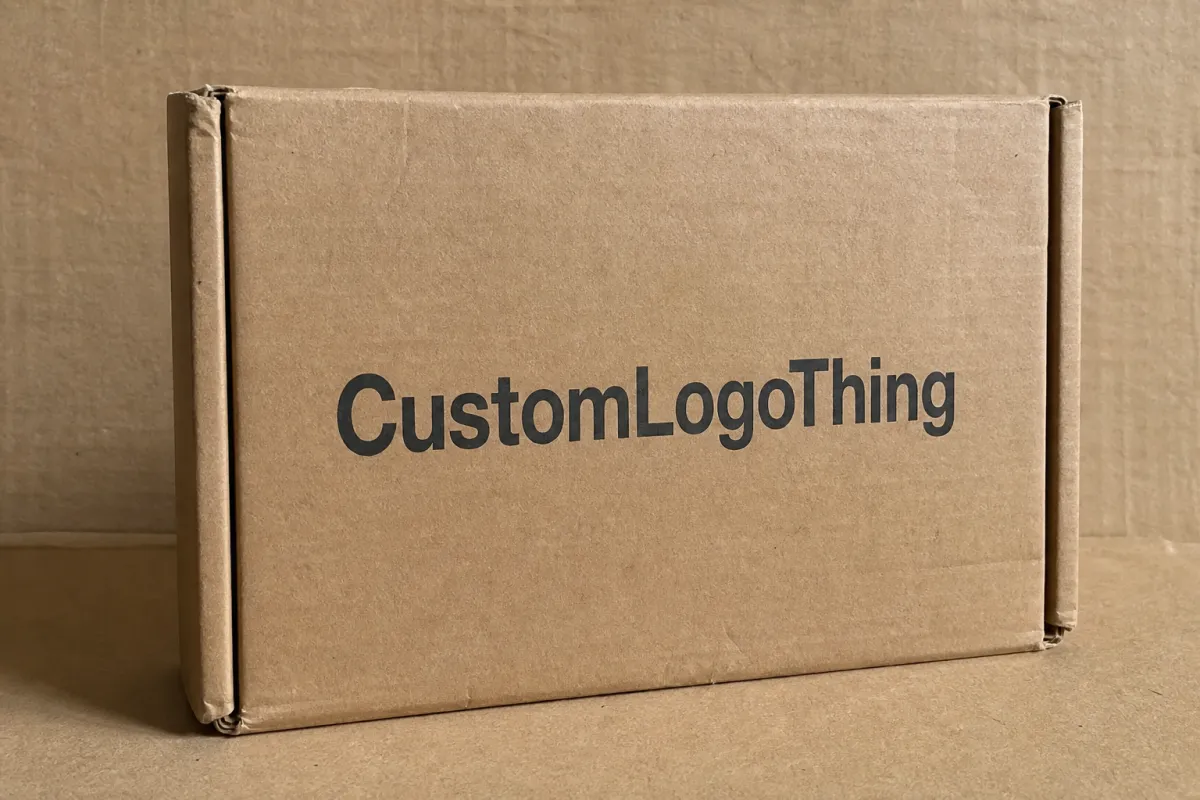
Generic brown mailers are fine if the only goal is point A to point B. Most brands are not shipping spare parts. They are selling a first impression, and the box is usually the first physical thing the customer touches. If that touchpoint looks accidental, the product starts behind before anyone even opens it.
Printed kraft mailer boxes bulk solve that in a direct, practical way. The print gives ownership. The kraft stock gives the carton a grounded, recyclable feel. The bulk order gives you pricing that rewards planning instead of punishing it. Put those together and a plain mailer usually loses the argument before the product enters the chat.
There is a second reason brands move to volume orders. Small repeat buys sound flexible until launch calendars stack up and the packaging closet turns into a graveyard of mismatched sizes. Bulk mailer programs cut that mess down. One spec can handle a core SKU. A second spec can cover seasonal drops. The brand stays recognizable instead of improvising with whatever box happens to be left on the shelf.
That consistency shows up in product photos, unboxing clips, and plain old customer perception. A sharp logo on kraft does not shout. It just looks finished. That is usually enough. Loud packaging can work. Forced packaging usually looks like somebody tried too hard.
Practical upside:
- Lower per-unit cost as quantity rises
- Less packaging variation across product lines
- Cleaner branded presentation for DTC shipping
- Better perceived value than plain transit cartons
- More control over sustainability messaging and material choice
Kraft does the job well because it is easy to read and hard to overcomplicate. Buyers do not need a lecture to understand a kraft box. They can see the material, feel the texture, and get the point without a lot of theater. If the goal is practical packaging that still looks like it belongs to a brand, kraft gets there fast.
Product Details: What You Are Actually Buying
Most buyers ask for a mailer box, but what they are actually buying is a folding carton or corrugated mailer structure that ships flat, assembles quickly, and often closes without extra tape. The self-locking design is the useful part. It cuts packing time and gives the box a cleaner shape when it lands at the customer’s door.
For Printed Mailer Boxes, the structure usually starts with single-wall corrugated stock. E-flute is common when the print surface needs to stay smooth. B-flute makes more sense when crush resistance matters more than a slightly finer print face. Lightweight paperboard can work for small retail kits, but once the product has weight, edges, glass, or anything that hates impact, corrugated is the safer move. Guessing on board strength is a fast way to buy damage twice.
Print choices are simple on paper and expensive in practice if they are handled badly. A one-color logo on the outside is often the leanest option. Interior printing adds a nice reveal without crowding the outside. Full coverage art can look strong, but it asks for cleaner files, tighter color control, and a bigger budget. If the brand is minimal, one-color ink on natural kraft usually looks sharp enough to do the job without paying for decoration nobody asked for.
Finish matters too. Raw kraft keeps the material story obvious. A light matte coating can cut scuffing and make dark ink feel more controlled. Heavy gloss or plastic-heavy lamination changes the recycling story and belongs on a different box type. If sustainability is part of the pitch, the finish should support it instead of undermining it.
Common uses include apparel, candles, beauty items, subscription kits, sample sets, and giftable e-commerce products. In every case, the box has to do more than hold a product. It has to protect it, present it, and keep the packing line moving without adding a bunch of extra steps.
Typical structure choices:
- Exterior print only for a clean, low-cost branded look
- Inside print for a better reveal without increasing outside clutter
- Simple logo treatment for minimalist brands and smaller budgets
- Full coverage print for premium unboxing and retail display
- Insert-ready builds for candles, cosmetics, and mixed-item kits
If you are comparing formats, our Custom Packaging Products page covers more carton styles, while Custom Poly Mailers make more sense for lighter garments and soft goods. For recurring replenishment, Wholesale Programs usually cuts the most friction.
Specifications That Affect Fit, Strength, and Shelf Appeal
Fit is where most packaging mistakes begin. Buyers estimate dimensions, round up, and then act surprised when the product rattles around or the box looks bloated. A mailer that is too large wastes material and can raise shipping cost. A box that is too tight can crush the product, damage the artwork, or make packing miserable. None of that is mysterious.
The first spec to settle is the real product size, not the optimistic version of it. Measure the item with inserts, sleeves, tissue, or internal cushioning if those are part of the final packout. Then leave just enough clearance so the product drops in cleanly without sloshing around. A few millimeters can change the whole feel of the pack.
Board choice comes next. For smaller, lighter items, E-flute often gives the best balance of print quality and protection. For heavier or more fragile products, B-flute or a stronger corrugated build usually makes more sense. If the box has to survive parcel networks, stack pressure, and repeated handling, ask for crush-resistance guidance instead of settling for a pretty mockup. Shipping boxes should survive shipping. Wild concept.
Artwork rules matter more than most first-time buyers expect. Bleed, safe zone, seam placement, and fold lines all change the final look. A logo that looks perfect on a screen can land awkwardly across a tuck flap or seam if the dieline gets ignored. Good packaging design is not just art. It is art arranged around machinery, glue, and folding.
For buyers who want a stronger technical baseline, ask what test references the supplier can provide. Distribution tests based on ISTA methods are common in shipping contexts, and carton performance can also be discussed with compression or burst data depending on the structure. If the supplier cannot explain the basic test method, that is a warning sign. Packaging that travels should be treated like travel packaging, not desk decoration.
Sustainability claims should stay specific too. Ask about recycled content, curbside recyclability, and whether any coating or lamination changes end-of-life handling. The EPA's recycling guidance at EPA recycling guidance is a decent baseline, but local rules still vary. FSC-certified paper can support sourcing goals if chain-of-custody matters to your brand. The point is not to collect buzzwords. The point is to make a package you can explain without flinching.
Specs worth checking before you approve:
- Exact internal and external dimensions
- Board caliper or flute type
- Print sides and print coverage
- Safe zones, bleed, and seam placement
- Coating or finish type
- Recycled content and recyclability notes
- Insert thickness if the product needs one
From a shelf appeal angle, a right-sized box with clean logo placement almost always beats an oversized package with busy artwork. Bigger does not automatically read as premium. A lot of the time it just reads as wasteful.
Pricing, MOQ, and Quote Basics
Packaging pricing is usually easier than people think, once they stop guessing. The main cost drivers are box size, material grade, print coverage, finish, and total quantity. A small box with one-color print will usually cost far less than a large mailer with interior art, matte coating, and a custom insert. That is not a trick. That is manufacturing.
As quantity rises, unit price usually falls in a pretty predictable way. For many custom runs, the gap between 500 pieces and 5,000 pieces is big enough to change the buying decision. Smaller runs help test demand, but the unit cost often hurts. Larger runs spread setup and tooling across more units, which is why bulk orders are the normal sweet spot for established SKUs.
Here is a realistic way to think about it: simple printed kraft mailer Boxes Bulk Orders in common sizes may land around $0.35 to $0.75 per unit at higher volumes for straightforward one-color work, while smaller quantities or fuller coverage can push closer to $0.95 to $2.80 per unit depending on size, board, and finish. Large boxes, inserts, and premium coatings move the number up fast. Anyone claiming every custom mailer should cost the same is selling fiction.
A good quote should show more than a single unit price. It should separate setup, sampling, freight, artwork changes, and any tooling or plate charge. If the supplier gives one number and refuses to break it down, expect surprises later. The worst packaging quote is the one that looks cheap until the freight bill arrives.
| Option | Best For | Typical Cost Impact | Tradeoff |
|---|---|---|---|
| One-color exterior print | Apparel, simple retail kits, launch boxes | Lowest unit cost; often the cleanest bulk price | Minimal visual drama, but efficient and reliable |
| Exterior plus inside print | Subscription boxes, beauty, giftable products | Usually adds about 10% to 25% over a basic print build | Better unboxing, more artwork prep |
| Full coverage printed kraft | Premium branding, strong shelf presence | Often 20% to 45% more than a minimal print spec | Higher visual impact, tighter color control needed |
| Heavy board with insert | Candles, glass jars, fragile mixed-item kits | Commonly adds $0.20 to $0.80 per unit | Better protection, more material cost |
Those numbers are not a quote. They are a buying range. Still useful, though, because ranges help you spot nonsense fast. If one offer is way lower than the rest, ask why. Sometimes it is a shortcut in stock thickness. Sometimes it is weak print. Sometimes it is a box that was sized badly and will cost more in damage than it saves in paper.
Ask every supplier these four things:
- What exactly is included in the unit price?
- Is the setup charge one-time or repeated on reorder?
- What freight assumptions were used?
- Does the quote match the actual artwork sides, finish, and insert needs?
Cheap boxes can get expensive fast in the real world. Oversized cartons eat storage space. Weak stock drives damage. Sloppy print makes the product look less credible. By the time those costs show up, the "good deal" has already used itself up.
Process, Timeline, and Lead Time
The order flow should be simple enough that a tired ops manager can follow it without a diagram. Request the quote. Confirm size and spec. Send artwork. Review the proof. Approve a sample if needed. Produce the order. Ship it. Fewer detours means fewer launch delays, which is the whole point.
Standard specs move faster. Custom sizing, unusual inserts, color-heavy artwork, and special finishes take more time. That part is normal. What slows orders down is not complexity by itself. It is indecision, missing files, and people changing the spec after the proof is already underway.
The most common delay points are boring, which is exactly why they keep happening. Dielines arrive unclear. Logo files are low resolution. A team asks for a color tweak after proof approval. One person signs off, then another person has opinions. Nothing dramatic. Just days slipping away.
Here is the cleanest way to keep lead time under control:
- Finalize the product dimensions first.
- Decide whether an insert is required.
- Send editable artwork files, not screenshots.
- Keep the print layout simple unless complexity is truly needed.
- Review the proof quickly and flag changes in one round, not five.
- Approve the sample against the real product as soon as it arrives.
For many custom printed packaging jobs, production can move in roughly 12 to 20 business days after proof approval if the structure is standard and the artwork is ready. Fully custom sizing, more detailed print, or added finishing can push that longer. Freight time sits on top of production time, so a buyer who promises a launch date without counting transit is setting a trap for themselves.
A sample or proof is not a formality. It is the moment you catch the expensive mistake before it gets multiplied. Fit, board feel, color, seam placement, and print clarity all show up differently on a physical box than on a screen. Screens are flattering liars.
"We stopped paying for oversized brown boxes and started buying actual fit. The shipping damage dropped and the unboxing got harder to ignore."
If speed matters, the best move is usually to simplify the spec, lock the quantity, and avoid late-stage changes. Fancy revisions after proof approval do not make a launch look smarter. They just make it slower.
Why Choose Us for Printed Kraft Mailer Boxes Bulk
The value in a packaging supplier is not mystery. It is consistency. Good printed boxes show up the way the proof promised. They fit the product the way the spec sheet said they would. They arrive in the right quantity, with board quality that does not wander from piece to piece. That sounds basic because it is basic. Packaging vendors still manage to mess it up.
For printed kraft mailer boxes bulk, the best supplier is the one that helps you control the boring details. Dieline guidance matters. Material recommendations matter. Clear quotes matter. Reorder consistency matters even more, because the second or third run should match the first without a scavenger hunt through old emails.
Support should be practical, not dramatic. If the box needs a tighter insert pocket, that should be called out. If the artwork needs more room around the seam, that should be flagged before print. If the board is too light for the shipping method, somebody should say so instead of hoping the carrier is feeling generous. Hope is not a packaging spec.
Sustainability should stay grounded too. Right-sized cartons reduce filler waste, reduce void space, and improve shipping efficiency more than vague eco copy ever will. A kraft box only earns the sustainability story if the construction, finish, and sizing support it. Anything else is just green language with a carton attached.
For buyers comparing vendors, these are the signals that usually separate the reliable ones from the flaky ones:
- They can explain the dieline and structure without hand-waving
- They quote unit cost, setup, and freight separately
- They offer samples or proofs before mass production
- They can match repeat orders to the original spec
- They give honest material guidance instead of pushing the most expensive option
If your line needs more than one packaging type, that is normal too. Mailer boxes are not the answer to everything. Some products work better in cartons, some in mailers, and some in soft packaging. The point is to choose the format that protects the product and supports the brand without paying for structure you do not need.
A good custom box supplier should make three things easier:
- Ordering the right size
- Understanding the real price
- Repeating the order without rework
That is the standard. Anything less creates avoidable cost later.
Next Steps to Order the Right Boxes
Start with the product, not the packaging fantasy. Measure the item, decide whether inserts are needed, and pick a quantity range that fits your budget and storage space. If the product shifts in transit or has fragile parts, build around that reality now instead of trying to patch it with tape and optimism later.
Gather the useful files before you request a quote. Logo artwork, brand colors, print preferences, and any structure notes should all be ready. If you have a preferred finish or a recyclable-material requirement, say that up front. Every round of back-and-forth adds time, and packaging timelines have a funny way of exposing vague planning very quickly.
One sample or proof is usually enough to tell you whether the box works. Check it with the real product, not a rough stand-in. Look at fit. Look at the tuck closure. Look at print placement. Look at how the kraft tone changes the logo color. A screen mockup can be flattering in all the wrong ways.
From there, choose the spec that balances cost, protection, and brand impact. A mailer does not need every possible finish to be effective. It needs the right structure, the right print, and the right quantity. That is how you get a package that feels intentional without bloating the budget.
If the launch date is already close, do not stall on perfection. Lock the dimensions, simplify the artwork if needed, and move forward with printed kraft mailer boxes bulk before the calendar starts making decisions for you. Packaging delays rarely improve a product. They just make everyone rush later.
Frequently Asked Questions
What is the minimum order for printed kraft mailer boxes bulk?
MOQ depends on the box size, print coverage, and material choice, so there is no single number that fits every order. Smaller runs are useful for testing, but the unit price is usually higher than a larger bulk order. The best MOQ is the smallest quantity that covers launch demand, sample testing, and a little safety stock.
Are printed kraft mailer boxes bulk recyclable?
Most kraft and Corrugated Mailer Boxes are recyclable if they are not heavily laminated or coated with plastic-heavy finishes. Ink coverage and surface treatment still matter, so ask what is used before assuming the package is fully curbside-friendly. Local recycling rules also vary, so buyers should confirm acceptance in their own area.
How long does a printed kraft mailer boxes bulk order take?
Timing depends on whether the size is standard or fully custom, and whether the artwork is ready to approve. Proofing and sample approval can add time, especially when a design needs revision. Freight time is separate from production time, so always ask for both before promising a launch date.
What print style looks best on kraft mailer boxes?
Bold logos, clean typography, and strong one-color prints usually look sharpest on natural kraft stock. Full-color art can work, but it needs better color control because kraft absorbs and softens the appearance. Interior print is a smart way to add impact without cluttering the outside design.
How do I get an accurate quote for printed kraft mailer boxes bulk?
Send exact product dimensions, target quantity, print sides, and material preferences so the quote reflects the real spec. Include insert needs, finish choices, and delivery location to avoid surprise charges later. Ask for pricing that separates unit cost, setup, and freight so you can compare offers honestly.


