Buyer Fit Snapshot
| Best fit | Printed Kraft Mailer Boxes with Logo projects where brand print, material claims, artwork control, MOQ, and repeat-order consistency need to be specified before quoting. |
|---|---|
| Quote inputs | Share finished size, material target, print colors, finish, packing count, annual reorder estimate, ship-to region, and any compliance wording. |
| Proofing check | Approve dieline scale, logo placement, barcode or warning zones, color tolerance, closure strength, and carton packing before bulk production. |
| Main risk | Vague material claims, crowded artwork, missing packing details, or unclear freight terms can make a low unit price expensive after revisions. |
Fast answer: Printed Kraft Mailer Boxes with Logo: Film, Print, MOQ, and Carton Packing should be specified like a repeatable production item. The safest quote records material, print method, finish, artwork proof, packing count, and reorder notes in one written spec.
Production checks before approval
Compare the actual filled-product size with the drawing, then confirm tolerance on folds, seals, hang holes, label areas, and retail display edges. Reserve space for logos, QR codes, warning copy, and material claims before decorative graphics fill the panel.
Quote comparison points
Review material grade, print process, finish, sampling route, tooling charges, carton quantity, and freight assumptions side by side. A quote is only useful when the supplier can repeat the same color, closure quality, and packing count on the next order.
Printed Kraft Mailer Boxes with Logo: Smart Branding That Actually Ships Well
Printed kraft mailer Boxes with Logo do a lot of quiet work. They carry the product, set the tone before the item is even touched, and give the customer a brand impression that starts at the parcel and follows through to the unboxing. That matters because packaging is rarely the first thing a team budgeted for, but it is often the first thing the customer remembers. In practice, printed Kraft Mailer Boxes with logo sit in the middle of three goals that do not always behave nicely together: protection, presentation, and sustainability.
That tension is exactly why so many packaging teams keep coming back to printed kraft mailer boxes with logo. Kraft has an honest, grounded look that feels familiar without feeling plain. A logo printed on that surface adds recognition without making the box shout for attention. The result can feel restrained in the best way, and that restraint is part of the appeal. A box that looks considered, ships cleanly, and still feels like it belongs in the brand system tends to earn its place pretty quickly.
The strongest packaging choices are rarely the flashy ones. They are the ones that survive a bumpy parcel route, a hurried packing shift, and a customer opening the carton on a kitchen counter after a long day. That is the real test for printed kraft mailer boxes with logo. Not how they look in a render, but how they hold up in the actual lane they were built for.
Printed Kraft Mailer Boxes with Logo: What They Are and Why They Matter
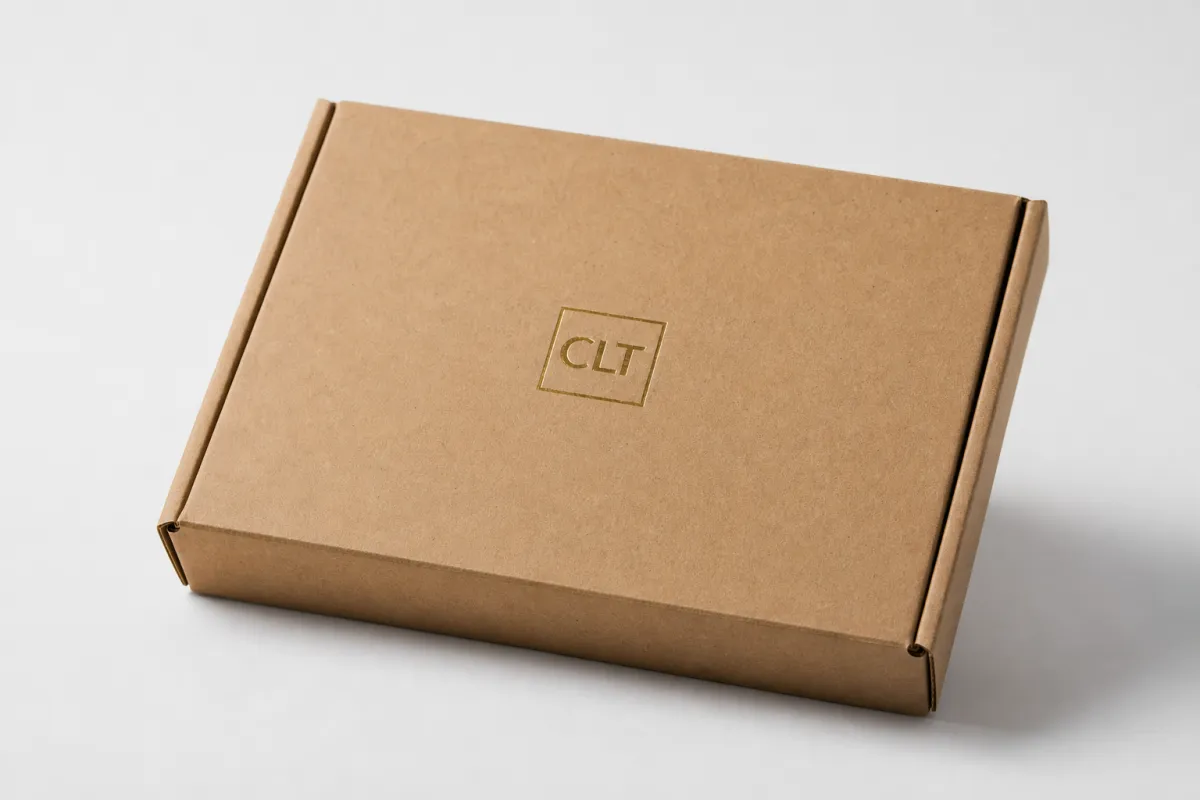
Printed kraft mailer boxes with logo are usually corrugated or foldable mailer-style cartons made from kraft-facing board. They are designed to ship flat, then fold into a rigid container at the packing station. That flat-to-formed shift is more than a convenience; it affects storage density, packing labor, and freight planning in a very real way. A warehouse can store far more flat mailers than pre-built cartons, which helps reduce cube waste and makes replenishment easier to manage.
The format solves a straightforward logistical problem. You need a box that protects a product, but you do not want to pay to move empty air around. Printed kraft mailer boxes with logo answer that problem with scores, tuck flaps, locking tabs, and folded panels that turn a flat sheet into a rigid shipping container. The box still feels deliberate, but it behaves like a working package instead of a display piece. That balance is part of why it shows up so often in e-commerce, subscription kits, and direct-to-customer fulfillment.
Brands often pick printed kraft mailer boxes with logo instead of a fully decorated rigid box or a plain brown mailer for practical reasons. Kraft surfaces create a visual shorthand for natural materials, restraint, and a cleaner-looking packaging story. That look is less polished than coated white board, and for many products that is exactly the point. The logo then carries the identity load. One strong mark, placed well, usually says more than a busy all-over print. Keep it simple and the box does its job better.
The trade-off is the whole story. A package that looks good but crushes in transit fails the job. A structure that is strong but prints poorly weakens the brand signal. A box that is beautifully printed but padded with unnecessary material starts to complicate the sustainability message. Printed kraft mailer boxes with logo work best when structure, print, and material choice are planned together rather than treated like separate decisions.
For brands building a wider packaging system, it helps to compare the mailer format against the rest of the line. A carton that works beautifully for direct-to-consumer orders may not fit wholesale inserts, subscription programs, or protective secondary packaging. If you are mapping a broader assortment, review Custom Packaging Products as a category-level starting point.
How Printed Kraft Mailer Boxes with Logo Work in Shipping
The shipping story starts with structure. Printed kraft mailer boxes with logo are built around scored board, which means every fold line has a purpose. If the scores are too shallow, the carton resists assembly and slows the pack line. If they are too deep, the board can weaken at the hinge. Good mailer design lives at the intersection of graphics and mechanical function, and both parts need to be right or the whole thing gets kinda annoying in production.
Branding behaves differently in transit than it does in a mockup. The logo may first appear on the top panel as the box sits on the packing table. It appears again when the customer removes tape, lifts the flap, and opens the lid. Placement matters more than many teams expect. Printed kraft mailer boxes with logo often perform best when the strongest logo position meets the first visual moment, while the inside of the box reinforces the same identity without crowding it.
Fulfillment is usually straightforward: boxes are stored flat, assembled on demand, filled, closed, labeled, and shipped. Each of those steps still affects the final presentation. A shipping label placed across the logo can undo the design. Too much tape along the seam can make even premium printed kraft mailer boxes with logo feel rushed. Scuffs, corner dents, and handling marks show up quickly on kraft because the natural surface does not hide abuse the way a coated sheet might.
Support materials can improve the experience if they are used with restraint. Tissue paper, molded inserts, paper tape, and a short thank-you card can add polish without crowding the box. Those details should support the mailer, not compete with it. In a compact subscription order, a single-color logo on kraft with a clean insert often feels more confident than a packed bundle of decorative layers trying to do too much.
For lightweight products, printed kraft mailer boxes with logo usually hit a strong middle ground between cost and appearance. Apparel, accessories, soft goods, and sample kits often fit the format well because the box can ship efficiently while still giving the customer a branded moment. Very light items may fit better in a flexible format such as Custom Poly Mailers, especially when moisture resistance matters more than structure or presentation.
A good mailer does more than protect the item. It should tell the customer that the brand thought through the whole journey, from the packing bench to the front door.
Printed Kraft Mailer Boxes with Logo: Key Factors That Shape Quality
Material selection comes first. Printed kraft mailer boxes with logo usually use corrugated board, and the board grade affects crush resistance, stiffness, and print behavior. A common e-commerce spec might use E flute at around 1/16 inch for lighter retail items, while slightly heavier products may call for B flute or a stronger wall construction. Board test numbers such as 32 ECT or 200# test help buyers compare strength levels, though the right choice still depends on product weight, stack height, and the route the box will travel.
Print method is the next major variable. Flexographic printing is often the practical choice for higher-volume runs and simpler graphics. Digital printing suits smaller quantities, faster changes, and more detailed art. Wrap-style printing or laminated solutions can support richer color, but they usually pull the package away from the raw kraft look that many brands want in the first place. Printed kraft mailer boxes with logo work best when the print method matches the artwork, not the idealized version of it.
Logo design matters more than brands sometimes admit. On kraft, bold shapes and thicker strokes usually read better than delicate lines. Tiny type can fill in or disappear, especially when the board has visible fiber texture. High-contrast artwork usually holds up better than pale gray marks or thin gradients. If the logo is the hero element, it should be tested on the actual board, not only approved on a screen.
That print test should be part of any serious run. Brown kraft absorbs ink and reacts differently than white lined board, which means colors can darken, soften, or shift warmer. Black, deep green, and dark brown often perform well. Light blues, pinks, and muted gradients are more fragile visually. Printed kraft mailer boxes with logo rarely fail because the concept is wrong; they fail because the art was chosen without enough attention to how the substrate behaves.
Sustainability claims need discipline too. Uncoated board, water-based inks, and minimal print coverage usually support a stronger recycling story. The Forest Stewardship Council provides a useful reference point for responsibly sourced paper and board: FSC certification guidance. Not every finish tells the same story, though. Heavy lamination, plastic windows, and mixed-material add-ons can reduce recyclability even when the base board is kraft.
Transit performance should also be tested, not guessed. ISTA test protocols are widely used as a benchmark for parcel packaging performance, and the organization’s resources are a useful starting point: ISTA packaging test standards. For many brands, that sort of verification is what separates a tidy sample from a package that actually survives distribution. Printed kraft mailer boxes with logo should earn their place in the line rather than merely look good in a mockup.
Two more factors often decide the final result. Alignment matters because a logo can look perfect in a file and still land slightly off-center on the finished mailer if the dieline was not set up carefully. Coverage matters too, because a small logo on a quiet kraft panel can look premium, while too much ink can push the box from restrained into busy. The design sweet spot is often simpler than teams expect, and that is usually the better path.
Printed Kraft Mailer Boxes with Logo Cost, MOQ, and Pricing Drivers
Pricing is where the conversation usually turns practical. Printed kraft mailer boxes with logo are affected by size, board grade, print coverage, number of ink colors, structural complexity, and any added finish. A small mailer with a one-color logo may cost very differently from a larger custom carton with an interior print, a special coating, and die-cut inserts. The printed portion is only one part of the cost equation, which is where a lot of first-pass budgeting goes off track.
MOQ matters because setup cost has to be spread across the order. At a lower quantity, the same prepress work, plate setup, proofing, and machine calibration are carried by fewer units, which pushes the per-box price up. Larger orders usually reduce unit cost, but they also increase inventory risk. That is why printed kraft mailer boxes with logo often make more sense as phased purchases than as one large speculative run. Nobody wants a warehouse full of boxes that looked great on paper and sit there for six months.
Here is a practical pricing lens that buyers can use when comparing options. These ranges are illustrative, not a promise, because size and structure can move the numbers quickly.
| Option | Typical MOQ | Approx. Unit Price | Typical Lead Time | Best Fit |
|---|---|---|---|---|
| Simple digital printed kraft mailer boxes with logo | 250-500 pcs | $0.75-$1.50 | 7-15 business days after proof approval | Launches, small pilots, seasonal drops |
| Flexographic printed kraft mailer boxes with logo | 1,000-5,000 pcs | $0.18-$0.45 | 12-20 business days after approval | Stable SKU demand, repeat fulfillment |
| Higher-finish custom corrugated mailers | 2,500-10,000 pcs | $0.40-$0.95 | 15-30 business days after approval | Premium unboxing, stronger brand presentation |
Those numbers change quickly once the box gets bigger, the print becomes more complex, or the board spec increases. A 6 x 4 x 2 inch mailer has a different cost profile from a 12 x 9 x 3 inch mailer, even if both are printed in one color. Printed kraft mailer boxes with logo also pick up cost from details that are easy to leave out of early budget sheets, such as dielines, sample rounds, freight, storage, and replacement stock.
The cheapest box is not always the least expensive packaging decision. A poor fit can increase filler usage, slow down pack-out, and raise damage rates. If the wrong board leads to crushed corners or returns, the low-cost carton becomes an expensive one very quickly. Landed cost matters more than the headline unit price, and that is usually where the honest answer lives.
There is a practical way to keep the budget under control without flattening the brand. Standardize box sizes where possible. Keep logo coverage intentional and limited. Use the simplest print method that still preserves the identity. If the order is moving through predictable demand, avoid overengineering the structure just because the artwork brief feels ambitious. Printed kraft mailer boxes with logo should be designed around actual shipping behavior, not only mood-board appeal.
For teams still comparing packaging families, price is only one lens. A complete packaging plan may include retail cartons, inserts, void-fill materials, and secondary mailers. If that sounds familiar, the broader assortment at Custom Packaging Products can help frame where printed mailers fit against other formats.
Step-by-Step Guide: Production Process and Timeline for Printed Kraft Mailer Boxes with Logo
The production path is usually clear once the specs are locked. Step one is defining the product, its weight, and how it will travel. Printed kraft mailer boxes with logo need dimensions that account for the item itself, any insert or tissue, and enough room to close cleanly without bulging. A box that is too tight can crush corners. A box that is too loose can let the contents shift, which increases abrasion and filler use. Both errors show up faster than people expect.
Step two is choosing the structure and requesting a dieline. This is the point where folding geometry becomes real. Scores, tuck flaps, locking tabs, and seam locations all affect where the logo can live. Printed kraft mailer boxes with logo should never be art-directed in isolation. The dieline shows what the package can physically do, and it keeps important text away from a fold or seam. That part is not glamorous, but it saves a lot of headaches.
Step three is artwork review. This is where many teams move too quickly and pay for it later. Check bleed, trim, color expectations, barcode placement, and any return-label or shipping-label zones. If the design includes fine type, ask for print-size confirmation. If the order matters, approve a physical sample instead of assuming a PDF tells the whole story. Printed kraft mailer boxes with logo often look different once ink meets board, and the difference can be bigger than a screen preview suggests.
Step four is production and quality control. The box is printed, cut, scored, folded or shipped flat, packed, and checked. Good suppliers inspect registration, folding accuracy, color consistency, and board integrity. In a parcel environment, a small defect can become a visible issue at scale, so inspection matters. The difference between a tidy carton and a sloppy one is often measured in millimeters rather than inches, which is not exactly forgiving.
Step five is shipment and receiving. Freight planning can become the hidden bottleneck, especially if boxes are built in one region and needed in another on a fixed launch date. Printed kraft mailer boxes with logo may be mechanically simple, but logistics still apply. Delays often come from one of three places: artwork revisions, sample approval, or freight scheduling. The sooner those are settled, the easier the rollout becomes.
Timeline expectations should stay honest. Smaller digital runs may move in a week or two after approval. Custom corrugated orders with specialized finishes, larger quantities, or multiple proof rounds usually need more time. If a brand has a launch date tied to influencer kits, a subscription start, or a retail rollout, build in margin. A rushed order compresses options and raises cost.
At a technical level, this is also where standards help. Many teams use parcel test benchmarks, burst strength checks, and fit trials to make sure the final package works under real handling conditions. Printed kraft mailer boxes with logo should pass those checks before the first customer ever sees them.
Common Mistakes to Avoid With Printed Kraft Mailer Boxes with Logo
The first mistake is choosing a box that fits the product but not the packing method. A perfectly sized cavity can still fail if the team needs space for tissue, inserts, or protective wrap. Printed kraft mailer boxes with logo should fit both the product and the workflow. If the dimensions only work inside CAD, the real packing station will expose the problem quickly.
The second mistake is overcomplicating the artwork. Thin rules, tiny text, and subtle gradients often turn muddy on kraft. Printing on brown board is not the same as printing on a bright coated sheet, and the surface texture can make delicate artwork look tired. Printed kraft mailer boxes with logo usually look stronger with a clear, concise mark than with a crowded layout trying to do too much.
The third mistake is skipping transit testing. A box that looks great after hand assembly may still fail under drop, vibration, and stack pressure. That is why many packaging teams use test protocols and sample runs to simulate shipping stress before approving full production. The ISTA resources linked earlier are worth revisiting for a practical benchmark. Printed kraft mailer boxes with logo should be judged in motion, not only on a desk.
The fourth mistake is treating eco-friendly as a single checkbox. Kraft board is only one part of the story. Mixed materials, plastic windows, heavy coatings, and non-recyclable extras can weaken the message. Even the most honest-looking kraft mailer can become less appealing if the finish makes recycling harder. Printed kraft mailer boxes with logo carry more credibility when the environmental claim is simple, supportable, and consistent.
The fifth mistake is approving proofs too quickly. Centering, seam placement, barcodes, and return-label space all deserve a careful check. A logo that looks balanced on screen can land awkwardly once the box is scored and folded. It is not glamorous work, but it saves money. Slow proofing is one of the least expensive forms of quality control.
Another issue is overpaying for a premium option that the product does not need. If the item is lightweight, low-risk, and mostly driven by repeat shipment, printed kraft mailer boxes with logo may only need a simple structure and a single-color mark. Save the more expensive board or specialty finish for products where the customer can actually feel the difference. Packaging should support the item, not compete with it.
Expert Tips and Next Steps for Printed Kraft Mailer Boxes with Logo
Ask for a sample kit before placing a large order. A proper kit should include board swatches, print samples, and at least one folded prototype. That lets you judge the texture in hand instead of relying only on an image on a screen. Printed kraft mailer boxes with logo often win or lose on tactile feel as much as on visual design, and buyers rarely regret taking that extra step.
Compare suppliers on landed cost and communication, not only on unit price. Freight, proof support, and responsiveness can matter more than a small difference in the box quote. A supplier that answers dieline questions quickly can save a week of back-and-forth, and that is a real cost even if it does not show up on the first line of a quote.
Run a pilot on one SKU first if you can. Measure damage rates, pack-out speed, and how customers respond to the unboxing. Those numbers tell you more than a subjective opinion from the conference room. Printed kraft mailer boxes with logo should be treated like a functional system, which means a small test is often worth more than a long debate.
Build a spec sheet before requesting quotes. Include the box dimensions, approximate product weight, quantity bands, logo files, color targets, finish requirements, and sustainability goals. A tight brief reduces confusion and cuts revision cycles. It also helps suppliers quote the same thing instead of three slightly different interpretations of the same project. That kind of clarity saves time on both sides.
One practical rule: keep the branding clear enough to recognize at a glance, but restrained enough to let the kraft material do its job. That visual balance is a big reason printed kraft mailer boxes with logo remain popular across apparel, cosmetics, supplements, accessories, and subscription programs. They feel modern without becoming precious, and they do not need much ornament to feel finished.
Another practical rule: think about the box after delivery, not only before shipment. Many customers reuse a good mailer for storage, returns, or gifting. A durable, attractive carton can keep advertising the brand long after the delivery scan. Printed kraft mailer boxes with logo are one of the few packaging formats where the shipping container can continue marketing the product inside the customer’s home.
If you are narrowing the decision now, start with three questions. What does the product need for protection? How much brand visibility do you want in transit and unboxing? What material and finish choices still support your sustainability goals? When those answers line up, printed kraft mailer boxes with logo become a straightforward packaging decision instead of a compromise between competing priorities.
That is the real takeaway: printed kraft mailer boxes with logo work best when branding, durability, and recycling goals are planned together from the start. Done that way, the package does more than carry the product. It carries the brand story cleanly, economically, and with less waste than many teams expect.
FAQ
What is the difference between printed kraft mailer boxes with logo and plain kraft mailers?
Printed versions add brand recognition, a stronger unboxing moment, and a more deliberate customer experience. Plain kraft mailers are usually cheaper and faster to order, but they do less marketing work once the parcel arrives. The better choice depends on whether the packaging needs to protect the product only, or support the brand too.
Are printed kraft mailer boxes with logo still recyclable?
Usually yes, if the box is made from recyclable kraft board and uses inks and coatings that do not interfere with recycling. Heavy lamination, plastic windows, and mixed-material finishes can reduce recyclability, so those details matter. Always confirm with your supplier and local recycling rules, because accepted materials can vary by region.
How much do printed kraft mailer boxes with logo usually cost?
Price depends on size, board grade, print method, color count, finish, and how many units you order. Smaller orders cost more per box because setup costs are spread across fewer pieces. The most accurate comparison is landed cost, which includes freight, sampling, and any tooling or proofing fees.
What file type should I send for the logo artwork?
A vector file such as AI, EPS, or PDF is best because it keeps edges sharp at any size. Raster files can work for reference, but they may not print cleanly if the resolution is too low. Ask for the supplier's dieline before finalizing artwork so the logo does not land on folds, seams, or label zones.
How long does it take to produce printed kraft mailer boxes with logo?
Simple digital runs may move quickly once artwork is approved, while custom corrugated jobs usually take longer. Proofing, sampling, and freight planning are common schedule drivers, so the timeline is not just about printing. If you need a rush order, ask early because speed can limit finish options and increase cost.


