Buyer Fit Snapshot
| Best fit | custom soap boxes with logo branding faster for packaging buyers comparing material specs, print proof, MOQ, unit cost, freight, and repeat-order risk where brand print, material, artwork control, and repeat-order consistency matter. |
|---|---|
| Quote inputs | Share finished size, material target, print colors, finish, packing count, annual reorder estimate, and delivery region. |
| Proofing check | Approve dieline scale, logo placement, barcode or warning zones, color tolerance, and any recyclable or compostable wording before bulk production. |
| Main risk | Vague material claims, crowded artwork, or missing packing details can create delays even when the unit price looks attractive. |
Fast answer: Custom Soap Boxes with Logo Branding Faster: Dieline, Finish, Proof, and Buyer Review should be specified like a repeatable production item. The safest quote includes material, print method, finish, artwork proof, carton packing, and reorder notes in one written spec.
What to confirm before approving the packaging proof
Check the product dimensions against the actual filled item, not only the sales mockup. Ask for tolerance on folds, seals, hang holes, label areas, and retail display edges. If the package carries a logo, QR code, warning copy, or legal claim, reserve that space before decorative graphics fill the panel.
How to compare quotes without losing quality
Compare board or film grade, print process, finish, sampling route, tooling charges, carton quantity, and freight assumptions side by side. A lower quote is only useful if the supplier can repeat the same color, closure quality, and packing count on the next order.
Custom Soap Boxes with Logo: Branding That Sells Faster
Soap is one of those products people judge in seconds. They cannot smell it through a screen, and on a shelf they usually cannot touch it before they buy. That is exactly why custom soap Boxes With Logo matter so much. The box is not just a wrapper. It is the first sales pitch, the trust signal, and the difference between a bar that looks generic and a bar that looks worth paying for.
From a packaging buyer’s point of view, Custom Soap Boxes with logo do three jobs at once. They protect the product, they support the brand story, and they make the soap easier to sell in retail packaging, at craft markets, and in ecommerce photos. If the box looks improvised, the product usually feels cheaper than it should. If the box feels intentional, the bar feels more premium before anyone even opens it.
A lot of packaging choices come down to that single tension between holding a product and selling it. A soap box can be little more than a foldable carton, or it can act like branded packaging that does half the selling for you. The best Custom Soap Boxes with logo do not shout. They clarify. They make the label readable, the brand memorable, and the product easier to gift. That sounds basic, but basic is often where profitable packaging starts.
Good packaging does not need to be loud. It needs to be clear, credible, and easy to buy from three feet away.
If you are comparing box structures, materials, or print options, it helps to think in terms of packaging goals first. Do you want a shelf-ready look, a giftable feel, or a shipping-safe carton? Those questions matter more than whether a finish sounds fancy on paper. You can browse broader custom packaging products to see how soap cartons fit into a wider packaging system, because the same logic usually applies across product lines.
Custom Soap Boxes with Logo: Why They Stop the Eye
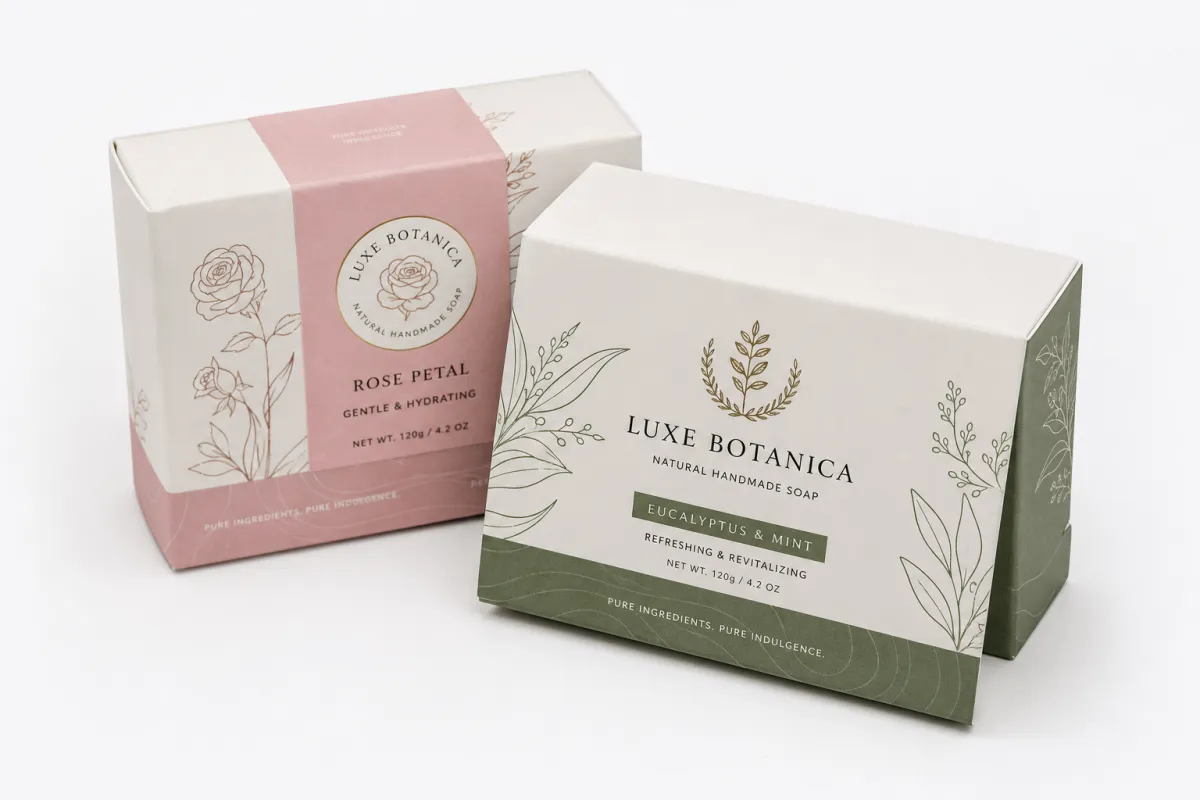
Most soap buyers are not shopping for soap alone. They are shopping for scent, skin feel, cleanliness, aesthetics, and price all at once. That is a messy decision stack, which is exactly why custom soap boxes with logo can move a product faster than a bare bar ever will. The box gives the shopper a reason to stop, read, and trust the brand long enough to make a decision.
On a crowded shelf, a plain soap wrap gets lost fast. A branded carton changes that. Custom soap boxes with logo make the bar feel like part of a real product line instead of a one-off item sitting next to a dozen similar ones. That matters in specialty retail, farmer’s markets, subscription boxes, hotel amenities, and gift shops where presentation is not a bonus. It is the product.
There is also a very practical side to this. Soap is dense, often slightly oily, and sometimes sensitive to humidity. A good carton gives the bar a cleaner profile, protects the label, and keeps corners from scuffing during handling. That means custom soap boxes with logo are not just about package branding. They help preserve the look that supports the sale.
In ecommerce, the box does even more work. Product photos rely on shape, contrast, and legibility. If the logo is too small, the box is too busy, or the typography is weak, the image will underperform before the shopper even reaches the product description. Strong custom soap boxes with logo support the picture and the click-through. Weak ones make the product look like a private-label afterthought.
That is why I usually separate “box that holds soap” from “box that sells soap.” They are not the same thing. A holding carton can be simple and functional. A selling carton needs clear hierarchy, a readable front panel, and a finish that fits the brand. For natural soaps, that might mean kraft paperboard with restrained ink coverage. For premium bars, it might mean soft-touch lamination, foil accents, or a window cutout that shows the product without exposing it to too much handling.
Custom soap boxes with logo also build repetition in the buyer’s mind. The next time someone sees the same color palette or symbol, they recognize it faster. That is package branding doing its job. Not dramatic. Just effective.
For anyone comparing soap packaging against broader branded packaging options, the rule is simple: the more the buyer has to guess, the less the box is selling. The more the box answers questions at a glance, the better custom soap boxes with logo perform. I have seen plain cartons work just fine for utility products, but soap shoppers usually respond faster to packaging that looks deliberate and honest.
How Custom Soap Boxes with Logo Are Made
The production path for custom soap boxes with logo is usually straightforward, but the details matter. A box starts with dimensions, not artwork. Measure the soap accurately, including any wrap or inner sleeve if the product needs one. Then build the dieline around the real size, not the size you hope the soap will be after drying, trimming, or storage changes. That mistake causes more headaches than people like to admit.
Once the dieline is set, the designer places the logo, product copy, bar weight, ingredient panel, barcode, and any regulatory text. The logo should not float around the panel like an afterthought. It needs clear hierarchy. On most custom soap boxes with logo, the front panel is doing the heavy lifting, so the logo should be visible from normal shelf distance without taking over every inch of the design.
Bleed and safe area are not decoration terms. They are production rules. Bleed gives the printer room to trim cleanly. Safe area keeps text and fine lines away from the cut edge and fold lines. If the artwork ignores those zones, the final carton can look slightly off, and that tiny misalignment is the sort of thing people notice without knowing why. I have watched good designs lose their polish for no reason other than a text block sitting too close to a fold.
Proofing comes next. A digital proof is good for layout, spelling, and line placement. It is not enough for judging color, texture, or how a finish reacts to the paper. That is why a physical sample can save money later, especially for custom soap boxes with logo that use textured stock, foil, embossing, or unusual folds. One sample often prevents five rounds of “that blue looked different on screen.”
What the buyer usually supplies
For most jobs, the buyer provides the logo file, brand colors, product copy, legal text, and any reference images that show the intended style. A vector logo file is best because it scales cleanly. If the logo only exists as a small JPEG, the printer may be able to use it, but the quality can suffer. That is a bad place to save time.
The manufacturer usually handles the technical side: dieline setup, print prep, imposition, cutting, folding, and glue-line adjustments. Some suppliers also help with packaging design cleanup, but that is not the same as handing over a final print-ready file. If you want custom soap boxes with logo to look sharp, ask early who is responsible for what. Confusion there is expensive.
Useful file prep usually includes:
- Vector logo files in AI, EPS, or PDF format
- CMYK artwork built at the correct size
- Font outlines or embedded fonts
- Ingredient, weight, and compliance copy
- Any barcode or batch code placement notes
That is the boring part. It is also the part that keeps a run on schedule. Strong custom soap boxes with logo are not only about visual appeal. They are about clean handoff, fewer revisions, and fewer ways for the job to drift off track.
If you want a useful benchmark for sustainability and material sourcing, FSC certification is worth checking for paper-based stock. You can review standards and sourcing language at fsc.org. For shipping durability, especially if the soap travels through distribution instead of sitting on a boutique shelf, test logic matters too. Packaging should survive transit, not just look polished on a desk.
Materials, Finishes, and Structural Choices That Matter
Material choice changes the whole feel of custom soap boxes with logo. A strong design can still look wrong if the board is too flimsy, too glossy, or too rough for the brand position. The common options are SBS, kraft, corrugated, and specialty paperboard, and each one has a job to do.
SBS paperboard is a common choice for retail soap because it prints cleanly and gives sharp detail. If you want bright color, fine text, or a polished cosmetic-style finish, SBS is usually easier to work with than rougher stocks. It is a smart choice for custom soap boxes with logo that need precise branding and a smooth shelf presentation.
Kraft board is popular for natural, handmade, and earthy product lines. It gives a warmer, less polished appearance, which is sometimes exactly the point. The tradeoff is visual precision. Dark ink on kraft can look beautiful, but color behaves differently than it does on white stock. If the design depends on tiny details, kraft can be unforgiving.
Corrugated makes sense when shipping protection matters or the soap is part of a larger gift set. It is bulkier, but it gives more crush resistance. For mail-order soap, corrugated can protect the bar and the outer presentation at the same time. That makes it useful for subscription orders, bundled kits, and ecommerce custom soap boxes with logo that must survive courier handling.
Specialty paperboard, recycled stocks, and textured papers add tactile value, but they also change print behavior. Texture can soften tiny type. Dark finishes can hide scuffs better. Light coatings can make graphics cleaner. Every material decision is a tradeoff, not a miracle. If the box has to work hard in a humid bath-and-body display, that tradeoff matters even more.
Then there is finish. Matte gives a calmer, more refined look. Gloss makes color appear sharper and can help a brighter brand feel more lively. Soft-touch adds a velvety feel that often fits luxury bath products, though it can show handling marks depending on the surface. Custom soap boxes with logo do not need special finishes to work, but the right finish can change the perceived price of the soap almost instantly.
Foil stamping, embossing, and spot UV are the features people talk about because they sound expensive. Sometimes they are useful. Sometimes they are just noise. Foil works well for a badge, emblem, or small logo lockup. Embossing adds depth and a premium touch. Spot UV can highlight the logo or one panel, but if it covers too much area, the box starts to look overdesigned. More effects do not automatically mean better branding.
Structure choices that actually affect sales
Tuck-end cartons are common because they are efficient and easy to pack. Sleeves work well if the soap already has an inner wrap or if the brand wants a simple reveal. Window cutouts help shoppers see the actual bar, which can be useful for artisanal soaps with visible color swirls or botanical pieces. Rigid-style presentation is better for premium gifting, but it raises cost and shipping volume.
For many brands, the smartest custom soap boxes with logo are not the fanciest ones. They are the ones that match product weight, retail display needs, and shipping method without adding pointless cost. That is why structure should always be decided before finish. A beautiful box that crushes in transit is still a bad box.
For general packaging standards and product protection thinking, the ISTA testing framework is a useful reference point. You do not need to turn every soap order into an engineering lab, but you do need to ask whether the box will survive the trip from warehouse to shelf or doorstep. That is not a glamorous question. It is a profitable one.
My blunt take: if the brand is natural and low-key, use material honesty. If the brand is premium, use a cleaner board and a tighter finish. If the product is fragile in transit, build for protection first and cosmetics second. That hierarchy keeps custom soap boxes with logo from becoming expensive mistakes.
Production Timeline: Design, Proofs, and Turnaround
People love to ask how fast custom soap boxes with logo can be made. The real answer depends on artwork readiness, proof approvals, finishing complexity, and whether the schedule gets slowed down by revisions. If everything is organized, a standard carton job often moves from proof approval to production in about 12 to 15 business days, then shipping adds its own time. If the job needs special finishes or sample rounds, expect longer.
The calendar usually breaks down like this: concept and sizing, dieline setup, proofing, corrections, final approval, production, then packing and shipping. That sounds tidy. It rarely feels tidy while it is happening. The slowest point is often not the factory floor. It is waiting for someone to approve a revised logo size or fix a copy line after seeing the proof.
Late artwork changes are expensive because they interrupt the flow. So are missing dielines, low-resolution images, and unclear finish requests. A supplier can move quickly on custom soap boxes with logo only if the files are clean and the decision tree is short. Every “maybe” in the process can add days.
Seasonal launches make timing more delicate. Holiday gift sets, spring refreshes, and product relaunches all compete for production space. If your soap line needs to hit a market date, work backward from the shelf date, not the order date. Give yourself buffer for proofing, sample approval, and shipping delays. That buffer is the difference between calm inventory planning and panic.
Rush orders are possible, but they are not magic. Speed usually limits finish choices, narrows material options, and raises cost. A rushed carton may still look good, but you are paying for compressed time and fewer variables. For custom soap boxes with logo, rush jobs make the most sense when the launch date matters more than decorative complexity.
Here is the practical version:
- Lock dimensions first.
- Approve the structure before the artwork goes too far.
- Check proof colors and fold lines early.
- Keep one person responsible for final sign-off.
- Order samples when the soap is valuable or the finish is unusual.
If you are comparing packaging design lead times across multiple products, soap cartons are usually not the slowest job. They become slow when the decision-making gets sloppy. A clean process keeps custom soap boxes with logo moving on schedule and reduces the chance of reprints.
Custom Soap Boxes with Logo Cost: What Drives Pricing
Pricing for custom soap boxes with logo is usually shaped by five things: quantity, material, size, print coverage, and finish. That is the core. Everything else is a variation of those five. A small batch of simple cartons can still feel pricey per unit because setup costs get spread across fewer boxes. A larger run lowers the unit price because the production work is divided across more pieces.
For a realistic range, simple retail soap cartons at mid-volume often land somewhere around $0.18 to $0.35 per unit depending on spec, while more detailed cartons with specialty finishes can move well beyond that. Smaller orders can be noticeably higher per box. That is not a supplier trick. It is math. Machines and setup do not care that the order is “just 500 boxes.”
Print coverage matters more than many buyers expect. A box with one-color ink on kraft stock is cheaper than a full-bleed, full-color design with multiple finishes. Extra panels, window inserts, foil, embossing, and custom coatings all add time and complexity. If the budget is tight, put money into the parts of custom soap boxes with logo that change what shoppers notice first: structure, front panel clarity, and one or two high-impact touches.
Hidden costs show up in places people skip over during quoting. A new dieline can add setup time. Artwork revisions can slow the schedule. Extra proofing can add cost. Inserts, if needed, increase both material and labor. Shipping weight rises with heavier board or rigid construction. Even a small change in box depth can shift the carton size enough to alter freight pricing.
Here is a simple comparison that buyers can actually use:
| Box Option | Typical Use | Approx. Unit Cost Range | Strengths | Tradeoffs |
|---|---|---|---|---|
| Simple tuck-end SBS carton | Retail bars, clean shelf display | $0.18-$0.32 | Sharp print, efficient production | Less tactile character than kraft or specialty stock |
| Kraft sleeve or wrap box | Natural soap, handmade branding | $0.20-$0.36 | Earthy look, strong handmade feel | Color reproduction is less bright |
| Window carton | Artisan soap with visible design | $0.24-$0.42 | Shows the product, improves shelf trust | Extra tooling and added labor |
| Rigid gift box | Premium sets, holiday gifting | $0.85-$2.50+ | High perceived value, strong presentation | Heavier freight, higher minimum spend |
That table is not a quote. It is a buying lens. The right choice depends on brand position, product price, and how much margin the soap can support. If the bar sells for $8, a $1.80 rigid carton may be hard to justify. If the bar is part of a $28 gift set, the packaging can do much more work. Custom soap boxes with logo should fit the economics of the product, not the fantasy of the mood board.
One more factor buyers often miss is waste. Overbuilt packaging can quietly eat margin through freight and storage. Lightweight but well-designed custom soap boxes with logo often win because they balance cost with perceived value. You do not need to overpay for structure just to feel serious.
If you are comparing packaging spend across your line, a useful approach is simple: pay first for the box elements that improve shelf performance, protect the product, or support the gift angle. Trim whatever does not move those three needles. That keeps custom soap boxes with logo profitable instead of decorative.
Common Mistakes That Make Soap Packaging Look Cheap
The fastest way to weaken custom soap boxes with logo is to overload them. Too many claims, tiny icons, multiple font families, and crowded panels make the box hard to read from normal viewing distance. Shoppers do not stand there decoding your packaging. They glance, compare, and move on.
Weak contrast is another classic mistake. Light gray text on kraft stock can look elegant on screen and disappear in real life. Low-resolution logos do something worse: they suggest the brand does not care enough to get the file right. A sharp logo is not a luxury. It is the minimum standard for credible branded packaging.
Bad typography can wreck an otherwise decent design. If the fonts fight each other, the box feels improvised. If the line spacing is too tight, it becomes hard to read. If the product name is buried under decorative copy, the front panel loses its job. That is especially painful on custom soap boxes with logo because the box has limited space to tell the story.
Material mismatch is just as damaging. A very premium-looking metallic finish on a handmade oat soap can feel off. A rough kraft carton with ornate foil can also feel confused. The box should match the brand promise. Natural soap needs natural-looking cues. Luxury soap needs restraint, not chaos. Custom soap boxes with logo work best when the visual language matches the price point.
Structural mistakes are expensive because they show up after the boxes are already made. If the carton is too loose, the soap rattles. If it is too tight, the bar scuffs or the flap strains. If the closure is weak, the box opens during handling. If the design leaves too much empty space, the product looks undersized. Those are not tiny issues. They change how buyers read the value of the product.
Here is the short version of what usually makes soap packaging look cheap:
- Too much copy on the front panel
- Poor logo quality or stretched artwork
- Colors that clash with the soap’s natural tone
- Finishes chosen for trend, not fit
- Cartons sized without checking the actual bar
For sellers comparing custom soap boxes with logo against generic wraps, the biggest advantage is control. You control the hierarchy, the texture, the first impression, and the retail behavior. Generic packaging gives away that control. Buyers can tell. They may not explain it that way, but they feel it.
If the design is getting crowded, simplify. If the logo is weak, fix the file. If the finish is fighting the soap, choose a calmer stock. Those three moves solve a surprising number of problems. They also keep custom soap boxes with logo from looking like a rushed private-label job.
What To Do Next Before You Order
Before ordering custom soap boxes with logo, measure the bar properly. Not roughly. Properly. Include length, width, thickness, and any wrapper or insert if the soap will ship with one. Then decide where the box is going to work hardest: retail shelf, online photos, shipping, or gifting. That choice should drive the structure.
Next, gather the files. You will move faster if you already have the logo, product name, ingredient copy, brand colors, and a few reference images that show the mood you want. If you also know your target quantity, budget range, and delivery date, the quote will be cleaner. That makes custom soap boxes with logo easier to spec correctly the first time.
Then compare the options honestly. If a simple tuck-end carton sells the soap just fine, there is no prize for choosing a more expensive structure. If the product is premium or gift-focused, a better finish may be worth the spend. Use samples when possible. A sample tells you more about print, feel, and fit than ten paragraphs of sales language ever will.
Here is a practical checklist before you place the order:
- Confirm soap dimensions and weight.
- Choose the box style that fits the channel.
- Pick the finish only after the structure is set.
- Ask for a proof and review it on screen and in print if possible.
- Check turnaround against your launch date, not your mood.
- Order a sample for premium or unusual jobs.
If you want a broader view of packaging options for other product lines, browse the available Custom Packaging Products and compare how structure, finish, and print coverage change the final feel. That comparison often makes the soap project easier to judge because the tradeoffs become obvious. Good custom soap boxes with logo do not happen by accident. They happen when the buyer makes a few practical decisions early and refuses to overcomplicate the rest.
One last point: custom soap boxes with logo should support the product, not drown it. If the box helps the soap look clearer, more credible, and easier to buy, you picked the right direction. If it only looks busy, start over. That is usually cheaper than pretending a bad carton can be fixed with better photos.
If you are still narrowing the spec, the cleanest path is simple: choose the right box size, choose the right material for the brand promise, then keep the front panel readable from a few feet away. That sequence keeps the packaging honest, and honesty is usually what makes soap feel worth picking up in the first place.
FAQ
How do custom soap boxes with logo help a small soap brand?
They make the product look intentional instead of unfinished, which matters a lot in a category where buyers judge fast. Custom soap boxes with logo also improve recognition on shelves, at markets, and in product photos, so repeat buying becomes easier. For small brands, that consistency can matter as much as the soap itself.
What box style works best for custom soap boxes with logo?
Tuck-end and sleeve styles work well for most retail soap, while rigid or specialty boxes fit premium gifting. The best choice depends on the bar size, the shipping method, and how much shelf presence the brand needs. A simple format is usually the safer starting point unless the soap is priced as a gift item.
How long do custom soap boxes with logo usually take to produce?
Standard production often takes around 12 to 15 business days after proof approval, but that changes with artwork revisions, special finishes, and sample requests. Rush schedules are possible, though they usually narrow your options and raise the price. If the launch date matters, build in a buffer so the box does not become the thing that slips.
What affects the cost of custom soap boxes with logo the most?
Quantity, material choice, print coverage, and finishing are the biggest cost drivers. Simple boxes with clean artwork generally cost less than heavily finished packaging with windows, foil, embossing, or custom inserts. Order size matters a lot too, because setup costs spread out more efficiently on larger runs.
Do I need special finishes on custom soap boxes with logo?
No, not always. A strong layout and a smart material choice can outperform a pile of effects. Use finishes only when they support the brand story, improve shelf impact, or protect the print. If a finish does not earn its keep, skip it and keep the box honest.

