Buyer Fit Snapshot
| Best fit | Custom Kraft Paper Bags with Handles projects where brand print, material claims, artwork control, MOQ, and repeat-order consistency need to be specified before quoting. |
|---|---|
| Quote inputs | Share finished size, material target, print colors, finish, packing count, annual reorder estimate, ship-to region, and any compliance wording. |
| Proofing check | Approve dieline scale, logo placement, barcode or warning zones, color tolerance, closure strength, and carton packing before bulk production. |
| Main risk | Vague material claims, crowded artwork, missing packing details, or unclear freight terms can make a low unit price expensive after revisions. |
Fast answer: Custom Kraft Paper Bags with Handles: What Actually Matters should be specified like a repeatable production item. The safest quote records material, print method, finish, artwork proof, packing count, and reorder notes in one written spec.
Production checks before approval
Compare the actual filled-product size with the drawing, then confirm tolerance on folds, seals, hang holes, label areas, and retail display edges. Reserve space for logos, QR codes, warning copy, and material claims before decorative graphics fill the panel.
Quote comparison points
Review material grade, print process, finish, sampling route, tooling charges, carton quantity, and freight assumptions side by side. A quote is only useful when the supplier can repeat the same color, closure quality, and packing count on the next order.
Custom kraft paper Bags With Handles look uncomplicated. That is exactly why buyers underestimate them. A bag is often the last physical object a customer touches before walking away, and that last touch sticks. A sturdy bag makes the purchase feel deliberate. A flimsy one makes a good product feel like it came out of a rushed warehouse aisle. In retail packaging, that contrast can be loud.
From a packaging buyer’s point of view, Custom Kraft Paper bags with handles pull more weight than their size suggests. They carry the product, they carry the branding, and they carry a judgment about quality out the door. Kraft paper earns its place because it combines strength, printability, and a surface that feels honest rather than polished to death. It works for boutique retail, takeaway, gifting, events, and product packaging because it does not pretend to be anything else.
The important decisions reach beyond logo placement. Paper weight, handle style, bag dimensions, base reinforcement, and print method all change how the bag behaves in the hand and on the floor of a shop. If you want the bag to match inserts, cartons, and other paper items, the rest of your Custom Packaging Products should be chosen with the same discipline. Otherwise the brand system starts to look assembled from whatever happened to be on sale.
I have seen this play out in real projects more than once. A boutique orders a clean, simple bag for folded knits, then switches to the same spec for ceramic mugs and wonders why the handles start to complain. Paper packaging is a little like footwear: the basic shape can stay the same, but the load changes everything. That is the part people miss until a sample tears in the meeting room. A bag can look right and still be wrong.
Custom Kraft Paper Bags with Handles: Why They Work So Well
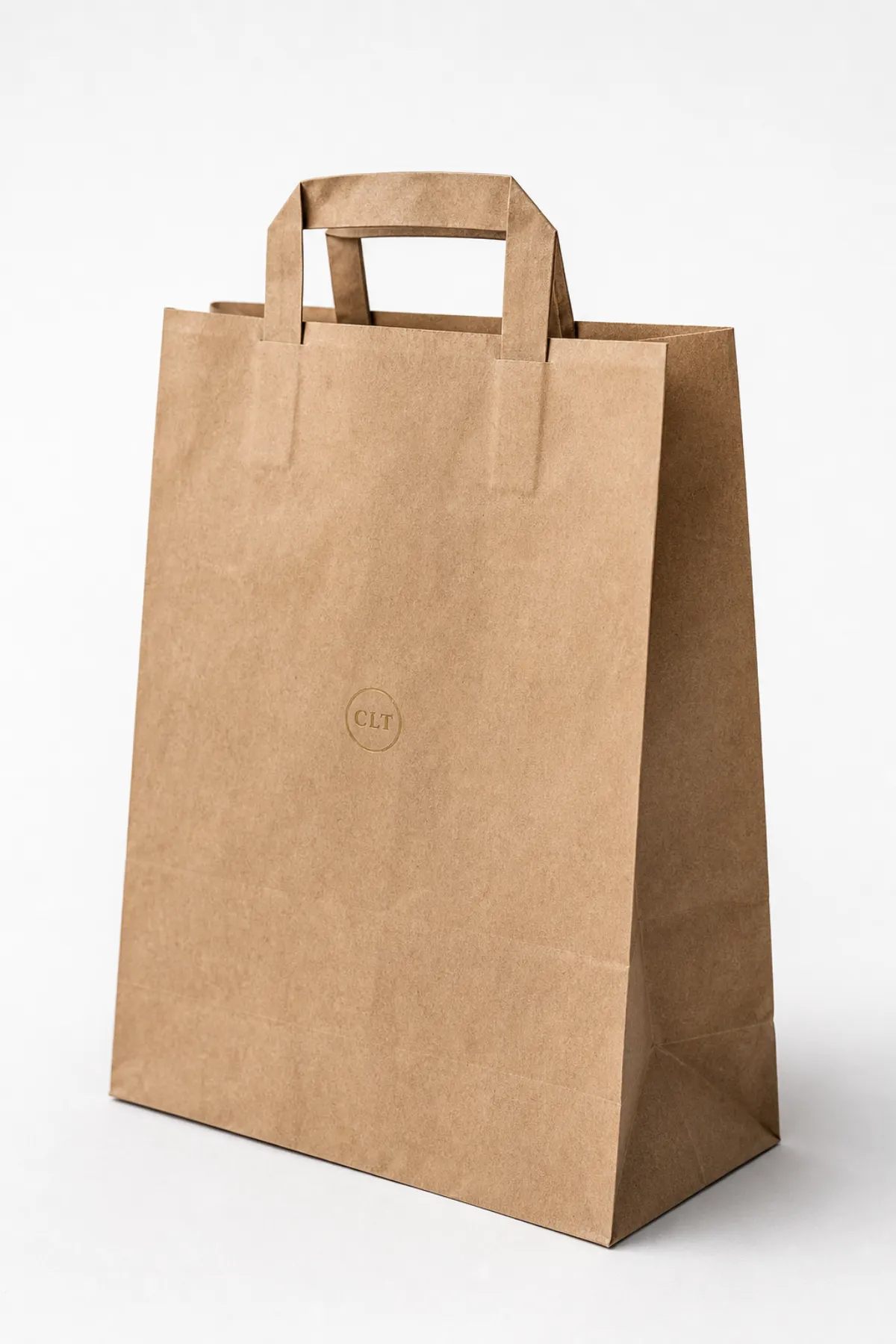
Custom kraft paper bags with handles work because they solve a practical problem first and a branding problem second. That order matters. Packaging often gets trapped in decorative thinking, as if a customer wants a performance piece instead of a bag that holds up and feels decent in the hand. Kraft paper brings a natural texture that reads as grounded and approachable. It also takes print cleanly, which makes it one of the easier branded packaging formats to control without pushing the budget into awkward territory.
Most kraft bags start with unbleached or lightly treated paper stock, then move through folding, gluing, gusset formation, base reinforcement, and handle attachment. That simple structure is the reason custom kraft paper bags with handles can cover so many jobs. A small boutique may use a lighter construction for jewelry or candles. A food brand may need stronger paper and a reinforced top edge. A gift shop may choose white kraft for a cleaner look. Same family of bag. Different performance demand.
Good packaging tends to disappear into the experience while still improving it. That is the trick here. Kraft bags do not need foil, gloss, or dramatic embellishment to feel finished. They support the purchase, then quietly leave the customer with something reusable. A bag that survives a trip home, a commute, or a second outing has a longer brand life than a bag that tears before the customer reaches the car. Long-tail visibility like that is hard to buy through ads and easy to miss in procurement meetings.
A bag is not just a carrier. It is the last piece of product packaging a customer physically handles, and the finish on that bag can make the whole purchase feel more expensive or more rushed.
Sustainability gets attached to kraft paper quickly, sometimes too quickly. Kraft stock is often associated with recyclability and paper-based sourcing, yet coatings, inks, adhesives, and local recycling rules all change the real outcome after disposal. Custom kraft paper bags with handles can support a cleaner packaging story than plastic-heavy alternatives, but the details still matter. If sustainability sits inside your brand promise, ask whether the stock is FSC-certified and whether the print and glue system supports your recovery goals. For chain-of-custody basics and sourcing standards, the FSC site is a useful reference: FSC.
The value is not that custom kraft paper bags with handles are the cheapest option in the market. They are not. The value sits in the middle ground they occupy: strong enough for everyday use, presentable enough for retail packaging, and flexible enough to scale across several product lines without forcing a new design every season. That is why they show up in apparel, cosmetics, specialty food, stationery, and event merchandising. They are plain in the way good tools are plain.
There is also a trust issue hiding in the background. Buyers are right to be skeptical of “eco” claims that sound cleaner than the actual disposal stream. A kraft bag with a glossy laminate and heavy flood print is still a mixed-material package, and mixed materials are where recycling stories get muddy. Honest packaging work means admitting that not every bag is equally recyclable in every city. That answer may be less exciting, but it is a lot more useful.
How Custom Kraft Paper Bags with Handles Are Made
The production sequence for custom kraft paper bags with handles is not complicated, but each step leaves a mark on quality. It begins with paper selection, because paper weight and fiber structure decide how the bag folds, holds glue, and resists tearing under load. Printing comes next, followed by die-cutting, folding, gluing, handle attachment, and final inspection. If any stage is sloppy, the bag exposes it the moment a customer lifts it.
Side gussets add capacity, which is why custom kraft paper bags with handles can fit a wider range of products than people expect without turning into a boxy mess. The bottom structure matters too. Some bags rely on a pasted base, while others add a board insert or a folded reinforcement to spread weight more evenly. Handle patches matter more than their size suggests. They distribute stress so the top edge does not fail after one heavy item and one careless swing.
The quality gaps usually show up in places buyers barely think about during quoting. Clean folds help the bag stand upright on a shelf. Tight glue seams stop side panels from bowing outward. Straight handle placement keeps the bag balanced in the hand. Accurate ink registration keeps logos and type crisp instead of slightly blurred and tired. None of that is glamorous. All of it changes how the package feels.
Simple one-color custom kraft paper bags with handles usually move through production faster because setup is lighter and the chance of mismatch is lower. Add coatings, complex artwork, multiple print passes, or custom handle colors, and the schedule stretches. That is not a supplier being difficult. That is what happens when more variables need to line up.
Material choice decides the personality of the bag. Natural kraft gives a raw, earthy feel that suits artisan products and casual retail packaging. White kraft offers a cleaner background for sharper graphics and stronger contrast. Heavier stock makes more sense for boxed goods, bottles, or anything with real mass. The bag is not corrugated cardboard, so it should not be asked to perform like a shipping carton. If the contents are heavy, the bag needs to be built for weight, not optimism.
The best suppliers think in terms of use case, not just format. A takeaway bag carrying a soup container needs different reinforcement than a bag for folded apparel. A gift set may need a wider opening so presentation stays neat. A bottle bag needs a stable base and stronger handles. Custom kraft paper bags with handles should be built around the product, not around a generic spec sheet that looks tidy in procurement software.
If you want to judge a supplier’s thinking, ask about paper basis weight, glue type, handle reinforcement, and transit testing. Good vendors can explain how they validate the build and how the bag behaves under load. For packaging and testing references, Packaging School is a useful starting point when you want performance to drive the design instead of guesswork.
One small detail makes a bigger difference than buyers expect: fiber direction. When the sheet is oriented well, the bag folds cleaner and the handles sit more squarely after gluing. It is the kind of thing nobody notices when it goes right. When it goes wrong, the top edge starts to curl, and the whole bag looks a bit tired from day one. That is why a spec sheet alone never tells the full story.
Custom Kraft Paper Bags with Handles: Cost, Pricing, and MOQ
Cost for custom kraft paper bags with handles usually comes down to a handful of levers: size, paper weight, print colors, handle style, finish, and quantity. Buyers often focus on unit price and ignore the setup structure behind it. That is how two quotes that look close on paper turn out to be completely different offers. A bag with heavier stock, better handles, and cleaner print may cost more per piece, yet still save money if it lowers breakage, complaints, or awkward presentation at the counter.
MOQ, or minimum order quantity, matters because setup time has to be spread across the run. Smaller orders carry higher unit pricing. Larger orders lower the per-piece cost but ask for more upfront budget and storage space. For custom kraft paper bags with handles, that tradeoff is usually the whole conversation. A short seasonal promotion can justify a leaner run. Core retail packaging usually rewards a larger run once the dimensions and build are proven.
Here is a practical range worth using as a planning baseline rather than a promise. Supplier, region, print area, and exact dimensions all move the numbers, but these figures help avoid fantasy budgeting.
| Bag Spec | Typical MOQ | Typical Unit Range | Best For | Main Tradeoff |
|---|---|---|---|---|
| Light retail kraft bag, flat handle, 1-color print | 3,000-5,000 pcs | $0.18-$0.32 | Apparel, flyers, small gifts | Lower cost, lighter load capacity |
| Standard boutique bag, twisted paper handle, 1-2 color print | 2,000-5,000 pcs | $0.28-$0.55 | Retail packaging, cosmetics, candles | Balanced price, moderate setup time |
| Heavy-duty kraft bag, reinforced top, premium handle | 1,000-3,000 pcs | $0.55-$1.20 | Bottles, boxed goods, gifting | Higher unit price, stronger build |
Handle style changes pricing more than many buyers expect. Flat handles are usually the economical choice. Twisted paper handles sit in the middle and feel a little more finished. Reinforced or specialty handles add cost, but they also improve comfort and perceived quality. If the bag will be carried across a store, into a car, or around an event all day, comfort is part of the product experience, not a luxury add-on.
Hidden cost traps show up fast. Extra proof rounds eat time and money. Rushed shipping can erase the savings from a lower quote. Overcomplicated artwork often requires more prep and more QC attention. Special inserts, custom labels, and unusual finishes can push a sensible quote into annoying territory. A bag ends up trying to solve branding, logistics, and budgeting all at once. That is a lot to ask from paper.
A practical buying rule keeps the noise down: keep the spec simple if the bag is for a short promotion, a seasonal event, or a first-order test. Spend more on strength and print quality if the bag is core retail packaging and will be handled again and again. Cheap bags that fail are not cheap. They are just deferred expenses in a smaller costume.
For teams comparing custom kraft paper bags with handles against other branded packaging formats, the key distinction is simple. A bag is a carry solution, not a shipping solution. If the product also needs a carton, inserts, or protective outer packaging, the bag should fit into the wider system instead of competing with it. Good package branding starts to look like a plan instead of a stack of separate purchases.
One useful comparison: a small price jump on the bag can be easier to absorb than a visible quality miss at the point of sale. If a bag tears once in every few hundred uses, the true cost is not the bag price. It is the replacement bag, the staff interruption, and the customer who remembers the failure more vividly than the product. That part is annoyingly human, but it is real.
Key Factors That Decide Performance and Brand Feel
Paper weight is the first thing worth checking. Light apparel, small gifts, and low-mass retail items can work with lighter stock. Bottles, books, boxed goods, and multi-item orders usually need heavier paper. With custom kraft paper bags with handles, the gap between “fine” and “frustrating” is often only a few grams per square meter. That sounds tiny until the bottom starts flexing under a real purchase.
Handle strength matters just as much as the paper itself. A handle that feels fine in a sample can fail once the bag is loaded and carried across a parking lot. The attachment should hold weight without tearing the top edge, twisting loose, or biting into the hand. Anyone who has carried a thin handle that cuts into the fingers already understands the problem. A bag that hurts to carry does not feel premium. It feels underbuilt.
Print quality shapes brand feel very quickly. Strong typography, high-contrast ink, and clean placement make custom kraft paper bags with handles look intentional. Muddy ink, tiny logos, and crowded layouts make even decent stock feel generic. Kraft surfaces usually work best with restrained graphics and a clear visual hierarchy. That does not mean dull. It means disciplined. If the logo needs a dozen effects to show up, the bag is carrying the design burden it should not have to carry.
Finish changes the impression too. Natural kraft with a matte surface feels earthy and contemporary. White kraft can read cleaner and more upscale. A soft-touch finish may suit some premium uses, but it is not always necessary, and it can complicate recycling expectations. Good packaging design does not come from piling on finishes until something looks expensive. It comes from choosing the right combination for the brand and the use case.
Size and proportion are the other common failure points. Too tall, and the bag looks awkward and unstable. Too narrow, and the contents fight the structure. Too roomy, and the product rattles around inside like it was packed in a hurry by someone thinking about lunch. The Best Custom Kraft paper bags with handles match the actual item dimensions with enough clearance for easy loading, not a heroic amount of empty air.
Use case fit is the final filter. Retail packaging needs a bag that looks good in a hand and on a counter. Food delivery needs grease resistance and reliable closures. Event merchandising may care more about print visibility than repeated reuse. Gift packaging might prioritize presentation and handle comfort. A bag succeeds when it fits the customer journey, not when it wins a mood board.
Packaging teams often borrow language from testing standards even when they are not shipping boxes. That habit helps. Strength, load, handling, and transit logic keep the discussion grounded. Bags are not cartons, yet gravity still enters the room. The same kind of thinking used for drop testing and distribution planning can prevent a paper bag from failing in the exact moment it is supposed to help the brand.
If your packaging set includes cartons or mailers, keep the whole family visually aligned. A kraft bag that sits naturally beside custom printed boxes can reinforce the brand. A bag that clashes with the rest of the system weakens package branding even if the bag itself is well made. Packaging should act like a family, not like a collection of strangers sharing the same shelf.
There is a quiet emotional layer here, too. Customers rarely talk about bag geometry over coffee, but they do remember whether the bag felt balanced and whether the handles stayed comfortable. I have watched a nicely packed purchase feel more valuable simply because the carrier behaved well on the walk out. It sounds almost silly, kinda, until you compare repeat use and customer comments. Then it stops being silly and starts looking like a pattern.
Process and Timeline for Ordering Custom Kraft Paper Bags with Handles
Start with a clean brief. Bag size, product weight, handle type, print colors, estimated quantity, and target delivery date all need to be on the page before quoting begins. If a supplier has to guess at those details, the quote becomes fuzzy and the production plan becomes worse. Custom kraft paper bags with handles are simple to specify once you know what they need to carry. The real challenge is clarity.
The sample and proof stage protects the project from expensive mistakes. A proper proof should confirm layout, bleed, color expectations, handle placement, and structural details. A physical sample is even better when time allows. A digital proof tells you the art direction. A sample tells you whether the bag actually feels right in hand. Those are different checks, and the difference matters.
Simple runs often move from proof approval to production in roughly 12 to 15 business days. More complex custom kraft paper bags with handles can stretch beyond that, especially when special finishes, thicker paper, or custom handle components are involved. Shipping adds a separate clock. If a supplier gives you a timeline that sounds unusually fast, ask what happens after approval and before dispatch. That is usually where reality lives.
Delays usually come from slow approvals, artwork revisions, and shipping congestion. Factory drama is rarely the real culprit. More often the problem is a buyer changing a file after proofing or waiting until the last week to confirm dimensions. Production chaos makes a better story. Human delay causes more missed dates.
Working backward from the launch date makes the process manageable. If the bags support a retail opening, seasonal promotion, or product drop, build in buffer. Then build in a little more. Custom kraft paper bags with handles are not useful if they arrive after the event has already passed. That sounds obvious until the calendar starts getting ignored.
- Lock the bag dimensions around the actual product, not around a guess.
- Choose handle style based on load, comfort, and budget.
- Approve artwork only after checking contrast, bleed, and placement.
- Confirm packaging timeline, shipping method, and backup buffer before release.
Another useful habit is to think about the full packaging chain. If your products travel through cartons, mailers, or corrugated cardboard shippers before reaching the customer, the bag should not be an afterthought. It should fit the brand, the product, and the delivery method. Many teams get this right by treating the bag as part of a system rather than a standalone purchase order.
Suppliers who ask better questions usually deliver better results. They should want item weight, reuse expectations, print area needs, and whether inserts or top closures are involved. If they only ask for width, height, and quantity, that is not a disaster, but it does reveal how much thinking you may need to do yourself.
For teams building a larger packaging program, it helps to connect the bag order to other items through one vendor plan. That may mean comparing paper stocks, aligning artwork across the range, or reviewing how the bag sits next to labels and shipping cartons. A consistent system is easier to manage and usually feels more intentional to the customer. If you want to compare options across the rest of the line, our Custom Packaging Products page is a practical place to start.
One more timing detail deserves a mention: proof approval is not a casual checkbox. If the logo shifts by even a few millimeters, or a Pantone match gets translated into a close-but-not-quite CMYK result, the bag may still be printable and still be wrong. That is the sort of mistake that gets expensive in silence. The files can be “approved” and the result can still feel off.
Common Mistakes When Ordering Custom Kraft Paper Bags with Handles
The most common mistake is choosing the lightest paper weight just to land on a lower quote, then acting surprised when the bag sags. That is not a packaging flaw. That is a buying flaw. Custom kraft paper bags with handles should be specified around the load, not around the number that looks friendliest in a spreadsheet.
Bad sizing comes next. Many buyers copy a competitor’s dimensions without checking their own product shape. The result is wasted space, crushed corners, or a bag that feels absurdly oversized for the contents. A good bag should fit the product with enough room to load it easily and enough structure to stay neat. It should not look like a small item lost inside a paper tunnel.
Artwork can sabotage an otherwise decent bag. Tiny logos, low-contrast printing, and crowded layouts make the bag feel generic. Custom kraft paper bags with handles are strongest when branding is simple and visible from a distance. The logo does not need to dominate the whole surface. It needs to stay legible, balanced, and consistent with the rest of the package branding.
Handle mismatch is another classic mistake. A beautiful bag with weak handles is still a weak bag. A heavy-duty handle on a light retail bag can feel clunky and overbuilt. The handle should match the product, the price point, and the customer expectation. If the customer feels the weight in the handle before the product itself, that is usually a good sign. If the handle looks like overkill, it probably is.
Procurement mistakes cost more than design mistakes because they are usually self-inflicted. Ordering without a sample, ignoring the delivery window, or assuming all kraft bags behave the same tends to create ugly surprises. Some buyers skip proof review because the file looked fine on screen. Others forget to ask about lead time because they were focused on the per-unit quote. Then the bags arrive late, or worse, wrong. That is not mystery. That is process failure.
There is also a category mistake people make with custom kraft paper Bags with Handles: they treat the bag as if it should perform like shipping packaging. It should not. A bag is a carry and presentation format. If the product needs protective transit performance, the right box, mailer, or carton should handle that job. Asking one format to do another format’s work is how expensive lessons happen.
Real-world use matters more than the spec sheet once the order lands. Will the bags be reused? Will they carry one light item or three heavy ones? Will they sit in a boutique with soft lighting or move through a fast takeaway counter? The answers shape every choice. A good bag is not universal. It is fit for purpose.
Another mistake is chasing too many finishes at once. Metallic ink, laminate, special handles, and heavy artwork can make the bag feel busy rather than premium. I have seen buyers spend extra to make the bag “stand out” and end up with something that looks louder, not better. A cleaner, quieter build often ages more gracefully. It also gives the product room to breathe.
Expert Tips and Next Steps for Your Order
The first recommendation stays the same because it saves the most time: match the use case to the spec. Before asking for pricing, write down product weight, expected handling, branding priority, and budget range. That one step makes custom kraft paper bags with handles much easier to quote correctly. It also prevents the familiar round of “we need it stronger, cheaper, and faster.” That request has never improved a bag.
Order a sample or prototype if you can. It is the fastest way to check handle comfort, print clarity, and whether the bag actually fits the product. A sample can also expose details that are easy to miss, like how a wider gusset changes shelf presence or how a darker kraft stock changes ink contrast. In packaging, those small differences are not small.
Keep the first version restrained. One or two print colors, a proven handle style, and a sensible paper weight usually outperform a flashy concept that is hard to repeat. Custom kraft paper bags with handles work best when they feel deliberate rather than overworked. The strongest branded packaging often looks simple because a long list of choices got made with care.
Ask the supplier a few direct questions before you commit:
- What is the MOQ for this exact build?
- How long from proof approval to shipment?
- What paper weights do you recommend for my product?
- Do you offer physical samples or only digital proofs?
- Can you show similar custom kraft paper bags with handles you have produced for my category?
Those questions do two things. They test the supplier’s experience, and they help you avoid buying blind. A good vendor should be able to speak plainly about tradeoffs. If they cannot explain why one handle style suits your load better or why one paper weight is safer than another, keep looking. Packaging expertise shows up quickly when the conversation moves from “can you make it?” to “should we make it that way?”
It also helps to keep the rest of the brand system aligned. If your store uses custom printed boxes, labels, or inserts, the bag should echo the same typography, tone, and finish choices. A coherent set of packaging pieces feels more expensive than a single standout item. That is not magic. It is consistency. Consistency still works when the budget is tight and the shelf is crowded.
One more practical point: do not overcomplicate the first order. Lock the dimensions, choose the handle, approve the artwork, and place the run. If you need to change the spec later, fine. The first batch only needs to be right. Custom kraft paper bags with handles perform best when they are treated as a working packaging format, not a design trophy. Pick the right build, and they will do their job without putting on a show.
That is the real value here. Custom kraft paper bags with handles give you a clean mix of usability, brand presence, and cost control, which is why they keep showing up in retail packaging, food service, gifting, and event work. Choose the paper weight, handle style, and print spec with discipline, and the bag does more than carry a product. It carries the brand properly.
If you need a simple decision rule, use this one: match the bag to the heaviest thing it will regularly carry, not the lightest thing you hope it will carry. That single choice eliminates a lot of regrets. Everything else, from print finish to handle style, sits on top of that foundation.
How strong are custom kraft paper bags with handles?
Strength depends on paper weight, handle attachment, and whether the top edge is reinforced. A well-made bag can handle apparel, boxed items, retail goods, and some food packaging without trouble. If the contents are heavy or oddly shaped, choose thicker stock and stronger handles instead of hoping light paper will somehow hold everything together.
What handle type is best for custom kraft paper bags with handles?
Flat handles are usually the budget-friendly option and work well for lighter loads. Twisted paper handles often feel more premium and can be a better middle ground for retail packaging. Reinforced handles make the most sense when the bag must carry heavier products or be reused often.
What paper weight should I choose for custom kraft paper bags with handles?
Use lighter stock for apparel, small gifts, and lower-weight retail items. Choose heavier stock when the bag holds bottles, books, boxed goods, or multiple purchases. If you are unsure, ask for samples, because paper weight changes both the feel and the performance more than most buyers expect.
How long does production take for custom kraft paper bags with handles?
Simple orders usually move faster than custom structural jobs or highly detailed print runs. Artwork approval, sampling, and shipping all affect the total timeline. Plan early if the bags are needed for a launch, event, or seasonal peak, because lead time can slip faster than people like to admit.
What is the MOQ for custom kraft paper bags with handles?
MOQ varies by supplier, bag size, print complexity, and handle style. Lower quantities usually cost more per unit because setup costs are spread across fewer bags. If you need a small test run, ask for the most standard spec possible so pricing stays under control.

