Buyer Fit Snapshot
| Best fit | Printed Labels with Logo Wholesale projects where brand print, material claims, artwork control, MOQ, and repeat-order consistency need to be specified before quoting. |
|---|---|
| Quote inputs | Share finished size, material target, print colors, finish, packing count, annual reorder estimate, ship-to region, and any compliance wording. |
| Proofing check | Approve dieline scale, logo placement, barcode or warning zones, color tolerance, closure strength, and carton packing before bulk production. |
| Main risk | Vague material claims, crowded artwork, missing packing details, or unclear freight terms can make a low unit price expensive after revisions. |
Fast answer: Printed Labels with Logo Wholesale: Material, Adhesive, Artwork, and MOQ should be specified like a repeatable production item. The safest quote records material, print method, finish, artwork proof, packing count, and reorder notes in one written spec.
Production checks before approval
Compare the actual filled-product size with the drawing, then confirm tolerance on folds, seals, hang holes, label areas, and retail display edges. Reserve space for logos, QR codes, warning copy, and material claims before decorative graphics fill the panel.
Quote comparison points
Review material grade, print process, finish, sampling route, tooling charges, carton quantity, and freight assumptions side by side. A quote is only useful when the supplier can repeat the same color, closure quality, and packing count on the next order.
Printed Labels with Logo Wholesale: Smart Buying Tips
Printed Labels with Logo wholesale is often the point where a brand stops treating packaging like an afterthought and starts treating it as part of the product itself. Retail orders make sense for a one-off test. They make far less sense when the same bottle, jar, carton, or mailer gets reordered month after month. At that stage, paying retail for labels becomes a quiet drain on margin. Wholesale ordering pulls that cost back into line while keeping the packaging consistent from one run to the next.
Labels do more than carry a logo. They shape shelf presence, support batch tracking, protect barcode readability, and signal whether a product belongs in the premium aisle or the bargain bin. Weak labels make even a solid product feel improvised. Printed labels with logo wholesale does the opposite. It turns the label into something repeatable, organized, and ready for scale.
I have seen this play out in surprisingly small details. A candle brand can spend weeks perfecting fragrance notes and jar color, then lose the whole impression because the label curls at the edge after two warm afternoons in storage. That is the part a lot of buyers miss: packaging is not just visual. It is physical, and the physics do not care about the mood board.
Printed Labels with Logo Wholesale: Why Bulk Changes the Math
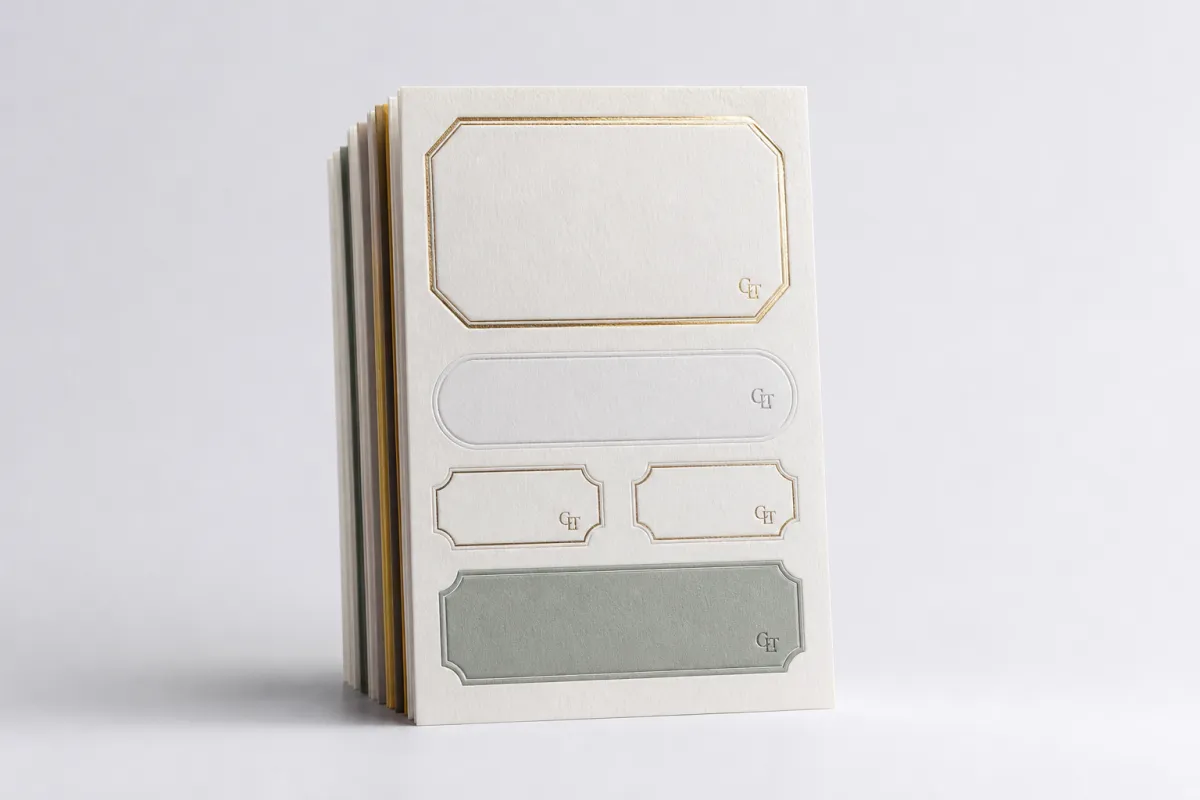
Printed labels with logo wholesale changes the economics in a very direct way. Once a size, stock, finish, and artwork layout are standardized, the buyer stops paying for repeated setup decisions and starts paying for a repeatable production run. That sounds obvious until the same small label gets reordered six times and each order brings fresh file checks, fresh approvals, and fresh shipping estimates. Those little costs add up faster than most teams expect.
For packaging buyers, the real value of wholesale label ordering is not only the lower unit price. It is the removal of friction. One spec sheet can cover an entire product family. One proof can hold the look in place. One reorder can serve multiple SKUs if the size and application stay consistent. That saves time, and time is never free, even when it hides inside someone’s inbox.
Labels also carry a blunt visual authority. They are the silent salesperson on the shelf, the part of the package that tells the customer whether the brand feels finished or patched together. If the finish is wrong, the adhesive fails, or the print looks muddy, the product loses polish before anyone reads the copy. Printed labels with logo wholesale keeps that presentation steady across bottles, jars, pouches, cartons, and mailers without forcing the buyer to start over every time the order is placed.
Bulk ordering also reduces the odds of mistakes. When a buyer standardizes printed labels with logo wholesale, the same artwork, die line, and roll direction can be reused. Reorders become easier to place and easier to verify. Fewer variables. Fewer surprise corrections. Fewer half-hour debates about whether the corner radius changed between runs.
The economics usually improve in three places:
- Setup: file prep and proofing happen once instead of turning into repeated custom work.
- Production: larger runs spread press time, finishing, and packing across more units.
- Operations: fewer stockouts and fewer emergency orders that eat into margin.
For brands building a steady label program, printed labels with logo wholesale is not a luxury purchase. It is the practical path for keeping the packaging consistent while keeping the reorder process orderly. Orderly is underrated. Orderly means the labels arrive, the line keeps moving, and nobody is scrambling because the new roll looks different from the last one.
Product Types and Use Cases for Branded Labels
Printed labels with logo wholesale covers more formats than most buyers expect, and that is where poor decisions get expensive. A label that works on a dry carton can fail on a chilled bottle or a candle jar that deals with oil, warmth, and handling. The product should dictate the format first. Decoration comes second.
The most common options include roll labels, sheet labels, die-cut stickers, clear labels, waterproof labels, thermal labels, and premium textured finishes. Roll labels handle higher-volume hand application and machine dispensing well, which is why they show up so often in production settings. Sheet labels suit smaller runs, office use, and internal workflows that still need some flexibility. Die-cut stickers fit packaging inserts, branded mailers, and promotional items. Clear labels deliver that printed-on look many brands want for glass and glossy plastic. Waterproof labels are the sensible choice where moisture is part of daily life. Thermal labels serve shipping and logistics. Premium textured finishes create a more expensive feel without changing the package structure itself.
Printed labels with logo wholesale is used in food, beverage, cosmetics, supplements, candles, retail packaging, and shipping workflows. Each category has its own pressure points. Food and beverage labels need moisture resistance, room for ingredients, and reliable barcode readability. Cosmetics labels often need small text, refined finishes, and resistance to oils. Supplements typically require tight compliance copy. Candles need adhesives and face stocks that tolerate heat and repeated handling. Shipping labels need fast printability and strong scan performance. The label has a job to do. It is not just a logo sitting on adhesive backing.
Surface type matters too. Glass jars, coated cartons, corrugated mailers, and flexible pouches all behave differently. Application method matters as well. A label applied by hand can tolerate a little more flexibility than a label fed through a dispenser or applicator. Storage conditions count just as much. Cold, frozen, oiled, stacked, or heavily rubbed products all demand the right material and adhesive combination.
For buyers comparing formats, Custom Labels & Tags is a useful place to review options against the actual surface and use case before placing a larger wholesale order. That kind of comparison saves money later. Guesswork rarely does.
Printed labels with logo wholesale should also support the brand story behind the package. A tamper-evident label helps protect product integrity. A glossy label on a bottle can make color feel brighter and more shelf-ready. A matte kraft label points toward a natural or handmade identity. A clear film label can disappear into the package and let the product itself carry the visual weight. The right choice depends on what the brand wants the buyer to believe in the few seconds before they pick it up.
For shipping-heavy or distribution-heavy products, it helps to think the way packaging testers do. The important question is not whether the label looks good. It is whether it will survive handling, vibration, moisture, and stack pressure. Industry groups such as ISTA publish methods for packaging and transit testing, and that mindset applies cleanly to labels as well. If the label cannot survive the trip, the mockup was just expensive paper.
Materials, Adhesives, Finishes, and Print Specs
Printed labels with logo wholesale works best when the material stack matches the product, not the mood board. Paper is usually the lowest-cost option and performs well on dry indoor products, cartons, and short-life applications. Polypropylene handles moisture better and makes more sense for bottles, cosmetics, and chilled packaging. Vinyl adds flexibility and durability for tougher surfaces. Clear film creates the clean, borderless look many brands want on glass or glossy plastic.
The adhesive matters just as much as the face stock. Permanent adhesive is the standard choice for most retail packaging because nobody wants labels peeling off in the stockroom. Removable adhesive makes sense for temporary labeling, promotional runs, or products that may need relabeling. Freezer adhesive is necessary when packages will sit in cold storage. High-tack adhesive fits rough surfaces, corrugate, or containers that resist application. If a supplier cannot explain the adhesive in plain language, that is usually a warning sign.
Finish changes both appearance and performance. Matte gives a softer, quieter look and hides minor scuffs more effectively. Gloss intensifies color and makes artwork feel sharper. Soft-touch adds a premium hand-feel, though it can raise cost and show wear in some handling situations. UV coating adds protection against abrasion and light exposure. None of this is mysterious. It is simply a matter of matching finish to use.
Here is the kind of spec list that should be on the table before ordering printed labels with logo wholesale:
- Size: width, height, and any corner radius.
- Shape: rectangle, oval, circle, custom die-cut, or square.
- Color count: full color process or a limited-color build.
- Bleed: 1/8 inch is usually a safe starting point unless the supplier specifies otherwise.
- Core size: critical for roll labels used in dispensers or applicators.
- Roll direction: important when labels are machine-applied.
- Finish: matte, gloss, soft-touch, or coated protection.
- Artwork status: print-ready or in need of cleanup, resizing, or template alignment.
Printed labels with logo wholesale should also account for legibility. If the label includes ingredients, lot numbers, expiration dates, or barcodes, the print method and stock must hold small text cleanly. A barcode that looks fine on screen can still fail in production if the contrast is weak or the label surface is too reflective. That is not a rare corner case. It happens often enough to deserve a spot in the planning stage.
If the label peels, curls, or smears, the customer blames the brand, not the printer. That is why material and adhesive selection matter more than a tiny savings per thousand pieces.
Brands that care about sourcing can ask whether paper stocks are FSC-certified. If sustainable sourcing is part of the brand story, ask for proof instead of vague claims. The same logic applies to packaging language more broadly. The FSC framework is a useful reference point for paper responsibility, even when the label spec still has to be judged on performance first. Attractive packaging does not matter if the adhesive fails.
For buyers who want printed labels with logo wholesale to look premium without complicating the run, the best approach is usually to keep the shape simple, lock the stock early, and use finish as the main visual difference. Fancy die-cuts have their place. Foil accents and textured papers do too. Yet if the brand is still testing volume, simpler specs usually cost less, move faster, and reorder with less friction.
A small note from the field: the orders that go smoothly are rarely the flashy ones. They are the ones where the buyer tells the supplier exactly how the label will be used. Dry shelf? Cold room? Oily product? Hand-applied or machine-applied? That one minute of clarity usually saves days later. Kinda boring, yes. Also very effective.
Printed Labels with Logo Wholesale Pricing, MOQ, and Unit Cost
Printed labels with logo wholesale pricing is built from a few moving parts: setup, material, print method, finish, quantity, and freight. Leave out any of those and the quote can look better than it really is. That is where buyers get misled. A low headline number is attractive, but landed cost is what reaches the budget.
Setup costs are usually the first thing to understand. Some label jobs carry plate charges, die charges, or file-prep fees depending on the print method and whether the shape is standard or custom. Material choice has more influence on price than many buyers expect. Paper is usually cheaper than polypropylene or vinyl. Premium finishes add cost. Specialty adhesives add cost. Shipping adds cost. None of that is surprising, but it is easy to overlook when comparing quotes side by side.
For a realistic buying conversation, printed labels with logo wholesale should be quoted in quantity tiers. That lets the buyer see where the price break actually lands. A 1,000-piece order may carry a unit price that is double a 5,000-piece run. A 10,000-piece run may lower the unit cost again, but only if the brand can store the inventory without tying up cash and shelf space.
Here is a useful way to think about it: the cheapest unit price is not always the best deal. If the label fails on the line, needs rework, or peels in transit, the hidden cost wipes out the savings. A slightly higher quote with a stable spec and a clean reorder path usually beats a bargain price that creates a fresh headache every month.
| Label Option | Typical MOQ | Approx. Unit Cost at 5,000 | Best Fit | Main Tradeoff |
|---|---|---|---|---|
| Paper roll labels | 500-1,000 | $0.03-$0.08 | Dry goods, cartons, low-cost retail packaging | Less moisture resistance |
| Polypropylene roll labels | 500-1,000 | $0.06-$0.14 | Bottles, cosmetics, chilled products | Higher cost than paper |
| Clear film labels | 1,000-2,500 | $0.08-$0.18 | Glass jars, premium packaging, clean visual look | Needs clean artwork and careful surface prep |
| Textured premium labels | 1,000-3,000 | $0.10-$0.24 | Luxury, candles, specialty retail | Higher material and finish cost |
| Waterproof labels | 1,000-2,500 | $0.07-$0.16 | Moisture-heavy handling, bath, beverage, freezer use | Spec must match environment |
Those numbers are planning ranges, not a quote. Even so, they give a buyer enough context to compare printed labels with logo wholesale offers without pretending every supplier is quoting from the same template. They are not. Some include proofing. Some do not. Some quote freight separately. Some bury it in the unit price and make the number look cleaner than it really is.
A smart buyer should ask for at least three quantity breaks, such as 1,000, 5,000, and 10,000 pieces. That shows the real pricing curve. If the jump from 1,000 to 5,000 cuts the unit cost meaningfully, the larger order may be worth it. If the savings are small, a shorter run protects cash flow and storage space. Printed labels with logo wholesale is supposed to support margins, not create a shelf full of unused inventory.
For brands buying through Wholesale Programs, the best pricing discussions usually happen after the artwork and specs are locked. That is where the quote becomes useful instead of aspirational.
Order Process and Timeline: From Proof to Delivery
Printed labels with logo wholesale should follow a clear, predictable process. If the quote stage feels vague, production usually feels worse. The standard path is straightforward enough: inquiry, spec review, artwork check, digital proof, approval, production, finishing, packing, and shipment. Problems usually start when one of those steps gets skipped or when approval is rushed to save a day.
Begin with the inquiry. Send the size, shape, quantity, material preference, finish, and where the label will be used. If the product has unusual conditions such as cold storage, oil exposure, or heavy handling, say that immediately. A good supplier uses that information to suggest the right stock and adhesive before anything gets printed. That is what printed labels with logo wholesale should do: prevent problems, not just produce boxes full of them.
Artwork review is where many orders drift off course. A proof should confirm size, bleed, margin, logo placement, barcode position, and finish. It should also catch text that is too small, images that are low resolution, and dielines that are not aligned correctly. Screen previews can mislead. A label that looks balanced in a PDF can still print with an awkward edge or a barcode sitting too close to a fold.
Timeline depends on complexity. Straight reorders usually move faster because the specs are already on file. A new custom label with a special finish or barcode testing takes longer. Complex color matching, specialty adhesives, and custom die-cuts add time too. In many cases, the clock starts after proof approval, not when the first email lands. Buyers who ask only, "How fast can you quote it?" are asking the wrong question. The number that matters is, "How fast can you produce after approval?"
Here is the honest version of what usually affects timeline:
- Proofing: faster when the artwork is clean and print-ready.
- Quantity: larger runs take more production time.
- Finish: special coatings or textured materials can add days.
- Shipping: domestic freight is simpler than split overseas delivery.
- Handling: palletized shipping or multi-warehouse drops can extend dispatch time.
For brands that need packaging to survive distribution, it is smart to think beyond the print room. A label that survives a desk test has not been fully proven. The package still has to handle transit, stacking, and temperature shifts. That is where packaging testing discipline matters. Some buyers reference shipping standards from groups such as ISTA or general packaging guidance from industry associations before they finalize a spec. Good habit. Cheap mistakes still cost money.
One practical way to reduce risk is to request a small test batch if the label will face cold storage, condensation, or heavy abrasion. That is especially useful for printed labels with logo wholesale because once a company scales the order, mistakes get multiplied across every carton in the shipment. Better to discover early that a finish rubs too easily than to learn it after 20,000 labels have reached a warehouse.
Packaging buyers also need to plan for logistics. If the order ships to a single warehouse for distribution, fine. If it has to split across several facilities, say that upfront. If cartons need specific labeling, pallet counts, or freight appointments, those details belong in the quote. Leaving them for the last minute usually creates the kind of email thread nobody enjoys.
Why Choose Us for Wholesale Label Programs
Printed labels with logo wholesale works best when the supplier understands packaging behavior, not just ink on paper. That is the difference between someone who can print a logo and someone who can help a product line stay consistent across reorders. A useful supplier does more than take the order. They ask the questions that keep the label from failing later.
That means clear communication, clean proofs, steady print quality, and a repeat-order process that does not force the buyer to rebuild the job every time. It also means helping brands Choose the Right stock, adhesive, and finish for the real use case. A good partner saves time because the first order is set up well. A poor partner wastes time because every reorder starts with confusion that should have been avoided. Printed labels with logo wholesale should remove friction, not add it.
For wholesale buyers, reliability matters more than polished language. If the supplier keeps specs on file, confirms the die line, and responds quickly when inventory gets low, the reorder process becomes much easier. That matters for brands with active product calendars, especially when one label format has to serve multiple SKUs. Consistency is the whole point.
Printed labels with logo wholesale also benefits from flexibility in order size. A supplier should be able to handle pilot runs, moderate repeat orders, and larger volume programs without changing the rules every time. That matters for brands testing a new item or scaling a proven one. Small pilot run today, larger wholesale run tomorrow. That is a normal path, not a special request.
Another point buyers often overlook is sample support. Material samples are useful when the product will be handled often or stored in difficult conditions. Paper that looks fine online may not feel right in person. Adhesive that sounds suitable on paper may be too weak for the surface. Practical sample support helps the buyer make a better decision before the full order goes out.
Printed labels with logo wholesale is also about protecting the brand look. A label is small, but it carries the package identity. If one SKU uses a different finish or color balance than the next, the brand starts to feel scattered. That kind of inconsistency is easy to avoid with a stable wholesale program and a supplier that keeps the details straight. No drama. Just repeatable output.
That is why many brands prefer a packaging-focused supplier instead of a general print vendor. Packaging buyers care about application, shelf presentation, and production reality. A label that makes sense in a design file but fails in a warehouse is not a win. It is only a prettier problem.
And yes, if the goal is to scale cleanly, printed labels with logo wholesale is one of the simplest ways to do it without pushing the packaging budget out of reach. The job is to look sharp, ship well, and reorder cleanly. That is the business case in plain language.
Next Steps: Build a Quote That Actually Compares
Printed labels with logo wholesale becomes much easier to buy when the buyer sends the right spec pack on the first pass. Start with the basics: size, shape, quantity, material, finish, and application method. If those five pieces are clear, the quote will be far more useful. If they are vague, the supplier has to guess, and guesswork is how budgets wander.
Next, send artwork in the cleanest format available. If vector files are available, use them. If the label includes a barcode, include the barcode data and say whether it must scan at retail or only for internal inventory use. If there is compliance copy, include that too. Ingredient lines, safety text, and lot code space all affect the layout. Printed labels with logo wholesale should be designed around the actual content, not around what merely looks tidy in a mockup.
Then ask for material options if the product will face moisture, cold storage, rough handling, or long shelf life. That single question prevents a lot of expensive rework. A test sample or short run can be worth it when the package has to survive transit or condensation. In practical terms, that is the difference between an informed order and a hopeful one.
Ask for multiple quantity breaks. Three is enough for most buyers. One low quantity, one mid quantity, one scale quantity. That gives you a way to compare unit cost, storage space, and cash impact. Sometimes the bigger run is clearly worth it. Sometimes it is not. Numbers settle that more reliably than instinct.
If the label has to look premium, say so. If the product has to survive abuse, say that too. Printed labels with logo wholesale can handle both needs, but the specs are different. A cosmetic jar label and a shipping label do not live the same life, so they should not be built the same way.
Once the spec sheet is ready, send it for a firm quote on printed labels with logo wholesale and compare landed cost, not just unit price. Freight, setup, and finish all matter. A lower number that leaves out half the job is not a bargain. It is an incomplete quote with better handwriting.
The most useful takeaway is simple: lock the size, stock, adhesive, and use case before you ask for pricing. That one move makes the quote sharper, the proof cleaner, and the reorder path easier. It is the difference between buying labels and managing label chaos.
Frequently Asked Questions
What is the best MOQ for printed labels with logo wholesale?
The best MOQ is the lowest quantity that still gives you a meaningful unit-cost break without forcing you to sit on extra inventory. A first order often works best at a smaller MOQ because it gives you room to test adhesion, color, and finish before you commit to a larger run. For repeat orders, ask for several quantity tiers so you can see how printed labels with logo wholesale pricing changes as volume rises.
Which material is best for printed labels with logo wholesale orders?
Paper works well for dry, indoor products where cost matters most. Polypropylene or vinyl is the stronger choice for moisture, handling, and longer shelf life. The right answer depends on product conditions first and appearance second. If the package lives in a refrigerator, warehouse, or bathroom, printed labels with logo wholesale should be built for that environment, not for a nice-looking mockup.
How long do printed labels with logo wholesale orders usually take?
Timeline depends on proof approval, quantity, finish, and shipping distance. Reorders are usually faster because the specs are already set. New custom work takes longer, especially if it needs special coatings, barcode checks, or custom die shapes. Ask when production starts, not just when the quote is sent. That is the number that actually matters for printed labels with logo wholesale delivery planning.
Can printed labels with logo wholesale include barcodes or variable data?
Yes, but the print method and file setup need to be confirmed before production begins. Variable data can change pricing, proofing, and turnaround time. Barcode readability should be tested before a large order goes out, especially if the label will be scanned at retail or in a warehouse. If the scan fails, the label is not finished, no matter how good it looks.
What should I send for a printed labels with logo wholesale quote?
Send the size, shape, quantity, material, finish, and application method. Include artwork files, barcode requirements, and any compliance text. Add the product environment too, because the supplier needs to know whether the label will face moisture, cold storage, oil, or abrasion. That is the fastest way to get a real printed labels with logo wholesale quote instead of a rough estimate.


