Buyer Fit Snapshot
| Best fit | packaging buyers who need clearer specs, stronger internal paths, and repeatable quote decisions where brand print, material, artwork control, and repeat-order consistency matter. |
|---|---|
| Quote inputs | Share finished size, material target, print colors, finish, packing count, annual reorder estimate, and delivery region. |
| Proofing check | Approve dieline scale, logo placement, barcode or warning zones, color tolerance, and any recyclable or compostable wording before bulk production. |
| Main risk | Vague material claims, crowded artwork, or missing packing details can create delays even when the unit price looks attractive. |
Fast answer: Printed Magnetic Closure Boxes: Design, Cost, and More should be specified like a repeatable production item. The safest quote includes material, print method, finish, artwork proof, carton packing, and reorder notes in one written spec.
What to confirm before approving the packaging proof
Check the product dimensions against the actual filled item, not only the sales mockup. Ask for tolerance on folds, seals, hang holes, label areas, and retail display edges. If the package carries a logo, QR code, warning copy, or legal claim, reserve that space before decorative graphics fill the panel.
How to compare quotes without losing quality
Compare board or film grade, print process, finish, sampling route, tooling charges, carton quantity, and freight assumptions side by side. A lower quote is only useful if the supplier can repeat the same color, closure quality, and packing count on the next order.
Printed Magnetic Closure Boxes: Design, Cost, and the Details Buyers Actually Miss
A box lands on the desk, the lid closes with a soft magnetic click, and the product feels more expensive before anyone has read a single line of copy. That is the odd power of printed magnetic closure boxes: they do brand work in the first few seconds, faster than a sales deck, faster than a product page, and usually faster than the team expects. Packaging does not often get that kind of instant lift.
For Brands That Sell presentation as much as product, the appeal goes beyond the polished look. Printed magnetic closure boxes combine structure, print, and unboxing into one object that people tend to keep on shelves, desks, and vanity counters. I have watched beauty launches and PR kits go from “nice mailer” to “keep this forever” just because the box felt deliberate. That matters for cosmetics, electronics, subscription kits, gift sets, and premium apparel alike.
Smart packaging choices usually hide in plain sight. They are not always the loudest or the most decorated. They are the ones that fit the product, the budget, and the calendar without creating a mess later. Printed magnetic closure boxes sit right in that overlap, which is why sourcing teams and designers keep coming back to them.
What Printed Magnetic Closure Boxes Are and Why They Stand Out
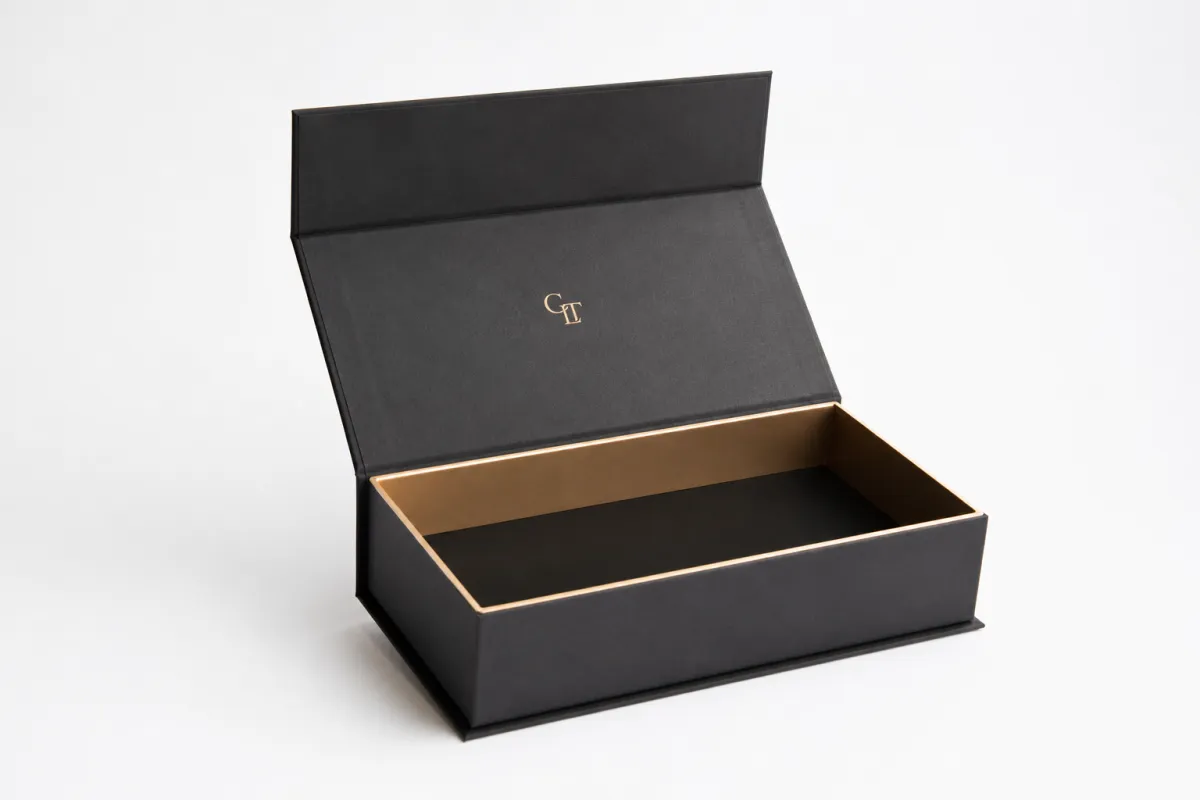
Printed magnetic closure boxes are rigid or semi-rigid presentation boxes built with hidden magnets in the lid or front flap so the box closes with a precise snap. They feel closer to a keepsake box than a shipping carton, and that distinction is exactly why brands use them for launches, gifts, and high-value product reveals. The outside is printed, but the real value lives in the experience of opening, closing, carrying, and storing the product.
The contrast with other formats is easy to miss until you compare them side by side. A tuck-end carton is efficient, light, and often ideal for mass retail. A sleeve box gives a nice reveal, yet it still depends on friction and board fit. Printed magnetic closure boxes send different signals altogether: rigidity, precision, and the sense that the product was meant to be presented, not merely packed. Buyers often approve them for PR kits, luxury skincare, premium apparel, watches, and electronics accessories for that reason alone.
The printed exterior turns the box into a branding surface instead of a blank shell. Design teams can carry logo treatment, color blocking, texture, and campaign messaging without adding a separate wrap or sleeve. With printed magnetic closure boxes, the box itself can hold seasonal artwork, a clean brand mark, or a restrained message that feels intentional rather than crowded.
There is a practical side that gets overlooked. Rigid board helps the box hold its shape better than a folding carton, and the closure keeps the lid from popping open during handling. That does not make it a shipping carton, but it does make printed magnetic closure boxes a stronger choice when the unboxing experience is part of the product value. If the package is meant to sit on a desk, shelf, or vanity, this format usually earns its place.
Think of it this way: tuck boxes are built to move quickly, sleeve boxes are built to slide, and printed magnetic closure boxes are built to impress while still doing real work. That is why they show up so often in premium gifting programs and product launches where packaging has to carry more than one job.
A premium box that opens badly is a problem. A plain box that opens well is still plain. Printed magnetic closure boxes sit in the useful middle, where structure and presentation reinforce each other.
How Printed Magnetic Closure Boxes Work: Materials, Magnets, and Structure
The anatomy of printed magnetic closure boxes is straightforward once you break it into parts. Most builds start with a rigid greyboard or chipboard shell, often around 1.5 mm to 3 mm thick depending on product weight and the tactile feel the brand wants. That range sounds small on paper, but in hand it can be the difference between “giftable” and “cheap.” The core gets wrapped in printed paper, and the magnet or magnets are hidden inside the flap, front panel, or nesting structure so the closing mechanism stays invisible from the outside.
The wrap paper drives much of the visual character. A 128 gsm or 157 gsm art paper wrap is common for full-color printed printed magnetic closure boxes, while specialty papers can create a more tactile surface, such as linen texture, soft-touch lamination, uncoated kraft, or a restrained matte finish. The right choice depends on the brand language. A glossy cosmetics launch and a natural skincare line are not asking for the same finish, even if the structural format is identical.
Magnetic pull has to be tuned, not just added. Too weak, and the lid flops open. Too strong, and the lid feels sticky or starts to distort the front panel over time. In well-made printed magnetic closure boxes, the closure should feel secure with a light hand and still open in one clean motion. That usually means embedding the magnet with enough support so it sits flush and does not telegraph through the wrap paper.
Print methods matter because they interact with the structure. Digital printing can be efficient for shorter runs and artwork with lots of variation. Offset printing starts to make more sense at higher volumes, especially when color consistency matters. Then there are finishing options: foil stamping for logo emphasis, embossing or debossing for tactile contrast, spot UV for selective shine, and soft-touch lamination for a more velvet-like surface. On printed magnetic closure boxes, finishes should strengthen the design hierarchy, not fight it.
Configuration changes performance too. A book-style box opens like a hardback cover and suits presentation kits and media sets. A fold-flat magnetic box ships efficiently and is assembled later, which helps reduce freight volume. A shoulder-neck style adds a nested shoulder for a more elevated reveal, often used in fragrances, accessories, and prestige items. Lid-and-base versions are simpler, yet they still benefit from the same print logic. The best structure depends on product size, handling, and the impression you want the customer to carry away.
Optional inserts matter more than many buyers expect. EVA foam, paperboard dividers, pulp trays, and satin-lined nests all change how the product sits inside printed magnetic closure boxes. A box with a strong exterior but a loose interior feels unfinished. A box with a precise insert feels engineered. That difference is subtle in a spec sheet and obvious in hand.
If the product will move through distribution or direct-to-consumer shipping, ask for testing aligned with recognized packaging procedures such as the ISTA test standards. That matters especially if the package will face drops, compression, or vibration in a multi-stop supply chain. Presentation packaging is not the same as transit packaging, but the two still have to coexist without surprises.
Another detail worth checking: magnet placement should never interfere with the print layout. Strong printed magnetic closure boxes account for fold lines, glue zones, closure points, and every area where the board changes shape. Ignore those details and the box can look polished from across the room, then awkward up close.
Printed Magnetic Closure Boxes Cost, Pricing, and MOQ Drivers
Price is where packaging decisions stop being abstract. The cost of printed magnetic closure boxes depends on size, board thickness, print coverage, finish complexity, insert style, magnet count, and assembly labor. A larger box uses more board and wrap material. A heavier product may need thicker board or a more complex insert. Add foil, embossing, soft-touch lamination, or a custom tray, and the unit price moves upward fast.
Volume changes the equation because setup cost gets spread across more pieces. That is why a 300-piece order can look expensive per unit while a 5,000-piece run lands much closer to a workable packaging budget. For printed magnetic closure boxes, the biggest jump usually does not come from print alone; it comes from the combination of setup, hand assembly, and finishing steps. The more custom the structure, the more visible those costs become.
MOQ matters too. Some suppliers can handle short runs, especially if they work from a stock structure or a simplified process. In practical sourcing terms, though, many custom printed magnetic closure boxes orders become more efficient around 300 to 500 pieces, and they tend to improve further at 1,000 pieces and above. Lower than that is possible, but buyers usually pay a higher unit rate and lose some flexibility on finishes or inserts.
| Spec level | Typical use | Indicative unit cost | Notes |
|---|---|---|---|
| Standard CMYK print, matte lamination | Launch kits, gift sets, simple retail presentation | $2.50-$6.00 at 300-500 units | Good balance of appearance and control for printed magnetic closure boxes |
| Soft-touch finish, foil logo, custom insert | Prestige beauty, accessories, electronics | $3.20-$8.50 at 500-1,000 units | Feels premium, but the finish stack increases labor and waste risk |
| Multiple effects: emboss, spot UV, specialty paper, nested tray | Hero SKU, high-value gifting, launch packaging | $1.50-$4.50 at 1,000-5,000 units | Per-unit cost improves with volume, but the spec needs close control |
Those numbers are directional, not universal. A small box with simple print can come in below those ranges, while a large shoulder-neck format with specialty wrap and multiple inserts can land above them. The point is to budget around the actual spec, not a generic “premium box” label. Printed magnetic closure boxes are cost-sensitive in ways that are easy to miss if you only judge them by the exterior.
When you request a quote, include exact dimensions, estimated quantity, print sides, insert type, finish callouts, and whether the box needs to arrive pre-assembled or flat. That checklist saves a lot of back-and-forth. A pricing request for printed magnetic closure boxes that leaves out insert type or closure style almost always comes back with assumptions, and assumptions are where budgets slip.
- Dimensions: product length, width, height, and any clearance needed for inserts
- Quantity: target order size plus expected reorders
- Print coverage: outside only, inside only, or both
- Finishes: foil, embossing, spot UV, lamination, specialty paper
- Assembly: flat-packed, pre-formed, or kitted with insert
If your sourcing team also cares about paper certification, ask for FSC options early. A responsibly sourced board or wrap does not rescue a weak structure, but it can support procurement requirements and brand claims. The FSC system gives buyers a recognized framework for paper and board sourcing. For printed magnetic closure boxes, that can matter almost as much as the finish in some sectors.
One more reality check: the cheapest quote is not always the cheapest outcome. If a lower-cost supplier uses thinner board, weaker magnets, or inconsistent finishing, the box may save money on paper and lose money in rework, replacement, or customer perception. That tradeoff shows up often with printed magnetic closure boxes, which is why serious buyers compare structure as carefully as they compare price.
Printed Magnetic Closure Boxes Production Process and Timeline
The production path for printed magnetic closure boxes usually starts with a brief, moves into dieline and artwork setup, then proceeds through proofing, sampling, production, and packing. If the product is already finalized, the first stage is mostly about confirming dimensions and structural needs. If the product is still changing, the packaging schedule can slide from manageable to risky very quickly.
In a typical run, a prototype can take about 5 to 10 business days after artwork approval, depending on complexity and whether specialty finishes are involved. Full production often takes another 12 to 20 business days after sample sign-off, with transit time added on top. More custom printed magnetic closure boxes with inserts, multiple finishes, or unusual structural features can take longer. That is not a manufacturing flaw; it is the cost of adding more steps to the build.
Delays usually appear in the same places. Missing artwork specs trigger file corrections. Late approvals push the schedule back. Color changes after a sample create another round of proofing. Structural changes after the prototype stage can reset the whole timeline. With printed magnetic closure boxes, the earlier the dimensions and finishes are locked, the smoother the schedule tends to run.
Prototype lead time and bulk lead time are not the same thing, and mixing them up causes avoidable stress. A buyer may see a sample in one week and assume the full order will ship just as quickly. In practice, the sample is only the first checkpoint. The full timeline for printed magnetic closure boxes includes production capacity, finishing queues, hand assembly, and quality inspection before packing.
A useful planning rule is to build extra time into any launch that depends on packaging for shelf impact. A clean promotional rollout, seasonal campaign, or retail reset usually benefits from a packaging buffer of at least one to two weeks beyond the nominal factory schedule. If your product launch is tied to a fixed event, printed magnetic closure boxes should be treated like a critical path item, not an afterthought.
Here is a simple planning framework:
- Define the product dimensions early so the box size does not shift later.
- Approve the dieline before final artwork so folds, magnets, and glue zones are correct.
- Review the sample in hand rather than only on screen.
- Allow time for one revision round if the project uses foil, embossing, or a custom insert.
- Plan shipping and receiving separately so the packaging schedule does not get confused with freight time.
That sequence sounds basic, but it saves a great deal of pain. A sample that closes too tightly or reveals a color mismatch is much cheaper to adjust before bulk production than after 1,000 units are already in process. That matters especially for printed magnetic closure boxes, where the structure itself can be more expensive than the printed wrap.
Step-by-Step Guide to Designing Printed Magnetic Closure Boxes
The strongest designs for printed magnetic closure boxes start with the product, not the artwork. Measure the item, note the weight, and decide how much movement is acceptable inside the box. A lipstick set, a watch, and a folded apparel kit do not need the same internal architecture. If the product shifts, the box will feel cheaper even if the print looks expensive.
Next, map the unboxing sequence. Where does the logo appear first? What does the customer see when the lid opens? Does the interior carry a message, a contrasting color, or a hidden print detail? Strong printed magnetic closure boxes use the outside, the lid, the insert, and the reveal as part of one story. That is part of the reason this format works so well for premium gifting and launch packaging: it lets the brand sequence unfold in stages.
Artwork needs to respect the structure. Safe zones, bleed, fold lines, magnet points, and glue areas all matter. A file that looks great in a PDF can fail on press if the logo sits too close to a fold or the pattern crosses a seam in an awkward place. On printed magnetic closure boxes, the dieline is not just a production file. It is part of the design logic.
Use finishes with restraint. Foil can sharpen a logo. Embossing can add tactile depth. Spot UV can highlight one element without overpowering the surface. Soft-touch lamination can make the box feel more refined in hand. Put too many effects on one panel and the result starts to feel busy. For printed magnetic closure boxes, one strong focal point usually works better than five competing ones.
File prep should be practical. Vector logos are best for sharp edges. Images should be high resolution at final size. Fonts should be outlined or embedded. Color mode should be confirmed before production. If the supplier asks for CMYK values or Pantone references, provide them clearly. A clean file set reduces risk and helps the print team keep printed magnetic closure boxes consistent across the run.
One detail that gets missed is the feel of the closed box in hand. Open and close the sample several times. Check whether the magnet is too strong, whether the lid bows, whether the insert pinches the product, and whether the closure stays aligned after repeated use. That kind of hand testing is simple, but it often reveals more than a desktop proof ever will. Good printed magnetic closure boxes should feel reliable on the tenth opening, not just the first.
I have seen teams approve a beautiful mockup on screen, only to discover on the sample that the magnet was sitting just far enough off-center to create a faint bulge near the flap. It was not a disaster, but it was the kind of detail that makes a buyer pause. Little things like that are why physical samples matter. They expose the stuff nobody wants to talk about in a spreadsheet.
If you are comparing packaging styles or building a broader branded set, related rigid boxes, inserts, and companion formats are grouped in our Custom Packaging Products catalog. Keeping the structural options in one review helps the visual system stay coherent.
Practical design checklist:
- Lock product dimensions before final artwork
- Leave room for the insert and closure hardware
- Use one dominant finish, not three or four competing effects
- Check color against the actual wrap material
- Review the sample in real lighting, not just under office screens
Common Mistakes With Printed Magnetic Closure Boxes
The most common mistake with printed magnetic closure boxes is overdesigning the surface. A brand can be tempted to add foil, embossing, spot UV, strong patterns, metallic ink, and a busy interior all at once. The box ends up looking expensive on a spec sheet but visually noisy in person. Good premium packaging is usually more disciplined than that. It gives the eye one or two places to land and then lets the structure do the rest.
Poor structural planning is another frequent problem. A box may look elegant but fail to protect the product, stack efficiently, or survive repeated handling. That matters because printed magnetic closure boxes are often used for presentation first and shipping second. If the product sits loose, the lid stresses the front flap, or the corners crush too easily, the luxury effect disappears quickly. Pretty packaging that cannot hold up is not really premium.
File preparation errors are equally costly. Low-resolution images, missing bleed, artwork placed too close to folds, and incorrect dielines are classic mistakes. A magnet point can also create a slight bulge if the layout is not planned properly. On printed magnetic closure boxes, these are not minor issues. They show up as alignment problems, weak folds, or print distortions that make the box look off by a few millimeters, which is enough for a buyer to notice.
A luxury-looking box that arrives with a weak lid, a crooked insert, or a scuffed corner is not premium. It is just expensive packaging with a problem.
Another trap is skipping sample testing because the schedule is tight. That usually creates one of three outcomes: the closure feels wrong, the insert shifts, or the box looks different in hand than it did on screen. Printed magnetic closure boxes are designed objects, not flat graphics, so they need physical approval. A good sample can save an entire run.
Rushing the project is its own hidden cost. When a team compresses approval, production, and shipping into too few days, the result is often rework or a box that misses the campaign window. That hurts more than paying a little extra for a better schedule. With printed magnetic closure boxes, timing is part of the value. A perfect box that arrives after the launch is still a missed opportunity.
Sustainability can also be mishandled. Paper sourcing, coating choice, and end-of-life assumptions all need some thought. If the brand has a responsible sourcing policy, ask for FSC-certified board or wrap where appropriate, and keep the structure as efficient as possible. This is not a magic fix, but it is a meaningful step. For many buyers, printed magnetic closure boxes need to look premium and satisfy internal sourcing rules at the same time.
Common pitfalls to avoid:
- Adding too many visual effects to one surface
- Ignoring the product weight and insert fit
- Submitting artwork without a correct dieline
- Approving a sample without opening and closing it multiple times
- Cutting the timeline so close that there is no room for correction
Expert Tips and Next Steps for Printed Magnetic Closure Boxes
If you want printed magnetic closure boxes to work as a packaging system instead of a one-off container, start with a short vendor brief. Include the product dimensions, target quantity, preferred finish, insert material, shipping destination, and the date the boxes must be on hand. A good brief removes guesswork, which is one of the biggest silent costs in packaging procurement.
Ask for a sample or prototype early if the project carries a premium product or a visible brand launch. That is not overcautious. It is practical. Small changes in board thickness, magnet placement, or insert depth are much cheaper before bulk production starts. With printed magnetic closure boxes, a prototype is not a luxury; it is the cheapest form of risk control.
Compare quotes on more than price. Review the board quality, magnet strength, finish options, assembly method, and lead time. Two suppliers can quote similar numbers and deliver very different experiences. One may use stronger board and cleaner wrap alignment, while the other may save a few cents and create a box that feels soft in the hand. For printed magnetic closure boxes, that difference is usually visible on the shelf and obvious during unboxing.
Build a simple testing checklist before you approve the final run:
- Closure feel: does the magnet close cleanly without forcing the lid?
- Print clarity: are logos, text, and texture sharp in real light?
- Shipping durability: does the box survive handling without corner damage?
- Shelf presentation: does the box stand upright and look balanced?
- Insert fit: does the product stay centered and protected?
This is where a lot of smart packaging decisions get made. A buyer may start by asking for printed magnetic closure boxes, but the real job is to build a repeatable brand experience that works across production, storage, transport, and retail display. That means thinking beyond the lid and the logo. It means treating the box as part of the product story.
Printed magnetic closure boxes are worth the investment when the packaging helps justify the product price, supports gifting, or improves recall at the point of unboxing. They are less useful when the product is low-margin and the box would consume too much of the budget. That tradeoff is normal. The right answer depends on whether the packaging is doing measurable branding work or just looking good in isolation.
For brand teams, the simplest path usually works best: define the product, define the budget, then define the experience you want the buyer to have. Once those three pieces are clear, printed magnetic closure boxes become much easier to specify, quote, and produce without expensive detours. Keep the structure honest, keep the design focused, and make the sample fight for approval before the order is locked.
How durable are printed magnetic closure boxes for retail and shipping?
They are durable for presentation and light to moderate transport when built with rigid board and a fitted insert. For shipping-heavy use, pair printed magnetic closure boxes with an outer carton or protective mailer so the premium box does not take the full impact. Durability depends more on structure and material thickness than on the printed surface itself.
What affects the price of printed magnetic closure boxes the most?
The biggest drivers are box size, material thickness, order quantity, and the number of finishing steps. Foil, embossing, specialty coatings, and custom inserts usually raise the price faster than standard full-color printing. Magnet count and assembly complexity also affect labor, which changes the final unit cost of printed magnetic closure boxes noticeably.
How long does it take to produce printed magnetic closure boxes?
Timeline depends on whether you need a prototype first, how complex the artwork is, and whether special finishes are included. Simple runs move faster than custom structural designs with inserts, multiple print effects, or color-matched brand requirements. Build in extra time for proofing and approval because late artwork changes are one of the most common delays for printed magnetic closure boxes.
What file format is best for printed magnetic closure boxes artwork?
Vector files are usually best for logos, type, and line art because they preserve sharp edges at production scale. Use high-resolution images for photography and place all artwork on the correct dieline with bleed and safe margins. Always confirm color mode, font outlines, and finish callouts before sending files for printed magnetic closure boxes production.
Are printed magnetic closure boxes worth it for small brands?
Yes, if the packaging plays a visible role in perceived value, unboxing, gifting, or repeat purchases. They may be less practical for very low-margin products, but they can support premium positioning and stronger brand recall. The best test is simple: if the box helps justify the product price, printed magnetic closure boxes are doing real marketing work every time they leave the shelf.