Buyer Fit Snapshot
| Best fit | Printed Mailing Bags Wholesale projects where brand print, material claims, artwork control, MOQ, and repeat-order consistency need to be specified before quoting. |
|---|---|
| Quote inputs | Share finished size, material target, print colors, finish, packing count, annual reorder estimate, ship-to region, and any compliance wording. |
| Proofing check | Approve dieline scale, logo placement, barcode or warning zones, color tolerance, closure strength, and carton packing before bulk production. |
| Main risk | Vague material claims, crowded artwork, missing packing details, or unclear freight terms can make a low unit price expensive after revisions. |
Fast answer: Printed Mailing Bags Wholesale: Specs, Pricing & MOQ should be specified like a repeatable production item. The safest quote records material, print method, finish, artwork proof, packing count, and reorder notes in one written spec.
Production checks before approval
Compare the actual filled-product size with the drawing, then confirm tolerance on folds, seals, hang holes, label areas, and retail display edges. Reserve space for logos, QR codes, warning copy, and material claims before decorative graphics fill the panel.
Quote comparison points
Review material grade, print process, finish, sampling route, tooling charges, carton quantity, and freight assumptions side by side. A quote is only useful when the supplier can repeat the same color, closure quality, and packing count on the next order.
A plain mailer gets the parcel out the door. A printed one does that too, while leaving a logo in front of the customer, the carrier, and anyone else who handles the package before it arrives. That is why printed mailing bags wholesale is not just a branding purchase; it is a shipping decision with a measurable marketing effect. For repeat-shipping brands, the economics usually look better than buyers expect once they compare the full picture instead of staring at unit price alone.
The cheapest bag is rarely the cheapest order. I have seen brands save a few cents per unit, then lose the gain to torn seams, slow packing, or a reprint after a proof error. That kind of mistake hurts twice because it wastes cash and delays dispatch. Good printed mailing bags wholesale buying sits at the intersection of unit cost, packing speed, and the customer's first physical contact with the brand.
Why printed mailing bags wholesale can beat plain mailers
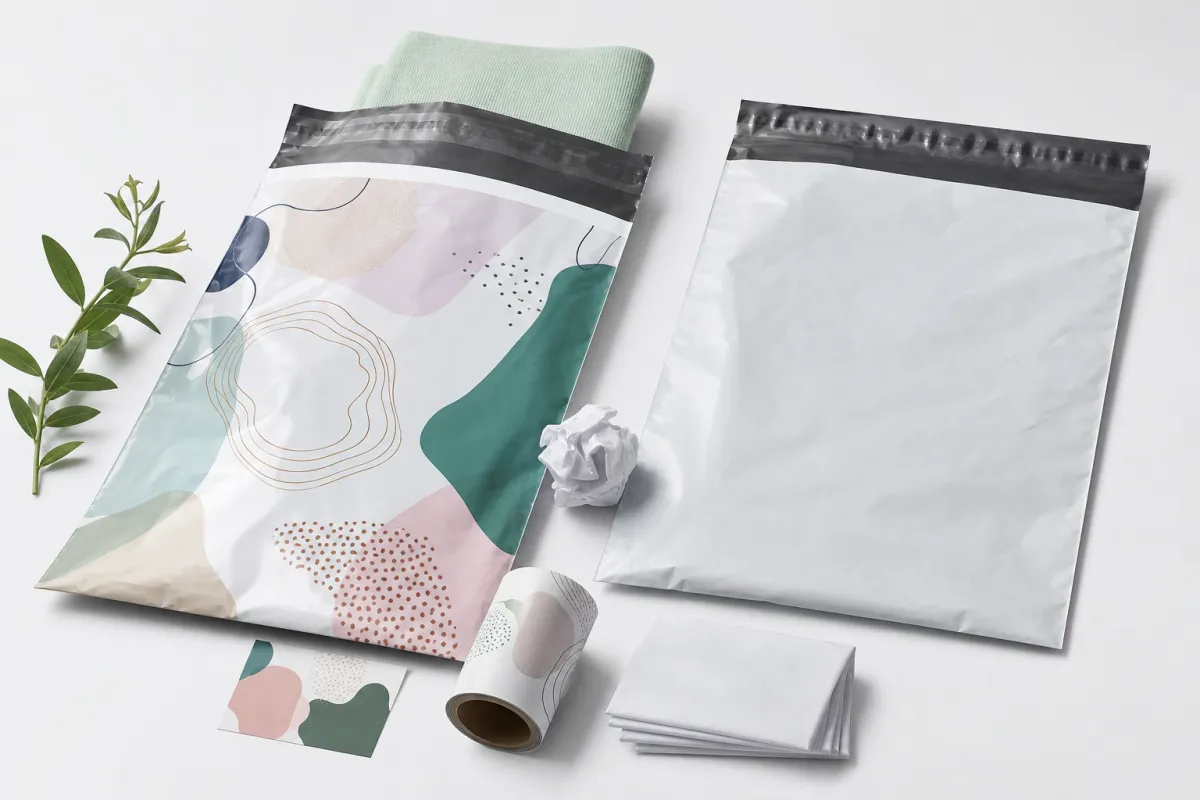
Picture a warehouse floor during a busy shift. Teams are packing apparel, soft goods, or accessories at pace. A plain mailer will do the job. It closes, it ships, and nobody complains when the order count is climbing. Still, every parcel leaves the building looking anonymous. printed mailing bags wholesale turns that same bag into a branded touchpoint without changing the packing workflow, which is exactly why operations teams tend to warm to it once they test it for real.
That detail matters more than many buyers admit. Ship 300 orders in a week and the customer sees your packaging 300 times. Ship 3,000 and the bag becomes part of memory, not just transport. printed mailing bags wholesale often delivers a lower cost per impression than almost any other physical brand asset because the parcel is already moving through the channel. No paid media slot. No extra insert program. Just a printed surface doing work after the label is applied.
Wholesale buying changes the economics because repeat shipping demands consistency. Subscription brands, ecommerce stores, and multi-SKU operations need packaging That Holds Up across dispatch cycles. A one-off retail order can tolerate a bit of trial and error. A replenishment schedule cannot. printed mailing bags wholesale gives you a fixed spec, a predictable print layout, and fewer choices for staff who already have enough decisions to make.
The value shows up in plain terms:
- Lower unit cost at volume than short-run custom packaging.
- Cleaner presentation without adding a separate branded sticker or card.
- Faster packing because the outer bag already carries the identity work.
- More consistent inventory across SKUs, shifts, and reorder cycles.
- Stronger unboxing perception without changing the shipping method.
That is the appeal from a packaging buyer's point of view. printed mailing bags wholesale is not trying to be ornate. It is trying to reduce friction, keep costs visible, and make the parcel look deliberate. In practice, that is often a better use of budget than packaging that photographs well in a mockup and behaves badly in a dispatch room.
A bag that ships well and looks intentional beats a flashy mailer that splits at the seam. Every time.
If you are comparing formats, treat the mailing bag as one piece of the system rather than the whole strategy. For many brands, the outer pack sits alongside other shipping materials, and our Custom Poly Mailers page is a useful reference point for comparing size, film, and print setup against other options. Buyers who compare systems instead of screenshots usually end up with a cleaner result.
One more practical point: printed mailing bags wholesale is especially useful when a brand carries several SKUs but uses the same shipping flow. Garments, accessories, and soft goods may vary in size, while the outer bag stays on-brand and the internal pack stays flexible. That gives operations room to move. Not glamorous. Very useful.
Printed mailing bags wholesale product details and build options
At its simplest, a mailing bag is a lightweight shipping envelope made for non-fragile goods. Most buyers use them for apparel, socks, small textiles, accessories, and similar products that do not need a rigid box. printed mailing bags wholesale usually means polyethylene film mailers with a custom print, though there are several build choices worth understanding before you sign off on production.
Material comes first. Co-extruded PE film is common because it balances strength, opacity, and cost. Recycled-content film works well for brands trying to reduce virgin plastic use, although the exact appearance and feel can vary by supplier. Opaque finishes matter when privacy is a concern or when contents would show through a thinner clear film. If your brand wants a matte, soft look rather than the glossy stock-mailer look, say so early. The finish changes the final impression more than people expect, and a sample usually tells the story faster than a spec sheet.
Print options matter just as much. A one-color logo on one side is usually the most cost-efficient setup. Two-color work creates more brand presence without pushing the job into expensive territory. Full-surface print, edge-to-edge artwork, or inside print adds setup complexity and usually raises cost, yet it can make sense for brands that treat the outer bag as part of the customer experience. With printed mailing bags wholesale, the print area is not decoration alone. It affects price, lead time, and the strength of the brand signal in transit.
Functional details are where good packaging earns its place:
- Adhesive strip for fast sealing and fewer packing delays.
- Tamper-evident closure so customers can see if the bag has been opened.
- Tear resistance for bags that will be handled in rough distribution lanes.
- Water resistance so light rain and sorting-center wear do not damage the shipment.
- Opacity to protect privacy and give the parcel a cleaner look.
The comparison against plain mailers is straightforward. Plain stock mailers are fine for purely functional shipping. printed mailing bags wholesale adds brand recognition and a more deliberate presentation, while keeping the same basic packing flow. You are not rebuilding the warehouse process. You are improving the parcel.
One common mistake is choosing a mailer that looks good in a sample but behaves awkwardly in real use. A glossy finish may photograph well and still show scuffs after a week of handling. A thin film may save pennies and then fail under a two-item order with a hard corner. Good printed mailing bags wholesale buying means thinking about the product as a shipping surface, not a logo canvas. If the bag will be handled by five different people before it reaches the customer, you want something that can take a little punishment. Shipping rarely behaves as politely as the mockup does.
If you also ship through broader wholesale channels, our Wholesale Programs are useful for matching packaging specs to repeat order patterns instead of treating every purchase like a one-off emergency.
Printed mailing bags wholesale specifications that affect performance
Specs are where a buying decision becomes real. Pretty mockups do not ship parcels. printed mailing bags wholesale should be judged on the numbers that affect the warehouse, the carrier, and the customer. If those numbers are vague, the bag becomes a gamble.
Start with size. The best bag is the one that fits the product with just enough margin for easy insertion and secure sealing. Oversized mailers waste film and look sloppy. Undersized bags slow packing and invite seam stress. For one folded tee or small accessory set, a compact format may be enough. For hoodies, layered garments, or multi-item orders, you need more room and a stronger seal line. printed mailing bags wholesale works best when the size is chosen around the packed item, not the wish list.
Thickness comes next. Film gauge is often the difference between a bag that holds up and one that feels flimsy in the hand. For lighter apparel shipments, a thinner film can work if the contents are soft and the route is straightforward. For heavier or mixed orders, a more durable film makes sense. As a rough buying guide, many brands look at:
- 50-60 micron for lighter clothing and low-abuse shipping paths.
- 60-80 micron for standard ecommerce apparel and mixed soft goods.
- 80-100 micron for heavier multi-item shipments, returns, or tougher handling conditions.
Finished dimensions matter too. A spec sheet should show the actual usable bag size after manufacturing, not just a theoretical flat width. Ask for the finished dimensions, seal width, and print-safe area. That avoids the ugly surprise where your logo sits too close to the edge or the top seal interferes with the printed panel. In printed mailing bags wholesale, the details that seem boring are often the ones that save the project.
Color and finish should be treated as business choices, not just brand taste. Matte finishes reduce glare and can feel more premium. Gloss can make colors pop and improve shelf visibility in storage bins. Opaque film protects privacy and gives the parcel a more uniform appearance. If you need brand color matching, ask for the closest practical match, and stay realistic about what film printing can deliver versus coated paper or rigid packaging.
There are also handling concerns that should not be ignored. Barcode and postage label placement should stay clear of dense print zones. Recycling instructions should be accurate and local to the market you ship into; film recycling is not the same as curbside paper recycling, and pretending otherwise only frustrates customers. If the bag will go through parcel testing, ask for performance data against recognized procedures such as ISTA transit testing guidance. That does not make the bag magical. It just makes the spec less hand-wavy.
Print coverage affects performance too. A small logo on one corner is cheaper than a full-field wrap. That is normal. A larger print area gives stronger visual presence, but it also changes ink usage, setup time, and sometimes the minimum order. printed mailing bags wholesale is a balancing act: enough brand visibility to matter, not so much complexity that the job turns expensive for no good reason.
Printed mailing bags wholesale pricing and MOQ explained
Price is where buyers can get pulled into poor decisions. A low unit number on a quote looks appealing until freight, setup, and samples appear later. printed mailing bags wholesale should always be read as a total landed cost question, not a neat per-bag figure on a sales sheet.
The main cost drivers are predictable:
- Size of the mailer.
- Film thickness and material type.
- Number of print colors.
- Print coverage, including one-side, two-side, or full-surface work.
- Quantity ordered.
- Artwork setup or plate work if the process requires it.
- Freight and any sampling charges.
MOQ is the other half of the equation. Lower MOQ usually means higher unit cost. That is not a trick. It is the cost of setting up a production line for fewer bags. For a new brand, a pilot run can be smart if the size, print, or sealing setup has not been tested. For a steady shipper, the economics usually improve quickly once the order moves into repeat volume. printed mailing bags wholesale becomes more attractive as the run size rises and the setup cost gets spread out.
Here is a practical buying range that helps most people think clearly:
- Pilot runs: about 1,000 to 3,000 units for testing fit, print, and customer response.
- Growing brands: about 5,000 to 10,000 units for better unit pricing and more stable supply.
- Established replenishment orders: 20,000 units and up if dispatch volume is predictable.
For price context, these are common indicative wholesale ranges for standard sizes and straightforward print setups:
| Option | Typical Spec | Indicative Wholesale Price | Best Fit |
|---|---|---|---|
| Standard opaque PE | 50-60 micron, one-color logo | $0.11-$0.19 per unit at 5,000 pcs | Apparel, soft goods, light ecommerce shipments |
| Recycled-content film | 50-60 micron, simple branding | $0.13-$0.22 per unit at 5,000 pcs | Brands with sustainability messaging and steady reorders |
| Heavy-duty mailer | 80-100 micron, stronger seal, larger format | $0.18-$0.31 per unit at 5,000 pcs | Heavier garments, mixed orders, rough transit routes |
| Full-surface print | Higher coverage, more setup | $0.22-$0.40 per unit at 5,000 pcs | Premium brand presentation or campaign packaging |
Those numbers are not universal, and they are not meant to be. They move with market conditions, freight lanes, print coverage, and the exact bag size. Even so, they are good enough to stop people from chasing unrealistic quotes. The cheapest printed mailing bags wholesale quote is often the one that leaves out the items you still have to pay for.
Common cost line items to ask about:
- Artwork setup and file correction fees.
- Sample charges or pre-production proofing.
- Tooling or plate costs, if applicable to the print method.
- Freight, especially if the bags ship in cartons or palletized loads.
- Special upgrades such as inside print, extra thickness, or custom color matching.
The most common buyer mistake is comparing unit price alone. That is how people end up with a cheap quote that gets expensive fast. A better way to think is total cost per shipped order. If the packaging saves packing time, lowers damage risk, and keeps brand presentation consistent, the real savings are larger than the sticker price. That is the point of printed mailing bags wholesale, not a spreadsheet trophy.
If your order volume is still moving around month to month, our Wholesale Programs can help you think about packaging in repeatable stages instead of forcing every purchase into the same rigid mold.
Printed mailing bags wholesale process, proofing, and timeline
A smooth order usually follows a simple path: quote request, artwork review, proof approval, production, packing, and shipment. printed mailing bags wholesale does not need a mysterious process. It needs a clear one. The more direct the workflow, the fewer surprises you get later.
Here is what usually happens in a well-run order:
- Inquiry and quote with size, quantity, print colors, and target delivery date.
- Artwork check to make sure the logo files fit the print area and format.
- Proof review with layout, color notes, and seal or size confirmation.
- Production after approval.
- Packing and shipment with carton or pallet details based on order size.
What slows orders down? Usually the same few problems. Unclear artwork files. Changing the bag spec after the proof is already out. Rushing the timeline and then taking three days to approve a mockup. Or asking for a completely different print layout after production has started. printed mailing bags wholesale is much easier when the buyer decides early and sticks to the decision.
Timeline depends on complexity. A repeat order using an existing size and simple logo print can move fairly quickly once the proof is approved. A fully custom job with special sizing, multiple colors, or a new material can take longer. A practical framework looks like this:
- Simple repeat jobs: often 10-14 business days from proof approval to shipment readiness.
- Standard custom runs: often 12-18 business days depending on setup and print complexity.
- Complex custom work: 18-25 business days or more if the spec changes during the process.
That is a working range, not a promise carved into stone. Freight time is separate. Domestic and international shipping can add a few days or a few weeks, depending on route and service level. If the bags are going into a critical dispatch schedule, plan the reorder before stock gets thin. Nothing creates bad packaging decisions faster than running out of inventory.
Sampling is worth the time. A pre-production sample or proof lets you check size, color, seal quality, and print placement before the full run starts. That matters because a logo can look fine on screen and land too close to the edge on the actual film. It also matters because a seal can feel secure in a sample and behave differently in a full production run if the spec changes. printed mailing bags wholesale is too practical to leave to guesswork.
For shipments that face rough handling, mixed carriers, or longer distribution chains, ask whether the bag should be evaluated against transit testing methods from the International Safe Transit Association. You do not need to turn a mailer into a laboratory project. You just need to know whether it can survive the trip without looking beaten up on arrival.
Freight planning matters too. If your order ships in cartons, ask how many bags fit per carton and how many cartons fit per pallet. That makes warehouse receiving easier and helps you estimate storage space before the order lands. printed mailing bags wholesale saves money best when the logistics are as tidy as the print.
Why choose us for printed mailing bags wholesale orders
Buyers do not need drama. They need consistent print quality, stable supply, clear communication, and a supplier who can handle small pilot runs as well as larger replenishment orders. That is the baseline. printed mailing bags wholesale should be handled like an operations purchase, not a branding stunt with a shipping label on top.
What helps most is advice that cuts through the noise. If your product is light and soft, you probably do not need an oversized heavy-duty bag. If your logo only needs to be visible from the front, full-wrap printing may be unnecessary. If your reorder cycle is short, it may be smarter to hold less inventory and buy in smaller repeated lots. A good supplier does not push the biggest order for fun. They help you Choose the Right spec for the actual use case.
Quality control is not optional. Good printed mailing bags wholesale work includes checks for print registration, seal strength, film consistency, and color drift between batches. The defects that hurt the most are the boring ones: slightly off-center print, weak adhesive, or a seam that opens too easily after a few dozen parcels. Those problems are avoidable if the production process is controlled and the proof is checked properly.
Practical support should include:
- File review before print setup begins.
- Spec guidance on size, thickness, and finish.
- Sampling help when the layout or material needs checking.
- Packaging recommendations so the bag fits the product, not just the image.
- Clear reorder planning so the next batch arrives before stock runs low.
That is the kind of help buyers remember. Not speeches. Not polished nonsense. Just clean execution. For a lot of brands, the difference between average and excellent printed mailing bags wholesale is not the logo itself. It is whether the supplier understands how packaging behaves in real shipping conditions.
There is also a sourcing angle people miss. If your brand uses paper inserts, outer cartons, or secondary packaging alongside the mailer, certified paper components can matter. A reference like the Forest Stewardship Council helps keep those paper-based pieces aligned with responsible sourcing goals. No, that does not solve every sustainability question. It does, though, give you a cleaner paper trail.
Some buyers come to printed mailing bags wholesale expecting a premium brand story and get uneasy when the conversation turns to size, gauge, and seal width. That reaction is normal. Packaging is both brand and logistics. Ignore one side and the other side punishes you. We prefer to keep the discussion grounded: what ships, what prints cleanly, what meets your volume, and what arrives on time. That is the part that keeps a warehouse moving without drama, and it is also the part customers never see when the job is done well.
Next steps for your printed mailing bags wholesale order
If you are ready to move, keep the brief simple. The fastest quote comes from a clean spec sheet. For printed mailing bags wholesale, the things to prepare are straightforward:
- Bag size or the product dimensions if you need help choosing it.
- Quantity for the first run and your expected reorder volume.
- Material preference such as standard PE, recycled-content film, or heavier gauge film.
- Print colors and the number of print sides.
- Logo artwork in vector format if possible.
- Target delivery date so production and freight can be planned properly.
A simple decision path works best. Request a quote. Compare one or two spec options. Review the proof. Approve the run. Then set a reorder point before inventory gets thin. That is far cleaner than waiting until the last carton is open and everyone is suddenly in a hurry. printed mailing bags wholesale rewards planning. It punishes panic.
If you are new to custom packaging, order a sample or proof whenever the bag size is unfamiliar, the print has strict color requirements, or the product has an odd shape that could stress the seal. If you already ship steady volume, ask for a spec that balances cost and durability instead of chasing the lowest number on paper. The right decision usually reduces friction in the warehouse and keeps the customer from spotting a problem before the package is even opened.
Fast quoting checklist:
- Send exact dimensions or product measurements.
- State the quantity and whether it is a test run or replenishment order.
- Share artwork in editable vector format.
- Tell us how many print colors you want.
- Confirm the delivery window and shipping destination.
That is enough to get a serious answer without three rounds of back-and-forth. In practice, printed mailing bags wholesale works best when the buyer treats packaging like an operations purchase, not a guessing game. You do not need perfect terminology. You do need the basics nailed down. A clear size, a clear print spec, and a realistic reorder plan will do more for the outcome than a pile of vague preferences.
If you want the next order to move cleanly, use the same logic for future reorders. Keep the approved size, approved artwork, and approved finish on file. That way printed mailing bags wholesale becomes a repeatable supply line instead of a monthly scramble. And once that rhythm is in place, the packaging stops being a nuisance and starts doing the quiet work it was supposed to do.
Choose the spec that fits the product, the volume, and the shipping route. Not the one that looks clever in a mockup. printed mailing bags wholesale should save money, protect the shipment, and make your brand look organized. That is the whole job, and it is enough.
What should you know before ordering printed mailing bags wholesale?
The shortest answer is this: know your product size, your monthly volume, your print needs, and your delivery window before you request pricing. printed mailing bags wholesale orders move faster when the brief is specific, because size, film gauge, print coverage, and freight all affect the final quote. A clean spec usually saves time, lowers revision risk, and makes it easier to compare options on a true landed-cost basis.
If you are unsure about the best format, start with the product itself. Light apparel, soft goods, and accessories often work well in standard polyethylene mailers, while heavier or mixed orders may need a thicker film or a more durable seal. For brands that care about appearance and repeat recognition, printed shipping mailers can add more value than a plain stock bag, especially when the same parcel is moving through the channel many times each week.
It also helps to think beyond the first order. printed mailing bags wholesale should fit a reorder pattern, not just one purchase. If you expect steady dispatch volume, ask for a spec that can be repeated without changing artwork or bag dimensions later. That keeps inventory simple, protects packing speed, and makes the next production run easier to plan. I have watched teams lose a whole afternoon to a packaging change that could have been avoided by locking the spec early. Nobody enjoys that kind of cleanup.
What affects the price of printed mailing bags wholesale orders?
Size, film thickness, print colors, total quantity, and finish all change the unit price. Artwork setup, samples, freight, and special options can also change the final landed cost, so compare total order cost instead of unit price alone.
What is the usual MOQ for printed mailing bags wholesale?
MOQ depends on the material and print setup, but smaller pilot runs usually cost more per bag. Larger repeat orders lower the unit price and make more sense for steady shipping volume. That is standard production economics, not a sales trick.
How long does a printed mailing bags wholesale order take?
Simple repeat orders move faster than fully custom runs because the proofing and setup are lighter. Clear artwork and quick proof approval are the biggest ways to keep the timeline moving. Freight time is separate and should be planned before stock gets tight.
Can I order custom sizes for printed mailing bags wholesale?
Yes, custom sizing is common when standard mailers do not fit the product properly. The right size reduces wasted material, improves presentation, and can speed up packing because staff are not fighting the bag.
Are printed mailing bags wholesale suitable for clothing shipments?
Yes, they are a strong fit for apparel, soft goods, accessories, and other non-fragile items. They are popular because they are lightweight, branded, and easy for warehouse staff to pack consistently without changing the shipping workflow.
What should I prepare before requesting a quote?
Have your bag size, quantity, material preference, print colors, logo artwork, and target delivery date ready. That gives you a faster quote and fewer corrections later. If the brand is new or the product is unusual, ask for a sample or proof before the full run.


