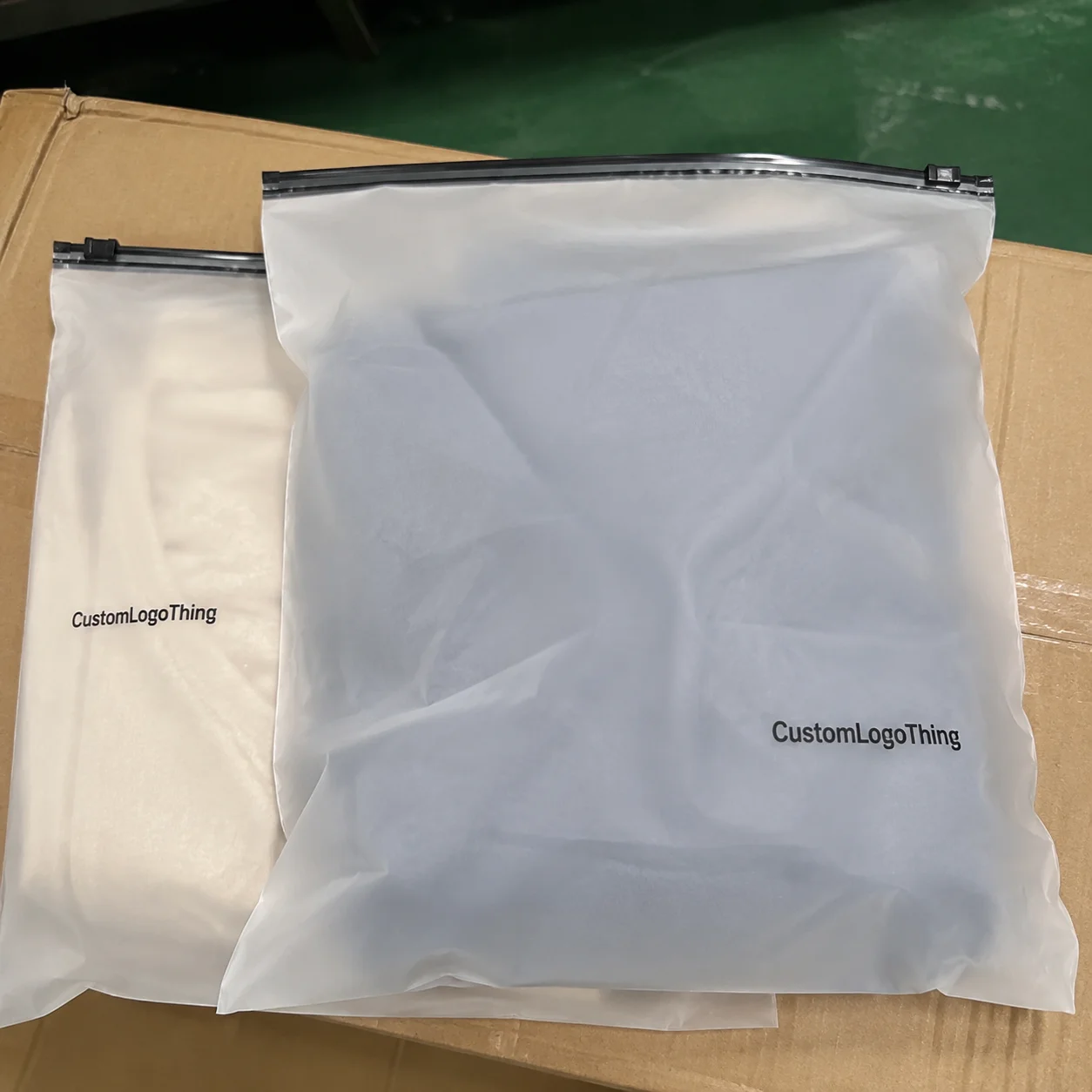
A soft hoodie, a folded tee, and a satin garment can all be labeled “apparel,” but they should not all be packed in the same zipper bag. Buyers asking for a printed Matte Zipper Bags quote for apparel will get cleaner pricing when they define the garment type, folded dimensions, order quantity, print coverage, and whether the bag is intended for shipping, retail display, warehouse storage, fulfillment, returns, or a mix of those uses.
Matte Zipper Bags are often chosen for their quieter, low-gloss look, but the most successful apparel programs specify the bag around function first. The finish can reduce glare in product photography, give the pack a softer hand-feel, and make a branded apparel line feel more considered without moving into rigid boxes, magnetic cartons, or specialty packaging that may add significant cost per unit.
Why a Printed Matte Zipper Bags Quote for Apparel Starts With Fit
Fit drives the quote. It sounds obvious until a packing team is trying to slide a thick fleece hoodie into a pouch that was sized from a flat product photo rather than a folded sample. A tee folded to 9 x 12 inches may pack neatly in a flat matte zipper pouch, while a fleece hoodie with drawstrings, embroidery, and a raised neck label may need extra headroom, a stronger zipper track, and a wider opening so packers are not refolding every piece.
For an accurate apparel zipper bag quote, the first question should not be “What is the cheapest bag?” A better starting point is: “What exactly goes inside, and how will it move?” A bag used for shelf presentation has different priorities than one inserted into a poly mailer for e-commerce fulfillment. A warehouse storage bag can often be simpler. A retail bag may need better opacity, cleaner print, a hang hole, or a suffocation warning positioned away from the main logo.
The zipper matters because apparel bags often live past the first opening. Customers may reuse them for returns, travel, closet storage, or keeping sets together. If the closure is weak, placed too close to the garment, or stressed because the bag is undersized, the whole presentation feels less deliberate even when the garment itself is well made.
Practical rule: quote the bag around the finished folded pack, not around the garment category. Two hoodies can need different packaging if one has embroidery, a bulky kangaroo pocket, metal drawcord tips, or a thick woven label.
A useful quote is built from measurable variables: width, height, film thickness, zipper style, finish, print method, number of ink colors, order quantity, packing method, and shipping destination. Those details affect unit cost, production timing, artwork setup, carton count, and freight. Guessing at this stage usually creates a slower quote and a higher chance of revisions after the first proof.
If you already have a current bag that almost works, send photos and measurements through Contact Us. A visual reference can quickly show whether the issue is fit, film gauge, zipper placement, print layout, or the way the garment is being folded.
Material, Finish, and Closure Details That Affect Bag Performance
Most custom matte apparel zipper bags are made from flexible plastic films, and the material structure should match both the garment and its route to the customer. PE-based films are common because they are flexible, soft in the hand, and practical for shirts, socks, light sets, children’s apparel, accessories, and many direct-to-consumer programs. Laminated structures are used when buyers need stronger print presentation, higher opacity, a more controlled matte surface, or improved resistance to scuffing during handling.
Matte finish can be produced in a few ways. Some bags use a pre-matte film, which is often cost-effective and straightforward. Others use matte lamination or a matte coating over printed film, which can improve the premium feel and protect the print, though it may add cost, lead time, and a slightly different tactile response. Matte surfaces also show handling marks differently than gloss. Not always worse, just different; heavy warehouse handling, tight carton packing, and abrasive trims can all affect how the surface looks after transit.
For closures, the common choice is a press-to-close zipper. It is familiar, flexible, and practical for apparel that may be opened and closed more than once. Slider-style closures can be useful for certain retail or reuse programs, but they are not always the right answer for flat apparel packing because they add component cost and can create a harder edge in cartons. Larger garments, bundled sets, and thicker folds may need reinforced zipper tracks or more clearance below the closure to reduce stress.
Useful add-ons should solve a real packing or retail problem. Hang holes support peg display. Vent holes release trapped air and help folded garments settle into cartons. Tear notches can help with controlled opening, although many zipper bags are opened directly at the top. Frosted windows allow some product visibility while keeping a softer branded look. White backing can improve logo opacity on clear or tinted materials. Write-on panels help teams mark size, SKU, lot, or return status.
Compliance details should not be treated as decoration. Suffocation warnings may be required depending on bag dimensions, destination, and distribution channel. Recycling marks can be appropriate when the material and local rules support them. For general packaging design and recovery considerations, the EPA sustainable materials management guidance is a useful reference, especially for brands reviewing packaging reduction and end-of-life claims.
In apparel workflows, Matte Zipper Bags stack neatly in picking stations, reduce shine under warehouse lighting, and protect garments from dust, finger marks, and repeated handling. The pack remains flexible enough for shelf bins, master cartons, or insertion into outer mailers. Material choice should account for garment weight, hardware, dye sensitivity, abrasion risk, and whether the customer is expected to reuse the bag.
Artwork, Logo Printing, and Brand Details Buyers Should Prepare
Artwork preparation has a direct effect on quoting speed. For a clean Printed Matte Zipper Bags Quote for apparel, send a vector logo file such as AI, EPS, or an outlined PDF whenever possible. Include desired print colors, Pantone references if exact brand matching matters, bag orientation, print position, and whether the branding appears on one side or both sides.
Flexible plastic apparel bags are commonly printed with flexographic printing for larger production runs and spot-color branding. Flexo is efficient when the artwork is stable, the order volume supports setup, and the design uses a manageable number of colors. Digital or other short-run methods may be suitable for smaller quantities, sampling, complex graphics, or launch programs where the brand wants to test size and artwork before committing to a larger run.
Matte film changes how artwork reads. Low-gloss surfaces can soften contrast slightly, especially on fine lines, small typography, pale gray ink, and tone-on-tone artwork. A black logo on a white matte bag will usually read strongly. A soft beige logo on frosted matte film may look elegant in a mockup but weaker under production lighting. Large solid ink areas also need review because flexible film can show slight variation from web tension, drying, lamination, or handling.
Leave safe margins around working areas. Zipper tracks, heat seals, side gussets, bottom folds, hang holes, and header areas can distort or interrupt print if the design sits too close. A logo placed 0.25 inch from a seal may look fine on a flat dieline, but it can disappear into the welded area once the bag is converted. For many apparel bags, a safer margin of 0.375 to 0.5 inch around seals and closure features is more forgiving.
Retail and fulfillment details also belong in the artwork conversation. Suffocation warning placement should remain readable. Barcode label space needs a clean, scannable area, especially if the bag is frosted or tinted. Size markings help pick-pack teams avoid mistakes. Country-of-origin statements, recycling symbols, and SKU labels should be planned before the first proof, not added after production files are released.
Custom Logo Things can review file suitability against the selected bag size, finish, and print method before production. That file check does not replace internal brand approval, but it does reduce avoidable delays caused by missing fonts, low-resolution logos, unsafe print placement, or artwork that conflicts with the zipper and seal layout. To start that review, send artwork and target specs through Contact Us.
Size, Thickness, and Specification Checklist for Apparel Bags
Measure the garment the way it will actually be packed. Fold it to the production fold, compress it gently by hand, then measure width, height, and thickness. Add clearance for hand packing, zipper closure, garment loft after folding, and any tags or hardware. For small tees, the allowance may be modest. For hoodies, denim, or embroidered garments, extra room can prevent zipper strain and reduce packing labor.
Finished pack size matters more than the flat garment alone. Puff prints, embroidery, woven labels, buttons, drawstrings, hangtags, belts, and folded tissue can all change how smoothly a bag closes. A package that looks acceptable for one sample may fail once 2,000 pieces are packed by different hands on a busy line.
Film thickness is usually discussed in mils or microns. Lighter films can suit tees, socks, swimwear, scarves, and accessories where the bag is mainly for dust protection and presentation. Heavier films are usually better for hoodies, denim, outerwear, multi-piece sets, or reusable return packaging. As a practical range, many apparel zipper bags fall somewhere around 2 to 4 mil equivalent depending on structure and performance needs, though laminated films may be specified differently by gauge and layer.
Construction also changes the quote. Flat zipper pouches are efficient for slim folded goods. Bottom gussets add standing volume but may not be needed for most flat apparel. Side gussets help with thicker items and sets. Header space above the zipper can support hang holes, branding, warning text, or a cleaner retail presentation. Vent holes help reduce trapped air during packing, which can lower carton bulge and make outer shipping more predictable.
Opacity affects both brand tone and daily operations. Clear matte shows the garment directly. Frosted matte softens visibility and reduces glare. White matte gives a clean branded surface and better ink contrast. Black matte can feel premium but may require a dedicated label area for barcode readability. Tinted films can support a brand palette, though they may complicate color matching and product identification.
| Garment Type | Common Bag Direction | Typical Film Approach | Practical Watchout |
|---|---|---|---|
| T-shirts and light tops | Flat matte zipper pouch | Flexible PE-based film, often lighter gauge | Allow space for hangtags and avoid overbuilding the film |
| Hoodies and fleece | Larger flat pouch or gusseted option | Heavier film with stronger zipper track | Check zipper stress after the garment loft returns |
| Denim and heavy sets | Generous pouch with strong closure | Higher gauge or laminated structure | Carton weight and freight can rise quickly |
| Satin or delicate apparel | Smooth matte or frosted presentation bag | Soft-hand film with controlled finish | Avoid rough internal contact with trims or hardware |
For quote-ready specifications, prepare the bag dimensions, material structure, film thickness target, finish, zipper type, print colors, print sides, quantity, packing method, shipping destination, and any retail or compliance markings. If one of those items is undecided, state that clearly. A good packaging quote can include options instead of forcing one premature specification.
Cost, MOQ, and Unit Pricing Factors for Matte Zipper Bags
Cost starts with material consumption. Larger bags, thicker film, gussets, laminated matte structures, and heavier zipper profiles use more plastic and increase carton weight. A 12 x 15 inch bag will not price like a 9 x 12 inch bag, even if the logo is identical. Freight and storage also rise as packed cartons get larger.
Print cost depends on the number of colors, total ink coverage, one-side versus two-side printing, plate or setup charges for certain methods, proofing needs, and color matching expectations. A one-color front logo is usually more economical than full-coverage artwork on both sides. Exact Pantone matching may be possible, but it should be treated as a production requirement rather than a casual preference because film color, matte finish, ink system, and print method all influence the final appearance.
MOQ is affected by film availability, print setup, machine setup time, custom size requirements, and whether the order can run efficiently on standard converting equipment. A standard-size clear matte zipper bag with a one-color logo may have a lower practical entry point than a custom tinted laminated bag with two-sided print and a slider closure. Higher quantities usually lower unit cost because setup and machine preparation are spread across more bags.
As a realistic planning frame, simple custom printed zipper apparel bags may quote in the lower cents per unit at higher volumes, while premium matte laminated structures, heavier gauges, custom sizes, or lower quantities can move much higher. For example, a moderate run around 5,000 pieces might land in a broad range such as $0.18 to $0.45 per bag depending on size, film, print coverage, and setup. That is not a universal price; it is a buyer’s planning range, and the final number depends on the actual specification.
The lowest unit price is not always the lowest total landed cost. Oversized bags can increase freight, waste shelf space, slow packing, and create loose, messy finished packs. Undersized bags can split at the zipper or drive up labor because packers have to refold garments repeatedly. Both problems cost money beyond the packaging invoice.
There are sensible ways to control cost without weakening the package. Standardize two or three bag sizes across multiple SKUs. Choose one strong logo placement instead of scattered graphics. Limit ink colors where possible. Confirm artwork before the production slot. Match film gauge to the garment rather than using the heaviest option for everything.
| Cost Driver | What Increases Cost | How to Control It |
|---|---|---|
| Bag size | Extra width, height, gussets, and header space | Measure the folded pack and avoid unnecessary empty space |
| Film structure | Heavier gauge, lamination, specialty opacity, custom tint | Match film to garment weight and handling demands |
| Printing | Multiple colors, two-sided print, high ink coverage | Use focused branding and confirm color needs early |
| Setup | Custom sizes, plates, repeated proof revisions | Provide vector files, dimensions, and approval contacts upfront |
| Freight | Bulky cartons, air shipping, rushed delivery | Plan lead time and compare quantity breaks with shipping included |
A complete quote should show quantity breaks, setup or plate charges if applicable, estimated production timing, carton details when available, and shipping options. Procurement teams should compare total cost, not only unit price.
Process and Timeline From Quote Request to Finished Bags
The process begins with a specification set. Share dimensions, quantity, artwork, material preference, zipper style, print colors, and destination. The packaging team reviews feasibility, identifies missing details, and returns pricing with practical options where needed. If the requested bag is likely to be too tight, too costly, or difficult to produce cleanly, that feedback should come before proofing.
Pre-production artwork review includes file cleanup, dieline placement, color notes, warning text, and safe zones around zipper tracks, seals, hang holes, and gussets. This step matters because flexible packaging is converted after printing, and the final bag has formed features that a flat screen proof does not always make obvious.
Proofing choices vary. Digital proofs are typically used to confirm layout, print position, warning text, and general color direction. Physical samples or pre-production samples may be appropriate for a new size, a premium retail launch, a strict color program, or a garment with unusual bulk. Physical proofing adds time, but it can prevent expensive corrections later.
Production generally follows a clear sequence: film sourcing or preparation, printing, curing where required, lamination or matte finishing if applicable, bag converting, zipper application, heat sealing, inspection, counting, and packing. Quality checks often focus on seal strength, zipper function, print registration, color consistency, bag count, and carton labeling.
Lead time depends on the material and complexity. A straightforward custom printed apparel zipper bag may move faster if film is available and artwork is approved quickly. Custom film, high ink coverage, complex lamination, unusual zipper components, busy production schedules, proof changes, and shipping method can all influence timing. Many custom programs should allow several business weeks from approved proof to delivery, especially if physical sampling or freight consolidation is involved.
Testing requirements may also matter for larger apparel programs. If the bag will be part of a shipping system, brands may look at transit testing through standards such as ISTA, especially for cartons, mailers, and full distribution packs. The zipper bag alone is usually not the whole shipping solution, but it contributes to dust protection, presentation, and the return experience.
Build in approval time. Merchandising may care about color and retail presence. Operations may focus on pack speed and carton cube. Compliance may review warnings and claims. E-commerce may want barcode space and return reuse. A one-day artwork review can become a week if those teams are not aligned.
Next Steps to Request an Accurate Apparel Zipper Bag Quote
The fastest quote starts with clear inputs. Send the garment type, folded dimensions, preferred bag size if known, order quantity, logo file, print colors, finish preference, zipper type, delivery location, and target in-hand date. If the project has a fixed launch date, say so early. Production and shipping options are easier to plan before the schedule becomes tight.
Photos help. A picture of the folded garment, current packaging, hangtag position, or carton pack can reveal fit problems that dimensions alone may miss. It can also show opportunities to standardize sizes across a product line. Two related tops, for example, may fit one bag size if the fold method is adjusted slightly, reducing SKU complexity and improving purchasing efficiency.
Be specific about the use case. Direct retail presentation, warehouse storage, e-commerce fulfillment, return reuse, subscription packaging, and wholesale packing each create a different balance of film, finish, closure strength, and print detail. A wholesale protection bag can be plain and efficient. A retail zipper bag needs to look clean under lights, sit properly on a peg or shelf, and carry required markings without crowding the logo.
Ask for quantity breaks. A quote at 2,500, 5,000, and 10,000 pieces can help procurement compare unit cost against storage capacity, SKU forecast, and launch timing. Larger runs can be economical, but only if the brand has enough demand and warehouse space to use the bags before specifications change.
For a live project, send specs through Contact Us and include artwork if available. The most useful printed matte zipper bags quote for apparel will be based on clear specifications, realistic production timing, and a bag construction matched to the garment rather than a generic pouch size.
Frequently Asked Questions
What details are needed for a printed matte zipper bag quote for clothing?
Provide bag width and height, folded garment dimensions, order quantity, film preference, thickness target if known, zipper type, print colors, logo file, delivery address, and required in-hand date. If size or thickness is not finalized, send the garment type and a photo of the folded item so the bag can be specified around the real packing method.
What is the usual MOQ for custom matte zipper apparel bags?
MOQ depends on bag size, film structure, print method, and whether the material is standard or custom sourced. Higher quantities usually improve unit cost because setup, artwork, and machine preparation are spread across more bags. A simple one-color logo on a standard film may have a very different MOQ than a custom tinted laminated pouch with two-sided printing.
Are matte zipper bags strong enough for hoodies, denim, and heavier apparel?
Yes, when the film gauge, bag size, and zipper strength are matched to the garment weight and thickness. Heavier apparel often needs a stronger film, more generous fit allowance, and careful zipper placement to prevent stress at the closure. Testing the folded garment in the intended bag size is a smart step before a large run.
Can matte plastic zipper bags be printed with exact brand colors?
Pantone references or brand color standards can be used to guide color matching, but final appearance depends on film color, matte finish, ink system, and print method. A proof or sample is recommended when color accuracy is critical for retail presentation, especially with muted colors, tinted films, or low-contrast artwork.
How long does production take after approving a custom apparel bag proof?
Lead time depends on material availability, print complexity, proofing requirements, order quantity, and shipping method. Approving artwork quickly and confirming all specifications before production helps prevent avoidable timeline delays. If the bags are needed for a product launch, share the target in-hand date during the first quote request.