Buyer Fit Snapshot
| Best fit | Printed Packaging Sleeves for Products projects where brand print, material claims, artwork control, MOQ, and repeat-order consistency need to be specified before quoting. |
|---|---|
| Quote inputs | Share finished size, material target, print colors, finish, packing count, annual reorder estimate, ship-to region, and any compliance wording. |
| Proofing check | Approve dieline scale, logo placement, barcode or warning zones, color tolerance, closure strength, and carton packing before bulk production. |
| Main risk | Vague material claims, crowded artwork, missing packing details, or unclear freight terms can make a low unit price expensive after revisions. |
Fast answer: Printed Packaging Sleeves for Products: Material, Print, Proofing, and Reorder Risk should be specified like a repeatable production item. The safest quote records material, print method, finish, artwork proof, packing count, and reorder notes in one written spec.
Production checks before approval
Compare the actual filled-product size with the drawing, then confirm tolerance on folds, seals, hang holes, label areas, and retail display edges. Reserve space for logos, QR codes, warning copy, and material claims before decorative graphics fill the panel.
Quote comparison points
Review material grade, print process, finish, sampling route, tooling charges, carton quantity, and freight assumptions side by side. A quote is only useful when the supplier can repeat the same color, closure quality, and packing count on the next order.
Printed Packaging Sleeves for Products: A Practical Guide
A sleeve can do more than dress a box. For many brands, printed packaging sleeves for products are the quickest way to refresh shelf appeal, clarify a variant, and tighten package branding without tearing up the entire carton spec or reworking the line. That matters because a packaging update is rarely just a design exercise; it usually becomes a decision about fit, timing, cost, and how much change a production team can absorb without creating a mess.
For buyers, sleeves sit in a useful middle ground. They can make a plain carton feel like a launch piece, turn a bottle into a seasonal item, or give a gift set a stronger retail packaging presence while the base structure stays exactly where it is. That combination is why printed packaging sleeves for products show up so often in multi-SKU lines, limited editions, and fast-turn promotions. The sleeve carries the story. The primary package keeps doing the heavy lifting.
A retailer may want stronger color contrast, better recognition from three feet away, and a clearer value signal, but the underlying box might already work well for packing, shipping, or display. In that situation, printed packaging sleeves for products can solve the visual problem without forcing a structural one. The real decisions are not just about design. They are about sleeve structure, substrate, print method, finish, application method, lead time, and how much budget the project can carry.
Why Printed Packaging Sleeves for Products Stand Out
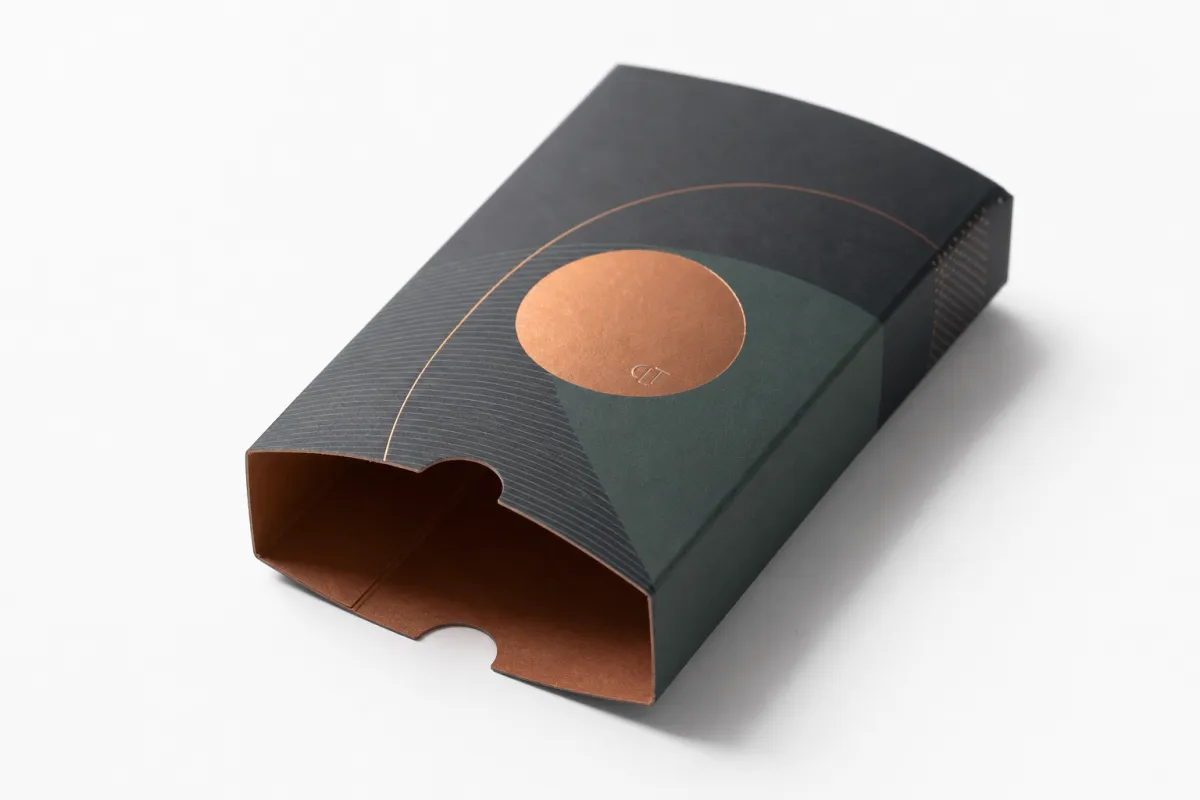
Printed packaging sleeves for products stand out because they change the first impression faster than a full packaging redesign can. That sounds simple, yet in practice it is a real commercial advantage. A brand can keep the original carton, tray, bottle, or mailer and still create a more visible shelf story. For packaging teams, that means less risk. For marketing teams, it means more freedom. For operations, it means fewer moving parts.
Picture a plain kraft mailer on a crowded shelf or a white folding carton in a category full of white folding cartons. A sleeve adds contrast, hierarchy, and motion. A band can highlight a new flavor. A wrap can carry a campaign message. A full-cover sleeve can create a front face that looks closer to custom printed boxes without the cost and delay of rebuilding the whole structure. That is one reason printed packaging sleeves for products are so common in seasonal retail packaging, because they let brands react quickly when competitors change their look or a retailer wants a fresh display program.
A sleeve can also be swapped, revised, or localized more easily than a primary pack. If the main carton is already approved for fill, stacking, and shipping, the sleeve gives the brand a second layer of control. In that sense, printed packaging sleeves for products act like a modular branding system. One base package. Multiple stories. Fewer headaches when the line expands.
Many buyers underestimate how much communication a sleeve can carry. A strong layout can hold the SKU name, the promise, the promo callout, and the compliance copy in a cleaner way than a crowded label on the base pack. That is especially helpful in branded packaging programs where the logo is already established but the visual system needs more clarity. A sleeve is often chosen because it makes the package easier to shop, not just prettier.
A sleeve should not rescue weak packaging architecture. It should sharpen a package that already works and make the offer easier to read in three seconds or less.
Brands also use printed packaging sleeves for products when the product line changes often. New scent. New size. New bundle. New holiday version. Instead of redesigning the base pack every time, teams can keep the structural package stable and use the sleeve as the variable layer. That is a practical way to reduce redesign friction, especially for categories with fast-moving promotions and frequent channel-specific variations. And honestly, it keeps the approval process from getting kinda out of hand.
How Printed Packaging Sleeves for Products Work
The basic build is straightforward. A flat printed sheet is produced, die-cut, creased, folded, and formed into a sleeve, wrap, or band that sits over a carton, tray, bottle, or mailer. That is the simple answer, and it is accurate, but it leaves out the part that determines success: fit. Printed packaging sleeves for products only look crisp when the dieline, seam position, fold direction, and opening allowance are all calculated against the packed product, not just the empty one.
The production chain usually starts with artwork and a dieline. Proofing follows, then printing, finishing, cutting, and final assembly or application. In a short-run environment, sleeves may be hand-applied after folding and gluing. In higher-volume lines, machine application is often used, which means the sleeve has to hold tighter tolerances and behave predictably on the line. That is where a lot of projects slow down. A sleeve can look perfect on screen and still fail because the overlap is too tight, the seam lands on a critical graphic, or the product dimensions were measured without the closure area included. Printed packaging sleeves for products reward precision.
Compared with a full branded carton, sleeves are often faster to launch and easier to revise. If the base package already exists, the team is not requalifying the whole structure. They are updating the visible layer. That is a major reason buyers choose printed packaging sleeves for products over starting from scratch with a new carton design. The sleeve can deliver many of the same visual benefits that people expect from product packaging or a fully customized outer box, but with less structural disruption.
The functional side matters just as much. Sleeves can support tamper visibility, barcode placement, promotional messaging, regulatory copy, and variant identification. In other words, they do more than decorate. They organize information. For a retailer, that matters because clear shelf communication reduces friction at the point of sale. For the brand, it means printed packaging sleeves for products can help the package read as both compliant and commercial, which is not always an easy balance.
If your program also needs inserts, cartons, or label support, it can help to review the broader Custom Packaging Products range alongside the sleeve spec. A sleeve may be the visible layer, but it still has to work with everything beneath it.
Key Design and Material Factors to Evaluate
Material choice drives more than appearance. It affects stiffness, scuff resistance, print fidelity, fold quality, and how the sleeve behaves in transit and on the shelf. For printed packaging sleeves for products, the common paperboard range usually sits around 300-400gsm, but the right spec depends on the size of the sleeve, the amount of ink coverage, and whether the pack will be hand-applied or machine-applied. A lighter stock may fold nicely but feel flimsy. A heavier stock can feel premium, yet crack on tight folds if the crease rule is not right.
Measurement is where many projects lose money. A sleeve needs the packed dimensions, not the flat product dimensions. That means accounting for the seam, any overlap allowance, opening edges, and the space needed for insertion or closure. Even a 1-2 mm error can create a sleeve that slides too loosely or binds during application. For printed packaging sleeves for products, that kind of miss is expensive because it usually shows up after proofs, after samples, and sometimes after the first batch is already underway.
Print decisions matter just as much. Strong typography at small sizes, clean contrast, and image files with enough resolution all make a difference. A sleeve is a wraparound communication device, so designers need to decide whether the main face carries the full story or whether the graphics should travel around the panel set like a sequence. That is where packaging design becomes strategic instead of decorative. A sleeve with too much text becomes clutter. A sleeve with too little hierarchy becomes forgettable. The goal is balance. Printed packaging sleeves for products should make the offer legible first and expressive second.
Finishing can change the tone of the entire package. Matte lamination lowers glare and often improves readability under harsh retail lighting. Gloss adds pop, especially on saturated color fields. Soft-touch gives a muted, tactile feel, but it can show handling marks if the line is rough. Foil, embossing, and spot UV can elevate a launch piece, yet each one adds cost and can create application challenges if the sleeve is bent or stacked before use. If you are comparing printed packaging sleeves for products across finishes, ask whether the finish supports the shelf story or simply adds noise.
Operational details belong in the design review from the beginning. Window cutouts can expose the primary pack or product. Ventilation may matter for certain goods. Scan zones must stay clear so barcodes read properly. Tamper features may need to align with retailer expectations. For paper-based material sourcing, many brands now ask whether the board is FSC-certified, which is a practical question as well as a brand one; the chain-of-custody rules are documented by the FSC itself at fsc.org. If your sustainability brief is strict, that conversation should happen before artwork is finalized, not after.
The best sleeves tend to feel ordinary in the production room and memorable on shelf. That is a good sign. It usually means the measurements are right, the material matches the handling conditions, and printed packaging sleeves for products are doing exactly what they should: making the package easier to understand at a glance.
Printed Packaging Sleeves for Products: Process and Timeline
The cleanest way to manage printed packaging sleeves for products is to treat the job like a controlled sequence, not a one-off design task. A simple workflow looks like this: brief, concept, dieline review, artwork setup, sample approval, production, packing, and delivery. That sequence sounds obvious, but the friction usually appears between the steps. A late copy change forces a new proof. A revised barcode changes the layout. A structural tweak can send the sleeve back through the fit check.
- Brief: define quantity, size, target finish, substrate, and the date the product must be in hand.
- Concept: choose the visual hierarchy and decide what the sleeve must say in the first three seconds.
- Dieline review: confirm seam position, bleed, trim, and fold lines before the artwork gets too polished.
- Proofing: check color, text, barcode placement, and any required legal copy.
- Sampling: validate fit on the actual packed product, not a rough mockup.
- Production and finishing: print, cut, crease, coat, and pack according to the approved spec.
Lead time shifts quickly depending on readiness. If the artwork is final and the stock is standard, printed packaging sleeves for products can often move through production in roughly 10-15 business days after proof approval. Add foil, embossing, unusual sizes, or special board sourcing, and the window can widen to three to five weeks or more. Custom tooling can add another layer, especially if the sleeve requires a new cutting die or finishing plate. That is not unusual. It is simply part of the economics of print production.
Delays tend to cluster in a few places. Copy changes after proofing are one. Color correction is another. Structural revisions are a third. Once one of those happens, the approval cycle resets, and that is where launch dates slip. If a project must reach retail on a fixed date, it helps to plan backward and build a buffer. For printed packaging sleeves for products, that buffer is cheap insurance. Two extra days at the front end can save two weeks at the back end.
For transit-heavy programs, especially e-commerce or distributor-shipped goods, it is worth checking the sleeve against a distribution test standard. The ISTA standards are widely used for package transit testing, and methods like ISTA 3A or ASTM D4169 can reveal scuffing, compression, and abrasion problems before a rollout. A sleeve that looks beautiful on a proof table can still fail if the pack rubs inside a parcel network. That is a common blind spot in printed packaging sleeves for products programs.
Approval checkpoints should stay practical, not ceremonial. Fit check. Color proof. Final signoff against the production spec. If a sample is being used, inspect it under retail lighting and again under warehouse light, because the visual difference can be larger than people expect. For a high-stakes launch, test the sleeve on the actual pack and place it next to a competitor SKU. That comparison tells you more than a PDF ever will.
Printed Packaging Sleeves for Products: Cost, Pricing, and MOQ
Pricing for printed packaging sleeves for products usually comes down to five variables: substrate, size, print coverage, finishing, and quantity. That is the short answer. The longer answer is that each of those variables affects setup, waste, run speed, and how much handwork the job needs. A small sleeve with simple two-color print behaves very differently from a large, full-bleed sleeve with soft-touch lamination and foil accents.
MOQ matters because setup cost has to be spread across the run. If a sleeve requires a die, plates, a specific board, and manual folding, the unit price at 1,000 pieces is going to be much higher than the unit price at 10,000. That is not a penalty. It is the math of production. For many printed packaging sleeves for products projects, short-run digital options make sense for launches, testing, or regional campaigns, while offset or higher-volume production starts to pay off once the order grows. The crossover point depends on the design, but buyers often begin to see better efficiency somewhere above 3,000-5,000 pieces.
A practical pricing range helps with planning. These are not fixed rates, because size and finish can move the numbers quickly, but they are useful when you are building a budget.
| Option | Typical Quantity | Typical Unit Price | Best For |
|---|---|---|---|
| Simple paperboard sleeve, standard print | 1,000-2,500 | $0.22-$0.55 | Test runs, regional launches, small product drops |
| Paperboard sleeve with stronger coverage and basic coating | 5,000-10,000 | $0.12-$0.28 | Mainline retail programs, seasonal refreshes |
| Premium sleeve with soft-touch, foil, or embossing | 5,000-10,000 | $0.20-$0.48 | Gift sets, premium branding, hero SKUs |
| Custom structure plus sleeve system | 10,000+ | Varies widely | Programs that combine sleeves with Custom Packaging Products |
The table hides one more truth: hidden costs are usually where the surprise lives. Dies, plates, sampling, freight, storage, and manual insertion labor all affect the final landed cost. If a sleeve needs to be folded or applied by hand, the labor line can matter almost as much as the print line. For printed packaging sleeves for products, it is smart to ask for pricing in tiers, because the difference between 2,500, 5,000, and 10,000 pieces often tells you more than a single quote ever could.
To get a quote that is actually useful, send dimensions, artwork stage, finish preferences, target quantity, and the launch date. If possible, include a sample of the primary package too. That one extra piece can cut back-and-forth dramatically because it lets the supplier verify fit instead of guessing. In commercial packaging work, guessing is expensive. Printed packaging sleeves for products are only economical when the input data is good.
Common Mistakes to Avoid When Ordering Sleeves
The most common mistake is measuring the product and forgetting the packed form. That sounds basic, but it happens all the time. A carton that closes with a slight bulge is not the same thing as a carton measured flat. A bottle with a shoulder curve is not the same thing as the label panel alone. Printed packaging sleeves for products need to fit the actual packed condition, including any closure area, flap, or label zone that must remain visible.
A second mistake is designing the artwork before the dieline is confirmed. That usually leads to text landing in a fold, a logo getting cut by the seam, or a callout disappearing where the sleeve wraps around the package. A sleeve is a three-dimensional object, which means flat artwork logic can only take you so far. Good printed packaging sleeves for products design begins with structure, then moves into graphics. Reversing that order is a classic source of rework.
Finish selection can also backfire. A treatment that looks elegant on a screen render can scratch, crack, or slow down application on the production line. Soft-touch is a good example. It feels expensive, and it often is, but it can show handling marks if the sleeves are shuffled in a warehouse or rubbed during assembly. Gloss can increase visual punch, but it may exaggerate fingerprints or glare. Good printed packaging sleeves for products choices depend on how the pack will actually move through the chain, not just how it will look in a presentation.
Then there is the compliance trap. Barcode readability, recycling icons, legal copy, and retailer-specific requirements need space. If those are squeezed in at the end, the design loses clarity and the sleeve starts doing too many jobs at once. Strong package branding is usually selective. It knows what to highlight and what to keep quiet. That is especially true for retail packaging, where shelf reading happens quickly and weak information hierarchy costs attention.
Many teams also underestimate the timeline around sampling and shipping. They focus on production lead time and ignore the back-and-forth before production even begins. That is risky. If a sample needs to be approved by multiple stakeholders, or if freight takes longer than planned, a supposedly simple sleeve can miss the launch window. For printed packaging sleeves for products, the safest projects are the ones with room for one revision cycle, not zero.
If there is a single rule here, it is this: treat the sleeve as part of the package system, not a graphic add-on. That mindset catches more problems early than any checklist can.
Expert Tips for Better Shelf Impact and Smoother Launches
Design for contrast first. That is the simplest and most reliable advice I can give. A sleeve should not just make the logo larger; it should make the package easier to spot against competing SKUs. In practical terms, that means checking value contrast, color separation, and shape recognition from several feet away. For printed packaging sleeves for products, a bold shelf read usually wins over decorative complexity. The package needs to stand out fast, especially in categories where buyers glance rather than study.
Build the information hierarchy with discipline. The product name should be easy to find. The variant should be obvious. The main benefit should be legible. Legal copy, technical details, and barcode zones should sit where they do not interrupt the front-of-pack story. That sounds like a design rule, but it is really a commercial rule. Printed packaging sleeves for products work best when the shopper can decode them without effort.
Test under real conditions, not just in a PDF. Place the sleeve under retail lighting. View it on a phone camera. Put it next to the main competitor on a shelf. Then look at it from the side, because side angles are where many sleeves become visually thin. If the design survives that test, it is usually strong enough to move forward. If it does not, the fix is often simple: more contrast, fewer words, or a clearer focal point. The important thing is to catch it before production.
Brands with multiple SKUs should build a sleeve system, not a one-off design every time. Same grid. Same type rules. Same placement logic. Different color or copy for each variant. That approach makes future quotes easier, speeds up approvals, and helps the product line feel coherent. It also makes printed packaging sleeves for products easier to scale because the structure can be repeated across flavors, sizes, or seasonal offers without reinventing the wheel each time. If the broader program also needs a carton refresh, revisit the wider Custom Packaging Products range so the sleeve and the primary pack feel intentional together.
One more practical tip: choose a system that your team can actually maintain. If the design depends on rare finishes, unusually tight tolerances, or constant manual intervention, it will be harder to repeat. Good printed packaging sleeves for products should be repeatable. That does not mean dull. It means stable enough that the next launch does not start from zero.
A good next step is to audit the current package, gather exact measurements, request samples or mockups, compare printed packaging sleeves for products by fit, finish, Cost, and Turnaround, and then lock the production spec before the artwork gets too polished. That sequence is boring in the best possible way. It reduces surprises, and in packaging, surprises usually show up as cost.
What are printed packaging sleeves for products used for?
They add branding, campaign messaging, or variant differentiation without redesigning the primary package. They are especially useful for seasonal promotions, limited editions, and product lines that change often. For many teams, printed packaging sleeves for products are the quickest route to a more visible package without changing the structure underneath.
How do I choose the right material for packaging sleeves?
Match the stock to handling needs, print quality, and the premium level you want customers to feel. Ask whether the material must be recyclable, scuff-resistant, food-safe, or strong enough for transit. If sustainability matters, confirm whether the board is FSC-certified and whether the finish still supports recycling goals. The best printed packaging sleeves for products usually start with material that fits the channel first and the brand look second.
How much do printed packaging sleeves for products cost?
Pricing usually depends on quantity, size, material, print coverage, finishes, and setup requirements. Request tiered quotes so you can compare unit cost at different MOQs and see where savings begin. For planning, many buyers see simple sleeves in the low tens of cents at higher volumes, while premium versions with special finishes can move higher. That spread is normal in printed packaging sleeves for products procurement.
What is the typical turnaround for packaging sleeves?
Simple jobs move faster when artwork is ready and no structural changes are needed. Complex finishes, color matching, sampling, and approvals extend the timeline, so build in buffer time. A straightforward run may ship in about 10-15 business days after approval, while more complex printed packaging sleeves for products often need several weeks from signoff to delivery.
Can printed packaging sleeves for products work for small batches?
Yes, they are a strong fit for launches, test runs, and seasonal or limited-edition packaging. Short-run production can support smaller quantities, but the per-unit cost is usually higher than bulk runs. That tradeoff is often worth it if the goal is speed, market testing, or a temporary campaign. In short, printed packaging sleeves for products are flexible enough for small batches when the brief is clear and the budget is realistic.
Bottom line: the best printed packaging sleeves for products do not just decorate a package; they make the offer clearer, the shelf read stronger, and the launch easier to manage. If the dimensions are right, the material fits the channel, and the timeline has a little breathing room, the next step is to lock the dieline before artwork gets too far along. That one decision saves more rework than any fancy finish ever will.


