Buyer Fit Snapshot
| Best fit | Printed Packing Stickers with Logo projects where brand print, material claims, artwork control, MOQ, and repeat-order consistency need to be specified before quoting. |
|---|---|
| Quote inputs | Share finished size, material target, print colors, finish, packing count, annual reorder estimate, ship-to region, and any compliance wording. |
| Proofing check | Approve dieline scale, logo placement, barcode or warning zones, color tolerance, closure strength, and carton packing before bulk production. |
| Main risk | Vague material claims, crowded artwork, missing packing details, or unclear freight terms can make a low unit price expensive after revisions. |
Fast answer: Printed Packing Stickers with Logo: Material, Adhesive, Artwork, and MOQ should be specified like a repeatable production item. The safest quote records material, print method, finish, artwork proof, packing count, and reorder notes in one written spec.
Production checks before approval
Compare the actual filled-product size with the drawing, then confirm tolerance on folds, seals, hang holes, label areas, and retail display edges. Reserve space for logos, QR codes, warning copy, and material claims before decorative graphics fill the panel.
Quote comparison points
Review material grade, print process, finish, sampling route, tooling charges, carton quantity, and freight assumptions side by side. A quote is only useful when the supplier can repeat the same color, closure quality, and packing count on the next order.
Printed packing stickers with logo do more than decorate a parcel. They move through the pack line, help a carton look finished, and give the customer a clear sign that the shipment came from a brand that pays attention to detail. For businesses that want a stronger presentation without replacing every box or mailer, printed packing stickers with logo are often the most practical upgrade, especially when the current packaging already includes standard mailers or recycled cartons from Custom Logo Things.
The appeal is straightforward from a packaging buyer's perspective. You are not paying for ornament alone. You are choosing a small printed piece that can support sorting, internal handling, and brand recognition at the same time. Printed packing stickers with logo can also make a pack table easier to manage, which becomes more valuable as order volume rises and several SKUs start sharing the same space.
I have seen plenty of packaging programs where the sticker ended up doing more work than the box ever did. That sounds a little odd until you watch a busy bench in real life. A good label keeps the team moving, and a weak one creates tiny delays that pile up fast.
Why Printed Packing Stickers With Logo Beat Plain Labels
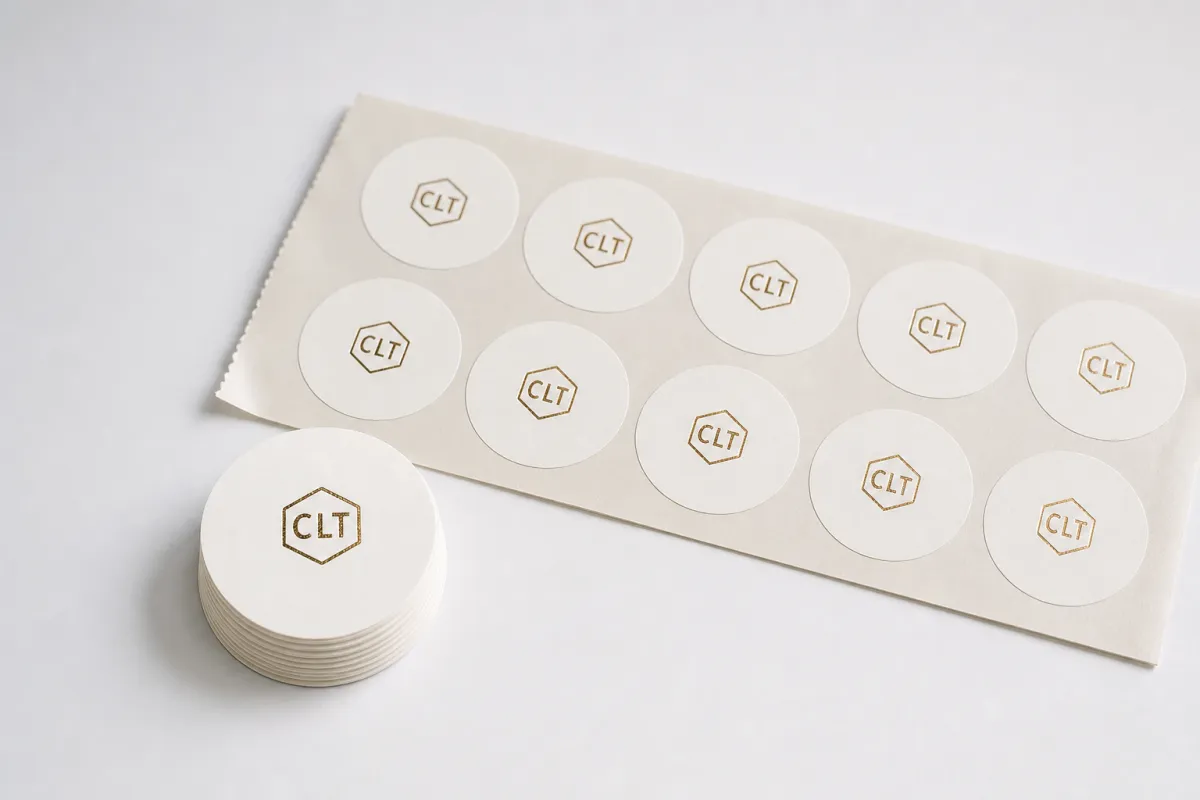
Plain labels can identify a package, but printed packing stickers with logo carry more visual weight. A logo catches the eye faster than a line of text, and that matters in a busy warehouse where staff members need to sort, seal, and move orders without slowing down. A well-placed sticker can help a team recognize the right order stream, the right product group, or the right shipping treatment in a few seconds instead of making them read through extra copy.
There is a presentation side to this as well. A kraft mailer, a recycled carton, or a plain poly bag can still feel deliberate when printed packing stickers with logo are sized well and placed with care. That small branded detail changes the tone of the parcel without forcing the rest of the packaging to become more expensive or more complicated.
Printed packing stickers with logo fit a wide range of operations. E-commerce brands use them for subscription boxes, everyday fulfillment, and seasonal campaigns. Retail teams use them for returns, repairs, and outlet shipments. Gift packing teams use them to turn a standard shipper into something that feels personal. Internal warehouse teams use branded stickers for carton identification, batch separation, and handling cues when different orders are moving through the same bench.
One thing people sometimes miss is how much a sticker can help with consistency. If the logo appears in the same place on every carton, the whole shipment looks calmer and more intentional. That consistency matters even more when orders are being packed by different people on different shifts.
"A sticker that slows the pack line costs more than it looks. A sticker that helps the team move cleanly and leaves the parcel looking complete usually pays for itself in the way the shipment is handled."
That is the real measure for printed packing Stickers With Logo: whether they create value at the moment the parcel is packed and still look appropriate after the box has moved through transit, sorting, and delivery. If the answer is yes, the sticker is doing real work, not just carrying a logo.
Many buyers also like that printed packing stickers with logo sit in a useful middle ground. They are easier to adopt than a custom carton program, less expensive than full print-on-box packaging, and quick to update when a promotion, seasonal message, or product line changes. For brands that need room to adjust, that flexibility matters.
What Printed Packing Stickers With Logo Actually Do
Branding and function should be separated at the planning stage. A branding sticker supports presentation, recognition, and customer experience. A functional label supports routing, handling, inventory, or compliance. Printed packing stickers with logo can fit either role, but the artwork, size, and material should match the job instead of trying to cover every need in one design.
Paper, film, and weather-resistant stocks behave in different ways. Paper labels are often a smart choice for dry indoor shipping and short dwell times. Film stocks, usually polypropylene or a similar material, hold up better against rubbing, moisture, and temperature changes. If the package may sit in a damp dock, ride through a cold chain, or travel through rough sorting, printed packing stickers with logo usually need a more durable face stock and a stronger adhesive than a basic office-style label.
Adhesive selection matters just as much as print quality. A strong acrylic adhesive can perform well on corrugated boxes, while a removable or low-tack option may suit returns, temporary carton marking, or reusable totes. If the surface is textured, dusty, or recycled, the sticker needs enough grab to stay flat at the corners. Many complaints about printed packing stickers with logo come down to the wrong adhesive rather than the wrong artwork.
Printing method changes what is practical. Digital printing is often the right fit for shorter runs, artwork changes, and jobs with variable data. Flexographic printing is usually better for longer repeat runs, where speed and consistency matter more than frequent edits. Roll production suits automated application and high-volume packing tables, while sheet production can work better for smaller teams or hand-applied labels. The best format for printed packing stickers with logo depends on how the label will actually be used on the floor.
Shape matters more than most buyers expect. Round stickers feel friendly and promotional. Squares and rectangles create more readable space. Custom die-cuts can echo a logo outline or give the parcel a premium look, but they may also raise waste or cost. If the logo has fine detail, a larger format usually reproduces it better than an intricate cut line. Printed packing stickers with logo should be sized for the package first and the art second.
One label can do several jobs if the design is planned carefully. Printed packing stickers with logo can reinforce brand identity, flag fragile parcels, and separate shipping stages with color or copy cues. That becomes especially useful in mixed-SKU pack stations where the team needs quick visual logic rather than extra text to read.
From a production standpoint, I usually tell buyers to think in layers: surface, adhesive, ink system, then finish. If any one of those layers is wrong, the label can fail in a way that looks like a print problem when it is really a materials problem. That distinction saves a lot of guesswork later.
Printing Process and Timeline for Packing Stickers
The production path for printed packing stickers with logo usually begins with artwork intake. The supplier checks the logo file, text, size, color references, and any special instructions before building a proof. If the logo is low resolution, contains stray vector points, or needs cleanup for small-format printing, that work should happen before the press run starts. Fixing art early saves time later and lowers the chance of a reprint.
After the artwork is approved, the team selects material, adhesive, and finish. Then comes print setup, color confirmation, cutting or die-cutting, finishing, inspection, and pack-out. The process sounds simple, though each step can take longer if the job uses a special shape, a barcode, a protective coating, or a very tight color target. Printed packing stickers with logo move faster when the specs are final and the artwork is press-ready.
Approval time and production time are not the same thing. A customer may hear "five business days" and assume the entire order will arrive in five days, yet delays often happen before the press even starts running. If internal stakeholders need to sign off on the logo, exact wording, or the placement of a handling message, that review can take longer than the print run itself. For printed packing stickers with logo, the approval stage often needs the most discipline.
- Gather final artwork and size requirements.
- Review the proof for color, spelling, and placement.
- Confirm material, adhesive, and finish.
- Approve a sample if the label will touch a new surface.
- Run the order, inspect the first finished units, and pack out.
Rush orders are possible, but speed usually narrows the room for adjustment. If you already know the exact stock, layout, and quantity, printed packing stickers with logo can often move fast enough for a launch or seasonal deadline. If the artwork is still changing, the timeline stretches. That is normal. The strongest rush jobs are the ones where the decisions were finished before the quote request went out.
A practical rule helps here: build in time for proofing, a real-world sample test on the actual box or mailer, and one correction cycle if needed. A sticker can look right on a screen and still behave differently on kraft fiber, coated board, or a soft-touch mailer. For transit testing and packaging performance reference points, the standards published by ISTA are a useful guide even if you are not running a formal certification program.
If your packaging program includes recycled paperboard, fiber-based mailers, or sustainability requirements, the substrate itself deserves attention. Paper sourcing and certification often come up in procurement conversations, and FSC certification is one label buyers frequently request. Printed packing stickers with logo can still fit those goals when the material choice is made with the full build in mind.
In practice, the cleanest timelines happen when the packaging team, the designer, and the supplier all agree on the same finished size before anyone asks for pricing. That simple step prevents a lot of back-and-forth, and it keeps the order from getting kind of muddy halfway through production.
Cost, Pricing, MOQ, and Quote Factors
Pricing for printed packing stickers with logo depends on several variables at once, which is why a simple "cheap" or "premium" label does not tell the whole story. Quantity, size, material, adhesive, finish, print coverage, die-cut complexity, and whether the order ships on rolls or sheets all shape the quote. Comparing only the headline price can hide the real cost of a label that is harder to apply or less durable in transit.
MOQ matters because setup cost has to be spread across the order. At lower quantities, tooling, press calibration, proofing, and operator time make up a larger share of the total. As the order grows, unit cost usually drops. That is why printed packing stickers with logo can seem expensive at 500 pieces and far more reasonable at 5,000 or 10,000, especially when the artwork stays the same from one run to the next.
Here is a practical comparison buyers can use as a starting point. These are planning ranges, not promises, because the actual price will vary with supplier, press method, and spec detail.
| Build | Typical Use | Approx. Unit Cost at 5,000 | Notes |
|---|---|---|---|
| Paper sticker, simple cut | Dry indoor shipping, light branding | $0.04-$0.09 | Good for budget-sensitive runs and flat carton surfaces |
| Film sticker, standard adhesive | More handling, light moisture exposure | $0.08-$0.16 | Better for parcel abrasion and shelf life |
| Laminated or coated film label | Warehouse use, rough transit, retail return flow | $0.10-$0.22 | Higher durability and cleaner look under lights |
| Custom die-cut premium label | Brand-forward parcels and seasonal packs | $0.12-$0.25 | Shape complexity can raise setup and tooling cost |
Special details raise cost faster than many teams expect. Color matching can take additional press time. Protective varnish or lamination can add a step. Branded backer sheets, split shipments, and expedited freight also matter. If the order has to arrive inside a tight window, shipping cost can become a meaningful line item by itself. Printed packing stickers with logo should be quoted with the full landed cost in mind, not just the label price.
The strongest quote requests include quantity tiers. Ask for pricing at 1,000, 3,000, 5,000, and 10,000 units if the supplier can show those levels. That makes it easier to see where the price curve begins to flatten and where the extra inventory becomes worthwhile. For many buyers, the right choice is not the lowest unit price; it is the quantity that fits cash flow, storage, and reorder rhythm.
Printed packing stickers with logo also need to be compared on consistency. A low quote is not very useful if the next reorder shifts color, size, or liner quality. If the labels feed a pack table or a semi-automated applicator, consistency may matter more than a small price difference. That becomes especially clear in recurring shipments where speed and repeatability matter every week.
There is also a hidden cost in rework. If a sticker curls, smears, or lifts on the box, somebody has to stop and fix it. Those little interruptions are easy to ignore in a quote review, but they show up immediately once the line starts moving.
How to Choose Materials, Adhesive, and Finish
Start with the surface, because the carton or mailer decides a lot about sticker behavior. Smooth coated board is easier than rough recycled corrugate. Glossy paperboard grabs differently than kraft fiber. Flexible mailers can shift and wrinkle in ways that are easy to miss during design. Printed packing stickers with logo should be matched to the actual package surface, not just to the proof on screen.
Paper stock is often enough for dry, indoor, short-cycle shipping. It is cost-friendly and prints well for straightforward branding. Film stock is the better choice if moisture, rubbing, or longer transit are part of the picture. If a parcel may sit in a cold room or pass through a damp environment, printed packing stickers with logo on film usually hold their look longer and resist edge lift more effectively than a basic paper build.
Finish changes both appearance and readability. Matte tends to reduce glare and can look more restrained. Gloss creates more visual pop but may reflect warehouse lighting. Soft-touch adds a premium feel, though it is not always necessary for shipping use. A clear overlaminate can protect the print, especially if the package is handled several times before delivery. For printed packing stickers with logo, the finish should support the job rather than compete with it.
Color choice matters too. A bold palette can look excellent in mockups, but the sticker still needs enough contrast to read from a moving line. A dark logo on a dark box can disappear. A pale logo on a bright mailer can lose definition. In a warehouse, visibility is not a cosmetic issue; it is an efficiency issue. Printed packing stickers with logo are strongest when the brand mark stays legible at a glance.
Size should stay in proportion to the package. A label that is too small can look timid and fail to carry the logo detail. A label that is too large can crowd shipping labels, barcodes, or handling instructions. A useful habit is to place a sample on the real carton and step back three to five feet. If the sticker reads clearly at that distance and still leaves the pack information clean, you are close.
For sustainability-minded teams, material selection can also align with sourcing goals. Paper content, recyclable film options, and FSC-certified paper stocks often come up in procurement conversations, especially when brands want packaging decisions to match broader environmental standards. Printed packing stickers with logo can support that direction, though the full build needs to be checked carefully rather than assumed.
If you already use other branded packaging pieces, the sticker should feel like part of the same system. The point is not to create a new visual language for every box size. It is to make printed packing stickers with logo fit the carton, the mailer, and the brand as naturally as a good box spec fits the product inside.
For me, the best material choice is usually the boring one that behaves well under pressure. Fancy finishes can be useful, sure, but if the label has to survive a rough dock, a simple construction with the right adhesive is usually the smarter call.
Step-by-Step Guide to Ordering Printed Packing Stickers With Logo
Begin with a packaging audit. List the box sizes, mailer types, storage conditions, and the exact point in the pack flow where the label will be applied. If the label goes onto the parcel before dunnage, after sealing, or at a final quality-check station, that affects size and placement. Printed packing stickers with logo should match the work pattern already in place instead of forcing the line to adapt around the artwork.
Next, define the sticker's job. Does it brand the parcel, mark a product line, call out fragile handling, or do all three? A sticker with one clear purpose usually performs better than one trying to carry too many messages. Printed packing stickers with logo can include a short handling cue or a promotional line, but the layout should remain easy to scan in a hurry.
Artwork prep is worth doing carefully. Supply a vector logo if possible, use color references that the supplier can actually reproduce, and keep copy concise. If a barcode or internal ID needs to be included, give the label room so the scanner area is not crowded. Clean art reduces proof revisions and helps printed packing stickers with logo move from file to finished product faster.
- Confirm packaging sizes and surface materials.
- Choose the sticker role: branding, handling, or identification.
- Prepare logo files, colors, and text.
- Review a digital proof line by line.
- Request a physical sample if the label is new to your packaging.
- Run a pilot on a small shipment batch.
- Lock the final spec for reorders.
A physical sample matters a great deal if the sticker will touch a new carton or mailer. A one-hour bench test reveals a lot: corner lift, edge memory, print clarity, and how the label behaves under pressure from gloved hands. For printed packing stickers with logo, that sample can prevent a great deal of frustration later because it exposes surface issues before the full order is committed.
Once the pilot passes, keep the reorder trigger simple. Record the final size, material, adhesive, finish, and approved artwork in one place so the next order starts from the same baseline. The more often a buyer has to rediscover a label spec, the more likely the reorder is to drift. Printed packing stickers with logo work best when the process stays repeatable.
It also helps to pair the sticker with other packaging components from the same supplier family. If you already buy Custom Labels & Tags, it can be easier to align substrate, color, and cut style across different uses. That does not mean every label needs to look identical, only that the whole packaging system feels coherent.
One practical detail that saves time later: keep a photo of the approved sticker on the real carton. That reference is worth more than a file name buried in a folder, because it shows scale, placement, and how the logo actually sits on the package.
Common Mistakes With Printed Packing Stickers With Logo
One of the biggest mistakes is crowding too much onto the label. The more text you add, the smaller the logo becomes and the less useful the sticker is for quick recognition. Printed packing stickers with logo are strongest when they communicate fast. If a label needs a paragraph to explain itself, the design has already lost some of its value.
Adhesive mismatch is another common problem. A sticker that behaves well on a smooth test sheet may fail on dusty recycled corrugate, a cold box, or a lightly textured mailer. People sometimes blame the print when the real issue is surface compatibility. Printed packing stickers with logo should be tested on the actual packaging, not on an ideal surface that never appears in the warehouse.
Size mistakes happen constantly. A label that looks fine on a monitor may disappear once it is applied to a larger carton. The opposite happens too: a sticker can be so large that it blocks shipping information or overwhelms the front of the package. In both cases, printed packing stickers with logo lose some of the clean branded effect the buyer wanted in the first place.
"If you have not seen the label on the real box, you do not really know the label yet."
Skipping a sample test is another quick way to create problems. Even a good proof can miss wrinkles, curl, scanner glare, or application-speed issues. A short physical trial often reveals what digital review cannot. Printed packing stickers with logo should be checked while the carton is moving through a real packing rhythm, because that is where most problems appear.
The last mistake is buying only on the lowest price. You want to know the stock quality, print consistency, lead time, reorder process, and how the supplier handles variance. A cheap run that lifts at the corners or prints inconsistently is not a bargain. Printed packing stickers with logo should be judged as part of the shipping system, not as a standalone commodity.
Another trap is approving artwork without checking the backside of the process. If the pack team has to fumble for the release liner or peel a label that splits, the label is slowing down the work even if it looks great on the carton. That kind of small annoyance adds up, and it is usually avoidable.
Expert Tips and Next Steps for Better Results
Standardize a small label system. That is one of the simplest ways to keep packing faster and training easier. Instead of designing a different sticker for every order type, build a few versions with clear jobs: general branding, special handling, and promotion or seasonal use. Printed packing stickers with logo become much easier to manage when the team knows exactly which sticker belongs where.
Keep the logo treatment consistent, but leave room for operational needs. A clean brand version can sit beside a version with a short handling message or a product-family cue. That gives the line team enough flexibility without turning the label program into a design free-for-all. Printed packing stickers with logo work best when variation stays controlled.
Ask for sample materials that match your real cartons. A label that performs beautifully on a smooth test panel may behave differently on recycled corrugate, flexible mailers, or dusty warehouse stock. That is not a flaw in the sample. It is a reminder that package surfaces matter. Printed packing stickers with logo should be verified on the exact substrate they will meet in production.
Documentation matters more than many teams expect. Keep the size, adhesive, finish, material, approved art, and reorder notes in one folder or spec sheet. When someone else has to place the next order, that record protects the brand from drift. For printed packing stickers with logo, a clear spec sheet is just as useful as a clean proof.
If you are deciding how far to go, start with a short pilot. Gather your packaging details, ask for a few quotes, compare samples on the actual box, and then run a modest order before scaling across the full operation. That approach keeps risk low and gives your team time to see how printed packing stickers with logo behave under real shipping conditions.
If you already buy adjacent packaging pieces, keep the conversation connected. A label program often works better when it is planned alongside cartons, mailers, inserts, and Custom Labels & Tags. The goal is not to complicate the order. It is to make sure every visible piece of the shipment speaks the same visual language.
Printed packing stickers with logo are a small item with a large influence. They can improve pack speed, sharpen brand recognition, and make a shipment feel finished without forcing a major change in packaging structure. Choose the right material, keep the artwork practical, and test on real surfaces, and printed packing stickers with logo can become one of the cleanest upgrades in the shipping workflow.
The most useful next step is simple: place one approved sticker on the real box or mailer, in the actual packing station, and watch how it behaves for a full shift. If it reads cleanly, peels cleanly, and still looks right after handling, you have the right starting point.
Frequently Asked Questions
What are printed packing stickers with logo used for in shipping?
They help packages look branded and intentional without requiring a Custom Printed Box for every shipment. Printed packing stickers with logo can also mark fragile orders, promo shipments, or product lines so packing teams recognize them quickly. In many operations, they improve the unboxing moment while keeping the workflow simple.
Do logo packing stickers replace shipping labels or barcodes?
Usually no. Printed packing stickers with logo are often used alongside operational shipping labels, not instead of them. If a sticker carries barcodes or routing data, it should be tested carefully so scanners can still read it. The safest setup is to keep branding and logistics functions separate unless the label is intentionally designed for both.
How long does it take to produce printed packing stickers with logo?
Timeline depends on proof approval, material choice, quantity, and whether the design needs custom cutting or special finishing. Simple runs move faster when artwork is final and the specs are already approved. If you need a rush order, expect faster production to cost more and leave less room for changes.
How does MOQ affect pricing for custom packing stickers?
Lower quantities usually cost more per label because setup and press time are spread across fewer pieces. Higher quantities often reduce unit cost, especially when the same artwork and material are repeated across multiple runs. Ask for tiered pricing so you can compare the real cost difference before committing.
Can printed packing stickers with logo stick to recycled or textured boxes?
Yes, but the adhesive needs to match the surface, especially if the box is rough, dusty, or made from recycled corrugate. A sample test is the best way to check whether the sticker lifts at the corners or holds through transit. For difficult surfaces, a stronger adhesive or different material often solves the problem better than changing the artwork.

