Buyer Fit Snapshot
| Best fit | Custom Seal Stickers with Logo projects where brand print, material claims, artwork control, MOQ, and repeat-order consistency need to be specified before quoting. |
|---|---|
| Quote inputs | Share finished size, material target, print colors, finish, packing count, annual reorder estimate, ship-to region, and any compliance wording. |
| Proofing check | Approve dieline scale, logo placement, barcode or warning zones, color tolerance, closure strength, and carton packing before bulk production. |
| Main risk | Vague material claims, crowded artwork, missing packing details, or unclear freight terms can make a low unit price expensive after revisions. |
Fast answer: Custom Seal Stickers with Logo: Material, Adhesive, Artwork, and MOQ should be specified like a repeatable production item. The safest quote records material, print method, finish, artwork proof, packing count, and reorder notes in one written spec.
Production checks before approval
Compare the actual filled-product size with the drawing, then confirm tolerance on folds, seals, hang holes, label areas, and retail display edges. Reserve space for logos, QR codes, warning copy, and material claims before decorative graphics fill the panel.
Quote comparison points
Review material grade, print process, finish, sampling route, tooling charges, carton quantity, and freight assumptions side by side. A quote is only useful when the supplier can repeat the same color, closure quality, and packing count on the next order.
Custom Seal Stickers With Logo: Specs, Cost, Materials, and Ordering Guide
Custom Seal Stickers with logo are one of those packaging details that people notice before they can quite explain why the parcel feels more finished. A plain mailer turns branded the moment the flap closes under a clean seal, and that tiny move often ends up in a customer photo instead of the recycling pile. If you sell direct-to-consumer, ship gift boxes, or package bakery and beauty items, custom seal stickers with logo can do more visual work than a lot of expensive packaging upgrades.
They are not just decoration. A well-made seal adds a light tamper cue, tightens up presentation, and gives the package a more deliberate finish without forcing you into full Custom Packaging Products or a redesign of your entire box program. From a packaging buyer's point of view, that matters because the sticker is one of the few low-cost items that can affect branded packaging, package branding, and perceived value all at once.
That is why custom seal stickers with logo show up everywhere: subscription kits, cosmetics, candles, specialty food, event favors, and retail packaging that needs to look cleaner without getting expensive fast. You see them on tissue, on mailers, across tuck flaps, and on sleeves. The best versions feel simple. The worst ones look like a last-minute afterthought. There is a difference, and customers can tell.
"The box was fine, but the seal made it look finished." That is the kind of comment brands want to hear. The seal does not need to shout. It just needs to make the packaging feel intentional.
Custom seal stickers with logo: the detail customers notice first
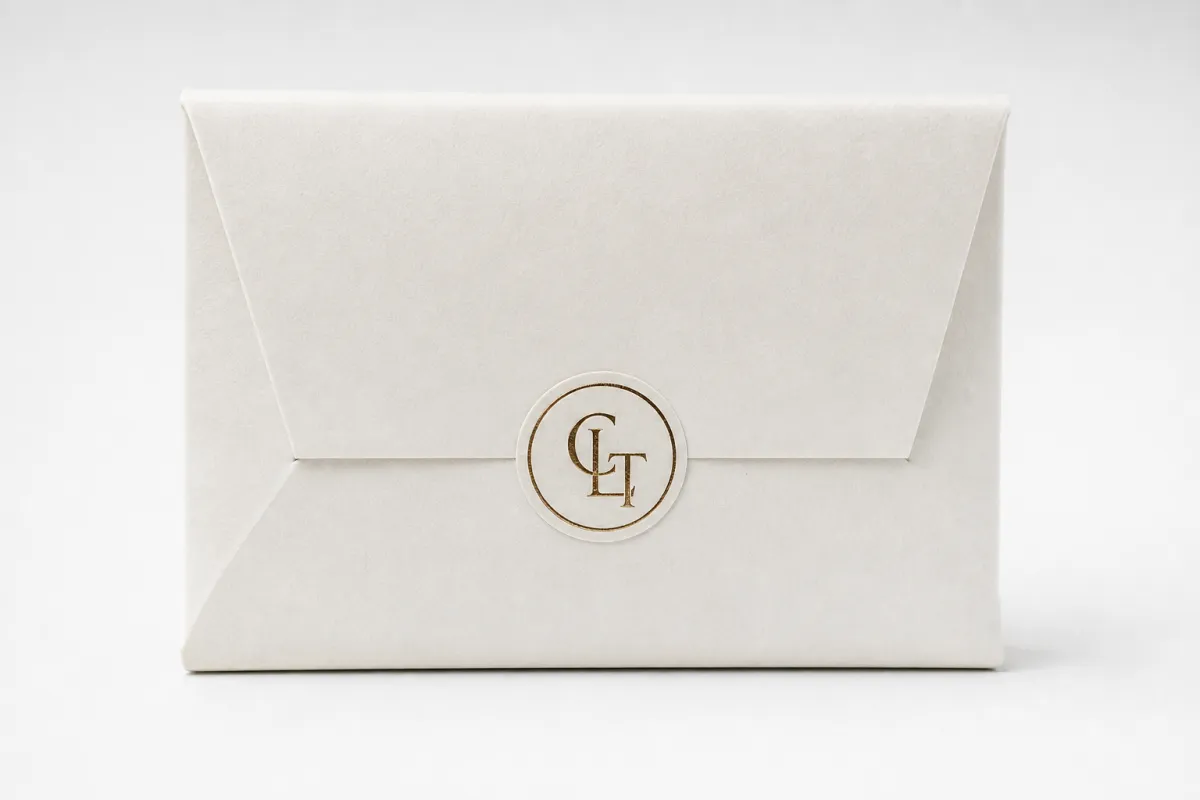
Open a mailer and you can usually tell within two seconds whether the packaging was planned or patched together. Custom seal stickers with logo live right in that first-impression window. They close the flap, hide the seam, and give the package a visual center point. A plain white mailer with a neat seal often looks better than a fancy box with a sloppy closure. Packaging is unforgiving that way. Small details win.
Brands that ship regularly get two jobs out of the same piece. The seal improves presentation and creates a cleaner handoff from warehouse to customer. A bakery can close a pastry box. A beauty brand can hold tissue around a serum set. A gift business can turn a simple pouch into something that feels more like a present than a pouch. Custom seal stickers with logo fit that role because they are visible, repeatable, and relatively cheap compared with redesigning Custom Printed Boxes.
Speed matters too. You are not asking the customer to study the package. You are giving them a clear brand cue in a place their eye already lands. That is the sweet spot for product packaging: the logo is seen fast, the seal looks deliberate, and the package feels more complete without adding much labor. Good packaging design often comes down to restraint like that.
In my own packaging reviews, the orders that caused the fewest headaches were the ones where the seal was chosen after testing on the actual box, not just on a proof. That sounds obvious, but it gets skipped more often than you'd think.
Common users are easy to spot:
- DTC brands that want repeatable brand presence on every shipment.
- Bakeries and food businesses that need clean closures on boxes, sleeves, and bags.
- Beauty and wellness brands that care about polished unboxing.
- Gift box companies that need a neat finish without overspending.
- Event packaging where the seal is part of the presentation and not just a closure.
If your packaging already relies on tissue, paper bands, or mailer flaps, custom seal stickers with logo can usually slide into the workflow without changing everything else. That is the appeal. You keep the current system and add a more polished surface cue. It is a practical middle ground between plain closures and a full custom box launch.
One detail buyers sometimes miss: a seal is not meant to carry the whole brand by itself. A clean logo, a clear shape, and one or two supporting colors are usually enough. If you cram too much copy into a 1.5-inch circle, the sticker stops feeling premium and starts feeling crowded. Nobody needs a tiny billboard on a mailer flap.
How custom seal stickers with logo work on packaging
Mechanically, custom seal stickers with logo are pressure-sensitive labels designed to sit on one surface or bridge two surfaces. That means they can hold a tissue wrap closed, bridge a mailer flap, or seal a sleeve around a box. The backing paper or release liner comes off, the adhesive meets the substrate, and the sticker bonds with pressure. Nothing dramatic. Just a small engineered problem solved well.
The shape matters more than people think. A stock circle or oval is easy and economical. A custom die-cut shape can echo the logo and make the seal feel more branded, but it also adds setup and can raise the minimum order. In practice, a round seal between 1.5 and 2.5 inches across is the sweet spot for most mailers and boxes. Larger pieces can work, but once a seal starts competing with the whole package, the effect gets clumsy.
Placement matters too. On a box, the seal should land where the flap closes naturally. On tissue, it should cross the fold cleanly without wrinkling the paper. On bags, it should sit on a flat, clean area rather than on a seam or curve that defeats the adhesive. If the package surface is textured kraft, glossy coated board, or flexible film, the seal may need a different adhesive construction. That is why it is smart to test custom seal stickers with logo on the actual packaging instead of guessing from a screenshot.
Here is the basic logic buyers should keep in mind:
- Bridging two surfaces works best when the flap or fold is fairly flat.
- Single-surface placement is better for sleeves, inserts, and branded bags.
- Logo readability matters at arm's length, not at microscope distance.
- Package branding should feel deliberate, not crowded with copy.
That last point gets ignored more than it should. A seal is often scanned in motion. The customer is walking, setting down a parcel, or opening tissue while the product is already in hand. They do not stop to read a paragraph. So the logo needs to be readable fast, and the contrast needs to survive real light conditions, not just the proof file.
Compared with tape or plain closures, custom seal stickers with logo are a cheaper way to make retail packaging feel more finished. Compared with full custom printed boxes, they cost far less and let you keep inventory flexible. That flexibility matters if you change products often, ship seasonally, or want to test branding before committing to a bigger print run. It is a practical move, not a magical one.
For brands that want a broader packaging system, seals can sit alongside inserts, tags, and labels instead of replacing them. A matched set of pieces creates a more coherent presentation than a pile of unrelated assets. If you need that broader kit, it is worth pairing seals with Custom Labels & Tags so the whole shipper, insert, and product stack speaks the same visual language.
Custom seal stickers with logo pricing, MOQ, and unit cost
Pricing for custom seal stickers with logo is driven by a handful of boring but important variables: size, shape, stock, finish, color count, adhesive type, and quantity. Boring does not mean unimportant. It just means the quote changes for reasons that are easy to predict if you know where to look.
The biggest pricing swing usually comes from quantity. A supplier spreads setup, proofing, cutting, and packing across the order. That means the first few hundred pieces cost a lot more per unit than the back half of a bigger run. Most buyers see the breakpoint around 1,000 pieces, then again around 5,000. If you only ask for one quantity, you can miss the real economics.
For a basic paper-based seal with simple artwork, here are realistic quote ranges you might see:
| Quantity | Typical unit cost | Typical total before shipping | What usually drives the price |
|---|---|---|---|
| 500 pieces | $0.24-$0.55 | $120-$275 | Setup spread across a small run, basic die-cut or stock shape |
| 1,000 pieces | $0.15-$0.32 | $150-$320 | Better spread on setup, still sensitive to finish and adhesive |
| 5,000 pieces | $0.07-$0.18 | $350-$900 | Large-run efficiency, more room for specialty printing and packing |
Those ranges move fast if you switch to foil, soft-touch, thick synthetic stocks, or complicated die lines. A metallic seal on a rigid box is one thing. A high-tack film seal built to survive moisture and handling is another. If the artwork is simple and the stock is common, custom seal stickers with logo stay cheap. If the request starts sounding like a luxury invitation suite, the price follows suit. Funny how that works.
MOQ is another place where sellers and buyers talk past each other. Some suppliers quote the minimum by design, not by quantity. Others tie MOQ to size, finish, or color count. Ask whether the minimum is for one artwork file, one die line, or one material. Otherwise you may think you are comparing quotes and you are actually comparing three different products wearing the same name tag.
Here is the short version of the cost drivers:
- Size: bigger stickers use more material and often more cutting time.
- Shape: circles and ovals usually cost less than custom die-cuts.
- Material: paper is usually cheaper than BOPP or vinyl.
- Finish: matte is usually simpler; foil and soft-touch cost more.
- Print coverage: heavy ink coverage or metallic effects can change the quote.
- Adhesive: special tack levels for coated or textured surfaces add cost.
Watch the hidden extras too. Proofing can be free or billed. Setup may be built into the unit price or shown as a separate line. Rush fees can raise the order by 10-30 percent. Shipping can be small on paper but annoying on heavy rolls or bulk-packed sheets. If you are buying custom seal stickers with logo for a seasonal launch, ask for landed cost, not just unit cost. Unit cost alone is how budgets get lied to by omission.
One useful buying habit: request quotes at 500, 1,000, and 5,000 pieces. The gap between those numbers tells you whether the supplier is pricing fairly or padding the low end. It also helps you decide whether to test the concept first or jump straight into a larger run. For branded packaging, that difference can be the line between a sensible pilot and a wasteful purchase.
Production steps and turnaround for custom seal stickers with logo
Most production runs for custom seal stickers with logo follow the same basic path: artwork intake, proof, file correction, die line approval, print, cut, pack, and ship. The details change by supplier, but the rhythm is familiar. If you understand the rhythm, you can keep the schedule moving instead of sending ten emails that all ask the same question in a different font.
- Artwork intake - Send the logo file, desired dimensions, shape, quantity, finish, and the surface it will touch.
- Prepress check - The supplier checks resolution, bleed, safe area, and whether the art can survive at sticker size.
- Proof approval - You review the digital mockup, colors, and placement before production starts.
- Die line confirmation - If the seal is custom shaped, the cutter path gets approved.
- Production - Printing and cutting happen, then the stickers are sheeted or rolled depending on the order.
- Packing and shipping - The finished order is counted, packed, and sent out.
For standard jobs, custom seal stickers with logo often take about 5-10 business days after proof approval. That is a normal range, not a promise carved into stone. If you need foil, special adhesives, unusual die cuts, or heavier packing, the timeline can stretch. Rush options exist, but they usually compress only the printing and shipping windows. They do not fix bad source files or a logo that has to be redrawn from a blurry screenshot.
Delays usually come from a small list of predictable problems:
- Low-resolution artwork that has to be rebuilt.
- Unclear cut lines for custom shapes.
- Color uncertainty when there is no brand reference.
- Late approvals because the team wants another round of sign-off.
- Seasonal demand that pushes the schedule back.
If you want faster turnaround, send cleaner files. Vector artwork is best. AI, EPS, and PDF with outlined fonts are ideal because they scale without turning fuzzy. If all you have is a PNG, make sure it is crisp and large enough to stay legible when reduced. The fastest jobs are the ones that do not need a rescue mission before print.
A practical approval checklist saves time:
- Confirm the final quantity.
- Approve the exact finish, not "something matte-ish."
- Check logo size at actual sticker dimensions.
- Verify the seal will fit the packaging seam or flap.
- Send the shipping address early and make sure someone can receive the parcel.
If your packaging must survive parcel handling, it is smart to think beyond the sticker itself and ask whether the full package should be tested. For shipping abuse and vibration standards, ISTA test methods are a useful reference. They are not mandatory for every seal order, but they are a good reality check if the sticker is part of a larger mailer or retail packaging system.
That kind of testing mindset matters because custom seal stickers with logo are often judged in the real world by the package around them, not by the sticker on its own. If the box flexes, the tissue shifts, or the adhesive is underpowered, the branding fails even if the art is perfect. Packaging buyers learn this the hard way. Usually once.
Choosing materials and finishes for custom seal stickers with logo
Material choice is where a lot of seal orders either feel smart or feel cheap. Custom seal stickers with logo can be made on paper, BOPP, vinyl, and specialty stocks, and each one behaves differently on the package. The right pick depends on the surface, the amount of handling, and whether the package is dry, cold, coated, textured, or exposed to moisture.
| Material | Best use | Strengths | Tradeoffs |
|---|---|---|---|
| Paper | Dry boxes, tissue wraps, bakery packaging, kraft mailers | Lowest cost, easy print quality, natural look | Less moisture resistance, can scuff faster |
| BOPP | Mailers, beauty products, bottles, coated packaging | Moisture resistant, durable, clean finish | Usually looks more synthetic than paper |
| Vinyl | Rough handling, longer wear, some flexible packaging uses | Very durable, strong hold, good for high-contact surfaces | Higher cost, overkill for simple unboxing |
| Kraft-style specialty stock | Earthy branding, craft food, eco-forward package branding | Natural texture, strong visual identity | Needs good contrast, some inks disappear on dark substrates |
Paper is still the easiest win for many brands because it keeps cost down and looks familiar on product packaging. If sustainability messaging matters, ask for FSC-certified paper where appropriate. The FSC system is a practical place to start if your brand wants traceable fiber sourcing rather than vague green claims that sound nice and mean nothing.
BOPP is useful when the seal needs to hold up better against moisture, handling, or coated surfaces. It often works well for beauty kits, snack boxes, and mailers that move through warehouses before they reach a customer's desk. Vinyl is more specialized. It is strong, but strong can be expensive when the job does not need that much muscle. A lot of buyers overbuy durability because "more durable" sounds safer. Sometimes it just sounds expensive.
Finishes affect both appearance and readability:
- Matte - clean, understated, and usually easy to read in most lighting.
- Gloss - bright and sharper looking, but glare can reduce legibility.
- Soft-touch - premium feel, though it can mute contrast if the artwork is thin.
- Foil - eye-catching for high-end retail packaging, but better on simpler designs.
For custom seal stickers with logo, finish choice should support the logo, not fight it. Thin serif fonts and fine line art can get lost in soft-touch or reflective foil. Heavy, bold marks usually survive better. If the seal is only 1.5 inches wide, you should be brutally honest about how much detail can fit. Tiny text at sticker scale is how good logos go to die.
Adhesive matters just as much as stock. A permanent acrylic adhesive is common because it holds well on boxes, sleeves, and coated papers. Higher-tack versions are better when the seal crosses textured kraft or lightly curved packaging. If the package is glass, chilled, or frequently handled, test for edge lift and residue. If you are trying to close flexible packaging, do not assume a normal paper seal will behave like a proper film seal. It usually will not.
ASTM peel-adhesion methods, such as ASTM D3330, are a decent reference point for talking about how a label resists pull-off forces. You do not need to quote the standard in a casual sales email, but it helps to know that adhesive claims should be backed by something more useful than a marketing adjective. "Strong" is not a specification. It is a hope.
For sizing, most brands land in these ranges:
- 1.5 to 2 inches for small seals on tissue, sleeves, and compact mailers.
- 2 to 2.5 inches for a balanced look on standard boxes and bags.
- 3 inches or more for larger gift boxes or when the logo has more breathing room.
That sizing advice is not decorative. Too small and the logo becomes a dot. Too large and the seal takes over the package. Good custom seal stickers with logo support the package. They do not announce themselves like they are the main event.
Step-by-step ordering guide for custom seal stickers with logo
Ordering custom seal stickers with logo gets much easier when you stop treating it like a creative mystery and start treating it like a packaging spec. The best orders are simple on paper: what size, what shape, what material, what finish, how many, and what surface it must stick to. Everything else is just noise.
- Collect the basics - logo file, dimensions, quantity, finish, and packaging type.
- Decide the job - seal tissue, close a flap, mark a box, or add a branded touch to bags.
- Ask for a mockup - check how the seal looks at actual size on the real packaging.
- Request a sample - physical testing beats digital optimism every time.
- Test adhesion - use the exact box, tissue, sleeve, or bag that will go into production.
- Lock the reorder plan - keep enough buffer so you do not run out in the middle of a launch.
The sample step is where a lot of bad decisions get rescued. A digital proof can look fine while the real seal lands too small, too shiny, or too weak for the substrate. Testing custom seal stickers with logo on the actual packaging catches problems with fit, placement, and adhesion Before You Buy a full run. That is not being fussy. That is buying like someone who likes not wasting money.
If you are building a broader packaging system, this is also where matching pieces help. A seal, a tag, and a carton label can work together without looking copied from three different brands. Pairing seal stickers with the right supporting pieces from Custom Packaging Products makes the whole presentation feel more coherent. That is especially helpful if your packaging changes by season or by product line.
Think about order timing in real life, not fantasy land. If you have a seasonal drop, a holiday event, or a subscription launch, build in enough time for proofing, production, and one round of correction. Most headaches come from the same three mistakes: not checking size, not testing the substrate, and not ordering a buffer. A 10 percent reorder cushion is cheap insurance when sales are moving.
One more practical tip: if your packaging team is debating between seals and other branding pieces, compare the landed cost against the role each item actually plays. A well-placed seal can do the job of a larger branding element for a fraction of the price. That does not mean it replaces everything. It means it can be the smartest first spend in a package branding system.
Common mistakes and practical next steps for custom seal stickers with logo
The most common mistake with custom seal stickers with logo is trying to do too much on a tiny surface. The second is ordering before testing. The third is assuming the supplier knows how your packaging behaves because the mockup looked clean on a screen. Screens are polite liars. Real packaging is not.
- Tiny text - if the copy matters, make it larger or remove it.
- Low contrast - pale logos on kraft or busy art can disappear fast.
- Overly detailed logos - thin lines and tiny marks often blur at seal size.
- Wrong substrate - a seal that works on cardboard may fail on coated or flexible surfaces.
- No testing - skipping samples is how you buy 5,000 pieces of the wrong thing.
Another common error is overordering because the quote looks attractive at a higher quantity. Yes, the unit price drops. No, that does not automatically make the larger run smarter. If your design is new, if your product line is still shifting, or if you have not tested adhesion on the final packaging, start smaller. You can always reorder. You cannot always unload leftover stickers that were technically correct and practically useless.
It also helps to think about how custom seal stickers with logo compare against other packaging choices. Printed tape is useful for broad coverage, but it does not feel as polished. Custom printed boxes can be beautiful, but they lock you into bigger inventory and more cost. Seals sit in the middle. That is why so many brands use them as the first upgrade in branded packaging: low risk, visible effect, and easy to scale.
Here is a sensible action list:
- Choose a quantity range instead of one blind number.
- Request 2-3 quotes so you can compare material and finish, not just price.
- Ask for a mockup and sample before approving the full run.
- Test on the exact packaging you will ship or display.
- Book production with a buffer if the order matters for a launch or event.
If you want the shortest honest answer, here it is: custom seal stickers with logo are worth it when you need a cleaner closing detail, a more deliberate look, and a practical branding upgrade without paying for full custom boxes. They are not fancy by themselves. They are effective because they solve a real packaging problem and make the package look finished while they do it.
Frequently Asked Questions
What are custom seal stickers with logo used for?
They close boxes, tissue, sleeves, and bags while adding a branded finish. They can also act as a light tamper cue if the seal crosses a seam, which is useful for retail packaging and shipped orders. They work best when the surface is clean and flat enough for the adhesive to hold.
How much do custom logo seal stickers usually cost?
Pricing moves with size, quantity, material, finish, and whether the shape is stock or die-cut. Small runs cost more per piece, so ask for quotes at 500, 1,000, and 5,000 pieces to see real breakpoints. Shipping, proofing, and rush charges can change the final number more than people expect.
How long does turnaround take for custom seal stickers with a logo?
Proofing is usually the first bottleneck, so clean artwork speeds everything up. Standard production often takes about 5-10 business days after approval, though specialty finishes and rush demand can extend that. If the shape is complex or the artwork needs cleanup, plan for more time.
What file format should I send for custom seal stickers with logo?
Send editable vector files when possible, like AI, EPS, or PDF with outlined fonts. If you only have a PNG or JPG, make sure it is high resolution and not stretched. Include logo colors, size, and any text that must stay readable at sticker scale so the proof does not become a guessing game.
Do I need a minimum order for custom seal stickers with logo?
Most suppliers have an MOQ because setup time and tooling need to be covered. Lower MOQs are useful for testing, but the unit cost usually drops at higher quantities. Ask whether the minimum is tied to one design, one size, or one finish so you know what you are actually being quoted.
If you are choosing between a small test run and a larger order, pick the quantity that lets you test on the real packaging and still leave room to reorder. That is the practical sweet spot for custom seal stickers with logo: enough volume to feel economical, not so much that a small design change leaves you stuck with inventory you do not want.

