Buyer Fit Snapshot
| Best fit | Printed Padded Mailers for Sample Kits projects where brand print, material claims, artwork control, MOQ, and repeat-order consistency need to be specified before quoting. |
|---|---|
| Quote inputs | Share finished size, material target, print colors, finish, packing count, annual reorder estimate, ship-to region, and any compliance wording. |
| Proofing check | Approve dieline scale, logo placement, barcode or warning zones, color tolerance, closure strength, and carton packing before bulk production. |
| Main risk | Vague material claims, crowded artwork, missing packing details, or unclear freight terms can make a low unit price expensive after revisions. |
Fast answer: Printed Padded Mailers for Sample Kits: Audit Questions should be specified like a repeatable production item. The safest quote records material, print method, finish, Artwork Proof, Packing Count, and reorder notes in one written spec.
Production checks before approval
Compare the actual filled-product size with the drawing, then confirm tolerance on folds, seals, hang holes, label areas, and retail display edges. Reserve space for logos, QR codes, warning copy, and material claims before decorative graphics fill the panel.
Quote comparison points
Review material grade, print process, finish, sampling route, tooling charges, carton quantity, and freight assumptions side by side. A quote is only useful when the supplier can repeat the same color, closure quality, and packing count on the next order.
Printed Padded Mailers for Sample Kits factory audit questions usually start with a simple reality check: the mailer has to survive the plant, not just the mockup. A design can look sharp on a screen, then fall apart the moment someone stacks it, squeezes it, or runs it through a packing table that does not care about branding. Pretty is nice. Repeatable is better.
Sample kit packaging gets more scrutiny than a plain shipping envelope because the job is bigger. It has to protect product testers, compliance inserts, swatches, literature, or small components that need to arrive intact and still look presentable when the customer opens the kit. A printed padded mailer is doing two jobs at once. It is packaging and advertising. If one side is weak, the whole thing feels cheap.
The questions are rarely abstract. Buyers ask whether the print scuffs, whether the seal survives compression, whether the size stays consistent from one run to the next, and whether the spec sheet gives QA enough to approve the build without guessing. That is the lens here: the practical checks that help printed sample mailers survive shipping, review, and the occasional overconfident auditor.
If a mailer cannot be packed the same way twice, it probably will not pass review the same way twice.
For teams comparing broader formats, the broader Custom Packaging Products catalog helps separate presentation mailers from heavier-duty shipper builds. If the sample kit needs a different structure, compare the options before the spec gets frozen and everyone starts pretending the first idea was always perfect.
Printed Padded Mailers for Sample Kits: What Auditors Notice First
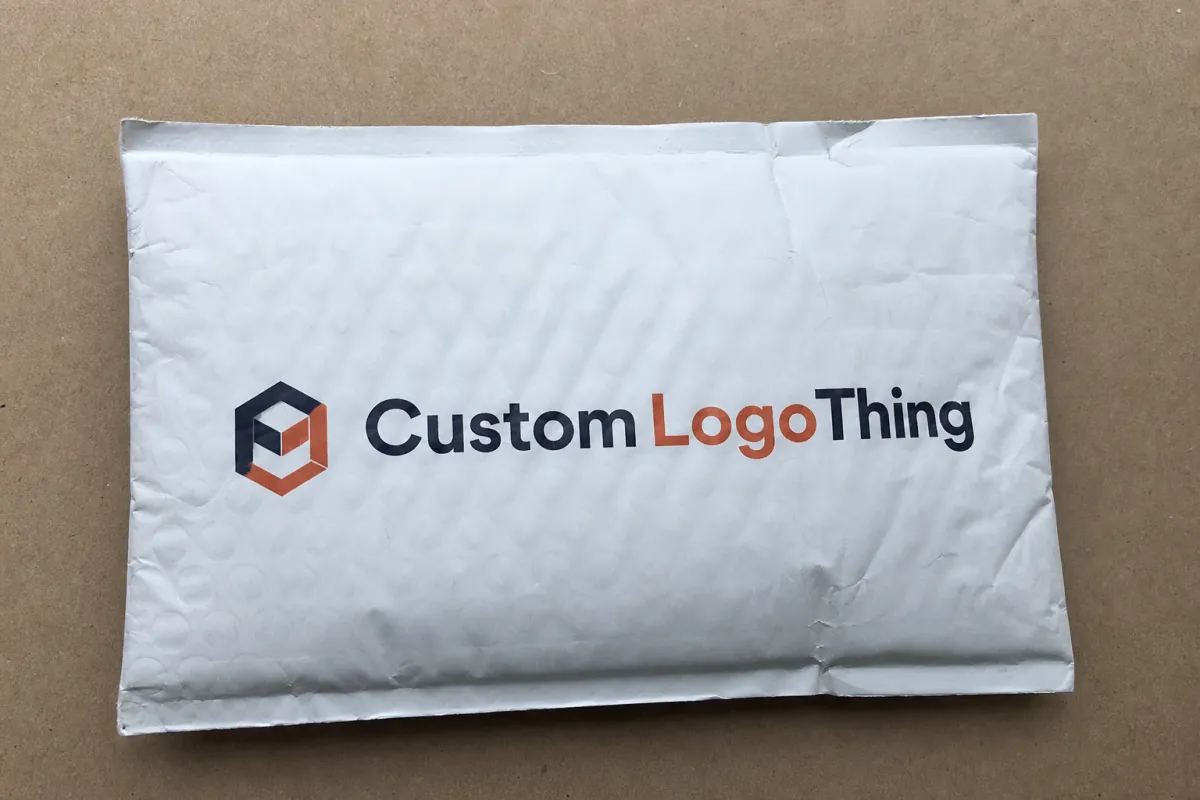
The first thing auditors notice is not always the artwork. It is the structure. A mailer can look premium from across the room and still fail the moment it buckles, scuffs, or opens too easily during handling. In a factory review, the package has to behave like part of the process, not like a fancy accessory someone tossed in for marketing points.
Printed padded mailers usually combine an outer face stock or film, an internal cushioning layer, a bonded seam, and a closure system. Depending on the build, the outer face might be kraft paper, coated paperboard, or polyethylene film. Common paper-facing options include 128gsm to 170gsm kraft or a premium coated board for stronger print coverage. The cushioning might be bubble, fiber padding, or a paper-based pad. A standard bubble layer may use a 3/16 inch profile, while paper-padded constructions often use a folded kraft or embossed liner. Each layer changes the hand feel, puncture resistance, and print durability once the package gets stacked, sorted, tossed, and moved again.
Sample kits need extra scrutiny because they often sit between branding and documentation. One kit may carry samples, a testing insert, a return card, and a regulatory leaflet. Another may hold several small parts that need to stay in a specific layout so the recipient can inspect them in order. If the outer mailer tears, the seal gives up, or the graphics rub away, the buyer sees a packaging problem before they see the product.
Auditors also care about the spec package. A flat artwork file is not enough. They want the finished size, the closure method, the cushioning style, the target insert weight, the dimensional tolerance, and the pack-out method the warehouse will actually use. Missing details turn a review into a guessing contest, and guessing is a good way to waste everyone's time.
From a sourcing standpoint, the phrase audit-friendly packaging actually needs a measurable definition. The goal is not just a branded mailer. The goal is a package that behaves predictably enough for QA, procurement, and the packing team to agree on what acceptable looks like without turning the meeting into a blame exercise.
A useful early question is blunt: does the mailer protect the sample kit, or does it merely hold it? That difference matters. A package can survive a short walk from one office to another and still fail after a day of warehouse movement, courier compression, and truck heat that turns everything into a stress test.
How Printed Padded Mailers for Sample Kits Work in Real Shipping Flows
To judge a mailer properly, picture the route. A sample kit gets picked from inventory, packed by hand or semi-automatically, sealed, cartonized or bulk-shipped, then handled again during pick-up, line haul, and final delivery. Every step adds a different kind of abuse. The closure sees tension. The seams see flex. The outer face sees friction. The print sees abrasion from the kind of contact no one bothered to model in the first meeting.
The outer layer is usually the part people notice first, but the cushioning layer often decides whether the package passes. A thin face stock can print beautifully and still fail if the padding is too light for the insert weight. A heavier structure can protect well and still become annoying if it is too bulky for standard carton counts or a busy pack station. That tradeoff shows up fast when a production line tries to pack the same sample kit twenty times in a row.
Printed surfaces behave differently depending on the ink system and top coating. Water-based inks on kraft can look clean but need a suitable varnish or aqueous coating to resist scuffing. UV ink on coated paper usually holds detail better, while flexographic print on film can be efficient for larger runs if the artwork is not overly complex. If the mailer carries a logo, QR code, batch identifier, or compliance mark, the ink needs to stay readable after normal handling. Glossy finishes can look sharp and still show scuffs. Matte finishes hide some marks and can still look tired if the wrong coating is used.
Kit content changes the stress profile too. A flat set of leaflets behaves very differently from a kit with glass vials, molded parts, metal tools, or boxed inserts. Thickness, edge geometry, and item weight push against the seams in different ways. A package that feels fine at 3 ounces can act very differently at 10 or 12 ounces, especially if the contents press into one corner like they have a grudge.
Shipping-safe and brand-safe are not always the same thing. A mailer can survive transit and still be a poor sample presentation package if it arrives wrinkled, overfilled, or annoying to open cleanly. For sample programs, presentation is part of the job. It does not get a pass because someone in procurement hates aesthetics.
If you are narrowing the format, compare the structure against simpler mailers. For lighter programs, Custom Poly Mailers may be the better fit. For sample kits that need built-in protection and a more finished unboxing moment, printed padded constructions usually strike a better balance between protection and presentation.
Key Factors That Decide Whether the Mailer Passes Review
Material selection is usually the first gate. A paper-backed padded mailer gives a more natural feel and can print cleanly, while a poly-based padded mailer usually brings better moisture resistance and tear strength. A common paper build might use 128gsm kraft facing over a 3/16 inch bubble liner; a heavier presentation build might use coated board laminated to a fiber pad. Recycled-content structures may help with sustainability targets, but they still need to be checked against the load, closure, and print requirements of the kit. The right choice depends on how much abuse the package will see, how premium it needs to feel, and whether the brand wants a paper-forward or film-forward look.
Closure performance is another common failure point. A pressure-sensitive strip that looks fine in the sample room may lose bond on a dusty packing line or after someone touches the seal area three times before closing it. Peel-and-seal closures are popular because they are fast, but the adhesive strength has to match the insert weight and the transit length. For sample kits under about 8 ounces, a standard hot-melt or pressure-sensitive closure may be enough; for heavier builds, a wider adhesive strip or double-seal flap is often safer. If the mailer is supposed to be tamper-evident, the opening path should be obvious and the reseal path should not invite bad behavior.
Print quality is not just about appearance. Auditors often ask whether the logo remains legible after handling, whether barcodes or batch numbers scan correctly, and whether the artwork stays aligned after folding or converting. A design that depends on tight registration or a very small reverse-out can become harder to approve, especially if the mailer runs on equipment that has normal variation instead of magical precision. For multi-color work, buyers often ask for an approved deltaE target, a barcode scan test, and a visible acceptance limit for scuffing on the high-contact zones.
Protection requirements need plain language. How much cushioning is needed? What is the acceptable puncture risk? Is a drop test required? Some programs only need a basic transit check. Delicate samples may need distribution testing against ISTA test methods or the test logic used in ASTM D4169. A typical internal pre-audit check might include a 4-foot drop on corners and edges, plus a short compression stack test that matches the warehouse carton pattern. No one gets extra points for over-engineering every kit, but vague expectations always come back to bite.
Sustainability claims and labeling deserve the same attention. If the material is being described as recycled, recyclable, or fiber-based, the claim needs to match the actual construction and local end-of-life reality. For fiber sourcing and chain-of-custody questions, the FSC framework is a common reference point. Packaging teams also need to make sure the label language does not oversell the story. A claim that sounds slick in a deck and falls apart in the spec sheet just creates cleanup work later.
Here is a practical comparison that many buyers use while deciding between common padded mailer builds:
| Option | Typical Strengths | Common Watchouts | Approx. Unit Range at 5,000 pcs |
|---|---|---|---|
| Paper-backed padded mailer | Cleaner print feel, better brand presentation, easier paper-forward story | Can scuff, can absorb moisture, cushioning may be lighter than expected | $0.42-$0.85 |
| Poly-based padded mailer | Good tear resistance, moisture resistance, strong handling performance | Less paper-like feel, print finish choices matter, may read less premium in some brands | $0.38-$0.78 |
| Recycled-content padded mailer | Supports sustainability goals, often easier to position in procurement review | Color consistency can vary, recycled fibers may change stiffness and print texture | $0.45-$0.95 |
| Heavy-duty custom padded build | Best for fragile inserts, stronger seams, better puncture resistance | Higher cost, higher bulk, may reduce carton density and raise freight | $0.60-$1.35 |
The numbers above are planning ranges, not promises. A 5,000-piece run with one-color print and a standard seal can land near the lower end, often around $0.15-$0.24 per unit for simpler paper mailers or plain padded stock depending on size, liner type, and print coverage, while a fully printed sample kit mailer with heavy cushioning and a specialty finish usually lands higher. A simple one-color logo on a standard size is one thing; full-coverage branding with a special coating and heavier padding is another. Regional labor, freight, and conversion method can move the number more than people expect.
Process and Lead Time: From Artwork Proof to Production Run
Most delays happen before the machine ever runs. A good schedule starts with a clear brief: finished dimensions, insert weight, artwork placement, closure style, target quantity, and any compliance notes. Once that is in place, the supplier can build a proof, confirm the material, and flag problems with bleed, seam placement, or print limits. If the brief is fuzzy, the proof cycle stretches. That part is almost impressively predictable.
Custom sizes are the first thing that slow a project down. Standard dimensions are easier because tooling and material usage are already known. Change the size and the team has to recheck fold lines, seal position, and carton counts. Special print effects can add another step, especially if the design uses metallic ink, a heavy solid flood, or a coating that changes the feel of the face stock. A mailer specified at 9 x 12 inches with a 1.5 inch flap will move faster than a unique size that needs new cutter setup and extra converting checks.
Approval flow matters just as much as manufacturing lead time. In many companies, packaging, procurement, QA, brand, and operations all want to review the sample. One group cares about appearance, another about shipping performance, another about cost, and another about line speed. If the review sequence is not mapped in advance, the mailer can sit untouched even after the supplier has finished the sample.
Physical samples are essential for printed constructions. A PDF proof can confirm layout, but it cannot show how the package loads, how the seal grabs, or how the printed surface behaves when rubbed. A flat visual proof can also hide the shade shift that jumps out under warehouse lighting. For sample kits, the best approval route is usually a live pack-out sample with the real inserts inside, not an empty sleeve that flatters everyone and answers nothing.
A realistic lead-time plan often looks like this:
- Brief and specification review: 1-3 business days.
- Artwork proofing and revision: 2-5 business days.
- Physical sampling: 3-7 business days, depending on the build.
- Audit review and internal approval: 2-10 business days, depending on how many teams must sign off.
- Full production after approval: often 10-18 business days for standard custom builds, or about 12-15 business days from proof approval for a repeatable spec with common materials.
- Transit time: depends on route and freight method, and it should be added separately.
For many programs, the full timeline from first brief to landed inventory ends up longer than the production run itself. That surprises teams who only look at machine time. Proofing, sample transit, revision loops, and shipping buffers all live inside the critical path, and each one can move a launch date.
If the audit is tied to a customer deadline or product launch, build a buffer. A two-day delay can force rush freight or a last-minute change to the packing plan. Those costs rarely show up in the first quote, which is convenient for the quote and annoying for everyone else.
Cost, Pricing, MOQ, and Quote Details to Compare
Cost starts with structure. Size, padding type, finish, number of ink colors, and closure method all drive the quote. A simple branded mailer with modest print coverage and standard padding will always cost less than a custom build with heavier cushioning, a specialty seal, and full-coverage graphics. That sounds obvious, but this is where buying conversations go sideways, because teams compare the unit price and ignore the cost of getting to approval.
Minimum order quantity can matter more than unit price in low-volume sample programs. A small run spreads setup, proofing, and print preparation across fewer pieces, so the per-unit cost rises. If the MOQ is too high, the buyer may get stuck with excess inventory. If the MOQ is too low, the seller may price the run so aggressively that the project stops making sense. The sweet spot usually matches the sampling calendar and warehouse turnover, not just the accountant's favorite number.
For budgeting, many teams use a rough planning range like this: simple printed Padded Mailers for Sample kits can land around $0.15-$0.24 per unit at 5,000 pieces for basic sizes and limited print, while paper-backed or heavier custom builds often sit closer to $0.42-$0.85 and may rise to $1.35 for oversized, full-coverage, or extra-protective designs. If the project uses a premium face stock, a specialty coating, or a more complex insert cavity, the first quote can move fast. Geography, freight method, and whether the run is paper-dominant or film-dominant also affect the final number.
When comparing quotes, ask for the whole picture. That means freight, setup charges, sample fees, plate or tooling fees if relevant, revision charges, and any cost tied to rework or relabeling. A quote that looks lower on the first page may become the expensive one after the add-ons show up. Freight is especially easy to miss on custom packaging because the product itself is light, but carton count and dimensional weight still matter.
One practical way to compare suppliers is to ask for the same information in the same format. If one quote lists size, material, closure, and print coverage while another only gives a unit price, the comparison is not fair yet. Ask both sides to quote the same approved spec and the same target quantity. That is the quickest way to see whether the price difference is real or just a side effect of different assumptions.
Here is a straightforward checklist buyers can use during quote review:
- Finished size and tolerances
- Insert weight and kit contents
- Paper-backed, poly-based, or recycled-content construction
- Print coverage and number of colors
- Closure type and seal strength
- Any required compliance or documentation
- Sample charge and freight terms
- Production lead time after final approval
The cheapest quote can become the most expensive choice if the mailer fails an audit and has to be remade. That risk grows fast for sample kits with a fixed launch window. A restart costs waste, yes, but it also delays sales, training, testing, or customer review. Those delays are never included in the bargain price.
From a packaging buyer's point of view, it usually makes sense to spend a little more on the right structure rather than chase the lowest number on a mismatched spec. A dependable closure, a better seam, and a printable face that does not scuff easily can save money across the full program, even if the first purchase order looks slightly higher.
Common Mistakes That Trigger Audit Pushback
The most common mistake is a vague spec. A buyer sends over a logo, a rough size, and a note that says "needs padding," then expects the supplier to fill in the blanks. That approach almost guarantees revision. If the insert weight, seal method, and appearance standard are not stated clearly, the sample will probably miss someone's expectation during review.
Another frequent issue is assuming all print behaves the same. It does not. A design that looks crisp on a digital proof may smear, crack, or scuff once it becomes a real mailer and moves through packing, palletizing, and shipping. Full-coverage color behaves differently than a simple mark, and matte surfaces behave differently than glossy ones. If the audit team handles the package after a few hours in transit, weak spots show up fast.
Fit problems are easy to overlook. Teams sometimes approve a mailer based on the outer size alone, then discover that the sample kit is hard to load, too loose to stay neat, or so tight that the closure strains. That is why a real pack-out sample matters. The contents should be the actual content, or a close physical proxy, not an empty envelope with hopeful guessing taped to it.
Documentation gaps can also stall approval. If the material declaration is incomplete, the revision history is unclear, or the carton labeling does not match the approved spec, the audit team starts questioning the whole package. A lot of packaging trouble begins with inconsistent paperwork, not with the mailer itself. Bureaucracy: always thrilled to be the problem.
Changing too many variables at once is another way to create confusion. If size, artwork, material, and seal style all change in one revision, it becomes hard to know what caused the improvement or failure. Good corrective action depends on isolate-and-test discipline. One change at a time gives the team a cleaner path to approval.
Audit pushback is usually less about surprise and more about ambiguity. The more exact the spec, the easier it is to pass review without rework.
Expert Tips for Cleaner Approvals and Better Sampling
A one-page specification sheet saves time. It should list finished dimensions, target insert weight, cushioning style, closure type, print coverage, approved artwork file, and any compliance notes. If the package has to be packed a certain way, include that too. Teams that keep the spec tight usually move through approval faster because everyone is reading the same document instead of three slightly different versions of the truth.
Order a physical sample under realistic conditions. That means the actual contents, the actual packing table, and the same sealing motion the warehouse team will use in production. A package can look perfect on a white table and still behave badly when packed by operators working at line speed. A sample that passes real handling is worth far more than a nice render.
Use pass-fail criteria before the sample arrives. Decide what counts as acceptable print variation, seal strength, scuffing, and edge damage. If the team knows the thresholds in advance, the approval conversation stays tied to measurable checks instead of personal preference. That matters in audits, because subjective reviews wander. They always do.
Keep one master approved version for reorders. When the first run is approved, preserve the exact spec, the approved print file, the material description, and any packing notes. That single source of truth becomes valuable later, especially when a reorder needs to match the original batch and the people involved in the first approval are no longer around.
Do not overvalue decorative extras. In sample kit packaging, small structural improvements usually matter more than special finishes. A stronger seam, a more reliable adhesive, or a better sized cavity can do more for audit success than a flashy coating or an extra print effect. Customers notice when the package feels controlled and dependable.
Some teams also compare the mailer against other packaging formats before locking the spec. If the application is still fluid, the right answer may be a lighter mailer, a flat pack, or a different presentation structure. That is one reason the FAQ on the site can be useful during internal alignment; it gives sourcing and operations a quick reference point before the formal audit paperwork starts moving.
Next Steps After the Factory Audit
Once the audit is complete, turn every comment into a clean revised spec sheet. Do not leave notes buried in email threads or meeting minutes. Capture the approved material, dimensions, print file, seal method, packing orientation, and any special instructions in one place so the production team follows the same version the auditors saw.
If the audit comments came from a real pack-out sample, ask for one final physical sample using the exact kit contents before release. That extra round is especially useful when the sample kit includes glass, sharp corners, dense inserts, or multiple components with uneven weight. The goal is to confirm that the approved structure still behaves correctly once the real contents are in play.
Build a timeline with a buffer. The smart schedule includes proof approval, sample review, revision time, full production, transit, and a safety margin for compliance changes. Even when the supplier is responsive, approvals usually move slower than the machine. If the program has a launch date, the calendar should assume that reality instead of hoping it will politely disappear.
Make sure the packing team receives the same instructions procurement used to approve the mailer. That sounds basic, but it is one of the most common handoff failures in packaging programs. A beautiful spec can still fail in production if operators never see the approved pack-out method. The first lot should match the audited version, not a memory of it.
For teams comparing the mailer against other branded formats or building a broader packaging program around the same sample launch, the Custom Packaging Products page is a practical place to keep the conversation organized. It is often easier to keep one approved structure and adapt it than to restart the sourcing cycle from scratch.
When the product team wants a more film-forward option, Custom Poly Mailers can serve as a reference point for comparing protection, branding, and cost. Not every sample kit needs the same cushioning, so comparing formats early can save a redesign later.
At the finish line, the goal is not just a mailer that looks good in a mockup. The goal is a package that keeps its shape, supports the brand, survives the route, and gives the audit team confidence that the spec can be repeated. For teams managing printed Padded Mailers for Sample Kits factory audit questions, the practical standard is simple: build to the real contents, document the approved setup, and make sure the first production lot matches what passed review.
FAQ
What do factory audit questions for printed padded mailers usually cover?
They usually start with the basics: material type, cushioning thickness, and closure strength. From there, auditors often ask whether the print stays legible after handling, whether the package survives normal transit stress, and whether there is a clear approved spec sheet with dimensions, sample photos, and any material declarations. They may also ask for the exact face stock, for example coated board or kraft-faced bubble mailer, plus the tested kit weight and pack-out orientation.
How can I test printed padded mailers for sample kits before approval?
Pack them with the real sample contents, seal them the way the warehouse will seal them, and run them through a short internal handling routine that includes stacking, carrying, and opening. Afterward, check for scuffing, seal failure, edge splitting, and print damage. A basic test set often includes 10 to 20 sample units, a short drop sequence, and a visual check after simulated courier handling. The test route should mirror your normal packing flow as closely as possible.
What information should I send for an accurate quote on sample kit mailers?
Send the finished dimensions, insert weight, print coverage, closure type, and target quantity. It also helps to include whether you need recycled content, custom artwork, or audit documentation. A target ship date is useful too, because it helps the supplier factor in proofing and production timing. If you already know the face stock or liner, include that as well, such as kraft facing, coated board, or a 3/16 inch bubble liner.
Why does MOQ affect the unit cost so much for printed padded mailers?
Because setup work, print preparation, and sample approval get spread across fewer pieces on smaller runs. Custom sizes and special print requirements also raise the minimum economical order. Standard dimensions and simpler artwork usually lower the cost per piece, especially when the run is large enough to absorb setup efficiently. At 5,000 pieces, a simple structure may sit around $0.15-$0.24 per unit, while a more finished custom padded mailer usually costs more.
How far in advance should I plan lead time for printed padded mailers for sample kits?
Plan enough time for artwork proofing, physical samples, audit review, and final production, then add shipping buffer on top. For many programs, production often takes 12-15 business days from proof approval if the spec is standard and the material is already confirmed. If the kit includes heavier inserts, special printing, or multiple approval steps, the schedule should be longer. A buffer matters because the first approved lot needs to arrive before launch or customer sampling starts.


