Buyer Fit Snapshot
| Best fit | Branded Padded Mailers for Sample Kits projects where brand print, material claims, artwork control, MOQ, and repeat-order consistency need to be specified before quoting. |
|---|---|
| Quote inputs | Share finished size, material target, print colors, finish, packing count, annual reorder estimate, ship-to region, and any compliance wording. |
| Proofing check | Approve dieline scale, logo placement, barcode or warning zones, color tolerance, closure strength, and carton packing before bulk production. |
| Main risk | Vague material claims, crowded artwork, missing packing details, or unclear freight terms can make a low unit price expensive after revisions. |
Fast answer: Branded Padded Mailers for Sample Kits: Sustainable Options should be specified like a repeatable production item. The safest quote records material, print method, finish, Artwork Proof, Packing Count, and reorder notes in one written spec.
Production checks before approval
Compare the actual filled-product size with the drawing, then confirm tolerance on folds, seals, hang holes, label areas, and retail display edges. Reserve space for logos, QR codes, warning copy, and material claims before decorative graphics fill the panel.
Quote comparison points
Review material grade, print process, finish, sampling route, tooling charges, carton quantity, and freight assumptions side by side. A quote is only useful when the supplier can repeat the same color, closure quality, and packing count on the next order.
Branded Padded Mailers for Sample kits sustainable material options can change how a buyer reads your product before the kit is even opened. That sounds dramatic, but it is usually true. If the outer mailer feels generic, flimsy, or awkwardly "eco" without actually being practical, the package starts with a disadvantage. The sample inside may be excellent. The first impression still gets dinged.
Sample kits are not standard ecommerce parcels. They land on desks, in mailrooms, at editorial offices, in retail buying departments, and sometimes in a creator's apartment that doubles as a packing station. The recipient is not just waiting for a delivery. They are making a quick judgment about whether the brand looks credible, organized, and worth their time. A beauty brand shipping a serum vial, a food startup mailing seasoning packets, and a supplier sending textile swatches all need the outer mailer to do part of the pitch.
The sustainability brief does not have to fight the branding brief. The right structure can protect the contents, keep the unboxing experience clean, and use recycled content, kraft paper, FSC certified substrates, or lower-impact padding without making the package feel cheap. The catch is obvious: the material mix has to work in transit, not just in a mockup. A mailer that photographs well but tears in a courier bag is not sustainable. It is just waste with a good pose.
A sample kit gets one shot at being taken seriously. If the mailer looks weak, oversized, or hard to recycle, the package starts behind before the first tear strip is pulled.
For packaging teams, the real question is not whether sustainable mailers exist. They do. The question is which one fits the contents, the shipping lane, the budget, and the brand story without pretending those inputs all want the same thing. They do not. A rigid cosmetic sample set, a stack of print collateral, and a glass bottle with a foil seal all need different answers. That is why material choice, print method, lead time, and total program cost matter together. If you are building a broader packaging system, the same logic applies across Custom Packaging Products, not just sample kits. If you are comparing a padded format against a lighter poly option for certain launches, our Custom Poly Mailers page is a useful reference point.
Why branded padded mailers for sample kits can reshape first impressions
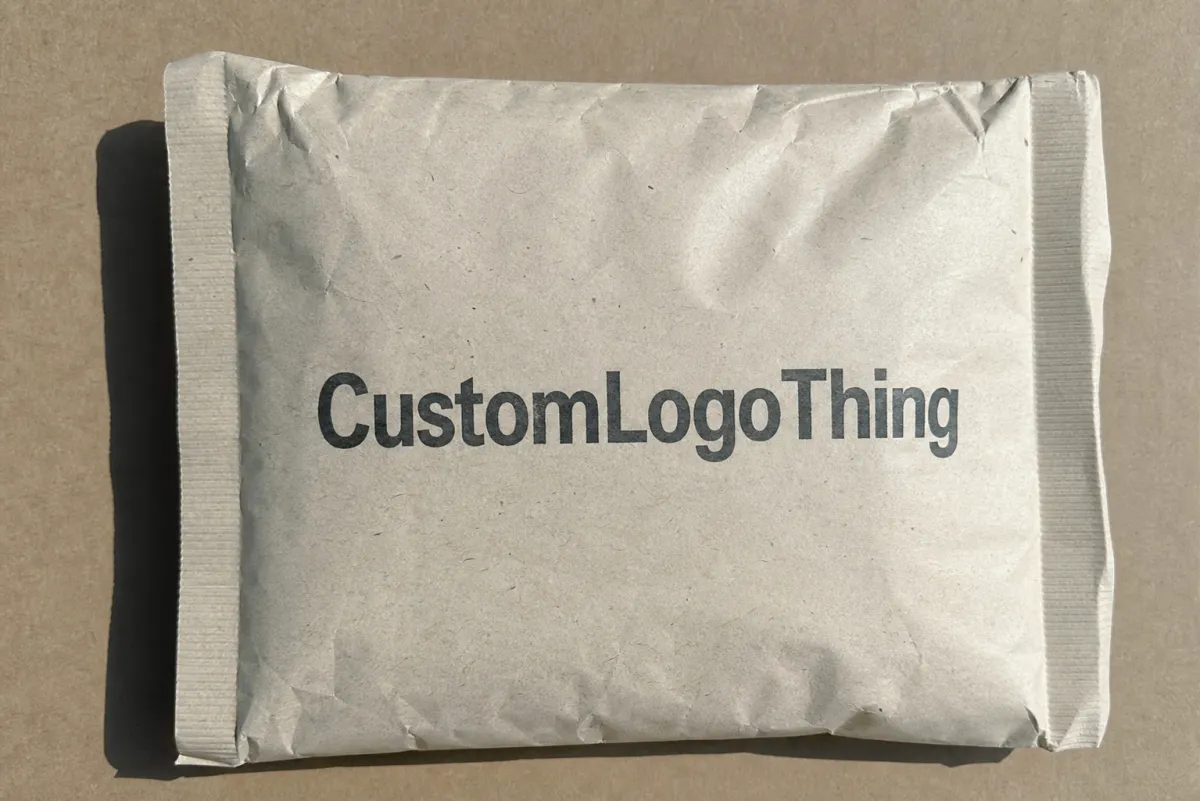
The outer mailer does more than move a product from one place to another. It frames the product. A plain mailer can be fine for low-stakes shipments, but sample kits live in a different lane. They are tied to persuasion. The recipient is not just waiting for delivery. They are deciding whether the brand feels credible enough to take seriously.
That is why branded Padded Mailers for Sample kits have to do two jobs at once. They need enough cushioning to protect what is inside, and they need enough visual control to say something accurate about the brand. A matte kraft finish can read practical and environmentally conscious. A clean white surface can feel clinical, premium, or beauty-forward. Neither is automatically better. The right one depends on the sample, the audience, and the message the package needs to send before anyone opens it.
Damage changes how people judge value. A dented vial, a scuffed sachet, or a mailer that splits at the seam can make the whole kit feel cheaper than it was. That is not a small presentation issue. It affects response rates, follow-up conversations, and whether a buyer thinks the product line will hold up in real use. A kit with a $2 sample and a damaged outer can lose more trust than a generic mailer ever gained.
Sample kits also travel differently from standard ecommerce orders. They move through more hands and often get more scrutiny. A retailer review kit may pass through office mail, a receptionist, a buyer's desk, and then a team meeting. An influencer kit may be photographed before it is opened. A press sample may sit on a media shelf for days. In those situations, the outer package becomes part of the story whether anyone planned for it or not.
The sustainability angle makes that story more sensitive. A plastic-heavy mailer may protect well, but it can clash with a brand that sells natural, refillable, or low-waste products. A mailer made with recycled content, kraft paper, or paper-padded construction can bring the packaging language back in line with the brand promise. The catch is simple: the environmental claim has to match the actual structure, not just the front graphic. If the kit uses a paper shell with a plastic bubble liner, buyers can spot the gap fast.
For launch kits, the outer mailer is where economics and optics meet. That matters most in low-quantity, high-touch programs where every unit is seen by someone who matters. A mailer that feels intentional can lift the perceived value of the whole kit without adding much to the unit cost. That is a nice little trick, and packaging should do more of those.
How branded padded mailers for sample kits sustainable material options work
A padded mailer looks simple, but each layer affects performance. The outer shell handles print and abrasion. The cushioning layer absorbs impact. The closure keeps the package shut through sorting, stacking, and last-mile handling. The print surface changes the look and the end-of-life story. Shift one piece and the rest of the structure reacts.
In practice, Branded Padded Mailers for Sample kits sustainable material options tend to fall into a few familiar families.
- Recycled kraft paper mailers - A paper-based shell with paper or fiber padding, often using 60% to 100% post-consumer content. These work well where curbside recyclability and a natural look matter.
- FSC certified paper constructions - Useful when procurement wants a documented sourcing signal for responsibly managed fiber. The FSC mark is not a medal, but it does make the sourcing story cleaner.
- Recycled poly mailers - Better for moisture resistance and puncture resistance, especially in humid storage or longer shipping lanes. These can be lighter than paper alternatives, which helps freight efficiency.
- Paper-padded hybrids - A practical middle ground when the contents need more cushioning than a flat mailer can provide, but the brand still wants a paper-led look.
- Bio-based or compostable alternatives - These can work in narrow programs, but they need a hard look. Compostable does not mean widely compostable, and local infrastructure varies a lot.
The best sustainable material options are not always the ones that look the most eco-friendly in a mockup. A recycled kraft outer with modest print can outperform a heavily coated premium paper if the coating makes recycling harder. A recycled poly mailer may be the better environmental choice on a wet route if it prevents damage and replacement shipments. Sending a damaged sample and then replacing it usually costs more material, more freight, and more time than choosing the right barrier up front. That math is not subtle.
Branding can happen in a few different ways. Flexographic printing is common for longer runs and clean spot color work. Digital printing is useful for shorter runs, variable content, or faster turnarounds. Labels can support low-volume tests, but they may complicate recyclability if the outer is meant to stay paper-recyclable. Minimal ink coverage usually preserves both the look and the end-of-life story better than a full flood of color, especially on kraft paper where the substrate itself is part of the design.
Concrete material specs matter too. A white premium mailer might use a 350gsm C1S artboard outer with an internal paper pad for a polished beauty or wellness kit. A sturdier mailer for heavier contents might use a 250gsm kraft liner paired with 100gsm to 120gsm padding. For lightweight apparel swatches or printed cards, a 200gsm to 250gsm kraft shell can be enough if the route is short and the contents are flat. Those details change the final feel more than the logo does.
Sustainability is not just the material. A well-sized mailer that cuts excess void space, reduces filler, and lowers dimensional weight can do more for the program than switching from one substrate to another. Right-sizing matters. So does reducing unnecessary inserts. A sample kit packed into a custom mailer with a snug fit and a simple paper pad can be lighter, cheaper, and easier to handle than a larger package stuffed with filler nobody wanted.
For teams comparing options, testing matters. Package testing against procedures from the International Safe Transit Association or methods such as ASTM D4169 gives a more realistic read on transit performance than a visual review alone. If the sustainability brief includes fiber sourcing, the Forest Stewardship Council is a useful reference point for certified paper and board sourcing.
Key factors in choosing sustainable materials for sample kit mailers
The first filter is always the contents. Glass vials, liquid sachets, cosmetic tubes, fabric swatches, printed collateral, and slim electronics all need different levels of protection. A mailer that works for folded apparel samples may fail badly for a small glass bottle. If the kit includes mixed components, the mailer has to be chosen around the most fragile item, not the easiest one to pack.
That is where a lot of programs go off the rails. The team starts with the brand story, not the shipping problem. The result can be a handsome mailer that does not protect corners, seals poorly, or compresses too much when stacked. If the kit will move through multiple distribution points, or if it is likely to sit in a warehouse before shipping, the design needs better puncture resistance and a more reliable closure than a single-zone local mailing might need.
Barrier performance matters too. Moisture resistance can be a real issue for paper-based formats if the route is humid, the kit ships during a rainy season, or the recipient may not open it right away. Tear strength matters for retail and buyer samples because the package may be repacked, couriered internally, or opened by hand under pressure. For sensitive products, puncture resistance and seam integrity matter more than the mood board on the proof.
Brand aesthetics still count. Kraft paper creates a strong sustainability signal, but it does not fit every identity. Some brands need a white surface because the printing must stay clinically clean or the color palette depends on contrast. Others want a tactile recycled look that says natural ingredients, low waste, or handmade quality. The right answer depends on whether the sample kit is trying to feel premium, technical, eco-friendly, or all three without looking confused.
Material thickness is part of that decision. A 350gsm C1S artboard outer can feel crisp and premium, but it may be overkill for a light kit and can add cost fast. A 120gsm kraft wrap may be plenty for a flat promo set, but it can buckle if the kit contains a heavier bottle or a metal component. Teams should match the board weight to the contents instead of treating every kit like a tiny presentation box.
End-of-life claims need a careful hand. A paper mailer with a plastic bubble liner is not the same as a fully paper-padded option. A compostable outer that only works in industrial facilities does not help much if the local system cannot process it. Teams should check real disposal pathways, not just vendor language. The EPA's recycling guidance is a solid place to start: EPA recycling guidance.
Order volume also changes the answer. At small quantities, recycled material with specialty print can cost more per unit than expected, especially if setup or sourcing is involved. At larger volumes, the same material can become much more competitive. Storage conditions matter too. If the mailers will sit in a humid dock or a warm stockroom, paper quality and adhesive performance deserve attention. If the brand uses multiple sample kit configurations, the mailer should be flexible enough to handle variability without creating three or four SKUs unless that actually solves a real problem.
Practical rule: choose the mailer based on the most fragile product, the longest shipping lane, and the clearest end-of-life path you can honestly support. If one of those three is weak, the package will feel compromised.
Process and timeline for designing and producing mailers
A good mailer project usually moves through a predictable sequence: brief, content audit, size selection, material selection, artwork, proofing, sampling, production, and shipping. The order matters more than many teams expect. If artwork gets approved before the size is locked, registration and placement problems show up later. If the material gets selected before the contents are measured, the package may end up too tight or too loose. Both mistakes are common. Both are expensive.
Start with the content audit. List every item in the sample kit, along with dimensions, weight, and any brittle or liquid components. Add the shipping reality: domestic or international, standard parcel or courier, flat storage or bulk freight. Once that information is on paper, sizing decisions become much less subjective. A beauty kit with two vials, a card insert, and a mini tube may fit a flat 6 x 9 mailer. A fabric sample pack with a brochure and a lidded jar may need a deeper padded format. That alone can cut days of back-and-forth from the project.
Lead time is usually driven by approvals, not the print press. Simple stock mailers with custom print may move in about 12-15 business days from proof approval, depending on vendor and quantity. A fully custom structure, especially one using specialty recycled materials or an unusual closure, can take 15-25 business days or longer. If you need physical samples, add several more days for shipping and review. If the package must be tested, build that in too. Rushed packaging is where small mistakes multiply.
Three decision points tend to slow things down the most:
- Custom dielines - Unique structures need more design attention and more proof review.
- Specialty inks or finishes - Soft-touch effects, heavy coverage, or unusual color matching can slow approvals and sourcing.
- Sustainability claims - If the mailer will reference recycled content, FSC certification, or compostability, the support documentation should be checked before print.
Testing deserves more attention than it usually gets. A desk-side mockup is useful for feel and appearance, but it does not tell you what happens when the kit gets dropped, compressed, or shifted in transit. For samples that matter, a simple drop test using the actual kit is worth the time. For more formal programs, ISTA-style tests give a better read on handling than a visual pass alone. That is especially true if the sample kit will ship repeatedly or go to high-value accounts where one damaged mailer can damage the relationship as much as the product.
If you are comparing formats, a stock-based mailer with custom branding is usually the fastest route. Fully custom construction gives more control over fit, padding, and appearance. The tradeoff is time. Many teams think production is the slowest part, but internal sign-off on artwork, sustainability language, and sample approval is often what stretches the schedule. Earlier decisions make the whole project less irritating. Which is rare, so enjoy it when it happens.
For a broader view of how packaging choices affect launch timing and branding, our Case Studies page shows how different packaging formats change presentation and handling in practice. The pattern shows up again and again: the best mailer is usually the one planned around real contents, not a random size from a catalog.
Cost, pricing, MOQ, and quote drivers
Pricing for branded Padded Mailers for Sample kits is driven by more than size. Material grade is usually the biggest factor, followed by print coverage, closure style, cushioning type, and whether the mailer is stock or fully custom. A plain recycled kraft padded mailer usually sits at the lower end of the price range. A branded paper-padded hybrid with custom dimensions and full-color print costs more. Add specialty finishes or complex construction, and the number climbs again.
As a working range, stock-based paper padded mailers with simple branding might land around $0.15-$0.24 per unit for 5,000 pieces, depending on size and print coverage. At lower quantities, the same style may be closer to $0.25-$0.45 per unit. Custom-printed recycled kraft constructions can often run around $0.30-$0.70 each, depending on size and ink coverage. Fully custom, high-appearance sample kit mailers with multiple materials or extra cushioning can move into the $0.60-$1.25 range or higher. These are planning numbers, not promises. Quantity, artwork complexity, material availability, and freight assumptions can shift the quote quickly.
MOQ changes the picture. At lower volumes, the unit price tends to look higher because setup costs are spread across fewer pieces. At larger volumes, recycled materials or FSC certified substrates can become more attractive on a per-unit basis. That is why procurement teams should ask for tiered pricing instead of one flat number. A quote at 1,000 pieces can look very different from one at 5,000 or 10,000, and that gap can decide whether the brand can afford the material it actually wants.
There is also a difference between unit cost and program cost. Unit cost is only part of the story. Freight, storage, spoilage, setup fees, and the cost of damaged samples belong in the total. If a cheaper mailer causes even a small percentage of replacement shipments, the savings can disappear fast. That matters especially for high-value kits where the sample itself costs far more than the outer packaging. A $0.08 saving on the mailer means very little if one damaged bottle triggers a resend that costs $12 to $25 in product and shipping.
The table below gives a practical comparison of common options. The numbers are broad planning ranges, not final quotes, but they make the tradeoffs easier to see.
| Material option | Protection level | Sustainability profile | Typical unit price | Best fit |
|---|---|---|---|---|
| Recycled kraft padded mailer | Good for light to medium contents | Strong paper story, often easier to recycle | $0.15-$0.24 at 5,000 pcs, or $0.20-$0.45 at smaller runs | Beauty samples, printed collateral, lightweight kits |
| FSC certified paper mailer | Good, depending on padding construction | Cleaner sourcing signal with certified fiber | $0.25-$0.55 | Brands with documented sourcing priorities |
| Recycled poly mailer | Very good against moisture and puncture | Uses recycled materials, lighter ship weight | $0.18-$0.40 | Humidity-prone routes, slim but delicate items |
| Paper-padded hybrid | Very good for mixed contents | Balanced structure, often lower waste than oversized cartons | $0.35-$0.85 | Sample kits with multiple components |
| Bio-based or compostable alternative | Varies widely | Can be strong in the right disposal system, but not always practical | $0.45-$1.25+ | Programs with verified end-of-life pathway |
For mailers that sit between a standard parcel and a more presentation-led kit, a custom format can make sense if it cuts filler, reduces dimensional weight, or improves the reveal. That is one reason teams exploring branded Padded Mailers for Sample kits sustainable material options should ask for pricing at multiple quantities and with multiple print configurations. A quote that includes exact dimensions, sample weight, desired finish, closure type, and sustainability claims is far more useful than a vague estimate that sounds polite and helps nobody.
If you are still comparing formats at the concept stage, think about the destination as much as the contents. A kit that goes by courier to a single buyer has different economics from a multi-stop retail outreach program. For the first, presentation may justify a more premium structure. For the second, protection and freight efficiency may matter more than elaborate print coverage.
Common mistakes when ordering branded padded mailers for sample kits
The biggest mistake is choosing a sustainable-looking material that cannot survive the trip. That problem shows up more often than teams like to admit. A recycled kraft mailer may look great on screen, but if the seam opens or the padding crushes under a heavy sample, the brand loses credibility right away. Sustainability is not a substitute for performance. It has to hold up beside it.
Oversizing is another frequent problem. A mailer that is too large adds freight cost, increases the amount of filler needed, and creates a more wasteful unboxing experience. It also makes the package feel less intentional. Buyers notice that. So do recipients on social platforms if the kit gets filmed. Right-sizing usually improves economics and presentation in the same move, which is refreshing for once.
Overprinting can create trouble too. Heavy coverage on a paper-based format may reduce recyclability in some contexts, and visually it can crowd out the clean, natural look that makes recycled materials appealing in the first place. A restrained print approach often works better. Strong logo placement, a clear message, and enough blank space for the substrate to show through can communicate confidence without cluttering the package.
Teams also under-test closures, seams, and corners. They approve the artwork, sign off on the material, and then discover the weak point after the first shipment. That is a painful lesson because the failure is usually repeatable. If one mailer tears at the corner, the whole run may do the same thing under the same load. A basic prototype test with real product, real closure, and real handling is the cheapest insurance in the project.
Another hidden risk is vague sustainability language. If the outer mailer uses mixed materials that are hard to separate, or if the padding and shell follow different disposal routes, the recipient may not know what to do with it. That confusion can undercut the sustainability message even if the material choices were thoughtful. A simple disposal callout is often enough, but it has to be accurate for the region where the kits are sent.
Finally, many teams forget to align the mailer with the sample life cycle. If the sample itself is disposable, the packaging should not claim more environmental virtue than the product can support. If the product is premium, reusable, or refillable, the mailer should feel equally considered. The outer package does not need to shout. It needs to match.
One practical check: ask whether the mailer would still look credible if the recipient never opened it. If the answer is no, the design probably depends too much on the contents and not enough on what the packaging is doing by itself.
Expert tips and next steps for better sample kits
The cleanest way to improve a sample kit is to start with the contents, not the mailer. Measure each item. Weigh the full kit. Note the most fragile component. Then choose the mailer size and structure around that reality. That sounds basic because it is. Basic is good. It prevents the two most common mistakes: buying a package that is too big and choosing one that is too weak.
Requesting swatches and a finished prototype is worth the time too. A flat sample tells you very little about how the material feels when folded, sealed, stacked, or handled by a courier. A prototype lets you compare print quality, fiber texture, closure strength, and the way the mailer opens in the hand. For brand teams, that tactile review is often where the final decision gets made. People pretend they decide with spreadsheets. Then they hold the sample and suddenly they have opinions.
A simple scoring sheet can remove a lot of noise. Rate each option on protection, recyclability, brand fit, cost, and lead time. Weight the categories based on the project. A beauty sample kit may care more about appearance and tactile feel. A lab or technical sample may care more about barrier performance and transit reliability. Once the team sees the score, the decision is usually easier to defend.
Real shipping conditions matter more than mockups. A mailer that looks perfect on a clean desk may behave differently in a warehouse, a rainy courier route, or a packed retail mailroom. If the kit is important enough to influence a sale, it is important enough to test under real handling conditions. That can be a short drop-and-tumble sequence or a more formal package test plan.
For brands building a repeatable sample program, it helps to standardize the data you collect every time:
- Contents - dimensions, weight, and fragility of each item
- Shipping lane - local, regional, national, or international
- Material preference - paper, recycled poly, hybrid, or specialty option
- Brand requirement - print coverage, finish, and color targets
- End-of-life claim - recyclable, FSC certified, recycled content, or other verified statement
That kind of record makes the next order faster and more accurate. It also makes quote comparisons easier because vendors are responding to the same brief instead of trying to guess what you meant.
If you are mapping out a larger packaging refresh, the next step is straightforward: define the contents, confirm the sustainability priorities, collect dimensions, request tiered pricing, and approve a prototype before scaling the order. That sequence gives you a much better shot at branded padded mailers for sample kits sustainable material options that hold up in transit, support the brand, and avoid waste that never needed to exist in the first place.
What are the best sustainable material options for branded padded mailers for sample kits?
Recycled kraft and FSC certified paper are strong options when you want a clear sustainability story and a material that is often easier to recycle. Recycled poly or paper-poly hybrids can work better if the kit needs moisture resistance or extra puncture protection. The best choice depends on sample fragility, shipping distance, and whether the mailer needs to fit common local recycling streams. For heavier kits, ask for structure details like 250gsm kraft, 350gsm C1S artboard, or reinforced seams instead of relying on a general eco claim.
How much do branded padded mailers for sample kits usually cost?
Cost depends on size, print coverage, material type, and whether you choose stock or fully custom construction. In broad planning terms, simple recycled or paper-based options may start around $0.15-$0.24 per unit for 5,000 pieces, depending on size and print coverage, while more custom or higher-performance constructions can move well above that. Higher MOQs usually lower the unit price, but the total program cost also includes freight, setup, storage, and the cost of any damaged samples.
How long does production take for custom sample kit mailers?
Stock-based projects usually move faster than fully custom constructions with specialty substrates or print effects. A simple run often takes 12-15 business days from proof approval, while more custom projects often need 15-25 business days or more. Artwork approval, sampling, and sustainability review often take longer than the print run itself, so internal sign-off should happen early.
Are paper padded mailers strong enough for fragile sample kits?
Often yes, if the contents are light to medium weight and the mailer is sized correctly. Fragile items may still need inserts, dividers, or a hybrid structure for better protection, especially if they include glass, liquids, or sharp edges. A drop test with the actual sample kit is the best way to confirm performance before a full run.
What should I ask for in a quote for branded padded mailers for sample kits?
Ask for exact unit pricing at multiple quantities, not just one tier. Request details on MOQ, material composition, print method, lead time, and freight assumptions, and include sample dimensions, weight, and any required sustainability claims. That level of detail keeps branded padded mailers for sample kits sustainable material options comparable across vendors and reduces surprises once production starts.