Buyer Fit Snapshot
| Best fit | Printed Padded Mailers for Skincare Launches Quote Checklist projects where brand print, material claims, artwork control, MOQ, and repeat-order consistency need to be specified before quoting. |
|---|---|
| Quote inputs | Share finished size, material target, print colors, finish, packing count, annual reorder estimate, ship-to region, and any compliance wording. |
| Proofing check | Approve dieline scale, logo placement, barcode or warning zones, color tolerance, closure strength, and carton packing before bulk production. |
| Main risk | Vague material claims, crowded artwork, missing packing details, or unclear freight terms can make a low unit price expensive after revisions. |
Fast answer: Printed Padded Mailers for Skincare Launches Quote Checklist should be specified like a repeatable production item. The safest quote records material, print method, finish, Artwork Proof, Packing Count, and reorder notes in one written spec.
Production checks before approval
Compare the actual filled-product size with the drawing, then confirm tolerance on folds, seals, hang holes, label areas, and retail display edges. Reserve space for logos, QR codes, warning copy, and material claims before decorative graphics fill the panel.
Quote comparison points
Review material grade, print process, finish, sampling route, tooling charges, carton quantity, and freight assumptions side by side. A quote is only useful when the supplier can repeat the same color, closure quality, and packing count on the next order.
Printed Padded Mailers for Skincare Launches Supplier Quote Checklist
Launch teams usually ask for a Printed Padded Mailers for skincare Launches Supplier Quote checklist after the first sample lands and the conversation gets real. The mockup looks fine until someone asks whether the fold will stay clean, whether the closure will hold after a warm truck route, and whether the bottle inside will arrive without scuffed corners or a bruised label. That is the point where packaging stops being a design exercise and becomes an operations problem.
Skincare needs more from outer packaging than a generic mailer with a logo on it. The mailer is part of the product presentation, and for direct-to-consumer shipments it often acts like the shelf display. A customer may never touch the retail carton until the parcel is already open, which means the outer package has to carry first impression, protection, and brand tone all at once. If it arrives bent, oily, overprinted, or half-open, the launch starts with a dent you cannot hide later.
Purchasing teams see the other side of the equation. A better mailer can lower damage claims, reduce replacement shipments, and keep the first month of a launch from turning into avoidable refund noise. Nobody wants a packaging choice that looks cheap on a quote and expensive in returns. The buyer is not only comparing padding. The buyer is choosing a printed packaging format that has to balance structure, branding, cushioning, shipping abuse, and unit cost at the volume the launch can actually support.
Use the checklist below to compare supplier quotes on facts instead of impressions. If the brief includes a serum, moisturizer, mask set, subscription kit, or sample pack, the details here will keep the comparison honest and save a lot of back-and-forth.
A launch mailer has one job before the customer opens it: arrive clean, flat, branded, and intact, with the product still looking packed on purpose.
Why Printed Padded Mailers Matter for Skincare Launches
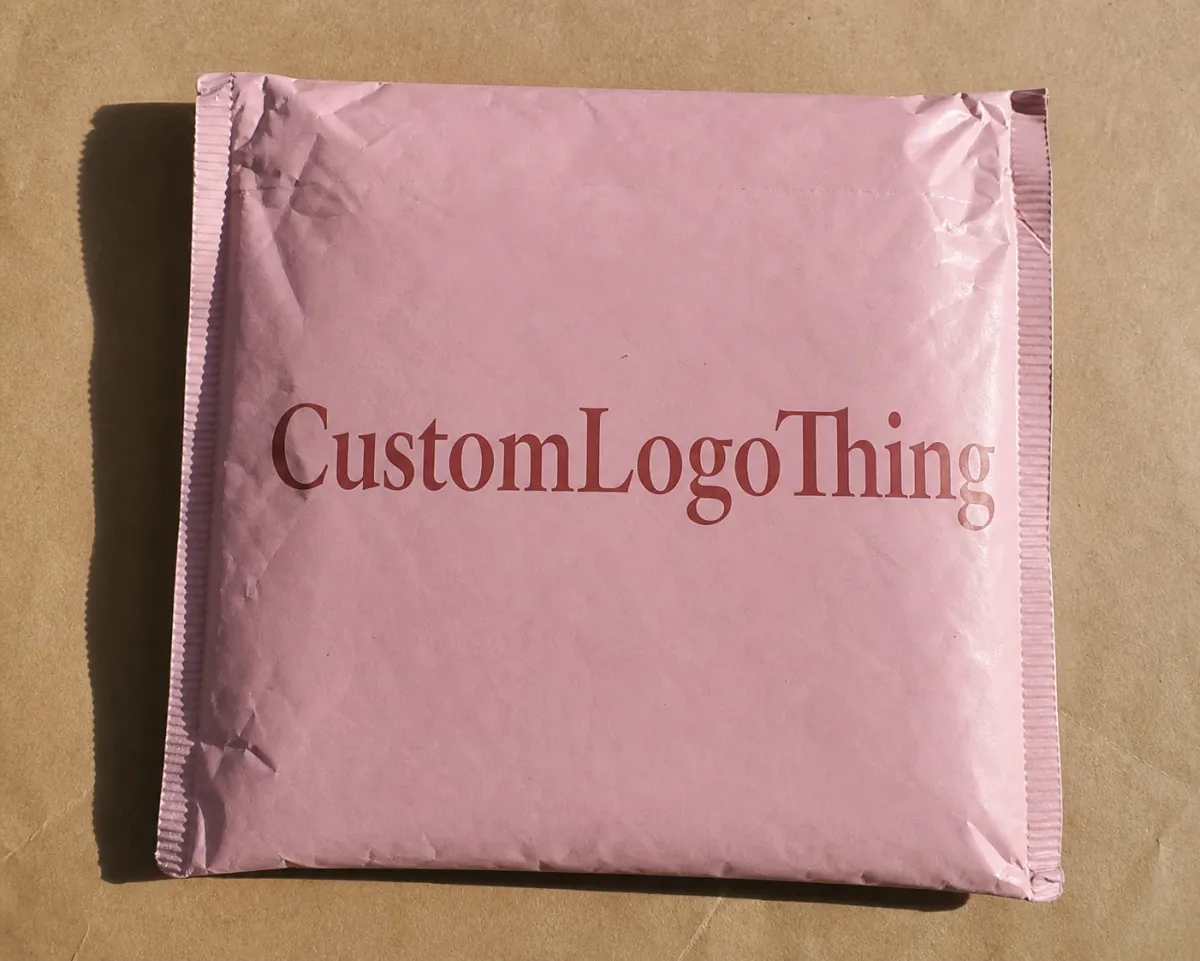
Skincare packaging sits close to the product experience, so the outer mailer is never just an afterthought. A launch may use a soft-touch carton, a glass bottle, a booklet insert, and a padded mailer as one package family. If the outer shipper feels generic, the rest of the presentation loses impact before the customer even sees the primary carton. That matters even more in DTC launches, where the parcel has to do the work a retail shelf normally would.
There is also the mechanical part, which is less glamorous and usually more expensive when ignored. Skincare items tend to be small, fragile, and valuable enough to make damage irritating. Glass droppers crack under corner pressure. Pumps scuff. Label edges wrinkle when packages rub against each other across a parcel network. A padded mailer built the right way helps absorb light impact and reduce abrasion, especially when shipments are stacked, slid, and compressed in transit.
The business case is straightforward. The outer mailer can influence return rates, replacement spend, and first-week sentiment, which is usually the most sensitive stretch of a launch. A mailer that feels deliberate also reinforces the brand position. Clinical, botanical, clean beauty, luxury, minimalist, loud and colorful — whatever the angle is, the shipper should not look like a random leftover.
Three forces usually compete for priority: protection, presentation, and cost. A buyer may want a matte printed finish with rich color, but the launch budget may only allow a simpler print method or a narrower material spec. That is why quote requests should start with actual product dimensions, shipping method, and order volume instead of vague requests for “premium mailers.” Vague specs have a habit of coming back with a price nobody trusts.
For teams comparing constructions across a wider packaging lineup, our Custom Packaging Products page is a useful reference. It helps when the launch includes more than one item family, such as sample kits, retail sets, and replenishment orders.
Printed Padded Mailer Construction, Materials, and Finish Options
Not every padded mailer behaves the same way. The difference shows up on the packing bench and again in the customer’s hands. The outer shell can be paper-based, poly-based, or a hybrid build. Paper-based mailers usually make sense when the brand wants a more natural look, easier print handling, or a stronger recyclability story. Poly-based mailers are usually chosen when moisture resistance, tear strength, and shipping weight matter more. Hybrid structures try to split the difference, though they are not the answer to every brief.
The padding layer deserves equal attention. Some mailers use paper fiber cushioning. Others use bubble or foam-style inserts. A thicker cushion can improve impact protection, but it also changes bulk, sealing behavior, and the way the mailer folds around the product. For a skincare starter kit that includes a rigid carton and a few sachets, a lighter bubble liner may be enough. For heavier glass sets or bundled promo packs, a thicker liner or a double-wall style insert can be worth the extra cost. Pretty on a render does not count for much once the parcel is moving.
Material specs should be written down, not implied. A common paper-based printed mailer might use a 60-70gsm kraft outer with a 40-60gsm cushioning liner for lightweight DTC shipments. A more premium paper mailer can use a 250-300gsm printed paper shell over a recycled fiber or bubble layer. If the format is more rigid and carton-like, buyers often ask about 350gsm C1S artboard for the face stock, usually paired with a kraft backer or another protective inner layer. That spec is not right for every job, but it is a real option when the package has to feel crisp and hold its shape on camera.
Print method matters too. The supplier should spell out exactly how the artwork will be applied. Flexographic printing tends to work well on larger runs and can be efficient when the design is not overly complex. Digital printing can make more sense for short runs or variable artwork. Buyers should also ask about matte versus gloss appearance, white ink support, edge coverage, and color consistency between reorders. A luxury skincare launch can look expensive or cheap based on one bad color match. That is not a small detail.
Finish changes perception quickly. Matte usually reads quieter and more refined. Gloss feels brighter and more promotional. Neither is automatically better. A clean matte build can support a clinical or premium skincare identity, while a reflective finish may suit a louder campaign. The choice should match the product story, the shipping route, and the way the unboxing should feel in the customer’s hands.
Get exact construction details in every quote:
- Substrate: paper, poly, or hybrid outer layer.
- Padding type: paper fiber, bubble, foam, or another cushioning layer.
- Face stock: for paperboard styles, ask whether the supplier is using 250-300gsm coated paper, 350gsm C1S artboard, or another board weight.
- Closure style: peel-and-seal, pressure-sensitive adhesive, or another sealing format.
- Seal strength: how the closure performs after packing, temperature change, and transit pressure.
- Disposal expectations: recyclable, curbside-friendly, mixed-material, or special handling guidance.
If your brand is leaning toward paper-based packaging, ask whether the fiber source is certified and whether chain-of-custody paperwork is available. The FSC framework is a familiar reference for responsibly sourced paper and board materials, and that can matter if the launch claims mention paper sourcing or recycled content.
Ask for samples or swatches before a full run. A sample tells you more in two minutes than a PDF does in two hours. You can check handfeel, crease behavior, logo clarity, and the way the mailer acts once a carton is inserted. That is the only practical way to know whether the structure still looks tidy after folding, sealing, and handling.
Size, Print, and Protection Specifications to Lock In
Pick size from the actual shipment contents, not from a product catalog and not from a guess based on retail dimensions. Skincare launch kits love to hide extra pieces inside the pack: insert cards, samples, instructions, tissue, product trays, and secondary cartons. A mailer that looks big enough on paper can turn into a tight squeeze once everything gets stacked together.
Start with the internal usable dimensions, not just the outside measurement. Internal width, gusset depth, and the closure flap all affect the space you really have once the product is packed. Exterior dimensions matter too, especially if your fulfillment center is trying to stay inside carrier thresholds or control dimensional weight charges. Too large and the kit wanders around inside the mailer. Too small and the seal fails or the corners crush. Neither outcome helps your launch week.
For common skincare scenarios, a slim serum or eye cream set may fit in a mailer around 6 x 9 in. to 8 x 10 in., while a bundled cleanser-and-moisturizer kit often needs 9 x 12 in. or larger. A subscription box that includes two or three rigid cartons may need a wider gusset or a mailer with a deeper cushion than the brand first assumed. The carton dimensions should be measured with the inserts, not just the bottles. The inserts are usually the thing that eats your margin and your patience.
Graphics have to be planned around the folds. Safe zones, bleed, and seam placement are not decorative extras; they decide whether the logo lands cleanly or gets chopped by a fold, adhesive strip, or edge seam. Barcodes, batch labels, and shipping marks should also be placed with discipline so they do not clash with the branded artwork or cover the closure area.
Protection needs to be tested against real handling, not a perfect lab fantasy. Ask whether the mailer can survive corner abrasion, light compression, and the kind of parcel-network roughness that happens between warehouse and doorstep. If the skincare product sits in a rigid carton, that carton may do most of the impact work, but the mailer still has to keep the unit stable. For fragile bottles, a slightly stronger seam or a firmer cushion can be the difference between a neat arrival and a dented package.
Build a simple SKU matrix before you ask for quotes. Include size, item count, artwork version, and target shipping weight for each launch component. That makes comparison easier because every supplier is answering the same brief. It also avoids the classic mess where one vendor quotes a tight fit and another quotes a loose size that looks cheaper but ships worse.
Teams with more than one packaging format often need a single internal reference list that compares mailers with other protective options. If the launch also needs outer cartons or retail shipping packs, our Custom Poly Mailers page can help you see where moisture resistance and lower shipping weight make sense.
Cost, Pricing, MOQ, and Quote Checklist
Quote comparison gets messy fast unless every supplier answers the same questions. A proper quote should show unit price by quantity, setup or plate charges if they apply, print fees, packaging configuration, freight terms, and any extra charges for special finishes or custom sizing. If those items are buried in one line, nobody can tell whether the quote is actually competitive or just dressed up that way.
MOQ, or minimum order quantity, changes based on material choice, print complexity, and tooling needs. A mailer with a simple one-color logo may carry a much lower MOQ than a full-coverage printed design with special adhesive or custom dimensions. Lower quantities are possible, but the unit price usually climbs because setup gets spread over fewer pieces. That does not make the quote bad. It just means the math changed.
For skincare launches, buyers should compare landed cost, not only unit cost. Landed cost includes freight, taxes, duty where applicable, and any proofing or storage charges that show up later. A quote that looks cheaper on paper can arrive more expensively at the fulfillment center. Launch budgets do not forgive that kind of surprise.
Here is a practical way to think about typical market bands for custom printed padded mailers. These are planning ranges, not fixed prices, because the final number depends on size, print coverage, material structure, and shipping lane.
| Quote Option | Typical MOQ | Typical Unit Price | Best Fit | Tradeoffs |
|---|---|---|---|---|
| Simple paper-based mailer with limited print | 1,000-3,000 units | $0.38-$0.78 each | Smaller launches, test runs, seasonal kits | Lower upfront commitment, but per-unit pricing may be higher |
| Custom printed mailer with fuller coverage | 3,000-10,000 units | $0.26-$0.52 each | Main launch runs with consistent branding | Better unit economics, but art and proofing need to be locked early |
| Premium structure with special finish or white ink | 5,000-20,000 units | $0.42-$0.92 each | High-end skincare, gift sets, influencer shipments | More visual impact, but setup costs and longer lead times are common |
For planning purposes, a 5,000-piece run of a standard printed padded mailer often lands around $0.15-$0.24 per unit for simpler paper constructions with moderate print coverage, depending on size and finish. If the job uses heavier cushioning, more print coverage, white ink, or a premium board face, the number usually moves up. By the time the order reaches 10,000 pieces, the price can fall into a lower band if the spec stays consistent and freight is controlled. The quote only makes sense when the supplier gives the exact size and print coverage behind the number.
The table only helps if the suppliers are quoting the same spec. One vendor may include a heavier liner, another may quote a lighter shell, and a third may quietly leave freight out of the number. That is why a quote checklist should ask every supplier to confirm the following in writing:
- Exact material specification and cushioning style.
- Print method and number of colors or passes.
- MOQ by price tier.
- Setup, proofing, and tooling charges.
- Lead time from proof approval to ship date.
- Sample policy and sample cost.
- Freight terms and delivery location.
- Payment terms and reorder rules.
For many cosmetic buyers, the biggest cost drivers are not the logo itself but the choices around it. Full-coverage print, custom sizing, white-ink layers, heavier cushioning, and tighter color matching usually move the quote more than a simple one-color logo on a stock size. That is useful, because it tells the buyer where the money is actually going.
A clean quote checklist also cuts internal churn. Marketing wants the package to look polished. Operations wants it to fit the ship line. Finance wants landed cost under control. When the supplier answers all three concerns in one quote, approvals move faster and fewer people end up pretending a fuzzy spreadsheet is a plan.
Process, Timeline, Lead Time, and Production Steps
A packaging timeline works better when it is broken into milestones instead of one fuzzy promise. The usual sequence starts with artwork submission and quote review, then moves into dieline confirmation, proof approval, production scheduling, quality checks, packing, and freight booking. Each step has a risk point. Spotting those early keeps the launch team from scrambling later.
Slow proof approvals are one of the easiest ways to miss a launch date. Incomplete artwork files, unclear color references, or late size changes can stop production before it starts. Material availability can also add time, especially if the order needs a specific paper stock, a custom print treatment, or a closure adhesive with tighter performance requirements.
For planning, many buyers assume a sample or proof window takes several business days, then production takes another block of time, then transit follows. That is a sensible way to think about it. A standard custom order often runs like this: proof approval takes 2-5 business days, production usually takes 12-15 business days from proof approval for straightforward printed mailers, and freight adds another 2-7 business days domestically. If the job needs special finishes, unusual board stock, or a larger-than-normal quantity, production may stretch to 15-20 business days.
If the launch date is fixed, ask for a milestone-based timeline rather than one broad estimate. A written schedule is more useful because it shows exactly when the proof is due, when the run starts, and when freight leaves the facility. That lets the brand team line up packaging arrival with filling, assembly, and campaign release.
A contingency plan helps too. Urgent launches sometimes need partial shipments, alternate approved materials, or split deliveries to protect the go-live date. A supplier that can discuss backup options clearly is usually easier to work with under pressure, especially after the marketing calendar has already been locked and everyone is pretending nothing can move.
When the packaging will move through a rough parcel network or support a subscription program, validation matters. The ISTA test family is a useful reference when you want to check drop, vibration, and compression behavior instead of trusting appearance alone. That kind of testing is not always required, but it is a sensible way to lower the odds of surprise damage on the first full run.
Ask about testing before the order is placed. If a supplier can explain how the mailer behaves under light compression and repeated handling, you get a more honest view of the product than a polished render will ever give you.
Why Choose Us for Skincare Launch Packaging Supply
At Custom Logo Things, the value is practical packaging guidance, not sales theater. A skincare launch needs a supplier who can explain what happens when a mailer is folded, sealed, stacked, and shipped, then turn that into a quote the buyer can compare without a translator. That means being clear about structure, print coverage, size fit, and lead time from the start.
We focus on the details that actually matter to a launch team: whether the mailer should feel soft-touch or matte, how much protection the cushioning layer gives, whether the closure stays secure under normal parcel handling, and what the artwork looks like once it is printed at scale. Those are not cosmetic details in the shallow sense. They decide whether the arrival feels polished or rushed.
A good packaging partner should make the decision easier, not foggier. Instead of forcing one answer, the supplier should be able to compare two or three build options side by side. One option may use a lighter weight for lower freight cost. Another may use a stronger paper shell for better presentation. A third may keep the print simple while adding more coverage for a premium look. The point is to help the buyer choose the right mix based on product fragility and volume, not to push the same spec onto every brand.
Quality control matters as well. A launch batch should not surprise anyone with off-center print, weak seals, or dimensional drift. Ask for sample availability, spec sheets, change-control discipline, and a clear process for confirming artwork before production starts. Those are the signs that reduce rework and keep the first shipment moving on schedule.
If you are building a broader packaging plan for a skincare rollout, our Contact Us page is the fastest way to start the quote process. Send the artwork, target quantity, finished product dimensions, and desired delivery date, and the conversation can stay focused on fit, cost, and timing instead of guesswork.
Multi-component launches work best when the quote shows every option in the same format. That way the team can compare a lightweight mailer, a premium printed version, and a more protective structure without spending half the week translating one supplier’s answer into another supplier’s language.
Next Steps for a Skincare Launch Quote
The cleanest way to request pricing is to send every supplier the same brief. Include the finished product dimensions, quantity target, artwork files or mockups, preferred finish, shipping destination, and launch date. When the inputs match, the quotes become much easier to compare, and the conversation stops looping over basic clarifications.
Before asking for pricing, gather these items:
- Artwork in a usable format, along with any brand color references.
- Target quantity by SKU or launch tier.
- Product size, including any insert cards, cartons, or sample items.
- Preferred mailer construction, if you already have one in mind.
- Required delivery date and receiving location.
If the launch depends on a premium presentation, request a sample or proof. A small approval step up front is usually cheaper than a reprint later. That is especially true for skincare, where the package often does as much brand work as the product label itself.
It also helps to build a short internal scorecard. Rank each quote by landed cost, protection, brand fit, and timeline. With those four items side by side, the team can choose quickly without losing sight of the tradeoffs. That is the real value of a printed Padded Mailers for Skincare Launches supplier quote checklist: it turns a broad packaging request into a decision that can be defended by numbers, not instinct alone.
The practical takeaway is simple. Send suppliers one clean brief, make them quote the same dimensions and construction, and refuse to compare numbers that hide different specs. If the mailer proves fit, cost, and timing on paper, you have a defensible packaging choice before production starts, which is a much better place to be than explaining a damaged launch to finance.
What should be included in a printed padded mailers for skincare launches supplier quote checklist?
Include material specification, print method, internal and external dimensions, MOQ, unit cost, freight terms, sample policy, and lead time. Ask the supplier to confirm setup charges, finishing options, and whether the quoted price changes at different order tiers, because those items often shift the final landed cost.
How do I compare pricing for printed padded mailers for skincare launch orders?
Compare landed cost, not only unit price, so freight, taxes, proofing, and any setup or tooling fees are included. Use the same quantity, same dimensions, and same print spec across every quote, otherwise the numbers will not describe the same product.
What MOQ is normal for custom printed padded mailers?
MOQ depends on print complexity, material choice, and whether the job needs custom tooling or special inks. Lower quantities are often possible, but the unit cost usually climbs because setup is spread over fewer pieces. For a launch test run, that higher unit price may still be the right call if the volume risk is small.
How long does it take to produce custom printed padded mailers for skincare launches?
Timeline usually depends on artwork approval, proofing, production scheduling, and transit time. A practical plan often includes 2-5 business days for proofing, often 12-15 business days from proof approval for production on standard runs, and extra time for freight. If the launch date is fixed, ask for a milestone-based schedule and confirm what can speed the job up if needed.
What print and material choices work best for skincare packaging?
Choose the structure and finish based on whether the brand wants a matte premium feel, stronger moisture resistance, or lower shipping weight. For fragile or boxed skincare items, ask for samples so you can check print clarity, seal strength, and real-world protection before ordering. That is the safest way to make sure the package still looks right after it has been folded, sealed, and shipped.