Buyer Fit Snapshot
| Best fit | printed paper pouches with logo for packaging buyers comparing material specs, print proof, MOQ, unit cost, freight, and repeat-order risk where brand print, material, artwork control, and repeat-order consistency matter. |
|---|---|
| Quote inputs | Share finished size, material target, print colors, finish, packing count, annual reorder estimate, and delivery region. |
| Proofing check | Approve dieline scale, logo placement, barcode or warning zones, color tolerance, and any recyclable or compostable wording before bulk production. |
| Main risk | Vague material claims, crowded artwork, or missing packing details can create delays even when the unit price looks attractive. |
Fast answer: Printed Paper Pouches with Logo: Sustainable Packaging should be specified like a repeatable production item. The safest quote includes material, print method, finish, artwork proof, carton packing, and reorder notes in one written spec.
What to confirm before approving the packaging proof
Check the product dimensions against the actual filled item, not only the sales mockup. Ask for tolerance on folds, seals, hang holes, label areas, and retail display edges. If the package carries a logo, QR code, warning copy, or legal claim, reserve that space before decorative graphics fill the panel.
How to compare quotes without losing quality
Compare board or film grade, print process, finish, sampling route, tooling charges, carton quantity, and freight assumptions side by side. A lower quote is only useful if the supplier can repeat the same color, closure quality, and packing count on the next order.
Printed Paper Pouches With Logo: Sustainable Packaging
A crowded shelf gives a product very little time to explain itself. Two items can share the same formula, the same fill weight, and nearly the same price, yet one pulls the eye while the other vanishes in a blink. That is usually where printed paper Pouches With Logo earn their keep. They turn the pouch face into an active brand surface instead of just a container, so the pack starts doing work before a shopper ever picks it up. Used well, printed paper pouches with logo make a product read faster, feel more intentional, and present a cleaner, more grounded look without pretending the structure can do more than it really can.
A packaging buyer usually has a practical set of questions in mind. Does the pouch fit the product? Will it hold the line speed? Can it survive shipping, handling, and the shelf-life target? Does the material story support the kind of brand language the team wants to use? A paper-based pouch can reduce visible plastic, give the pack a softer visual tone, and suit brands that want something less industrial. The structure still has to protect the contents, though. A weak barrier, a poor seal, or a logo placed without regard for folds and curvature can undo the whole job pretty quickly.
I have seen projects go sideways because the creative looked great on a flat mockup but got pinched by a side seam or disappeared into a gusset once the pouch was filled. That part is kinda frustrating, but it is also avoidable if the artwork and structure are treated as one system from the start.
What Printed Paper Pouches with Logo Actually Are
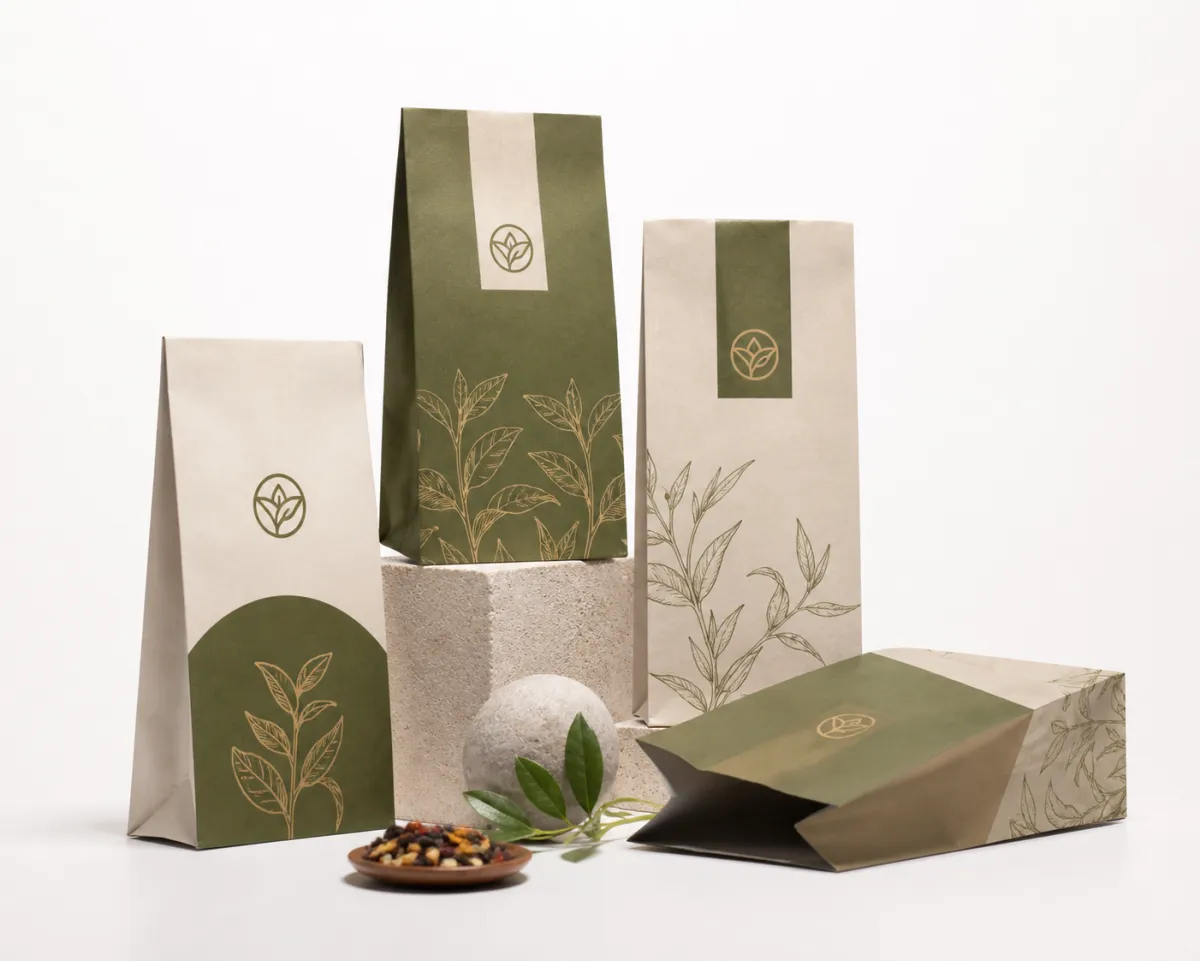
Printed paper pouches with logo are paper-based flexible packages built to hold dry, semi-dry, or lightly protected products while showing the brand directly on the outer face. In practical terms, the pouch itself carries the identity of the product rather than depending on a separate label or sticker. The outer layer is usually paper or a paper-like stock, while the full structure often includes an inner barrier or sealant layer that gives the pack the performance the product needs.
That difference matters in both production and retail. A paper pouch is not the same as a paper bag, and it is not the same as a conventional film pouch. A bag usually serves simpler applications and may not seal with the same precision. A flexible pouch, by contrast, is often built for better barrier protection, cleaner line performance, or tougher shipping conditions. Printed paper pouches with logo sit between those formats for many brands: they bring a familiar paper look, a strong branding field, and enough engineering for products like snacks, coffee, powders, tea, dry ingredients, pet treats, hardware samples, or small retail kits.
The sustainability story is real, but it needs a careful hand. Printed paper pouches with logo can reduce visible plastic on shelf and make the product feel less glossy and more grounded. They can also simplify the visual language of the pack, which often suits premium, natural, and artisanal positioning. Sustainability is not only about changing the face material, though. It is about matching the pouch to the product so the package does not fail early, create spoilage, or trigger rework. A package that protects the contents properly usually carries a better environmental profile than one that only looks greener.
From a shelf-read perspective, the logo carries a lot of weight. Strong printed paper pouches with logo use the brand mark, typography, and supporting graphics to create recognition before the shopper reads much else. That is why the pouch face deserves as much attention as the barrier structure. One side supports brand recall; the other supports product integrity. If either one is weak, the package loses value.
The pouch works best as a small system with three jobs: protect the product, present the brand, and survive the handling that happens during storage, shipping, and filling. The logo is only one part of the decision. The film structure, paper stock, seal width, and fill method all shape whether printed paper pouches with logo will perform on your line and in the market.
For buyers comparing material claims across formats, paper sourcing and waste guidance should be checked against trusted references such as FSC and the EPA. Those sources do not replace a supplier spec sheet, but they keep the conversation tied to recognized material and waste-management standards.
How Printed Paper Pouches with Logo Are Made
The build for printed paper pouches with logo usually begins with an outer paper layer, then adds the barrier or sealant layers needed underneath. Depending on the product, that may include a moisture barrier, an aroma barrier, a grease-resistant treatment, or a laminated inner layer that supports sealing and shelf stability. Some pouches include a tear notch, a zipper, a window, or a fin seal depending on the format and the way the product will be filled.
Printing method matters more than many buyers expect. Digital printing often works well for shorter runs, quick art changes, and launches where the order size is still uncertain. Flexographic printing usually becomes more efficient at higher volumes, since plate costs are spread across more units. Some programs use hybrid production in the middle, especially when the design relies on strong brand color blocks but still needs flexibility for versioning or seasonal updates. With printed paper pouches with logo, the right method is the one that fits the run size, the color complexity, and the budget instead of the one that sounds most impressive in a sales pitch.
Artwork prep is where many packaging projects get protected or damaged. The logo should be placed against the real dieline, not a flat mockup that hides fold lines and seal areas. A proof should show where the brand mark sits relative to the top seal, the bottom gusset, any side seams, and any window cutout. If the pouch uses a reseal zipper or a tear notch, those features need to be accounted for before approval. In practice, the strongest printed paper pouches with logo are rarely the ones packed with design tricks. They are the ones where the layout respects the shape of the pouch.
A production chain sits behind the printed surface too. File preparation, color management, press setup, sample approval, seal validation, and line trials all affect the final result. A logo that looks perfect on screen can shift once it lands on paper, especially if the stock absorbs ink differently than expected or the pouch uses a textured finish. Once the run starts, the relationship between artwork and machinery becomes critical. Seal strength, fill temperature, product weight, and storage conditions all influence whether the finished pouch behaves consistently.
A pouch that prints beautifully but fails on the line is just expensive artwork.
That is why production teams keep asking the same basic questions: how dry is the product, how sensitive is it to oxygen or moisture, what shelf life is required, and how much abuse will the pack take in transit? Printed paper pouches with logo can answer those questions well, but only when the structure is built around the product conditions rather than around the mockup alone.
If the product is sensitive, the inner layers matter just as much as the outer paper face. Greasy snacks, aromatic coffee, and moisture-sensitive powders often need more than paper and ink. Coatings and laminations help, although they should be selected with care because every added layer changes the way the package behaves in recycling streams and how much material it uses overall. That is the practical side of sustainable packaging: the lightest structure that still works is usually better than the most symbolic one.
Printed Paper Pouches with Logo: Cost and Pricing Factors
Pricing for printed paper pouches with logo comes down to a handful of variables buyers can actually influence: quantity, pouch size, substrate choice, print coverage, barrier build, and finishing complexity. Change one variable and the unit price may move a little. Change several at once and the quote can shift more than expected. That is why a supplier will usually ask for product dimensions, fill weight, seal requirements, and artwork files before offering a serious number.
Quantity is usually the biggest lever. Short runs carry more setup cost per unit because the press, die, and proofing work have to be absorbed across a smaller lot. Larger runs generally push the unit price down, especially when the artwork stays stable and the pouch size does not change. For launch planning, that means the first order may cost more per pouch than the reorder. That is normal. What matters is whether the launch quantity gives you enough real-world data to avoid a costly redesign later.
Material choice is the second major driver. A simple paper face with modest barrier needs may sit in a lower cost bracket, while premium paper stock, stronger moisture resistance, better grease resistance, or a more specialized lamination can raise the price. Windows, matte varnish, soft-touch coatings, zipper closures, and reinforced seals add cost as well. On printed paper pouches with logo, the temptation is often to load the pack with every possible feature. The better result usually comes from selecting only the features that support the product and the sales channel.
Artwork can influence the budget more than people expect. Full-bleed graphics require careful ink coverage control. Multiple spot colors can increase press complexity. White ink may be needed under certain designs, especially on darker paper stocks or uncoated surfaces. Tight logo registration and fine type raise quality demands, which may slow the run or require more proofing. If the brand wants a highly detailed logo on a natural paper face, it helps to ask how that artwork will behave at production speed instead of assuming the screen proof tells the whole story.
A practical buying rule works well here: spend where the product touches the market, and save where the buyer will not notice the difference. A stronger seal or better barrier usually deserves investment before a flashy interior print that nobody sees. With printed paper pouches with logo, the visible face carries a lot of branding weight, so modest changes in paper finish or ink coverage can influence how premium the pack feels. That said, every layer does not need to be overdesigned just to look serious.
The table below gives a rough comparison of common production paths. Actual pricing depends on dimensions, material source, print complexity, and order volume, but this view helps buyers budget with a clearer frame.
| Print / Build Option | Best For | Typical Setup Pressure | Unit Cost Direction | Notes |
|---|---|---|---|---|
| Digital print on paper pouch stock | 1,000-5,000 units, fast launches, frequent artwork changes | Lower setup, faster proofing | Usually higher per unit | Good for pilots and seasonal runs; useful when the design may still evolve. |
| Flexographic print on paper pouch stock | 10,000+ units, stable artwork, repeat orders | Higher plate and setup cost | Usually lower per unit | Strong fit for consistent brands that reorder the same printed paper pouches with logo. |
| Hybrid build with specialty finish | Premium retail, brand refreshes, multi-SKU programs | Moderate to high | Mid to high | Useful when shelf impact matters and the package needs both flexibility and a polished appearance. |
As a rough planning range, small-run printed paper pouches with logo can land anywhere from about $0.45 to $1.10 per unit when quantities are low and setup is spread thin, while larger production runs may drop closer to $0.14 to $0.32 per unit depending on size and build. Those numbers are planning guidance, not promises. The actual quote depends on whether the pouch is plain paper or laminated, whether it needs a zipper, whether the graphic uses multiple inks, and how much barrier performance the product needs.
Setup charges matter too. Plates, dies, color matching, and proofing can make up a noticeable part of the budget on shorter runs. For a buyer comparing printed paper pouches with logo against labels on stock pouches, total project cost should include not just pouch price but also artwork prep, freight, receiving, storage, and any co-packing labor. A cheaper pouch that slows the line or causes spoilage is not the cheaper choice in the end.
If the goal is to keep the project lean, three savings habits tend to work best: keep the pouch size standardized, keep the print palette controlled, and avoid finishing features that do not help sell or protect the product. That is a practical way to buy printed paper pouches with logo without turning packaging into an overdesigned expense line.
Step-by-Step Timeline for Ordering Printed Paper Pouches with Logo
The cleanest ordering process starts before the quote. Define the product first: what it is, how much it weighs, how sensitive it is to moisture or oxygen, and how long it needs to stay stable. Then choose the pouch format, estimate the dimensions, gather your artwork, and note any special claims or compliance language. Once those basics are clear, printed paper pouches with logo become much easier to source because the supplier can quote the right build instead of guessing.
After the brief, a dieline review usually comes next. This is where the printer shows the real pouch shape, seal zones, folds, and any optional features like a zipper or tear notch. A digital proof then confirms layout, type placement, color direction, and logo positioning. If the brand wants a tactile or visual check before production, a physical sample can be worthwhile, especially on premium printed paper pouches with logo where paper texture and ink behavior matter. Sample approval is often where buyers catch the problems that would otherwise show up too late.
The production window depends on the print method, the material stock, and how quickly approvals move. Short digital programs can often move from approved proof to shipment in about 10-15 business days, while larger flexographic runs may take 15-25 business days or more once plates, setup, and scheduling are included. Those are general ranges, not guarantees. A clean file and a fast signoff can shorten the timeline more than almost anything else. Artwork changes, specialty coatings, or source material shortages can add days fast.
Logistics can stretch the schedule in ways buyers often forget to plan for. Freight time, warehouse receiving, carton count verification, and co-packer booking all need attention. If your filling line is scheduled before the pouches arrive, the whole project gets stressed. That is especially true for printed paper pouches with logo tied to a launch date, a retail reset, or a seasonal demand window. The packs should be in the building before the line is waiting on them.
Here is a realistic project flow:
- Write the brief with product specs, fill weight, and shelf-life target.
- Request quotes using the same dimensions and print assumptions for every supplier.
- Review the dieline and make sure logo placement avoids seams and folds.
- Approve the digital proof or sample after checking color, copy, and claims.
- Schedule production only after the final signoff is complete.
- Plan freight, receiving, and any co-packing labor before shipment leaves the plant.
That sequence sounds simple, yet it saves money because it cuts revision loops. The fastest projects are usually the ones that treat printed paper pouches with logo like a packaging system instead of a design file. When the product is defined properly up front, the rest of the process becomes far more predictable.
Common Mistakes to Avoid with Printed Paper Pouches with Logo
The most common mistake is choosing the pouch for its look before checking the product requirements. That mistake shows up in weak seals, poor shelf life, or a package that looks great on a mockup but performs badly on the line. With printed paper pouches with logo, the face of the pack can pull attention, but the hidden structure still has to do the hard work. If that structure is wrong, the branding cannot rescue it.
Barrier under-specification is another problem. Moisture-sensitive powders, greasy snacks, aromatic blends, and products sold through long distribution chains often need more protection than a simple paper face provides. If the barrier conversation gets skipped, the project may save a little on paper but lose far more to spoilage or returns. This is one place where packaging buyers should be strict. Ask what the pouch actually blocks, not just how it looks.
Artwork mistakes are just as common. Small logos, thin fonts, and low-contrast color combinations can disappear once the pouch is filled and curved. Seals, gussets, and folds can hide important copy. If your logo sits too close to an edge, part of it may disappear in production. Good printed paper pouches with logo keep the brand mark clear, legible, and centered in the visible panel, with enough breathing room that the pouch still looks balanced when it sits on a shelf at retail height.
Sustainability claims need discipline as well. If a pouch is paper-faced but uses a barrier layer that changes how it should be disposed of, the marketing copy should not overstate recyclability or compostability. Buyers should ask for clear material descriptions and use language that matches the actual structure. A clean sustainability claim is more valuable than a vague one. A vague claim may attract attention for a week and create trouble for much longer.
Timing causes another round of problems. People often assume that once artwork is approved, the rest happens quickly. In reality, sample approvals, plate work, and material sourcing can all introduce delays. Order minimums can also surprise teams used to stickered stock packaging. The smartest printed paper pouches with logo projects are the ones that leave time for proofing instead of racing the calendar and hoping nothing changes.
If the pouch format, artwork, and fill process are not designed together, the most expensive part of the project is usually the reprint.
One more issue shows up often: buyers forget to look at how the pouch behaves after filling. A flat proof does not tell the full story. Once the pouch has product inside, the front face bows, the seam lines shift slightly, and the visible area becomes smaller. If the logo, product name, or regulatory text is too tight on the artwork, the final result can feel crowded. That is why proof review on the real dieline matters so much for printed paper pouches with logo.
Expert Tips for Better Results and Lower Waste
Design for the pouch shape, not for a flat poster. That sounds simple, but it changes the outcome in a big way. Flexible packaging behaves differently from a carton or a label, and the brand has to work with curves, seams, and limited real estate instead of fighting them. The strongest printed paper pouches with logo usually have a clear focal point, a clean hierarchy, and enough margin to stay readable after filling.
Standardization is one of the easiest ways to reduce waste. If a brand can keep a small family of pouch sizes across several SKUs, purchasing gets easier, inventory stays cleaner, and artwork revisions become more manageable. Reusing structure where possible also helps the team compare performance across products. A snack line, a tea line, and a sample kit do not always need three unrelated pouch formats if one or two good sizes cover the range. That makes printed paper pouches with logo simpler to order and easier to replenish.
Finish selection should match the product story. A matte or uncoated paper look often feels natural and understated, which works well for bakery, tea, organic foods, and artisanal dry goods. Gloss can create stronger shelf pop and higher contrast. Specialty finishes can be useful, but they should support the use case rather than just decorate the pack. Buyers sometimes add a finish because it is available, not because it improves the outcome. That usually adds cost without adding value to printed paper pouches with logo.
Use the back panel and side panels with intention. Ingredient lists, QR codes, recycling instructions, origin stories, and usage directions can live there without crowding the front. The front panel should sell the product quickly; the back panel should help the shopper understand it. That balance keeps the logo face clean and still gives the brand room to explain the product. Good printed paper pouches with logo do not try to say everything at once.
One of the smartest production habits is to test a small pilot batch before committing to a full run. A pilot reveals how the pouch fills, how the seal behaves, how the paper face handles scuffing, and whether the logo reads well once the pack is full. You may find that a slightly larger seal area, a different finish, or a small adjustment to the artwork solves a problem before it becomes a waste problem. That kind of test is especially useful when the product is being packed on a new line or by a new co-packer.
Here are a few practical habits that often save time and scrap:
- Keep the logo away from seams, seals, and highly curved fill zones.
- Use strong contrast between the brand mark and the paper stock.
- Ask for a real dieline before approving the final layout.
- Match barrier strength to the product, not to the design trend.
- Review sample packs under the same lighting conditions used at retail if possible.
Those small choices matter. They are what make printed paper pouches with logo feel polished instead of improvised, and they often reduce waste by preventing rework, over-ordering, or product loss after launch.
What to Do Next Before You Order
Before you request pricing, write a one-page spec sheet. Include the product type, fill weight, target shelf life, barrier needs, pouch dimensions, finish preference, and any brand claims that will need review. If you already know the fill line or co-packer, include that too. A supplier can only quote printed paper pouches with logo accurately when the brief is specific enough to guide the structure.
It also helps to collect two or three sample references. They do not have to be exact matches, but they should show the kind of structure, finish, and branding style you want. One sample might show the right paper texture, another might show a useful zipper format, and a third might show a logo treatment you like. That gives the printer a concrete target instead of a vague direction, which usually improves the first quote and the first proof for printed paper pouches with logo.
Ask for pricing at multiple quantities. A launch order, a mid-size replenishment run, and a larger volume scenario can show how unit cost changes as volume increases. That comparison helps buyers decide whether to place a smaller test order or commit to a larger inventory buy. If the product is seasonal or changes quickly, a shorter run may be smarter. If the design is stable and the product is expected to move consistently, a larger order may reduce unit cost enough to justify it.
Artwork should be prepared early. Make sure the logo, required copy, and any regulatory or sustainability language are checked before the supplier finalizes the dieline. Confirm the safe zones around folds, seals, and any windows or reseal features. A clean artwork package speeds everything up and gives you a better shot at accurate printed paper pouches with logo on the first production pass.
If the specs are clear, the buying decision becomes much easier. You are no longer guessing about paper face stock, barrier layers, or artwork placement. You are choosing a structure that fits the product, the shelf, and the line. That is the real advantage of printed paper pouches with logo: once the technical details are aligned, the pack can do its job without creating extra work for the team.
Are printed paper pouches with logo actually better for sustainable packaging?
They can be a better fit when you want to reduce visible plastic and present a more natural material story, but the pouch still has to protect the product properly. The most sustainable choice is usually the one that balances material use, shelf life, and transport efficiency, because a failed package creates more waste than a well-built one. If the product needs strong moisture or oxygen protection, make sure the structure still lines up with your disposal or recovery goals. Local recycling systems matter here, and they vary more than most brands expect.
What affects the price of printed paper pouches with logo the most?
Quantity is usually the biggest driver, since setup costs spread out more efficiently on larger runs. Material grade, barrier layers, print coverage, and special finishes can raise the price quickly. Artwork complexity matters too, especially when the design uses multiple colors, full-bleed graphics, or tight logo registration. For many projects, printed paper pouches with logo get more expensive because of build complexity rather than because of the paper face itself.
How long does it take to produce printed paper pouches with logo?
Timing depends on whether you need a simple digital run or a larger production run with more setup and proofing. The biggest schedule risks are artwork revisions, sample approval delays, and specialty material availability. A clear spec sheet and fast proof approvals usually shorten the overall timeline more than anything else. For printed paper pouches with logo, the fastest jobs are the ones where the brief is complete before the first quote goes out.
Can printed paper pouches with logo be used for food products?
Yes, if the pouch structure, inks, coatings, and seals are appropriate for the food item and its shelf-life needs. Greasy, aromatic, or moisture-sensitive foods often need barrier features that go beyond plain paper. Food packaging should also be checked for compliance language, handling requirements, and any testing your product category needs. When food is involved, printed paper pouches with logo should be selected as a technical package first and a branding piece second.
What design mistakes should I avoid on printed paper pouches with logo?
Avoid tiny type, low-contrast logos, and critical text near folds or seal areas. Keep the layout simple enough that the brand still reads clearly when the pouch is filled and sitting on a shelf. Always review a proof on the real dieline so the finished pouch looks intentional, not crowded or cut off. The best printed paper pouches with logo leave enough space for the eye to move naturally across the pack.
Start with the product specs, not the artwork. If you define the fill, barrier need, pouch size, and shelf-life target before you ask for a quote, printed paper pouches with logo become a straightforward packaging decision instead of a guessing game. That is the practical takeaway: build the pouch around the product, then let the logo do its job on a structure that can actually carry it.


