Buyer Fit Snapshot
| Best fit | printed paperboard boxes manufacturer for packaging buyers comparing material specs, print proof, MOQ, unit cost, freight, and repeat-order risk where brand print, material, artwork control, and repeat-order consistency matter. |
|---|---|
| Quote inputs | Share finished size, material target, print colors, finish, packing count, annual reorder estimate, and delivery region. |
| Proofing check | Approve dieline scale, logo placement, barcode or warning zones, color tolerance, and any recyclable or compostable wording before bulk production. |
| Main risk | Vague material claims, crowded artwork, or missing packing details can create delays even when the unit price looks attractive. |
Fast answer: Printed Paperboard Boxes Manufacturer: Design to Delivery should be specified like a repeatable production item. The safest quote includes material, print method, finish, artwork proof, carton packing, and reorder notes in one written spec.
What to confirm before approving the packaging proof
Check the product dimensions against the actual filled item, not only the sales mockup. Ask for tolerance on folds, seals, hang holes, label areas, and retail display edges. If the package carries a logo, QR code, warning copy, or legal claim, reserve that space before decorative graphics fill the panel.
How to compare quotes without losing quality
Compare board or film grade, print process, finish, sampling route, tooling charges, carton quantity, and freight assumptions side by side. A lower quote is only useful if the supplier can repeat the same color, closure quality, and packing count on the next order.
Printed Paperboard Boxes Manufacturer: Design to Delivery
A face cream can look great in a render and still fail the moment it hits a conveyor, gets squeezed in a master carton, or rubs against another box on a pallet. That is the job of a printed paperboard boxes manufacturer: not just making packaging look sharp, but making sure the carton survives the ugly parts of the supply chain. Shelf appeal matters. So does glue line strength, crease performance, print fidelity, and whether the thing actually protects the product after someone at the warehouse has had a long day.
If you are comparing vendors for a product launch, it helps to understand how a printed paperboard boxes manufacturer fits into the bigger packaging workflow. The manufacturer is not just a printer with a die cutter. It is the place where artwork, structure, material, and production realities collide. I have sat through enough packaging reviews to know that the prettiest sample is not always the best production choice. Sometimes it is kinda the opposite.
There is a reason this category is so widely used. Paperboard cartons are flexible, relatively light, easy to brand, and much more adaptable than rigid set-up boxes. A smart printed paperboard boxes manufacturer can help you match the package to the product instead of forcing the product to adapt to a box that only looked good in a mood board. That difference saves money, but more importantly, it saves headaches later.
For brands building a retail program, the strongest packaging decisions usually start with honest answers: how the product ships, how customers open it, what kind of shelf environment it faces, and how much damage the carton can tolerate before the whole presentation starts to fall apart. Once those basics are clear, choosing a printed paperboard boxes manufacturer gets a lot easier.
What a Printed Paperboard Boxes Manufacturer Actually Does
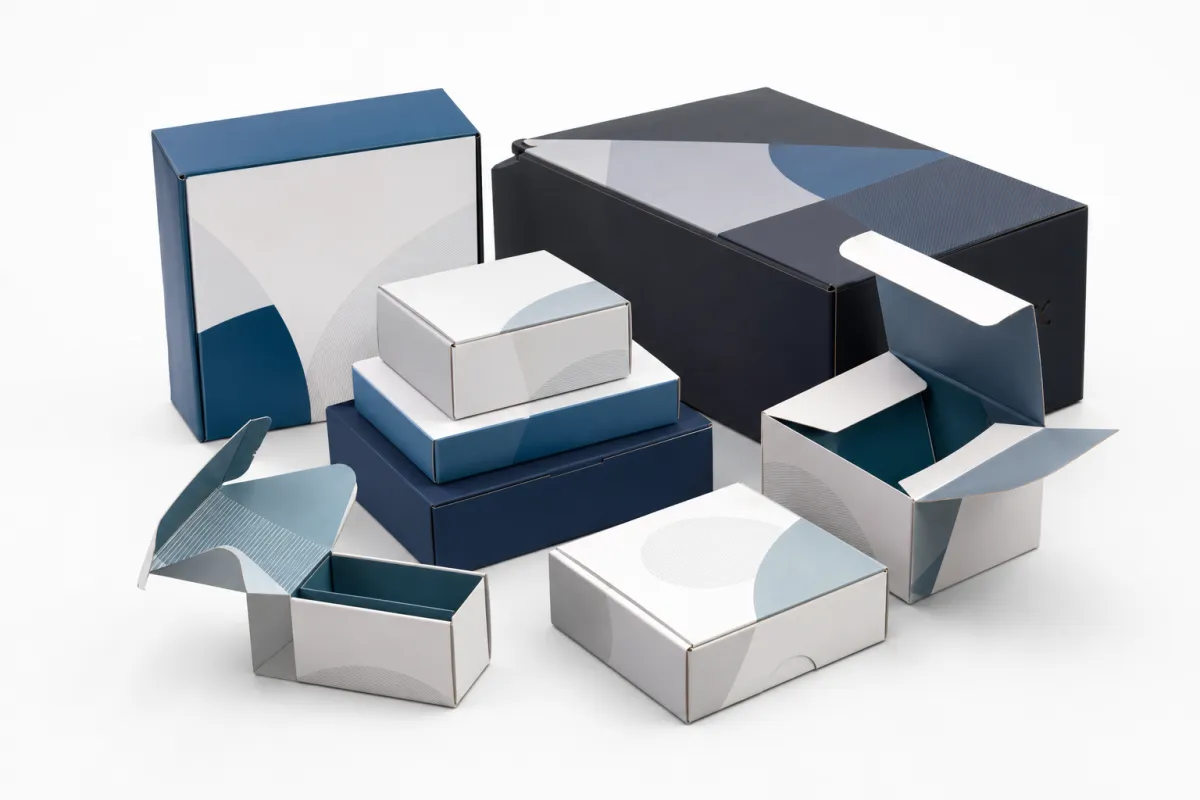
A printed paperboard boxes manufacturer does far more than print ink on board and fold it into a carton. The work starts with the product itself: dimensions, weight, fragility, how it will be packed, and how many hands will touch it before it reaches the customer. A cosmetic carton may need a refined front panel and a tactile finish, but it still has to survive cartoning, stack pressure, and transit vibration. A supplement box may need tamper cues and compliance copy. A small electronics box may need an insert so the contents do not rattle around like loose change.
The best manufacturers think about packaging as a system. The carton, insert, closure, coating, and outer shipper all need to work together. If one piece is off, the whole thing suffers. That is why a serious printed paperboard boxes manufacturer will ask questions before quoting: What is the product weight? Will it ship flat or assembled? Does it go through a hand-pack line or an automated one? Is the box meant for retail display, e-commerce, or both? Those answers change the structure, the board choice, and sometimes the print method too.
There is also a difference between a printer, a converter, and a full-service printed paperboard boxes manufacturer. A printer handles image transfer. A converter turns board into a finished carton through cutting, creasing, folding, and gluing. A full-service manufacturer usually manages the whole chain, including dielines, prepress, finishing guidance, and quality control. That matters because a carton can print beautifully and still fail if the folds crack or the dimensions are off by a few millimeters. Packaging is unforgiving like that. Tiny mistake, big bill.
Paperboard boxes are used everywhere for a reason. They are versatile. They can feel premium without the weight of rigid packaging, and they can be sized tightly enough to reduce shipping voids. A printed paperboard boxes manufacturer may produce cartons for cosmetics, supplements, food, candles, health products, electronics accessories, and giftable retail goods. Paperboard also takes detailed graphics, small type, and barcodes well, which is why so many shelf-facing programs rely on it. The better the carton is engineered, the less work the outer shipping system has to do.
From a buyer’s point of view, the most useful thing a printed paperboard boxes manufacturer does is reduce guesswork. A good vendor can tell you whether your board spec is strong enough for the product weight, whether your finish is likely to scuff, and whether your closure style will survive repeated handling without falling apart. That kind of clarity is boring in the best way. It prevents drama.
The thickest carton is not automatically the best one. In production, the right box is the one that matches the product load, print method, finish, and conversion tolerance without wasting material or creating avoidable failures.
If you are comparing vendors, the real test is simple: does the printed paperboard boxes manufacturer help you make better decisions, or do they just sell you a prettier sample? If the team can explain structure, print coverage, and lead time in plain language, that is usually a good sign.
How a Printed Paperboard Boxes Manufacturer Makes Boxes
The production path usually starts with a brief. The buyer shares product dimensions, target quantity, artwork files, desired finish, and any special needs such as windows, inserts, or retail hang tabs. A capable printed paperboard boxes manufacturer will turn that information into a dieline or confirm an existing one so the artwork actually fits the carton geometry. That step matters more than people think. A tiny shift in flap size or glue area can change where the graphics land and how the box folds on the line.
Next comes substrate selection. The paperboard is chosen based on thickness, stiffness, printability, and cost. After that, the artwork is prepared for press, usually with attention to bleed, registration marks, barcode placement, and any varnish or foil zones. A printed paperboard boxes manufacturer may provide a digital proof or a physical sample so the buyer can review layout and copy before production begins. That proof is not decorative. It is the last clean chance to catch the dumb stuff before it gets expensive.
Once the proof is approved, the board is printed, coated if needed, then cut, creased, folded, and glued. Finished cartons are packed flat or partially formed, depending on the project and the packing line requirements. There is no single “right” method here. A short run for a niche product may ship one way. A high-volume retail program may need another. The right printed paperboard boxes manufacturer should explain the tradeoffs instead of pretending every job follows the same path.
Print method choices affect both appearance and economics. Offset printing is common for larger retail programs because it handles fine detail and consistent color well across longer runs. Digital printing is often the better fit for short runs, multiple SKUs, or frequent design changes. A printed paperboard boxes manufacturer may also offer varnish, lamination, foil stamping, embossing, debossing, and spot UV when the project needs extra shelf presence. Each finish adds cost. Each finish also changes how the carton feels in hand, how it reflects light, and how well it resists scuffing.
Tolerances matter at the edges of the design. Tuck flaps need enough room to close cleanly. Auto-bottom structures need to fold without fighting the board. Window patches need alignment, because a window that is just a little off can make the whole front panel look sloppy. A printed paperboard boxes manufacturer that understands tolerances checks dimensions against the product, not just against the drawing. That matters even more when the box has to fit inside a master carton, a shipper, or a retail tray.
Quality control is not a single final inspection. It is a chain of checks. The board gets inspected for flatness and surface consistency. The press run gets checked for color drift and registration issues. Cutting and creasing are reviewed for clean edges and fold performance. Glue patterns are checked to avoid open seams or squeeze-out. A conscientious printed paperboard boxes manufacturer treats each stage as a chance to catch a problem early, because a small issue at the press can become a rework disaster after folding and packing.
For shipping validation, many packaging teams reference test methods from organizations such as ISTA, especially when cartons need to hold up through vibration, drop, or distribution stress. If your project is tied to a sourcing or sustainability claim, the fiber conversation may also include FSC certified materials. A solid printed paperboard boxes manufacturer should be comfortable talking about both performance and claims. The carton has to do more than look polished in a sales deck.
One practical detail gets overlooked all the time: how the cartons are packed after production. Some runs ship flat to save freight and warehouse space. Others arrive pre-glued or partially erected to speed pack-out. The right answer depends on labor cost, line speed, and storage constraints. A reliable printed paperboard boxes manufacturer should be able to explain the tradeoff in hours saved versus freight added, because that is the kind of detail that separates a real packaging partner from a simple print supplier.
Key Design and Material Factors That Shape the Box
The first material decision is usually board grade and caliper. Paperboard thickness affects stiffness, print feel, and how the carton stands on the shelf. A lighter board can work for a small, low-weight item. A heavier board may be needed for a product that will be stacked, inserted, or shipped more than once. A thoughtful printed paperboard boxes manufacturer will not push the thickest board by default. The team should match the board to the product load, closure style, and brand position. Too thin, and the box feels cheap. Too thick, and you can get cracking at the folds, extra freight cost, and unnecessary material spend.
Board Feel and Print Behavior
Board surface matters almost as much as board thickness. Coated one-side board, coated two-side board, and recycled fiberboard all behave differently on press and in the hand. High-white surfaces support crisp graphics and cleaner skin tones in cosmetic branding, while more natural-looking boards can support a kraft or eco-conscious aesthetic. A printed paperboard boxes manufacturer should advise on ink holdout, opacity, and how the chosen board affects color matching. Not every board absorbs ink the same way, and that can change whether a brand red reads warm, cool, or muddy once production starts.
Finish selection changes the tone of the package too. Matte lamination feels quiet and modern. Gloss can make saturated color pop, especially on retail displays where light is strong. Soft-touch lamination adds a tactile layer that buyers often associate with premium personal care or gift products. Varnish can be a lower-cost way to add protection without fully laminating the surface. A good printed paperboard boxes manufacturer will explain that finish is not only about appearance; it also affects scuff resistance, fold behavior, and whether the ink survives abrasion in transit.
Structure and Unboxing
Structural style matters as well. Reverse tuck cartons are common for lightweight retail items and are usually easy to convert. Straight tuck styles can improve front-panel presentation when the design is centered carefully. Auto-bottom boxes help speed assembly and support products that need more structure. Sleeve formats create a nice unboxing rhythm when the product inside has strong visual appeal. Window patching can be useful when the product itself deserves to be seen. A skilled printed paperboard boxes manufacturer will match the structure to the product instead of treating every job like a generic folding carton.
Branding needs shape the graphic system. Color consistency, typography hierarchy, barcode placement, ingredient or compliance copy, and the way the product story reads from three feet away all matter. Shelf impact is often won in the first second, which is why contrast, panel order, and clear visual hierarchy matter so much. A printed paperboard boxes manufacturer should be able to keep the artwork faithful to the brand while also warning you when small text will become hard to read after coating or if a foil element will crowd the fold line. The best cartons are intentional, not busy.
Sustainability deserves a practical conversation, not a glossy one. Recyclable coatings, responsibly sourced fiber, and efficient dieline layouts can all reduce environmental burden, but no single feature solves everything. A very heavy board with a premium finish may create more waste than it saves if the product is small and light. A carton with an insert may improve protection but also increase material use. The right printed paperboard boxes manufacturer will talk through those tradeoffs honestly instead of hiding them behind broad claims. If the packaging needs to support a formal sustainability statement, the materials, adhesives, and coatings should be reviewed together rather than one by one.
There is also the practical matter of line speed and packability. If a carton must be erected and loaded by hand, the closure needs to be easy to understand. If the box feeds through a semi-automatic cartoner, the tolerances need to be tighter. If the product is delicate, the insert design may matter more than the exterior print finish. A responsive printed paperboard boxes manufacturer can help solve these details early, before they turn into delays on the packing floor.
I have seen buyers obsess over the front panel and barely glance at the inside structure. Bad move. A carton is a working object. The outside sells, but the folds, board, and closure keep it honest.
What Drives Printed Paperboard Box Pricing
Pricing from a printed paperboard boxes manufacturer comes down to a handful of variables that affect each other. Size is one of the biggest. Larger cartons use more board and often more press space, which raises cost. Board grade matters too, because thicker or higher-quality board usually costs more. Print coverage also matters. A simple one-color box is often cheaper than a fully flooded CMYK design with heavy solids, multiple spot colors, or dense black backgrounds. Add foil, embossing, soft-touch lamination, or window patching, and the price moves again.
Order quantity changes the math in a big way. Setup costs for plates, dielines, press make-ready, and finishing get spread across the run. That means the unit price usually drops as volume rises. A printed paperboard boxes manufacturer can often give a much better per-unit rate at 10,000 pieces than at 1,000 pieces because the machine time is being used more efficiently and material nesting becomes more favorable. The actual savings depend on carton shape, the number of SKUs, and how much of the sheet can be used without waste.
Structural complexity also affects cost. Boxes with tight tolerances, unusual closures, display windows, or custom inserts require more setup and more inspection. If the job needs a special die, that adds tooling cost. If glue patterns are tricky, labor goes up. If artwork changes across multiple product versions, prepress time rises. A seasoned printed paperboard boxes manufacturer usually sees these cost drivers immediately and can point out where a design choice will have a bigger effect than the buyer expected.
| Production Option | Best For | Typical Unit Cost Range | Strengths | Tradeoffs |
|---|---|---|---|---|
| Digital printing | Short runs, test launches, multiple SKUs | $0.55-$1.40 at low volume | Fast setup, flexible revisions, lower minimums | Higher unit cost at scale, fewer specialty effects on some lines |
| Offset printing | Mid to long runs, retail programs | $0.18-$0.48 at 5,000+ pieces | Strong color consistency, efficient long-run economics | More setup time, plate costs, less forgiving of late artwork changes |
| Offset with premium finishes | Prestige packaging, giftable products | $0.30-$0.85 depending on finish | Foil, embossing, lamination, and stronger shelf presence | Higher setup and labor, longer production flow |
Those ranges are directional, not fixed quotes, because the final number depends on board grade, dimensions, coverage, and freight. Even so, the pattern is familiar: a printed paperboard boxes manufacturer can make short-run work economically with digital print, but offset usually wins once the quantity climbs and the artwork is stable.
Hidden costs deserve attention too. Artwork revisions can add prepress fees. Late approval can force a rush fee. A barcode shift can require a new proof. Freight can swing depending on carton size, pallet count, and whether the boxes ship flat or erected. Storage and warehousing can matter if the project is seasonal or if the launch date gets pushed back. A transparent printed paperboard boxes manufacturer should itemize these variables so the buyer can see where the money is going instead of discovering surprises after the order is already moving.
Short-run economics deserve one more note. Digital printing is often the smarter choice for small campaigns, regional trials, or product lines with frequent updates. Offset becomes more attractive once the run is large enough to absorb setup cost and the design is stable. A practical printed paperboard boxes manufacturer should help you make that call based on business reality, not just on what machine happens to be available that week.
Step-by-Step Ordering Process and Timeline
The ordering process usually starts with a quote request. The buyer sends product measurements, target quantity, artwork files, and any structural notes. A reliable printed paperboard boxes manufacturer will ask for the actual product dimensions, not just a rough estimate, because even a few millimeters can change the fit and the fold sequence. If the box needs to hold an insert, a bottle, a jar, or a device accessory, a product sample helps even more. A manufacturer can build a better dieline when the physical item is on the table.
After the initial quote, the next step is usually structural review. If there is no existing dieline, one gets created or adapted. Then the buyer checks panel size, closure style, and copy layout. This is also the point where approval delays can creep in. If the design team is juggling other priorities, a project that should move in days can sit for a week waiting for feedback. A good printed paperboard boxes manufacturer will keep things moving, but the buyer still needs to answer questions quickly if the schedule matters.
Once the dieline is approved, the print proof follows. This may be a digital mockup, a color proof, or a physical sample depending on the project. At this stage, the buyer should review barcodes, legal copy, product claims, brand color, and any special finish notes. A printed paperboard boxes manufacturer that works carefully will flag issues such as small text near a fold, a logo too close to the edge, or a window that interferes with a design element. Those are the details that save money later.
Lead time varies with complexity, but a realistic planning range for many custom carton projects is roughly 12-18 business days after final proof approval for straightforward runs, with longer windows for specialty finishes, inserts, or highly customized structures. Sampling may add several days, and freight can add more depending on destination. A seasoned printed paperboard boxes manufacturer will tell you where the schedule is flexible and where it is not. For launch planning, I usually suggest building in a buffer because approval delays, artwork changes, and seasonal demand can all push a project back.
Here is a simple milestone view that many buyers find useful:
- Inquiry and specifications submitted.
- Quote, material suggestion, and structural direction returned.
- Dieline or sample created and reviewed.
- Artwork proof checked for copy, color, and placement.
- Final approval given for production.
- Printing, converting, finishing, and QC completed.
- Cartons packed and shipped.
That sequence sounds basic, but it keeps the project from turning into a guessing game. A disciplined printed paperboard boxes manufacturer will also be clear about what information speeds things up: exact dimensions, target quantity, preferred board, finish preferences, and whether the box needs to fit automated packing equipment or a hand-pack workflow. If the buyer can answer those points early, the job usually moves faster and with fewer revisions.
For shipping-sensitive or retail-critical cartons, testing is worth considering before you commit to the full run. Many teams use transit and handling methods informed by ISTA and align their packaging expectations with common shipping stress scenarios. That is especially useful if the product will travel through distribution centers, parcel carriers, or multiple touch points before reaching the shelf. A practical printed paperboard boxes manufacturer does not treat testing as an afterthought.
One more planning habit helps a lot: connect the box schedule to the launch schedule. If the boxes need to arrive before filling, the production window should account for both manufacturing and inbound freight. If the cartons are part of a promotional rollout, the approval deadline should be set early enough to absorb rework if the first proof is not right. A thoughtful printed paperboard boxes manufacturer can help build that calendar, but the brand still needs to anchor the decision around the real launch date.
Common Mistakes When Choosing a Manufacturer
Choosing a printed paperboard boxes manufacturer based on the lowest quote alone is one of the fastest ways to create expensive problems later. A low bid can look great until the cartons arrive with weak board, color variation, poor folds, or a finish that scuffs the moment it hits the shelf. Then the business pays again for reprints, delays, and damaged brand perception. A better comparison looks at total landed value, not just the invoice.
Another common mistake is skipping structural testing. If the product is heavy, fragile, or meant for e-commerce, the box should be reviewed in a real-use scenario, not just on screen. A carton that looks fine in the artwork proof can still split at the seam or collapse when stacked. A good printed paperboard boxes manufacturer will ask about product weight and shipping conditions early because those answers affect board choice, closure design, and insert needs.
Artwork errors are another frequent source of pain. Missing bleed, low-resolution images, unapproved spot colors, and barcode placement mistakes can all show up late in the cycle. A conscientious printed paperboard boxes manufacturer will send a proof checklist, but the buyer should still preflight the file carefully. Small text, especially on nutraceutical or cosmetic packaging, can become hard to read once the coating is applied or the sheet is folded. If there are regulatory statements, ingredients, or warnings, they need a proper review process.
Lead time is often underestimated. Buyers sometimes assume the box can be turned around as soon as the artwork is finished, but sampling, proofing, and queue time all add up. If the order is for a seasonal launch, build in a buffer for revisions and freight delays. A printed paperboard boxes manufacturer can move efficiently, but nobody can recover a missed approval window once it has passed. That is why schedule discipline matters as much as print quality.
It is also a mistake to assume every manufacturer can handle every requirement. Some are strong in premium finishes but weak in short-run agility. Some are excellent at standard folding cartons but less equipped for insert-heavy kits. Some can source sustainable materials cleanly, while others make broad claims without much documentation. Before placing the order, ask what the printed paperboard boxes manufacturer actually controls in-house and what gets outsourced. That one question often reveals whether the supplier is a good fit.
If a vendor cannot explain board, finish, and conversion in plain language, they may not be the right partner for a packaging program that has real timing or retail pressure behind it.
There is a final trap worth naming: assuming the first sample is enough. A single prototype may confirm the shape, but it does not prove the full run will match under production pressure. A solid printed paperboard boxes manufacturer will welcome a careful review, because that is how issues get removed before the full run locks in. The early time you spend checking the sample usually pays for itself many times over.
Expert Tips and Practical Next Steps
Start with the product and the shelf goal, then build the carton around those two things. That sequence sounds simple, but it keeps the project grounded. A cosmetic carton should reinforce brand story and tactile quality. A food carton may need clearer claims and better durability. A supplement carton may need tight regulatory copy and a strong hierarchy. A printed paperboard boxes manufacturer can help shape those needs into a real structure, but the brand should be clear about the job the box has to do.
Always request samples and judge them under real lighting. Fluorescent retail light, warm office light, and daylight all make printed color read differently. A matte coating can mute contrast more than expected. A gloss surface can brighten a design but also reveal fingerprints and scuffs. A careful printed paperboard boxes manufacturer should provide a sample that helps you judge those conditions, not just a polished digital mockup that hides the physical reality of the board.
Ask for a production plan, not only a quote. That plan should cover material choice, finish options, lead time, approval checkpoints, and shipping format. If the manufacturer cannot explain those pieces clearly, the project is more exposed to surprises. A well-prepared printed paperboard boxes manufacturer should be able to tell you whether the run is better suited to digital or offset printing, where the likely bottlenecks are, and what the buyer needs to approve before the run starts.
Before release, run a final preflight checklist. Confirm dimensions, barcode placement, carton count, messaging hierarchy, and any regulatory copy. Check whether the packaging needs to meet retailer requirements, shelf-ready presentation rules, or shipping carton compatibility. If the box is part of a larger packaging system, make sure it fits the shipper, master carton, and product insert plan together. A smart printed paperboard boxes manufacturer will appreciate that level of discipline because it reduces rework and protects the schedule.
It also helps to compare several options side by side, not just the cheapest one. One vendor may offer better print consistency. Another may have stronger structural support. A third may be better at turn time. If you are building a packaging program for growth, the right printed paperboard boxes manufacturer is often the one that can stay consistent across reorders, line extensions, and seasonal changes without forcing you to redesign the whole package every time.
For many brands, the most practical next step is simple: gather the product sample, the current artwork, and the target quantity, then talk through board, finish, and lead time as one package instead of separate decisions. That approach keeps the project realistic and helps the manufacturer give better advice. If you are evaluating a printed paperboard boxes manufacturer, ask whether they can show you how the carton will look, how it will fold, how it will ship, and how it will hold up. Those are the questions that matter.
From my point of view, the strongest packaging programs respect both the brand side and the factory side. The brand wants the shelf to look polished. The factory wants the line to run cleanly. A good printed paperboard boxes manufacturer brings those two goals together, and that is what creates packaging That Feels Premium without turning into expensive noise.
So if you are planning a launch, a refresh, or a seasonal retail run, think less about the box as a container and more about it as a working part of the product itself. The right printed paperboard boxes manufacturer will help you choose the board, the finish, the structure, and the schedule that make the package perform from design to delivery. The takeaway is straightforward: lock the product specs first, then choose the carton spec that supports them. Everything else gets easier after that.
FAQ
What should I ask a printed paperboard boxes manufacturer before ordering?
Ask which board grades, print methods, and finish options they recommend for your product weight, shelf goal, and shipping needs. A good printed paperboard boxes manufacturer should also confirm whether they can provide dielines, structural samples, and print proofs before full production. It helps to ask about minimum order quantities, lead times, and what file format or product data they need to keep the project moving.
How long does it usually take a printed paperboard boxes manufacturer to produce custom boxes?
Timeline depends on artwork readiness, sampling, quantity, and finishing complexity. Straightforward jobs can move faster, while custom structures, inserts, specialty coatings, and approval delays add time. A printed paperboard boxes manufacturer can give the best estimate once dimensions, quantity, and finish requirements are clear. Planning backward from launch is usually the safest way to avoid rush fees and freight stress.
What affects printed paperboard box pricing the most?
Size, board thickness, quantity, print coverage, and finish choices usually have the biggest impact. Structural complexity, custom inserts, and premium effects can raise setup and labor costs. A printed paperboard boxes manufacturer may also charge more when artwork changes late in the process or when the order needs to move on an accelerated schedule. Freight and storage can matter too if the cartons are bulky or need to arrive early.
Which paperboard is best for retail packaging?
The best board depends on product weight, shelf presentation, and whether the carton needs to ship well or simply display well. Thicker board offers more rigidity, while lighter board can work for smaller or less demanding products. A practical printed paperboard boxes manufacturer should help match the structure and board grade to the product instead of guessing. That guidance is especially useful for cosmetics, supplements, and small electronics accessories.
Can a printed paperboard boxes manufacturer help with sustainable packaging choices?
Yes, many can recommend recyclable boards, lower-impact coatings, and material-efficient structures. It helps to discuss sustainability goals early so the design supports them without hurting performance. A thoughtful printed paperboard boxes manufacturer will explain tradeoffs clearly, because the best option usually balances recyclability, print quality, and product protection rather than chasing one goal at the expense of the others.