Buyer Fit Snapshot
| Best fit | custom matte boxes with logo for packaging buyers comparing material specs, print proof, MOQ, unit cost, freight, and repeat-order risk where brand print, material, artwork control, and repeat-order consistency matter. |
|---|---|
| Quote inputs | Share finished size, material target, print colors, finish, packing count, annual reorder estimate, and delivery region. |
| Proofing check | Approve dieline scale, logo placement, barcode or warning zones, color tolerance, and any recyclable or compostable wording before bulk production. |
| Main risk | Vague material claims, crowded artwork, or missing packing details can create delays even when the unit price looks attractive. |
Fast answer: Custom Matte Boxes With Logo: Branding That Feels Premium should be specified like a repeatable production item. The safest quote includes material, print method, finish, artwork proof, carton packing, and reorder notes in one written spec.
What to confirm before approving the packaging proof
Check the product dimensions against the actual filled item, not only the sales mockup. Ask for tolerance on folds, seals, hang holes, label areas, and retail display edges. If the package carries a logo, QR code, warning copy, or legal claim, reserve that space before decorative graphics fill the panel.
How to compare quotes without losing quality
Compare board or film grade, print process, finish, sampling route, tooling charges, carton quantity, and freight assumptions side by side. A lower quote is only useful if the supplier can repeat the same color, closure quality, and packing count on the next order.
Custom Matte Boxes With Logo: Branding That Feels Premium
Custom matte Boxes with Logo do something glossy packaging often cannot: they make a brand feel calmer, sharper, and easier to trust at arm's length. Matte cuts glare, so the logo reads cleanly under store lights, in product photos, and during that quick first-handling moment when someone decides whether the box feels worth the price. For brands that care about package branding, custom matte boxes with logo matter more than people like to admit. They are not loud. That is the point.
I have seen matte packaging rescue a product that was doing fine on paper but looked cheap on shelf because the finish fought the artwork. Once the glare was gone, the typography started carrying its weight. The box felt intentional instead of busy. That shift is small on a spec sheet and pretty obvious in person.
From a packaging buyer's point of view, custom matte boxes with logo also solve a practical problem: they make premium presentation easier without piling on decoration. A matte surface hides some visual noise, keeps typography readable, and gives the carton a more controlled feel. That matters for cosmetics, candles, supplements, apparel accessories, and small electronics, where the box often has to sell the idea before the product gets opened. Done well, custom matte boxes with logo make the product look considered instead of overdesigned.
There is also a production side to this. Matte finishes can be forgiving on camera, but they are not magic. The wrong board, weak ink coverage, or sloppy die lines will still show up fast. That is why custom matte boxes with logo should be planned with materials, coating, structural strength, and print method in mind from the start. If you treat the box like a disposable sleeve, you usually get disposable-looking results.
What Custom Matte Boxes With Logo Actually Do
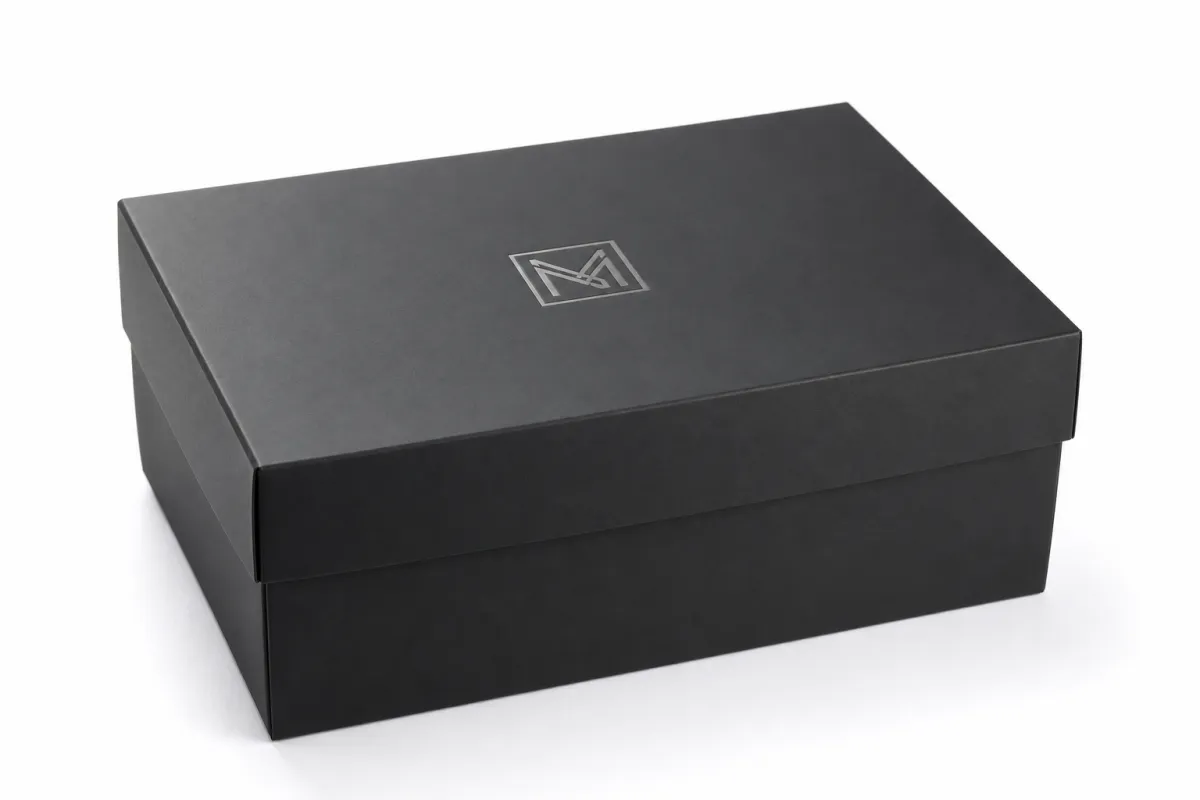
Custom matte boxes with logo are popular for a simple reason: they look controlled. Gloss can be flashy, but it can also bounce light around and make print look busier than it really is. Matte behaves differently. It softens reflection, which lets the logo, typography, and shape do the work. If the packaging is well designed, custom matte boxes with logo can make even a simple layout feel deliberate.
That controlled look has real branding value. A matte box tends to signal restraint, and restraint reads as confidence in packaging. A brand does not need to shout when the carton already looks composed. That is one reason custom matte boxes with logo are common in premium beauty, clean skincare, artisan food gifts, and subscription packaging. The finish helps the product feel more expensive without relying on metallic ink, oversized graphics, or heavy decoration.
There is a behavioral side too. People pick up matte packaging differently. The surface feels softer to the eye and often more tactile in the hand, especially if soft-touch lamination is used. When someone touches custom matte boxes with logo, the finish can create a small sensory pause. That pause matters. It buys the brand a second look.
Matte also helps in photography and retail displays. I see matte packaging perform well in e-commerce because it produces fewer hot spots and cleaner color separation on camera. That means custom matte boxes with logo usually photograph more consistently under mixed lighting. If your product is sold through retailers, it also avoids the mirror effect that makes shelf facings look uneven under overhead lights. The result is a box that holds its shape visually, even in less-than-perfect settings.
Still, matte is not automatically premium. Weak print, muddy blacks, and poor layout can make custom matte boxes with logo look flat in the bad sense. A matte surface reduces shine, but it also removes a layer of visual forgiveness. That means color accuracy, line weight, and spacing need more discipline. If the design relies on gloss to hide flaws, matte will expose them. No surprise there.
For brands deciding between finishes, the question is not "matte or gloss?" It is "what should the box make people feel first?" Gloss often says energetic, loud, and promotional. Matte says calm, refined, and modern. Custom matte boxes with logo work best when the product itself supports that message. If your brand sells luxury skincare, natural supplements, boutique candles, or gift sets, matte is usually a good fit. If you sell sports drinks or kids' novelty items, not always.
How Custom Matte Boxes With Logo Are Printed and Finished
Custom matte boxes with logo are usually printed on paperboard and finished with a matte coating or lamination. The exact process depends on the structure, budget, and quantity. For folding cartons, common substrates include 300gsm to 400gsm SBS, C1S artboard, or folding box board. For rigid presentation packaging, chipboard wrapped with printed paper is more common. The finish can be applied as matte aqueous coating, matte varnish, or matte lamination, and each option behaves differently in the hand and on the shelf.
Print Method
Offset printing is the standard choice for custom matte boxes with logo when you want consistent color and clean detail across larger runs. It handles fine typography, dense solids, and detailed artwork better than many low-end digital setups. Digital printing can work well for smaller batches or quick prototyping, but color matching tends to be less forgiving. If your logo uses a delicate gradient or specific brand color, ask for a proof that reflects the actual board and finish, not just a flat screen image.
For short runs, custom matte boxes with logo can also be produced digitally with matte lamination or a matte aqueous topcoat. That is useful when you want to test different sizes or sell seasonally. For higher volumes, offset usually gives better per-unit pricing and more predictable output. There is no universal best option. The right choice depends on quantity, artwork, and how strict your brand color requirements are.
Matte Coating Options
Aqueous coating is common because it is economical and dries quickly. It gives custom matte boxes with logo a soft sheen reduction without the heavier feel of film lamination. Matte varnish is another option, though it can vary more in appearance depending on the press and ink density. Matte lamination adds a film layer, so it often feels smoother and more durable, but it can increase cost and sometimes mute contrast if the artwork is too dark.
Soft-touch lamination is a separate category and deserves attention. It gives custom matte boxes with logo a velvety, almost rubberized hand-feel that buyers often associate with premium goods. The tradeoff is cost and scratch behavior. Soft-touch can show scuffs if handled roughly in transit or retail. If the box needs to survive repeated handling, ask for a sample before committing. Fancy finishes are great until they arrive marred by carton rub.
Special Effects That Still Work With Matte
Matte does not mean plain. Custom matte boxes with logo can still include foil stamping, embossing, debossing, spot UV, or raised ink. The trick is restraint. A small foil logo on a matte field can look expensive because the contrast is controlled. A full page of effects can make the box look confused. Spot UV can also work, but only if it is used to highlight a small design area rather than cover the entire surface. Otherwise, the matte effect disappears under the wrong lighting.
From a production standpoint, the easiest premium combination is often this: matte lamination, one-color or two-color printing, and a single accent like foil or emboss. That formula works especially well for custom matte boxes with logo because the finish itself already carries the luxury signal. You do not need to keep piling on decoration just to prove the box cost money.
For brands handling food or wellness products, you should also check compliance needs. Food-contact packaging, ink migration concerns, and coating safety can matter depending on how the box is used. If the packaging only acts as an outer carton, requirements are different than if it directly touches the product. Ask the supplier for material specs and any relevant certifications such as FSC for paper sourcing or food-safe declarations where applicable. A pretty box that misses the basic paperwork is still a problem.
Design Factors That Change the Look and Feel
The finish gets attention, but the design decisions do the heavy lifting. Custom matte boxes with logo can look expensive or underwhelming based on spacing, typography, board thickness, and ink coverage. A matte surface exposes layout discipline. If the margins are tight, the logo is too small, or the copy is crowded, the whole package starts looking cheap fast. That is just how it is.
Start with logo placement. On custom matte boxes with logo, the logo usually works best when it has room to breathe. Centered placement can feel formal and clean. Upper placement can feel more editorial. A side-panel logo can look modern if the front face stays minimal. The key is not to jam the mark into the busiest part of the carton. In practice, the matte finish lets negative space become part of the design, so use it.
Typography matters just as much. Thin fonts can disappear if the coating is heavy or the print contrast is weak. Large, clear type tends to perform better on custom matte boxes with logo, especially for small retail packaging. Sans serif styles often feel current, but serif type can work beautifully when the brand is aiming for a more heritage or boutique look. The point is not to follow trends. The point is to make the logo readable at a glance.
Color choice is another big lever. Black, off-white, charcoal, forest green, navy, and warm neutral tones usually perform well on matte packaging. Bright colors can work too, but they need control. Matte red, for example, can look deep and elegant if the ink laydown is even. On the other hand, weak yellow or pale gray may look washed out. For custom matte boxes with logo, check how your exact Pantone or CMYK values look on the actual board after finishing. Screens lie. Paper does not.
Box structure also changes perception. A tuck-end folding carton feels different from a rigid lid-and-base box, even with the same print finish. Custom matte boxes with logo on a rigid structure usually read as more luxurious because the board thickness, closure, and weight all reinforce the message. Folding cartons are more efficient and easier to ship flat, which is often the right call for consumer goods with tighter margins. There is no shame in choosing the less expensive structure if the product does not need a presentation box.
Window cutouts are worth thinking about carefully. A window can help if the product itself is visually strong, but on custom matte boxes with logo it can also break the clean, controlled look. If you add a window, shape and placement matter. A small, precise cutout often feels intentional. A large, awkward one usually just feels like the design was struggling.
Finish consistency is easy to ignore until you compare samples. Matte coatings can vary slightly in texture across suppliers, especially if the board stock changes. Ask for a production sample or at least a final prototype before approving the full run. With custom matte boxes with logo, a half-gloss result or patchy matte area can ruin the whole presentation. Buyers notice those things faster than brands expect.
And yes, print coverage affects cost and appearance. Full-bleed dark artwork on custom matte boxes with logo can look dramatic, but it often requires tighter color control and can show more handling marks. Lighter designs are safer for large production runs and can still feel premium if the typography and structure are strong. The box does not need to be busy to be effective.
One practical detail that gets missed: matte does not hide bad dielines. If the fold lines are off, the corners crush, or the glue area is too close to live artwork, the problem becomes obvious fast. I usually tell buyers to inspect the prototype with the same annoying attention a retailer would use. If something feels slightly off in your hands, it will feel off on shelf too.
Cost and Pricing for Custom Matte Boxes With Logo
Pricing for custom matte boxes with logo depends on material, size, finish, quantity, and how much setup the artwork needs. Buyers often want a simple answer, but there is no single number that works across the board. A folding carton in a standard size might be quite affordable at volume, while a rigid box with soft-touch lamination and foil stamping can cost several times more. That is not a markup mystery. It is just material and labor.
For a useful starting point, here are broad ranges for custom matte boxes with logo in common production scenarios:
| Box Type | Typical Quantity | Approximate Unit Cost | Notes |
|---|---|---|---|
| Simple folding carton, matte coating | 5,000+ units | $0.18-$0.40 | Best for lightweight retail products and standard sizes |
| Folding carton with matte lamination and one special effect | 3,000+ units | $0.35-$0.75 | Common for cosmetics, candles, and premium supplements |
| Rigid box with matte wrap | 1,000+ units | $1.20-$3.50 | Better for gift sets, luxury items, and presentation packaging |
| Rigid box with soft-touch, foil, or embossing | 1,000+ units | $2.00-$5.00+ | Higher-end finish, more setup, more labor |
Those ranges are not promises. They are practical buyer ranges that move up or down based on size, board thickness, print coverage, and shipping terms. Custom matte boxes with logo become more cost-effective as quantity rises because setup costs get spread out. A 500-piece run can look expensive on a per-unit basis, while a 5,000-piece run often lands much lower once the press is already set.
Size affects price more than many first-time buyers expect. A small two-piece cosmetics carton uses less material and may fit on a more efficient sheet layout. A large subscription box or apparel mailer can require heavier board, more waste, and stronger glue lines. Custom matte boxes with logo also rise in price when the design uses complex die cuts, windows, internal inserts, or multiple print passes. Fancy is fun. Fancy is also expensive.
Color count matters too. A clean one-color print on a matte board costs less than a full-coverage four-color design with metallic accents. If you want the logo to carry the brand, a restrained layout can be a smart budget choice. Many custom matte boxes with logo look better with less ink, not more. Buyers sometimes think "more color equals more value." Packaging does not always agree.
Shipping and warehousing can change the economics as well. Flat-packed folding cartons are easier to store and usually cheaper to ship than rigid boxes. If you do not need a presentation-style unboxing moment, folding custom matte boxes with logo can free up budget for better board or a cleaner finish. On the other hand, if your product sells on gifting or premium perception, rigid packaging may be worth the higher landed cost because the box itself does more of the selling.
When you request a quote, make sure you ask for the following: material spec, finish type, box style, dimensions, quantity, print method, and whether tooling is included. Without that, the numbers are almost useless. A supplier quoting custom matte boxes with logo needs to know if you want a standard tuck carton or a rigid setup, because the difference is not small. It is often the difference between reasonable and irritating.
Step-by-Step Process and Timeline for Custom Matte Boxes With Logo
The production path for custom matte boxes with logo usually follows a familiar sequence, but good projects still depend on how carefully each step is handled. Rushing the first stages tends to create rework later. That rework costs time and money, which is exactly what most buyers were trying to avoid.
1. Define the box requirements
Start with the product dimensions, weight, shipping method, and display needs. If the item is fragile, the box may need internal support or a stronger board. If it sits on a shelf, front-panel readability becomes more important. Custom matte boxes with logo should be sized around the product, not the other way around. A loose box feels cheap. A box that is too tight can create scuffing and shipping issues.
2. Choose the structure and finish
Decide whether you need a folding carton, rigid box, mailer, sleeve, or drawer-style format. Then choose the finish. Matte aqueous coating is usually the budget-friendly route. Matte lamination gives more surface control. Soft-touch gives the richest hand-feel, but it also raises cost and can show wear differently. For custom matte boxes with logo, this is where the brand promise and the operational reality need to meet in the middle.
3. Prepare artwork and dielines
Once the structure is fixed, the dieline should guide the artwork layout. Keep logos away from folds, glue areas, and trim edges. Leave enough safety margin so the final cut does not clip important content. On custom matte boxes with logo, even a tiny registration error can make the panel look off-center. That is why prepress review matters so much. A clean proof is cheaper than a full reprint.
4. Review proof samples
Request a digital proof first, then a physical sample if the project is important. The physical sample is where the truth appears: color depth, coating feel, fold quality, and logo clarity. For custom matte boxes with logo, I would never approve a new finish without seeing one under normal indoor light and, if possible, under retail-style lighting too. The same box can look different in each setting.
5. Approve production and schedule the run
After approval, production usually takes around 12-15 business days for standard folding cartons and 15-25 business days for more complex rigid boxes, depending on quantity and finish. Add time if you need special effects, inserts, or custom structural engineering. Custom matte boxes with logo with foil or embossing often need a little more patience. The people who promise "instant luxury packaging" are usually selling a headache with a nice coat of paint.
6. Inspect the finished shipment
When the boxes arrive, check color consistency, finish uniformity, edge crispness, and glue strength. For shipping-related testing, look to ISTA methods or at least a basic drop and compression test if the box will travel. If you are using custom matte boxes with logo for retail and e-commerce fulfillment, the packaging should survive real handling, not just sit pretty on a render file.
A simple timeline for custom matte boxes with logo often looks like this: 1-2 days for requirements, 2-4 days for artwork review, 2-5 days for prototyping, and then production plus transit time. Faster is possible, but only when the design is already locked and the supplier has capacity. If you need structural changes late in the process, expect the schedule to stretch. Packaging never gets slower because everyone is in a good mood.
If you are working with a launch date, pad the calendar. A two-day delay in packaging can become a two-week delay in fulfillment if the boxes are the last thing blocking assembly. I have seen that happen more than once, and it is always avoidable. Usually with one earlier proof review and fewer "tiny" changes that are not actually tiny.
Common Mistakes to Avoid With Matte Packaging
One of the most common mistakes with custom matte boxes with logo is assuming that matte hides poor design. It does not. It hides glare. That is all. If the logo is too small, the spacing is awkward, or the colors are muddy, matte will not rescue the box. It will simply make the problems look quieter.
Another mistake is choosing the wrong board weight. Thin stock can buckle, especially for larger cartons or products with sharp corners. Custom matte boxes with logo should feel stable when squeezed lightly. If the carton flexes too much, the premium impression falls apart immediately. Buyers may not know the board specification, but they absolutely feel when a box feels flimsy.
Overusing special effects is another classic problem. A matte surface already carries a premium signal. Add too much foil, too much spot UV, and too much embossing, and the design starts competing with itself. The best custom matte boxes with logo usually use one focal point. Maybe two. More than that and the brand begins to look like it is trying very hard, which is rarely the luxury message anyone wants.
Ignoring print contrast is also risky. Dark matte boxes with a low-contrast logo can look elegant on screen but disappear in real light. Light matte boxes with pale typography can do the same. Before placing a large order, test the design in the actual environment where the box will be seen. Store shelves, shipping photos, countertop displays, and social media content all reveal different weaknesses. Custom matte boxes with logo should work in all of them, or at least in the most important ones.
Do not forget supply chain basics either. Ask about lead times for the board, coatings, inserts, and shipping cartons. If one component is delayed, the entire project stalls. Custom matte boxes with logo are often part of a product launch calendar, so missing the packaging date can affect everything downstream. That sounds obvious until you watch a launch slip because a foil plate was approved late.
Finally, do not skip the test fit. A box can look perfect and still fail in practice if the product rattles around inside or the closure is too tight. Put the actual product inside the sample and check the unboxing motion. Custom matte boxes with logo should feel smooth to open, solid to close, and secure enough to protect the item. Packaging is supposed to reduce friction, not create a small daily battle for the customer.
One more thing people underestimate: matte is less forgiving of fingerprints, adhesive smudges, and edge crush. If your fulfillment team handles packaging a lot, darker shades and soft-touch finishes need extra care. That does not mean you should avoid them. It means you should decide with your eyes open, not after the pallet shows up looking tired.
Final Checks Before You Order Custom Matte Boxes With Logo
Before placing the order, check a few things that often get overlooked. First, confirm the exact dimensions with real product samples, not just spec sheets. A few millimeters can matter more than people think. Second, confirm the finish sample in daylight and indoor light. Custom matte boxes with logo can shift character depending on the setting. Third, make sure the logo clear space is respected on every panel.
Next, ask for the full material description. If you want sustainability claims, make sure they are backed by an actual paper source or certification. FSC-certified board is a strong starting point for many brands, but only if the chain of custody is in place. If the packaging will ship through rough channels, ask about compression resistance and transit testing. A matte finish is not a substitute for structural integrity. It is still a box, after all.
Also review how the packaging will be stored and assembled. Flat custom matte boxes with logo save space, but they may require hand folding or machine setup. Rigid boxes may arrive pre-formed, which reduces assembly time but increases freight volume. Make sure the packaging plan fits your warehouse team, not just your brand deck. Pretty packaging that slows fulfillment is expensive in a very boring way.
If you are comparing multiple quotes, make them comparable. Same size. Same board. Same finish. Same effect count. Otherwise you are not comparing custom matte boxes with logo at all. You are comparing unrelated quotes and pretending the numbers mean something. That is how buyers get confused and suppliers get blamed for the wrong reason.
One practical habit that saves headaches: approve a production sample with the actual product inside, and keep that sample on hand for future reorders. It becomes the reference point when a supplier changes paper stock or a new team member starts handling packaging approvals. Small step. Big payoff.
One more thing: order a few extra units if the project is new or if the design is delicate. Those extras help with photography, retailer samples, internal approvals, and the occasional damaged unit. For custom matte boxes with logo, the first batch is often the one that teaches you the most. Better to have a little buffer than to run out right when the product is gaining traction.
FAQs
Are custom matte boxes with logo better than glossy boxes?
Not universally. Custom matte boxes with logo usually feel calmer, more premium, and less reflective, which helps in photography and retail display. Gloss can work better for energetic, promotional, or youth-oriented products. The right choice depends on the brand personality, product category, and where the box will be seen.
What finish is best for custom matte boxes with logo?
For many brands, matte lamination or matte aqueous coating is the practical starting point. If the box needs a softer, more tactile feel, soft-touch lamination is worth considering. For custom matte boxes with logo that need more protection and a richer hand-feel, soft-touch can be strong, but it usually costs more and can show wear differently.
Can custom matte boxes with logo include foil or embossing?
Yes. In fact, matte is often a good base for foil, embossing, or spot UV because the contrast is stronger. The key is restraint. One strong accent usually works better than several competing effects. With custom matte boxes with logo, the finish should support the brand, not wrestle with it.
What material should I choose?
For folding cartons, 300gsm to 400gsm SBS or C1S artboard is common. For rigid packaging, chipboard wrapped with printed paper is standard. The right choice depends on product weight, presentation goals, and shipping needs. Custom matte boxes with logo can look excellent on either structure if the board and finish are matched properly.
How long does production usually take?
Standard folding cartons often take about 12-15 business days after proof approval. Rigid boxes and special finishes can take 15-25 business days or more. That does not include transit time. If you need custom matte boxes with logo for a launch date, build in extra time for sampling and revisions.
What should I ask the supplier before ordering?
Ask for material specs, finish type, exact dimensions, print method, whether tooling is included, sample options, and shipping terms. If custom matte boxes with logo are meant for retail or e-commerce, ask about packaging strength and transit testing too. It is a lot easier to answer those questions before production starts than after the boxes arrive.
Do matte boxes show fingerprints?
They can, especially with darker colors and soft-touch finishes. Matte reduces glare, but it does not make the surface invisible to handling. If your custom matte boxes with logo will be touched often, request a sample and check how the finish behaves after repeated handling.
Are custom matte boxes with logo a good fit for small businesses?
Yes, if the product and budget justify it. Small brands often use custom matte boxes with logo to create a more premium first impression without needing expensive structural packaging. The trick is to keep the design disciplined and the finish choices realistic. You do not need every effect in the catalog to look serious.
Custom matte boxes with logo work best when the design, board, and finish all support the same message. Keep the layout clean, Choose the Right material, and resist the urge to overdecorate the surface just because the budget allows it. That is how custom matte boxes with logo end up looking intentional instead of cluttered. If the goal is a premium package that feels calm, credible, and worth opening, start by locking the structure, finish, and sample approval before you place the full run. That order matters more than the pretty render does.

