Buyer Fit Snapshot
| Best fit | Printed Paperboard Sleeves for Brands projects where brand print, material claims, artwork control, MOQ, and repeat-order consistency need to be specified before quoting. |
|---|---|
| Quote inputs | Share finished size, material target, print colors, finish, packing count, annual reorder estimate, ship-to region, and any compliance wording. |
| Proofing check | Approve dieline scale, logo placement, barcode or warning zones, color tolerance, closure strength, and carton packing before bulk production. |
| Main risk | Vague material claims, crowded artwork, missing packing details, or unclear freight terms can make a low unit price expensive after revisions. |
Fast answer: Printed Paperboard Sleeves for Brands: Board, Finish, Dieline, and Unit Cost should be specified like a repeatable production item. The safest quote records material, print method, finish, artwork proof, packing count, and reorder notes in one written spec.
Production checks before approval
Compare the actual filled-product size with the drawing, then confirm tolerance on folds, seals, hang holes, label areas, and retail display edges. Reserve space for logos, QR codes, warning copy, and material claims before decorative graphics fill the panel.
Quote comparison points
Review material grade, print process, finish, sampling route, tooling charges, carton quantity, and freight assumptions side by side. A quote is only useful when the supplier can repeat the same color, closure quality, and packing count on the next order.
Printed Paperboard Sleeves for Brands: Smart Packaging Guide
Printed paperboard sleeves for brands do one very specific job well: they make a basic pack look intentional. Keep the carton, tray, jar, or multipack that already works. Add a printed sleeve where shoppers actually see it. That gives you more visual impact without blowing up the whole structure and starting over from scratch.
I keep seeing the same pattern in launches, holiday editions, regional rollouts, and SKU refreshes. The packaging team already has a functional base pack, but the shelf face needs more punch, more room for claims, or a cleaner way to localize artwork. A sleeve solves that problem faster than a full carton rebuild. And yeah, it avoids the ugly little moment where someone realizes the warehouse is sitting on boxes nobody can use anymore.
Printed paperboard sleeves for brands also make sense when timing is tight. You can refresh graphics, swap out a seasonal message, or separate variants without changing the entire packaging system. That matters more than people admit. A lot of brand decisions are made under deadline pressure, not in a design vacuum with perfect lighting and a giant mood board.
Printed Paperboard Sleeves for Brands: What They Are
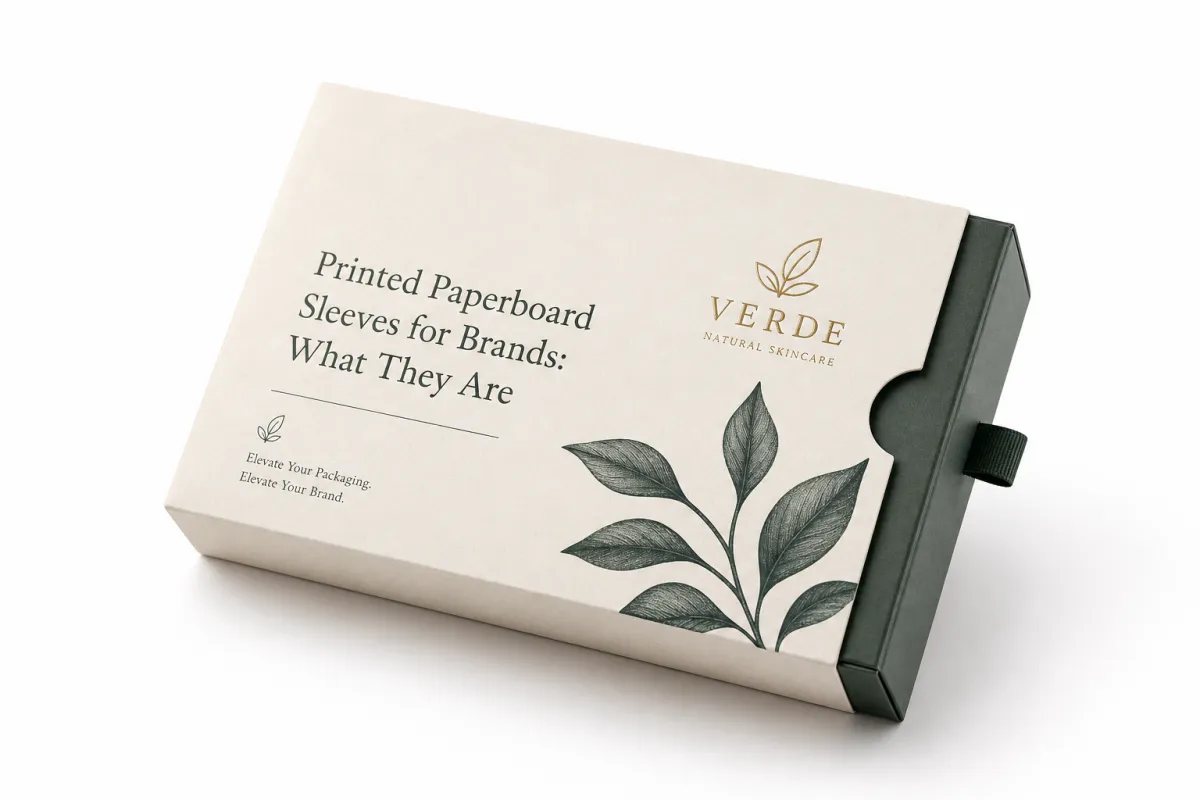
A printed paperboard sleeve is an outer wrap, band, or partial cover made from paperboard that fits around a product package. It can surround a box, tray, jar, tub, or multipack. In practice, printed paperboard sleeves for brands handle the visual story while the base pack handles the physical protection and structure.
That split is the whole appeal. The carton carries the product. The sleeve carries the brand message. That gives teams a lot of flexibility when the structure is fine but the shelf presence is weak, the language needs to change by market, or the brand wants to test different artwork without scrapping inventory that still has plenty of shelf life left.
Printed paperboard sleeves for brands are a good fit for:
- Seasonal promotions that need a quick visual update
- Gift sets and multipacks that need stronger shelf impact
- Subscription or direct-to-consumer boxes that change graphics often
- Regional versions that need different language, claims, or legal copy
- Limited editions where the artwork matters more than a new structural design
From the production side, sleeves are attractive because they reduce structural risk. You can test the look without committing to a new box shape, new tooling, or a pile of packaging that gets obsolete before the next launch. That is a very real cost advantage, not a theoretical one.
They are not magic, though. A sleeve will not fix a weak carton, a bad fit, or a product that already handles poorly in its base pack. It can cover a flaw. It cannot cure one. Printed paperboard sleeves for brands work best when the base pack is already doing its job and the sleeve is there to sharpen presentation, not pretend to be engineering.
A sleeve should make the pack easier to sell, not harder to run. If it looks great in a mockup and turns into a nuisance on the line, the design missed the point.
Good packaging vendors usually ask for dimensions, quantity, and application method before they quote anything. That is not busywork. It is how they avoid building a sleeve that fits the rendering and fails in the real world. I have seen a “close enough” sleeve turn into a box of scrap faster than anyone wanted to admit.
How Printed Paperboard Sleeves for Brands Work
The production path starts with a flat sheet. That sheet gets prepress setup, printed, dried or cured, then die-cut and scored so it can fold into the finished shape. Depending on the design, the sleeve may be glued, tab-locked, wrapped as a band, or left open along one seam.
The important bit: the sleeve is built around the product, not the other way around. A tuck carton and a tray sleeve do not behave the same way. A hand-applied sleeve and a machine-applied sleeve do not behave the same way either. Miss that distinction and the result looks polished in the PDF but annoying at the packing table.
Printed paperboard sleeves for brands usually land in a few common positions:
- Wrapped around the center of a carton as a belly band
- Slid over the top of a box or tray to frame the product face
- Locked with tabs or a glued seam for a tighter fit
- Applied to a multipack that needs one strong front panel
The real advantage is surface area. A sleeve gives you more room than a label, which means you can fit product names, flavor cues, hero imagery, claims, regulatory copy, barcodes, and promo text without cramming everything into one tiny panel. That extra room helps, but only if someone manages the hierarchy. Too many sleeves try to act like a billboard and end up reading like a shouting match.
Printed paperboard sleeves for brands also need to fit the packing environment. Some are hand-applied at low volume. Others are designed for semi-automated or fully automated lines. Once a sleeve has to move through a machine, tolerances matter more than opinions. Slot width, score depth, seam placement, board memory, and even how the board was stored all affect whether the sleeve folds cleanly or fights back.
If you want to see how that difference shows up in actual projects, our Case Studies are useful. They show the gap between a tidy dieline and a sleeve that survives production without creating drama. That gap is where a lot of avoidable cost hides.
The handoff should be boring in the best possible way. Artwork goes to prepress. The dieline gets confirmed. Proofs get checked. Printed sheets get finished and converted into sleeves. Skip one step and the job still gets made, just not the way anyone intended. Packaging rewards patience. It has no patience for guessing.
Key Factors That Affect Sleeve Performance
Material choice comes first. For printed paperboard sleeves for brands, the board grade changes stiffness, print sharpness, fold quality, and how the sleeve feels in hand. A good sleeve feels deliberate. A bad one feels like a cost-saving move that got too confident.
Common options include 300-400 gsm artboard, 14pt-18pt SBS, and heavier stocks when the sleeve needs more body. Size matters too. A small cosmetic sleeve does not want the same caliper as a large multipack. Too thin and the sleeve bows, dents, or loses shape after handling. Too thick and it gets stubborn on the fold, which is great if your goal is to annoy the packing crew.
Printed paperboard sleeves for brands also depend on finish. Matte aqueous coating gives a quieter, cleaner look. Gloss makes color pop. Soft-touch signals premium, but it adds cost and can show scuffing in ugly ways if the pack moves through rough handling. Foil and embossing can lift perceived value fast, then drag the budget and schedule right behind them. Premium effects are not free. They just move the bill around.
What usually drives the shelf result
- Seam placement: Put it where it will not cut through the main graphic or barcode area.
- Score quality: Clean scoring reduces cracking on dense ink coverage and heavy solids.
- Clearances: Tight fits can slow packing or scuff the base package.
- Ink coverage: Full-bleed dark colors and rich blacks expose fold issues faster than light layouts.
- Hierarchy: From a few feet away, the sleeve should sell the product before anyone reads the details.
Brand copy and regulatory copy need a clear order. The shopper should notice the product name, flavor, or variant first. Benefits come next. Details follow. If everything is trying to win the first glance, nothing lands. That is not bold design. That is clutter with a marketing budget.
Printed paperboard sleeves for brands also need to behave under distribution requirements. If the finished pack will move through retail channels, ask whether it should be evaluated against ISTA profiles such as ISTA testing or a related transit test plan. If fiber sourcing matters, FSC-certified paperboard may matter too. These are not decorative checkboxes. They keep the job from turning into a late-stage argument.
The practical takeaway is simple. A sleeve should match the product, the line, and the brand story. Miss one and the package starts looking expensive in all the wrong places. That is the point where printed paperboard sleeves for brands either earn their keep or expose a planning issue nobody wanted to name.
Cost and Pricing for Printed Paperboard Sleeves for Brands
Pricing for printed paperboard sleeves for brands usually breaks into setup, print method, board stock, die cutting, finishing, assembly, and freight. If a quote does not show those pieces, it is not much of a quote. It is a guess wearing a blazer.
Short runs cost more per unit because setup gets divided across fewer pieces. That is the part everyone likes to ignore until the spreadsheet stops being polite. A 1,000-piece order is not just a smaller 10,000-piece order. The setup burden sits heavier on each unit, which is why smaller runs often look pricier than people expect.
Here is a practical pricing range for printed paperboard sleeves for brands. The numbers are broad on purpose, but they are useful for planning:
| Option | Typical Quantity | Estimated Unit Cost | Best Fit | Main Tradeoff |
|---|---|---|---|---|
| Short-run digital sleeve | 500-2,000 | $0.45-$1.10 | Pilots, test launches, regional trials | Higher unit cost |
| Standard CMYK sleeve on SBS or artboard | 2,500-10,000 | $0.18-$0.35 | Retail programs, seasonal promos | Moderate setup, limited finishes |
| Premium sleeve with soft-touch, foil, or spot UV | 5,000-20,000+ | $0.32-$0.75 | Gift sets, prestige products, hero SKUs | Higher finish cost and longer lead time |
| Simple one-color or low-coverage sleeve | 5,000+ | $0.12-$0.22 | Utility packs, internal promos, high-volume basics | Less shelf drama |
Those ranges move with size, ink coverage, tolerances, and application method. A small sleeve with dense black coverage and foil does not price the same way as a larger sleeve with one-color art. Printed paperboard sleeves for brands can look cheap on paper and expensive on press if the spec keeps stacking add-ons that do not earn their place.
The pricey extras are usually obvious. Foil stamping, embossing, soft-touch lamination, high-tack adhesives, unusual die shapes, and hand application push cost up faster than most teams expect. A more complicated shape is not automatically better. Often it is just harder to quote, harder to pack, and harder to reorder without a headache.
Savings usually come from the unglamorous decisions: use a standard size, keep the shape simple, limit finish layers, and reuse an existing dieline. None of that ruins the design. It makes the program repeatable. That matters when the sleeve needs to scale past one launch.
For a clearer look at how the numbers shift by format, our Case Studies show how small spec changes can move total project cost by 15-30% without changing the visible result much at all. That is the part buyers miss when they compare artwork before they compare spec. Then the invoice shows up and everybody suddenly remembers math exists.
Ask vendors whether the quote includes plates, tooling, proofing, packaging, and application labor. If those items are split out, fine. If they are hidden, you are not comparing similar quotes. You are comparing blind spots.
Process and Timeline for Printed Paperboard Sleeves
The first step in printed paperboard sleeves for brands is the brief. A useful brief includes product dimensions, quantity, pack style, print goals, finish choices, and whether the sleeve will be hand-applied or machine-applied. Leave out the application method and the spec will wander. It always does.
Proofing comes next. Expect a dieline review, a digital proof, and sometimes a physical mockup before production begins. This is where teams catch the mistakes that would otherwise show up on a full run. Skipping proofing is a very efficient way to buy expensive surprises later.
Printed paperboard sleeves for brands usually move through this sequence:
- Artwork and dieline confirmation
- Prepress setup and color checks
- Printing and drying or curing
- Coating or specialty finishing
- Die cutting and scoring
- Conversion, folding, or gluing
- Inspection and packing
Each step adds time when the design gets more complicated. A plain CMYK sleeve can move quickly once approvals are locked. A sleeve with foil, embossing, tight registration, or special folding needs more room in the schedule. There is no elegant workaround for that. Fancy work takes longer.
Typical timelines for printed paperboard sleeves for brands often look like this:
- Simple sleeve: 10-15 business days after proof approval
- Premium finish sleeve: 15-25 business days after proof approval
- Complex or machine-applied sleeve: 20-35 business days, sometimes longer
Those ranges depend on vendor capacity, season, and how fast your side approves files. Delays rarely come from one huge failure. They come from five small approvals each taking an extra day. By the time everyone notices, the launch window is already getting tight.
Shipping time matters too. A sleeve that arrives after the campaign date is not a launch asset. It is inventory sitting in a corner with a story nobody wants to tell. Leave room for freight, receiving, a last sample check, and the last-minute artwork change that someone will absolutely request.
Printed paperboard sleeves for brands work best when the production timeline is treated as part of the launch plan, not an afterthought. Strong packaging is usually the result of a schedule that respects the work instead of rushing it.
Common Mistakes With Printed Paperboard Sleeves
The first mistake is bad measurements. A sleeve that is even slightly off can twist, gape, scuff, or slow the line. Measure the actual product, not the one that exists in a slide deck. That sounds obvious. It still gets missed all the time.
The second mistake is overdesigning the surface. Too many finishes, tiny type, and crowded claims can make printed paperboard sleeves for brands harder to read and more expensive to produce. If a shopper needs to squint to understand the offer, the design is doing too much and saying too little.
The third mistake is ignoring the base package. If the box underneath has weak structure, the sleeve will not fix it. It only hides it. Printed paperboard sleeves for brands are branding tools, not structural repair kits. Treat them like both and the job usually goes sideways.
The fourth mistake is forgetting how application really works. Hand-applied sleeves need different tolerances than machine-applied sleeves. A sleeve that looks fine on a flat proof may still fail on line speed, under temperature changes, or during operator handling. Production is friction, motion, and repetition. It is not a mood board.
The fifth mistake is vague artwork files. Missing bleeds, unclear spot colors, and a dieline that nobody owns are classic ways to waste proofs and delay launch. Sloppy files produce sloppy results. There is no mystery there, just avoidable pain.
Here are the specs teams should lock before release:
- Finished sleeve dimensions with tolerances
- Board grade and caliper
- Print method and color profile
- Finish stack, including coatings or foil
- Assembly method and application direction
- Carton or product photo for reference
Printed paperboard sleeves for brands also fail when teams change scope in the middle of the job. A small copy edit is not small if it moves the fold, the barcode, or the seam. Packaging changes have side effects. That is why late-stage revisions cost more than anyone wants them to.
Want a smoother process? Ask for one approved spec sheet and keep it locked. Reorders get easier, internal approvals move faster, and your vendor does not have to re-guess the job every time. That alone keeps printed paperboard sleeves for brands from turning into a recurring headache.
Expert Tips and Next Steps for Printed Paperboard Sleeves
Start with one hero SKU or one launch use case before you scale. It is cheaper to learn on a focused run than to discover problems across an entire line. Printed paperboard sleeves for brands are excellent at proving a concept. They are terrible at hiding bad planning across six variants at once.
Ask for a sample spec package. Finished size, board grade, print method, finish stack, and application method should all sit in one place. That gives you a clean baseline for future orders and makes vendor comparisons much less slippery. If one supplier quotes 16pt SBS and another quotes “premium board,” you do not have a comparison. You have noise in a spreadsheet.
Use finish where it matters. Put premium effects where shoppers touch or look first, then keep the rest clean and efficient. A foil logo on the front panel can do more for shelf presence than coating the entire sleeve. Printed paperboard sleeves for brands should create value where people notice it, not burn budget on hidden panels no one will ever touch.
There is also a strategic angle here. If the sleeve localizes a product, make the variable area easy to update. If the sleeve supports a promotion, make sure the core structure can stay unchanged for the next run. Good sleeve programs are modular. Bad ones turn into one-off puzzles nobody wants to reorder.
Use a vendor comparison sheet with these columns:
- Quantity
- Finished dimensions
- Board grade
- Print method
- Finish level
- Application method
- Proofing steps
- Lead time
That is the easiest way to compare printed paperboard sleeves for brands without getting fooled by a low headline number. The cheapest quote is not always the lowest total cost once you add rework, reproofs, or line problems.
If you are building a new packaging program, review a few packaging Case Studies and look for the pattern behind the finished result. The good ones usually share the same traits: simple construction, clear hierarchy, realistic finishes, and tight spec control. Fancy is fine. Random is expensive.
For brands working with Custom Logo Things, the next step is straightforward: audit one product, gather its measurements, choose the finish level, and request quotes for printed paperboard sleeves for brands using the same spec across vendors. That gives you a clean apples-to-apples comparison instead of a stack of guesses dressed up as a pricing sheet.
Final Take on Sleeve Strategy
Printed paperboard sleeves for brands earn their place when the base package handles the physical job and the sleeve handles the commercial one. That is the sweet spot. You get flexibility, faster artwork changes, and a stronger retail face without rebuilding the entire packaging system.
That is also why printed paperboard sleeves for brands keep showing up in smart packaging programs. They are not magical. They work because they fit the way brands actually launch: with budgets, deadlines, and the occasional last-minute change that no one wants to discuss until it is already urgent.
Choose the Right board, keep the shape sane, proof the dieline, and compare quotes on the same spec. Do those four things well and printed paperboard sleeves for brands become a practical tool instead of a risky experiment. For brands that need shelf impact without a full carton redesign, printed paperboard sleeves for brands are often the cleanest middle ground.
Here’s the part I’d actually pin to the wall: lock the product dimensions, lock the application method, and lock the spec sheet before artwork goes live. Do that, and the sleeve stays a branding decision instead of becoming a production problem with a fancy print job attached. Simple. Not easy, but simple.
Frequently Asked Questions
What products work best with printed paperboard sleeves for brands?
They Work Best on cartons, jars, tubs, trays, multipacks, and gift sets where the base package already provides the structure. They are also a strong fit for seasonal promos, limited editions, and SKU refreshes because you can change the face without rebuilding the box. They are less useful when the pack needs the sleeve itself to provide heavy protection, because paperboard is for branding first, not armor.
How much do printed paperboard sleeves usually cost?
Price depends on size, board stock, print method, finishes, die cutting, and whether the sleeve is assembled by hand or on a line. Short runs cost more per unit because setup gets spread across fewer pieces; higher volumes lower unit cost but raise inventory commitment. Special finishes like foil, embossing, or soft-touch coatings add cost quickly, so ask for separate line items before you compare quotes.
How long does production take for printed paperboard sleeves?
Simple jobs can move fairly fast once artwork and dielines are approved, but custom finishes and complex shapes extend the schedule. Proofing usually comes before full production, and the approval step is where timelines slip when files are incomplete or stakeholders move slowly. Add shipping time and a buffer for launch changes, because a sleeve that arrives after the campaign date is just expensive paperwork.
Are printed paperboard sleeves recyclable?
Often yes, if the sleeve is made from paper-based board and does not use heavy plastic lamination or other mixed materials. Local recycling rules still matter, so the final answer depends on the coatings, inks, and waste stream in the market where it is sold. If recyclability is a priority, ask for board and finish options early so you are not trying to make a glossy premium sleeve do a sustainability job it cannot do.
What should I send to get an accurate quote for printed paperboard sleeves?
Send product dimensions, target quantity, application method, and a photo or sample of the item the sleeve will cover. Include print goals, finish preferences, timeline, and whether you already have a dieline or need the vendor to create one. For brands comparing printed paperboard sleeves for brands, the cleanest quote comes from a spec that spells out packaging only versus packaging plus assembly and fulfillment.


