Buyer Fit Snapshot
| Best fit | printed pillow boxes with logo branding for packaging buyers comparing material specs, print proof, MOQ, unit cost, freight, and repeat-order risk where brand print, material, artwork control, and repeat-order consistency matter. |
|---|---|
| Quote inputs | Share finished size, material target, print colors, finish, packing count, annual reorder estimate, and delivery region. |
| Proofing check | Approve dieline scale, logo placement, barcode or warning zones, color tolerance, and any recyclable or compostable wording before bulk production. |
| Main risk | Vague material claims, crowded artwork, or missing packing details can create delays even when the unit price looks attractive. |
Fast answer: Printed Pillow Boxes with Logo Branding: Dieline, Finish, Proof, and Buyer Review should be specified like a repeatable production item. The safest quote includes material, print method, finish, artwork proof, carton packing, and reorder notes in one written spec.
What to confirm before approving the packaging proof
Check the product dimensions against the actual filled item, not only the sales mockup. Ask for tolerance on folds, seals, hang holes, label areas, and retail display edges. If the package carries a logo, QR code, warning copy, or legal claim, reserve that space before decorative graphics fill the panel.
How to compare quotes without losing quality
Compare board or film grade, print process, finish, sampling route, tooling charges, carton quantity, and freight assumptions side by side. A lower quote is only useful if the supplier can repeat the same color, closure quality, and packing count on the next order.
Printed Pillow Boxes with Logo: Branding That Carries More Than Its Size
Printed pillow Boxes With Logo can do a lot of brand work for a package that looks almost modest at first glance. A candle, a jewelry set, a soap bar, a tea sample, or a small accessory feels more complete the moment it goes into a pillow-style carton carrying the brand mark, because the package gives the product a finish before anyone even opens it. That first visual cue often pulls more weight than the physical size of the box, and for brands that want a polished retail look without moving into rigid-box territory, printed pillow boxes with logo usually land in a very practical middle ground where presentation, speed, and cost all make sense together.
That balance is why printed pillow boxes with logo show up so often in gift packaging, boutique retail, subscription inserts, and event giveaways. The shape stays simple, but it never has to feel generic if the artwork is handled with care. The curved face gives the carton a recognizable silhouette, and the print can make the whole piece feel more refined than the board weight would suggest. If you are comparing formats across Custom Packaging Products, the pillow box is one of the most efficient ways to make a brand visible without adding more structure than the product really needs.
I’ve always liked this format because it looks straightforward, yet the details matter a lot. The shape is already doing part of the branding, which means the design does not need to shout to be effective. It needs good contrast, thoughtful placement, and a finish that matches the product inside. That is the real strength of printed pillow boxes with logo: they feel intentional without pushing the order into luxury-box pricing.
What Printed Pillow Boxes With Logo Are and Why They Stand Out
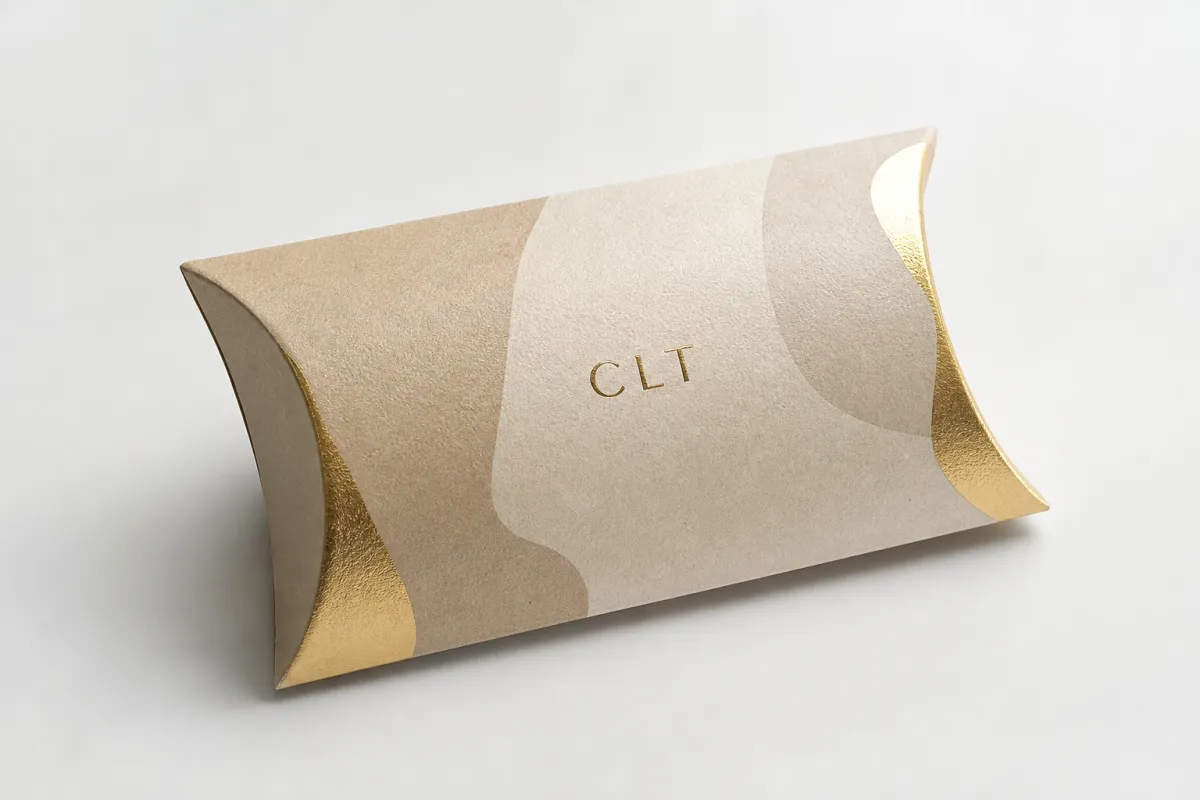
Printed pillow boxes with logo are curved, self-locking cartons usually made from folding paperboard or another lightweight stock. They are die-cut flat, then folded into a shape that swells gently in the center and tucks at both ends. That construction keeps them compact in shipping and tidy in storage until a packing line needs them. For lightweight retail goods and gift items, the format works because it combines presentation and handling in one small, efficient piece.
The visual effect is immediate. A plain sleeve or a basic tuck-end carton can handle the job, but printed pillow boxes with logo add a softer, more giftable feel without needing a rigid board structure. The curved center gives the artwork a bit of movement, and that matters on a shelf where a package may only get a quick glance from a few feet away. The logo becomes part of the form instead of sitting awkwardly on top of it, which is one reason the shape feels finished even before the product is touched.
That said, the format has a clear lane. Heavier products, fragile items that need serious crush resistance, or goods that have to survive rough parcel handling may need a stronger carton or an outer shipper. A pillow box works best when the item is light, the brand wants a polished presentation, and the box is acting as a display layer rather than the main protective shell. From a buyer’s point of view, that distinction helps keep the budget honest and the expectations grounded.
For many brands, printed pillow boxes with logo also make sense because the print area is forgiving in a visual sense. Full coverage is not required to get a strong result. A centered mark, a restrained pattern, or a single-color brand stamp can look excellent if the stock and finish are chosen well. That is why this format shows up often for cosmetics, candles, tea accessories, apparel accessories, soaps, and sample programs. The structure stays simple, while the presentation still feels elevated.
The format also works because people understand it quickly. Open one end, insert the product, close the tuck, and the job is done. Packing teams appreciate that speed. Retail teams appreciate it too. Customers notice the same thing, because the box feels easy to hold and easy to remember. That combination is hard to fake, and printed pillow boxes with logo benefit from it every time the design respects the shape.
A pillow box should not try to tell the whole brand story. It should carry the clearest part of it, in a shape that feels understandable the moment someone picks it up.
If you are comparing packaging formats, review Custom Packaging Products beside the product dimensions and weight first. The right box is usually the one that fits cleanly, leaves enough room for branding, and avoids structural extras that do not serve a real purpose.
How They Work From Design to Shelf
The manufacturing path for printed pillow boxes with logo starts with a flat sheet. That sheet is printed, die-cut, and scored so it can fold into the pillow form with repeatable accuracy. Because the structure starts mostly flat, production stays efficient and shipping cartons can hold a large number of blanks without taking up much space. For brands ordering in volume, that compactness helps with freight, storage, and line-side organization.
Designing for this shape is a little different from designing for a standard rectangular carton. The curved center and tucked ends change the way the eye reads the artwork, so the dieline matters more than many teams expect. Safe zones, bleed, and fold lines are not minor details; they keep the logo sharp once the piece is folded and assembled. If a mark sits too close to an edge or text crosses a tuck area, the finished box can feel cramped even when the digital file looked clean on screen. That is one reason suppliers ask for a current dieline before artwork is finalized.
Printed pillow boxes with logo usually work best with one of three branding approaches. A centered logo on one face gives a clean, retail-ready look and keeps the message simple. A repeated pattern adds texture and can feel more playful or fashion-forward if the brand wants more energy. A minimal one-color mark on kraft or uncoated stock suits natural products and brands that want a quieter visual language. Each approach can work well, but the right one depends on how much attention the product already draws on its own.
From a packaging buyer’s perspective, the curved face is both an advantage and a constraint. It gives printed pillow boxes with logo a distinct silhouette, but it also means the print should work with the shape instead of fighting it. Large blocks of copy often look awkward here. A compact logo, a short tagline, and one supporting graphic element usually produce a result that feels more expensive than a crowded layout trying to do too much at once.
For teams that want a technical check, the same artwork discipline used for folding cartons applies here: keep key text away from folds, export at the proper resolution, outline fonts before production, and build the art against the correct dieline version. If the box will travel through parcel networks, transit behavior deserves attention as well. Resources from ISTA transit testing standards are useful when a package needs to withstand vibration, compression, and handling without scuffing the logo or opening at the seam.
That last point gets missed often. A design can look beautiful in a mockup and still fail in real handling if the board is too soft or the print coverage is too heavy for the intended use. The shelf does not care how polished the proof looked. It cares whether the fold stays closed, whether the logo remains aligned, and whether the box still looks clean after a few touches from warehouse staff or retail buyers.
Printed Pillow Boxes With Logo Cost, Pricing, and MOQ Basics
Pricing for printed pillow boxes with logo usually comes down to a handful of variables: board grade, print method, number of colors, finishing, box size, and whether the design includes windows, inserts, or special coatings. If the box is small and the artwork stays simple, the cost usually remains reasonable. If the order calls for foil stamping, spot UV, or a soft-touch coating, the price rises because every added effect brings setup work and another production step.
MOQ matters just as much. Small runs are useful for product launches, seasonal promotions, market tests, and limited editions, but the unit price is usually higher because setup costs are spread across fewer boxes. Larger orders tend to lower the per-box cost, especially when offset printing is part of the run. For many buyers, the best balance lands somewhere between cash flow and savings, which is why printed pillow boxes with logo are often ordered in the 1,000 to 5,000 unit range after the design is approved.
Here is the kind of pricing spread that often shows up in real quoting, though the final numbers still depend on size, artwork, and supplier setup:
| Option | Typical Build | Best For | Indicative Price |
|---|---|---|---|
| Simple kraft pillow box | 1-color print, no special finish | Natural brands, light accessories | $0.18-$0.28 per unit at 5,000 pieces |
| Full-color retail pillow box | SBS board, CMYK print, matte or gloss varnish | Cosmetics, candles, gifts | $0.24-$0.42 per unit at 5,000 pieces |
| Premium finish pillow box | Soft-touch, foil, or spot UV accents | Higher-end presentation packaging | $0.38-$0.70 per unit at 5,000 pieces |
| Short-run digital box | Lower quantity, faster setup | Tests, launches, event packaging | $0.55-$1.10 per unit at 500 pieces |
The lowest quote is not always the best value. A low unit price can hide weak stock, poor print contrast, folding trouble, or extra charges for tooling, shipping, and sampling. Before approving printed pillow boxes with logo, ask what is included in the quote: structure, print, finish, proofing, and freight. If those pieces are not listed, the numbers may not be comparable in any meaningful way.
What should you send for a useful quote? Size, product weight, expected quantity, print coverage, finish preference, and timing. If you already know the retail channel, include that too. A pillow box for a boutique counter display is not the same as one that will travel inside a mailer. That difference affects board choice and cost, and it is one of the fastest ways to avoid an underbuilt specification.
For buyers who want a more sustainable direction, FSC-certified board and recycled content are common requests. The Forest Stewardship Council is a useful reference point for responsible fiber sourcing, especially when a brand wants to make a verified paper-based claim instead of relying on vague language. Many printed pillow boxes with logo can be produced with responsible fiber content, but the exact stock, coating, and local recyclability still need to be checked before final approval.
To keep the decision practical, compare price against product value and channel. A low-cost accessory may not need premium finishes, while a higher-margin gift item may benefit from a better coating, cleaner print, or a subtle foil mark. That is where printed pillow boxes with logo often outperform plain packaging: the unit cost stays manageable, while the brand presence improves enough to justify the spend.
Production Steps and Timeline
The production sequence for printed pillow boxes with logo stays fairly consistent, though timing can vary a lot depending on how ready the artwork is. First, the supplier confirms size, stock, print method, and structure. Next comes the dieline, which should be checked carefully before the design file is locked. After that, the artwork is placed, proofed, and approved. If a physical sample is needed, that stage happens before mass production. Then the job moves into print, die-cutting, folding, packing, and shipment.
Lead time usually depends on how many variables need sign-off. A clean file with a ready dieline can move quickly, while a file that needs artwork cleanup, finish changes, or multiple proof rounds will slow the schedule. In practice, many custom pillow box jobs land somewhere around 12-15 business days from proof approval for straightforward runs, while special finishes or larger quantities can stretch beyond that. That is why launch planning matters so much for printed pillow boxes with logo. Packaging should be part of the calendar, not a late-stage fix.
A few common points can push the timeline out. Artwork revisions are the biggest one. Finish upgrades are another. If foil is added after the first proof, expect another confirmation round. If the box size changes after the dieline has already been built, the layout may need to move again. Those are normal production realities, not mistakes by default, but they still affect the calendar. Brands working with printed pillow boxes with logo should leave extra room before a launch or seasonal drop.
For product launches that depend on packaging arrival, I prefer to see the packaging locked before the final marketing push. That gives the design team time to coordinate labels, inserts, hang tags, and any outer mailers that will travel with the pillow box. If you are ordering through a broader packaging program, it can help to review other Custom Packaging Products at the same time so the visual language stays consistent across the set.
One more point deserves attention: sample approval. A digital proof is useful, but it will never show the full feel of the board, the quality of the fold, or how the print sits on the curve. For printed pillow boxes with logo, a sample or pre-production proof often catches small issues that matter later, like a logo sitting too close to a fold or a finish that looks too shiny under retail lighting. That small delay can save a much larger correction once the full run is underway.
If the boxes will travel through distribution channels, consider how the package will behave in transit. A simple internal review, paired with guidance from ISTA, can help define whether the design needs extra crush resistance, a tighter product fit, or a protective outer pack. That is especially useful for e-commerce, where the shipment may be handled more roughly than a display case in a store.
Key Factors That Affect Performance
Performance starts with fit. Printed pillow boxes with logo should match the product’s dimensions and weight so the box closes cleanly, holds its shape, and does not look bulged or loose. If the item is too tight, assembly becomes frustrating and the ends can stress the board. If the item is too small, the box feels underfilled and the presentation drops. That one detail can make a package look refined or careless without much middle ground.
Material choice comes next. SBS board gives a very clean print surface and is often chosen for bright retail graphics. Kraft board creates a more natural, earthy feel and works well for artisan products or brands with a low-gloss identity. Recycled board may support sustainability goals, but print sharpness and surface smoothness depend on the exact stock. Coated papers improve color richness, while uncoated stocks can feel more tactile. The board should be chosen for the product, not for a generic label that sounds premium. That point matters a great deal with printed pillow boxes with logo.
Finish is where perception changes quickly. Matte coatings reduce glare and feel understated. Gloss coatings add brightness and can make colors pop. Soft-touch lamination has a velvety feel that many brands use for beauty, gifting, and special editions. Spot UV can bring the logo forward without covering the whole package in shine. Foil adds a reflective accent, though it should be used with restraint on a curved package because too much reflection can overwhelm the shape. The best finish is the one that fits the product tone and the retail setting.
Handling matters too. A pillow box may sit beautifully on a shelf, but how does it hold up after warehouse sorting, packing, and customer handling? If the box is going into a mailer, then scuff resistance matters. If it is used at retail checkout, finger marks and crease memory matter more. If it is used for samples, easy opening and reclosing matter. Printed pillow boxes with logo should be evaluated against the full journey, not just the first photo.
Testing helps clarify the answer. Not every pillow box needs formal lab validation, but if the product is valuable or the distribution path is rough, a practical transit test can reveal weak points early. That could mean compression, vibration, drop, or shelf-life checks, depending on the application. Packaging teams often reference basic distribution standards and then adapt them to the item, which is usually smarter than guessing. A package that survives normal handling is worth more than one that only looks good on a mockup.
Brand tone matters as well. Printed pillow boxes with logo can read playful, elegant, rustic, modern, or promotional depending on the artwork and substrate. The box form is versatile, but the design has to make a clear choice. A restrained mark on kraft tells a different story than a saturated full-color design with metallic accents. That is not a problem; that is the advantage. The format gives you room to speak clearly without forcing the package into a style it does not naturally support.
Common Mistakes to Avoid
The most common mistake with printed pillow boxes with logo is overcrowding. Because the shape is already distinctive, some teams try to add too much copy, too many icons, and too many claims. The result is a package that loses the clean retail feel that made the format attractive in the first place. A strong logo, a short line of copy, and one supporting graphic often do more than a dense layout full of fine print.
Sizing errors come next. If the box is too shallow, the product may sit awkwardly. If it is too deep, the end folds can become clumsy and the silhouette looks less elegant. That creates assembly friction, which matters on a packing line and at the display table. Before ordering printed pillow boxes with logo, make sure the product has been measured in its final wrapped or unwrapped state, not guessed from a catalog entry.
Prepress mistakes are another headache. Missing bleed, text too close to the fold, the wrong dieline version, or a low-resolution logo can all cost time. The curved area of a pillow box needs special attention because small shifts are easier to spot there. A supplier may catch the problem early, but not always. If the design team has not worked with this format before, ask for a proof checklist and treat it as part of production, not an optional extra.
Finish and material mismatch is just as common. A delicate foil treatment looks excellent on a boutique gift box, but it may not suit a shipping-heavy SKU that gets handled roughly. Likewise, a rough or fibrous stock may support a natural look, but it will not always reproduce tiny type cleanly. Printed pillow boxes with logo work best when the material, finish, and print method all agree with the actual use case.
Another mistake is failing to think through the unboxing sequence. If the box opens in a retail display, the closure should feel smooth and intuitive. If it is going into a kit, the opening should not snag the contents. If it is a gift item, the first reveal matters a great deal. These are small details on paper, but they shape how the package is remembered. That memory becomes part of the brand whether the buyer notices it consciously or not.
Sometimes the issue is simple optimism about what the box can do. Printed pillow boxes with logo are good for presentation and light protection. They are not a replacement for a shipper when the product is heavy, fragile, or exposed to rough transport. Using the format outside its natural range is where many packaging problems begin.
Expert Tips and Next Steps
Order a sample or proof before full production if you can. That step gives you the chance to inspect color, fold behavior, logo placement, and the feel of the board in hand. For printed pillow boxes with logo, the proof stage often reveals whether the package has enough contrast to read clearly or whether the logo needs a little more breathing room. It is a small investment that often pays for itself.
Build a packaging spec sheet as well. Keep the product size, quantity, artwork notes, finish preference, board type, and delivery window in one place. That document makes reorders easier and reduces the chance that someone will approve a different stock by accident later. If you manage more than one SKU, a spec sheet is one of the simplest ways to keep printed pillow boxes with logo consistent across the line.
Compare quotes by more than unit price. Check the stock grade, print method, finish, setup fees, sampling policy, and freight terms. A lower quote may be using a lighter board or excluding a critical finishing step. A slightly higher quote may actually be the better value if it includes cleaner print, better folding, and more reliable color consistency. That matters especially when the boxes are used in retail or gift settings, where appearance shapes customer perception.
Think about the long view too. If the product will stay in the range for more than one selling cycle, design the box so the artwork can survive small changes in flavor, scent, or seasonal copy without a full rebuild. The stronger the base structure, the easier it is to reuse. That flexibility is one reason printed pillow boxes with logo appeal to growing brands: they can be adapted without reinventing the whole pack every time.
For sustainability-minded teams, confirm the exact stock and ink system before signing off. FSC-certified fiber, recycled content, and lower-ink designs can support better sourcing decisions, but the final package still needs to work in the real world. Some coatings and lamination choices can affect recycling outcomes, so do not rely on a label alone. Ask the supplier to spell out the material build clearly, then make the brand claim match the spec.
The practical path is straightforward: finalize the dimensions, request a quote, review the dieline, approve a sample, and then scale the order once the result is validated. That sequence keeps risk low and helps the packaging team make better decisions the first time. If you are comparing options now, use Custom Packaging Products to map the format against your product, then narrow the spec until the structure, print, and finish all support the same story.
Done well, printed pillow boxes with logo give a product a finished, brand-right look without pushing packaging cost into rigid-box territory. They are lightweight, tidy, easy to assemble, and surprisingly effective for small retail goods. When the shape, material, and print are chosen with care, printed pillow boxes with logo become more than a container; they become part of the reason the product feels worth picking up.
Final takeaway: start with fit, then choose the board and finish that match the product’s real handling, not just the mockup. If the dieline is clean, the logo stays clear on the curve, and the sample looks right in hand, you are probably on solid ground with printed pillow boxes with logo.
FAQ
Are printed pillow boxes with logo good for lightweight retail products?
Yes, they work especially well for small items like cosmetics, candles, jewelry, soap, accessories, and sample kits that do not need heavy structural packaging. Printed pillow boxes with logo are strongest when the product fits snugly and the box is used for presentation, brand recognition, and light protection rather than bulk shipping.
What affects the price of printed pillow boxes with logo the most?
The biggest price drivers are quantity, board type, print colors, special finishes, and whether the design needs windows, inserts, or custom cutouts. MOQ also matters because smaller runs usually have a higher unit cost, while larger orders spread setup and tooling costs across more boxes.
How long does it take to produce printed pillow boxes with logo?
Timeline depends on artwork readiness, proof approval, sampling, print method, and finishing, so a clean file and fast approval usually shorten the schedule. Custom finishes or design revisions can add time, so it is smart to build extra lead time before a product launch or seasonal campaign.
What artwork works best for printed pillow boxes with logo?
Simple, high-contrast artwork usually performs best because the curved pillow shape gives the package visual interest already, so the logo should stay clear and easy to read. Design files should follow the supplier’s dieline, with safe margins, bleed, and fold-aware placement so nothing important lands too close to the edges.
Can printed pillow boxes with logo be made with eco-friendly materials?
Yes, many suppliers can produce them in recycled or FSC-certified board with water-based or soy-based inks, depending on the print and finish requirements. If sustainability is a priority, confirm the exact stock, coating, and local recycling compatibility before approving the final specification.


