Buyer Fit Snapshot
| Best fit | Printed Plastic Envelopes for Shipping projects where brand print, material claims, artwork control, MOQ, and repeat-order consistency need to be specified before quoting. |
|---|---|
| Quote inputs | Share finished size, material target, print colors, finish, packing count, annual reorder estimate, ship-to region, and any compliance wording. |
| Proofing check | Approve dieline scale, logo placement, barcode or warning zones, color tolerance, closure strength, and carton packing before bulk production. |
| Main risk | Vague material claims, crowded artwork, missing packing details, or unclear freight terms can make a low unit price expensive after revisions. |
Fast answer: Printed Plastic Envelopes for Shipping: Material, Print, Proofing, and Reorder Risk should be specified like a repeatable production item. The safest quote records material, print method, finish, artwork proof, packing count, and reorder notes in one written spec.
Production checks before approval
Compare the actual filled-product size with the drawing, then confirm tolerance on folds, seals, hang holes, label areas, and retail display edges. Reserve space for logos, QR codes, warning copy, and material claims before decorative graphics fill the panel.
Quote comparison points
Review material grade, print process, finish, sampling route, tooling charges, carton quantity, and freight assumptions side by side. A quote is only useful when the supplier can repeat the same color, closure quality, and packing count on the next order.
Printed Plastic Envelopes for Shipping: What to Know
The outer mailer is often the first object a customer touches, not the product inside. That small detail carries outsized weight. A crisp parcel can make a brand look organized and deliberate. A battered one can make the whole operation feel improvised, even if the item inside is excellent. That is why printed plastic envelopes for shipping can shape perception before the box is even opened.
They are not armor. They are a working part of the shipping chain, and they have to balance protection, cost, print quality, and pack-out speed in real order fulfillment. Miss one of those pieces and the mailer becomes a quiet drain on margin. Get them aligned and it improves ecommerce shipping, presentation, and the odds of a repeat order.
Brands shipping apparel, accessories, sample kits, documents, or other low-fragility goods often land on printed plastic envelopes for shipping because the format sits between plain utility and branded experience. The trick is knowing what is actually being bought. A good-looking mailer that tears in transit is just a polished apology.
What Are Printed Plastic Envelopes for Shipping?
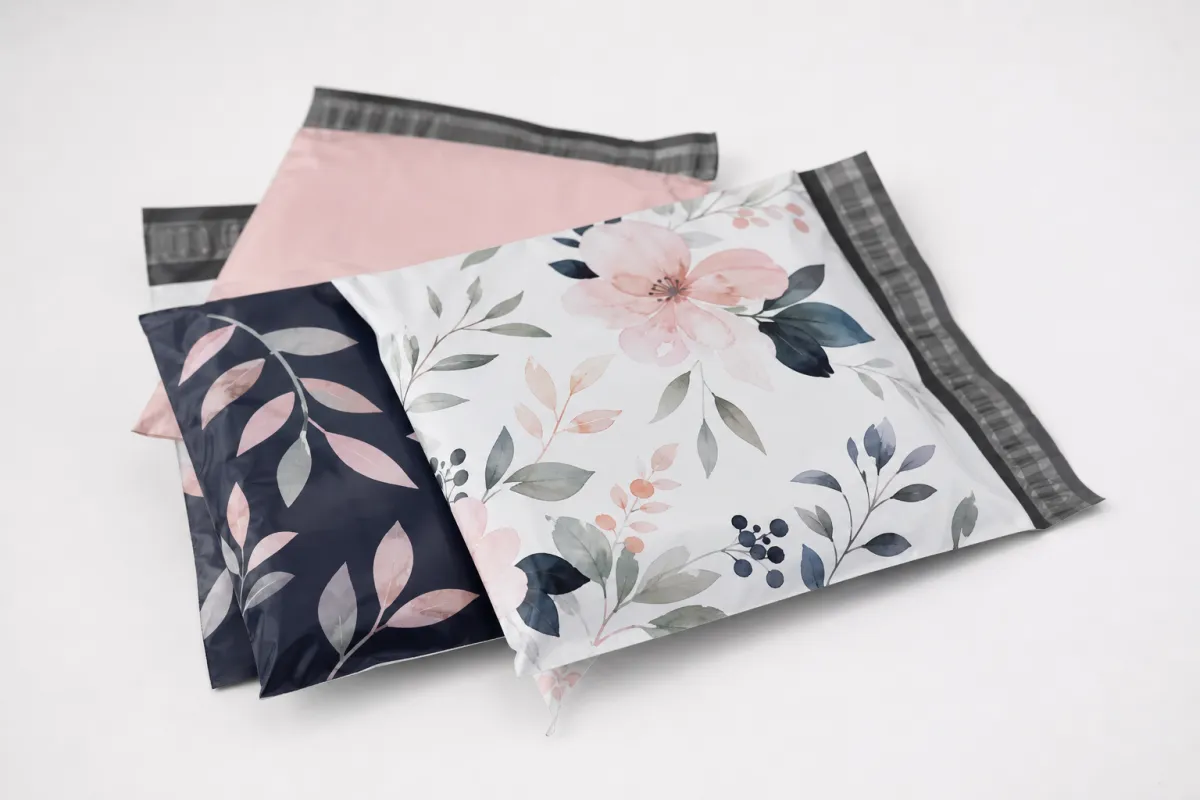
Printed plastic envelopes for shipping are lightweight plastic mailers with custom branding on the outside. Most are made from LDPE or a co-extruded film, then converted into flat or gusseted envelopes with a self-seal strip. In practical terms, they are the branded version of the poly mailer category: flexible, simple, and built for products that do not need rigid walls to make it safely to the destination.
That distinction matters because packaging is often treated like decoration first. It is not. Printed plastic envelopes for shipping are transit tools before they are branding surfaces. The strongest versions do both well. They keep dust, scuffs, and light moisture away from the contents, and they make the parcel look intentional the moment it lands on a doorstep or warehouse table.
They are common in ecommerce shipping because they are fast to pack and easy to store. Apparel is the obvious use case, but they also fit socks, soft goods, beauty accessories, documents, supplement samples, and low-risk promotional kits. Sharp, fragile, or crush-prone products usually need something more protective. That is where honesty matters more than a pretty mockup.
Presentation matters in a more concrete way than many buyers expect. A branded mailer shortens the unboxing moment, which sounds soft until you watch a crowded fulfillment team move 500 packages before lunch. A clean mailer suggests control. A wrinkled, oversized, overprinted one suggests the opposite. In that sense, printed plastic envelopes for shipping are part brand signal, part operational discipline.
Another common mistake is assuming all printed plastic envelopes for shipping behave the same. They do not. Film thickness, closure quality, seal style, print method, and sizing all change performance. Good artwork helps. A split seam ruins the mood much faster.
A mailer that looks polished on a screen but fails in transit is not premium packaging. It is a customer complaint wearing a logo.
If you are comparing formats, begin with the product, not the packaging trend. Some brands are better served by Custom Poly Mailers. Others need the broader options available through Custom Packaging Products. Products that need stronger stacking or crush protection may be better suited to Custom Shipping Boxes, printed or plain.
How Printed Plastic Envelopes for Shipping Work
The structure is straightforward, which is part of the appeal. A standard mailer usually includes an outer film, a printed surface, a pressure-sensitive adhesive strip, and sometimes a tear notch, tear line, or second seal for returns or multi-use packing. Printed plastic envelopes for shipping can also come with a matte or glossy finish, and that finish changes both the look and the resistance to scuffs during transit.
Printing can happen in a few different ways. Flexographic printing is common on higher-volume runs because it handles repeat production efficiently and keeps the per-unit cost down once the setup work is done. Gravure and digital methods appear in some programs too, though the right choice depends on artwork complexity, quantity, and the coverage you want. A simple one-color logo on a small run has different economics than a full-bleed design wrapping the entire surface of printed plastic envelopes for shipping.
The film does the actual protective work. It resists dirt, light abrasion, and incidental moisture exposure. That does not make the mailer waterproof in the "leave it in a puddle and hope" sense. It means the package stands up better to ordinary shipping abuse than a paper alternative, especially when the seal is strong and the gauge matches the item inside.
Size matters more than most buyers realize. Too large, and the product shifts, the package looks sloppy, and dimensional weight can creep upward. Too tight, and the seal fights the load while corners begin to split. The sweet spot is a mailer that fits the product with enough room for an easy insert, a flat seal, and a clean reveal when the customer opens it.
Print placement deserves real attention. Seams, folds, and adhesive areas can distort artwork if the layout is not built around the actual mailer structure. That is why a design that looks perfect in a PDF can land awkwardly on production pieces. Good printed plastic envelopes for shipping are designed around the envelope dimensions, not treated like a generic rectangle that happens to be plastic.
I have seen this go wrong in a very ordinary way: procurement approves a sample, the artwork looks sharp, and then the first production run lands with a logo too close to the edge. Nobody panics, but everybody notices. The piece still ships, yet it no longer feels intentional. That kind of drift is common, and it is why the final spec has to be treated like a physical object, not a screen image.
A useful way to think about the process is simple: the envelope should survive handling first, then support the brand story. If it does the reverse, the packaging probably cost too much for the wrong reason.
Key Factors That Decide Quality and Performance
Material choice is the first big decision. LDPE is common because it is flexible, fairly tough, and easy to convert into mailers with decent puncture resistance. Co-extruded films are also popular because they let manufacturers tune layers for strength, printability, and appearance. Recycled-content blends can work well too, though they deserve closer sampling because consistency, opacity, and surface feel can vary from run to run.
Thickness, often called gauge or mil thickness, changes the whole experience. A thinner mailer saves money and may be perfectly adequate for light apparel or flat accessories. A thicker one can handle rougher handling, heavier contents, and sharper corners without feeling flimsy in hand. For many brands, 2.5 to 3 mil is a common starting point. Move up to 3.5 or 4 mil if the shipment is likely to get tossed around, if the product has edges, or if the brand cannot afford re-shipments.
Print quality is another make-or-break factor. Color coverage, opacity, registration, and scuff resistance all matter. Fine text and pale pastel tones can turn muddy if the print process is not tuned correctly. Dark designs with large color blocks can show banding or uneven coverage just as quickly. That is not only a visual problem. It is a credibility problem for printed plastic envelopes for shipping and for the brand using them.
Closure strength is where a lot of cheap mailers fall apart, literally and commercially. The adhesive strip should seal firmly without a long delay, and it should stay shut through handling changes, warehouse heat, and shipment vibration. If the adhesive is weak, the entire package becomes a gamble. Printed plastic envelopes for shipping cannot compensate for a bad seal. The branding can be beautiful and the shipment can still arrive in pieces.
Testing matters, especially for buyers shipping at scale. Transit packaging is judged against practical abuse, not showroom conditions. ISTA-style distribution testing is useful for brands that want more confidence before a launch. See the test-focused material at ISTA transit testing standards and compare those ideas against your own shipping lanes. The point is not to become a lab. The point is to ask whether the mailer survives real handling.
ASTM references help too. Film properties are often discussed using methods for tensile strength and dart impact, which turn vague claims into measurable values. A supplier should be able to explain what is being done with the film and why it holds up for your product mix, not just hand over a sample and hope nobody asks for details.
Sustainability deserves an honest treatment, not marketing confetti. Using less material is usually better than using more material that says "eco" on the front. Recycled content can help, but only if it does not create weaker seals, worse print quality, or more waste from damaged shipments. EPA guidance on source reduction and recycling is a useful reminder that packaging decisions should lower total impact, not just create a brief feeling of virtue. A practical reference is the EPA packaging and source reduction guidance.
Put simply, the strongest printed plastic envelopes for shipping are not the prettiest ones in isolation. They are the ones that fit the product, the shipping lane, the warehouse process, and the budget without forcing the team to work around weak packaging every day. That sounds plain, but plain is usually where the savings hide.
Printed Plastic Envelopes for Shipping: Cost, Pricing, and MOQ
Pricing starts with a few direct drivers: material thickness, print colors, coverage area, custom sizing, and order quantity. The more customization involved, the higher the unit price usually climbs. That is not a trick. It is the ordinary math of converting a custom item at scale. Printed plastic envelopes for shipping are generally cheaper in larger runs because setup costs spread across more pieces, and the press can run more efficiently once it is dialed in.
Minimum order quantities exist because press setup, plate creation, material sourcing, and production calibration all take time. A supplier is not going to spend a day getting a 500-piece job ready at a price that only makes sense for 10,000 pieces. For buyers, MOQ affects three things at once: per-unit cost, inventory risk, and how much design freedom is realistic. Need a specific size or a full-coverage print? Expect a higher MOQ or a higher unit price. Production does not care about wishful thinking.
Here is a practical pricing view for printed plastic envelopes for shipping. These are planning ranges, not quotes.
| Option | Typical Thickness | Print Style | Approx. Unit Cost at 5,000 | Best Fit |
|---|---|---|---|---|
| Stock-size unprinted poly mailer | 2.5-3 mil | None | $0.08-$0.14 | Basic shipping where branding is secondary |
| One-color branded mailer | 2.5-3 mil | Simple logo or text | $0.18-$0.28 | Budget-conscious brands that still want identity |
| Full-coverage custom mailer | 3-3.5 mil | Multi-color, full-bleed artwork | $0.26-$0.42 | Launches, retail presentation, stronger brand impact |
| Recycled-content custom mailer | 3-4 mil | Logo or limited-color design | $0.30-$0.48 | Brands prioritizing sustainability messaging and feel |
Those numbers move quickly with order size. A 1,000-piece order can cost 20 to 60 percent more per unit than a 5,000-piece order, depending on setup and print method. A 10,000-piece run may drop the price again, but only if storage and cash flow can support the larger buy. There is no free lunch here. There is only a slightly less expensive lunch if you order enough of it.
Hidden costs are where budgets get ambushed. Artwork setup, plates, proofing, freight, import duties if applicable, and rush fees can all change the final number. Printed plastic envelopes for shipping should be priced on a landed basis, not only on the base unit quote. If the mailer is cheap but freight is high, or the proofing requires multiple rounds, the headline number stops being useful.
Dimensional weight matters too. A larger-than-needed mailer can raise billed shipping costs even when the material itself is inexpensive. That is especially painful in ecommerce shipping, where a few extra inches can push parcels into a worse rate tier. A better size often saves more over time than shaving a cent off the film.
I have watched teams save a fraction of a cent on the mailer and then lose it back through higher freight, more re-ships, or a return from a customer who got a crushed product. The math is not glamorous, but it is real. Packaging cost should always be compared against the cost of failure, not just the quote.
Compare the full landed cost, not the polished unit price. Cheap packaging that damages presentation or triggers re-ships is not actually cheap.
If you are comparing multiple formats, match the mailer to the product and the shipping lane. Some brands save money with printed plastic envelopes for shipping for most SKUs, then reserve boxes for heavier or premium items. That split often beats forcing one packaging type to do every job badly.
Step-by-Step Process and Timeline
The ordering process is not complicated, but it goes sideways quickly when people treat it casually. Start by defining the use case. What are you shipping? How heavy is it? Does it have sharp edges? How often will the team pack orders? Printed plastic envelopes for shipping are much easier to specify when the product and the shipping conditions are clear from the beginning.
Next comes size selection. A good mailer should fit the product with enough room for easy insertion and a secure seal. If the product is flexible, the envelope can be fairly tight. If it is bulky or irregular, leave room for the pack-out team to work without fighting the seam. A sample of the actual product beats a guess every time. Guessing is how people end up with packaging that looks fine and functions poorly.
Artwork comes after structure, not before. That mistake shows up constantly. The envelope dimensions, seal zone, folds, and print limits should shape the layout. Clean vector files help. Clear color references help too, especially when the design depends on exact hues. If the file is a mess, the proof stage slows down and the final result gets riskier. Fast approvals matter more than fancy emails.
A realistic timeline for printed plastic envelopes for shipping often looks like this:
- Quote and specification review: 1-3 business days.
- Artwork adjustment and proofing: 2-5 business days.
- Sampling or pre-production confirmation: 3-7 business days if needed.
- Production: often 7-15 business days after approval, depending on quantity and print method.
- Freight: 3-10 business days for domestic moves, longer for international shipments.
That is not a guarantee. It is a sensible planning range. Special finishes, multiple revisions, custom sizing, and color-critical branding can stretch the schedule. So can last-minute file changes, the familiar "one tiny tweak" that somehow takes three days. If the mailers are tied to a product drop or seasonal launch, buffer time is not optional. It is the difference between a controlled launch and a warehouse scrambling for excuses.
What speeds the process up? Clean files, clear quantities, one decision-maker, and a firm ship-to location. What slows it down? Unclear specs, endless approval loops, and changing the size after the proof has already been built. The smoothest printed plastic envelopes for shipping projects are boring in the best way. The brand team knows what it wants, signs off quickly, and lets production do its job. That is the kind of boring that saves money.
Common Mistakes That Make Mailers Look Cheap
The first mistake is crowding too much onto the surface. A mailer is not a billboard, and it is definitely not the place to paste every slogan the brand team could not fit anywhere else. When the design is overloaded, it looks loud rather than premium. Printed plastic envelopes for shipping work best when the layout is deliberate, readable, and recognizable from a few feet away.
Choosing the wrong size creates a second problem. Oversized mailers make packaging look lazy and can increase material use and dimensional weight. Too-small mailers strain the seal and make packers fight the product. Both mistakes are expensive, just in different ways. The right envelope should look tailored, not stretched or floating.
Ignoring the seal and film thickness is where a lot of budget orders fall apart. A thin mailer on a rough shipping lane is asking for torn corners, split seams, and a customer opening a sad plastic flap with a product hanging out of it. That is not a branding issue. It is a trust issue. The worst part is that the damage often happens after the product has already left the warehouse, which means the brand pays for the mistake twice.
Artwork can fail at the structural level too. If a logo crosses a seam, or a full-bleed pattern is built without accounting for folds, the printed result can look off-center or broken. That is how printed plastic envelopes for shipping end up looking like they were rushed by someone who never handled the final piece. Screen mockups lie. Production does not.
Chasing the lowest quote is another trap. Cheap mailers can be fine if the specs are truly comparable, but too often the bargain hides thinner film, weak adhesive, inconsistent printing, or freight terms that erase the savings. The lowest price on paper can become the highest price on the invoice. Odd how that works.
Overdesign deserves more scrutiny. Some mailers shout for attention in a way that feels generic or overly promotional. A better approach is often a cleaner design with one or two strong visual cues, a clear logo, and disciplined use of color. The packaging should support the product and the brand story, not fight it.
There is also a subtler problem: brands sometimes try to make the mailer do the emotional work of the whole package experience. It cannot. If the product arrives damaged or the opening experience is confusing, no amount of glossy ink is gonna fix that. Good packaging is less theatrical than people expect and more reliable than they think.
Before approving printed plastic envelopes for shipping, ask one blunt question: would this still look good if the courier had a bad day? If the answer is no, the package probably needs another round of thought.
Good packaging does not try to impress everyone. It survives, stays legible, and makes the brand look competent.
Expert Tips and Next Steps for Ordering
Start with the real shipping scenario, not the polished version. What is the product weight, what is the shape, how fragile is it, and how fast does the pack-out team need to move? Printed plastic envelopes for shipping should be selected around those facts. A light apparel brand does not need the same build as a subscription kit with rigid inserts and sharp corners.
Request samples or printed proofs before locking in a large run, especially if color matters. A screen is a charming liar. The only way to judge opacity, print sharpness, and adhesive feel is to hold the piece and use it the way the warehouse will use it. If the brand is color-heavy, sample testing is worth the extra day or two. That short delay is cheaper than thousands of mailers that look slightly off.
If the business ships multiple product types, test a few sizes or thicknesses. A 2.5 mil mailer may work for soft tees, while a 3.5 mil version makes more sense for boxed accessories or items with harder edges. One size rarely covers every job well. Printed plastic envelopes for shipping are no exception. The smartest teams keep a small matrix of options instead of forcing one spec to cover every SKU.
Here is a simple internal checklist that saves time:
- Product dimensions and weight.
- Target ship date and launch date.
- Quantity needed for the first run.
- Artwork files, logo versions, and approved colors.
- Seal type, thickness, and finish preference.
- Storage space and monthly usage estimate.
That checklist helps procurement, design, and operations speak the same language. Without it, the conversation drifts into vague preferences and everybody pretends the final mailer simply "happened." It never happens. Someone chose it, and the choice should be traceable.
If the budget is tight, do not only compare unit price. Compare damage risk, storage cost, and how the package will support the brand. A slightly better printed plastic envelopes for shipping spec can be worth it if it cuts returns or makes a low-margin item feel more polished. Spending premium money to wrap commodity items in a fancy shell can also be a bad trade. Packaging should earn its keep.
For brands still deciding between formats, compare mailers and boxes against the actual product. Custom Poly Mailers are often a strong fit for light, flexible goods. Custom Shipping Boxes are better when crush protection matters more than speed. If the packaging program is growing, it helps to review the broader mix in Custom Packaging Products before locking into one path.
The smartest ordering strategy is usually dull in the best possible way: match the envelope to the item, ask for a sample, check the quote against the full landed cost, and leave enough time for proofing. That is how printed plastic envelopes for shipping stop being a gamble and start acting like a useful part of the brand system. The goal is not packaging for its own sake. It is fewer problems after the label is printed.
FAQ
How thick should printed plastic envelopes for shipping be?
Choose thickness based on product weight, sharp edges, and shipping distance instead of guessing. Light apparel often works with thinner films in the 2.5 to 3 mil range, while heavier or rougher products usually need 3.5 to 4 mil for better puncture resistance. If the mailer bends too easily in hand, it probably is not thick enough for real transit abuse.
Are printed plastic envelopes for shipping waterproof?
Most poly mailers resist moisture far better than paper mailers, but they are not meant for full water exposure. The seal quality matters as much as the film itself because a weak closure can let water in. If the shipment may face heavy rain, rough carrier handling, or long exposure on a dock, add stronger protection or inner packaging too.
What affects the price of printed plastic envelopes for shipping the most?
Order quantity, film thickness, and print coverage usually drive the biggest cost swings. Custom sizing and special finishes can raise the price quickly, even when the base material seems cheap. Shipping, setup, and proofing fees can quietly change the total landed cost, so ask for the full number before comparing suppliers.
How long does production usually take?
Production time depends on artwork approval, quantity, and whether the design uses standard or custom specs. Clean files and fast proof approval shorten the timeline more than almost anything else. Add buffer time if the mailers are tied to a launch, because freight delays are annoyingly ordinary.
What is the difference between printed plastic envelopes and paper mailers?
Plastic envelopes usually offer better moisture resistance and a smoother print surface. Paper mailers can feel more eco-forward in some contexts, but they may not handle wet or dirty transit as well. The right choice depends on the product, shipping conditions, brand image, and budget, not just the material label.
Bottom line: printed plastic envelopes for shipping work best when they are chosen as a transit tool first and a branding surface second. Match the film, seal, size, and print method to the product, and the mailer stops being an afterthought. It starts doing real work for the brand, which is the whole point. The next smart move is simple: sample the right size, test it against the actual product, and price it on landed cost, not a glossy unit quote.

