Buyer Fit Snapshot
| Best fit | Printed Poly Mailers for Dtc Brands projects where brand print, material claims, artwork control, MOQ, and repeat-order consistency need to be specified before quoting. |
|---|---|
| Quote inputs | Share finished size, material target, print colors, finish, packing count, annual reorder estimate, ship-to region, and any compliance wording. |
| Proofing check | Approve dieline scale, logo placement, barcode or warning zones, color tolerance, closure strength, and carton packing before bulk production. |
| Main risk | Vague material claims, crowded artwork, missing packing details, or unclear freight terms can make a low unit price expensive after revisions. |
Fast answer: Printed Poly Mailers for Dtc Brands: Film, Print, MOQ, and Carton Packing should be specified like a repeatable production item. The safest quote records material, print method, finish, artwork proof, packing count, and reorder notes in one written spec.
Production checks before approval
Compare the actual filled-product size with the drawing, then confirm tolerance on folds, seals, hang holes, label areas, and retail display edges. Reserve space for logos, QR codes, warning copy, and material claims before decorative graphics fill the panel.
Quote comparison points
Review material grade, print process, finish, sampling route, tooling charges, carton quantity, and freight assumptions side by side. A quote is only useful when the supplier can repeat the same color, closure quality, and packing count on the next order.
Printed Poly Mailers for DTC brands do more than move a product from a warehouse shelf to a front porch. They set the tone before the package is opened, they carry the brand into the customer’s hands, and they turn a routine shipment into something that feels deliberate rather than anonymous.
That matters because the shipping envelope is often the first physical brand touchpoint a customer actually notices. If the product inside is the promise, Printed Poly Mailers for DTC brands are the proof that someone paid attention to the small details that shape repeat orders, referrals, and the way the package feels when it lands in a crowded mailbox.
Good mailers earn their place through more than appearance. They need to hold up in sorting belts, compression, light abrasion, humidity, and the occasional rough handoff. They also have to pack efficiently, seal cleanly, and fit the product without wasting film or turning the shipment into a bulky parcel that pushes shipping costs in the wrong direction.
For a customer receiving three similar parcels in the same week, the one with the strongest outer presentation is usually the one that sticks in memory first. That is the quiet advantage of Printed Poly Mailers for DTC brands: they make a shipment recognizable before the product is even touched, which is kind of a big deal when every order is fighting for attention in the same delivery stream.
Printed Poly Mailers for DTC Brands: The Unseen Shelf Space
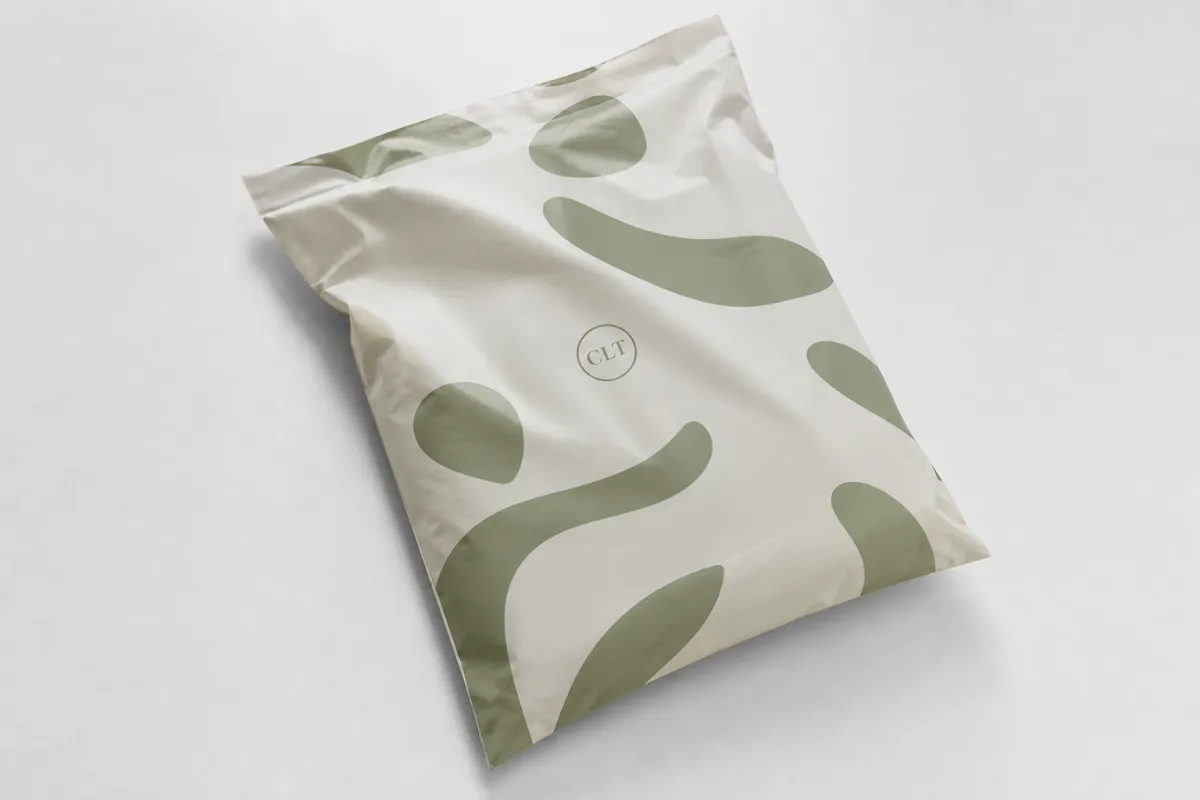
Think of the doorstep, the mailroom table, and the apartment lobby as shelf space that nobody planned to rent, but every brand still competes for. It is not a retail shelf, yet it works the same way for attention. Printed poly mailers for DTC brands claim that space for a few seconds, and those seconds carry more weight than many teams expect. A plain gray or white mailer can fade into the background, while a well-printed one carries color, pattern, or a clean logo that lands instantly.
That kind of recognition does real work. It cuts down the generic shipping feeling that can make a premium product seem more ordinary than it is. It also helps with social sharing, because customers are far more likely to photograph packaging that looks considered. When the outer bag feels like part of the product experience, the unboxing starts before the seal is broken. For many brands, printed poly mailers for DTC brands become an efficient way to strengthen recall without adding a second carton or another layer of packaging.
There is a practical side to all of this. A mailer that looks good on a screen but fails in transit becomes a problem fast. Poly film has to survive conveyors, pileups, friction from other parcels, and moisture from weather or warehouse handling. That is why packaging buyers should treat printed poly mailers for DTC brands as working packaging, not as a graphics project. The visual treatment matters, and so do seal strength, tear resistance, and the way the bag behaves once it is filled and labeled.
Picture a subscription apparel brand shipping three orders to the same customer in one week. One arrives in a plain clear bag, one in an undersized mailer that pulls at the seam, and one in a cleanly printed bag with a proper closure and crisp edges. The customer remembers which one felt polished. That memory is not vanity; it becomes part of retention. Printed poly mailers for DTC brands create the gap between something that is merely shipped and something that feels branded.
I have seen teams spend weeks fine-tuning a homepage banner while the shipping envelope stayed generic, and the mismatch shows up faster than people think. Packaging does not need to shout, but it does need to belong to the brand. For some labels, that means a bold color field. For others, it means a restrained logo, a smart repeat pattern, or a single strong message that does not try too hard.
For brands comparing packaging formats, it helps to look across the broader Custom Packaging Products catalog before settling on a single direction. Some products fit a mailer well. Others need a different structure because of weight, shape, warehouse flow, or return rate.
What Printed Poly Mailers Are and How They Protect Orders
A poly mailer is a flexible film envelope with a self-seal flap or adhesive strip, built to carry lightweight goods without the rigidity of a corrugated box. Most are used for apparel, soft goods, cosmetics, printed inserts, and other items that do not need a hard shell but still need dependable protection. Printed poly mailers for DTC brands are custom-branded versions of that same format, with logo, pattern, color blocks, messaging, or shipping instructions printed directly on the film.
The material structure is what makes the package do its job. Film thickness, usually expressed in mils, affects puncture resistance, tear behavior, and the feel in the hand. A thinner mailer may save a bit of money, but it can feel flimsy and be more vulnerable to sharp corners, hang tags, or metal hardware. A thicker film adds confidence, yet it also adds weight and cost. For many printed poly mailers for DTC brands, the useful range sits around 2.5 to 4 mil, depending on product weight, fill style, and route conditions.
Printing methods matter too. Surface printing is common for branding, and depending on the supplier, the production may use flexographic or gravure-based processes with one or several colors. Large ink coverage creates a premium look, though it can change the visual texture of the bag, add setup complexity, and sometimes show scuffing differently. If the design uses deep solids, fine type, or edge-to-edge artwork, the artwork file and print method need to be matched with care to the production line. Printed poly mailers for DTC brands tend to perform best when the design is built around film printing realities instead of being lifted straight from a carton layout.
Protection is not only about the outer film. A good closure strip, a proper seal width, and an accurate size all influence how well the package survives transit. If the mailer is too tight, the seam takes stress. If it is too loose, the product shifts and the parcel looks sloppy on arrival. For soft goods, printed poly mailers for DTC brands are a strong fit because they keep weight down while still providing a moisture barrier and a compact format for parcel shipping.
For buyers who want a more specialized option, our Custom Poly Mailers page is a useful place to review sizes, specs, and common branding configurations before requesting quotes.
To validate transit durability, many teams also look at established shipment testing practices. Organizations like ISTA publish methods used to simulate distribution hazards, and those methods are a solid reference when you want to know whether a printed mailer is ready for the lane it will travel. If a supplier cannot explain how their film handles abrasion, seal integrity, and drop exposure, that is a signal to slow down and ask better questions.
Printed Poly Mailers for DTC Brands: Cost, Pricing, MOQ, and Quotes
Pricing for printed poly mailers for DTC brands is shaped by a few variables that move together. Size is one of the biggest. A 10 x 13 mailer uses less material than a 14.5 x 19 mailer, so the difference can be meaningful even before print enters the picture. Film thickness matters too, because heavier film uses more resin and usually carries a higher base cost. Print complexity changes the number as well: one-color branding on one side is a very different job from a two-sided design with multiple colors and dense coverage.
MOQ, or minimum order quantity, is where many brands first feel the economics of custom packaging. Smaller runs usually cost more per unit because setup costs are spread across fewer bags. Larger runs lower the unit cost, but they also ask for more storage and more upfront cash. That is why printed poly mailers for DTC brands usually make the most sense when the forecast is clear enough to support a full production run without tying up too much working capital.
Setup charges can appear in different forms. Some suppliers quote plate charges by color, while others roll prepress, proofing, or setup into the package price. Artwork cleanup can add cost if files are not press-ready. If a brand wants a metallic ink effect, a special finish, or two-sided printing, the quote will move upward. The safest way to compare printed poly mailers for DTC brands is to ask every supplier to price the same size, film weight, print coverage, and delivery destination.
Here is a practical comparison framework that helps procurement teams avoid apples-to-oranges quotes:
| Run Size | Typical Unit Range | What Usually Drives Cost | Best Fit |
|---|---|---|---|
| 2,500 units | $0.26-$0.42 each | Setup spread across fewer bags, higher handling, proof and prepress work | Launches, pilot programs, or short seasonal drops |
| 5,000 units | $0.18-$0.28 each | Balanced setup burden, moderate storage needs, common custom order size | Growing DTC brands with a steady weekly ship rate |
| 10,000 units | $0.13-$0.22 each | Better scale pricing, but more cash tied up and more warehouse space needed | Established programs with predictable replenishment |
Those ranges are not promises; they are realistic market-style reference points for standard printed poly mailers for DTC brands with conventional artwork and common sizes. If the mailer is oversized, uses heavier film, includes more colors, or needs special packaging, the number will move. Freight also matters. A quote that looks sharp on paper can lose some of its appeal once pallet shipping, split shipments, or rush fees are added.
A better quote request starts with a clean spec sheet. Include finished size, desired thickness, print colors, one-side or two-side print, estimated annual volume, and whether the artwork is ready or still in development. If your team is evaluating other branded packout options at the same time, the broader Case Studies section can be useful for seeing how packaging decisions change once product mix, shipping volume, and launch timing are part of the picture.
For sustainability-related claims, careful language matters. If a supplier says a film contains recycled content, ask for documentation. If the packaging system includes paper inserts, labels, or cartons, then the paper side of the pack should be supported properly, and organizations like the FSC provide a credible reference for responsible fiber sourcing. Printed poly mailers for DTC brands are often part of a larger package system, and every component should stand on its own claim.
Process and Timeline: Production Steps From File Prep to Delivery
The production process for printed poly mailers for DTC brands is straightforward when everyone respects the sequence. First comes the specification stage: size, film thickness, closure type, print area, and quantity. Then artwork is prepared and checked for bleed, resolution, font outlines, and color separations. After that, the supplier sends a digital proof or mockup, and in some cases a physical sample or preproduction reference. Once the proof is approved, printing begins, followed by curing or drying, slitting or bag forming where needed, inspection, packing, and freight booking.
Most timeline problems happen before the press ever starts. Files that need cleanup can add days. Brand colors that need matching can add another round of approval. If legal or marketing teams want to review sustainability language, barcodes, or QR placement, that can slow things further. Printed poly mailers for DTC brands may seem simple compared with rigid cartons, yet the approval chain can still run longer than expected when several teams are involved.
Lead time depends on the plant, the print method, and current capacity, but a realistic expectation for many custom orders is often 12-15 business days after proof approval, plus transit time. Bigger runs, complex artwork, and special finishing can push that longer. Rush jobs are possible in some situations, but they usually cost more and leave less room for correction. For printed poly mailers for DTC brands, speed should never replace a readable proof and a sample checked with a real product inside.
A practical rhythm keeps the project moving:
- Lock the finished size and quantity early.
- Send vector artwork or clean high-resolution files.
- Review the digital proof with ops, brand, and procurement in the same loop.
- Approve a sample or preproduction reference before mass printing.
- Reserve warehouse space and plan receiving dates before freight leaves the plant.
That last step gets overlooked more often than people admit. I have seen teams approve printed poly mailers for DTC brands only to find the receiving area already packed with cartons and inserts. A well-run packaging project is not just about print approval; it is about coordinating production, inbound freight, and packout schedules so the packaging arrives when the warehouse can actually use it. If the boxes have nowhere to go, even a perfect mailer order turns into a storage headache.
If your team wants to compare how shipment testing and material sourcing fit into a packaging project, the guidance published by ISTA is useful for distribution-minded thinking, while the FSC stays relevant when printed mailers are paired with paper components that need credible sourcing claims.
Choosing the Right Size, Thickness, and Finish
The right mailer is sized around the actual pack-out, not just the product dimensions. That sounds obvious, but it is one of the most common mistakes I see with printed poly mailers for DTC brands. A folded sweatshirt, a hoodie with a hang tag, or a product with an insert card needs a little breathing room. If the mailer is cut too tight, the seal area can be stressed, the stack looks swollen, and the shipment may feel overstuffed. If it is too large, the product slides around and the parcel looks less intentional.
Thickness should follow the contents. Lightweight tees and soft accessories can often move well in thinner film, while heavier hoodies, boxed bundles, or items with hard edges may need a sturdier gauge. For many printed poly mailers for DTC brands, 2.5 mil works for lighter apparel, 3 mil is a common balanced choice, and 4 mil can make sense for more demanding packouts. The goal is not to use the thickest film possible; it is to match the film to the risk profile of the shipment.
Finish influences both appearance and scuff behavior. Gloss gives strong color and a brighter first impression, though it can show surface rubbing more readily. Matte feels more subdued and can hide minor handling marks better. Soft-touch-style effects can look premium, but they may not fit every production method or budget. Printed poly mailers for DTC brands should be selected with the full customer journey in mind: warehouse handling, carrier abrasion, doorstep presentation, and how the package photographs under indoor light.
Here is the practical tradeoff that matters most: visual impact versus honest material claims. If a brand wants to position the mailer as lighter weight, easier to ship, or more efficient, the material specification has to support those statements. A bright, branded bag does not automatically mean less waste or better environmental performance. If a supplier offers recycled content or recyclable messaging, ask for the exact resin composition and any local recycling limitations before the claim appears on the packaging. Printed poly mailers for DTC brands can support a strong brand story, but only if the story matches the real film specification.
A mailer is doing three jobs at once: it protects the order, it carries the brand, and it sets expectations for the customer before the product ever lands on the table. If one of those jobs is weak, the whole package feels weaker.
That is why many buyers prefer to review a sample in person, not just on screen. Color on film can read differently from color on a monitor, and the feel of the closure strip tells you a lot about quality before the first ship date. For printed poly mailers for DTC brands, the sample is not a formality; it is the point where design meets logistics. It is also the moment when you find out whether the bag is gonna behave the way the mockup promised.
Common Mistakes Brands Make With Custom Poly Mailers
The first mistake is choosing the bag by design mockup alone. A mailer can look beautiful in a render and still fail in actual shipping conditions because the product is too tight, the seal is too narrow, or the film is too thin. Printed poly mailers for DTC brands have to be judged as working packaging, not just as a graphic surface. If the sample does not survive a real packout with your actual product, it is not the right spec yet.
The second mistake is overcrowded artwork. On a flat screen, every logo, tagline, social icon, and pattern detail seems harmless. On a finished mailer, seams, folds, postal labels, and rounded corners all claim space. The stronger designs usually leave room for the logo to breathe and use the film color with intention. With printed poly mailers for DTC brands, restraint often reads more premium than trying to fill every square inch with graphics.
The third mistake is skipping a hands-on sample check. Color accuracy, seal strength, and pack-out efficiency can all shift when the bag is filled, folded, and labeled. I have seen brands approve a design only to learn the adhesive strip was awkward with their tape application method or the gusset left the contents too loose. A sample run reveals those details early, when they are still inexpensive to fix. That is especially true for printed poly mailers for DTC brands launching alongside a new product line or a new warehouse workflow.
The fourth mistake is underordering. Teams sometimes try to save a little by ordering just enough to cover the first few weeks of shipments. That feels prudent until the reorder arrives late and the warehouse is forced to mix old packaging with new, or worse, switch to generic mailers during a peak week. With printed poly mailers for DTC brands, stockouts cause more than inconvenience. They interrupt consistency, complicate replenishment, and make forecasting harder for everyone downstream.
- Wrong size: leads to stretched seams, wasted film, or loose product movement.
- Weak artwork planning: reduces brand impact once labels and folds are in place.
- No sample test: hides closure, scuff, and fit problems until production is finished.
- Too little inventory: increases the risk of rush reorders and visual inconsistency.
If you want to see how packaging choices change across different product lines and fulfillment models, our Case Studies page is a helpful way to compare real-world decisions. The right mailer for one brand may be a poor fit for another, and printed poly mailers for DTC brands are no exception.
Expert Tips and Next Steps for a Smarter Mailer Order
Start with a one-page spec sheet. It sounds simple, but it saves real money and clears away confusion. Include finished size, thickness target, closure style, one-side or two-side print, number of colors, order quantity, destination zip code, and whether your team needs the supplier to support artwork cleanup. When every vendor is pricing the same package, printed poly mailers for DTC brands become much easier to compare.
Next, ask for a sample or pilot run and test it with actual products, inserts, and shipping labels. Do not test with a hand-folded mockup that is lighter than your real order. Put the real item in, seal it the real way, and measure how it feels in the hand and how it stacks in a carton. Printed poly mailers for DTC brands can look identical on paper and behave very differently once the product weight changes by just a few ounces.
Set a reorder threshold based on weekly shipment volume, not just on optimism. If a brand ships 1,200 orders a week and the lead time is two to three weeks, the reorder point needs to leave room for approvals, freight, and an unexpected spike. A buffer of one to two weeks of stock is often sensible, though the exact level depends on storage space and the predictability of demand. For printed poly mailers for DTC brands, running too lean usually costs more than carrying a modest safety stock.
Compare quotes with a checklist rather than a gut feeling:
- Is the size quoted as finished or flat?
- Is the film thickness identical across suppliers?
- Are plate charges, proofing, or setup fees included?
- Does the price include freight, or is that separate?
- Are overages or underages specified in writing?
That list is useful because the lowest quote is not always the best buying decision. A supplier that communicates clearly, ships on time, and provides a usable proof can save more operational cost than a lower headline price. Printed poly mailers for DTC brands should support the whole program, not just the purchase order. A cheap bag that creates delays or damages the brand experience is not really cheap.
If your team is ready to source, review the options on Custom Poly Mailers, compare them with broader Custom Packaging Products, and bring a clean spec sheet to the quoting stage. The faster the specs are aligned, the faster printed poly mailers for DTC brands can move from idea to working inventory.
Handled well, printed poly mailers for DTC brands do more than protect a shipment. They carry the brand into the customer’s hands, they keep packout efficient, and they make the first touch feel deliberate. If you Choose the Right size, the right film, and the right print structure, printed poly mailers for DTC brands can become one of the smartest packaging purchases in the whole fulfillment stack. The best next move is simple: define the packout, confirm the film spec, and test one real sample before you place a full order.
How much do printed poly mailers for DTC brands usually cost?
Pricing depends on size, film thickness, print complexity, and order volume, so the best quote is tied to exact specifications. For many standard printed poly mailers for DTC brands, a larger MOQ lowers unit cost, but brands should also factor in storage space, cash flow, and how quickly they will reorder. Freight, setup, and proofing can also move the final number, so a clean apples-to-apples quote matters more than a headline price.
What MOQ should I expect for printed poly mailers?
Minimums vary by supplier and print method, but custom mailers often need enough volume to offset setup and press preparation. If you are testing a new design, ask whether a smaller pilot run is available before scaling into a full production order. That approach is often the safest way to evaluate printed poly mailers for DTC brands without overcommitting inventory. It also gives your team a real sample to inspect before the warehouse is stuck with thousands of bags.
How long is the process and lead time for custom printed poly mailers?
The timeline usually includes artwork prep, proof approval, production, finishing, and freight, so approvals can matter as much as printing. Rush schedules are possible in some cases, but they can raise cost and reduce flexibility if files are not ready early. For printed poly mailers for DTC brands, a realistic planning window is often more useful than chasing the fastest promise. A typical custom order often lands around 12-15 business days after proof approval, plus transit, though that can stretch with complex art or busy production schedules.
Are printed poly mailers for DTC brands strong enough for shipping apparel?
Yes, when the size and thickness are matched to the product weight and shape, they are a common choice for apparel and soft goods. For items with hard edges or heavier contents, confirm puncture resistance and consider whether a thicker film is needed. The right spec makes printed poly mailers for DTC brands a practical and efficient apparel shipper. For a heavier hoodie or a bundle with inserts, a stronger gauge usually earns its keep pretty quickly.
What information should I send when requesting a quote for printed poly mailers?
Share finished size, thickness target, print colors, estimated quantity, artwork status, and any special finish or sustainability requirement. The more complete the spec sheet, the easier it is to compare pricing apples-to-apples across suppliers. That is especially true for printed poly mailers for DTC brands, where small spec changes can shift the price more than many buyers expect. If possible, include a photo of the packed product so the supplier can sanity-check fit before quoting.


