Buyer Fit Snapshot
| Best fit | Printed Poly Mailers with Logo projects where brand print, material claims, artwork control, MOQ, and repeat-order consistency need to be specified before quoting. |
|---|---|
| Quote inputs | Share finished size, material target, print colors, finish, packing count, annual reorder estimate, ship-to region, and any compliance wording. |
| Proofing check | Approve dieline scale, logo placement, barcode or warning zones, color tolerance, closure strength, and carton packing before bulk production. |
| Main risk | Vague material claims, crowded artwork, missing packing details, or unclear freight terms can make a low unit price expensive after revisions. |
Fast answer: Printed Poly Mailers with Logo: Material, Print, Proofing, and Reorder Risk should be specified like a repeatable production item. The safest quote records material, print method, finish, artwork proof, packing count, and reorder notes in one written spec.
Production checks before approval
Compare the actual filled-product size with the drawing, then confirm tolerance on folds, seals, hang holes, label areas, and retail display edges. Reserve space for logos, QR codes, warning copy, and material claims before decorative graphics fill the panel.
Quote comparison points
Review material grade, print process, finish, sampling route, tooling charges, carton quantity, and freight assumptions side by side. A quote is only useful when the supplier can repeat the same color, closure quality, and packing count on the next order.
Printed Poly Mailers with logo often arrive before the customer has fully decided what the product feels like, which is why a 12 x 15 inch bag with a matte black one-color mark can shape the whole unboxing in under 10 seconds. That first touch is smaller than a box, lighter than a carton, and weirdly revealing in a way most brands do not expect. I have watched shoppers pull a package from a mailbox, turn it over once, and decide the brand feels more deliberate before they ever see the item inside. It is a tiny moment, but tiny moments are where perception gets expensive, especially when the mailer itself costs $0.15 to $0.26 per unit and the product inside may be worth ten or twenty times that.
The reaction is not emotional fluff. A flexible shipping bag is doing two jobs at once: shielding the contents and carrying a brand signal that shows up on a porch, at a packing station, or on a returns shelf in places like Austin, Chicago, and Manchester. For e-commerce teams, Printed Poly Mailers with logo can be the least expensive part of the shipment and still be the most visible branding element, even at 5,000 units per order. That is a strange little economic fact, and honestly, I think it is why people underestimate them for so long. A $0.18 mailer can travel farther in the customer's memory than a $4 thank-you insert.
For brands shipping apparel, accessories, and subscription kits, Printed Poly Mailers with logo sit in a narrow but useful middle ground between plain shipping bags and fully custom cartons. They are light, easy to store, and visually direct. A good one turns a routine shipment into a branded package without adding much handling time or extra material. It is the kind of Packaging Choice That looks simple right up until you try to get 20,000 of them right.
What Printed Poly Mailers with Logo Are
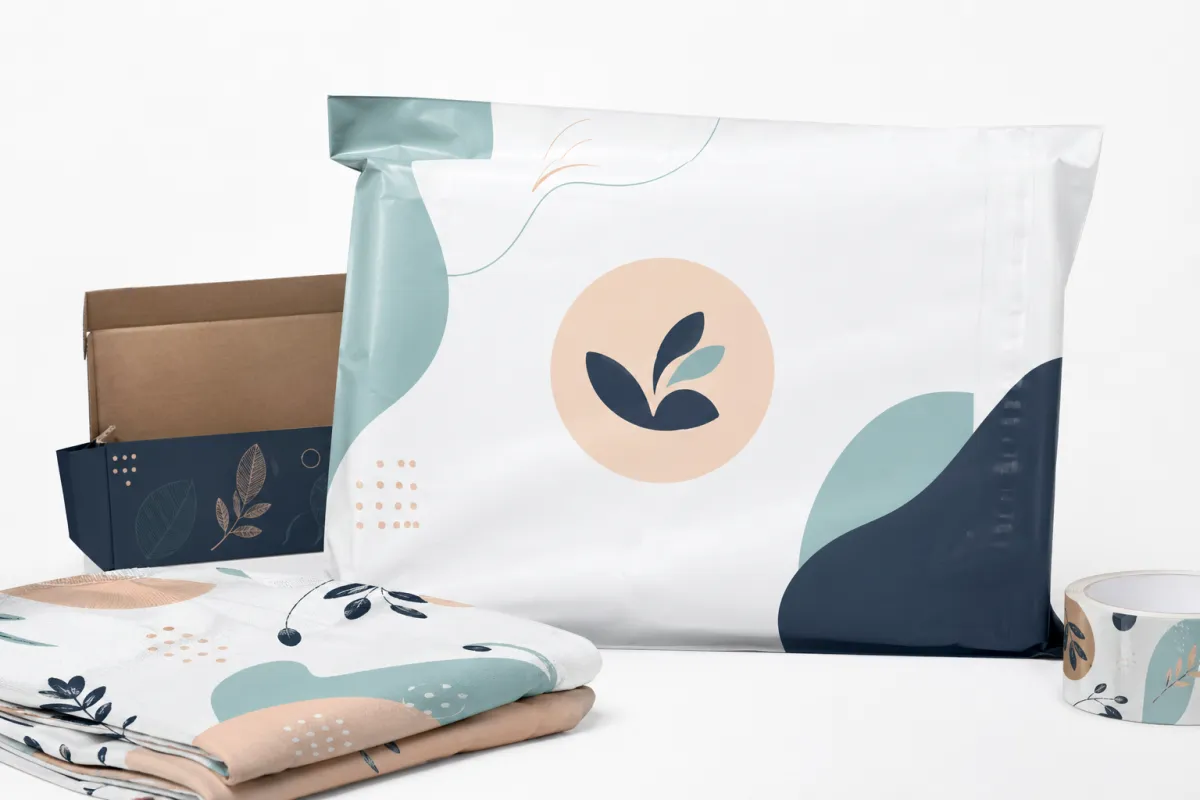
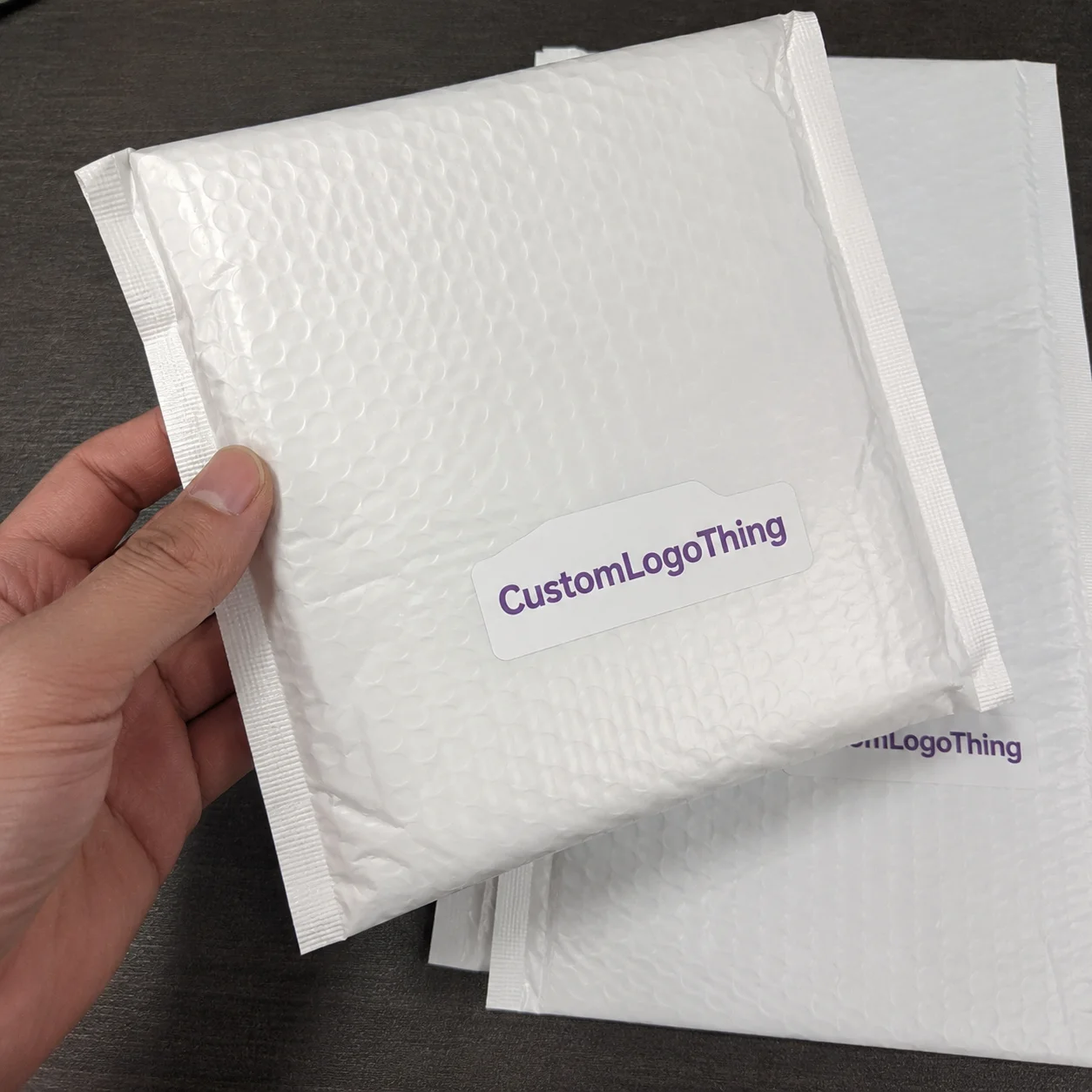
Printed Poly Mailers with logo are flexible polyethylene shipping bags printed with a brand mark, product message, graphic pattern, or warning icon. Apparel, socks, books, accessories, and subscription kits are common fits because those items do not need the crush protection of a corrugated box. The mix of low weight and high visibility is why printed poly mailers with logo keep showing up in launches where margin and presentation both matter. If you are shipping something soft, flat, and not remotely interested in being crushed by a forklift, these bags make a lot of sense, especially in 2.5 mil or 3 mil film.
The category looks simple from a distance. The decisions behind it are not. A single-color logo on a matte gray pouch tells a very different story than a full-surface pattern on bright white film, and both differ again from a restrained black mark on recycled-content material. Printed Poly Mailers with logo can read loud, quiet, premium, playful, or nearly invisible depending on the print method and the brand identity behind it. That range is useful, but it also means one bad assumption can make the whole package feel off, even if the artwork file is perfect and the bag size is technically correct at 14 x 19 inches.
On a factory floor in Shenzhen, I once watched a client compare three versions of Printed Poly Mailers with logo under identical lighting, with the bags stacked beside a 350gsm C1S artboard carton and a roll of 48 mm tape. The plain version looked cheap beside the product, the full-bleed version felt crowded for a minimal label, and the middle option won because it balanced presence with restraint. That kind of choice sounds cosmetic until you remember that 25,000 shipments can repeat the same visual cue for six straight weeks. Repetition does not forgive sloppy taste, especially when the bags are produced in Guangdong and inspected one pallet at a time.
Brands choose printed poly mailers with logo for practical reasons. They cut out extra branded tape, reduce the need for secondary labels, and can lower material weight compared with a box-and-fill package by 12 to 18 grams per shipment on lighter SKUs. The stronger versions still have to survive conveyor sorting, rough bins, wet weather, and a lot of handling, so the purchase sits halfway between a shipping spec and a marketing asset. If you are comparing packaging families, our Custom Packaging Products page is a useful place to see how mailers fit alongside other components, including cartons that use 350gsm C1S artboard and rigid mailers sized for slower-moving SKUs.
Buyers sometimes overfocus on the artwork and underfocus on the structure. Printed poly mailers with logo perform best when the size, seal, opacity, and print style all fit the product inside. A 12 x 15 inch mailer that holds a folded tee cleanly can look awkward if a thick hoodie is forced into it, and a bag that is too tight can split before it ever reaches the carrier scan table. I have seen a beautiful design turn into a very expensive headache because the wrong bag size made every packer fight the material like it had personally offended them. A 3-pound hoodie in a 2.25 mil bag is not a theory; it is a broken seal and a refund waiting to happen.
"We thought the logo was the whole decision," a fulfillment manager in Louisville told me during a supplier review. "Then we saw how much a bad size choice costs in rework, returns, and damaged inventory. On our 18,000-unit season order, the mistakes were more expensive than the print."
How Do Printed Poly Mailers with Logo Work in Real Use?
At the material level, printed poly mailers with logo are usually made from polyethylene film, often an LDPE or LLDPE blend, which gives them flexibility, water resistance, and enough tear strength for light to medium parcel loads. Film thickness is usually listed in mils, and that number matters more than the marketing copy suggests. A 2.25 mil mailer can feel very different from a 3.5 mil version once it moves through a sorter, scrapes against a tote edge, or lands in wet weather. I remember one sample batch that sounded almost identical in the hand but behaved completely differently during transit between Ningbo and Los Angeles. The thinner bag looked fine. The carrier conveyor did not care one bit.
The print is applied before conversion, which means the logo becomes part of the bag rather than a sticker added at pack-out. Flexographic printing is common for repeat orders because the setup cost spreads across larger runs, gravure is favored for very high volumes and tight color consistency, and digital printing can suit shorter runs or frequent artwork changes. Printed poly mailers with logo end up behaving like labels, like flexible film, and like a moving billboard that still has to survive shipping abuse. That is a lot to ask from one piece of plastic, frankly, whether the job is running in Dongguan, Suzhou, or a contracted plant in southern Vietnam.
The operational gain shows up fast once a team starts using them. If packing staff no longer need to apply tape, print labels separately, or slip in a branded insert with every order, the pack-out line gets faster. I have watched a six-person station in Atlanta shave roughly 18 seconds off each cycle once printed poly mailers with logo replaced a three-step branding process with a single bag-and-seal motion, lifting output from about 120 parcels per hour to 145. That is not glamorous, but twenty seconds saved on every order becomes real money by month-end. If a manager tells you that does not matter, ask them to stand next to a packing table during peak season. They usually change their tune after the first 500 orders.
Testing is where the claims get sorted from the truth. Seal strength, puncture resistance, tear behavior, and opacity all matter once a parcel contains sharp edges, dense hardware, or high-value goods. ASTM D882 tensile testing, ASTM D1709 dart impact, and ISTA 3A drop checks are useful during spec review, and the shipment should be judged against how it actually travels, not how it looks in a product photo. For transport context, the ISTA test framework is a practical reference point, especially for orders leaving Shenzhen or Qingdao on a tight freight window.
Printed poly mailers with logo also simplify the opening sequence. There is no extra adhesive strip to peel, no separate brand card to sort, and no loose paper insert to crease in transit. The customer opens the package quickly, and the brand is already visible before the product is in hand. That cleaner sequence is one reason these mailers show up so often in apparel, cosmetics accessories, and subscription fulfillment. In my experience, people underestimate just how much friction a package can create before the item is even touched, especially when a clumsy insert adds another 6 to 8 seconds of handling.
Key Factors That Affect Print Quality, Durability, and Fit
Size comes first, and it is the most common place where buyers guess wrong. Printed poly mailers with logo need enough room for the product to lie flat without stretching the seams, but not so much slack that the bag looks inflated or wasteful. A 10 x 13 inch bag may suit one folded blouse, while a 14 x 19 inch bag may be the better fit for a heavier knit or a bundled two-pack. Oversize bags waste film and can affect postage; undersize bags split and trigger replacements. The difference sounds small in a spreadsheet and annoying in a warehouse, which is a very different thing when a carrier pickup is due at 4:30 p.m.
Thickness comes next. A heavier gauge film can improve puncture resistance and give printed poly mailers with logo a more premium hand feel, but it may add cost and nudge shipping weight upward. In one sourcing meeting, a buyer tried to save $0.02 per unit by dropping from 3 mil to 2.2 mil. The idea looked clever on paper until the returns team showed zipper hardware punching through the thinner bags at a rate of roughly 1 in 400 shipments. That is the sort of "saving" that tends to evaporate once real parcels get involved, especially across a 15,000-piece monthly run.
Artwork quality depends on how much detail the bag has to carry. Simple logos, bold icons, and repeating patterns usually print with fewer surprises, while tiny type, gradients, and photographic art need tighter prepress review. Printed poly mailers with logo can support strong branding, but film is less forgiving than a coated carton surface. If a vendor says the logo will be readable at 2 inches high, ask for a proof with exact dimensions, not a loose mockup on a screen. Screens are polite. Film is not. A 6-point disclaimer in white on gray film often disappears faster than the customer can read it.
Closure style matters more than many catalogs admit. Self-seal adhesive is standard, but double seal strips help with returns and re-use, while tamper-evident closures are useful for premium products or regulated goods. Interior opacity also matters, especially if contents could show through translucent film. A bright white shirt inside a thin gray bag can be visible before delivery, and not every brand wants that. Printed poly mailers with logo should protect privacy as well as presentation, with adhesive strips wide enough to cover a 12-inch seam and hold through humid transit.
Sustainability claims deserve real scrutiny. Recycled-content film, downgauged material, and right-sized formats can reduce material use, but not every claim survives local recycling rules. A 30% post-consumer recycled blend in California may still be handled differently than the same bag in Texas, and the rules can shift again in the UK or parts of Germany. The EPA recycling guidance is a solid place to check collection realities, and FSC chain-of-custody documentation matters if paper-based inserts or outer components are part of the pack. Printed poly mailers with logo are not automatically eco-friendly, and buyers should ask for evidence instead of slogans. I have seen too many glossy sustainability claims collapse the second somebody asks for a certificate or a resin spec.
Step-by-Step Process and Timeline for Ordering
The order process starts with information, not art. Before requesting pricing on printed poly mailers with logo, gather the finished product dimensions, target quantity, logo files, Pantone references if available, and any performance needs such as tear resistance or opacity. A supplier cannot quote accurately on "a medium bag for clothes" because medium means nothing without measurements, film thickness, and closure style. For a 10,000-piece order, a clear spec like 12 x 15 inch, 3 mil, black one-color print, and self-seal closure can shave a day off back-and-forth and prevent a quote that is built on guesses.
Proofing is where most surprises appear. Vendors usually send a digital mockup first, and that is the point where artwork placement, bleed, fold zones, and seal-clearance issues get caught. I once saw a buyer approve a proof with the logo too close to the bottom seam; the final bag was technically printable, but half the mark sat too low and looked cut off. Printed poly mailers with logo need the same prepress discipline as labels or cartons, even if the surface is flexible. Flexible does not mean forgiving, and a 2 mm bleed can be the difference between a clean edge and a cropped brand name.
If the bag is custom-sized or uses a more complex graphic, a physical sample is worth the extra day or two. I have held sample mailers against actual product cartons in a warehouse aisle to check how a 14-inch seam line folds under pressure. That sounds obsessive, but it saved one client from ordering 25,000 printed poly mailers with logo that would have clipped their sewn-in care tags. Sample approval costs less than a warehouse correction. Much less, in fact, which is a nice change from the usual retail math. A 250-piece pilot in a Guangzhou sample room is cheaper than a single week of returns.
Timelines vary by method, but the pattern is predictable. Simple repeat orders on stock sizes can move in roughly 12 to 15 business days after proof approval, while custom sizes, full-color art, or plate-based jobs can stretch to 20 to 25 business days before freight. Freight itself can add another 3 to 10 business days depending on lane and season. Printed poly mailers with logo are not usually the slowest part of a launch, but they are often the part that gets overlooked until the calendar is already tight. And once the calendar gets tight, everyone suddenly becomes very interested in lead times, which is amusingly inconvenient for the people trying to book a vessel out of Shenzhen or Ningbo.
Plan backward from your ship date, not forward from your quote. If a campaign starts on the first Monday of a month, build in one round of proof edits, one round of sample review if needed, and a freight cushion that accounts for weather or port delays. That matters even more for printed poly mailers with logo tied to seasonal drops, influencer releases, or fulfillment peaks. A late bag delivery can stall a launch even when product inventory is already sitting in the warehouse. I have seen a team with perfect inventory and zero packaging spend two full days staring at pallets like that would somehow solve the problem. It does not, especially if the order is still on a vessel outside Hong Kong.
For teams comparing components side by side, our Custom Poly Mailers listing is a good starting point because it shows how size, film, and print choices interact before a formal quote, including 12 x 15 inch and 14 x 19 inch options that are common in apparel and accessory shipments.
Cost, Pricing, and ROI of Custom Poly Mailers
Price is driven by quantity, print colors, bag size, film thickness, and whether the order is a stock format or a custom spec. Printed poly mailers with logo usually get cheaper per unit as volume rises because setup costs spread across more bags. A buyer ordering 5,000 pieces of a simple one-color bag out of Dongguan might see a quote near $0.15 per unit, while 50,000 pieces of a similar spec may fall closer to $0.08 to $0.10 per unit. Those are illustrative figures, not promises, but they show how sharply scale changes the math.
That spread is why short-run and bulk pricing can feel like different products. A small order absorbs plate charges, machine setup, and more labor per bag, while a large order dilutes those expenses. Printed poly mailers with logo also price differently if the artwork uses multiple colors, because every extra color adds prepress complexity and can slow the production line. In one supplier negotiation, a brand wanted four colors on a 10,000-unit run and then wondered why the quote jumped by nearly 22 percent versus the one-color version. I sympathized, but only a little, because the math was right in front of them from the first draft.
Hidden costs matter because they change the true landed price. Plate fees, proof revisions, freight, rush fees, and export paperwork can add several hundred dollars to a small order, and sometimes more on a tight schedule. I have seen a buyer celebrate a "cheap" quote of $0.14 per bag only to discover the freight and setup pushed the landed cost to $0.23. Printed poly mailers with logo should always be judged on total delivered cost, not just the printed unit price. The lowest quote can become the most expensive decision in the room, which is deeply annoying and also very common once a shipment leaves Ningbo and crosses an ocean.
ROI also shows up in places buyers miss. If printed poly mailers with logo replace separate branded tape, labels, or inserts, the package can become cheaper even when the bag itself costs a little more. Labor, packaging inventory, and error reduction all matter. A cleaner package can also improve repeat recognition, which is hard to quantify but very real in DTC categories where the shipping experience is the first brand touch. I would rather have a package that reduces three small headaches than one that looks clever in a vendor catalog, especially if that package saves 15 seconds per order across 8,000 monthly shipments.
Here is a simple comparison that I use with clients who want a quick decision lens:
| Option | Typical MOQ | Typical Unit Price | Best For | Main Tradeoff |
|---|---|---|---|---|
| Stock-size, one-color printed poly mailers with logo | 5,000 to 10,000 | $0.16 to $0.24 | Apparel basics, recurring shipments, fast launches | Limited artwork and fewer size choices |
| Short-run digital printed poly mailers with logo | 1,000 to 5,000 | $0.22 to $0.35 | Seasonal promos, testing, small brand drops | Higher unit cost and narrower material options |
| Bulk custom printed poly mailers with logo | 20,000 to 50,000+ | $0.08 to $0.12 | Stable SKUs, mature fulfillment, national rollouts | Larger cash commitment and storage needs |
ROI should be tracked per shipped order, not per bag. A mailer that costs $0.03 less but adds two minutes of handwork is a bad deal, especially at 2,000 orders a day. Printed poly mailers with logo often pay for themselves through speed, fewer touch points, and a cleaner branded experience that makes the shipment feel more deliberate. If a package can save time, reduce errors, and still look polished, that is doing actual work rather than just decorating a box in a more expensive outfit. I have seen a 30-day pilot cut labor by 11 hours per week on a 9,500-order cycle, which is a number finance teams tend to notice.
Common Mistakes Buyers Make With Custom Mailers
The first mistake is artwork placement. Printed poly mailers with logo have seam zones, fold zones, and seal margins that can swallow part of a design if nobody checks the production template carefully. I have seen a retailer approve a gorgeous oversized logo only to find the lower stroke disappeared into the side weld. The proof looked fine on a laptop; the finished bag did not. Nothing humbles a team quite like a logo that gets eaten by the seam, especially on a 15,000-piece run that has already left the port.
The second mistake is treating a screen proof as a physical sample. Screens exaggerate brightness and can smooth out tiny type, while film stock may shift ink warmer, cooler, or flatter than expected. Printed poly mailers with logo need color expectations set in the real world, not on a glossy monitor. If a brand color must be exact, ask for the closest Pantone match the printer can hold and request a drawdown or pre-production sample. Otherwise, the "brand navy" can end up looking a little too close to "conference room blue," which is not a thrilling outcome when the order lands in a warehouse in Atlanta or Denver.
The third mistake is choosing the wrong strength for the product. A lightweight fashion tee is one thing, but metal accessories, boxed skincare, or garments with zippers create different stress points. I once sat in on a supplier review where the buyer tried to put a 3-pound bundled kit into a bag designed for a single shirt. The seal failed before carrier handoff. Printed poly mailers with logo should be chosen by load profile, not by guesswork. Guesswork is how you end up with a pile of damaged returns and a very quiet meeting, usually with a half-open carton and a tape gun sitting in the corner.
The fourth mistake is ordering against the calendar instead of the forecast. If a brand launches too early, bags sit in storage and can go stale after a logo refresh. If it orders too late, shipping gets delayed and customer service absorbs the fallout. Printed poly mailers with logo work best as a planned supply item, with reorder points tied to monthly volume rather than panic. A 60-day planning window is safer than a 6-day scramble. Panic ordering is a terrible hobby, and it tends to show up right before Black Friday.
The fifth mistake is vague sourcing language. "Need gray bags" is not a spec. "Need 12 x 15 inch gray polyethylene mailers, 3 mil, black one-color logo, self-seal closure, opaque interior, 10,000 pieces" is a spec. I have seen negotiations stall for a week because the buyer never defined whether the size was finished or flat, whether the logo needed a bleed, or whether the target was matte or gloss. Printed poly mailers with logo become much easier to buy once the spec sheet is plain enough for a production manager in Guangdong to quote without interpretation. Precision is boring, and it saves money. Which is why it keeps winning.
Expert Tips and Next Steps Before You Place an Order
Start with a sample kit or a small pilot run. Printed poly mailers with logo can look excellent on paper and still feel wrong in the hand if the film is too slick, too noisy, or too translucent for the product category. I have watched a beauty brand switch from a glossy bag to a soft-matte finish after a 250-piece test in a Guangzhou sample room because the original version sounded crinkly enough to make the team nervous in fulfillment. The sample cost was tiny compared with the change it prevented. Sometimes the problem is not technical at all; it is that the package simply feels wrong at the packing table.
Build a one-page spec sheet before you talk to suppliers. Include finished size, film thickness, print colors, closure style, target quantity, storage limits, and the monthly reorder estimate. Printed poly mailers with logo are easier to quote and easier to compare when every supplier sees the same data. A good spec sheet also reduces the risk of getting three quotes that cannot actually be compared because one vendor assumed 2.5 mil film and another assumed 3.25 mil. That sort of mismatch is how teams end up comparing apples to oranges and calling it procurement, which is how budget lines become a guessing game.
Ask for the timeline in writing, and ask for the parts that usually get forgotten. That means proof turnaround, production window, freight estimate, sample approval timing, and reprint policy if the job arrives with a defect. Printed poly mailers with logo are a supply item, and supply items fail less often when expectations are documented. I trust a supplier more when they are precise about what they cannot guarantee than when they claim everything is easy. "Easy" is often code for "we have not read your spec yet." A vendor who says 15 business days from proof approval and 5 to 7 days for air freight is giving you something useful.
Do not crowd the bag with too much copy. The strongest printed poly mailers with logo usually keep the logo readable from a distance of 6 to 10 feet and use the rest of the surface to support the brand story, not to cram in every marketing message. A short line, a simple pattern, or a small icon can do more than a paragraph ever will. Clean packaging tends to feel more expensive than busy packaging, even when the material cost is almost identical. There is a reason luxury brands in Milan and Seoul are often suspiciously minimalist, and it is not because they ran out of ideas.
On the factory side, I once heard a production lead in Dongguan say, "The best print job is the one you never need to explain." That stuck with me because it sums up the whole category. Printed poly mailers with logo should be obvious, durable, and easy to pack. If a team has to explain the print every time, the artwork probably tried to do too much. And if a shipment triggers a discussion at every packing station, you are not designing packaging anymore; you are creating a recurring meeting topic for a team already handling 300 cartons before lunch.
Before you place the order, shortlist two or three vendors, request comparable quotes, review a physical sample, and then place a pilot run that matches your real monthly demand. That approach gives you data instead of assumptions, and printed poly mailers with logo are too visible in the customer journey to leave to guesswork. If you want to see how branded packaging pieces can work together, compare the options in our Custom Packaging Products range and then narrow the bag spec from there, whether you are matching a 12 x 15 inch apparel bag or a larger 14 x 19 inch shipping format.
When the rollout goes well, the result can feel almost invisible in the best possible way. The fulfillment team packs faster, the customer sees a cohesive brand moment, and the cost per order stays under control. That is the practical promise of printed poly Mailers With Logo: a shipping item that does not just protect the product, but quietly makes the whole operation look more intentional. In a week where every minute matters and every pallet counts, that is not small. It is the difference between a package that merely ships and a package that does actual brand work.
How much do printed poly mailers with logo usually cost per unit?
Pricing depends most on quantity, print colors, bag size, and film thickness. Printed poly mailers with logo in a 5,000-piece run can land around $0.18 to $0.26 per unit for a simple one-color spec, while larger orders often drop sharply because setup costs are spread across more bags. A 10,000-piece order with 3 mil film and a single black logo may come in near $0.14 to $0.17 per unit from an established supplier in Shenzhen or Dongguan. Always compare the landed cost, including freight, plates, and any rush fee. I have seen the "cheap" quote turn out to be the expensive one more than once.
What is the minimum order for printed poly mailers with logo?
Minimums vary by supplier and production method. Some vendors will support short runs of 1,000 to 3,000 pieces for printed poly mailers with logo, while others focus on 10,000-unit and above volumes. Simple one-color designs on stock sizes usually allow lower minimums than multi-color or custom-size jobs, so ask about setup requirements before you commit. If you need a 12 x 15 inch bag with one-color print, you will usually get more flexibility than a 14 x 19 inch bag with a full-bleed pattern.
How long does it take to produce printed poly mailers with logo?
Production time depends on proof approval, tooling or plate needs, and the complexity of the artwork. Straightforward repeat orders of printed poly mailers with logo can move in roughly 12 to 15 business days after proof approval, while custom projects often need 20 to 25 business days before freight. Build in extra time for revisions and shipping so the launch date stays realistic. The rush fee is never as charming as it looks, especially if the freight route adds another 5 to 7 business days from southern China.
Are printed poly mailers with logo recyclable or eco-friendly?
Some printed poly mailers with logo use recycled content or downgauged film to reduce material use, but recyclability depends on local collection rules and the exact resin blend. A 30% PCR bag may be accepted in one region and rejected in another, so I would not assume every bag is identical. Ask the supplier for documentation and verify how the material aligns with your market's collection system before making any environmental claim. If the vendor cannot tell you the resin spec or the PCR percentage, that is a signal to keep asking.
What file type should I send for my logo on printed poly mailers with logo?
Vector files such as AI, EPS, or PDF are usually preferred because they scale cleanly and keep edges sharp on printed poly mailers with logo. Include brand colors, font names, and spacing rules if you have them. If all you have is a raster file, send the highest-resolution version available and ask for artwork review before the proof is approved. A blurry logo on a shipment bag is the kind of mistake that keeps bothering you every time you see the packing table, especially on a run of 8,000 bags that leaves no room for do-overs.
What should I do first if I want to order printed poly mailers with logo?
Lock the finished product size, pick a film thickness, decide on one- or two-color artwork, and request a physical sample before you scale. That order of operations keeps the buying process grounded in actual packaging behavior instead of mockups. If the sample feels right, fits the product cleanly, and survives a short packing test, you are in good shape. If it does not, adjust the spec before you spend money on a full run.
Takeaway: If you are buying printed poly mailers with logo, start with the product dimensions, then choose film thickness and closure style, and only then finalize the artwork. Ask for a real sample, test it with actual inventory, and place a small pilot before scaling up. That sequence saves money, cuts packing friction, and gives the logo a package that can carry its weight without any drama.