Buyer Fit Snapshot
| Best fit | Printed Pouch Labels Wholesale for Clean, Fast Branding projects where brand print, material claims, artwork control, MOQ, and repeat-order consistency need to be specified before quoting. |
|---|---|
| Quote inputs | Share finished size, material target, print colors, finish, packing count, annual reorder estimate, ship-to region, and any compliance wording. |
| Proofing check | Approve dieline scale, logo placement, barcode or warning zones, color tolerance, closure strength, and carton packing before bulk production. |
| Main risk | Vague material claims, crowded artwork, missing packing details, or unclear freight terms can make a low unit price expensive after revisions. |
Fast answer: Printed Pouch Labels Wholesale for Clean, Fast Branding should be specified like a repeatable production item. The safest quote records material, print method, finish, artwork proof, packing count, and reorder notes in one written spec.
Production checks before approval
Compare the actual filled-product size with the drawing, then confirm tolerance on folds, seals, hang holes, label areas, and retail display edges. Reserve space for logos, QR codes, warning copy, and material claims before decorative graphics fill the panel.
Quote comparison points
Review material grade, print process, finish, sampling route, tooling charges, carton quantity, and freight assumptions side by side. A quote is only useful when the supplier can repeat the same color, closure quality, and packing count on the next order.
printed pouch labels wholesale solve a very ordinary problem that keeps getting expensive: too many flavors, sizes, seasonal versions, or private-label variations to justify reprinting every pouch each time something shifts. A label update can keep a packaging line current without sending good inventory to the scrap pile, and that is why printed pouch labels wholesale often make more sense than direct-printed bags for brands that move quickly and add SKUs as they grow.
From a buyer’s point of view, the tradeoff is pretty clear. printed pouch labels wholesale lower upfront spend, make version control easier, and give a much cleaner branded finish than handwritten stickers or generic retail labels slapped onto a pouch. If you are launching seasonal runs, trial packs, supplements, cosmetics, or food products with frequent artwork changes, labels usually buy you more flexibility than a full pouch reprint ever will.
I have seen plenty of packaging programs where the label path kept a launch on schedule while the pouch artwork was still being finalized, and that kind of breathing room matters. Teams rarely need more complexity; they need a package that can change without turning the next production run into a headache. That is the real appeal of printed pouch labels wholesale.
Printed Pouch Labels Wholesale: The fast fix for messy SKUs
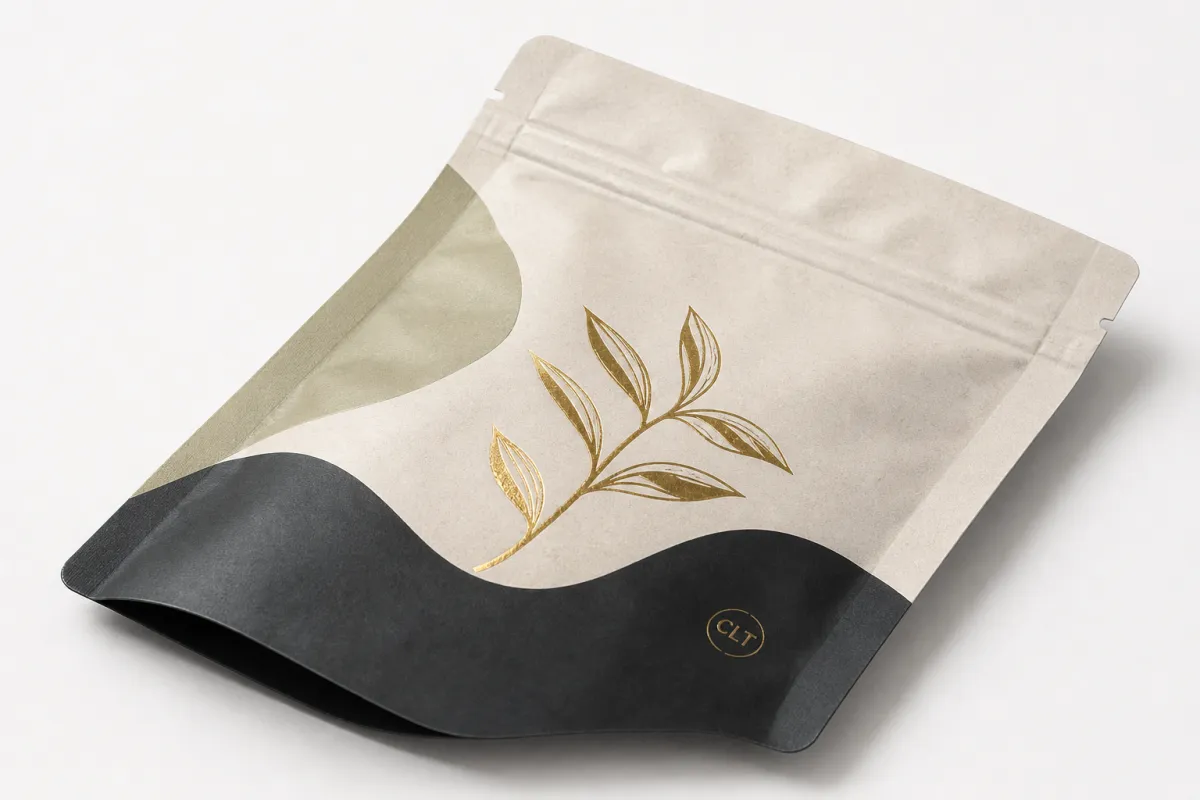
printed pouch labels wholesale are the right move when the product line is changing faster than the packaging budget can keep up. A recipe changes. A net weight changes. Marketing decides a flavor deserves its own run. Compliance asks for a copy update after the first production cycle. A label gives you room to respond without tossing a stack of perfectly usable pouches that still have shelf life left in them.
That is where the economics start making sense. Direct-printed pouches can look excellent if volumes stay steady and artwork never shifts, but most brands do not live that way for long. They deal with one SKU that sells through faster than expected, another that stalls, and a distributor request for private-label artwork that needs to be live next week. printed pouch labels wholesale give that business a pressure release. The packaging stays in house, the brand stays current, and the supply chain does not need to be rebuilt every time a panel changes.
Seasonal launches, private-label programs, and short-run food or supplement lines tend to see the biggest payoff. In those jobs, printed pouch labels wholesale clean up the visual mess fast: no handwritten notes, no mismatched stickers, no Labels That Look like they were run through three different printers and none of them were happy about it. A proper label makes the pouch look deliberate, and shelf presence matters more than people like to admit once the pack sits beside products with stronger merchandising.
Buyers usually notice one practical advantage after the first reorder: version control becomes manageable. One artwork file per SKU. One label spec per pouch size. One proof path. That is far easier than juggling a new pouch print run every time a UPC changes or a private-label customer wants a slightly different copy block. printed pouch labels wholesale are not flashy. They are dependable, and dependable is what packaging teams end up valuing most.
There is also a cash-flow angle that does not get talked about enough. If you are unsure whether a new flavor will stick, labels let you test the market without locking yourself into a large printed-film commitment. That makes the first order easier to justify, and it keeps the risk where it belongs: on the product, not on a warehouse full of obsolete packaging.
- Best fit: seasonal products, test launches, and multi-SKU brands.
- Budget win: lower upfront spend than reprinting pouch film.
- Operations win: simpler reorders and faster artwork updates.
- Shelf win: a cleaner look than handwritten or mismatched labels.
Printed Pouch Labels Wholesale Product Details and Formats
printed pouch labels wholesale are not one fixed product. They include multiple formats, substrates, and adhesive choices that behave very differently once they leave the proof stage. Buyers who treat every label like a basic paper sticker usually discover curling corners, scuffed ink, or adhesive failure the moment the pouch gets cold, oily, or handled more than expected.
The most common format is the roll. Roll labels are the workhorse option for hand application and for many simple applicator setups. They store compactly, move through production without much fuss, and fit a wide range of workflows. For smaller teams, printed pouch labels wholesale in roll form are often the cleanest starting point because they move from print to application with very little extra handling.
Sheet labels make sense for smaller orders or fully manual application. They are easy to sample, easy to handle, and less demanding for one-off batches. If you are running a local launch or a short promotional pack, printed pouch labels wholesale in sheet format can keep you from paying for a larger production setup than the job actually needs.
Custom cut shapes sit higher on the shelf-appeal ladder. Rounded corners, specialty silhouettes, and die-cut edges can make a pouch feel more intentional, especially for premium snacks, beauty products, or wellness packaging. The decorative choice should still earn its place. printed pouch labels wholesale need to look good, yes, but they also need to apply cleanly, stay flat, and survive carton packing, shipping, and retail handling without lifting at the edges.
In practical terms, the format should follow the production reality, not the mood board. A beautiful label that slows down packing or jams a label applicator is a bad trade, and it is usually a sign that someone designed for the proof sheet instead of the actual line.
Roll labels for hand or machine application
Roll labels are usually the safest place to begin. They work for manual application, semi-automatic applicators, and many higher-volume lines. If the pouch face is flat enough and the label size is sensible, roll format keeps the process organized. printed pouch labels wholesale in roll form also simplify reorder planning because the roll spec can remain stable across several production cycles.
Rolls also make quality control easier. Operators can inspect the first few labels, check placement, and confirm that the adhesive behaves the way it should before a full run gets underway. That small pause saves a lot of cleanup later, which is kind of the whole point.
Sheet labels for short runs
Sheet labels are a natural fit for low-volume products, samples, and internal use. They are also helpful when artwork changes often and the final copy is still being approved. For printed pouch labels wholesale, sheets are the easiest format for buyers who care more about flexibility than throughput.
They are especially useful when packaging is being tested in a local market or at a trade show, where speed matters more than automation. A sheet label can get a product out the door while the team figures out whether the SKU deserves a larger run.
Materials and finishes that change the feel
Paper works well for dry goods and shorter shelf-life products. BOPP and polypropylene hold up better when the pouch may face condensation, rubbing, or a bit of oil from handling. Matte finish gives a softer, more natural look. Gloss makes color feel louder and sharper. Soft-touch can raise the perceived quality, although it will not rescue weak artwork or poor layout. Material choice matters just as much as design when printed pouch labels wholesale need to survive actual packaging conditions.
One mistake I see a lot is choosing stock by appearance alone. A label can look lovely on a screen and still be a pain in production if the pouch is chilled, textured, or handled with damp hands. That is why substrate testing is worth the extra hour.
Adhesives should match the pouch, not the assumption
Permanent adhesive is the default for many retail packs, but it is not always the right one. Freezer-safe adhesive matters if the product is chilled or frozen before sale. Extra-tack adhesive helps on harder-to-bond surfaces or in rough handling environments. Removable adhesive makes sense for temporary promotions or packaging programs that change so often a permanent bond would only create waste. The right adhesive for printed pouch labels wholesale depends on pouch texture, storage temperature, fill process, and the way the bag is sealed and shipped.
If the pouch has a matte film or a lightly textured finish, expect the adhesive conversation to matter even more. Smooth, glossy surfaces are forgiving; rougher ones are not. That is where a lot of disappointing label failures begin.
Printed Pouch Labels Wholesale Specifications That Matter
printed pouch labels wholesale live or die on specification details. Buyers who send a logo and wait for a miracle usually get a proof that looks fine on a laptop and falls apart once it meets production reality. Label size, bleed, corner radius, roll direction, core size, wind orientation, and application method all matter. Those details decide whether the label behaves like packaging or like a nuisance.
Label size is more than a dimension on a quote sheet. It is a fit check. A pouch with a zipper track, top seal, or gusset already has limited real estate. If the label reaches into a seal zone, it can wrinkle or lift. If it is too small, the brand message looks timid and the regulatory text gets cramped. Good printed pouch labels wholesale start with an actual pouch measurement, not a rough guess made during a meeting that ran long.
Print quality deserves real attention too. Barcode readability has to be tested, not admired from a distance. Small text needs enough contrast to survive production. Fine lines, icon sets, and legal copy can vanish quickly on a compact pouch front. If the artwork depends on a thin font or pale color, expect trouble. printed pouch labels wholesale are often judged by the weakest element on the label, not the strongest.
Compliance copy is where many brands get casual and then pay for it later. Ingredient panels, nutrition facts, batch codes, allergen statements, country-of-origin claims, and region-specific warnings cannot be treated as decorative filler. Food, supplement, and cosmetic labels have to match the actual regulatory scope. For broader packaging terminology and industry language, packaging.org is a useful reference point. For shipping and handling stress, ISTA standards help frame what a label should survive before anyone calls the job finished.
Pack fit is another detail that feels minor until it creates a service issue. Labels on matte pouches behave differently from labels on slick film. Curved or soft-fill bags can distort the face panel. Resealable zippers can interfere with placement. If you need printed pouch labels wholesale to sit flat on a filled pouch, test the label on the actual pouch surface, at the actual fill level, before you place a volume order.
That is also where prepress discipline matters. Trim lines, safe zones, and barcode quiet space are not ornamental. They are the difference between a label that looks polished and one that starts causing trouble during packing or receiving.
- Measure the panel: width, height, zipper clearance, and seal margin.
- Confirm the wind: especially if labels feed through a machine.
- Test the barcode: scan it in real lighting, not just on a screen.
- Check the adhesive: cold, oily, textured, and matte pouches all behave differently.
Many packaging teams use ASTM D3330-style peel testing logic to compare adhesive performance, even if they do not run a formal lab program. That is not a substitute for a production test. It simply keeps the discussion grounded in something measurable. A label that looks beautiful but peels during transit is still a bad label. printed pouch labels wholesale should pass the boring tests first, because that is where most failures show up.
Printed Pouch Labels Wholesale Cost, Pricing, MOQ, and Quote Basics
printed pouch labels wholesale pricing comes from a few predictable variables, and anyone pretending otherwise is usually hiding a cost somewhere else. Material choice, label size, print colors, finish, die-cut shape, adhesive, and quantity all move the number. Add variable data, specialty coatings, or unusual roll specs, and the quote shifts again.
MOQ works the same way. Smaller runs almost always cost more per label because the setup burden gets divided across fewer pieces. Larger runs usually improve unit cost and reduce repeated setup charges. That is not a trick. It is how print economics actually work. For printed pouch labels wholesale, the better buying decision usually balances inventory risk against per-unit savings instead of chasing the lowest line item without checking the rest of the order.
Most buyers want pricing that feels simple. That part makes sense. The honest way to compare quotes is to ask what is included. Are proofs extra? Is the die charge one-time or repeated? Is shipping included? Are plate costs separate? Does the supplier charge again for the same artwork on a reorder? Those details decide whether printed pouch labels wholesale look affordable or only look cheap on the first page of the quote.
It also helps to ask how the quote behaves across quantity breaks. A price that looks good at 1,000 labels can flatten out or even jump at 2,500 if there is a setup cost hiding in the math. That is why tiered quotes matter so much. They show where the spend actually drops instead of letting the lowest number do all the talking.
| Label option | Best for | Typical wholesale range | Tradeoff |
|---|---|---|---|
| Paper roll labels | Dry goods, short runs, basic branding | $0.03-$0.09 per label at mid-volume | Lower cost, weaker moisture resistance |
| BOPP or polypropylene roll labels | Moisture-prone, handled, or longer shelf-life packs | $0.05-$0.14 per label at mid-volume | Better durability, slightly higher price |
| Custom die-cut labels | Premium shelf appeal and signature shapes | $0.08-$0.20 per label depending on shape | More setup cost, more design control |
| Variable data labels | Batch codes, serialized SKUs, promos | Quoted case by case | Useful for traceability, adds production complexity |
Those ranges are practical, not magical. A 1,000-piece run and a 10,000-piece run are not the same purchase, and the pricing should not pretend otherwise. If you are comparing printed pouch labels wholesale across suppliers, ask for two or three quantity tiers so you can see where the per-label drop actually justifies a larger buy. Sometimes the jump from 2,500 to 5,000 labels barely changes the spend. Sometimes it does. The quote will make that clear.
Custom dies usually add a one-time cost, often somewhere in the $50-$150 range for straightforward shapes, though more complex setups can cost more. That is normal. The point is knowing whether you are paying for a reusable production tool or a one-off artwork decision. With printed pouch labels wholesale, good quoting should separate recurring print cost from setup cost so you can plan the next reorder without having to decode the invoice later.
Why Choose Us for Printed Pouch Labels Wholesale
printed pouch labels wholesale are the kind of purchase where service matters just as much as price. Packaging buyers do not want guesswork. They want clean print, labels that stay put, and a supplier who catches problems before the order reaches the filling line. That is not extra credit. That is the basic job.
A good supplier should review contrast, barcode placement, text legibility, cut lines, and label size against the pouch artwork before production starts. If the barcode sits too close to a fold or the legal copy gets buried in a crowded layout, someone should say so. Otherwise the first team to discover the mistake is usually operations, and they are rarely in the mood to celebrate. That is why printed pouch labels wholesale work best with honest prepress feedback instead of a yes-everything response.
Consistency is the other issue that matters. Reorders should match. Color should stay close from run to run. Roll setup should be repeatable. The adhesive should behave the same way in the next batch as it did in the first. Brands that live on retail shelves cannot afford label drift. printed pouch labels wholesale are supposed to reduce chaos, not introduce a new version of it.
If the barcode scans, the label sticks, and the artwork still looks like your brand after a shipment crosses the country, most packaging teams are happy. If it fails any of those three checks, the price was never the real problem.
That is where Custom Logo Things fits in. If your project needs more than pouch labels, our Custom Labels & Tags and Wholesale Programs pages are the right starting points. The goal is not to push the largest order possible. The goal is to match the format to the application so printed pouch labels wholesale solve the actual packaging problem, not a problem somebody invented in a spreadsheet.
Service should also include practical guidance. If the pouch is too textured, the label is too large, or the adhesive choice is a poor fit, someone should say it plainly. That saves money. It also avoids the awkward moment where a brand launches with labels peeling off during the first week. printed pouch labels wholesale are only a good deal when they still work after the proof is approved and the product is in the field.
I also think honest lead-time communication belongs in the conversation. If a job needs extra testing, say so. If the artwork is likely to need a second proof, say that too. Clear expectations beat pretty promises every time.
Next Steps: Order Printed Pouch Labels Wholesale Without Guesswork
printed pouch labels wholesale go better when the order starts with a tight spec sheet instead of a vague request. The job does not need to become complicated. It does need to be specific. Send the pouch material, label size, finish, adhesive need, quantity, and whether the application is manual or automated. That alone removes a large share of the back-and-forth that slows most orders down.
Then gather the files that prevent delays. Final artwork. Barcode data. Regulatory copy. Dieline or placement photo if the label has to land in a very specific spot on the pouch. If the product line includes several SKUs, list the differences clearly. printed pouch labels wholesale move faster to quote and faster to produce when the supplier can see the full set of variables at once instead of piecing them together from five different emails.
If you want to reduce risk before committing to volume, ask for a sample or proof. That matters even more if the pouch is textured, curved, cold, oily, or otherwise difficult in the way packaging often is. A label that looks fine on a flat proof sheet can behave very differently on a filled pouch. If transit abuse is part of the story, think like a packaging tester and check against ISTA-style handling logic before you approve the final order. printed pouch labels wholesale should be judged on the real package, not in a vacuum.
It helps to make one last pass through the order as if you were the person applying the labels on the line. Is there enough room for fingers? Does the label avoid the seal area? Will the barcode still scan after the pouch gets handled a few times? Those practical checks sound small, but they decide whether the job runs smoothly or turns into a cleanup project.
- Step 1: confirm pouch size, material, and label placement.
- Step 2: lock artwork, barcode, and regulatory copy.
- Step 3: choose substrate, finish, and adhesive.
- Step 4: review a proof or sample on the actual pouch.
- Step 5: approve production only after fit and scan checks pass.
That is the clean path. It is not fancy, but it works. That is the point with printed pouch labels wholesale: you want a branded finish, controlled unit cost, and a repeatable reorder path instead of starting over every time a launch changes. For pouch lines that shift often, this is usually the smartest place to put the money.
The takeaway is simple: measure the pouch, match the stock and adhesive to the real environment, and ask for a proof before you lock volume. Do that, and printed pouch labels wholesale become a practical packaging tool instead of another variable that keeps the team up late.
What are printed pouch labels wholesale usually made from?
Most printed pouch labels wholesale orders use paper, BOPP, or polypropylene. Paper works well for dry goods and shorter shelf-life products. Synthetic stocks like BOPP or polypropylene are better when the pouch may face condensation, oil, friction, or repeated handling. The material choice should match the product environment, not just the design preference.
How do I choose the right adhesive for wholesale printed pouch labels?
Match the adhesive to the pouch surface, storage temperature, and whether the package is flat, curved, resealable, or frozen. Permanent adhesive works for many retail applications, but freezer-safe or extra-tack options are better for harder environments. For printed pouch labels wholesale, the adhesive test matters just as much as the print.
What is a normal MOQ for printed pouch labels wholesale?
MOQ changes by material, size, print method, and finish. Smaller orders usually cost more per label because setup gets spread across fewer pieces. Bigger runs reduce unit cost, but only if you can use the inventory. The useful move is to ask for tiered quotes so you can see where printed pouch labels wholesale pricing actually drops enough to justify ordering more.
How long does wholesale printed pouch labels production take?
Simple repeat jobs are faster because they skip new artwork setup and proof corrections. First-time custom orders take longer, especially if the label needs a special die cut, variable data, or revised regulatory copy. As a practical range, printed pouch labels wholesale can move quickly when specs are locked, but anything custom should still be planned with real lead time.
Can printed pouch labels wholesale work on freezer or moisture-prone pouches?
Yes, if you Choose the Right stock and adhesive instead of assuming a standard label will survive cold, wet, or oily conditions. Test the label on the actual pouch surface before you commit to full production. That is the short answer, and it saves a lot of wasted product. printed pouch labels wholesale work in tough environments only when the label is built for them.


