Buyer Fit Snapshot
| Best fit | Printed Product Boxes with Inserts projects where brand print, material claims, artwork control, MOQ, and repeat-order consistency need to be specified before quoting. |
|---|---|
| Quote inputs | Share finished size, material target, print colors, finish, packing count, annual reorder estimate, ship-to region, and any compliance wording. |
| Proofing check | Approve dieline scale, logo placement, barcode or warning zones, color tolerance, closure strength, and carton packing before bulk production. |
| Main risk | Vague material claims, crowded artwork, missing packing details, or unclear freight terms can make a low unit price expensive after revisions. |
Fast answer: Printed Product Boxes with Inserts: Design, Fit, Cost should be specified like a repeatable production item. The safest quote records material, print method, finish, artwork proof, packing count, and reorder notes in one written spec.
Production checks before approval
Compare the actual filled-product size with the drawing, then confirm tolerance on folds, seals, hang holes, label areas, and retail display edges. Reserve space for logos, QR codes, warning copy, and material claims before decorative graphics fill the panel.
Quote comparison points
Review material grade, print process, finish, sampling route, tooling charges, carton quantity, and freight assumptions side by side. A quote is only useful when the supplier can repeat the same color, closure quality, and packing count on the next order.
Printed Product Boxes With Inserts: Design, Fit, Cost
Printed product boxes with inserts solve a problem that looks small on a sample table and turns expensive in production: a premium item can sit inside a well-printed carton and still feel flimsy if it moves. Even a few millimeters of play can change how a bottle lands against a corner, how a candle jar rattles, or how a device scratches itself against a rigid wall. The damage may be cosmetic, but the effect on perceived quality is immediate.
For buyers, the value proposition is practical. The printed outer box carries the brand, while the insert holds the product in place, shapes the reveal, and reduces handling damage. Presentation and protection work together instead of competing for budget. That is why printed product boxes with inserts show up so often in cosmetics, electronics, candles, glass bottles, supplements, and gift sets.
The structure is simple in theory and more exacting in practice. The outer box is the decorated carton; the insert is the shaped component inside that locates the product, cushions it, or does both at once. Loose-fill, tissue, and oversized shipping cartons leave too much room for variance. This format is tighter, easier to repeat, and easier to inspect at scale, which matters when every unit must fit the same way. Browse Custom Packaging Products if you want to see how structural and printed packaging options are usually grouped together during planning.
One detail is often missed: the insert usually does more damage prevention than the print finish does image building. Most returns start with movement, not with the carton wall itself. A box can have foil, matte lamination, and rich graphics and still fail if the product knocks into a corner during transit. The structure behind the branding deserves the same scrutiny as the artwork on the outside.
Why Printed Product Boxes with Inserts Improve the Unboxing Experience
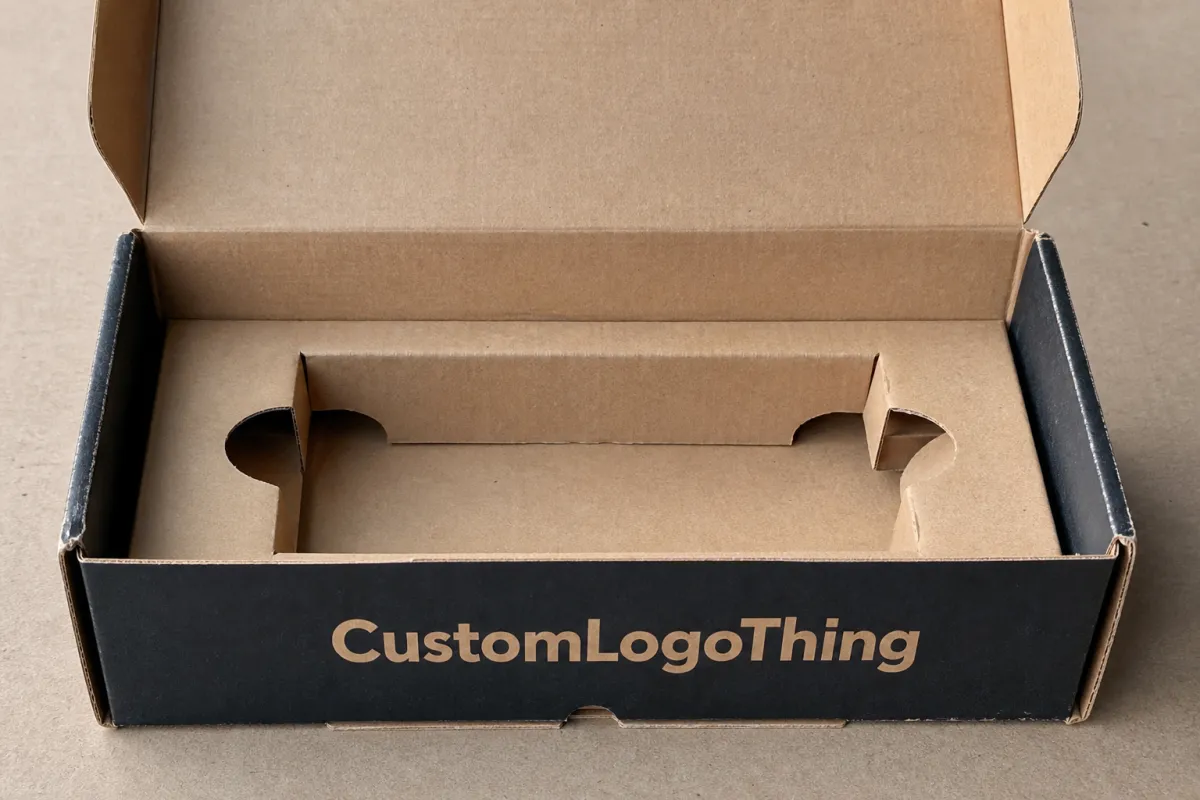
Unboxing is not theater for its own sake. It is proof that the package was planned. A customer opens a rigid or folding carton and finds the product seated neatly in an insert, and the package sends a message before the item is even touched: this was handled with intent. Order reads quickly. A product sitting straight and secure tends to feel more premium, even when the material cost is modest.
Presentation and protection shape perception at the same time. A serum bottle arriving loose inside the box creates noise, movement, and uncertainty. A lipstick, candle jar, or charger tray appearing in a fixed position with a clean reveal line changes the feel of the package completely. The same item can move from generic to considered with the right insert geometry. That shift is often larger than the difference between two print finishes.
Retail and e-commerce teams see the same effect from different angles. Gift-ready goods can use the insert to control the lift-off sequence so the product appears at the right height when the lid opens. E-commerce packs can use it to keep accessories from mixing, reduce abrasion on coated surfaces, and stop small parts from disappearing under the main item. The insert is not only padding. It is choreography.
Fit deserves precision. Snug does not mean crushed. Enough retention is needed to stop motion, but too much friction turns opening into a struggle. A customer should not have to yank a fragile top, dent a painted finish, or tear a sleeve just to remove the product. The best packages feel calm and deliberate. They do not resist the hand.
A good pack does three jobs at once: it protects the item, it guides the hand, and it makes the product feel like it belongs there.
That is the quiet strength of printed product boxes with inserts. The outer graphics sell the idea of the product; the insert confirms that the idea has been built properly.
How Printed Product Boxes with Inserts Work
Structurally, the system has three parts. First is the printed carton, which may be a folding carton, a rigid setup box, or a specialty mailer. Second is the insert material, which could be paperboard, molded pulp, foam, or corrugated board. Third is the locking or folding logic that keeps everything centered and easy to assemble. Once those parts are planned together, the package starts behaving like one design rather than a stack of separate components.
Die-cut paperboard inserts are common for lighter products because they can be scored, folded, and glued into efficient shapes. Molded pulp is often selected for recycled-content goals and for products that need broad contact support. Corrugated partitions or trays add more strength and can help with shipping packs or multi-item kits. Foam still has a role for very fragile items, though many buyers now reserve it for cases where cushioning performance outweighs material and disposal concerns. Each material solves a different balance of protection, cost, and brand feel.
The best results come when the product and the insert are engineered together from the beginning. If the outer box is finished first and the insert is guessed later, the result is usually predictable: uneven margins, pressure points at the corners, or a cavity that looks tidy on screen but behaves poorly in real use. A packaging engineer will usually ask for more than length, width, and height. Weight, center of gravity, accessory count, and surface sensitivity all shape the final design.
The unboxing sequence matters too. The outer carton sets the tone through print, finish, and structure. The insert controls the reveal, so the product sits at the right depth and comes out in the right order. If there are multiple items, the insert can create a hierarchy: main product first, accessories second, literature third. That ordering reduces confusion and makes the package feel more deliberate. In a gift set, for example, the tray can make the primary item visible at once while still protecting smaller pieces from bouncing out of position.
Assembly method carries real cost impact. Some inserts arrive flat and are folded on site. Others are pre-formed and dropped into the carton ready to use. Flat-packed components save freight and storage, but they add labor. Pre-assembled trays speed the line, but they take more volume in transit and can require extra planning for warehousing. Neither option wins automatically; the better choice is the one that fits the production model.
There is also a difference between what a packaging supplier can make and what a fulfillment team can actually use. A design that looks efficient in renderings may slow a high-volume line if it requires too many hand motions. A cleaner insert that opens naturally, or seats the product with one movement instead of three, can improve throughput more than a thicker board ever will. That is why experienced buyers ask not only whether the insert fits, but whether it fits the workflow.
Key Factors That Shape the Right Insert
The first question is still dimensions, but dimensions alone never tell the full story. A 150 mm tall glass bottle with a narrow neck behaves very differently from a 150 mm plastic jar with a broad base. Weight changes how the load transfers through the carton. Center of gravity changes how much a product tips inside the cavity. Fragility changes the level of retention needed at corners, shoulders, and caps. Finish sensitivity changes how much contact is acceptable. High-gloss, coated, soft-touch, painted, or plated surfaces need an insert that prevents rubbing during transit.
Material choice follows the product profile. Light premium goods often work well with rigid paperboard, especially if the shape cradles the item instead of depending on friction alone. Shipping strength usually points toward corrugated because it adds structure and helps absorb handling stress. Sustainability-led programs often choose molded pulp when the tolerances are tight and the surface finish is acceptable. Maximum cushioning still belongs to foam in some cases, though many buyers now ask whether the protection gain justifies the material and end-of-life tradeoff.
Brand presentation affects the insert as well. Some inserts should disappear visually so the product stands out. Others can be color matched or printed, especially in kits where the interior needs to feel as branded as the exterior. There is a marked difference between a plain white cavity and a tray that echoes the carton graphics. One reads as utilitarian. The other feels intentional.
Sustainability and compliance have moved into the buying conversation rather than sitting outside it. Recycled-content goals, retail expectations, and shipping requirements all shape the design brief. For fiber-based options, FSC-certified board can support sourcing goals; see FSC for chain-of-custody information. For ship-ready packs, some teams also use the testing frameworks published by ISTA as a practical reference point. That does not mean every pack needs the same level of testing, but it does help teams compare risk in a structured way.
A common misconception is that the thickest insert must be the best insert. A heavier insert can raise cost, slow assembly, and increase shipping weight without improving performance much. The stronger design is often somewhere in the middle. It balances retention, protection, print presentation, line speed, and the actual landed cost of the finished package. In other words, the best insert is rarely the one with the most material.
| Insert type | Best fit for | Typical strengths | Typical tradeoffs | Indicative unit cost |
|---|---|---|---|---|
| Die-cut paperboard | Light to medium premium goods | Clean branding, compact shipping, easy printing | Less cushioning for heavy or fragile items | $0.08-$0.35 depending on quantity and complexity |
| Molded pulp | Recycled-content projects and form-fit cradles | Good surface coverage, recognizable sustainability signal | Tooling and fit control can take longer | $0.10-$0.40 depending on cavity size and tooling |
| Corrugated tray or partition | Shipping packs, kits, and heavier products | Structural strength, stacking support, better edge protection | Bulkier profile, less refined reveal if left visible | $0.12-$0.45 depending on board grade and layout |
| Foam insert | Very fragile or high-value products | Strong cushioning, reliable retention, high precision | Material perception and disposal concerns for some brands | $0.15-$0.60 depending on density and cut complexity |
Note: those ranges are directional only. Quantity, print coverage, tooling, and assembly method can move the numbers quickly, especially on smaller runs.
Step-by-Step: From Product Dimensions to Dieline
Good packaging work starts with a measurement audit, not an art file. Capture the product length, width, height, and weight, but also measure the accessory set if there is one. Check caps, buttons, cords, droppers, pipettes, and any protruding parts that could be stressed by compression. Note which surfaces are delicate. A brushed aluminum body, for instance, behaves differently from a coated paper tube. If a finish can scratch, the cavity must protect it from the first contact point to the last.
The opening style comes next. A top-opening rigid box gives a different reveal from a side-open carton or a tuck-end folding carton. The opening logic changes how the insert supports the item during removal. It also affects where the fingers go. If the customer has to pinch too hard, lift at a bad angle, or hunt for a tab hidden behind graphics, the experience starts to feel clumsy rather than premium.
Once the opening logic is clear, the dimensions can become a dieline concept. This is where tolerances matter. A few millimeters can separate a snug fit from a damaged finish. Too tight, and the product scuffs or jams. Too loose, and it shifts in transit. Packaging teams often prototype more than one cavity size before settling on the final spec, because the real object rarely behaves exactly like the CAD file.
The artwork review should happen at the same time. Logos, copy, regulatory marks, and finish effects can collide with folds, glue tabs, and opening edges if they are treated as separate tasks. A foil logo placed across a score line may look fine on screen and fail on press. Clean layout is not only a graphics issue; it is a structural one.
Prototype testing is the final checkpoint before production. Build the sample, load the actual product, close the box, reopen it, and repeat the cycle enough times to see where friction develops. Then ask direct operational questions: How fast does a packer assemble it? Does it need tape or not? Can the item be seated without force? Does the customer understand how to remove the product without tearing the insert?
For fragile or shipping-sensitive products, a small pilot run is usually worth the effort. It helps confirm whether the cavity tolerances, glue points, and fold memory hold up under real conditions. If the packaging is meant for distribution, a drop or vibration protocol matched to the risk level is better than a visual approval alone. That is where teams save time later, because the issue is caught before the full run lands in inventory.
A useful detail here: the best dieline is not always the one that uses the least board. If one extra score line makes the tray easier to fold, or one small flap prevents the item from lifting during a corner drop, that extra material may be the cheaper choice. Packaging economics reward designs that reduce failure, not designs that simply look lean on paper.
Cost, Pricing, MOQ, and Unit Cost
Pricing for printed product boxes with inserts depends on more variables than many buyers expect. Carton size is only the beginning. Board grade, insert complexity, print coverage, coating, foil, embossing, spot UV, and assembly method all move the quote in different directions. A simple white mailer with a plain insert is one thing. A four-color printed rigid box with a custom tray, matte lamination, and a foil logo is another.
MOQ affects pricing because setup costs have to be spread across the run. On a smaller order, tooling, print setup, die cutting, and finishing time are absorbed by fewer units, so the unit price rises. On a larger order, the per-box cost usually drops, though storage and cash flow can become the bigger issue. Tiered quotes make the economics clearer. Seeing pricing at 500, 1,000, 3,000, and 5,000 units often reveals more than a single number ever will.
Another cost item gets overlooked too often: total packaging cost, not just quote price. Freight, warehousing, labor, spoilage, and product damage belong in the analysis. An insert that adds a few cents can reduce return rates, repacking labor, and breakage enough to improve the real margin. That is especially true for fragile goods and refill systems where one broken component can ruin the whole set.
For e-commerce brands, a useful comparison is simple: what does the insert cost versus what does a damaged order cost? If the finished pack costs $0.25 more per unit but prevents a $12 replacement shipment or a customer complaint, the more expensive pack may be cheaper in practice. The exact numbers depend on damage rates, product value, and shipping distance, but the principle holds. In a category with tight margins, even a small reduction in breakage can matter more than a slight increase in board cost.
Below is a simple buying framework many teams use before requesting quotes from a supplier:
- Launch run: prioritize speed, fit confidence, and low rework risk.
- Replenishment run: optimize for repeatability, freight efficiency, and assembly speed.
- Scale run: negotiate print, tooling, and material costs with tighter spec control.
If you are also planning labels, sleeves, or secondary cartons, it helps to define the whole packaging system at once. That is where custom packaging products can be compared as a family rather than as isolated items. A supplier can often quote more intelligently if the box, insert, and print requirements are described together.
Specialty finishes and insert precision tend to amplify one another. A heavily finished exterior with a poorly shaped interior weakens the premium effect immediately. A modest print specification with excellent fit often feels more expensive than a flashy pack with mediocre engineering. Buyers should judge the whole package, not one line in the quote.
Process, Timeline, and Lead Time
A typical project starts with discovery, then quote, then dieline creation. After that comes artwork prep, structural sample development, revision, approval, manufacturing, and shipping. That path looks linear on paper, yet packaging schedules usually move in loops. A changed bottle shoulder can force an insert adjustment. A revised logo can shift the print layout. A late regulatory note can push the whole calendar back by a week.
Lead time is not one fixed number. It depends on print method, finishing complexity, order quantity, sample requirements, and whether the insert needs new tooling. A simple printed folding carton with a standard insert can move much faster than a rigid box with a custom molded component. Seasonal demand matters too. If a supplier’s line is full, even a simple order can wait behind earlier jobs.
Delayed approvals are the most common cause of missed ship dates. Missing dimensions create back-and-forth. Artwork changes after sample signoff force rework. Insert redesigns are especially disruptive because a structural change can affect every other dimension around it. A team that locks the product spec early usually saves more time than a team that chases a slightly nicer visual late in the schedule.
Build a buffer for sample review and transit time. If the project includes new tooling or a first-time fit test, there should be room to inspect the prototype with real products in hand. Shipping a sample across the country and reviewing it the same day it arrives is not enough. Someone needs to load the pack, close it, carry it, and check the opening sequence more than once.
Planning backward from launch day is the cleanest way to manage this. Start with the sales date or inventory date. Then count backward through production, packing, approval, and transit. That timeline should include enough space for QA checks and pilot packing. The strongest packaging projects are rarely the fastest; they are the ones that arrive with enough margin to absorb a small surprise.
For teams launching a seasonal product, one more caution helps: freight delays can erase an otherwise perfect packaging schedule. If the box is going to sit in a warehouse for six weeks before shipping, you need more than a good fit sample. You need confidence that the board will not warp, the insert will not loosen, and the printed finish will hold up under storage conditions. Packaging does not stop being physical just because the order was approved digitally.
Common Mistakes That Cause Damage or Rework
The most expensive mistake is designing the outer box first and the insert second. That sequence often creates a mismatch between the visual plan and the real fit. The box looks right on the mockup, but the product sits too low, too high, or too loosely inside it. Once the carton is fixed, the insert has fewer options, and the team ends up forcing a compromise.
Ignoring tolerance comes next. A difference of a few millimeters sounds tiny on paper, yet it can decide whether a gloss-coated item slides freely or gets scuffed on entry. This is especially true for bottles, jars, and devices with hard edges. If the product has a painted finish or a delicate closure, tolerance should be checked against the real object, not only the spec sheet.
Weak testing habits create another layer of risk. A sample that looks good on a desk may fail on a packing table. If there is no drop testing, vibration testing, or at least a real transit simulation, the approval is incomplete. The test does not need to be elaborate, but it does need to be representative. A product that survives one careful hand pack might still fail in a high-speed fulfillment environment.
Overdesign causes problems too. Extra layers, oversized coatings, and a heavy insert can make the pack feel more premium at first glance, yet they may slow assembly and increase shipping cost. Sometimes the added material gives very little return. A buyer should ask whether each added component improves protection, presentation, or line speed. If it does not, it is usually decorative noise.
Artwork can create its own problems. A hidden pull tab, crowded instructions, or opening cues that are too subtle can make a smart insert feel awkward. The customer should not have to guess how the package works. If the insert needs a particular lift angle or hand position, the graphics should help guide that motion. Packaging fails when design and behavior are treated as separate subjects.
Testing the package the way a customer or picker will actually use it is one of the most practical rules in the process. If the item is assembled, packed, shipped, opened, and re-closed three times during the project, there is a strong chance the weak point will reveal itself early. That is far cheaper than discovering it after 5,000 units are on the water or sitting in a warehouse.
One more failure mode deserves mention: approving a sample that looks fine but has no clear reordering spec. Months later, the same box is reordered with slightly different board thickness, a different insert density, or a revised cavity depth, and suddenly the fit changes. That kind of drift is common. It is also avoidable.
Expert Tips and Next Steps for a Cleaner Launch
Start with a packaging brief that is more than a sketch. Include product dimensions, weight, finish sensitivity, accessory count, shipping method, target audience, display needs, and sustainability goals. If the product ships in retail channels and direct-to-consumer channels, say so. If the insert must support a shelf presentation as well as parcel transit, say that too. Good briefing shortens the number of revisions.
Ask for side-by-side prototypes whenever possible. A single sample tells you something, but two or three versions reveal more. One may protect better, another may pack faster, and a third may feel more premium when opened. Comparing options at the bench is far more useful than judging one concept in isolation. A packaging team can spot a lot in five minutes with actual units and real hands on the table.
Test with real products, not substitutes. Mockups are helpful for checking structure, but they often miss the weight, balance, and finish behavior of the actual item. A bottle with a different cap height can change the whole fit. A kit that includes a cable, spoon, or accessory tray needs to be packed as a complete set, not as a single object in a sample cavity.
If you are creating a family of SKUs, write the spec so reorders stay repeatable. That includes board thickness, insert material, cavity dimensions, tolerances, print finishes, and assembly instructions. Reorder consistency is one of the hidden benefits of disciplined packaging. Once the spec is clear, future jobs become easier to price and faster to approve.
If you need a starting point for the outer carton, the structural insert should be developed with the same discipline as the print artwork. That is where a supplier’s packaging catalog can be useful. Reviewing printed packaging solutions alongside insert options gives the team a better picture of how the complete system will work, not just how it will look.
Before full production, run this checklist:
- Lock the product measurements and weight.
- Choose the insert material based on risk, branding, and sustainability goals.
- Request tiered pricing at several quantities.
- Approve the dieline and sample together.
- Run a pilot pack and inspect the actual removal experience.
That sequence keeps the launch grounded. It also reduces the chance that a last-minute packaging change will disturb the budget or the delivery date. For teams that want fewer surprises, the process is as valuable as the final box. It also creates a paper trail that helps the next reorder move faster and with fewer questions.
Conclusion
Printed product boxes with inserts work because they treat presentation and protection as one problem. The outer carton tells the brand story. The insert controls fit, movement, and reveal. When those two parts are designed together, the package tends to look better, ship better, and pack faster than a box-and-filler approach.
The strongest result is rarely the fanciest structure. It is the one that matches the product’s weight, fragility, and handling path without adding unnecessary cost or assembly time. A glass dropper bottle, a candle in a straight-sided jar, and a multi-piece electronics kit all need different answers. The common thread is disciplined fit. If the cavity is wrong, no amount of print coverage will fix the experience.
The practical takeaway is straightforward: measure the real product, define the unboxing sequence, compare at least two insert materials, and test the sample with actual handling, not just visual approval. Then lock the specification before production so the next order behaves the same way. That is the shortest route to printed product Boxes With Inserts That perform in the real world.
What products are best suited for printed product boxes with inserts?
Items that can scratch, shift, crack, or tip over during shipping are strong candidates, especially cosmetics, candles, glass bottles, electronics, and gift sets. Products with multiple pieces also benefit because the insert keeps accessories organized and stops small parts from rattling into one another.
Are paperboard inserts strong enough for printed product boxes with inserts?
Yes, for many light to medium-weight products, especially when the insert is die-cut to cradle the item instead of relying on friction alone. For heavier or more fragile goods, paperboard may need reinforcement, a corrugated structure, or a different insert material entirely.
How do printed product boxes with inserts affect pricing?
They usually raise the upfront unit cost because there are more materials, more setup, and often more design work than a standard folding carton. They can still save money overall by reducing breakage, returns, repacking time, and inconsistent fulfillment.
What information should I send before requesting a quote for printed product boxes with inserts?
Send exact product dimensions, weight, photos, quantity targets, shipping method, and any finish or branding requirements. If you already know the insert material preference, assembly method, or target MOQ, include that too so the quote reflects real production needs.
How do I test whether the insert fits correctly?
Load the actual product into the sample and check for movement, friction, and pressure points while closing and reopening the box. Then run a small real-world test: carry it, ship it, or drop-test it according to the product risk level before approving the final design.


