Buyer Fit Snapshot
| Best fit | Printed Protective Sleeves for Shipping projects where brand print, material claims, artwork control, MOQ, and repeat-order consistency need to be specified before quoting. |
|---|---|
| Quote inputs | Share finished size, material target, print colors, finish, packing count, annual reorder estimate, ship-to region, and any compliance wording. |
| Proofing check | Approve dieline scale, logo placement, barcode or warning zones, color tolerance, closure strength, and carton packing before bulk production. |
| Main risk | Vague material claims, crowded artwork, missing packing details, or unclear freight terms can make a low unit price expensive after revisions. |
Fast answer: Printed Protective Sleeves for Shipping: Material, Print, Proofing, and Reorder Risk should be specified like a repeatable production item. The safest quote records material, print method, finish, artwork proof, packing count, and reorder notes in one written spec.
Production checks before approval
Compare the actual filled-product size with the drawing, then confirm tolerance on folds, seals, hang holes, label areas, and retail display edges. Reserve space for logos, QR codes, warning copy, and material claims before decorative graphics fill the panel.
Quote comparison points
Review material grade, print process, finish, sampling route, tooling charges, carton quantity, and freight assumptions side by side. A quote is only useful when the supplier can repeat the same color, closure quality, and packing count on the next order.
Printed protective sleeves for shipping solve a packaging problem that gets ignored right up until the damage report lands on someone’s desk. The product arrives intact, but the outside looks tired, scuffed, or like it lost a fight with a conveyor belt. That matters. Packaging buyers notice it, and customers absolutely do too. A sleeve can protect the surface, carry branding, and give fulfillment teams a cleaner handling layer without forcing a full custom carton into the budget.
That is the real value of printed protective sleeves for shipping. They do three jobs at once. They protect the outer surface, improve the first impression, and carry shipping instructions, SKU IDs, or promo copy that would otherwise need a sticker, insert, or extra wrap. For ecommerce shipping, subscription kits, retail-ready cartons, and higher-touch B2B shipments, that mix is practical. Not flashy. Practical.
If you buy transit packaging often, you already know the tradeoff. Pretty usually costs more. Strong usually costs more. Fast usually costs more. Printed protective sleeves for shipping sit right in that annoying middle ground where everyone wants all three. They can be made from paperboard, corrugate, or coated stock, and the result depends on fit, print coverage, moisture exposure, and how the pack moves through order fulfillment.
At Custom Logo Things, I have seen plenty of packaging programs look perfect in proofs and then get humbled on a busy receiving dock. The real question is not whether a sleeve looks good in a mockup. The real question is whether printed protective sleeves for shipping still look good after a warehouse shift, a carrier sortation run, and a couple of rough touches in transit. That is the test that matters.
What Are Printed Protective Sleeves for Shipping?
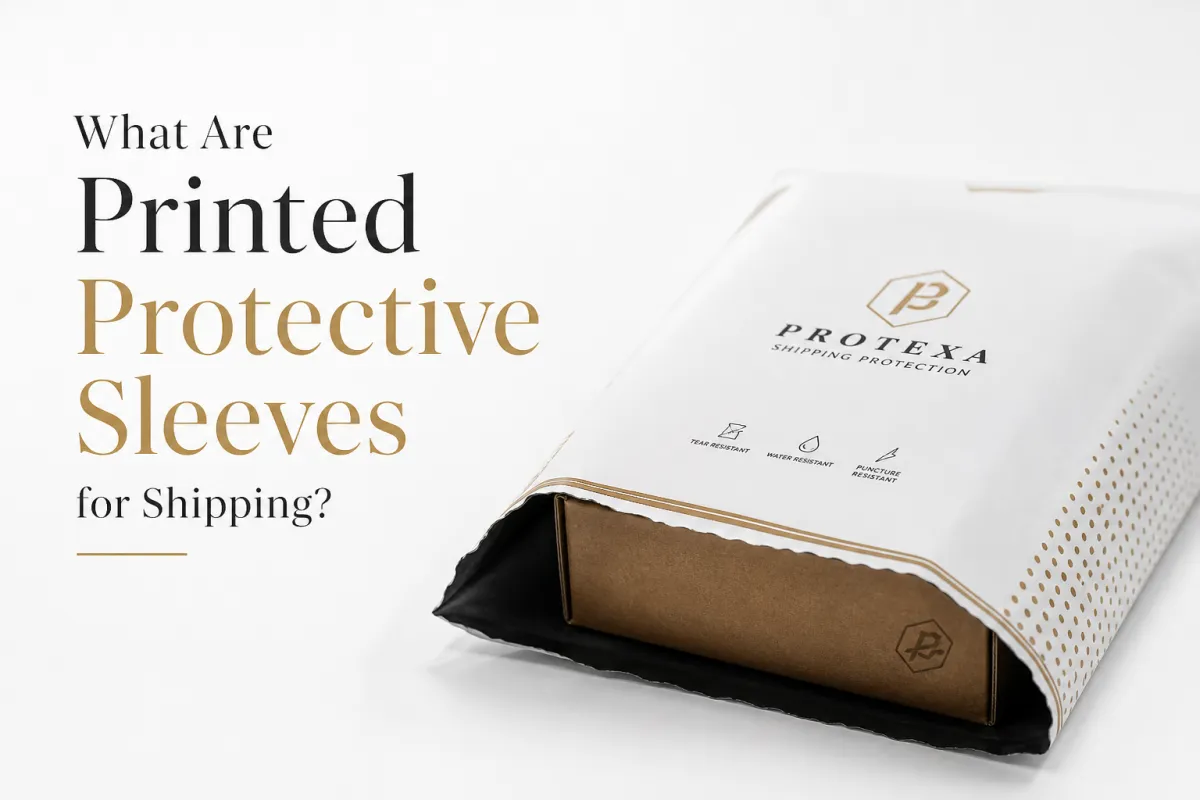
At the simplest level, a sleeve is an outer wrap or fitted layer that sits around a product, carton, or shipper. Printed protective sleeves for shipping combine that physical layer with branding or handling information. The sleeve might slide over a rigid box, wrap around a bundle of products, or act as a snug outer shell over a mailer-style pack.
The picture is easy enough. The product inside is fine. The box is structurally sound. The surface still picked up rub marks, the edges dented a little, and the package now looks generic on a receiving dock or a front porch. Printed protective sleeves for shipping fix the first thing people see. That is not cosmetic fluff. In a crowded delivery stream, the exterior is part of the product.
Where do sleeves fit in the packaging stack? Usually between the core shipper and the final presentation layer. They make sense for ecommerce shipping where a carton needs extra surface protection, for retail-ready packs that move from warehouse to shelf, and for Subscription Boxes That need consistent branding even if the base shipper stays standard. They also work in B2B transit packaging when a customer wants identification, handling notes, or product family coding without reprinting every carton component.
The value is blunt. One component can protect, present, and inform. That means fewer loose labels, fewer extra inserts, and fewer brand compromises. It also means a packaging team can keep the expensive part of the system simple. A standard shipper plus printed protective sleeves for shipping often gives more flexibility than a fully printed carton, especially when SKU counts are high or the product line changes often.
"If the outer pack looks worn before the customer opens it, the brand has already lost part of the sale."
That line sounds obvious because it is. A lot of teams still underplay it. Buyers notice the shipping material before they notice the structure. A sleeve can carry a logo, product name, handling warning, or seasonal message while the underlying package does the heavy lifting. For brands that care about unboxing and repeat purchase, printed protective sleeves for shipping are a small change with a very visible payoff.
One more practical point: sleeves do not replace every other packaging format. If a shipment needs real puncture resistance, a reinforced shipper may still be the right call. If you need lower-cost, lighter protection for soft goods, Custom Poly Mailers may be the cleaner option. If the product needs a rigid shipper or a retail-style presentation, Custom Shipping Boxes can be the better base. The sleeve is the layer that makes those structures feel finished.
How Printed Protective Sleeves for Shipping Work
Think of printed protective sleeves for shipping as a sacrificial outer layer. They absorb minor abrasion, help keep surfaces clean during handling, and lower the odds that the final package lands with visible rubs or scuffs. In busy fulfillment environments, that matters because contact points are everywhere: conveyors, tote bins, pallet wrap, loading docks, and the occasional rushed hand that does not care about your brand standards.
Fit is the first performance variable. A sleeve that is too loose can shift, wrinkle, and create friction at the corners. A sleeve that is too tight can slow pack-out or split at the seam if the product dimension varies even a little. The best printed protective sleeves for shipping are built around real pack-out tolerances, not perfect-world dimensions from a drawing. That matters even more when inserts, internal dividers, or void fill change the effective size of the shipment.
Printing changes the job, too. A clean brand mark on the outside turns a shipping unit into a visible touchpoint. Handling icons, SKU codes, barcodes, batch numbers, and seasonal messages can all live on the same surface if the layout is disciplined. For order fulfillment teams, that can mean faster sorting. For customers, it can mean better recognition and a more intentional feel.
It helps to compare the sleeve with common alternatives. Stickers are cheaper, but they do not protect the surface. Belly bands are tidy, but they often cover less area and can move if the product stack is uneven. Fully printed cartons look sharp, but they can get expensive when artwork changes often or when dimensional weight matters and the box size needs to stay standardized. Printed protective sleeves for shipping often land in the middle: more presence than labels, less commitment than a full custom box program.
That middle ground is not a compromise in the lazy sense. It is the reason many packaging teams use sleeves for product launches, limited editions, promotional bundles, and seasonal runs. The sleeve can change without tearing apart the whole shipper, which keeps shipping materials more adaptable. If a brand sells through multiple channels, that flexibility is usually worth more than a clever print finish nobody notices after the tape goes on.
There is also a logistics angle. Clear printed protective sleeves for shipping can help warehouse staff identify a SKU family at a glance, separate fragile items from standard ones, or route a product to a specific packing line. Good design does not just sell. It can make transit packaging easier to run. A sleeve with poor contrast becomes decoration with a job title it cannot earn.
Key Factors That Shape Printed Protective Sleeves for Shipping
Material choice usually decides half the project before the design team touches a layout. Paperboard is common when you want crisp print quality, easy folding, and a familiar recycling path. Corrugate adds more body and better crush resistance. Coated stock can improve ink holdout and scuff resistance. Specialty substrates can be justified for premium goods, but they should earn their place, not just show up because a sample feels nice in the hand.
For printed protective sleeves for shipping, thickness matters almost as much as substrate. A 12 pt paperboard sleeve and a 16 pt sleeve can feel similar on a desk, but they behave differently once stacked, banded, or compressed in transit. Finish matters too. Matte coatings hide fingerprints better. Gloss can punch up color but sometimes shows scuffs faster. Soft-touch creates a premium feel, though it may need careful testing if the pack gets handled repeatedly in a warehouse.
Fit is non-negotiable. Sleeves built to the wrong carton or product dimension can waste material and create real problems at pack-out. Even a few millimeters of error can cause corner lift, poor alignment, or a slower assembly rhythm. Teams usually discover this after sampling, which is why real measurements should include void space, insert thickness, and compression from outer packaging materials.
Print complexity changes cost and durability. A single-color sleeve with one logo and one handling panel is cheap to run and easy to read. A full-coverage design with gradients, small type, and multiple finishes looks rich, but it can get fragile if abrasion is part of the shipping route. If the package may see moisture, condensation, or rough handling, the artwork needs to be specified for that reality, not for a pretty deck slide.
Sustainability sits in the brief now. It is not a side note. Many teams want recycled fiber content, FSC-certified paper, or a curbside-recyclable structure that avoids mixed-material confusion. The FSC system matters when you need traceable fiber claims. If your packaging program also tracks recycling compatibility, the EPA's guidance on paper and cardboard recovery is worth checking alongside local rules; see EPA recycling guidance for a starting point.
Not every channel needs the same spec. A fragile luxury item shipped to consumers has different demands than a bulk B2B kit moving between distributors. A subscription brand may care more about presentation and predictable assembly. A warehouse-heavy operation may care more about line speed and low error rates. Printed protective sleeves for shipping should match the channel, not get shoved into one-size-fits-all assumptions.
Another detail that gets missed is dimensional weight. If the sleeve adds bulk or changes the outer profile enough to affect cubic size, the carrier bill can move even if the actual weight barely changes. That is why teams should think beyond print and ask how the sleeve changes the total transit packaging footprint. A small structural tweak can ripple into freight cost.
| Material Option | Typical Use | Strengths | Typical Unit Cost at 5,000 Pieces |
|---|---|---|---|
| Paperboard | Light to medium products, retail-ready packs, ecommerce shipping | Sharp print quality, easy folding, broad recyclability | $0.18-$0.32 |
| Corrugate | Heavier items, higher crush risk, transit packaging with more abuse | Better structure, stronger edge protection, good for rough handling | $0.24-$0.48 |
| Coated premium stock | Gift sets, subscription boxes, premium branding | Improved scuff resistance, richer color, elevated feel | $0.28-$0.60 |
Those ranges are not a promise. They are a working frame. Final pricing depends on print coverage, folding complexity, material availability, and whether the sleeves are flat-packed or pre-assembled. Still, the table shows why printed protective sleeves for shipping are often attractive: they can add value without forcing a full-box redesign.
For brands building a larger packaging system, sleeves should be evaluated next to other custom packaging products, not on their own in a vacuum. A sleeve may work beautifully if the rest of the stack is simple. It may be the wrong choice if the packaging program already relies on heavy inserts, strong branding, and high graphic coverage. Good package protection is always a system question.
Printed Protective Sleeves for Shipping: Cost, Pricing, and Timeline
Pricing is usually a stack of smaller decisions rather than one giant number. Setup fees matter. Tooling or plate costs matter. The print method matters. Material grade matters. Finishing matters. Even the way the sleeves are packed for freight can shift total spend, especially if the order needs palletization, inner bundling, or pre-assembly to support faster pack-out.
For printed protective sleeves for shipping, unit price almost always drops as volume rises. That is true in flexographic, offset, digital, and mixed production environments. Lower unit cost does not always mean lower total spend, though. A premium substrate, specialty coating, or custom structural change can burn through the savings quickly. A buyer who focuses only on the per-piece number can miss the real budget picture.
There are tradeoffs worth choosing on purpose. If you choose a standard size, you may avoid expensive tooling and reduce waste. If you simplify the artwork, you may keep a higher-grade material in play. If you standardize one sleeve platform across several SKUs, you may reduce changeover time and simplify inventory. That kind of thinking matters a lot for ecommerce shipping programs that need steady replenishment without drama.
Here is the short version:
- A simpler design can preserve a better substrate.
- A standard dimension can reduce setup friction.
- A smaller print area can help control scuff risk.
- Fewer variants can speed order fulfillment.
Timing is usually more predictable than pricing if the brief is clean. A typical project moves through specification, artwork proofing, sample approval, production, finishing, packing, and freight. For printed protective sleeves for shipping, a normal timeline is often 12 to 15 business days from proof approval for straightforward runs, though more complex jobs can stretch past that if special finishes or custom die work are involved.
Delays usually pile up in a few places. Late size changes are one. Artwork that is not print-ready is another. Revisions after sampling can also push delivery out fast. When buyers ask for multiple versions, a color change, or a last-minute compliance panel, the schedule tightens. That is why printed protective sleeves for shipping should be planned with room for at least one sample loop and one contingency window.
Rush work deserves a reality check. Faster production can help, but it is rarely free. If a sleeve design has not been tested for fit, abrasion, and assembly time, rush pricing can buy speed at the exact moment the design still needs refinement. A weak sleeve that ships on time is still a weak sleeve. Better to allow testing than to fix the design after the first large run lands on a dock.
From a packaging buyer's point of view, the cost comparison should also include labor. A sleeve that adds eight seconds to every pack-out might not sound expensive until you run it across thousands of orders. In order fulfillment, seconds stack up fast. If a hand-applied sleeve slows the line, the hidden labor cost can wipe out the print savings. Printed protective sleeves for shipping should be priced with labor, damage risk, and freight in the same conversation.
One more comparison helps. If a business is choosing between printed protective sleeves for shipping, a premium mailer, or a fully printed box, the sleeve often wins when the outer structure can stay standard and the brand wants flexibility. If the product is very light, Custom Packaging Products may include other formats that work better for the same budget. The goal is not to force the sleeve into every project. It is to use it where the economics make sense.
That also explains why quoted pricing should be broken out clearly. Ask for setup cost separately from running cost. Ask whether the number assumes pre-assembled packs or flat shipping. Ask whether a second color or varnish changes the timing. Printed protective sleeves for shipping become much easier to compare once the quote separates what is fixed from what scales with quantity.
Step-by-Step Guide to Ordering Printed Protective Sleeves for Shipping
The cleanest projects start with a packaging audit. What is being shipped? How fragile is it? What surfaces are vulnerable to scuffing? Which brand moments matter most? If the answer is a premium box or product carton that is already visible to the customer, printed protective sleeves for shipping may be the best outer layer. If the package is low-value and purely functional, another format may do the job with less complexity.
Next, measure real pack-out conditions. Do not rely on nominal dimensions alone. Measure the product, inserts, void fill, and any compression from the outer shipper. A sleeve that fits on a design sheet can fail on a live line if the pack is even slightly variable. That matters a lot for multi-SKU programs where one dimension change can ripple through the whole range.
Then choose the structure and substrate. Paperboard is a common starting point. Corrugate is better when package protection needs to survive rougher handling. Coated stocks help when visual finish matters and you expect more hand contact. For printed protective sleeves for shipping, the right choice depends on durability, appearance, sustainability goals, and how the sleeve will be stored and fed into the line.
Artwork should come after structure, not before it. Build around folds, seams, and handling zones. Leave space for barcodes, SKU names, and logistics information. If the sleeve needs to communicate fragile handling or temperature sensitivity, make those signals large enough to be seen quickly. A tiny icon hidden under a color block is not a useful logistics tool. It is just art pretending to help.
Mockups and samples are the stage where many teams learn the most. Test the sleeve for fit, corner friction, stacking, and how it looks under warehouse lighting. Test it again under customer-facing light if the pack will be opened in a retail or home setting. Printed protective sleeves for shipping should be checked for abrasion after handling, not just for a neat appearance straight out of the box.
There is a reason many packaging teams compare samples side by side. A good sample can still fail when multiplied across a live operation. One version may slide on faster but scuff more easily. Another may hold color better but slow down pack-out. Good decisions come from comparing the tradeoffs rather than chasing one visual preference.
After that, run a pilot batch. Confirm whether pack-line speed changes. Track damage rates. Compare labor time. If the sleeve causes even small delays, the economics may shift. If it reduces rework or claims, the economics may improve faster than expected. Printed protective sleeves for shipping are not just a design decision; they are an operational one.
A useful checklist for ordering:
- Confirm final dimensions and tolerances.
- Lock the substrate and finish.
- Approve artwork with fold-safe zones.
- Request a physical sample or mockup.
- Test the sleeve in real pack-out conditions.
- Track labor and damage data during a pilot run.
That process may sound cautious, but cautious is cheaper than reworking a run of printed protective sleeves for shipping that fit badly or slow the line. The brands that get this right treat packaging like a controlled system, not a one-off design exercise. They think about shipping materials, customer perception, and warehouse behavior together.
Common Mistakes With Printed Protective Sleeves for Shipping
The first mistake is designing before dimensions are final. It sounds basic, and yet it happens constantly. A box changes by a few millimeters, a product insert gets thicker, and suddenly the sleeve no longer sits flat. With printed protective sleeves for shipping, small changes can turn into a bigger financial problem than people expect because revised tooling, artwork, and inventory all need attention again.
Another common error is stuffing the sleeve with too many messages. Brands want their logo, a tagline, product information, handling icons, promo copy, seasonal art, and sometimes legal text. That can work if the design is disciplined. More often, it turns into visual noise. A sleeve should support the package, not wrestle it for attention. Good branding feels intentional. Clutter feels nervous.
Material mismatch is another expensive miss. A sleeve may look excellent in a sample room and still fail under humidity, stacking pressure, or rough carrier handling. Printed protective sleeves for shipping need to survive the same journey as the box. If they are expected to protect a glossy surface or a premium printed carton, scuff resistance has to be part of the spec from the start.
Fulfillment speed gets ignored too often. A sleeve that takes an extra ten seconds to apply might seem acceptable in a design review. Multiply that by a week of orders, and the labor impact becomes real. In ecommerce shipping, the most elegant pack is not always the most efficient one. If the line slows down, packaging savings can disappear into labor costs.
Channel mismatch is a subtler mistake. A retail-style sleeve may look great for a boutique shelf, but it may not suit a rugged distribution route. A high-end sleeve may be unnecessary for a low-value product. A fragile luxury item may need a heavier structure than the sleeve alone can provide. Printed protective sleeves for shipping should match the shipping lane, not just the brand mood board.
Then there is the data gap. Many teams never measure damage rates before or after a packaging change. That means they cannot prove whether the sleeve helped package protection or merely added expense. If you are spending money on transit packaging, you want evidence. Track claims, return reasons, visible scuffs, and line speed. Otherwise, you are guessing and paying for the privilege.
One more issue deserves attention: too many versions. Different sleeve sizes can make sense, but too many SKUs create inventory complexity. If the product line is stable, a standardized platform often works better than a highly customized matrix. For some brands, that means one sleeve family across several box sizes with minor dimensional adjustments, not a totally new format for every item.
When teams avoid these mistakes, printed protective sleeves for shipping become much easier to manage. The sleeve stops being a decorative add-on and starts acting like part of the operating model. That shift matters more than most people think.
Expert Tips and Next Steps for Printed Protective Sleeves for Shipping
Test against the real carrier mix, not a generic drop test alone. That sounds minor, but it changes outcomes. A parcel moving through a calm regional route does not experience the same handling as transit packaging moving through a dense national network. If your customer base is spread across rougher lanes, printed protective sleeves for shipping need to be judged against that reality.
Build a one-page spec sheet Before You Order. Keep it simple and specific: size, substrate, print method, finish, approved color targets, tolerance range, and acceptable assembly method. The goal is to reduce ambiguity. When a plant, a buyer, and a designer all read the same sheet, the chance of costly rework drops fast.
Compare three numbers before you approve a final version: scuff resistance, assembly time, and damage claims. Those figures tell a better story than a polished rendering. A premium sleeve that protects well but slows the line may still be wrong. A fast sleeve that looks fine but raises returns is also wrong. Printed protective sleeves for shipping work best when the visual and operational scores move together.
A phased rollout usually makes the most sense. Start with the highest-value or highest-risk SKUs. These are the products where presentation and package protection matter most, and they also give you the clearest signal on whether the sleeve is paying off. Once the sleeve proves its fit and economics, expand it across the range. That lowers risk and gives the team time to learn.
Keep the design flexible. Seasonal messages, limited editions, and SKU shifts are easier to manage when the sleeve has room for small updates without a full redesign. That flexibility is one reason printed protective sleeves for shipping can be more efficient than a rigid custom-box program. You can refresh the look while keeping the base structure stable.
It also helps to think about the sleeve as part of a broader packaging ecosystem. If your program uses Custom Packaging Products for launch kits, standard shippers for replenishment, and printed sleeves for special runs, you have a layered system that can serve different channels without forcing every order into the same format. That kind of design logic keeps shipping materials aligned with actual business needs.
If you want a clean rule of thumb, use this: choose printed protective sleeves for shipping when you need protection plus brand presence, but do not want to rebuild the whole shipper. That is the sweet spot. It is narrow enough to demand discipline and broad enough to be useful across many product lines.
For teams at Custom Logo Things, the next step is usually a short technical review: product dimensions, the carton or mailer being used, the expected transit profile, and the print finish. From there, it becomes much easier to narrow down the material, estimate the budget, and decide whether the sleeve should be flat-packed, pre-assembled, or paired with another format. Printed protective sleeves for shipping are rarely the only answer, but they can be the smartest answer when the brief is clear.
Used well, printed protective sleeves for shipping do not just dress up a parcel. They reduce scuffs, support order fulfillment, clarify handling, and make the brand look more intentional from the first touch. That is a practical outcome, not a vanity one, and it is why the format keeps earning a place in modern ecommerce shipping and transit packaging programs. The simplest next move is to test one sleeve against one real product, one real lane, and one real packing team. If it survives that, you are probably onto something.
FAQ
Are printed protective sleeves for shipping better than plain mailers?
They are better when you want package protection plus branding in the same layer. Plain mailers usually win on simplicity and cost for lower-value shipments, while printed protective sleeves for shipping add more visual presence and can help reduce surface scuffs. The right choice depends on damage risk, customer expectations, and how much customization the shipment needs.
What materials work best for printed protective sleeves for shipping?
Paperboard and corrugate are the most common choices because they balance print quality, structure, and recyclability. Coated stock can improve scuff resistance and color vibrancy, but it may raise cost and change your end-of-life claims. The best material depends on product weight, transit distance, handling roughness, and whether the sleeve needs to survive humidity or abrasion.
How much do printed protective sleeves for shipping usually cost?
Pricing depends on quantity, substrate, print complexity, finishing, tooling, and whether the sleeve is flat-packed or pre-assembled. In many programs, unit cost drops as volume rises, but specialty finishes or structural changes can offset those savings. Ask for a quote that separates setup from running cost so you can compare printed protective sleeves for shipping more clearly.
How long does production take for printed protective sleeves for shipping?
Most projects move through spec finalization, proofing, sample approval, production, finishing, and freight. Straightforward runs often land in the 12 to 15 business day range after proof approval, though more complex jobs can take longer. Late size changes and artwork revisions are the biggest reasons schedules slip.
Can printed protective sleeves for shipping be customized for different box sizes?
Yes, but it helps to standardize dimensions where possible. A common approach is to build one sleeve platform with small variations across related SKUs, rather than creating a totally different structure for each box. Custom sizing works best when the product line is stable enough to justify the setup and the expected volume supports the tooling.


