Skincare buyers usually start asking for a printed PVC Zipper Garment Bags quote for skincare after a standard pouch fails in a few predictable ways. The pouch wrinkles when it is filled. The zipper feels fragile. The whole set looks less polished than the products inside. That is a problem for travel kits, bundled sets, and gift packaging that has to hold attention on a shelf or in an unboxing moment.
Printed PVC zipper bags solve a very specific packaging need: they keep the contents visible, protect them from dust, and still feel reusable enough that customers do not treat them as throwaway wrap. For skincare brands, that combination is useful because presentation and protection often matter at the same time. A flimsy pouch can do one or the other, but not both for long.
Packaging rule of thumb: if the pack has to hold shape, show contents, and survive repeated handling, a thin PE bag is usually the wrong starting point.
Why skincare brands ask for PVC zipper garment bags when standard pouches fail
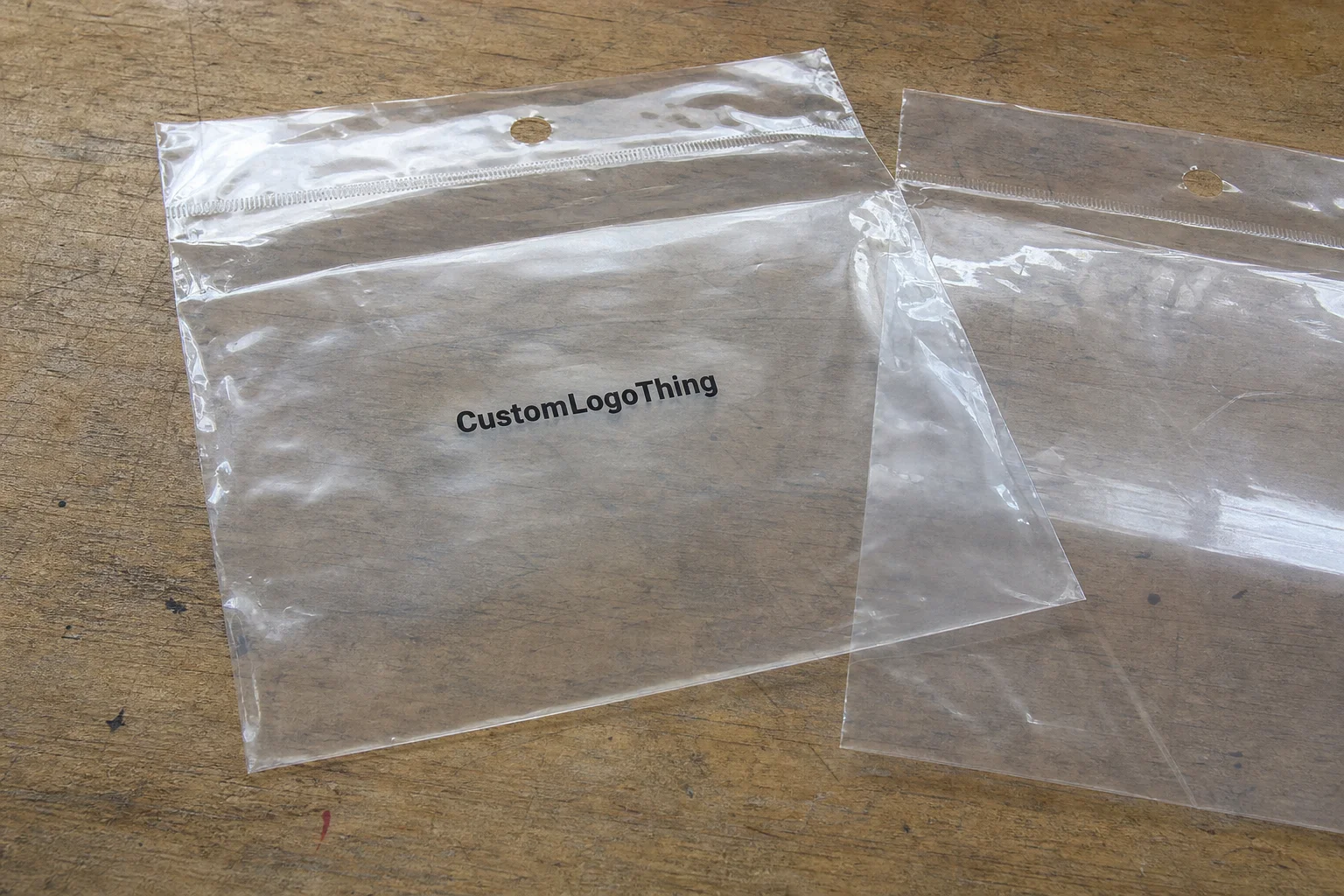
A printed PVC Zipper Garment bag gives structure first, visibility second, and branding space after that. Buyers notice the shape immediately. They also notice whether the packaging reveals the product clearly enough that the set feels intentional rather than improvised. Clear or lightly frosted PVC makes that possible without hiding jars, tubes, brushes, or inserts.
Skincare packaging often has to do more than contain small items. It may need to showcase multiple SKUs, hold a pump bottle upright, keep a spatula from sliding around, or present a gift set in a way that feels deliberate. Standard soft pouches tend to collapse around those contents. A structured zipper bag keeps cleaner edges, protects the contents better, and usually reads as more premium when the thickness is chosen well.
Common uses include:
- Limited edition gift sets with several skincare items inside
- Travel kits for cleanser, toner, serum, and moisturizer
- Subscription box inserts that are meant to be kept and reused
- Spa or salon retail bundles displayed at the counter
- Influencer and PR mailers that need a clean visual finish
Material thickness changes the impression quickly. Too thin, and the bag feels like a novelty sleeve. Too thick, and it can become expensive without adding much value. For lighter skincare sets, buyers often work in the 0.20 mm to 0.30 mm range. For heavier bundles or packs that will be opened often, 0.35 mm to 0.50 mm is more common. The right answer depends on the weight, the number of items, and how many times the bag is expected to be reused.
Because the bag is transparent, artwork placement needs a little more discipline than it would on an opaque pouch. A logo centered too low can disappear behind a jar or carton. A care warning can look accidental if it lands in the wrong view panel. Transparent packaging is unforgiving in that way, so the print layout has to be planned around the filled product, not just around the blank film.
Printed PVC zipper bag construction that matters for skincare packaging
Construction details decide whether the bag performs well after filling. Shape, seal method, zipper style, and print process all affect how the finished pack feels in use. Skincare is especially sensitive to scuffing, leaking, and awkward fit, so the structure has to be chosen with the contents in mind.
The base material is usually clear or frosted PVC film. Clear film gives the best visibility and works well for display-focused kits. Frosted film hides fingerprints and minor surface marks better, which can be useful for premium or clinical-looking lines. Some brands prefer frosted PVC because it looks a little softer and less glossy under retail lighting. Others want the contents visible at a glance, and then clear is the better call.
Zipper style is another practical detail that often gets underpriced in the quoting stage. A standard single-track zipper can be fine for sample sets or lighter promo packs. Repeated reuse, however, benefits from a stronger closure or a wider track. If the bag will be opened every day for travel or counter display, the zipper needs to tolerate more wear than a one-time mailer pack. Seal quality matters too; uneven heat seals make the bag look rushed and can fail under load.
Common construction choices
| Option | Best for | Tradeoff |
|---|---|---|
| 0.20 mm PVC, flat bag | Samples, light promo sets | Lower cost, less structure |
| 0.30 mm PVC, gusseted bag | Retail kits, boxed skincare bundles | Better shape, slightly higher unit price |
| 0.40 mm+ PVC, reinforced zipper | Heavier sets, repeated reuse | More durable, more material cost |
| Frosted PVC with print | Premium or clinical positioning | Less product visibility than full clear |
Print method affects both appearance and cost. Screen printing suits simple logos, solid spot colors, and shorter artwork. It is usually a sensible choice when the branding is straightforward and the bag does not need photographic detail. UV printing handles sharper text, finer lines, and more complex graphics, and it becomes more attractive when the brand wants gradients or small print elements that need to stay legible on transparent film.
Do not under-specify the internal dimensions. A bag that is too tight can press pump heads, scuff jars, and curl inserts. Too much extra space also looks untidy because the contents shift around. For skincare kits with bottles or glass jars, it is better to finalize the internal size after the product list is confirmed. Otherwise the bag may look right on paper and wrong in production.
Small details can improve the finish if they are used carefully. A tinted zipper, a frosted window, or a metallic accent print can lift the appearance, but too many decorative elements start to compete with the product itself. The strongest designs usually stay restrained and let the contents provide most of the visual interest.
Ask about odor, clarity, and scratch resistance before approving the film. PVC quality varies. Lower-grade film can carry a strong smell or show handling marks too easily, and that is a weak fit for skincare packaging, where the customer expects a clean and controlled presentation.
Specs to confirm before requesting a printed PVC zipper garment bags quote for skincare
If you want a useful printed PVC Zipper Garment Bags quote for skincare, the request needs to include more than a product name and a rough quantity. The best quotes come from complete specifications, because that is what lets the supplier price the real job instead of guessing and revising later.
The basic quote package should include:
- Finished bag size — width, height, and gusset depth if needed
- Material thickness — for example 0.20 mm, 0.30 mm, or 0.40 mm
- Print area — one side, both sides, or specific panels
- Print colors — one-color logo, multi-color artwork, or white underprint
- Zipper type — standard, reinforced, color-matched, or tinted
- Handle style — none, cut handle, webbing handle, or reinforced grip
- Bag style — flat, gusseted, boxy, or with insert support
- Quantity — exact order volume or a very close estimate
What goes inside matters just as much as the bag itself. Three 30 ml bottles fit differently from a set of glass jars, a spatula, and a folded insert card. Product weight changes the choice of film thickness and zipper strength. If the set is heavy, the bag should be priced as a stronger build, not as a light promotional sleeve.
Send vector artwork whenever possible. AI, EPS, and editable PDF files are the easiest to work with. If the brand uses PMS colors, include those references. If the design needs white ink behind the logo to keep it visible on clear film, say so before proofing starts. Transparent film changes how colors read, and that becomes obvious very quickly if the artwork was prepared like it was going onto a white carton.
Also clarify tolerance and end use. Retail packaging can sometimes allow a little size variation if the finished pack still looks clean and functions well. Set-specific packaging, display packs, and transit-sensitive kits need tighter control because inserts and product positioning have to stay aligned. If the order needs to meet shipping or distribution testing requirements, mention that early. Packaging performance is not just visual; it has to survive handling, stacking, and transport as well. Industry references from ISTA and material guidance from Packaging School and industry resources are useful when the pack has a real logistics job to do.
Other helpful details include hang holes, barcode panels, warning icons, reseal labeling space, insert-card size, and whether the bag has to fit secondary packaging. Those small points prevent expensive changes after the tool-up or print file has already been approved.
Cost, pricing, and MOQ for custom PVC zipper bags
Pricing is driven by a handful of variables: thickness, size, print coverage, zipper quality, and quantity. That is the core structure of the quote, and most of the difference between suppliers comes down to how each one handles those factors.
Simple one-color logo bags are usually cheaper than full-surface printed packs. A small mark on a standard clear bag can stay relatively economical, especially in larger runs. Once the artwork becomes multicolor, includes metallic accents, or needs white underprint, the cost climbs because of setup work, additional print passes, and tighter registration control.
Minimum order quantity depends on how much setup a particular build requires. Standard sizes with simple branding often allow lower MOQs than oversized, highly customized, or oddly shaped bags. Once the bag requires a special die, custom zipper color, or reinforced construction, the production line has more changeover cost to absorb, and the minimum usually rises.
A practical buying approach usually looks like this:
- Use a standard size if the set fits without looking cramped.
- Print one side only if the back panel does not add value.
- Limit print colors unless the design depends on them.
- Reuse one bag spec across several SKUs to spread setup cost.
- Choose a common zipper color unless exact brand matching is necessary.
For planning purposes, standard promotional PVC zipper bags in larger runs often land at a much lower per-unit cost than thicker, gusseted, heavily printed retail packs. There is no single universal price, and anyone claiming there is probably has not compared a 5,000-piece one-color order with a 2,000-piece custom spec that needs special finishing. Quantity, artwork complexity, and physical size matter too much for that.
Watch the hidden costs. Samples may be free, partly credited, or charged depending on the supplier. Freight can change the landed cost more than buyers expect. Artwork cleanup may add a fee if files are not ready for production. Carton labeling, export packing, and retail packing instructions can also add small but real charges. Those items are easy to overlook until the purchase order is already moving.
Comparing quotes only by unit price is risky. A cheaper bag can print poorly, smell stronger, scratch more easily, or fail at the zipper after a few uses. The better comparison is thickness, print durability, zipper quality, and the amount of handling the bag is expected to survive.
Process, lead time, and approval steps from quote to shipment
The quoting process should be direct. The buyer sends size, quantity, artwork, and use case. The supplier reviews the spec and prices the actual build. Then both sides confirm the details before sample or production starts. If a quote arrives without asking about material thickness or zipper type, it is only a placeholder.
Approval usually happens in one of three ways:
- Digital proof for simple logo placement and text checks
- Physical sample for material feel, zipper function, and print appearance
- Pre-production sample for complex artwork or launch-critical orders
Once approval is in place, production normally follows a familiar sequence: material sourcing, printing, cutting, sealing, zipper installation, inspection, and final packing. The order can shift depending on the factory setup, but the control points are the same. If the artwork is already stable and the dimensions are fixed, production moves faster. If the bag needs a custom die, multiple print stages, or special packing requirements, the schedule should be longer from the start.
Lead time depends on order complexity and season. Standard custom PVC zipper bags usually move faster than highly customized versions. Seasonal skincare launches can stretch timelines because many buyers are trying to secure the same production window. International shipping adds another layer. If the bags are imported, transit time, customs clearance, and possible inspection delays should all be included in the plan. Planning to the ship date instead of the dock date is one of the easiest ways to avoid launch stress.
Most delays come from approval changes rather than production itself. Artwork changes. Size changes. Print color changes. If the team is still adjusting the logo position after proofing, the schedule will slip. The cleaner the sign-off process, the fewer surprises later.
How we keep skincare packaging consistent across repeat orders
Repeat orders are where packaging discipline matters most. The first run can go smoothly because everyone is focused and the files are fresh. The reorder is where small differences start appearing if the spec is not locked down. Brand color, zipper shade, film clarity, print placement, and seal finish need to match the approved master sample closely enough that the customer never sees a shift.
Quality control should include incoming film inspection, print registration checks, seal strength checks, zipper function, and final appearance under normal lighting. For skincare retail packaging, the obvious defects matter most: scratches, cloudy sections, crooked print, uneven seals, and zippers that do not close cleanly. A bag can be technically usable and still fail the visual test if those details are off.
To reduce variation on reorders:
- Keep a master sample and compare every run against it
- Lock the artwork file so casual edits do not slip in
- Record exact specs for thickness, zipper type, and dimensions
- Store approved color references for brand-sensitive print jobs
- Confirm packing method so the bags arrive in the same condition each time
There is a tradeoff worth accepting upfront. Highly transparent PVC shows handling marks more easily than frosted film. That does not make it a poor material. It just means the warehouse, carton lining, and overall handling need to be a little cleaner. Better inner packing and less abrasion in transit go a long way toward preserving the finish.
For brands working with retail accounts or subscription programs, consistency is not cosmetic decoration. It protects the product story and the buyer’s confidence. If the second shipment looks different from the first, distributors notice. Retail staff notice. Customers may not be able to explain what changed, but they will feel it. That is why the reorder file should contain exact dimensions, print references, and approved sample notes rather than assumptions.
Sustainability may also shape the packaging brief. If reuse is part of the value proposition, the bag should be durable enough to make that promise credible. If waste reduction matters, the material plan should be discussed honestly rather than treated as a tagline. For broader material and recycling context, the EPA recycling resources are a more dependable reference than marketing language.
Next steps to request an accurate quote and avoid rework
If you need a useful printed PVC Zipper Garment Bags quote for skincare, send all the important details in one message: bag size, quantity, thickness, artwork, zipper preference, contents, and sales channel. That is enough information to get a price that reflects the actual job instead of a placeholder number that changes later.
The sales channel matters more than many buyers expect. Retail shelf, ecommerce insert, salon counter, gift set, and influencer mailer all place slightly different demands on the same bag. A retail-facing pack usually needs cleaner visual presentation. An ecommerce insert may need more physical protection. A salon bundle may value reuse and easy reopening more than a one-time display look.
It helps to ask for two versions when the brief is still under discussion:
- Standard spec — best cost and faster production
- Upgraded spec — thicker film, stronger zipper, better print or finish
That comparison makes internal approval easier because the team can judge presentation against cost instead of debating in the abstract. If the launch is time-sensitive, approve proofs quickly and ask for samples only when the finish really needs to be checked. A delay in sign-off is usually more expensive than the sample itself.
If you are still refining the bag spec, send the contents list, target size, and artwork together with the intended use. That gives the quote real context and reduces back-and-forth later. For skincare packaging, good pricing starts with complete information and a clear idea of how the pack will be used.
FAQ
What details do I need for a printed PVC zipper garment bags quote for skincare?
Provide the finished bag size, material thickness, quantity, artwork file, print colors, zipper style, and the skincare items that will go inside. If you have a target use case such as retail display, subscription packing, or a PR mailer, include that too.
Are printed PVC zipper garment bags suitable for skincare retail packaging?
Yes. They work well for visible retail kits, gift sets, spa bundles, and subscription packaging when you want protection and shelf appeal in one pack. The key is selecting the right thickness and print style so the bag looks intentional rather than improvised.
What affects the cost of custom PVC zipper bags the most?
Thickness, size, print coverage, number of colors, zipper type, and order quantity have the biggest impact on pricing. Freight, sample fees, and artwork changes can also affect the final landed cost.
What is the usual MOQ for printed PVC zipper garment bags for skincare?
MOQ varies by size and print complexity, but standard designs usually have a lower minimum than oversized or heavily customized bags. Simpler specs are easier to produce in smaller quantities.
How long does production take after I approve the quote and sample?
Lead time depends on specs and quantity, but standard orders move faster than custom builds with special print or finish requirements. If the order is time-sensitive, confirm artwork early and allow for shipping plus customs time if importing.


