Buyer Fit Snapshot
| Best fit | Printed Retail Box Inserts projects where brand print, material claims, artwork control, MOQ, and repeat-order consistency need to be specified before quoting. |
|---|---|
| Quote inputs | Share finished size, material target, print colors, finish, packing count, annual reorder estimate, ship-to region, and any compliance wording. |
| Proofing check | Approve dieline scale, logo placement, barcode or warning zones, color tolerance, closure strength, and carton packing before bulk production. |
| Main risk | Vague material claims, crowded artwork, missing packing details, or unclear freight terms can make a low unit price expensive after revisions. |
Fast answer: Printed Retail Box Inserts: Design, Cost, and Strategy should be specified like a repeatable production item. The safest quote records material, print method, finish, artwork proof, packing count, and reorder notes in one written spec.
Production checks before approval
Compare the actual filled-product size with the drawing, then confirm tolerance on folds, seals, hang holes, label areas, and retail display edges. Reserve space for logos, QR codes, warning copy, and material claims before decorative graphics fill the panel.
Quote comparison points
Review material grade, print process, finish, sampling route, tooling charges, carton quantity, and freight assumptions side by side. A quote is only useful when the supplier can repeat the same color, closure quality, and packing count on the next order.
A shopper decides in seconds whether a product feels worth the price, and printed retail box inserts can tilt that judgment before the product itself even gets a fair shot. That interior piece is not dead space. It is structure, guidance, branding, and, in plenty of cases, the difference between a package that feels considered and one that feels thrown together by someone with too many deadlines and not enough cardboard sense.
The best printed retail box inserts do three things at once: they hold the product in place, they tell the buyer what to notice first, and they reinforce the brand without turning the inside of the box into a billboard. Easy enough to say. Harder to pull off. Once an insert has to protect fragile parts, separate accessories, and carry instructions, it stops being a simple print job and starts acting like a small piece of packaging engineering with real business consequences.
I have seen great products lose trust the second the carton opened because the inside looked sloppy. That is the annoying part of packaging: people absolutely judge the interior, even if they pretend they do not.
A good insert does not elbow the product out of the way. It clears the stage so the product looks easier to trust, easier to use, and easier to remember.
What Printed Retail Box Inserts Actually Do
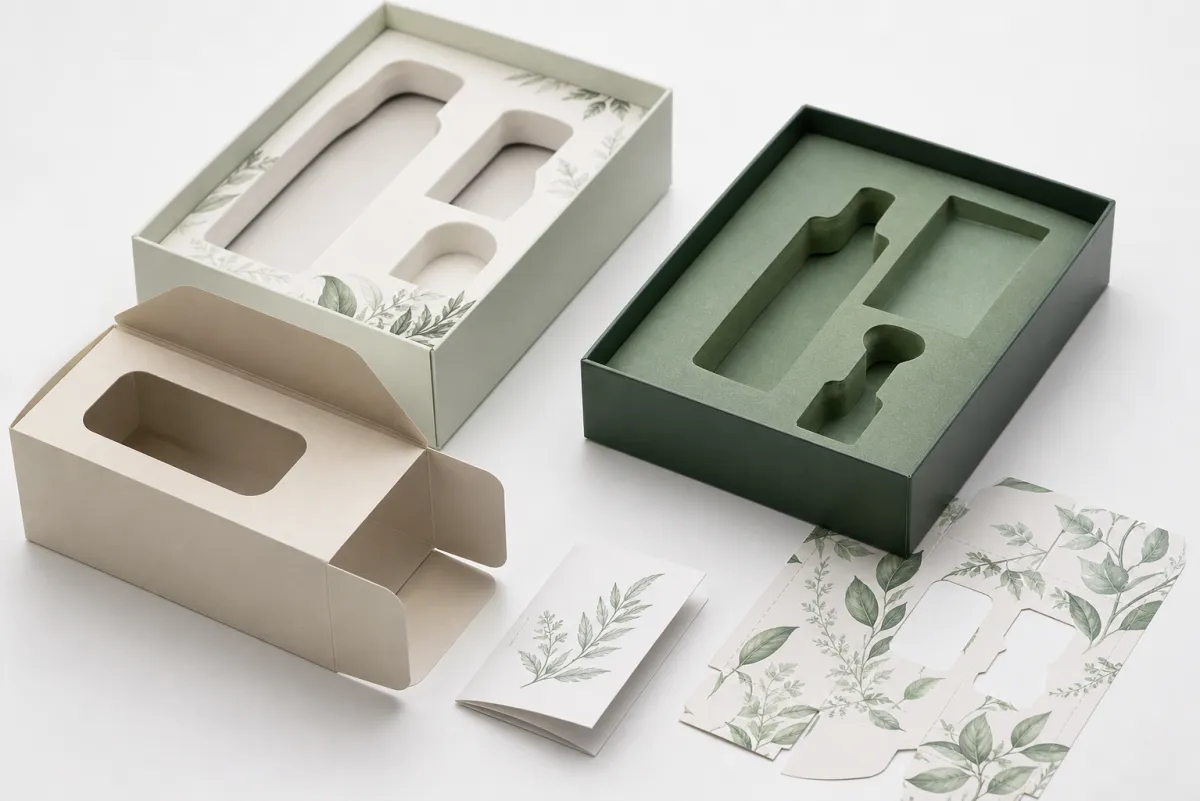
Printed retail box inserts are the interior components placed inside retail packaging to organize a product, explain usage, reinforce branding, or communicate promotional information. They can be folded cards, fitted paperboard trays, printed sleeves, or shaped supports that make the opening experience feel deliberate instead of accidental. For packaging buyers, the insert is often the first thing that says whether the brand understands the thing it is selling.
The first five seconds matter. A shopper opens a box and immediately reads the setup. Is the main item centered? Are accessories tucked into place? Is the next step obvious? Printed retail box inserts answer those questions before a salesperson ever has to rescue the package. That is why they do more than decorate the inside. They create order, and order tends to feel premium.
They also cut down on confusion. A loose charger, wand, sample packet, or refill cartridge rattling around inside a carton sends a cheap message, even if the product itself is excellent. A well-built insert stops movement, separates parts, and keeps the opening sequence clean. That lowers the odds of damage, missing pieces, and avoidable support calls. It also helps reduce returns in categories where setup or first use is the moment people get stuck.
Think of the insert as a silent sales associate. It can say, “This is the main product.” It can say, “These accessories matter.” It can also say, “Read this first.” In beauty, supplements, electronics, and gift items, printed retail box inserts often carry ingredient lists, setup steps, QR codes, or short troubleshooting notes. Those details are not decoration. They affect perceived value and they change how confident the customer feels before the product is even used.
The brand signal matters too. A plain tray says one thing. A printed tray with a clean logo, restrained iconography, and a short usage panel says something else entirely. The difference shows up most in premium and mid-premium retail. Buyers may never spell it out that way, but they notice. Strong printed retail box inserts can make a product feel curated, and curated usually beats generic.
The best teams treat the insert as part of the package architecture, not as a leftover task after the real work is done. The outer carton gets the first glance. The interior insert handles the second and third. When those layers work together, the package feels intentional from shelf to unboxing. When they clash, the customer notices the gap immediately.
How Printed Retail Box Inserts Work in the Purchase Journey
The purchase journey does not stop at the shelf. It keeps going through handling, opening, inspection, first use, and sometimes re-packing. Printed retail box inserts sit right in the middle of that sequence. They create visual hierarchy, direct the eye, and reduce the mental effort needed to understand the product. A clean interior layout makes a box feel easier to trust. Tiny friction adds up fast.
The sequence is pretty simple. A shopper sees the carton, picks it up, opens it, and scans the contents. If the insert is clear, the product looks organized. If the product is held securely, it feels protected. If the message is obvious, the customer does not have to guess what happens next. In that sense, printed retail box inserts work like wayfinding signs inside the package.
Different product categories use that interior space differently. Cosmetics often need shade identification, ingredient callouts, or a small QR code that leads to application tips. Electronics may need setup diagrams, cable labels, or a safety reminder. Supplements may need dosage guidance and lot-code visibility. Gift items may use the insert for a message panel or a thank-you note. In all of those cases, printed retail box inserts have to balance function and presentation, not pick one and ignore the other.
The layout matters more than the word count. A short, well-placed logo plus one line of instruction usually beats a crowded wall of text. The buyer is not sitting down to read a manual. They are trying to make sense of the package in a few seconds. Strong printed retail box inserts use typography, spacing, and folding sequence to lower friction. The easier the package is to decode, the less likely the customer is to hesitate.
Support data tends to back that up. Products with confusing first-use steps generate more “how do I open this?” and “what is this part for?” questions. A simple insert can prevent those calls. It can also reduce misused accessories, which is one reason brands sometimes see fewer returns after improving interior packaging. printed retail box inserts are not magic. They just remove preventable confusion.
Alignment with the outer carton matters a lot. If the exterior says premium quality but the interior looks like a random utility piece, the illusion breaks. The reverse is true too: a plain box can feel more considered when the inside is clearly planned. The best printed retail box inserts extend the same visual system inward, so the shopper gets one coherent brand story instead of two disconnected design decisions fighting in a cardboard box.
For teams evaluating the role of insert design, one question helps more than the usual round of opinions: what does the customer need to know before they touch the product? Whatever that answer is, the insert should deliver it quickly and cleanly.
Key Factors That Shape Printed Retail Box Inserts
The strongest printed retail box inserts usually begin with fit. If the insert is even a few millimeters off, the product can shift, buckle, or sit too high in the carton. That is why dieline accuracy matters so much. Structural design is not glamorous, but it is where packaging succeeds or fails. A beautiful print file cannot rescue a weak fit. It can only dress up the problem.
Material choice comes next. Paperboard is a common option for lightweight retail products because it prints cleanly and can be scored, folded, and die-cut with relative efficiency. SBS board usually gives a smooth surface and strong print reproduction. Corrugated works better when the insert needs more protection or depth. Specialty stocks can add texture or a more premium hand feel, though they can also push the price up quickly. The right substrate depends on product weight, opening expectations, and shelf position.
Print method changes both appearance and cost. Offset printing usually makes sense for larger runs and tighter color control. Digital printing can support short runs, test markets, or faster approvals. Finishes like aqueous coating, matte lamination, soft-touch lamination, foil, and spot UV each change the personality of the insert. Some brands want crisp contrast and bright color. Others want something quieter and more restrained. Printed retail box inserts should be designed with production limits in mind, not just visual ambition.
Branding priorities matter just as much as structure. Color consistency, type hierarchy, icon style, and tone all need to match the outer carton. If the box is minimal and the insert suddenly gets loud, the customer notices. If the box is playful and the insert turns clinical, the package loses coherence. Well-built printed retail box inserts make the internal experience feel like a continuation of the brand, not a separate file handed off by another team that never spoke to the first one.
Sustainability and compliance shape the design too. Recycled content, recyclable construction, and forest certification can matter to buyers. If you need to confirm sourcing claims or look at responsible fiber options, the FSC site is a practical starting point. For shipping and transit considerations, the test methods published by ISTA help teams think beyond the pretty mockup and into actual handling conditions.
Regulatory copy placement is another detail that gets ignored until it bites somebody. Safety text, ingredient statements, warnings, and barcode zones should be mapped before artwork is approved. If the insert has to carry multilingual copy, space gets tight fast. Printed retail box inserts work best when legal, structural, and graphic requirements are solved together. Split those decisions apart and the schedule usually pays for it.
From a production standpoint, the best inserts balance three forces: visual impact, product protection, and manufacturing efficiency. A package that looks amazing but is miserable to assemble can slow a line. A package that is cheap to make but flimsy in the hand can hurt conversion. Good printed retail box inserts sit in the middle, where the design feels polished and the run stays practical.
One more factor deserves attention: how the insert opens. A fold that reveals the product in sequence can create a strong unboxing moment. A flat card that just sits under the product may be functional, but it usually does less for perceived value. printed retail box inserts do not need drama, but they should create a sense of progression. That sequence is part of the brand experience, whether teams admit it or not.
Printed Retail Box Inserts Cost: What Drives Pricing
Pricing for printed retail box inserts starts with quantity. Setup costs behave very differently on a 500-piece test run than on a 20,000-piece production order. A design that looks inexpensive on paper can get expensive per unit when the run is short, because prepress, make-ready, and tooling are spread across fewer pieces. That is why low-volume launches feel costly even before material choices enter the room.
Size and complexity come next. A simple flat insert with one score line is not the same as a multi-panel structure with die-cuts, tabs, windows, and locking features. Every added fold or cut usually means more prepress work and more press attention. Heavier board stocks also raise material cost and may need different converting equipment. For printed retail box inserts, structure is often the hidden cost driver that surprises first-time buyers.
Print coverage can move the quote more than people expect. One-color black on a natural stock is materially different from full-bleed process color with foil accents and spot UV. Specialty inks, metallic effects, and premium coatings all add labor and machine time. If the insert is meant to feel upscale, that may be money well spent. The design still has to earn it. printed retail box inserts can be budget-friendly or premium, but they should never be priced without the actual brand objective attached to them.
Tooling and prepress deserve their own line in the budget. Custom dies, sample approval, plate charges, and color calibration are not optional if the insert shape is unique or the color requirements are strict. Even a simple design may need proofing rounds if the product dimensions are tight. In a real procurement conversation, these are not side notes. They are core inputs. Printed retail box inserts often look inexpensive until the team counts every step needed to turn artwork into an accurate interior component.
Shipping and assembly add another layer. A heavier insert costs more to ship. A complex insert that must be hand-folded or partially assembled may require kitting labor. If the package needs to arrive flat and be filled later, that affects both warehouse workflow and storage space. The right quote for printed retail box inserts should reflect the full path from production to final pack-out, not just the printed sheet sitting on a spreadsheet.
To make the pricing conversation more concrete, here is a simple comparison. These ranges are ballpark figures, not formal quotes, but they help buyers see where the money goes.
| Insert Type | Typical Use | Common Per-Unit Range | What Drives the Price |
|---|---|---|---|
| Simple one-color paperboard insert | Lightweight accessories, samples, basic retail kits | $0.08-$0.18 at higher quantities | Low ink coverage, minimal finishing, simple die cut |
| Full-color folded insert | Cosmetics, gift sets, starter kits | $0.14-$0.32 depending on volume | Process color, multiple panels, more prepress attention |
| Premium branded insert with coating or foil | Premium retail, unboxing-led products | $0.28-$0.75 | Special finishes, tighter color control, more setup |
| Custom shaped structural insert | Electronics, fragile items, mixed-component packaging | $0.35-$1.10+ | Complex die lines, thicker board, assembly or kitting labor |
That table hides an annoying truth: the cheapest option is not always the cheapest outcome. If a fragile product moves inside the box, the brand may pay later through returns, damage, or extra customer service. If a weak insert forces manual adjustments on the packing line, labor costs can eat the savings. The smarter question is not just “what does it cost?” It is “what does printed retail box inserts save or create over the life of the product?”
There is also a real difference between prototype cost and production cost. A prototype may be more expensive per piece because it exists to validate fit and print realism. A production run should be judged differently. That is why brands should separate sample budgeting from final purchasing. Printed retail box inserts often look more expensive during development than they do at scale, which is exactly why early sample approval matters.
Step-by-Step Process and Timeline for Printed Retail Box Inserts
The process starts with a brief, not artwork. Before printed retail box inserts can be designed properly, the team needs product dimensions, component counts, brand goals, print requirements, and any mandatory copy. If the product has accessories, batteries, refill parts, or multilingual instructions, those details should be included from the beginning. The more complete the brief, the fewer surprises later.
Next comes the dieline. This is where the insert gets mapped to the exact product footprint and the carton interior. A good dieline checks clearance around corners, fold placement, panel overlap, and any locking tabs. If the product is irregularly shaped, this stage matters even more. Printed retail box inserts fail fast when the structure was drawn for a different dimension than the item it is supposed to hold. Packaging, annoyingly, obeys physics.
After the structural plan comes design. This is where hierarchy gets set. Which message appears first? Does the logo sit on the top panel or inside flap? Should the instruction flow rely on icons or short text? The designer should be working with the packaging engineer, not around them. Strong printed retail box inserts depend on that back-and-forth because the best layout is usually the one that respects both brand and build.
Proofing is where theory meets reality. Digital proofs confirm layout, copy, and color intent, but physical samples reveal whether the insert actually fits and behaves the way the team expects. A sample can expose problems that are easy to miss on screen: a tab that is too tight, a panel that buckles, a logo that disappears in a crease, or text that becomes too small once folded. For printed retail box inserts, a sample is not a luxury. It is a risk-control step.
A realistic timeline often looks like this:
- Brief and measurements: 1-2 business days if the product data is ready.
- Structural dieline and first layout: 2-4 business days.
- Revisions and internal approval: 2-5 business days, sometimes longer if legal copy is still changing.
- Sample or proof review: 1-3 business days for digital proof, longer for physical sampling.
- Production: often 7-15 business days after approval, depending on complexity and quantity.
- Delivery and pack-in planning: several additional days if freight or warehouse scheduling needs coordination.
In many projects, the full path lands somewhere around 12-25 business days after approval of final specs. That range is wide on purpose. It depends on quantity, finishing, and whether a new die is required. Printed retail box inserts move faster when the dimensions are known, the copy is stable, and the sample gets accepted on the first pass. They move slowly when every department wants one more tweak.
Delays usually come from the same three places: missing measurements, slow approvals, and late copy edits. Packaging teams can lose days because the product changed by 3 millimeters and nobody updated the dieline. They can lose more because compliance text showed up after design approval. A simple milestone system helps. Mark the brief complete, the dieline approved, the sample signed off, and production released. That keeps printed retail box inserts from drifting through the schedule without anyone noticing until it is too late.
One useful tactic is to lock the must-have information first and treat secondary messaging as optional. The insert should never sit around waiting for a tagline if the safety copy is still unresolved. Brands that sequence decisions this way usually save time, and in packaging, time is money with a deadline.
Common Mistakes With Printed Retail Box Inserts
The most common mistake is designing for the eye only. A pretty concept that does not fit the product is still a failure. In retail packaging, function comes first because the insert has to survive handling, transport, and opening. Printed retail box inserts should be judged by how they perform inside the carton, not only by how they look in a mockup on a designer’s screen at 2 a.m.
Copy overload causes another mess. Brands sometimes try to squeeze in a mission statement, usage guide, QR code, promotion, warranty note, and legal disclaimer all at once. The result is visual noise. Small retail formats are especially vulnerable because the room for hierarchy is limited. Better inserts use a strong primary message and only the supporting details that matter. With printed retail box inserts, restraint usually reads as more premium than clutter.
Inconsistent branding creates a different problem. If the outer carton uses a warm neutral palette and the insert uses a completely different color temperature, the package can feel patched together. Low-resolution artwork, mismatched type, or an off-tone message can also make the entire pack feel cheaper. Brands underestimate this all the time. They focus on the outside and let the interior become an orphaned design. That is a mistake. Printed retail box inserts are part of the brand surface area.
Another trap is hiding the most useful information too late in the opening sequence. If the customer has to peel away too many layers before finding the main instruction panel, frustration rises. If accessories are buried in a way that makes them easy to miss, the support team pays for it later. Good printed retail box inserts reveal the right thing at the right moment. Timing is part of the design, not a side effect.
Compliance oversights can get expensive fast. Safety warnings, ingredient details, allergen callouts, barcode placement, and multilingual text should be reviewed before print approval, not after the first sample. Once a run is in motion, corrections become expensive very quickly. For regulated or semi-regulated products, printed retail box inserts need a tighter review process than a simple promotional piece.
Here is the deeper pattern: most failures come from separating packaging decisions from product reality. The insert has to work for the product, the carton, the supply chain, and the customer. If one of those pieces is missing from the conversation, the insert may still print, but it will not perform.
From a buyer’s perspective, the safest habit is to ask one question before approval: what happens if the customer opens this box without instructions? If the answer is confusion, the insert is not ready yet.
Expert Tips and Next Steps for Printed Retail Box Inserts
Start with the job. Not the artwork, the job. Does the insert need to educate, protect, organize, upsell, or do all four? Once that purpose is clear, the rest of the decision tree gets easier. Printed retail box inserts are most effective when every panel has a reason to exist.
Request a structural prototype early. A sample tells you more than a dozen comments in email. It shows whether the product sits correctly, whether the copy is readable, and whether the unboxing sequence actually feels intentional. If the insert includes several components, test it with the real product and not a placeholder. That is where subtle problems surface. Printed retail box inserts are too dependent on fit to leave sample review until the end.
Build a reusable checklist. It should include product dimensions, board or stock choice, print method, finish, fold sequence, legal copy, barcode zones, shipping requirements, and approval owners. Teams that keep a standard checklist tend to move faster because nothing gets rediscovered on every order. Over time, that process becomes a quiet efficiency gain instead of a weekly fire drill.
Compare at least two directions if the product line is likely to grow. One version might be utility-first: plain, clear, efficient. Another might be premium-branded: stronger color, more finishing, more story. The right answer depends on margin, target shopper, and how much the customer sees the interior. In some categories, a simpler printed retail box inserts strategy wins because it keeps costs controlled. In others, the interior package is a major part of the value proposition, and the premium route pays for itself.
If you are preparing a new run, a practical next-step sequence looks like this:
- Measure the product and accessories with a real sample, not a spec sheet alone.
- Write down the top message hierarchy before layout begins.
- Confirm the material, finish, and quantity target so pricing is realistic.
- Request a prototype or digital proof and check readability at actual size.
- Review the final artwork for safety, ingredient, and barcode placement.
That process is boring in the best possible way. It prevents expensive rework. It also gives the packaging team a cleaner approval path, which matters more than many brands expect. Done well, printed retail box inserts become one of the most efficient brand-building surfaces in the package.
If the goal is a sharper shelf-to-unboxing experience, the standard is not complicated: get the dimensions right, keep the message disciplined, Choose the Right stock, and test before you commit. That is how printed retail box inserts move from “extra paper inside the carton” to a real packaging asset. Skip any one of those steps and the box starts telling the wrong story. Usually a boring one. Sometimes an expensive one.
One last practical filter: if the insert cannot be understood, packed, and checked by the warehouse team without a ten-minute explanation, it is too clever for its own good. Make it obvious. Make it fit. Then make it look like it belongs there.
What are printed retail box inserts used for?
They hold the product in place, reduce movement during shipping or shelf handling, and add branding, instructions, or promotional messaging inside the package. In many categories, printed retail box inserts also reduce returns by making setup, use, or product selection clearer.
How much do printed retail box inserts cost?
Pricing usually depends on quantity, size, stock, print method, and finishing. Simple inserts cost less because they use fewer materials and less setup time, while custom shapes, premium finishes, and low-volume runs increase the per-unit price. For many buyers, printed retail box inserts land somewhere between a low-cost utility component and a premium presentation piece.
How long does it take to produce printed retail box inserts?
Timing depends on design readiness, proof approval, and whether a custom dieline is needed. Fast projects move quicker when product dimensions and final copy are already confirmed. Delays usually come from revisions, sample changes, or late compliance edits. Once approved, printed retail box inserts often move through production in roughly 7-15 business days, though complex jobs can take longer.
What information should go on printed retail box inserts?
Include the most important product guidance first: setup, usage, safety, or care instructions. Add branding elements only after the essential message is clear and readable, and use QR codes or short URLs only when they support a specific customer action. The best printed retail box inserts keep the message hierarchy simple enough that the shopper can understand it at a glance.
How do I choose the right material for printed retail box inserts?
Match the material to the product weight, the insert shape, and the unboxing experience you want. Paperboard works well for many retail applications, while corrugated or specialty stocks suit heavier or premium items. Ask for a sample or prototype so you can test fit and print quality before approving the full run. That is usually the safest way to spec printed retail box inserts without paying for surprises later.
Do printed retail box inserts need finishing treatments?
Not always. A lot of inserts work better with a clean, uncoated look, especially if readability and speed matter more than a glossy finish. Add coating, lamination, foil, or spot UV only when the finish supports the brand story or improves durability. Otherwise, it is just extra cost dressed up as taste.
Related packaging resources
Use these related guides to compare specs, costs, quality checks, and buyer decisions before making the final call.