Buyer Fit Snapshot
| Best fit | Printed Setup Boxes Supplier projects where brand print, material claims, artwork control, MOQ, and repeat-order consistency need to be specified before quoting. |
|---|---|
| Quote inputs | Share finished size, material target, print colors, finish, packing count, annual reorder estimate, ship-to region, and any compliance wording. |
| Proofing check | Approve dieline scale, logo placement, barcode or warning zones, color tolerance, closure strength, and carton packing before bulk production. |
| Main risk | Vague material claims, crowded artwork, missing packing details, or unclear freight terms can make a low unit price expensive after revisions. |
Fast answer: Printed Setup Boxes Supplier: Costs, Process, and Fit should be specified like a repeatable production item. The safest quote records material, print method, finish, artwork proof, packing count, and reorder notes in one written spec.
Production checks before approval
Compare the actual filled-product size with the drawing, then confirm tolerance on folds, seals, hang holes, label areas, and retail display edges. Reserve space for logos, QR codes, warning copy, and material claims before decorative graphics fill the panel.
Quote comparison points
Review material grade, print process, finish, sampling route, tooling charges, carton quantity, and freight assumptions side by side. A quote is only useful when the supplier can repeat the same color, closure quality, and packing count on the next order.
A printed setup boxes supplier does more than put a brand mark on a rigid carton and send it out the door. The real work sits in structure, fit, print accuracy, hand assembly, and finishing that still looks crisp after the hundredth unit, which is usually where weak processes begin to show. A premium product should feel considered before the lid opens, and that means the printed setup boxes supplier is shaping part of the customer experience, not just the outer shell. They are managing presentation, protection, and the kind of repeatability that keeps damage claims and awkward unboxing moments from piling up.
That matters because setup boxes do a different job than folding cartons or basic mailers. Cosmetics, spirits, electronics, corporate gifts, and luxury retail often rely on rigid packaging that feels deliberate rather than disposable. A careful printed setup boxes supplier understands that the box is part of the product story. A careless one treats it like stiff paper with a lid. The difference tends to show up fast, usually in the first round of samples or the first delayed shipment.
If you are building out a packaging line, the broader range of Custom Packaging Products can help you compare rigid boxes, inserts, and related formats before you settle on the wrong structure. That step sounds simple, yet brands skip it often and then wonder why a quote looks fine while the finished box misses the mark on fit or presentation.
Printed Setup Boxes Supplier: What They Do and Why It Matters
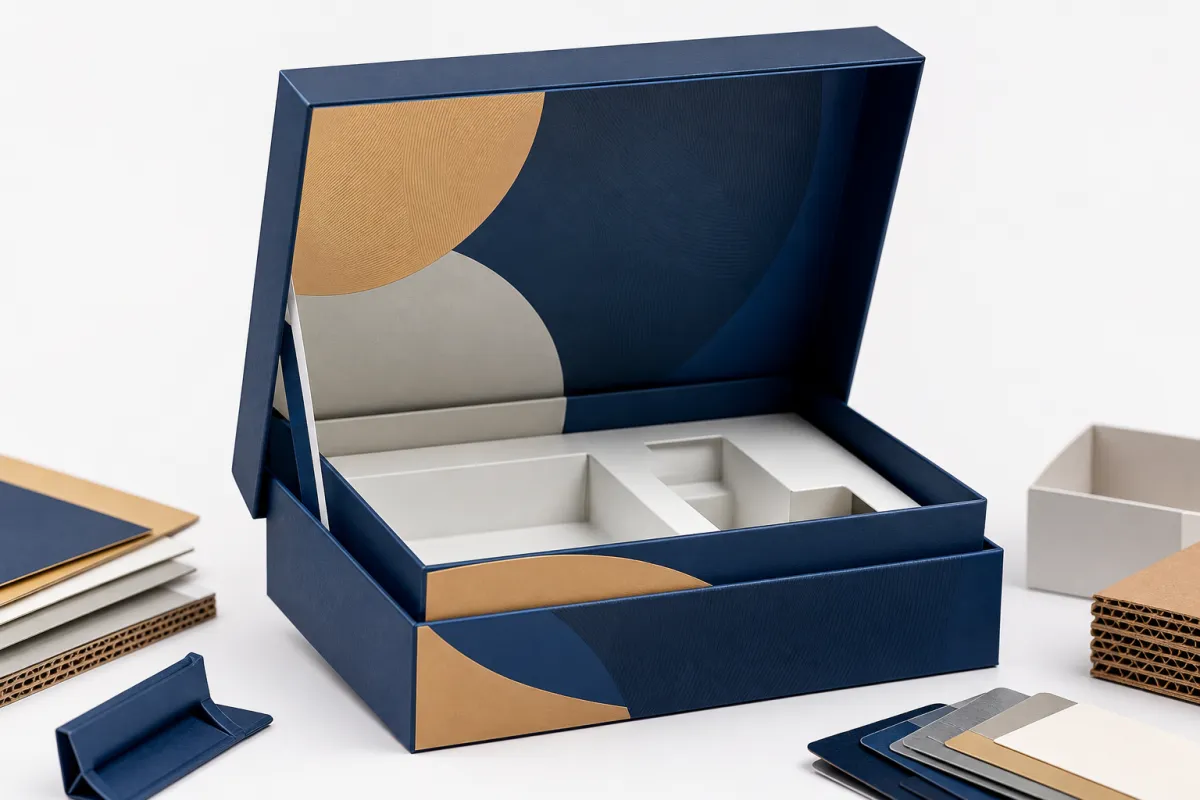
A printed setup boxes supplier handles a chain of decisions that starts with structure and ends with shipment. Board selection, artwork prep, wrapping, insert planning, quality checks, and packing all sit inside the process. The outside of the box may look minimal, but rigid packaging hides a lot of complexity under the wrap. Buyers often see a clean exterior and assume the job is straightforward. The reality is much more exacting.
Setup boxes are rarely costly because of the paper itself. Material is only one line in the budget. Precision cutting, board mounting, corner wrapping, glue control, insert alignment, and finishing steps take time and skill. Small mistakes show up quickly. If the corners bunch, the wrap shifts, or the insert floats inside the box, the premium feel drops away. No brand wants a luxury package that looks tired before it reaches the customer.
From the buyer's side, the printed setup boxes supplier is closer to a production partner than a simple vendor. You are not only purchasing print. You are buying a fit that protects the product, a finish that supports the brand, and a production plan that can be repeated without drift. That repeatability matters for reorder runs, retail launches, and holiday programs where consistency carries real weight.
Rigid packaging matters because it changes how value is perceived. A fragrance bottle in a sturdy setup box feels different from the same bottle in a soft folding carton. A whiskey gift set feels ready for gifting before the customer opens it. Electronics get a stronger first impression when the package is stiff, aligned, and finished with care. The box does not sell the item on its own, yet it strongly affects whether the item feels worth the price.
I have seen brands spend heavily on product development and then underplan the packaging that protects and presents that product. A sharp printed setup boxes supplier should help prevent that mistake before production starts, not after a design has already been approved. That means asking about closure style, insert depth, board caliper, clearances for transit, and whether the product has enough room to avoid rattling or pressure damage. If the supplier brushes past those questions, that is usually a sign the box is being treated like decoration instead of an engineered part of the product.
A premium rigid box should feel tight, clean, and controlled. If the supplier is guessing at the structure, the customer will notice.
There is also a sustainability side to the conversation, and the better suppliers separate themselves here. If recycled content or responsible sourcing matters to your brand, ask for FSC paperwork and chain-of-custody details through fsc.org. If the product is fragile or high value, ask whether the packaging has been considered alongside transit testing methods used by ISTA. Those details are practical, not ornamental, especially when the product has to arrive intact and presentable.
A strong printed setup boxes supplier should also tell you where the risks sit. A high-gloss exterior with heavy foil can look sharp and still scuff quickly. A shallow insert may appear elegant in a mockup and still allow the product to shift in transit. A magnetic closure can feel premium and still create fit problems if the board thickness is off by a small amount. Those are the details that separate a box that photographs well from a box that actually performs.
There is no universal “best” setup-box spec, because the right answer depends on the product, the shipping lane, and how the box is handled after packing. A perfume carton that sits in a boutique shelf all week has different needs than a PR kit that gets boxed, shipped, unboxed, and reboxed by several teams. A useful supplier knows that and says so plainly instead of pretending one structure fits everything.
How a Printed Setup Boxes Supplier Turns Specs Into Boxes
The first job of a printed setup boxes supplier is translation. Buyers usually send dimensions, artwork, product weight, closure preference, and quantity. That is the starting point. A real supplier then checks whether the structure works in production. If the brief says a rigid lid-and-base box needs to hold a 2.2-pound product with a foam insert, the supplier has to verify wall height, base depth, board thickness, and internal clearance so the item does not crush the insert or rattle inside the box.
That translation step is where experience shows. A supplier that only takes orders may accept whatever the customer asks for, even if the structure is weak or the proportions are awkward. A better printed setup boxes supplier will push back when the brief is not realistic. Maybe the lid will not stay seated with the chosen board. Maybe the insert needs deeper pockets. Maybe the artwork runs too close to the edge and disappears into the turn-in. A useful supplier catches those issues before they become expensive rework.
Here is the usual path from spec to finished box:
- Dimensions and product data: exact size, weight, shape, and any fragile surfaces that need protection.
- Structure selection: lid-and-base, magnetic closure, book-style, drawer box, shoulder box, or another rigid format.
- Board and wrap choice: greyboard thickness, wrap paper, specialty paper, soft-touch lamination, or textured stock.
- Insert planning: paperboard, EVA foam, molded pulp, fabric-lined trays, or custom die-cut supports.
- Print and finish plan: offset print, spot UV, foil, embossing, debossing, matte or gloss lamination.
- Assembly method: manual wrapping, machine-assisted steps, or hand-finished details that need tight QC.
That is the core of what a printed setup boxes supplier does. They do not just print artwork. They build the manufacturing plan around the product. If a buyer leaves out a detail, the supplier either has to ask for clarification or make assumptions. Assumptions are where packaging problems begin. Clear direction leads to predictable results, which is the whole point of working with a specialist.
Proofing is another place where people make easy mistakes. A digital mockup helps with layout checks, yet it does not show how the box feels in hand, how foil catches light, or whether the insert grips the product tightly enough. A physical sample shows those things. If the project involves premium finishes or a tight product fit, a sample is not a luxury. It is a small cost that protects a much larger order.
A capable printed setup boxes supplier will also tell you when the dieline needs to change. If the product is taller than expected, the walls may need to be extended. If the insert cutout is too small, the assembly can look neat in CAD and still fail on the line. If the artwork crosses a fold line, the print may need to be shifted to avoid white edges or cracking at the seam. Those are normal production decisions, not extra favors.
Incomplete briefs are common, and a good supplier knows how to work through them. Not every brand arrives with exact measurements and polished files. Experienced packaging teams can still start from a rough concept, then tighten the spec through dielines, samples, and written approvals. If a printed setup boxes supplier cannot guide that process, the burden lands on the buyer, and that is rarely where the expertise lives.
Once the boxes are built, they still need to survive shipping. Finished rigid boxes should be packed in master cartons that protect corners, avoid compression, and reduce scuffing and moisture exposure. A beautiful sample that arrives dented does not help anyone. It is just a very expensive problem in a damaged carton.
Printed Setup Boxes Supplier Cost, Pricing, and MOQ Basics
The quote from a printed setup boxes supplier can look straightforward at first glance. Pull it apart and the price starts depending on board thickness, print coverage, lamination, foil, embossing, inserts, labor, packing, and freight. That is why two quotes that seem close can deliver very different value. One may include everything needed to finish the job. Another may leave out tooling, samples, or shipping and hope the gaps do not surface until later.
The main cost drivers usually follow the same pattern:
- Board thickness: thicker greyboard costs more and may require more careful assembly.
- Print coverage: full-coverage graphics usually cost more than a simple logo and solid color.
- Finish: matte lamination is common, while foil, embossing, and spot UV add cost quickly.
- Insert type: EVA foam and custom molded inserts tend to cost more than simple paperboard trays.
- Labor: hand assembly is part of rigid box production, and labor costs rise with complexity.
- Freight: heavy rigid boxes can be expensive to ship because the cartons take up space fast.
MOQ exists for practical reasons. A printed setup boxes supplier has setup time, die costs, material yield, color matching, and manual assembly to manage. If the run is too small, those costs are spread across fewer boxes, which pushes the unit price up. That does not mean small runs are impossible. It means the pricing model changes. A hundred foil-stamped boxes with a custom insert are not priced like five thousand standard lid-and-base boxes. Anyone pretending they are is not being direct about the math.
Unit price usually improves as volume rises, but the drop is not always linear. Some finishing steps stay expensive no matter how large the run gets. Foil stamping still needs setup. Hand-applied inserts still need labor. Specialty papers still have minimum purchase requirements. So while 10,000 pieces will often be cheaper per unit than 1,000, the savings may flatten sooner than a buyer expects. A good printed setup boxes supplier should explain where the savings actually come from instead of pointing at a lower number and calling it efficiency.
Here is a practical way to frame pricing for rigid printed boxes. These are not universal numbers, because structure and finish move the range quickly, but they help with buying conversations:
| Option | Typical Use | Relative Cost | What Drives It |
|---|---|---|---|
| Simple lid-and-base setup box | Cosmetics, gifts, retail kits | Lower | Standard board, basic print, limited finishing |
| Magnetic closure rigid box | Premium retail, electronics, PR kits | Medium | Extra board, magnet placement, tighter assembly |
| Drawer-style setup box | Jewelry, fragrance, premium gifting | Medium to higher | Pull tab, sleeve construction, insert fit, more labor |
| Foil + emboss + custom insert box | Luxury launches, corporate gifts | Higher | Multiple finishing steps, tooling, hand assembly, QC time |
If you are comparing quotes, do it line by line. A lower base price can hide a lot of missing pieces. Ask whether sampling is included. Ask whether tooling or dies are separate. Ask whether shipping is door-to-door or ex-works. Ask what happens if the print run has a small color shift. The printed setup boxes supplier that answers those questions clearly is usually the one with fewer surprises later.
For a mid-size run, a clean rigid setup box quote can be reasonable if the spec is sensible. Add special paper, magnetic closures, foil, embossing, and custom foam, and the cost climbs quickly. That is not bad news. It simply means the box is doing more work. A buyer who understands where the money goes can decide whether the finish is worth it instead of treating every premium detail like a vague extra charge.
One useful buying habit is to separate the quote into must-have and nice-to-have items. The rigid structure, insert, and matte wrap may be non-negotiable. Foil and embossing may be optional if the launch budget gets tight. A disciplined printed setup boxes supplier should be able to quote both versions. That gives you a real tradeoff instead of a fake yes-or-no answer. And honestly, that kind of clarity is gonna save everyone time.
Production Process and Timeline: What to Expect Before Delivery
The production path for a printed setup boxes supplier starts with the RFQ and ends with shipment, but the middle matters most. A realistic sequence looks like this: request for quote, spec review, sample or mockup, artwork approval, prepress, board cutting, printing, finishing, assembly, inspection, packing, and freight booking. Each step is simple on paper. Together, they define whether the boxes land before launch or after the marketing team has already moved on.
Simple Custom Rigid Boxes can move in a few weeks if the artwork is ready, the spec is clear, and the design stays stable. Complex projects take longer. Add an insert, specialty finish, or multiple sample rounds and the timeline expands quickly. A good printed setup boxes supplier will give you a range, not a fantasy. A straightforward run may need about 12-15 business days after proof approval, while a more involved rigid box project can stretch further once sampling and hand assembly are included. Freight is additional time, not part of the factory clock.
Here are the usual delay points, and none of them are mysterious:
- Missing dielines: the supplier has to pause because dimensions or bleed areas are incomplete.
- Late artwork changes: even one small revision can force another proof round.
- Unclear finishes: gloss, matte, soft-touch, foil, and embossing need to be defined early.
- Sample revisions: fit issues on the first sample often lead to a second round.
- Freight booking: the box may be done, but the truck or vessel is not ready.
International shipping adds another layer to the schedule. The box can finish production and still wait for space, paperwork, or customs clearance. Local receiving can add more time if the cartons are heavy or the delivery appointment slips. When a buyer asks for total lead time, the best answer from a printed setup boxes supplier should include production plus transit, not just factory time. Otherwise the wrong clock is being used.
Shipping time and usable inventory time are not the same thing. If the cartons reach a warehouse that is not ready to receive them, the project is still delayed. If the boxes are packed too tightly, they can scuff in transit. If the outer cartons are not labeled clearly, the receiving team wastes time sorting them. These details sound dull, yet they are the reason experienced brands treat freight as part of packaging rather than an afterthought.
A useful printed setup boxes supplier will build checkpoints into the schedule. Proof approval should happen before production begins, sample sign-off should happen before the line runs, and packing review should happen before the shipment leaves. If those checkpoints disappear, the timeline may look shorter on paper and longer in reality. Fast is not the real goal. Predictable is the goal.
Testing matters too, especially if the packaging is protecting a fragile product or traveling long distances. Ask whether the design has been checked against transit expectations, stacking pressure, and the kind of handling the product will face in distribution. The point is not to make the supplier sound academic. The point is to avoid redesigning packaging after the first damaged shipment. That lesson is expensive and unnecessary.
One small but useful habit: lock the approval trail before the order starts. If the supplier has the approved proof, the final dieline, and the confirmed packing method in one place, there is far less room for confusion later. That may sound basic, but basic discipline is what keeps a packaging program from getting messy.
Key Factors That Separate a Reliable Supplier from a Risky One
A reliable printed setup boxes supplier does not hide behind polished mockups. They can explain engineering choices, share samples, and point out where tolerances matter. That is the difference between sales language and production competence. If the supplier cannot explain why a 2 mm board change affects lid fit or why a finish might scuff during assembly, they are probably not the right partner for a premium job.
Engineering support should come first. Can the supplier adjust the structure if the product is awkward? Can they suggest a different board thickness if the lid feels loose? Can they recommend an insert material that protects the item without making the box too bulky? A strong printed setup boxes supplier should be comfortable with those questions. Packaging is not only visuals. It is tolerances, weight, and how the product behaves under real shipping conditions.
Color consistency matters as well. A rigid box can look expensive in a sample and slightly off in production if the supplier does not control print matching. This is especially true with brand colors, dark solids, and metallic finishes. Ask how they manage color targets, whether they use approved references, and what their process looks like if the batch drifts. A clear answer here is more useful than a glossy brochure.
Communication speed is a practical filter. Slow replies are not merely annoying. They often point to a team that is disorganized, overloaded, or not reading the brief carefully. A good printed setup boxes supplier should answer with specifics: board thickness, finish options, MOQ, sample cost, lead time, and what they still need from you. Vague answers usually become expensive surprises later.
Quality control should be visible, not implied. Samples help. Production photos help more. Inspection steps help most. If the supplier can explain how they check corner alignment, wrap tension, insert fit, and carton packing, that is a healthy sign. If they cannot describe what happens when a defect is found, they are asking you to trust luck, which is not a production strategy.
Repeat orders are a real test of competence. The first order is often handled carefully because everyone is watching. The real question is whether the printed setup boxes supplier can repeat the same look, Fit, and Finish months later. Can they keep the approved spec on file? Can they match the sample without changing materials quietly? Can they run the reorder without introducing drift? That is the level that matters for brands with ongoing demand.
A simple risk test helps here. Ask three questions:
- What exact board, finish, and insert are you quoting?
- What is included in the unit price and what is separate?
- What happens if the sample needs a fit adjustment?
If the answers are clear, you are dealing with a supplier that understands the job. If the answers are slippery, you are probably looking at a printed setup boxes supplier that may be fine for generic work but risky for premium packaging.
Common Mistakes When Choosing a Printed Setup Boxes Supplier
The first mistake is easy to spot and still common: comparing a printed setup boxes supplier on unit price alone. That comparison usually means very little unless the specs, tooling, finish, and shipping terms are identical. A lower unit cost can still become the more expensive choice if samples, freight, or inserts are billed separately. Cheap is a creative word in packaging. It often means “I did not look closely enough.”
The second mistake is approving artwork before seeing a physical sample. Digital files hide problems that only show up in the hand. Metallic foil may read flatter than expected. A logo placed too close to a fold may crack. A magnetic closure may not seat properly if the board thickness changes. A good printed setup boxes supplier should push you toward a sample when the project is premium or the fit is tight. If they do not, they are saving time in the wrong place.
The third mistake is underestimating lead time. Buyers often budget for printing and forget about approvals, rework, freight, and seasonal congestion. Then the production slot slips and everyone acts surprised. The box did not become slower. The schedule just became honest. A realistic printed setup boxes supplier will usually protect you from that by asking for your launch date early and working backward from it.
The fourth mistake is sending a vague brief. “Make it luxury” is not a spec. Neither is “premium feel” or “clean look.” Those phrases can mean almost anything, which means they guide nothing. A better brief includes dimensions, product weight, target quantity, closure style, insert type, finish, and shipping destination. The clearer the brief, the cleaner the quote from the printed setup boxes supplier.
The fifth mistake is ignoring the reorder scenario. Some buyers get the first run right and then never document the approved spec well enough to repeat it. Small changes in board thickness, paper texture, or print tone can creep into the next order. Those shifts can be enough to make the packaging look inconsistent. A disciplined printed setup boxes supplier should record the approved structure and keep it on file. If they do not, you are relying on memory, and memory is a poor production system.
There is also a sustainability mistake that shows up more than people admit. A brand asks for recycled content, then never checks whether the finish or insert material supports that goal. Or they want FSC-certified paper, then never confirm paperwork. Or they choose a heavy rigid box for a low-margin product and later complain about freight costs. Packaging always comes with tradeoffs. Pretending those tradeoffs do not exist does not make them disappear.
One more mistake: choosing a supplier who agrees with everything. That may feel pleasant during quoting. It is not a good sign. A real printed setup boxes supplier will question a weak spec, warn about a risky finish, or suggest a better insert depth. If they never disagree, they are probably not protecting you. They are just trying to win the order.
Next Steps: How to Vet, Order, and Reorder With Less Guesswork
The easiest way to get a cleaner result from a printed setup boxes supplier is to send a better brief. Keep it to one page if possible, but make it specific. Include box dimensions, product weight, finish preferences, insert needs, target quantity, shipping destination, launch date, and any special handling concerns. If the product is fragile, say so. If the box must fit inside another carton, say that too. A supplier cannot engineer around missing information they do not have.
Before you ask for quotes, line up the core project inputs:
- Exact internal and external dimensions
- Product weight and shape
- Closure style and opening direction
- Insert material preference
- Print coverage and finish level
- Quantity by run and by reorder
- Shipping destination and delivery deadline
Then send the same brief to at least three suppliers. That is the only fair way to compare a printed setup boxes supplier against another. If one quote uses a different board thickness or excludes freight, the numbers are not really comparable. Ask for an itemized quote. Ask for a physical sample. Ask for a written timeline. Ask what is included, what is separate, and what triggers a change order. Those are not awkward questions. They are the questions that prevent awkward invoices.
If the launch matters, consider a pilot order. It does not need to be large. It only needs to be enough to confirm fit, finish, and packing behavior before scaling. A smaller pilot can reveal whether the insert holds the product securely, whether the corners survive shipping, and whether the finish scratches too easily. A smart printed setup boxes supplier will not treat a pilot as an insult. They will treat it as normal risk control.
Then build a reorder checklist. Keep the approved dieline, final artwork files, finish spec, insert spec, carton count, and sample reference together. Store the supplier's quoted lead time and packing notes in one place. The next run moves faster when the approved details are easy to find. That sounds dull because it is dull. It also saves money and avoids preventable mistakes.
For brands expanding their packaging line, this is also a good moment to review the rest of the packaging stack through Custom Packaging Products. Sometimes the setup box is not the only rigid format in play. You may need inserts, sleeves, display cartons, or another structure that supports the launch. It is better to map that early than discover a second packaging need after the first order is already in motion.
Here is the cleanest rule I can give you: choose the printed setup boxes supplier that documents every spec, explains every cost, and can repeat the same quality on the next run without making you chase them for details. That is the real value. Not the lowest quote. Not the prettiest sample photo. The supplier that keeps the box looking intentional from prototype to reorder is the one worth keeping. Start there, and the rest of the decision gets a lot less messy.
What should I send a printed setup boxes supplier for an accurate quote?
Send exact box dimensions, product weight, insert needs, print coverage, finish choice, and target quantity. Include artwork files, shipping destination, and whether you need samples before production. The more exact the brief, the fewer quote surprises you get later from the printed setup boxes supplier.
How long does a printed setup boxes supplier usually take to finish an order?
Simple rigid box jobs can move in a few weeks, but complex projects usually take longer because of sampling, finishing, and assembly. Add extra time for artwork revisions, approval delays, and international freight. If a printed setup boxes supplier promises something unusually fast, ask what they are leaving out.
What MOQ is normal for printed setup boxes?
MOQ depends on materials, print method, and how much manual assembly the box needs. Higher-end rigid boxes often start in the hundreds or low thousands, but the exact number changes by supplier and spec. Lower MOQ is possible, but expect a higher unit price because the setup cost gets spread across fewer boxes.
How can I tell if a printed setup boxes supplier quote is fair?
Compare quotes only after confirming the specs are identical, down to board thickness, finish, insert type, and shipping terms. Ask whether tooling, samples, and freight are included or billed separately. A fair quote is usually the one that explains the cost instead of hiding it, which is what a serious printed setup boxes supplier should do.
Can a printed setup boxes supplier help with design decisions?
A good supplier should advise on structure, tolerances, material thickness, and finish compatibility. They should provide a dieline or engineering guidance if the packaging brief is not fully built out. If they only say yes to everything, that is not support. That is a problem waiting to happen with your printed setup boxes supplier relationship.