Buyer Fit Snapshot
| Best fit | Printed Shipping Bags for Apparel projects where brand print, material claims, artwork control, MOQ, and repeat-order consistency need to be specified before quoting. |
|---|---|
| Quote inputs | Share finished size, material target, print colors, finish, packing count, annual reorder estimate, ship-to region, and any compliance wording. |
| Proofing check | Approve dieline scale, logo placement, barcode or warning zones, color tolerance, closure strength, and carton packing before bulk production. |
| Main risk | Vague material claims, crowded artwork, missing packing details, or unclear freight terms can make a low unit price expensive after revisions. |
Fast answer: Printed Shipping Bags for Apparel: Film, Print, MOQ, and Carton Packing should be specified like a repeatable production item. The safest quote records material, print method, finish, artwork proof, packing count, and reorder notes in one written spec.
Production checks before approval
Compare the actual filled-product size with the drawing, then confirm tolerance on folds, seals, hang holes, label areas, and retail display edges. Reserve space for logos, QR codes, warning copy, and material claims before decorative graphics fill the panel.
Quote comparison points
Review material grade, print process, finish, sampling route, tooling charges, carton quantity, and freight assumptions side by side. A quote is only useful when the supplier can repeat the same color, closure quality, and packing count on the next order.
Printed Shipping Bags for Apparel: Smart Buying Guide starts with a simple truth: the outer bag is often the first physical brand moment a customer sees, long before they touch the garment itself. For apparel labels, printed shipping bags for apparel are not just a transit supply; they sit at the intersection of protection, packing speed, and the kind of brand presence that reaches the doorstep before the product is even unboxed. Get that combination right and ecommerce shipping feels deliberate. Miss it and the package ends up advertising a rushed operation.
I have seen plenty of brands spend time perfecting hang tags, tissue, and thank-you cards, then hand the final mile over to the cheapest plain mailer they can find. The product still arrives, sure, but the shipment feels anonymous, and that is a missed opportunity. Printed shipping bags for apparel do not have to be fancy to work. They just need to fit the product, hold up in transit, and look like they belong to the label that made the clothes.
Most of the time, printed shipping bags for apparel means Custom Poly Mailers, branded courier bags, or printed garment shipping envelopes made for folded clothing. They stay light, flex with the product, and remain affordable enough for high-volume shipping, yet they still need to handle sortation, stacking, moisture, and the occasional rough toss onto a conveyor or porch. That balance is the real work. Packaging that looks good on a mockup but fails in a delivery chain is just expensive decoration.
For brands sending tees, hoodies, leggings, and soft sets, printed shipping bags for apparel can reduce packing time, keep the look consistent, and make the parcel feel like it belongs to the label rather than a generic warehouse. They are not the answer for everything. Boxes still make sense when products need crush resistance or rigid structure. Choosing the right container saves money because the package matches the item instead of forcing the item to adapt to the package.
What Printed Shipping Bags for Apparel Actually Solve
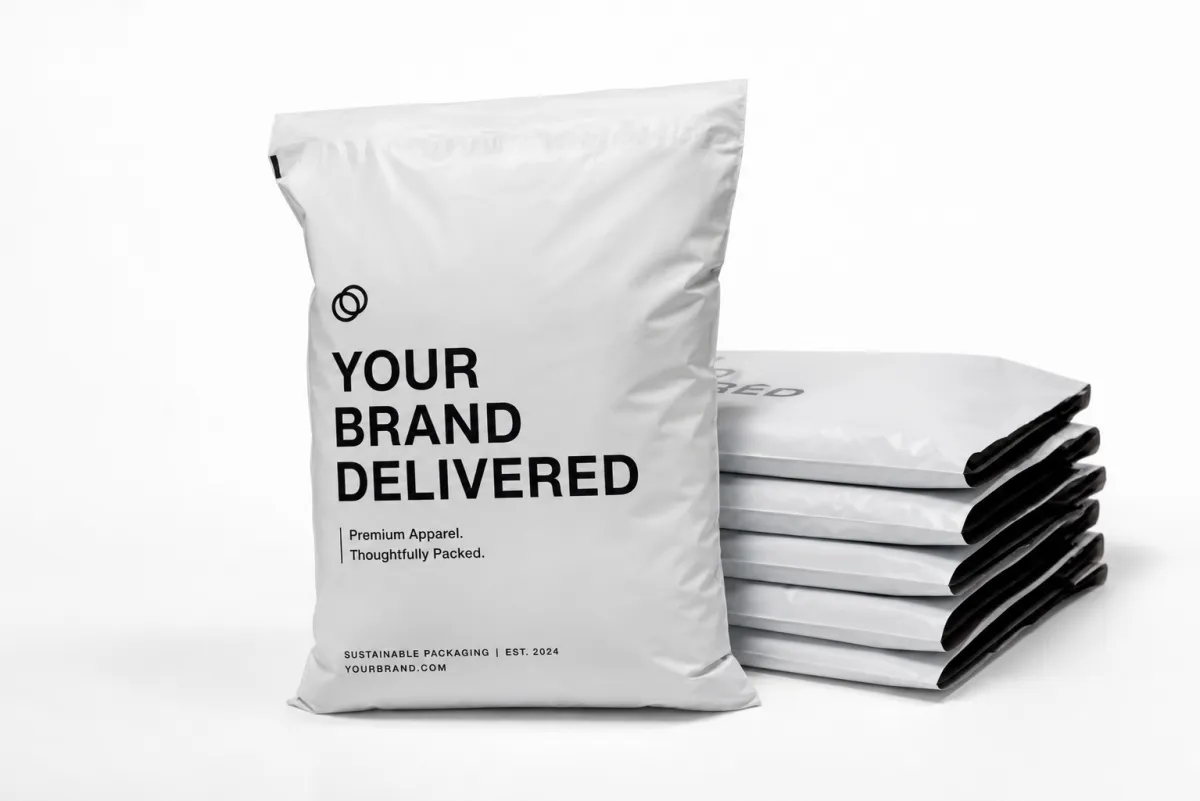
Printed shipping bags for apparel solve three problems in one move: they protect soft goods, speed up packing, and make the shipment look branded instead of plain. The last part matters more than many teams admit. Customers usually see the outside package before they touch the hoodie or T-shirt inside, so the mailer becomes a small but visible brand touchpoint.
From a packaging buyer's perspective, printed shipping bags for apparel help because they reduce friction on the pack line. A flat poly mailer is fast to fill, quick to seal, and easy to label. If your warehouse ships hundreds or thousands of units each week, those small time savings add up fast. A box can be a smart choice for premium kits or fragile add-ons, but folded apparel often does not need the extra weight, extra labor, or dimensional weight fees that come with it.
There is also a practical difference between protection-only packaging and packaging that carries marketing value. Protection-only shipping materials do one job: keep the item intact. Printed shipping bags for apparel do that too, but they also reinforce color, logo, and tone before the customer opens the parcel. That is why so many brands treat the mailer as part of the product experience rather than a throwaway supply.
One thing that gets overlooked is how much brand memory can live in a very ordinary bag. I have opened shipments that felt premium because the outer package was clean, sized correctly, and carried a sharp logo with good contrast. I have also seen equally nice garments arrive in a bag so generic that the whole order felt colder than it needed to. That is not some grand theory, just how people react to the box or bag before they ever reach the product.
A shipping bag that packs quickly, holds up in transit, and looks like it belongs to the brand is doing useful work. The flashy part is optional. The useful part is the reason it earns its place.
For the right product mix, printed shipping bags for apparel beat overbuilt alternatives because they fit the product instead of making the product fit the package. That is especially true in order fulfillment workflows where staff need a predictable size, a clean seal, and enough opacity to protect privacy. If the shipment is soft and foldable, a branded poly mailer usually makes more sense than a box. If you are shipping shoes, ceramics, or boxed bundles, that is a different packaging conversation entirely.
Used well, printed shipping bags for apparel can support a few practical goals at the same time:
- Lower pack time in busy order fulfillment windows
- Cleaner presentation at the doorstep and in unboxing content
- Better package protection from dirt, moisture, and scuffing
- More consistent branding across ecommerce shipping channels
- Less wasted space than oversized cartons for soft goods
For brands still shaping their packaging stack, it helps to compare options instead of guessing. Custom Poly Mailers are the closest direct fit for most apparel shipments, while Custom Packaging Products gives a broader view of what can sit around them. If the shipment needs harder walls, Custom Shipping Boxes may be the better fit. Most brands end up using more than one package type anyway.
How Printed Shipping Bags for Apparel Work
Printed shipping bags for apparel are usually built from a flexible film with a peel-and-seal adhesive strip, a printed outer layer, and an opaque or semi-opaque body. The structure sounds simple because it is simple. That is the point. The outer film carries the branding, the inner layer carries the load, and the adhesive closure keeps the package moving without extra tape.
Most printed shipping bags for apparel use LDPE, recycled poly, or a co-extruded film. LDPE is common because it is lightweight, flexible, and easy to seal. Recycled poly can reduce virgin resin use, though the feel and clarity may vary. Co-extruded films combine layers for better puncture resistance and a cleaner print surface. The best choice depends on whether cost, durability, or a more premium handfeel matters most.
The workflow is straightforward. Garments are folded, sometimes wrapped in tissue or slipped into a clear inner bag, then placed into the mailer. Inserts or return cards go in if needed. The seal strip closes the bag. A shipping label goes on the front, and the parcel moves into the carrier network. For a lot of apparel brands, that simplicity is the whole appeal of printed shipping bags for apparel. Less handling. Less clutter. Fewer chances to slow down the pack line.
Print placement matters more than many first-time buyers expect. A logo placed too low on the face of the bag can disappear under a label or get lost when parcels are stacked. A centered mark, a bold side repeat, or a clear back-panel message is easier to see in transit and on social posts. With printed shipping bags for apparel, the bag is not just moving through the system. It is being seen by warehouse staff, carriers, and the end customer. That is a lot of visibility for one thin piece of packaging.
For soft goods, printed shipping bags for apparel work best with tees, hoodies, leggings, loungewear, socks, and lightweight sets. They are also useful for return shipments if your brand includes a reseal strip or dual-use closure. Still, package protection has limits. If the item needs crush resistance, rigid corners, or stacked-load support, a mailer is not the right answer. It is simply the wrong shape for the job.
There is a reason many ecommerce shipping teams keep a mix of shipping materials on hand. Not every product deserves the same transit packaging. A folded shirt and a fragile gift box should not go in the same container, and forcing them together usually creates wasted spend. Printed shipping bags for apparel work best when they are matched to the product, not asked to solve every packaging problem in the building.
For buyers who want a practical reference, the bag construction usually comes down to a few variables:
- Film type: LDPE, recycled content, or co-extruded blends
- Seal style: pressure-sensitive adhesive, sometimes tamper-evident
- Opacity: clear, translucent, or fully opaque for privacy
- Print method: flexographic, gravure, or digital depending on run size
- Thickness: often measured in mils or microns for tear resistance
For a useful benchmark on transport stress, brands that want better parcel performance often look at guidance from the ISTA testing standards. Not every apparel bag needs formal lab validation, but if your shipments are heavy, high-value, or sensitive to damage, testing is smarter than guessing. A quick sample test on your own pack-out line can reveal a lot before you place a bigger order.
Sizing, Film, and Print Choices That Change the Result
Size is where many printed shipping bags for apparel go wrong. The bag should fit the folded garment plus tissue, inserts, and a little seal allowance, not the other way around. If the package is too tight, staff will fight it, the seal can fail, and the apparel can wrinkle badly. If it is too loose, the item slides around and the package looks underfilled. Neither outcome helps the brand.
A practical approach is to measure a packed sample first. Fold the garment the way your team actually packs it, add any insert card or return slip, and note the final footprint. That is the number you use when asking for printed shipping bags for apparel quotes. T-shirts may fit comfortably in smaller mailers, while hoodies, crewnecks, and thicker knits usually need more width and a bit more depth. If you are between sizes, choose the slightly larger one. Fighting a bag to save a few cents is false economy.
Film thickness changes the result too. Thin mailers cost less, but they are easier to puncture on zippers, hang tags, sharp corners, or rough carrier handling. Heavier films add cost and can feel more substantial, but they give better tear resistance and a cleaner look in transit. For printed shipping bags for apparel, a lot of brands land somewhere in the middle, because going too thin saves pennies and creates headaches later.
Print choice matters in the same way. One-color branding is often the cleanest and most economical option for many labels. Full-color graphics can look excellent, but they need enough contrast and enough surface area to read well on a flexible film. Fine detail is where people overreach. If the artwork depends on tiny lines, subtle gradients, or delicate text, it may not survive contact with a moving plastic surface. Simple marks usually print better, and bluntly, they age better.
Finish changes perception more than most buyers expect. A matte surface can look softer and more premium. A glossy finish tends to read louder and can make colors pop. With printed shipping bags for apparel, finish is part of the brand tone, but it also affects scuff visibility. A high-gloss bag can show scratches sooner; a matte bag can mute heavy color slightly. There is no perfect answer. There is only the answer that fits your brand and budget.
Compliance and practical details matter just as much as appearance. Opaque bags protect privacy, which matters for many apparel shipments. Recyclability claims should be accurate and backed by the actual film composition. If you are printing handling notes, return directions, or warning text, leave enough room so the message does not compete with the logo. Keep label placement in mind too. Carriers need a clean flat zone, not a collage of graphics where the barcode gets trapped in the design.
Here is a simple comparison that helps most buyers narrow the field:
| Option | Typical Use | Price Range | Strength | Tradeoff |
|---|---|---|---|---|
| Stock poly mailer with logo | Basic apparel shipments, fast reorder needs | $0.08-$0.18 per unit at higher volumes | Lowest setup friction | Less customization |
| Custom printed shipping bags for apparel | Branded ecommerce shipping and direct-to-consumer orders | $0.12-$0.34 per unit depending on size and print | Best balance of cost and brand presence | Needs artwork approval and planning |
| Heavy-gauge branded mailer | Bulkier garments, added puncture resistance | $0.18-$0.45 per unit | Better package protection | Higher material cost |
| Custom shipping box | Fragile bundles, premium kits, rigid products | $0.45-$1.20+ per unit | Strong crush protection | More weight and dimensional weight charges |
The table is not a rulebook. It is a reality check. Printed shipping bags for apparel often win because they stay lightweight and inexpensive while still carrying real brand value. That matters because dimensional weight can wreck a shipping budget faster than many buyers expect. A box that looks tidy on a spreadsheet can become expensive once carrier math enters the picture.
For sustainability-minded buyers, check the material specification before making claims. The EPA has practical information on recycling and material recovery at epa.gov/recycle. That does not magically make every poly mailer eco-friendly. It simply means the film, recycled content, and local end-of-life reality should be verified instead of relying on vague green language. If a supplier cannot explain the exact resin mix or post-consumer content, that is a warning sign, not a small detail.
What Printed Shipping Bags for Apparel Cost
Cost is usually the first filter, which makes sense. Printed shipping bags for apparel can be very economical, but the final number depends on size, film gauge, print colors, ink coverage, quantity, and whether you need special finishes or custom sizing. A plain stock-style mailer with a logo is much cheaper than a fully custom run with multiple print zones and a heavier film.
Setup costs are the hidden part that catches smaller brands. A quote may look expensive at 500 or 1,000 units because art preparation, plates, tooling, or setup fees are spread over a small run. At 5,000 units or more, the unit price often drops quickly. That is why printed shipping bags for apparel can feel overpriced in small quantities and suddenly make sense once volume grows. Same bag. Different math.
As a practical range, small custom runs often land around $0.28-$0.60 per unit depending on size and print complexity. Mid-volume orders can fall closer to $0.12-$0.28 per unit, and larger runs may go lower if the artwork stays stable enough to reorder. These are not universal numbers. They are buying ranges, and they move with market conditions, film pricing, and freight. If a supplier gives you a quote far outside these bands, ask why before assuming they are right or wrong.
Printed shipping bags for apparel also carry costs that do not always appear in the unit price. Freight, proofing, plate charges, rush fees, and replacement runs because someone changed the logo after approval can all stack up. Then there is labor. If the bag is the wrong size and the team spends an extra few seconds per order fighting the seal, that labor becomes a real expense in order fulfillment. Cheap packaging that slows the line is not cheap. It is just badly measured.
Buying behavior should change with volume. For a small brand testing a new drop, a limited run makes sense even if the unit cost is high. You are buying information as much as packaging. For a growing shop with stable SKUs, standardizing on one or two bag sizes is usually smarter than chasing the lowest quote every month. For a mature brand with consistent volume, bulk pricing and locked artwork can bring printed shipping bags for apparel into a very manageable cost lane.
Here is the blunt buying advice I give most people:
- Small brands: start with a test run and a simple one- or two-color print
- Growing brands: standardize sizes and confirm pack-out dimensions before reordering
- Stable volume brands: negotiate around repeat quantities, not one-off quotes
- Premium launches: spend more on the bag only if the customer will actually notice it
Printed shipping bags for apparel also interact with the rest of the packaging stack. If you are using inserts, tissue, or return cards, the bag needs to accommodate all of that without becoming oversized. If you are switching from boxes to bags, your shipping profile may improve because the parcel becomes lighter and flatter. That is where the savings show up: not just in the packaging cost, but in the shipping rate too.
One more practical note: do not price bags in isolation. Price them against the whole delivery system. If a slightly thicker bag lowers damage, reduces re-ships, and keeps the brand looking cleaner in transit, it may be the cheaper option even if the unit price is higher. Printed shipping bags for apparel are one part of the total landed cost. Pretending otherwise is how budgets get surprised. I have watched more than one team learn that lesson the hard way, usually after a spike in replacements or a carrier complaint.
Ordering Timeline: From Quote to Delivery
The ordering process for printed shipping bags for apparel is usually straightforward, but only if the buyer is prepared. It generally starts with a quote request, then artwork review, then a digital proof, then approval, then production, quality check, and shipping. Simple. Not glamorous. Still the difference between getting the right bag on time and scrambling for a backup mailer two days before launch.
Realistic timing depends on the job. Stock sizes with simple printing can move faster after proof approval. Custom dimensions, heavier materials, high-coverage prints, or specialized films usually take longer. If the artwork needs revisions, that can become the schedule killer. Printing itself is rarely the biggest delay. Waiting for clean art files is what drags the project. Printed shipping bags for apparel are only fast when the buyer is fast too.
For planning purposes, many brands should order before the collection ships, not after. That sounds obvious, but packaging still gets treated like a last-minute accessory more often than it should. If the bag is part of the launch experience, it should be ordered early enough to absorb proof revisions and freight time. For seasonal drops, keeping some safety stock is smart. For fast-turn fashion, a reorder calendar prevents the classic panic order.
Typical lead times often look like this:
- Quote and artwork check: 1-3 business days if the file is clean
- Digital proof and revisions: 1-5 business days depending on changes
- Production: about 10-18 business days for many standard runs
- Freight transit: a few days to a few weeks depending on location and method
Those ranges are not a promise. They are a practical planning window. Printed shipping bags for apparel can move faster if the supplier has the right inventory and your artwork is ready on day one. They can also move slower if you keep changing bag dimensions after approval. The bag does not care that the launch date is inconvenient.
It also helps to build a reorder threshold instead of waiting until the last carton is gone. A safety buffer of one or two weeks of usage is common for brands with predictable order flow. For volatile demand, the buffer may need to be larger. The point is simple: printed shipping bags for apparel are most useful when they arrive before inventory does, not after the product is already staged for shipping.
Quality checks matter too. Inspect the seal strength, color consistency, print placement, and bag dimensions on arrival. If your brand depends on presentation, compare a few units against the proof. You do not need to overcomplicate it. Just make sure the printed shipping bags for apparel you approved are the same bags that landed in the warehouse. A quick spot check on the first carton is usually enough to catch the obvious problems early.
Common Mistakes When Choosing Printed Shipping Bags for Apparel
The first mistake is choosing by price alone. Thin bags can split on sharp corners, zipper pulls, or poorly folded product edges. That is not a cost saving. That is a return label waiting to happen. Printed shipping bags for apparel should be priced against durability, not just against the cheapest line item in a spreadsheet.
The second mistake is ordering the wrong size. If the bag is too small, packing slows down and apparel gets crushed or crammed. If the bag is too large, the garment slides around and the package looks sloppy. This is one of those unglamorous problems that creates outsized pain. Printed shipping bags for apparel need a fit that supports the fold, the closure, and the visual finish.
The third mistake is overdesigning the artwork. Fine typography, tiny rules, and overly detailed graphics can disappear on flexible film. High contrast usually prints better than subtle gradients. Bold brand marks, clean type, and a clear layout tend to hold up better in transit. Remember that these bags are being handled by machines, stacks, belts, bins, and tired people. If the design needs a magnifying glass, it is too fragile for the job.
The fourth mistake is ignoring shipping conditions. Moisture, friction, stacking pressure, and rough handling all affect the performance of transit packaging. A mailer that looks fine on a table may scuff or wrinkle badly in the carrier network. That is why package protection is not just about thickness. It is about the whole journey. Printed shipping bags for apparel need to survive the actual route, not a polished version of it.
The fifth mistake is skipping samples. Brands often approve a proof on screen and assume the final bag will match their expectations perfectly. Sometimes it does. Sometimes the color reads differently on film, the finish feels different in hand, or the seal is less aggressive than expected. Test orders exist for a reason. Use them. One sample run can save you from a very public packaging faceplant.
Other common errors include:
- Leaving no space for carrier labels or barcodes
- Forgetting privacy opacity for customer orders
- Assuming recycled-content film behaves exactly like virgin film
- Ordering a custom size before measuring a packed garment
- Ignoring how the bag looks when stacked with other parcels
For sustainability claims or certification language, do not guess. If the supplier mentions FSC for inserts, cartons, or paper-based components, verify the scope before using it in customer-facing copy. The source matters. The claim matters. The paperwork matters. It is easier to get it right once than explain a vague statement later. Honest labeling protects the brand more than any marketing flourish ever will.
Next Steps for Better Printed Shipping Bags for Apparel
Start with three non-negotiables: the garment type, the target order volume, and the level of brand presentation you want at unboxing. Those three decisions narrow the field quickly. Printed shipping bags for apparel do not need to be exotic. They need to fit the product, fit the budget, and fit the workflow.
Measure a packed sample before asking for quotes. That one step removes a lot of guesswork. It also helps the supplier recommend a real size instead of guessing based on a product category. Printed shipping bags for apparel are easier to source when the buyer knows the folded dimensions, insert thickness, and seal allowance. Vague requests usually produce vague answers.
Prepare clean vector artwork and keep the number of colors realistic. Simple targets are easier to match and easier to repeat. If you have compliance notes, return instructions, or a privacy requirement, include those up front. The more complete the brief, the less time you spend revising proofs. And yes, that matters when the shipping window is tight.
If the order will run at scale, ask for at least one material sample and one production-like proof. That lets you verify the handfeel, the opacity, the seal, and the print behavior before you commit. For printed shipping bags for apparel, samples are not a luxury. They are inexpensive insurance.
Then build a reorder calendar. Seriously. Packaging that arrives after the inventory has already landed is a planning failure, not a supplier miracle waiting to happen. The brands that stay calm are the ones that treat printed shipping bags for apparel as part of the launch schedule, not as an afterthought. That is the difference between controlled growth and warehouse chaos.
If you want the simplest decision path, use this:
- Measure the packed garment.
- Pick the right film thickness for the item weight.
- Keep the artwork bold and legible.
- Order a sample before full production.
- Reorder before stock gets tight.
That is the practical version. No drama. No packaging poetry. Just better printed shipping bags for apparel that do the job without wasting money or time. If you are unsure between two sizes, pick the one that protects the fold and leaves room for the seal to close cleanly. That small bit of discipline saves a lot of hassle later.
FAQ
Are printed shipping bags for apparel better than plain poly mailers?
Yes, if you want the package to do branding work instead of only protecting the product. Plain mailers are cheaper upfront, but printed shipping bags for apparel usually improve recognition and make the shipment feel intentional. For very small budgets, a simple one-color print is a sensible starting point before you move into more complex artwork.
What size printed shipping bags for apparel do I need for folded shirts or hoodies?
Measure the folded item first, then add room for tissue, inserts, and seal allowance. T-shirts usually fit in smaller mailers, while hoodies and sweatshirts need more width and depth. If you are between sizes, pick the slightly larger bag. Overstuffing is what causes seal failure and ugly packaging.
How much do printed shipping bags for apparel usually cost?
Price depends on size, film thickness, print colors, quantity, and setup fees. Small runs cost more per bag because the setup is spread across fewer units. Larger orders usually lower the unit cost, but only if the artwork and dimensions stay stable enough to reorder. That is where printed shipping bags for apparel stop feeling expensive.
How long does it take to produce printed shipping bags for apparel?
Simple orders can move quickly after proof approval, while fully custom jobs take longer. Artwork revisions are usually the biggest schedule killer, not the printing itself. Plan early if the bags need to arrive before a launch, seasonal drop, or holiday shipping window. Printed shipping bags for apparel are not hard to make; they just need enough lead time.
Are printed shipping bags for apparel recyclable or eco-friendly?
Some are recyclable, but it depends on the exact material and local recycling rules. Recycled-content films and lighter gauges can reduce material use, but they are not all the same. If sustainability matters, ask for the film spec and the recycling guidance before you place the order. Printed shipping bags for apparel should be evaluated on the real material, not the marketing copy.
Printed shipping bags for apparel work best when they are treated like a practical tool first and a branding surface second. If you size them properly, Choose the Right film, keep the print clean, and plan the reorder timing, they become one of the most efficient pieces of packaging in apparel ecommerce. The takeaway is pretty plain: measure the packed garment, confirm the film spec, order a sample, and lock your reorder point before stock runs low. That one routine keeps the packaging side of the business steady, and steady is what good operations usually look like.

