Buyer Fit Snapshot
| Best fit | Printed Shipping Labels for Brands projects where brand print, material claims, artwork control, MOQ, and repeat-order consistency need to be specified before quoting. |
|---|---|
| Quote inputs | Share finished size, material target, print colors, finish, packing count, annual reorder estimate, ship-to region, and any compliance wording. |
| Proofing check | Approve dieline scale, logo placement, barcode or warning zones, color tolerance, closure strength, and carton packing before bulk production. |
| Main risk | Vague material claims, crowded artwork, missing packing details, or unclear freight terms can make a low unit price expensive after revisions. |
Fast answer: Printed Shipping Labels for Brands: Material, Adhesive, Artwork, and MOQ should be specified like a repeatable production item. The safest quote records material, print method, finish, artwork proof, packing count, and reorder notes in one written spec.
Production checks before approval
Compare the actual filled-product size with the drawing, then confirm tolerance on folds, seals, hang holes, label areas, and retail display edges. Reserve space for logos, QR codes, warning copy, and material claims before decorative graphics fill the panel.
Quote comparison points
Review material grade, print process, finish, sampling route, tooling charges, carton quantity, and freight assumptions side by side. A quote is only useful when the supplier can repeat the same color, closure quality, and packing count on the next order.
Printed Shipping Labels for Brands: A Practical Guide
On a busy packing line, Printed Shipping Labels for brands are the smallest item in the carton and often the one carrying the most responsibility. A brand sending 300, 800, or 2,000 parcels a day needs every label to scan cleanly, stay put, and still look intentional when it reaches the customer's doorstep. That is why printed shipping labels for brands are more than address stickers. They sit inside order fulfillment, they travel as part of transit packaging, and they become one of the few brand touchpoints every single order is guaranteed to see.
How Do Printed Shipping Labels for Brands Support Fulfillment?
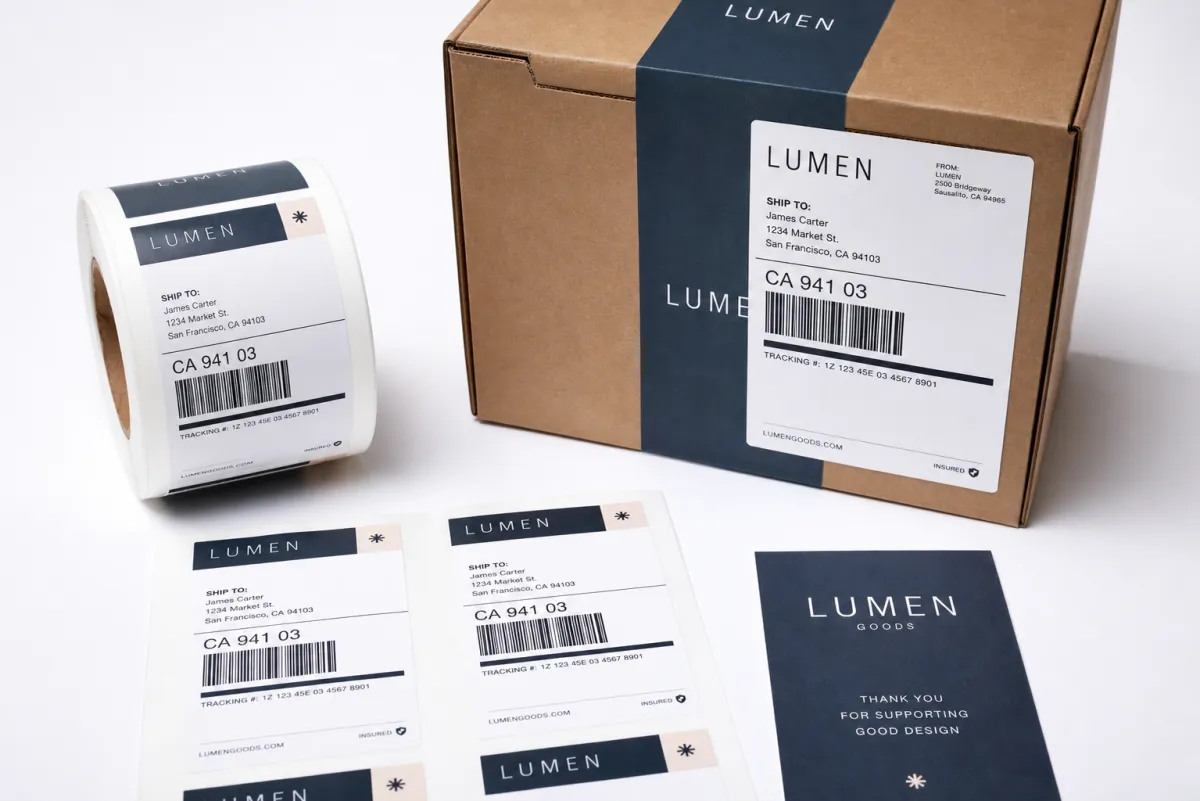
Picture a fulfillment team pushing out hundreds of boxes a day. The cartons may be plain kraft, printed with a logo, or wrapped in a branded mailer, but every package still needs one thing that cannot be skipped: the shipping label. That is where printed shipping labels for brands earn their keep. They carry carrier data, return information, routing codes, and often a traceable barcode, all while riding on a carton that may be handled by half a dozen touchpoints before it reaches the buyer. Some parcels glide through, others get roughly sorted and re-sorted, and the label has to survive all of it.
From a packaging buyer's point of view, printed shipping labels for brands solve three problems at once. First, they keep the operation cleaner and faster because the label format is already set, so packers are not printing ad hoc stickers or handwriting details at the bench. Second, they improve scan reliability, which matters more than many teams realize, because a label that curls, smears, or prints too lightly can slow a sortation line and force manual intervention. Third, they help the package look deliberate the moment it lands on a porch or in a receiving bay.
There is also a subtle but real brand effect. A customer may never notice a shipping label that works perfectly, but they will notice one that is crooked, cheap-looking, or difficult to read. That little square of adhesive stock becomes a signal. In practice, printed shipping labels for brands tell the customer that the shipment was handled with care, even before the box is opened. That matters in ecommerce shipping because trust is built in small moments, not only in the glossy product reveal.
One thing people miss is that shipping labels are both operational and visual. A label is not supposed to carry the whole brand story, and it should never fight with carrier requirements, but it can still reinforce the larger packaging system. If the box, tape, insert card, and label all feel like they belong together, the shipment reads as organized. If one piece looks improvised, the whole thing feels less controlled. A single weak link can undo the impression created by the rest of the packout.
That is why the best printed shipping labels for brands are planned alongside shipping materials, carton size, and application method. They are a working part of the packout, not a last-minute add-on. When they are treated that way, they can reduce packing errors, support package protection by limiting extra handling, and create a smoother customer experience from dock to doorstep.
There is a financial side to that clarity too. A label that costs $0.07 instead of $0.05 sounds minor until the brand ships 50,000 parcels and the difference becomes $1,000. Then the real question shifts: did the cheaper option actually save anything once waste, reprints, and labor are counted? Often the answer is no. Packaging is full of those small traps, and labels are one of the easiest places to miss them.
In one warehouse audit I sat in on, the operations team spent more time fixing labels than applying them. That sounds dramatic, but it happens. A label that is "good enough" on paper can become a daily nuisance once the boxes, humidity, dust, and speed of the line enter the picture. Labels are tiny, sure, but the consequences are not.
How Printed Shipping Labels for Brands Are Made
The production flow for printed shipping labels for brands usually starts with a simple question: what has to be fixed information, and what has to change from order to order? That decision shapes everything downstream. A standard file may hold the brand name, return address, service level, compliance text, and design elements, while variable data such as recipient address, barcode, tracking number, and routing code updates with each shipment. The printing method has to support that mix without making the label slow to produce or hard to scan. In Custom Label Printing, that balance between fixed artwork and variable data is what separates a clean rollout from a messy one.
Most jobs begin with artwork setup and dieline confirmation. Size matters more than many teams expect. A label that is too small forces the text and barcode into a crowded layout, while one that is too large can waste material and eat into carton real estate. Common formats for printed shipping labels for brands are 4 x 6 inches for carrier labels, 4 x 2 inches for compact address use, and custom rectangles when the brand wants a different ratio. Once the size is settled, the printer or converter checks bleed, quiet zones around the barcode, and the placement of any logo or brand block.
After that comes the material decision. Paper facestocks are often the most economical choice for dry, short-to-medium transit routes. Synthetic options such as BOPP or polypropylene hold up better against moisture, scuffing, and rough box handling. Adhesive choice matters just as much as the face stock: permanent acrylic adhesives work for most standard cartons, while freezer, removable, and high-tack versions solve more specific problems. If the label needs to stick to recycled board, dusty cartons, or cold-chain packaging, the adhesive is not a minor detail; it is the whole job.
Print method depends on the order profile. Digital print is common for short runs and faster artwork changes. Flexographic printing often makes sense for larger, repeatable volumes with tighter unit economics. Some operations also run thermal transfer labels in-house for variable data, which is useful when the brand wants control over packing speed and service updates. In all of these cases, the finish should support readability. Matte surfaces are usually friendlier to barcode scanning than glossy ones, unless the design keeps all critical data in a clear, uncoated zone.
Finishing can be simple or more tailored. Rolls are common for thermal printers and applicators; sheets are better for lower-volume hand application. Perforation, kiss cutting, and liner choice affect how cleanly the label dispenses. A roll wound on the wrong core size can jam a desktop printer, and a liner that is too flimsy can cause misfeeds on a faster line. That is why printed shipping labels for brands should always be specified with the printer, the application speed, and the warehouse workflow in mind.
When the label is intended to do more than inform the carrier, selective branding can be added carefully. A logo mark, border color, or short brand statement can work well if the scan area stays uncluttered. I would avoid anything that places visual texture under the barcode, because even a clean-looking design can become a problem if it adds glare or reduces contrast. The practical rule is simple: brand the label enough to feel intentional, but never so much that the scan data suffers.
That production sequence is easy to underestimate. A label is not just artwork printed on adhesive stock. It is the result of file prep, substrate choice, press setup, cut accuracy, and warehouse reality all agreeing for a moment. Miss one of those pieces and the label still exists, but it may not perform.
Key Factors That Affect Quality, Cost, and Pricing
The price of printed shipping labels for brands is shaped by far more than the face stock and the quantity on the purchase order. Size, adhesive strength, print coverage, finishing, and how often the artwork changes all influence the final number. A buyer who only compares unit price can easily miss the real cost, especially once setup, proofing, spoilage, and labor are included. That is why printed shipping labels for brands should be judged as part of the overall shipping materials budget, not as a standalone line item.
One of the biggest cost drivers is print complexity. A simple one-color address label on paper stock is much less expensive than a multi-color label with a logo, brand pattern, and variable data overlay. Another driver is substrate choice. Durable synthetics cost more than standard paper, but they can also reduce reprints, reject rates, and the time spent replacing damaged labels at packout. If a label fails during shipment and has to be reworked, the hidden cost is almost always higher than the savings from the cheapest stock.
Adhesive performance changes the equation too. A freezer adhesive, for example, is not needed for every brand, but it can be the right call for cold storage, winter shipping, or cartons that are handled in damp environments. High-tack adhesives can improve application on rough corrugate, but they may also require a more controlled placement process. In other words, printed shipping labels for brands are not just about print economics; they are about fit for the actual environment.
It helps to think in terms of total landed cost. A label priced a few cents higher may save labor because it dispenses better, scan failures may drop, and the team may spend less time cleaning up misapplied labels. That matters in ecommerce shipping where labor is often the tightest part of the margin. Dimensional weight is another good reminder: if a brand is already paying based on carton size rather than actual product weight, trimming one line item by a cent or two is less meaningful than improving packout speed and reducing waste. Small efficiencies add up across thousands of orders.
Minimum order quantities also shape the conversation. Some suppliers can support smaller runs, but the unit cost may rise because setup and press time are spread across fewer labels. For larger programs, the cost per label usually drops as quantities increase, though the brand then has to manage inventory and reorder timing carefully. Setup fees, plate charges, and proofing costs can also show up, depending on the print method. A buyer should ask early whether the quote includes file checks, digital proofs, physical samples, or any color matching work.
| Label Option | Typical Use | Indicative Price at 5,000 Units | Performance Notes |
|---|---|---|---|
| Uncoated paper label | Dry ecommerce shipping and standard cartons | $0.04-$0.09 each | Good value, easy to print, best for short transit and low abrasion |
| Matte synthetic label | Moisture-prone routes and rough handling | $0.09-$0.18 each | Stronger tear resistance and better durability through transit |
| Thermal transfer roll label | High-volume warehouse printing and variable data | $0.05-$0.12 each, plus ribbon | Works well for fast order fulfillment with compatible printers |
| Freezer or high-tack construction | Cold-chain, recycled board, or difficult surfaces | $0.10-$0.22 each | Built for tougher conditions and more challenging adhesion |
That table is only a starting point, because actual pricing for printed shipping labels for brands depends on coverage, supply chain conditions, and the print technology chosen for the job. Still, it gives buyers a better way to compare options than simply asking for the cheapest quote. A better question is: which label keeps the operation steady, minimizes waste, and supports the brand presentation without creating a headache in the warehouse?
If you want a broader industry lens on packaging choices and testing, the resources at ISTA and FSC are both useful reference points. ISTA helps frame transit testing, while FSC is relevant if paper sourcing and responsible forestry matter to your buying standards.
Process and Timeline for Printed Shipping Labels for Brands
A clean project for printed shipping labels for brands usually follows a predictable path, but the pace depends on how complete the input is. The process starts with discovery: what size label is needed, where will it be applied, what carrier or fulfillment system will touch it, and what print environment will it live in? Those early answers prevent a lot of back-and-forth later.
From there, the team moves into specification. This is the stage where the label stock, adhesive, liner, finish, and format get locked in. If the brand is using a desktop thermal printer, the roll core and outer diameter need to match the machine. If the label is applied by hand, sheet format might be better. If the label will run through an automated applicator, the roll build has to be compatible with that equipment. These details sound small, but they are the difference between a smooth rollout and a pile of unusable stock.
- Discovery: confirm package type, surface texture, print environment, and carrier requirements.
- Specification: choose size, stock, adhesive, liner, finish, and roll or sheet format.
- Artwork prep: set barcode quiet zones, logo placement, and any variable data rules.
- Proofing: review digital or physical samples for layout, color, and scan clarity.
- Approval: sign off on the final proof and confirm quantities.
- Production: print, cut, finish, inspect, and package the labels.
- Shipment: stage the finished order for delivery and reorder planning.
The fastest printed shipping labels for brands are repeat jobs where the artwork and specs already exist. In those cases, once the proof is approved, production may take only a handful of business days. New custom setups usually take longer, especially if samples are needed for adhesion testing or barcode validation. A realistic timeline for a fresh job is often 10 to 15 business days after approvals, and sometimes longer if the project stalls on file corrections or material selection. I would rather tell a buyer that early than promise an unrealistic ship date and miss it later.
What slows projects down most? Missing barcode standards, unclear label size, and poor file setup. A barcode that looks fine on screen may not meet the quiet zone needed for consistent scanning. A brand that changes its mind on size after proofing can push the whole job back by several days. Adhesive testing can also extend the timeline, especially if the label must bond to recycled corrugate, coated mailers, or packaging exposed to cold storage. None of that is unusual. It is just part of doing printed shipping labels for brands well.
The smart move is to plan reorder timing before inventory gets low. If a promotion, seasonal spike, or wholesale push is coming, build enough lead time to avoid a label shortage becoming the bottleneck. A lot of brands focus on product stock but overlook the packaging components that keep the line moving. That is a mistake. If the labels run out, the whole packout slows, even when the product is ready.
There is a rhythm to the best projects. The brief is specific, the proof moves quickly, and the test run happens before the busy season, not during it. A label program that starts calmly tends to stay calmer. That calm is not flashy, but it saves the sort of money that rarely shows up in a single line item.
Common Mistakes Brands Make With Shipping Labels
One of the most common mistakes with printed shipping labels for brands is design overconfidence. A label can look attractive on a monitor and still fail in the warehouse because the text is too small, the barcode sits too close to a fold, or the contrast is not strong enough for a fast scan. That is especially true when the brand tries to squeeze too much information into one small area. A cleaner label often performs better than a flashy one.
Another issue is the wrong material for the environment. Paper labels are fine for many dry shipping jobs, but they are not always the best choice for damp docks, cold-chain packaging, or cartons with lower surface energy. A dusty recycled box can cause a standard adhesive to lift at the edges, while a freezer adhesive or stronger tack level may solve the problem immediately. The point is simple: printed shipping labels for brands need to be matched to the surface, not just the artwork.
Printer compatibility causes its own set of headaches. If a roll is built on the wrong core size, or if the outer diameter is too large for the printer tray, labels can jam before they ever reach the carton. This gets expensive fast because the issue repeats across every pack station. Brands also sometimes forget to check whether their label stock is meant for direct thermal or thermal transfer printing. That mismatch can create faded print, unreadable barcodes, and waste that no one budgeted for.
"Most label problems are not really print problems. They are fit problems, adhesion problems, or layout problems that showed up on a live carton instead of in the proof file."
Planning mistakes are just as costly. A brand may approve a label size without considering how much waste will come from die-cut shape, trim, or over-ordering for the wrong season. It may also underestimate how much labor is tied up in changing rolls too often, or how much time is lost if the label format does not match the warehouse software. Good printed shipping labels for brands reduce friction in the workflow. Bad ones create tiny delays that pile up across the shift.
There is also the mistake of treating labels as decorative only. Yes, the label can carry a logo, a border, or a little visual polish, but it still has to survive handling, conveyor movement, and carrier sortation. If it fails there, the brand impression is worse than if the label had been plain to begin with. That is why the best approach is to design for durability first, then add brand cues inside the safe zone of the layout.
Brands sometimes discover the problem too late, after the first few hundred cartons have already gone out the door. The box is fine, the product is fine, and the label is the thing causing the headache. That is an ugly kind of oversight because it is preventable. I have seen teams blame the printer, the adhesive, and even the carrier before admitting the layout was crowding the scan area from the start.
Expert Tips for Better Performance and Lower Waste
If there is one habit that saves trouble with printed shipping labels for brands, it is testing on the actual package surface. Not a sample board. Not a clean lab surface. The actual carton, mailer, or wrapped pack that will leave the warehouse. A label can behave very differently on a smooth coated mailer than it does on a recycled corrugate box with texture, dust, and a little pressure from the applicator. Real testing catches the problem before it becomes a return, a scan failure, or a rework ticket.
Standardizing a few label sizes also helps. Many teams start with a different label for every SKU or every channel, and that creates more file versions, more mistakes, and more waste. It is usually better to define a small set of approved formats that handle most shipments cleanly. For example, one label for outbound cartons, one for poly mailers, and one for returns or special routing can cover a lot of ground without turning the warehouse into a print shop. Simpler systems are easier to train, easier to reorder, and easier to audit.
Application method matters more than people expect. If labels are being applied by hand, the adhesive needs to grab consistently without forcing the packer to press and smooth each label for too long. If labels are run through an applicator, the roll build and tension have to stay consistent across the run. If the label is printed on demand, the printer settings, ribbon quality, and sensor calibration all affect how cleanly the label comes out. The best printed shipping labels for brands are designed around the equipment, not around guesswork.
Good branding should also respect readability. A strong logo, a clear border, or a short brand line can make the package feel finished, but the barcode zone should stay plain, high contrast, and easy to scan. I would also keep critical text away from seams and edges. If a package is folded, taped, or tucked into a mailer, the data needs some breathing room. This is the part where restraint pays off. A label that is calm and clear usually performs better than one that tries to do too much.
- Test printed shipping labels for brands on the exact carton or mailer used in production.
- Keep barcode areas clean, flat, and free of decorative elements.
- Standardize label sizes to reduce training, changeovers, and reorders.
- Match stock and adhesive to temperature, humidity, and surface texture.
- Review packaging alongside Custom Labels & Tags, Custom Shipping Boxes, and Custom Poly Mailers if you want the whole system to feel coordinated.
Packaging teams that care about waste reduction should also look at label format as part of the larger sustainability picture. A label that prints correctly on the first pass reduces scrap, and a label that sticks correctly reduces rework. Those are small wins, but in a high-volume environment they matter. Less waste, fewer misprints, and fewer damaged cartons are not flashy goals, yet they save money and keep the operation calmer. That is practical sustainability, not a marketing line.
For more context on how transit packaging is evaluated, the testing guidance from ISTA is useful reading. It helps brands think beyond the print face and into what the package experiences once it leaves the building. That perspective is especially helpful for printed shipping labels for brands that have to survive long routes, mixed-carrier handoffs, and the occasional rough belt transfer.
Waste also hides in the unglamorous places: a label that needs to be peeled off and replaced, a roll that jams because the winding is wrong, a proof that looked fine but failed a scan test. Each one seems small. Together they can turn a neat forecast into a messy quarter.
Next Steps for Printed Shipping Labels for Brands
If you are preparing to order printed shipping labels for brands, start with an honest audit of what is already happening on the packing floor. Look for the labels that smear, lift, jam, or slow down application. Ask the team which cartons or mailers cause the most trouble. Then decide what has to improve first: scan reliability, appearance, adhesion, or throughput. It is much easier to spec the right label once the real problem is named.
Before requesting a quote, gather the practical details. You will want the label size, substrate, adhesive type, finish, quantity, print method, roll or sheet format, and the surface the label will touch. If the brand uses a specific printer or applicator, include that too. If barcodes are part of the artwork, share the required format and any compliance rules. The more complete the brief, the better the pricing and the less time gets wasted in proofing.
I also recommend asking for a proof or sample run before placing a full order. That sample should be tested for adhesion, scannability, and speed of application. Put it on the real carton, in the real pack area, with the real hands that will use it. A few minutes of testing can save weeks of frustration later. That is especially true for printed shipping labels for brands that sit at the intersection of brand presentation and operational load.
If you are building a broader packaging program, it can help to compare labels with the rest of the shipment system. Maybe the best move is to coordinate label artwork with Custom Packaging Products, or maybe the better answer is to pair labels with packaging components that reduce breakage and improve presentation across the order. The point is to plan the whole path, not only one sticker on one box.
In practice, the strongest programs treat labels the way they treat cartons and tape: as essential infrastructure. Nothing glamorous there, just a lot of money saved by getting the details right. And yes, that can be kinda boring. It is also where a lot of profit quietly lives.
Printed shipping labels for brands work best when artwork, cost, timeline, and warehouse process are planned together. Start with the carton, test on the real surface, confirm barcode rules, and ask for a sample before you lock the order. If that sequence is followed, the label stops behaving like a last-minute consumable and starts acting like part of a dependable shipping system.
Frequently Asked Questions
Are printed shipping labels for brands better than plain labels?
Yes, if the brand wants a more polished customer experience and a more consistent look at the box level. Printed shipping labels for brands can also reduce handwritten details, improve legibility, and make fulfillment easier to standardize. The right choice depends on shipment volume, printer setup, and whether the label has to do more than carry address data.
What materials work best for printed shipping labels for brands?
Paper labels are often the economical choice for dry, short-term shipping. Synthetic facestocks like BOPP or polypropylene are a stronger option for rough handling, moisture, or longer transit. The best material for printed shipping labels for brands depends on the carton surface, the packing environment, and how long the label must stay readable.
How long do printed shipping labels for brands usually take to produce?
Repeat orders can move quickly once the artwork and specs are already approved. New custom jobs usually take longer because they may need proofing, material selection, and adhesion or barcode testing. In many cases, the timeline is driven more by approvals and setup than by the actual press run for printed shipping labels for brands.
What affects the cost of printed shipping labels for brands the most?
Size, quantity, print coverage, material choice, adhesive strength, and finishing all affect pricing. Setup requirements and reorder frequency can also change the total cost more than brands expect. Buyers usually get better long-term value when they spec printed shipping labels for brands around the real application instead of chasing the lowest unit price alone.
How do I make sure printed shipping labels for brands scan correctly?
Keep barcode areas clean, high contrast, and free from folds, seams, or decorative elements. Match the label stock and printer setup to the required barcode size and resolution, and always test the label on the actual package surface before approving production. That test is one of the simplest ways to protect the performance of printed shipping labels for brands.


