Buyer Fit Snapshot
| Best fit | Printed Shipping Tubes with CMYK projects where brand print, material claims, artwork control, MOQ, and repeat-order consistency need to be specified before quoting. |
|---|---|
| Quote inputs | Share finished size, material target, print colors, finish, packing count, annual reorder estimate, ship-to region, and any compliance wording. |
| Proofing check | Approve dieline scale, logo placement, barcode or warning zones, color tolerance, closure strength, and carton packing before bulk production. |
| Main risk | Vague material claims, crowded artwork, missing packing details, or unclear freight terms can make a low unit price expensive after revisions. |
Fast answer: Printed Shipping Tubes with CMYK: Cost and Process should be specified like a repeatable production item. The safest quote records material, print method, finish, artwork proof, packing count, and reorder notes in one written spec.
Production checks before approval
Compare the actual filled-product size with the drawing, then confirm tolerance on folds, seals, hang holes, label areas, and retail display edges. Reserve space for logos, QR codes, warning copy, and material claims before decorative graphics fill the panel.
Quote comparison points
Review material grade, print process, finish, sampling route, tooling charges, carton quantity, and freight assumptions side by side. A quote is only useful when the supplier can repeat the same color, closure quality, and packing count on the next order.
Printed Shipping Tubes with CMYK: Cost and Process
Printed Shipping Tubes with CMYK can do something a plain mailer rarely manages: they turn the package into part of the product story before the cap even comes off. I have seen a simple poster order feel oddly expensive in the wrong way until the tube itself carried the brand properly; then the same shipment felt intentional. That change is not magic. It is packaging doing its job.
CMYK stands for cyan, magenta, yellow, and black, the four process inks used to build full-color imagery. The difference between Printed Shipping Tubes with CMYK and spot-color printing is bigger than the jargon suggests. Spot inks are mixed to hit a specific formula. CMYK builds color through screened layers, which makes it a strong fit for photographs, gradients, layered illustration, and brand art that needs range rather than a single solid tone. For packaging teams, that often lands in a sweet spot: more visual depth than a one-color print, less structural and budget strain than a fully custom rigid box.
Printed Shipping Tubes with CMYK are not just a branding exercise. They affect how the package survives sorting belts, how it lands in the customer’s hands, and how the order behaves once setup, freight, and dimensional weight enter the picture. One spec choice changes the others. Board grade changes print quality. Tube length changes shipping cost. Finish changes how much scuffing the graphics can take. The whole system is connected, which is why a quote makes more sense after the use case is clear.
If you are comparing formats, it can help to look at Custom Packaging Products, or compare how a tube program sits beside Custom Shipping Boxes and Custom Poly Mailers. A tube is not the answer to every shipping problem. It wins when the item is long, rolled, fragile in a linear way, or presentation-heavy enough that the package itself should carry part of the brand load.
Good tube packaging has to pull three weights at once: protect the item, carry the brand clearly, and stay inside the budget. If one of those slips, the spec usually needs a second look.
What Are Printed Shipping Tubes with CMYK?
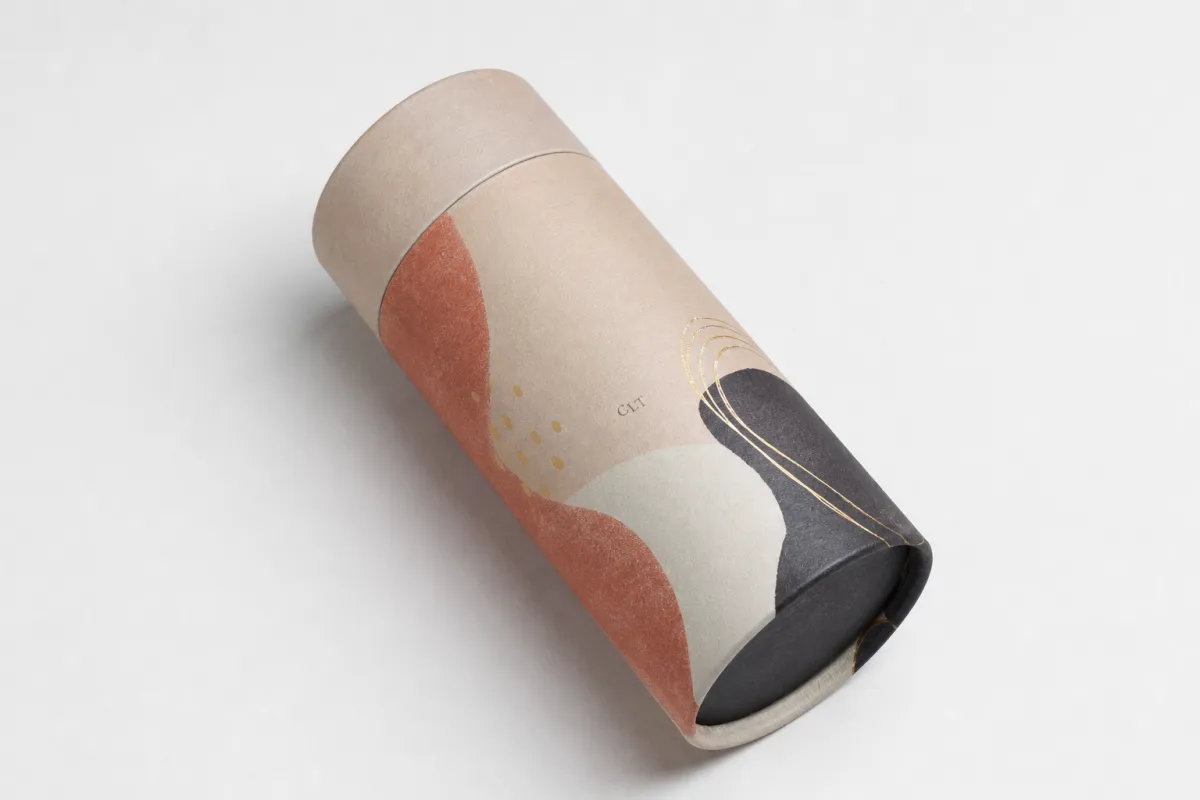
Printed shipping tubes with CMYK are cylindrical mailers, usually made from paperboard or rigid fiberboard, with full-color process printing applied to the outer surface or to a wrapped sheet that becomes the tube body. They show up in poster mailers, art print packaging, apparel programs, technical drawing delivery, branded inserts, and subscription kits. The form is familiar. The appearance is not. Compared with a blank kraft tube, printed shipping tubes with CMYK give the brand a much larger visual footprint at the exact moment the package changes hands.
The curved surface changes how artwork behaves. That is the detail many first-time buyers underestimate. Printed shipping tubes with CMYK can read differently because the eye tracks across a cylinder instead of a flat face. A seam breaks the design. A curve can distort small type if the layout is too close to the edge. A rougher substrate can mute fine detail. A red that looks vivid on a screen may print warmer or quieter on kraft board. None of that is unusual. It is the physics of printing on a converted package.
CMYK matters because it can build nearly any image from four inks instead of asking for a separate mix for each color. For printed shipping tubes with CMYK, that opens the door to photographs, tonal blends, shaded icons, and layered graphics without multiplying the ink stations. Spot color still has a place, especially if a brand needs a rigid Pantone match or a single solid logo tone. Process color usually wins when the artwork carries depth, variation, or more than one visual layer.
There is a pricing story embedded in the format too. Printed shipping tubes with CMYK often feel substantially more premium than a blank tube, yet they do not always require the same budget leap as a fully rigid custom box with inserts and specialty finishing. That makes them useful for ecommerce shipping programs and order fulfillment teams that want a better-looking package without overspending on structure the product does not need. If the item is long, rolled, or display-facing, the tube shape can make the money work harder.
The core question is blunt: what has to happen on the way out of the warehouse? If printed shipping tubes with CMYK need to support package protection, product discovery, or a strong unboxing moment, the design and board choice should be built around those goals from the start. A lot of packaging misses happen because the art gets approved first and the physical constraints get dealt with later. That sequence usually costs more.
For brands running mixed packaging systems, printed shipping tubes with CMYK may only be one part of the line. A subscription business might use tubes for posters, custom boxes for kits, and mailers for soft goods. A DTC brand might reserve tubes for limited artwork drops or premium launches. The common thread is fit: the product, the shipping materials budget, and the handling environment all need to line up. The graphic brief alone is not enough.
How Printed Shipping Tubes with CMYK Are Made
The production sequence for printed shipping tubes with CMYK usually starts with artwork prep and dieline review, then moves into proofing, printing, converting, forming, finishing, and pack-out. The exact order varies by supplier, but the logic stays steady: lock the layout before anything hits board. That matters more on a tube than on a standard carton because the design wraps, the seam has to land in a specific place, and the artwork needs to read from multiple angles once the package is assembled.
Most printed shipping tubes with CMYK begin as a flat wrap or sheet. That file is then mapped to the tube body. Bleed, safe zone, and seam placement become non-negotiable. A logo too close to the seam can look clipped. A border without enough bleed can reveal a thin white line after conversion. A pattern that ignores the curvature can feel busy in hand even if it looked disciplined on a monitor. The tube is a visual object that gets read while moving.
Color management is the next variable that decides whether the result feels polished or merely printed. Printed shipping tubes with CMYK can look sharp and saturated, but only if ink limits, board choice, and press calibration are aligned. On a coated white board, CMYK usually reads brighter and cleaner. On kraft or recycled board, the same palette often shifts warmer, darker, or slightly quieter because the substrate shows through in the final appearance. Screen proofs cannot tell you that. A screen is a prediction, not the package.
Here is the file discipline that keeps printed shipping tubes with CMYK moving through prepress without friction:
- Build the art from the supplier’s dieline rather than estimating wrap dimensions.
- Keep type and barcodes inside safe zones so forming does not crowd them.
- Use vector text where possible and keep raster images at print resolution.
- Plan seam placement early so key elements do not fall into the break line.
- Match the art to the board finish before color approval, not after.
The print method matters too. Depending on volume and construction, printed shipping tubes with CMYK may be produced with digital printing, offset printing, or a printed wrap that is laminated before conversion onto the tube body. Digital printing usually fits shorter runs, versioned artwork, and fast proof cycles. Offset printing usually fits larger quantities where color consistency and unit economics matter more than speed. The choice changes the quote, the ink behavior, and the final look.
The tube is still a shipping structure, not just a print surface. Printed shipping tubes with CMYK need enough wall strength to handle handling, stacking, and carrier movement. Too light, and the package crushes. Too weak at the ends, and the cap can loosen. Too heavy, and dimensional weight starts pushing the shipping cost upward even though the tube feels sturdier in the hand. Buyers who ask only for the print spec miss the part that actually keeps the product alive in transit.
One practical way to think about tube production: a beautiful print on a weak structure is expensive decoration. A balanced tube gives the artwork a surface that can survive the trip. That balance is where printed shipping tubes with CMYK earn their value.
Printed Shipping Tubes with CMYK: Cost Drivers and Pricing
Pricing for printed shipping tubes with CMYK comes down to a small set of levers that matter far more than the phrase “custom print” suggests. Tube diameter and length, board grade, print coverage, finish, quantity, and freight all move the number. A narrow poster mailer behaves differently from a wider tube for garments or architectural prints, and each dimension changes both material usage and waste. Once dimensional weight enters the equation, shipping can move almost as much as manufacturing.
Setup cost is where small runs often feel painful. Printed shipping tubes with CMYK usually need prepress work, proofing, press setup, and sometimes die or conversion setup. Those fixed costs get spread across the run. Five hundred units can look oddly expensive per piece even if the overall spend is manageable. At five thousand units or more, the fixed cost thins out, and the unit price usually becomes much easier to justify for ecommerce shipping or launch campaigns.
Full-wrap printed shipping tubes with CMYK generally cost more than a small logo panel, and the reason is not just ink usage. Larger coverage usually means more press time, more waste during setup, and more attention to color consistency across the entire surface. A simple mark on one side is easier. A full wrap with gradients, photos, and dense backgrounds asks the supplier to control a wider set of variables.
Use this as a directional pricing frame. The numbers are not universal because tube size, board, finish, and freight can shift the result quickly, but the comparison helps buyers orient the quote conversation:
| Option | Typical Run Size | What It Usually Includes | Relative Unit Cost | Notes |
|---|---|---|---|---|
| Small logo panel | 1,000-5,000 | One-color or limited CMYK on a small area | Lower | Good for simple branding and tighter budgets |
| Half-wrap CMYK | 1,000-5,000 | Large brand panel with partial coverage | Medium | Useful when the tube needs strong presence without full coverage |
| Full-wrap CMYK | 2,500-10,000+ | All-over graphics, gradients, and photo content | Medium to higher | Best visual impact, but setup and waste can be higher |
| Premium finish package | 2,500-10,000+ | CMYK plus matte, gloss, soft-touch, or scuff resistance | Higher | Finish can lift the look, but it also adds cost and lead time |
For many buyers, the smarter comparison is not “cheap versus expensive,” but the same tube quoted by different suppliers. Ask every vendor to quote the exact same dimensions, the exact same board, the exact same coverage area, and the same finish. Without that discipline, printed shipping tubes with CMYK are nearly impossible to compare fairly because one quote may hide a lighter board, a smaller print area, or a different closure style. Apples-to-apples quoting is unglamorous and extremely useful.
Short-run digital printing can make sense when speed and flexibility matter more than the lowest possible unit price. Larger-volume offset printing can be more economical when the art is stable and the quantity is known. That choice affects inventory, cash flow, and how much product the brand wants to commit before the campaign proves itself. A buyer managing order fulfillment usually wants the run aligned with real demand, not with an optimistic forecast.
Freight can change the economics too. Printed shipping tubes with CMYK may influence carton count, pallet pattern, and dimensional weight, and that can alter landed cost in a way buyers underestimate. A slightly longer tube can cross a carrier threshold. A wider tube can reduce packing efficiency. If the order ships by parcel, inches matter. If it ships by freight, pallet utilization matters. The better quote accounts for both production and transit.
For sourcing context, I like to keep a couple of standards in view. The ISTA test methods help when package protection needs to be checked against real transit conditions, and FSC certification can matter when the board supply has to align with sustainability goals or retailer requirements. Printed shipping tubes with CMYK do not need every certification available, but they should be designed with the actual shipping lane and sourcing expectations in mind.
Choosing Materials, Sizes, and Print Specs
Material choice is where printed shipping tubes with CMYK either start to feel expensive in a useful way or drift into over-spec territory. White board usually gives the cleanest CMYK color and the strongest photo reproduction. Kraft board gives a warmer, more natural look, which fits brands that want an earthy or utilitarian feel. Recycled content can support sustainability positioning, though the surface may print with a little less uniformity. Coated surfaces tend to sharpen detail and saturation. Uncoated surfaces feel more tactile and less polished.
Tube size matters just as much. Diameter controls what the package can hold, how much product can roll inside, and how well the tube resists crushing. Length affects usable graphics space and the shipping profile. Wall thickness affects stiffness, package protection, and shipping cost. End-cap style matters too. A friction-fit cap, plug cap, or reinforced closure can change both the look and the handling. Printed shipping tubes with CMYK should be sized to the product, not to the largest item in the catalog.
Moisture resistance and scuff protection are worth discussing early, especially if the tubes will move through ecommerce shipping lanes, warehouse sorting, or high-touch retail fulfillment. A matte finish usually hides handling marks better than gloss. A scuff-resistant coating can help the graphics survive rubbing inside secondary cartons. If the tube will sit in a depot, travel through humid conditions, or land on a doorstep, those details stop being cosmetic and start affecting the outcome.
The art has to fit the shape of the tube. That sounds obvious until a layout built for a rectangle gets wrapped around a cylinder and starts feeling crowded. Large blocks of text compress. Thin rules disappear into the seam. Brand marks look stronger when they are scaled to the tube circumference rather than copied over from a box design. Printed shipping tubes with CMYK reward layouts that respect the object instead of fighting it.
Here is a simple spec lens that helps buyers sort the practical tradeoffs:
- White coated board: best for sharper CMYK color and detailed imagery.
- Kraft board: best for a natural look, lower visual contrast, and a more tactile impression.
- Heavier wall stock: best for package protection and longer transit lanes.
- Matte finish: best for a softer premium feel and less visible scuffing.
- Gloss finish: best for brighter color impact and high-sheen branding.
Printed shipping tubes with CMYK also need to fit the broader sourcing strategy. If a brand already uses custom boxes for outer shipping and poly mailers for lightweight items, the tube program should not compete with those formats. It should cover the niche where long, rolled, or display-ready items need a package that looks intentional instead of generic. That is where the tube earns its slot in the shipping materials lineup.
The sourcing question should keep circling back to use. Is the priority presentation, package protection, or dimensional weight? The answer changes by product and by audience. A premium poster release aimed at collectors may justify a coated white tube with full-wrap printed shipping tubes with CMYK and a soft-touch finish. A high-volume technical print mailer may do better with a simpler board, a cleaner logo print, and fewer finishing steps. Both can be rational choices.
Production Process, Timeline, and Lead Time
A good timeline for printed shipping tubes with CMYK starts with a brief that locks dimensions, quantity, board, finish, and shipping needs before artwork starts moving around. Once the spec is fixed, the supplier can quote accurately and the designer can build to the right dieline. If those details stay fuzzy, each revision creates delay, and delay compounds fast.
The usual sequence runs like this: brief, quote, dieline review, artwork submission, proofing, sample approval, production, finishing, and shipping. Printed shipping tubes with CMYK move fastest when the buyer answers the structural questions early. A tube that changes diameter after artwork approval sends the file back through prepress. A finish change from gloss to matte can alter drying or lamination steps. Even a small seam shift can force layout revisions if the branding sits too close to the wrap edge.
Delays show up in the same three places over and over. First, the file is not built to the supplier’s template. Second, proof feedback arrives slowly or without clear instructions. Third, the production window is already full and the order has to wait. That is not unusual. It just means printed shipping tubes with CMYK are easier to schedule when someone is actively managing artwork and approval instead of treating them like a stock mailer.
Lead time changes with quantity and complexity. A repeat order with known artwork can move faster than a new launch with photographic CMYK art and a specialty finish. Printed shipping tubes with CMYK also need more time when the order includes custom closures, unusual lengths, or heavier board stock that is not a stock item. The fastest jobs are usually the ones that avoid surprises, not the ones that ask for rush service after the brief keeps changing.
If brand color matters, or if the tube carries fine text, build time for a physical sample or color proof. A digital proof checks layout, seam location, and text placement. A printed proof or sample tube gives a better read on color because the curve, board, and ink behavior are visible in hand. For printed shipping tubes with CMYK, that extra step often saves money by preventing a run that looks technically correct and still feels off.
A practical planning rule works better than a hopeful one: lock dimensions first, lock structure second, then finalize artwork. That order keeps printed shipping tubes with CMYK from drifting into revision loops that consume days. Once the board, seam, and closure are stable, the creative team can make better decisions about typography, image scale, and brand placement. If the order supports a product launch or seasonal campaign, that discipline matters even more.
When comparing suppliers, ask how they handle prepress, proof turnaround, and production scheduling. Some vendors are strong at digital printing and quick changes. Others are better at offset printing and larger volumes. Neither is automatically superior. The right fit depends on how many units are needed, how soon they are needed, and how exact the printed shipping tubes with CMYK must be on color and layout.
If sustainability is part of the brief, ask whether the board can be sourced with FSC certification or other documented chain-of-custody support. That does not change the print mechanics, but it can matter for brand reporting and retailer requirements. The same logic applies to transit tests. If the tubes will carry fragile inserts or premium prints, a supplier familiar with ISTA-style package protection testing can help set expectations early. The goal is a tube that prints well and survives the lane.
Common Mistakes That Hurt Color or Raise Cost
The most common mistake with printed shipping tubes with CMYK is treating the tube like a flat sheet. That leads to art files that ignore the seam, forget the wrap direction, or place critical copy too close to the curved edge. Once the tube is formed, those oversights show immediately. A logo that looked centered on the screen can feel off-center in hand, and a border that looked tidy in proof may split across the seam.
Another easy error is sending RGB artwork or low-resolution images and hoping the press can rescue them. It cannot. Printed shipping tubes with CMYK need press-ready files, usually with outlined fonts and images at the correct resolution for the final print size. Thin reversed text is especially risky because small counters and fine strokes can break apart when the art lands on a curved object or a less coated board. The file needs to be built for production, not presentation.
Overcomplicated artwork can quietly raise costs. Multiple color zones, tiny copy, too many SKUs, or excessive versioning can increase setup time and make printed shipping tubes with CMYK less efficient to produce. Rich graphics are absolutely possible, but the layout still has to respect how the tube will be printed, cut, and handled. If the campaign needs five versions, it is worth asking whether variable content truly earns the extra cost or whether one cleaner master design would do the job better. Sometimes the simpler route is the smarter one, even if it feels less flashy.
Ignore shipping requirements and the beautiful package can fail in transit. Printed shipping tubes with CMYK still need enough wall strength for package protection, enough closure integrity to resist opening in the mail stream, and enough structure to handle being packed next to other shipping materials. If inserts are needed to prevent movement, or if the product can shift and dent the ends, that belongs in the spec from the beginning, not after the first damage claim.
Skipping proof review is one of the fastest routes to avoidable reprints. A good proof catches color surprises, layout errors, barcode issues, and placement mistakes before the run starts. Printed shipping tubes with CMYK deserve that attention because the surface area is small enough that a one-inch error feels huge once the tube is in hand. A proof is not administrative drag. It is far cheaper than correcting a full order.
There is also a tendency to compare printed shipping tubes with CMYK against plain mailers without measuring brand value. That creates false savings. If the tube improves customer perception, supports repeat purchase behavior, or reduces damage claims, the higher unit cost can be justified. If the package only moves internal paperwork or low-value samples, a simpler print method or a label on a plain tube may be enough. Good sourcing is about fit, not vanity.
For teams balancing multiple formats, the lesson stays consistent: use the right package for the job. Custom boxes may be better for bulky kits, poly mailers may be better for lightweight soft goods, and printed shipping tubes with CMYK may be the strongest answer for long, rolled, or display-ready items. The mistake is not choosing a glamorous package. The mistake is choosing one without measuring how it supports the product, the budget, and the shipping lane.
Next Steps: Spec, Compare Quotes, and Order
The cleanest next step is to write a one-page spec sheet before shopping quotes. Include tube dimensions, quantity, board type, print coverage, finish, closure style, shipping requirements, and any color or approval notes. Once that sheet exists, printed shipping tubes with CMYK become much easier to quote because every supplier is responding to the same job instead of interpreting an incomplete brief.
Ask for two or three quotes on identical specs. That sounds basic because it is basic, and it is still the only fair way to compare printed shipping tubes with CMYK across vendors. If one quote is lower, you want to know whether the difference comes from board grade, print area, finish, or freight. If the numbers are close, the split may come down to proof quality, timeline, or how well the supplier handles prepress communication.
Request a sample, printed proof, or mockup if the artwork is new or the brand colors are sensitive. For printed shipping tubes with CMYK, that step matters most when the design wraps, the logo sits near a seam, or the art carries small type. If the project is a launch, a pilot order is often the safest move because it lets you test handling, appearance, and package protection before a larger production run.
Here is a practical action list that usually keeps the order moving:
- Lock the dimensions and closure style first.
- Choose the board and finish based on the shipping environment.
- Build the art from the supplier’s dieline.
- Review the proof carefully for seam placement and text size.
- Approve a sample if the color or structure is critical.
- Order a pilot run before scaling a new tube program.
Printed shipping tubes with CMYK work best when the spec gets settled early, because that keeps the budget, timeline, and final print result under control. If you treat the tube as both a branding surface and a piece of transit packaging, the decisions get clearer fast. The strongest programs usually do not chase the flashiest option; they choose the option that fits the product, the handling path, and the actual cost structure.
For buyers who want to grow into the format carefully, printed shipping tubes with CMYK can start modestly and expand once the artwork, lead time, and demand pattern are proven. That approach protects cash, reduces guesswork, and makes order fulfillment easier to manage. It also gives the brand room to refine the tube spec over time instead of locking into a size or finish that looked right on the first pass but does not serve the line well.
Printed shipping tubes with CMYK are strongest when they are specified with care, quoted on equal terms, and built with branding and shipping performance in mind. Keep those three pieces aligned and the format can do a lot: premium presentation, practical package protection, and a cost structure that still makes sense once the shipment leaves the dock.
How much do printed shipping tubes with CMYK usually cost?
Pricing depends most on tube size, board grade, print coverage, quantity, and finish, so there is no single universal price. Small runs carry higher unit costs because setup and proofing are spread across fewer pieces. Ask for quotes on identical specs so you can compare true unit cost instead of getting misled by different materials or print areas.
Do printed shipping tubes with CMYK need a proof before production?
Yes, a proof is the safest way to check seam placement, color accuracy, and text legibility before the full run starts. A proof matters especially when brand colors need to stay close or when the design wraps around the tube in a complex way. If the order is time-sensitive, ask whether a digital proof, printed proof, or sample tube is the fastest approval path.
What artwork format works best for printed shipping tubes with CMYK?
A press-ready vector file with outlined fonts and linked high-resolution images is usually the cleanest starting point. Artwork should be built from the supplier's dieline so bleed, safe area, and seam position are correct from the beginning. If the file is not production-ready, expect extra prepress time, which can affect both lead time and cost.
How long is the lead time for printed shipping tubes with CMYK?
Lead time varies with order size, print complexity, proof approval speed, and the supplier's current schedule. Simple repeat orders move faster than new designs because the artwork and specs are already approved. Build in extra time if you need a sample, a color match review, or a custom finish.
Are printed shipping tubes with CMYK better than labels or one-color printing?
CMYK is usually better when the design needs photos, gradients, or rich brand graphics that a simple label cannot deliver. One-color printing or labeling can be more economical for very small budgets or for designs that only need a logo and basic text. The right choice depends on the balance between branding impact, unit cost, and how the tube will be handled in transit.


