Buyer Fit Snapshot
| Best fit | Printed Shopping Bag Branding projects where brand print, material claims, artwork control, MOQ, and repeat-order consistency need to be specified before quoting. |
|---|---|
| Quote inputs | Share finished size, material target, print colors, finish, packing count, annual reorder estimate, ship-to region, and any compliance wording. |
| Proofing check | Approve dieline scale, logo placement, barcode or warning zones, color tolerance, closure strength, and carton packing before bulk production. |
| Main risk | Vague material claims, crowded artwork, missing packing details, or unclear freight terms can make a low unit price expensive after revisions. |
Fast answer: Printed Shopping Bag Branding: Film, Print, MOQ, and Carton Packing should be specified like a repeatable production item. The safest quote records material, print method, finish, artwork proof, packing count, and reorder notes in one written spec.
Production checks before approval
Compare the actual filled-product size with the drawing, then confirm tolerance on folds, seals, hang holes, label areas, and retail display edges. Reserve space for logos, QR codes, warning copy, and material claims before decorative graphics fill the panel.
Quote comparison points
Review material grade, print process, finish, sampling route, tooling charges, carton quantity, and freight assumptions side by side. A quote is only useful when the supplier can repeat the same color, closure quality, and packing count on the next order.
Printed Shopping Bag Branding: How to Do It Right
Printed shopping bag branding works because the bag keeps moving after the receipt is gone, and that simple fact gives it a level of visibility that few low-cost packaging items can match. A customer walks out, rides the train, sets the bag on a chair, places it on a desk, and the brand keeps showing up in ordinary places without a media buy, a retargeting setup, or anyone trying too hard to sell. That slow, repeated exposure is part of why the format has stayed relevant for retailers for so long.
That is the real value. Printed shopping bag branding is not just a logo on paper. It is material choice, handle style, finish, print placement, color contrast, and the way the bag behaves once it is actually in use. Miss one of those details and the bag starts to feel inexpensive, even if the artwork looked polished on a screen. I have seen beautiful mockups fall apart the second the paper stock changed tone, and that mismatch is a lot more common than most buyers expect.
For retailers, boutiques, event brands, and restaurants, the bag serves as both packaging and a moving display surface. Done well, printed shopping bag branding supports brand identity, brand consistency, and brand recognition in a way that feels natural rather than forced. Done poorly, it becomes a flimsy reminder that nobody checked the spec sheet closely enough. That is a hard lesson, but a useful one.
If you want to see how print and packaging choices shape the final impression, our Case Studies show how much the physical format can change the result.
Printed Shopping Bag Branding: Why It Gets Noticed Fast
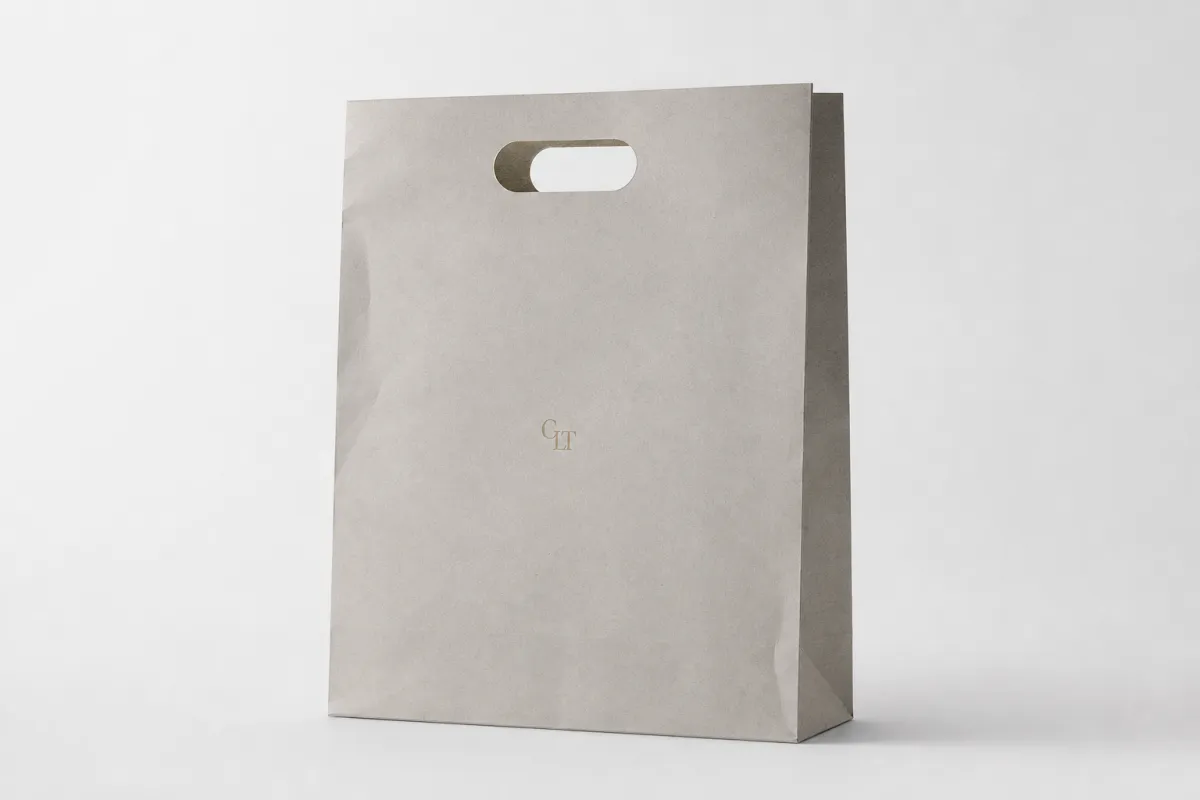
People remember what they carry. That part gets overlooked because it sounds too simple to matter, yet it matters a great deal. A receipt slips into a pocket, a gift card disappears into a wallet, and a shopping bag stays visible long after the purchase is complete. That gives printed shopping bag branding a long useful life for a very ordinary object.
Picture a bag leaving a store on a busy street. The next person in line sees it, the barista across the road sees it, someone in the office elevator sees it, and the brand picks up a trail of impressions before the bag ever reaches home. Printed shopping bag branding can outperform other low-cost brand touches because it keeps working after the sale, in places where the brand did not have to pay for each glance separately. That sort of repeat visibility is part of why packaging buyers keep coming back to it.
What gets noticed is not only the logo. It is the full visual read. A sharp black mark on white paper sends a different message than a muted logo on tan kraft. Matte lamination changes the tone. Rope handles feel more premium than twisted paper in some categories. A centered logo looks restrained and formal; a full-bleed pattern feels louder and more fashion-led. Printed shopping bag branding is visual branding in the most literal sense, and the substrate does half the talking before anyone reads a word.
From a packaging buyer's point of view, that matters because the bag never stands alone. It sits beside the store interior, the staff uniforms, the tissue paper, the product tags, and the checkout experience. If those pieces clash, the impression drops quickly. If they line up, the bag reinforces the brand story without needing extra explanation. That kind of consistency is usually what makes a brand feel more established than it really is.
There is a basic economic argument here as well. Printed shopping bag branding gives repeated impressions at a fixed unit cost. A bag that costs a little more but gets reused three or four times often beats a cheaper bag that tears on the first carry. Buyers should think about that tradeoff instead of looking only at the headline price. Cheap is only cheap if the bag does the job and stays in circulation long enough to matter.
A good shopping bag does two jobs at once: it protects the purchase and advertises the brand. If it cannot do both, it is just a container with a logo on it.
Some brands treat the bag as an afterthought. That usually shows. Strong printed shopping bag branding starts with a clear decision about what the bag should say before anyone reads the website or speaks with staff. That question usually gets you to the right size, paper weight, and print style faster than a wall of mood-board references. It also keeps the final bag from drifting into generic territory, which happens more often than people admit.
For brands that want more than a one-time checkout touch, printed shopping bag branding can work alongside inserts, labels, and tags. A simple bag plus a well-chosen tag often feels more polished than a crowded bag trying to do every job at once. If you need a companion piece, see our Custom Labels & Tags.
How Printed Shopping Bag Branding Works
Printed shopping bag branding follows a production chain, and most problems start when someone skips one step. The usual path runs through artwork file, dieline, proof, sample, print run, quality check, and delivery. If the dieline is wrong or the artwork is built for the wrong bag size, the finished bag will be wrong no matter how polished the PDF looked. The file can look flawless on a monitor and still fail on press, which is why prepress discipline matters so much.
The first technical decision is the print method. Flexographic printing is common for larger runs and simple artwork, especially when the design uses one to three spot colors. It is efficient and consistent, though it is not the best route for tiny details or heavy color gradations. Offset printing gives sharper detail and stronger color control on coated paper, which is why it often appears in premium retail. Screen printing can produce bold, tactile results on paper or fabric, but it usually suits fewer colors and more graphic designs. Digital printing is useful for short runs, samples, and fast turnaround, although unit cost tends to rise more quickly as quantity climbs.
Bag material changes the result just as much as the print method. Kraft paper gives a natural, eco-leaning look and works well for simple logos and strong contrast. Coated paper is smoother and supports richer detail. Laminated paper adds a more polished finish and better durability, though it can also affect recyclability and handling. Recycled stock can look excellent, but color consistency may shift because the base tone is less uniform. Reusable fabric and nonwoven bags sit in a different category entirely; they are built for longer life, which changes both the print approach and the brand expectation.
Color management is where buyers often get surprised. A logo on white paper does not behave like the same logo on brown kraft. White ink may be needed under a dark mark. Pantone spot colors can be worth the extra setup cost if brand consistency matters across stores, seasons, or regions. If your logo depends on a precise red, blue, or black, do not assume a standard CMYK build will land perfectly on every substrate. Sometimes it will. Sometimes it will drift just enough to annoy everyone in the room. That is the kind of detail that separates a clean run from a headache.
Finishing changes perception quickly. Matte lamination feels quieter and more restrained. Gloss makes colors pop and can help retail bags look more energetic. Foil stamping adds impact for special launches, though it should be used with restraint because too much foil can start to feel like a wedding supply aisle. Embossing and debossing are subtle and premium, though they usually make sense on heavier paper and at higher quantities. A finish should support the brand mood, not shout over it.
There is also a standards side to all of this. If the bag is part of a sustainability story, ask whether the paper is FSC-certified and whether the claim can be documented properly through the supplier. For transport, storage, and packaging quality references, organizations like FSC and the International Safe Transit Association are useful starting points. That does not magically make the bag premium. It simply means the claims and handling practices are less likely to fall apart under basic scrutiny.
Printed Shopping Bag Branding Cost, Pricing, and MOQ
Pricing is where printed shopping bag branding gets real. The mockup is the fun part. The quote is where the decision starts to matter. Final cost depends on material, bag size, handle type, number of print colors, coverage area, finish, order quantity, and shipping. That is not a trick. It is simply how custom manufacturing works.
The easiest way to think about it is this: paper weight and print complexity push the price up, volume pushes it down. A small order of premium laminated bags can feel expensive because setup and labor are spread across fewer units. A larger order often reduces unit price sharply, but it also ties up cash and takes warehouse space. Printed shopping bag branding is one of those categories where the cheapest per-piece quote is not always the smartest buy.
| Bag Type | Typical MOQ | Common Unit Price Range | Best Use Case |
|---|---|---|---|
| Plain kraft paper with 1-color print | 500-1,000 pieces | $0.18-$0.45 | Retail basics, events, simple brand identity |
| Coated paper with 2-color or spot color print | 1,000-3,000 pieces | $0.30-$0.85 | Boutiques, gift packaging, stronger visual branding |
| Laminated paper with specialty finish | 1,000-5,000 pieces | $0.55-$1.40 | Premium retail, launches, elevated customer perception |
| Reusable nonwoven or fabric bag | 500-2,000 pieces | $0.40-$1.80 | Longer life, repeat use, stronger brand recognition |
Those ranges are not fixed law. They move with market conditions, paper availability, finish choice, and whether the artwork is simple or fussy. A black logo on kraft is often cheaper than a full-color wrap with a foil mark and a custom handle, because every extra feature adds production steps. If a supplier gives you a suspiciously low quote, check whether freight, setup, or sampling was left out. The low unit price is often the bait, and it can hide the real total until the final invoice arrives.
Setup charges matter more than casual buyers think. Printing plates, die lines, tooling, and color matching can add $40-$250 or more to a job, depending on the method and the supplier's process. On a large order, that cost fades into the unit price. On a short run, it stings. That is why MOQ is not just a number on a spreadsheet; it is part of the economics of printed shopping bag branding.
Ask for an apples-to-apples quote. Not a loose one. A proper quote should include the exact bag size, paper weight, handle type, number of print colors, finish, packaging format, freight terms, sample cost, and any rush fee. If you compare one supplier's printed shopping bag branding quote against another supplier's "maybe around this size, maybe with this paper" estimate, you are not comparing anything useful. You are comparing guesswork to guesswork, and that usually ends badly.
One more practical note: bigger orders lower cost, but only if you can store and use the bags before the design changes. If your branding changes often, short runs may be smarter even if the per-unit price is higher. That tradeoff shows up constantly in retail. Stable branding rewards volume. Rapid campaign turnover does not. A buyer who knows the brand calendar can make a much cleaner decision than one chasing the lowest line item.
Printed Shopping Bag Branding Process and Timeline
The timeline for printed shopping bag branding depends as much on buyer readiness as it does on supplier workload. If the artwork is clean, the bag spec is final, and the supplier has stock materials available, the process can move quickly. If the bag needs a custom finish, special handle, or exact color match, the clock stretches. That is normal. Printing does not care about launch panic, and it rarely rewards late surprises.
Here is the usual sequence. First comes the brief, where the buyer shares the bag size, quantity, use case, and preferred look. Then the supplier checks the artwork, confirms the dieline, and sends a proof. After that, a sample or mockup gets approved. Only then does production begin. Final quality control and shipping follow. The point of the sequence is straightforward: catch errors before they become expensive boxes of paper you cannot use.
Realistic timing ranges look like this. Artwork review and proof setup can take 1-3 business days if files are in good shape. Sampling may take 3-7 business days for standard paper bags and longer for special finishes or custom handles. Production itself often runs 5-15 business days, depending on order size and print method. Add transit time on top of that. Domestic freight may only add a few days. Imported production can add several weeks, depending on route and customs handling.
That timing is one reason packaging testing matters. If the bags will be stacked, shipped, or handled through a busy retail network, ask what checks the supplier uses for carton compression, edge damage, or handling stress. The ISTA framework is useful as a reference point for transport-minded buyers. Not every shopping bag needs formal lab testing, of course, but the thinking behind it is useful: test the pack the way it will actually be used. I have seen light damage in transit undo an otherwise well-planned release, and nobody wants that kind of delay the week before launch.
Custom materials, foil, embossing, and precise color matching usually add days. Not because anyone is being dramatic. Because they add steps. Ink has to set. Finishes have to cure. Samples have to be checked. A supplier who promises impossible speed on a complex spec is either overconfident or quietly planning to disappoint you later. I would not gamble on either.
For rush orders, the safest rule is simple: lock the bag spec first and keep the design changes tiny. If the launch date is fixed, do not spend three days debating whether the handle should be cotton rope or twisted paper. Decide what matters most, freeze it, and keep moving. Printed shopping bag branding rewards clarity. It punishes indecision. That sounds strict, but it saves money and sanity.
Step-by-Step Guide to Printed Shopping Bag Branding
- Define the use case. Decide whether the bag is for premium retail, trade shows, events, hospitality takeaway, or gift packaging. A boutique bag and a conference bag are not the same job, even if they both carry a logo. The use case sets the paper weight, handle strength, and print style. It also keeps the design from drifting into something pretty but impractical.
- Choose the construction. Pick paper, laminated paper, or reusable material based on weight, budget, and how long you want the bag to stay in circulation. A 120gsm kraft bag is fine for light retail items. A heavier 180-250gsm paper bag makes more sense if the contents are bulkier or the brand wants a stronger premium signal. If the bag needs to last, do not skimp on reinforcement.
- Prepare the artwork properly. Send vector files if you have them. PDF, AI, and EPS are usually best. Keep important text away from folds and edges by at least 5-10 mm. If your color has to stay exact, specify Pantone references instead of hoping CMYK gets lucky. Printed shopping bag branding gets cleaner results when the design is built for the bag, not copied from a website banner. A print file should behave like a print file, not a resized ad.
- Request a proof and a spec sheet. This is where you catch errors in handle placement, logo scale, and print alignment. A good proof shows the exact bag size, artwork position, and finish. It should not be a fuzzy sketch. If you cannot read it clearly, neither can production. Ask for enough detail that nobody has to guess later.
- Approve the sample and document the final spec. The sample is where reality shows up. Check color, construction, handle strength, and how the bag sits when filled. Keep the approved spec on file so reorder batches stay consistent. Brand consistency is easier to protect when nobody has to remember what happened six months ago. That little bit of paperwork saves a lot of frustration later.
One practical trick: if the bag needs a companion element, such as a hang tag or product label, coordinate that early. A bag with a clean logo and a well-matched tag looks more intentional than a bag trying to carry the entire identity by itself. That is often where customer perception improves faster than the buyer expected. Small details do a lot of heavy lifting here.
Another point that gets overlooked is distance reading. Your bag has to work when it is across the room, not only when someone is studying the mockup. The logo should be readable at a glance, and the contrast should hold up in average store lighting. If the design only works on a monitor, it is not ready for printed shopping bag branding. A bag that disappears in the hand is basically missing the assignment.
Common Mistakes in Printed Shopping Bag Branding
The biggest mistake is simple: people design for the screen instead of the bag. A logo that looks elegant on a backlit laptop can disappear on brown kraft or flatten out on matte paper. Printed shopping bag branding needs substrate-aware design. Without that, the finish choice and paper tone can quietly ruin the whole effect. The design may still be attractive, but it will not carry the same weight in real use.
Another common mistake is clutter. Buyers want the logo, the website, the slogan, the social handles, the store address, the brand mission, and maybe a small poem if there is room. There usually is not. The more information you cram onto the bag, the less it feels like a branded package and the more it feels like a poster someone folded in half. Minimal does not mean boring. It means the eye can actually find the brand, which is kinda the point.
Handle strength and bag capacity are easy to get wrong too. A bag that looks elegant but cannot hold the product is not a success story. If the contents are heavy, ask for a reinforced bottom, thicker paper, or a stronger handle attachment. The bag should survive real retail use, not just a flat photo on a supplier page. That sounds obvious, yet people still act surprised when a light-duty bag fails under actual weight.
Skipping samples is another classic error. The first printed batch is not the place to discover that the logo sits too low, the finish is too shiny, or the brown kraft tone makes the color look muddy. Printed shopping bag branding is too visible to leave to hope. Sample first. Then approve. Then print. I know that adds a bit of time, but it avoids a much bigger mess later.
If a bag is handled, folded, carried, and reused, then durability is part of the design. Treat it like decoration and it will behave like decoration.
There is also a subtle mistake that costs brands repeat impressions. Some buyers choose a bag that feels cheap because the unit price is lower, then use it for a premium purchase. That mismatch weakens brand recognition and pushes customer perception in the wrong direction. A customer will remember the bag longer than the invoice line. That is not flattering, but it is true, and I would rather say it plainly than pretend otherwise.
Finally, do not forget reorder discipline. If the first run looks good but nobody saves the final spec, the second run may drift. Paper tone, handle color, print position, and finish should all be documented. Printed shopping bag branding works best when the bag is repeated, not reinvented every time someone places an order. A clean record keeps the brand from wandering.
Expert Tips and Next Steps for Printed Shopping Bag Branding
Start with one dominant visual idea. That is the cleanest way to make printed shopping bag branding feel intentional. A strong mark, a single pattern, or one bold color can do more work than a crowded collage of brand assets. If the bag is trying too hard, it usually looks less expensive than it should. Simple does not have to feel plain if the paper, print, and finish are doing their jobs.
Design for distance and movement. People do not admire shopping bags like art prints. They see them while walking, standing in line, or sitting across a table. The logo needs to read quickly, the contrast needs to hold, and the main message needs to survive motion blur. Shorter text almost always performs better. Larger logos almost always help. It is a practical rule, not a trendy one.
Use reusable bags or heavier paper when repeat impressions matter. A bag that survives a week of normal use prints more value than a bag that folds, tears, or gets tossed after one carry. This is where printed shopping bag branding starts to behave like media planning. More life means more impressions. More impressions mean better brand recognition per unit cost. That is the metric that matters, even if the purchase order does not show it directly.
Ask suppliers for their best-performing print sizes and finishes, not just their standard catalog. A supplier that prints every day usually knows which bag sizes hold up best, which finishes sell best in retail, and where the common failure points show up. That is more useful than a website image with polished lighting. Honest supplier input saves money, and it usually saves a few headaches too.
Then compare three things Before You Order: the sample, the quote, and the reorder plan. The sample shows what the customer will see. The quote tells you the real cost, not the fantasy cost. The reorder plan tells you whether the bag can support a future campaign without forcing a full redesign. That three-part check keeps printed shopping bag branding practical instead of decorative.
Good printed shopping bag branding is not complicated. It is disciplined. It uses the right material, the right print method, the right finish, and the right amount of information. That is how you get a bag that looks credible, supports brand identity, and still feels worth carrying after the purchase is over.
If you want to see how packaging choices influence results in practice, our Case Studies are a useful place to compare formats, and the right companion details can come from Custom Labels & Tags. Keep the spec simple, test Before You Print, and choose materials with actual use in mind, and printed shopping bag branding becomes one of the most efficient parts of your packaging mix. That is the point of it.
What is printed shopping bag branding, exactly?
It is the use of printed bags to display a logo, pattern, message, or campaign identity while the bag is being carried. The job is not only packaging. It is repeated visibility after the customer leaves the store. The best results happen when the material, print style, and brand colors are planned together instead of treated as separate decisions.
Which material works best for printed shopping bag branding?
Kraft paper is a good fit for simple branding and lower-cost retail use, especially if the look should feel natural or eco-leaning. Coated or laminated paper gives sharper color and a more premium finish, which suits boutiques and gift packaging. Reusable fabric or nonwoven bags make sense if the goal is longer life and more impressions. The right answer depends on weight, price target, and how polished the bag needs to feel.
How much does printed shopping bag branding usually cost?
There is no single safe number because pricing changes with material, print colors, finish, and order quantity. Small orders usually cost more per unit because setup and tooling are spread across fewer bags. Larger runs lower the unit price, but they increase cash tied up in inventory. A proper quote should include sampling, freight, and any rush fees so the total is clear.
How long does printed shopping bag branding take from proof to delivery?
Simple jobs can move fast once artwork is approved and the supplier has stock materials on hand. More custom jobs, especially those with special finishes or exact color matching, take longer because they add setup and curing time. In practical terms, proofing can take a couple of days, production often takes one to three weeks, and shipping adds its own window on top of that. If the deadline matters, lock the bag spec early.
What should I send when requesting a printed shopping bag branding quote?
Send the bag size, quantity, material preference, print colors, logo files, and any finish requirements. It also helps to explain where the bag will be used, because retail, events, and takeaway packaging all need different durability levels. If you want comparable quotes, ask each supplier to price the same spec. A loose request invites loose answers, and that is how buying teams waste time.

