Buyer Fit Snapshot
| Best fit | Printed Shrink Sleeves with Logo projects where brand print, material claims, artwork control, MOQ, and repeat-order consistency need to be specified before quoting. |
|---|---|
| Quote inputs | Share finished size, material target, print colors, finish, packing count, annual reorder estimate, ship-to region, and any compliance wording. |
| Proofing check | Approve dieline scale, logo placement, barcode or warning zones, color tolerance, closure strength, and carton packing before bulk production. |
| Main risk | Vague material claims, crowded artwork, missing packing details, or unclear freight terms can make a low unit price expensive after revisions. |
Fast answer: Printed Shrink Sleeves with Logo: Material, Print, Proofing, and Reorder Risk should be specified like a repeatable production item. The safest quote records material, print method, finish, artwork proof, packing count, and reorder notes in one written spec.
Production checks before approval
Compare the actual filled-product size with the drawing, then confirm tolerance on folds, seals, hang holes, label areas, and retail display edges. Reserve space for logos, QR codes, warning copy, and material claims before decorative graphics fill the panel.
Quote comparison points
Review material grade, print process, finish, sampling route, tooling charges, carton quantity, and freight assumptions side by side. A quote is only useful when the supplier can repeat the same color, closure quality, and packing count on the next order.
Printed shrink sleeves with Logo: Practical Packaging guide
Printed shrink Sleeves with Logo solve two problems at once. They give a brand a large, high-impact canvas and they wrap awkward containers without making the decoration look improvised. If a bottle tapers, a jar has a bulky shoulder, or a seam keeps ruining a flat label, a shrink sleeve covers the problem and makes the pack look designed on purpose.
What Printed Shrink Sleeves with Logo Actually Do
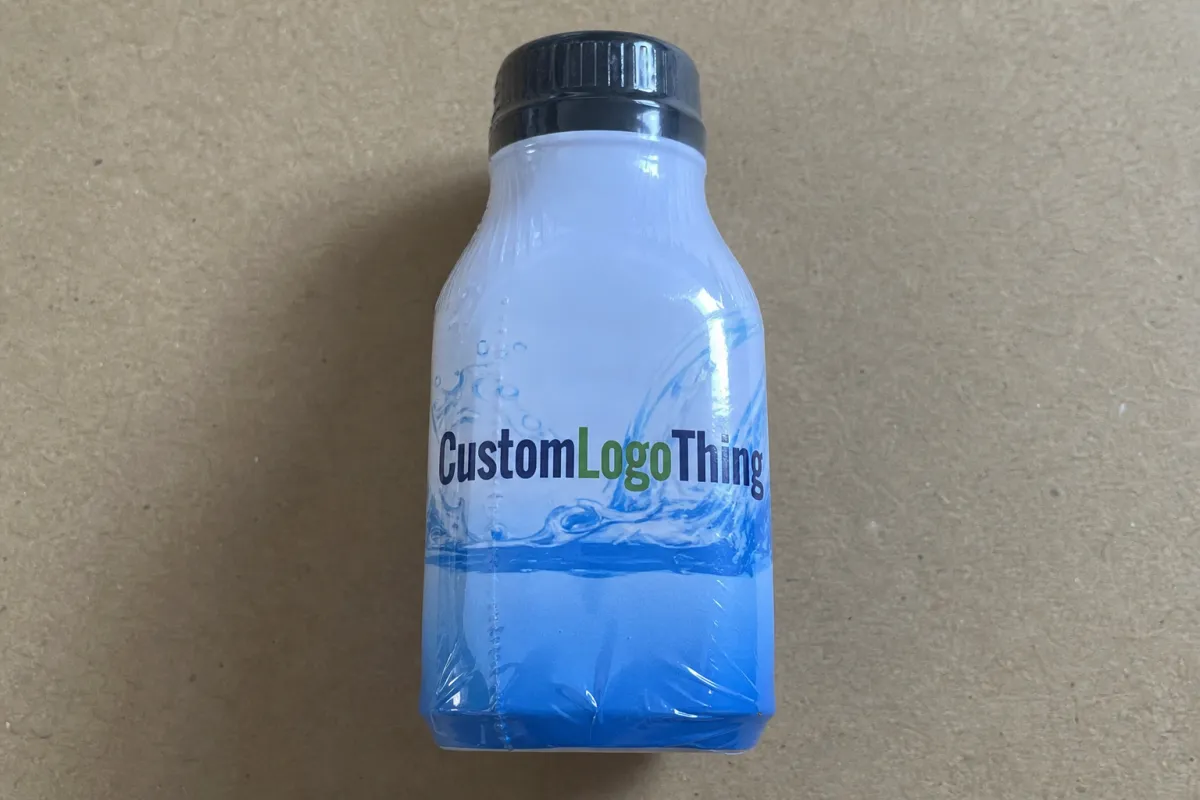
A shrink sleeve is a printed film tube that slips over a container and tightens with heat until it follows the shape underneath. Simple idea. Useful result. That is why printed shrink sleeves with logo keep showing up in beverage, personal care, household, and specialty food packaging. They create branding space and they handle awkward shapes far better than a flat label usually can.
For a packaging buyer, that matters because the sleeve can carry graphics, ingredient text, directions, logos, barcodes, regulatory statements, and tamper-evident features across shoulders, curves, and recessed panels. Flat-label assumptions stop helping once the container gets complicated. A sleeve wraps the package and keeps the message readable.
Printed shrink sleeves with logo are especially useful when the container already has a lot going on visually. Molded texture, strong curves, a bad seam position, or a deep taper can make a standard label look sloppy. A sleeve gives the brand one clean visual field without asking for a bottle redesign or a jar retool. That can save time, money, and a fair amount of internal debate.
The premium effect is real too. A full-body wrap, a metallic accent, or a bold color block can move a plain container into a different shelf tier fast. Not magic. Just disciplined packaging. The product does not need to be simple. It needs to be planned around the shrink process instead of being dragged into it after the fact.
A shrink sleeve is part of the package system, not decoration added at the end. Container, artwork, fill process, and pallet plan all need to agree.
That systems view matters more once the project leaves the mockup stage. The sleeve has to survive filling, cartoning, palletizing, freight vibration, and retail handling without scuffing, lifting, or pulling the artwork off center. A sleeve program that only looks good in a presentation deck is not much of a program.
There is also a practical branding advantage that gets ignored too often: a sleeve can hide legacy container issues while keeping the SKU recognizable. That is useful for private label refreshes, seasonal packaging, and rebrands where the supplier wants a faster visual update than a new bottle mold would allow. When the budget is tight, that kind of flexibility matters.
How Printed Shrink Sleeves with Logo Work on the Line
The production flow makes more sense if you picture the sleeve as a decorated film tube that has to land in the right place before it shrinks. In most lines, the sleeve comes on a roll or as cut pieces, gets applied to the filled container, and then passes through a heat tunnel so the film contracts and locks in place.
Film choice changes a lot. PETG, PVC, polyolefin, and other specialty materials do not shrink the same way, and they do not react the same way to tunnel settings. Some shrink faster. Some tolerate more heat. Some hold print with better clarity or stiffness. The right pick depends on the container shape, line speed, finish, and whether the sleeve covers the whole body or only part of it.
For many brand owners, PETG is the default starting point because it handles a wide range of shapes and gives strong clarity. PVC still appears in some programs, but many buyers avoid it because of recycling policy, regional regulations, or corporate sustainability rules. That is not a moral lecture. It is procurement reality. Material choice should match the package strategy, not just the price sheet.
In practice, the operator is managing several things at once:
- Graphics need to land where the customer expects the logo.
- Sleeve height has to account for neck, shoulder, and base area.
- Seam placement should stay away from the front panel and key copy.
- Closure height and cap style need checking before application.
- Heat, dwell time, and airflow have to be tuned so the shrink stays even.
The heat stage is where shrink-sleeve issues usually show up. Too much heat can wrinkle fine type or distort a curved graphic. Too little heat leaves loose sections, especially around shoulders and undercuts. If tunnel airflow is uneven, the sleeve can skew slightly and push the logo off center even when the print was perfect.
Steam tunnels often work well on more complex shapes because steam distributes heat evenly around the container. Hot-air tunnels can work too, but they usually need more tuning. There is no prize for picking the fanciest system. The film and tunnel have to match, and the container geometry has to fit the line speed you actually run.
Handling before application matters more than people like to admit. Sleeves stored in a humid room, bent in shipping, or packed loosely on pallets can be harder to feed consistently. Good suppliers watch roll quality, slit width, static control, and carton protection because those details become fewer stops and fewer rejects later.
Container consistency matters just as much. A sleeve that fits one bottle perfectly may look sloppy on another bottle that varies by a few millimeters. If the pack comes from multiple mold cavities or multiple suppliers, check the process early. Waiting until after the run is booked is a bad hobby.
One more line-level detail: reverse printing is often used so the ink sits on the inside of the film. That helps protect graphics from scuffing and moisture, which is useful when the package spends time in conveyors, cases, or cold storage. Not every design needs it, but programs that ship hard usually benefit from that extra protection.
Cost and Pricing for Printed Shrink Sleeves with Logo
Pricing for shrink sleeves is not just a unit quote. The actual cost depends on film choice, print method, sleeve dimensions, artwork count, special features, minimum order quantity, and how much setup work the run needs. A simple sleeve on a straight-sided bottle is usually easier to price than a sleeve that wraps a tapered, contoured container with a tear band and metallic finish. Packaging loves complexity. Accounting does not.
Buyers should look at the whole program, not just the price per piece. A sleeve can replace a pressure-sensitive label, a tamper band, and part of a secondary decoration step. If it removes another component from the packaging line, the system cost may be lower even when the sleeve itself looks pricier on paper.
For budgeting, these broad ranges are useful enough to keep the conversation grounded. Every supplier will vary based on materials and converting method, but the pattern holds:
| Program Type | Typical Quantity | Indicative Unit Cost | Best Fit | Common Watchouts |
|---|---|---|---|---|
| Simple printed sleeve | 5,000-20,000 pieces | $0.08-$0.22 each | Straight or lightly tapered containers | Lower setup tolerance, basic graphics only |
| Mid-complexity sleeve | 10,000-50,000 pieces | $0.14-$0.32 each | Curved bottles, jars, broad decoration coverage | More proofing, tighter shrink control, possible scrap during start-up |
| Specialty sleeve with extras | 25,000+ pieces | $0.22-$0.45+ each | Metallic effects, tear bands, heavy coverage, premium shelf programs | Higher film and finishing cost, more sampling, more line tuning |
Those numbers are not promises. They are realistic enough to keep the discussion out of fantasy territory. Smaller quantities usually carry a higher per-sleeve cost because setup gets spread across fewer units. Larger runs improve efficiency if the design is locked early and the line runs cleanly enough to avoid waste.
When you request a quote, have the essentials ready:
- Container dimensions, including height, diameter, shoulder shape, and any recessed areas.
- Artwork count, including whether front, back, and seam positions are fixed.
- Application method, such as steam tunnel, hot-air tunnel, or manual application.
- Coverage target, meaning full-body wrap or partial decoration.
- Special features, including tear bands, perforations, metallic ink, matte finish, or gloss finish.
- Order quantity and whether the project is a pilot run or a recurring SKU.
Another cost factor hides in plain sight: waste from setup and test runs. A supplier may quote a competitive unit price, but if the sleeve needs several print approvals, extra converting time, or repeated trial fits on the application line, the total cost goes up fast. The cheapest quote is often the one that causes the most damage later.
If you are comparing a sleeve program against other packaging options, think about material efficiency and transport performance too. For transit validation, the testing library at ISTA is a useful reference for packaging teams that need confidence their decorated packs can handle distribution instead of just posing well in a sample review.
There is also a hidden financial advantage when a sleeve consolidates more than one function. If the same component provides branding, tamper evidence, and part of the compliance labeling surface, the line can become simpler. Fewer parts to stock. Fewer touchpoints. Fewer things for someone to misplace on a busy Tuesday.
Process and Timeline: From Artwork to Production
A good sleeve project follows a predictable path, but the details still matter. The best schedules start with the container, not the art file, because the film has to fit the shape before the design can fit the film. A working sequence usually looks like this:
- Project brief and container review.
- Dieline creation or dieline confirmation.
- Artwork setup and copy placement.
- Proof review and corrections.
- Sample production or test sleeves.
- Final approval after fit review.
- Printing, converting, and shipment.
Where do delays usually show up? Late artwork changes. Incomplete measurements. Approvals that ignore shrink behavior. A flat proof can look flawless while the actual sleeve fails on the container because the seam lands wrong or the graphic shifts too far over the shoulder.
Simple programs can move quickly once the specs are locked. More complex sleeves need more time because proofing may include physical samples, shrink tests, or another round of artwork correction. A realistic planning window is usually measured in weeks, not days, especially when the design includes specialty film, extra finishing, or a launch date that leaves no room for cleanup.
Shipment timing deserves the same attention as print timing. If the sleeves need to arrive before a bottling run, a seasonal promotion, or a retail launch window, freight should be built into the project from the start. A perfect sleeve arriving late is still a problem. Packaging has a brutal way of making that point.
Test the sample on the actual container, not on a substitute that “should be close enough.” It usually is not. I would rather see one correctly fitted sample on a real bottle than ten beautiful flat proofs that have never met heat. A small pilot catches neck-height issues, shoulder distortion, and print placement problems before the full order gets released.
For projects that touch paperboard cartons, shelf-ready cases, or recycled-content claims, check whether any part of the package chain needs FSC documentation. That does not control the shrink sleeve itself, but it can matter for the broader package architecture, especially when brand teams want the claims to line up across primary and secondary packaging.
One practical detail that saves headaches later: keep a signed sample set from the final approval stage. If the project gets transferred to a new plant, a contract packer, or a seasonal co-manufacturer, that physical reference helps everyone compare what was approved with what is being run. Paper trails are good. Product trails are better.
Key Factors That Shape Fit, Shelf Impact, and Performance
Container geometry comes first. Shoulders, tapers, embossed logos, recessed panels, and odd neck finishes all change how a shrink sleeve moves while it tightens. A sleeve can cover a lot of sins, but physics still gets a vote. If the package has a severe curve, the artwork needs to avoid putting important copy where the film stretches most.
Geometry first, graphics second
Buyers often start with the visual concept and ask about the shape later. That order creates avoidable pain. A tall straight bottle can handle a large front panel and a clean back panel with little distortion. A short jar with a wide shoulder may need the logo moved higher and the body copy simplified so it stays readable after shrinking.
A decent rule: let the container tell you where the safe zones are. Barcode placement, ingredient panels, and date codes should stay on areas that remain as flat and scannable as possible. If the scan area lands on a hard curve, the code may print beautifully and still fail in the warehouse or at the register. That sort of failure is expensive and annoying, which is a delightful combination for nobody.
Also watch the seam. On a lot of programs, the seam is the first thing nobody notices during design and the first thing everyone notices after production. If the logo, key image, or regulatory text lands too close to that area, the pack can look slightly off even when the rest of the sleeve is fine. Slightly off is enough to bother a brand manager for months.
Shelf impact that earns attention
Printed shrink sleeves with logo tend to win shelf space because they create room for strong color, full-body branding, and visual continuity from top to bottom. In a crowded retail setting, a pack has roughly a second to make sense. High-contrast typography, disciplined copy hierarchy, and clean negative space usually do more work than a busy layout stuffed with tiny text.
The sleeve can also deliver premium cues without changing the container mold. A matte finish, a metallic accent, or a bold wraparound graphic can move a product’s perceived value quickly. The trick is restraint. Too many effects make the pack noisy. One or two well-placed design moves usually look sharper and cost less to regret later.
Brand teams sometimes want every available finish on the same sleeve. Foil look, gloss varnish, matte field, microtype, cutout window, and a giant logo, all at once. That is how a package starts sounding expensive before it even ships. Stronger work usually comes from one clear idea supported by a few disciplined details.
Performance in shipping and retail
Material performance matters after the filler shuts off. A sleeve may need to resist moisture, light abrasion, carton rub, and handling across the supply chain. If the product will sit in cold rooms, ship through humid conditions, or travel with other items that scuff easily, choose the film and print system with that abuse in mind.
Tamper evidence is another reason sleeves stay popular. Perforations, tear bands, and breakaway sections can give a clear opening signal while still keeping the pack neat at point of sale. The feature has to match the bottle and application method, though. A tear band that opens too aggressively can damage the closure or annoy the consumer. Both are bad outcomes. One is just louder.
Good packaging teams test more than appearance. They check the whole route from line to shelf. That means seeing how the sleeve behaves in a tray, how it looks after cartoning, and whether the graphics still read clearly after pallet wrap and transit vibration. If the pack will face a distribution test, the real question is not only “does it look right?” but also “does it stay right?”
There is a trust issue here too. If a supplier cannot explain shrink rates, seam placement, or tunnel behavior in plain language, keep asking questions. A good vendor should be able to tell you where the risk is and what tradeoff you are making. Vague reassurance is not a quality control plan.
Common Mistakes to Avoid Before You Order
The most common mistake is approving artwork before the container is fully measured. A few millimeters may not sound like much, but with shrink film, small errors compound quickly. If the dieline comes from a guess instead of a physical sample, the sleeve may end up too short, too loose, or misaligned around the shoulder.
Ignoring the application method is another easy way to create trouble. A sleeve that behaves in one tunnel can misbehave in another because heat delivery, dwell time, and airflow are different. Pretty artwork does not rescue a bad process. If the line is not tuned to the film, wrinkling and skewing are almost guaranteed.
Here are a few mistakes worth avoiding:
- Using tiny text that becomes hard to read after the film shrinks.
- Placing the logo too close to the seam or a steep shoulder.
- Skipping sample testing on the actual container.
- Choosing a low quote without checking scrap risk or print quality.
- Assuming all bottles in the same SKU family are dimensionally identical.
That last one matters a lot for contract fillers and multi-cavity molds. If the neck finish, shoulder height, or body diameter changes from run to run, sleeve fit changes with it. A variation that looks invisible to the eye can still create a visible problem once the film shrinks and the graphics no longer line up the same way.
A bad measurement costs more than a good sample. One controlled test run usually saves far more money than it costs.
There is also a sustainability angle to keep in view. If your package claims rely on recyclable content, post-consumer material, or reduced material use, the sleeve specification should be reviewed as part of that claim set. The sleeve may be only one piece of the pack, but it still affects the material profile and the waste created during setup.
Another miss is forgetting the end user. If the product needs to be opened in a wet shower, a cold warehouse, or with gloved hands, the tear feature and surface finish matter more than the mockup suggests. Good design does not stop at the shelf photo. It has to work in the hand.
Expert Tips and Next Steps for a Smooth Launch
The cleanest sleeve launches usually start with one simple habit: request the dieline early, then check it against the actual container before the art gets locked. That one step cuts a surprising amount of rework. Once the container is measured correctly, the rest of the design can be built around what the film and shrink process will actually do instead of what everyone hopes they will do.
After that, confirm the shrink percentage for the chosen material and ask how it behaves in the application tunnel. If the supplier says a film is suitable for a certain shape, I still want to see it on the exact bottle or jar in question. Real containers have real tolerances. Those tolerances matter more than a sales deck wants to admit.
A short production checklist keeps everyone honest:
- Container height, diameter, shoulder profile, and finish are confirmed.
- The seam and logo positions are approved on a physical sample.
- Copy, barcode, and date-code areas remain readable after shrink.
- Application speed matches the line’s actual bottling rate.
- Carton packout and pallet pattern are reviewed for rub and pressure points.
That last item is easy to miss, and it can save the launch. If the sleeve finish is delicate or the print area sits near carton contact points, a warehouse test can expose scuffing before the shipment leaves. The sleeve needs to look good during the reveal, not just on day one in the print room when everyone is still pretending they will never touch the cartons again.
For the first order, treat the run like a controlled pilot. Even if the art is final, there is value in watching the sleeve through the first production cycle and making small improvements for the next order. Maybe the logo should sit 3 mm higher. Maybe the tear band needs to open a little cleaner. Maybe the tunnel wants one more adjustment. Those small corrections are how a decent sleeve program becomes a reliable one.
If the launch involves multiple teams, put one approval calendar in place and keep marketing, purchasing, operations, and logistics aligned. Shrink sleeves often get treated like a graphic task, but they are really a packaging component with production consequences. When everyone sees that clearly, the schedule usually holds together better.
For brands that need decoration, tamper evidence, and a cleaner read on a difficult shape, printed shrink sleeves with logo are worth testing early, not after the line is already booked. Measure the container, gather the artwork, ask for a real sample, and give the application team enough time to tune the process before the launch window closes.
The practical takeaway is straightforward: lock the container specs first, approve a physical sample next, and make sure the line, the film, and the artwork are tested together before volume production. That is the difference between a sleeve that looks good in a folder and one that survives the real world.
FAQ
Are printed shrink sleeves with logo better than pressure-sensitive labels?
They are often a better fit for curved, tapered, or highly contoured containers because the film can conform across more of the package. They also allow full-body branding and can add tamper evidence in the same component. Pressure-sensitive labels can still be the better choice for flat surfaces, short runs, or simpler packs that do not need 360-degree decoration.
What container shapes work best for printed shrink sleeves with logo?
Bottles, jars, cans, and specialty containers with shoulders, tapers, or irregular contours usually benefit the most. The best results come from shapes with consistent dimensions and enough surface area for the sleeve to shrink evenly. Deep grooves, aggressive curves, or unstable neck finishes may need testing before production is approved.
How long does it take to produce printed shrink sleeves with logo?
Lead time depends on artwork readiness, sample approval, material availability, and the complexity of the print and finishing. Straightforward projects move faster when measurements and graphics are finalized early, while custom or highly detailed sleeves need more proofing time. Shipping time should always be built into the schedule so the sleeves arrive before the filling run or launch date.
What affects the cost of printed shrink sleeves with logo?
Main cost drivers include film type, order quantity, print complexity, special effects, and whether the sleeve includes tamper-evident features. Setup, proofing, and scrap from test runs can also change the total project cost even when the unit quote looks competitive. The lowest quote is not always the best value if the sleeve needs rework or causes line trouble.
Do printed shrink sleeves with logo help with tamper evidence?
Yes, they can be built with perforations or tear bands that show clear evidence of opening. That is useful for beverage, food, health, and personal care packaging where product integrity matters during distribution. The tamper feature has to match the container and application process so it opens cleanly without damaging the pack.
For packaging teams, the strongest sleeve programs are the ones that balance shelf presence, fit, and production discipline. That is exactly why printed shrink sleeves with logo should be evaluated as part of the full packaging system rather than as an afterthought.


